- The paper demonstrates that engineered topological defects serve as nucleation sites that trigger deterministic phase separation via directional invasion fronts.
- The study systematically maps the phase diagram by using nonlinear scalar couplings to reveal a crossover between second-order and first-order transitions.
- The work uses fast quench protocols to show that defect-induced invasion exhibits scale-invariant velocity, independent of the overall system size.
Topological Defect Induced Phase Separation in a Holographic System
Holographic Model Construction and Phase Diagram
The work systematically investigates the interplay between symmetry breaking, topological defect formation, and phase separation in a strongly coupled system using gauge/gravity duality. The authors utilize the Einstein-Maxwell-scalar (EMS) model with a neutral scalar sector implementing a global Z2 symmetry. Crucially, the scalar potential is augmented by quartic (λΨ4) and sextic (τΨ6) terms, which allow for crossover from second-order to first-order, and more intricate, multicritical phase transition structures depending on the sign and magnitude of λ and τ. This provides a highly flexible holographic platform for capturing a broad variety of critical phenomena.
The paper explores, via static and dynamical analyses, the induced phase structure as a function of these nonlinear couplings. In the absence of these terms, the model reproduces a standard superfluid/superconductor-like second-order transition, evidenced by the continuous onset of the condensate and associated smooth free energy behavior Figure 1.
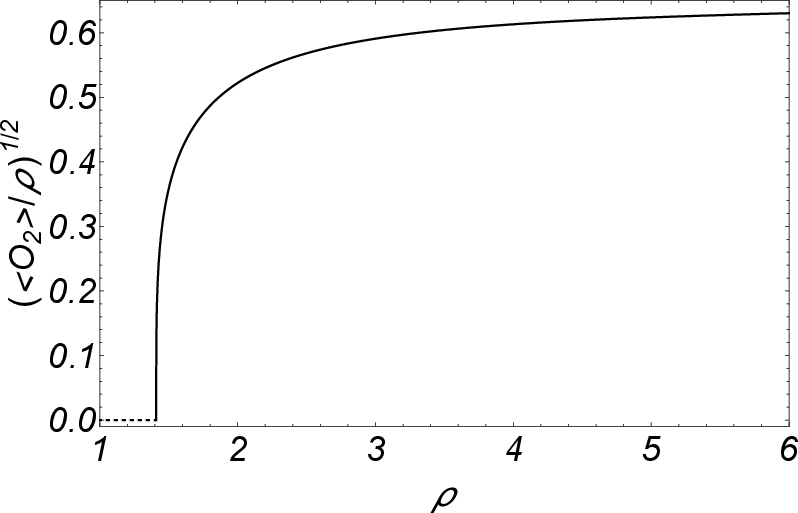
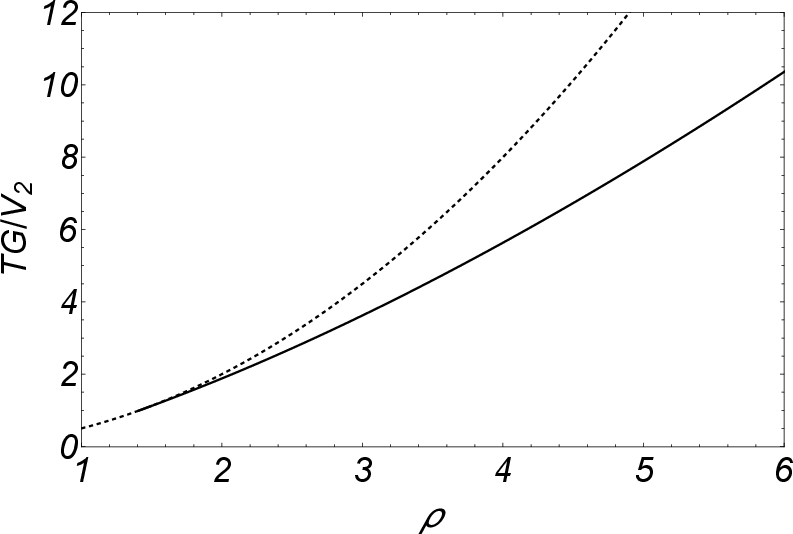
Figure 1: The condensate and free energy for λ=0 and τ=0 demonstrate the canonical second-order transition structure.
However, upon introducing negative λ and positive τ, first-order and Cave-of-Wind (COW) type transitions emerge, characterized by free energy swallowtail structures and the metastable-supercritical regions essential for phase separation Figure 2. The position in the (λ,τ) plane determines the detailed phase diagram topology Figure 3, including the existence/absence of a stable superfluid phase.
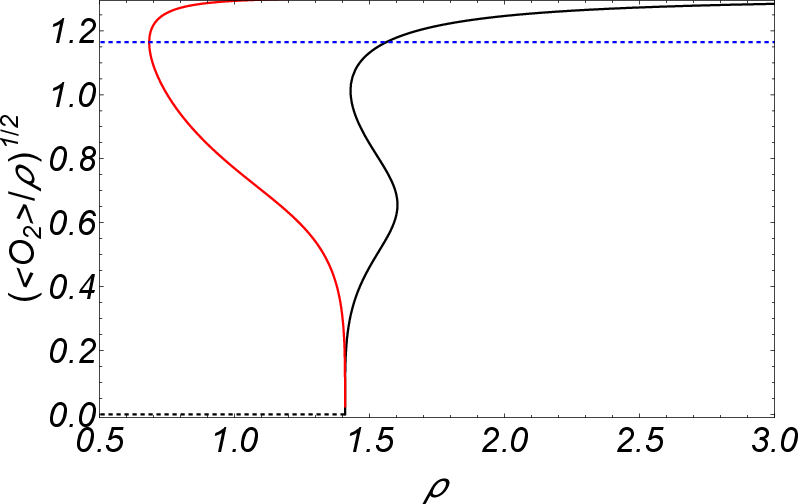
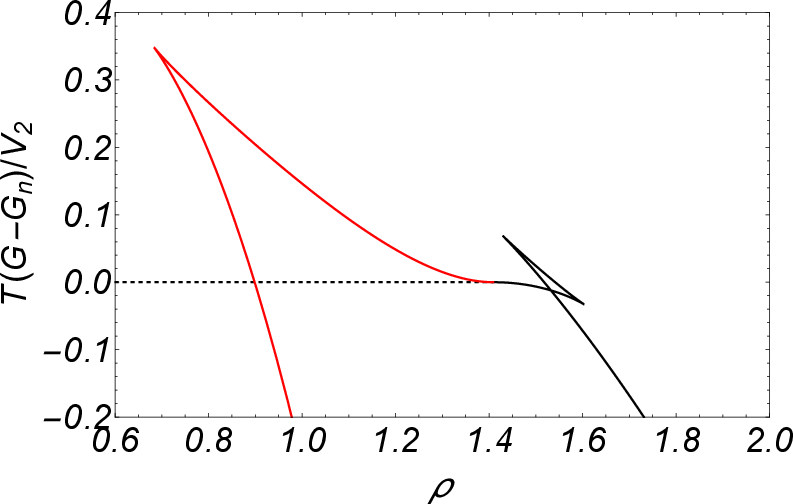
Figure 2: The condensate and free energy for (λΨ4)0, (λΨ4)1, revealing the coexistence of multiple ordered states, spinodal region, and an inflection point in the grand canonical analysis.
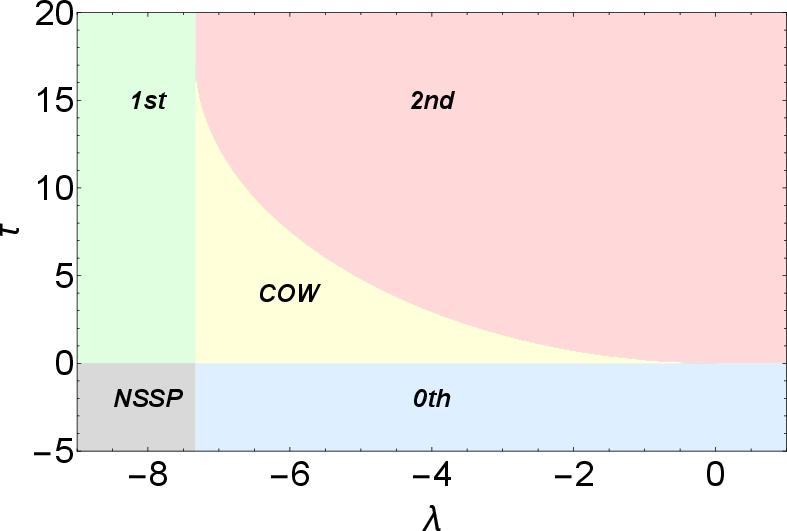
Figure 3: Phase diagram in the (λΨ4)2 plane, showing boundaries of second, first, and COW transitions, and the no-stable-superfluid region.
Nonequilibrium Dynamics: Symmetry Breaking versus Phase Separation
Employing time-dependent holographic evolution, the authors study two canonical nonequilibrium protocols: fast quenches across the critical point and quenches into the metastable region of a first-order transition. When the system is rapidly driven across the second-order critical point, the (λΨ4)3 symmetry is spontaneously broken, with the Kibble-Zurek (KZ) mechanism dictating the density of kink (domain wall) defects formed. Post-quench, these kinks demarcate domains of positive/negative condensate; subsequent defect-antidefect annihilation further reduces their number Figure 4.
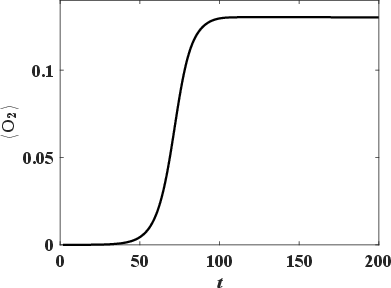
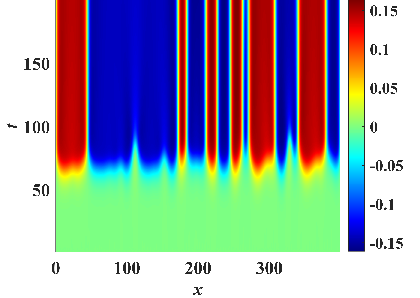
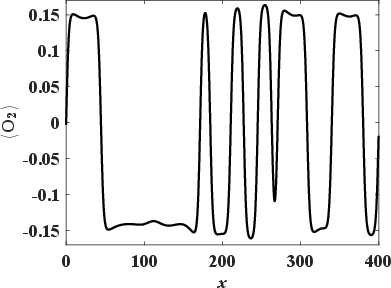
Figure 4: Time evolution of the condensate during a second-order transition quench, illustrating topological defect (kink) formation and relaxation.
For quenches deep into the spinodal region of a first-order transition, phase separation occurs absent symmetry breaking: the homogeneous state spontaneously decomposes into coexistence of regions with distinct condensate densities—the nucleation, growth, and merger of bubble-like domains Figure 5.
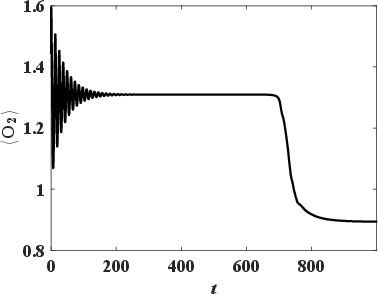
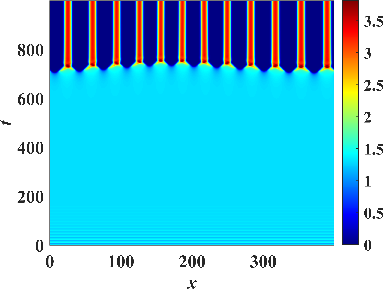
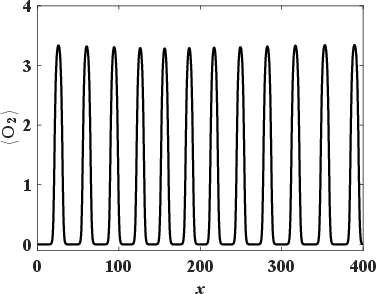
Figure 5: Pure phase separation dynamics showing the spontaneous emergence and growth of spatial inhomogeneities following a quench into the metastable region of a first-order transition.
When a quench both crosses the critical point and enters the metastable regime, the two mechanisms couple: symmetry breaking generates kinks, which partition the system into sectors, and subsequent phase separation proceeds within these, leading to highly nontrivial final spatial structures and enhanced maximum condensate values compared to either process alone Figure 6.
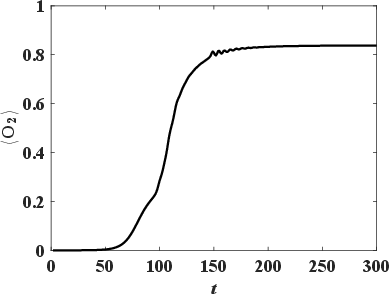
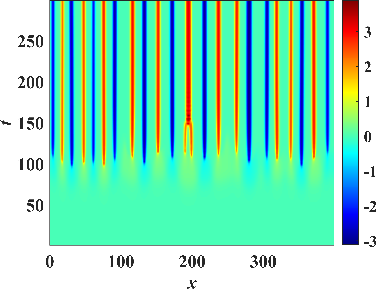
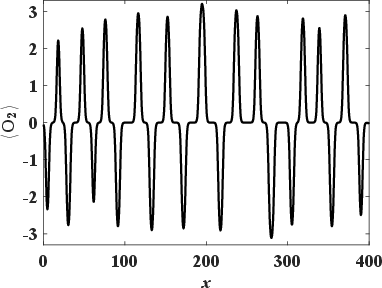
Figure 6: Combined symmetry breaking and phase separation—kinks form rapidly after quench, constraining subsequent inhomogeneous evolution and yielding robust, spatially separated domains.
Defect-Induced Invasion: Mechanism and Scaling
The central result of the study is the identification and analysis of the "invasion" phenomenon: by imposing initial conditions with deliberate spatial partitioning (e.g., sign flip of the condensate at a central location), well-defined kinks are engineered. Upon quenching, these topological defects act as deterministic triggering sites for phase separation. Unlike stochastic bubble nucleation, phase separation is now initiated at the kinks and invades the system via directional fronts, resulting in deterministic, scale-invariant expansion of high/low condensate phase domains Figure 7.
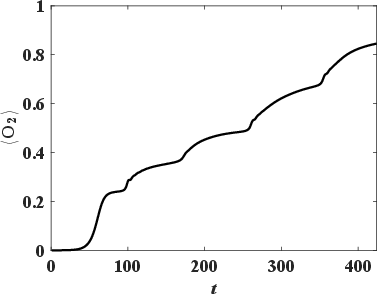
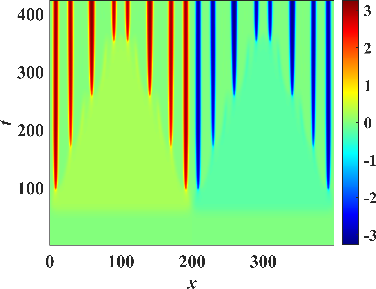
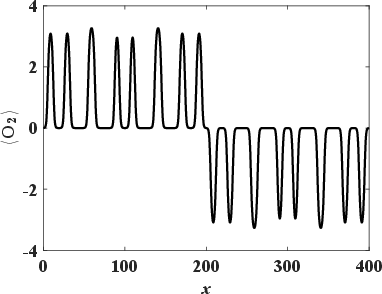
Figure 7: Invasion phenomenon—kink interfaces serve as nucleation sites for phase separation, with fronts propagating through the system in time.
A notable quantitative observation is that under ultrafast quenches, the invasion velocity is remarkably independent of the overall system size Figure 8. This independence is demonstrated across multiple spatial scales, supporting the assertion that invasion dynamics are controlled by the local instability structure around defects rather than global system features.
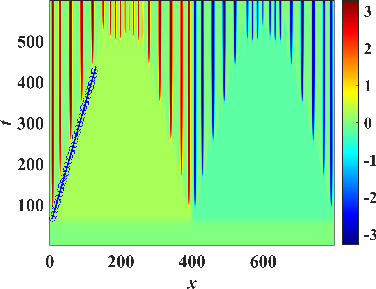
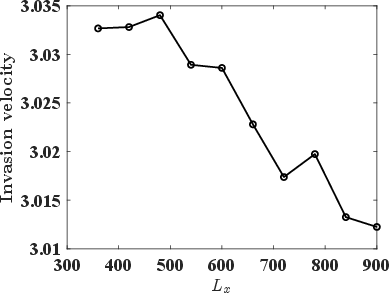
Figure 8: Left: Space-time density plot illustrating invasion fronts. Right: Linear scaling of front position vs system size confirms scale-invariant invasion velocity across domains.
The robustness of defect-induced phase separation against initial spatial randomness or noise is further confirmed in hybrid scenarios, with numerically extracted invasion velocities showing negligible variation even as the background initial state is varied.
Theoretical and Practical Implications
The explicit construction and analysis of defect-induced invasion in the context of holographic systems have multiple theoretical ramifications:
- Interplay of Nonequilibrium Mechanisms: The study provides direct numerical evidence that symmetry-breaking defects can seed and direct subsequent dynamical instabilities (phase separation), demonstrating a mechanism for controlled nonequilibrium pattern formation in strongly coupled media.
- Universality: The spatial scale independence of the invasion velocity suggests an emergent universal property, likely tied to local instability criteria rather than specifics of the initial perturbation or global domain size.
- Supercritical/Metastable Structure: The approach enables precise mapping of the kinetic phase diagram, complementing thermodynamic analyses and potentially informing searches for analogous invasion phenomena in higher-dimensional symmetry breaking (e.g., string/domain wall defects) and in experimental platforms such as ultracold atomic gases or QCD matter.
Practically, realization of deterministic nonequilibrium structure formation driven by topological defects may impact scenarios ranging from pattern formation in materials out of equilibrium to evolution of strongly correlated quantum fluids under rapid parameter sweeps.
Conclusion
This paper delivers a detailed and controlled study of the coupled dynamics of symmetry breaking and phase separation in nonlinear holographic superfluids. The key result is the identification of topological kink defects as preferential and robust seeds for directional phase separation, giving rise to invasion front dynamics whose velocity is invariant to the system size. This invasion phenomenon sharply contrasts with conventional, randomly nucleated bubble growth in pure phase separation and provides a prototypical scenario for the deterministic control of nonequilibrium structure formation via engineered defects. Prospects for extending these results to higher dimensions, exploring the dependence on nonlinear couplings (λΨ4)4, and relating holographic findings to experiment and to QCD-like matter are immediate avenues for further investigation.
Reference:
"Topological defect induced phase separation in a holographic system" (2604.00690)