- The paper establishes a detailed symmetry classification of nodal lines using mirror, inversion plus time-reversal, and nonsymmorphic protections.
- It employs ARPES and DFT to characterize extended linear dispersions and SOC-induced gap variations in material families like ZrSiX.
- The study links quantum oscillations, weak (anti)localization, and chiral anomaly to distinct macroscopic transport signatures in NLSMs.
Introduction and Theoretical Framework
Nodal-line semimetals (NLSMs) constitute a prominent class of topological quantum materials wherein conduction and valence bands cross along one-dimensional lines, loops, or nets in momentum space, fundamentally distinct from point-like Dirac or Weyl semimetals. The protection and stability of these nodal degeneracies derive from crystal symmetries—mirror, nonsymmorphic (glide plane, screw axis), or combinations of inversion and time-reversal—resulting in topological invariants and unique surface phenomena such as drumhead states.
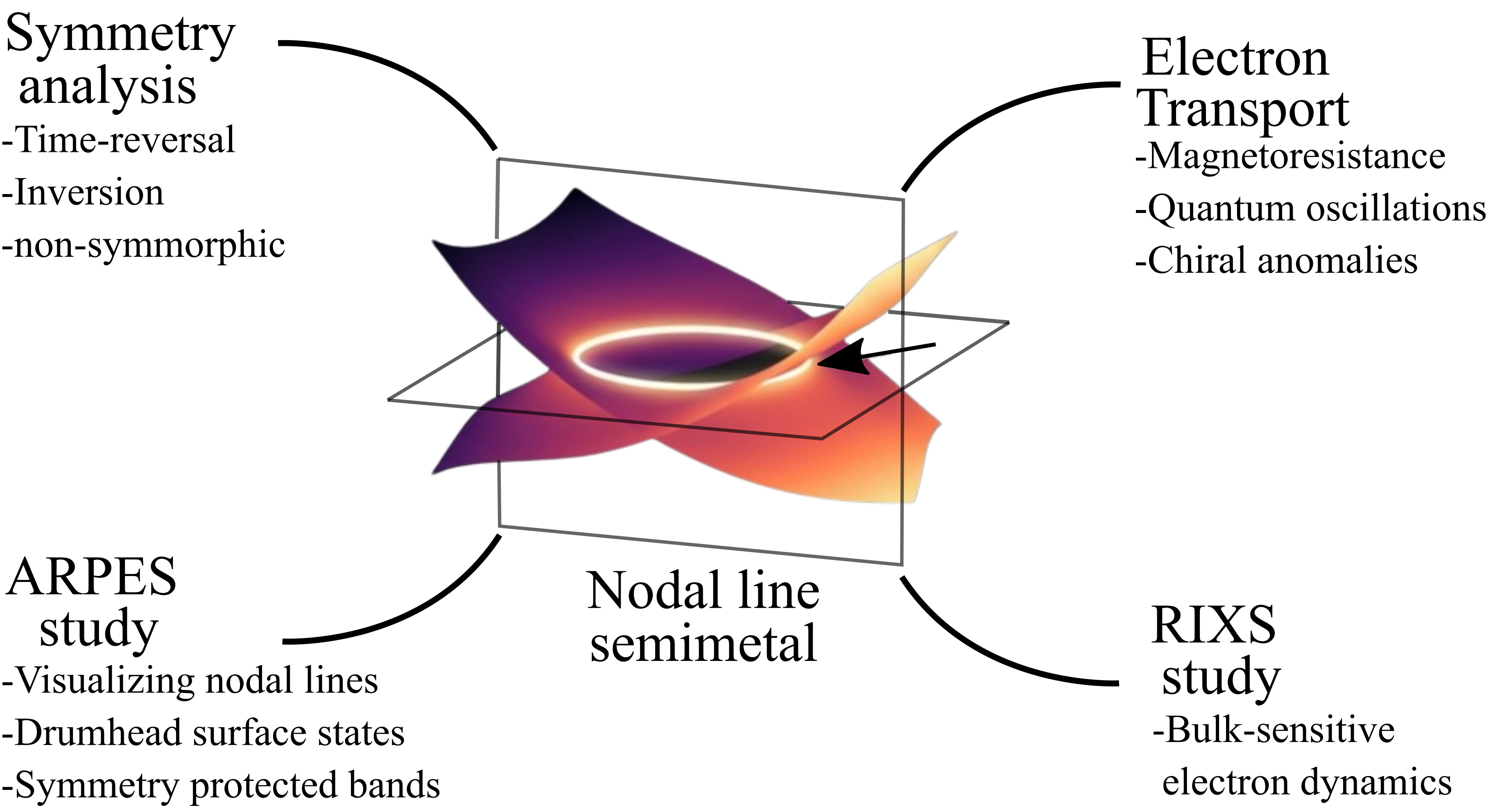
Figure 1: Schematic depiction of nodal-line semimetals, highlighting the role of symmetry protection, ARPES observation of nodal lines and drumhead surface states, transport signatures, and RIXS as a bulk-sensitive probe.
The paper provides a tightly categorized symmetry classification of nodal lines:
- Mirror-protected (type A)
- Inversion plus time-reversal (type B)
- Double-nodal lines in the presence of nonsymmorphic and spin-rotation symmetries (type C)
A key analytical model introduces a two-band Hamiltonian with tunable hopping parameters controlling the nodal structure, which is further classified by order (linear, quadratic, cubic) and type (I, II, or III, depending on the band slopes).
The topological invariant is constructed on a closed manifold encircling the nodal line, borrowing from approaches for insulators but adapted for the absence of a full gap. The presence and robustness of a nodal line can thus be encoded in Z or Z2 indices depending on the symmetry algebra.
Experimental Identification and ARPES Visualization
ARPES is crucial for direct momentum-resolved detection of NLSM band topology. The challenge is the three-dimensional tracing of band crossings rather than isolated point nodes. Systematic photon-energy-dependent and polarization-resolved ARPES, in conjunction with DFT, address surface-bulk discrimination, spin-orbit modifications, and matrix-element effects inherent to real materials.
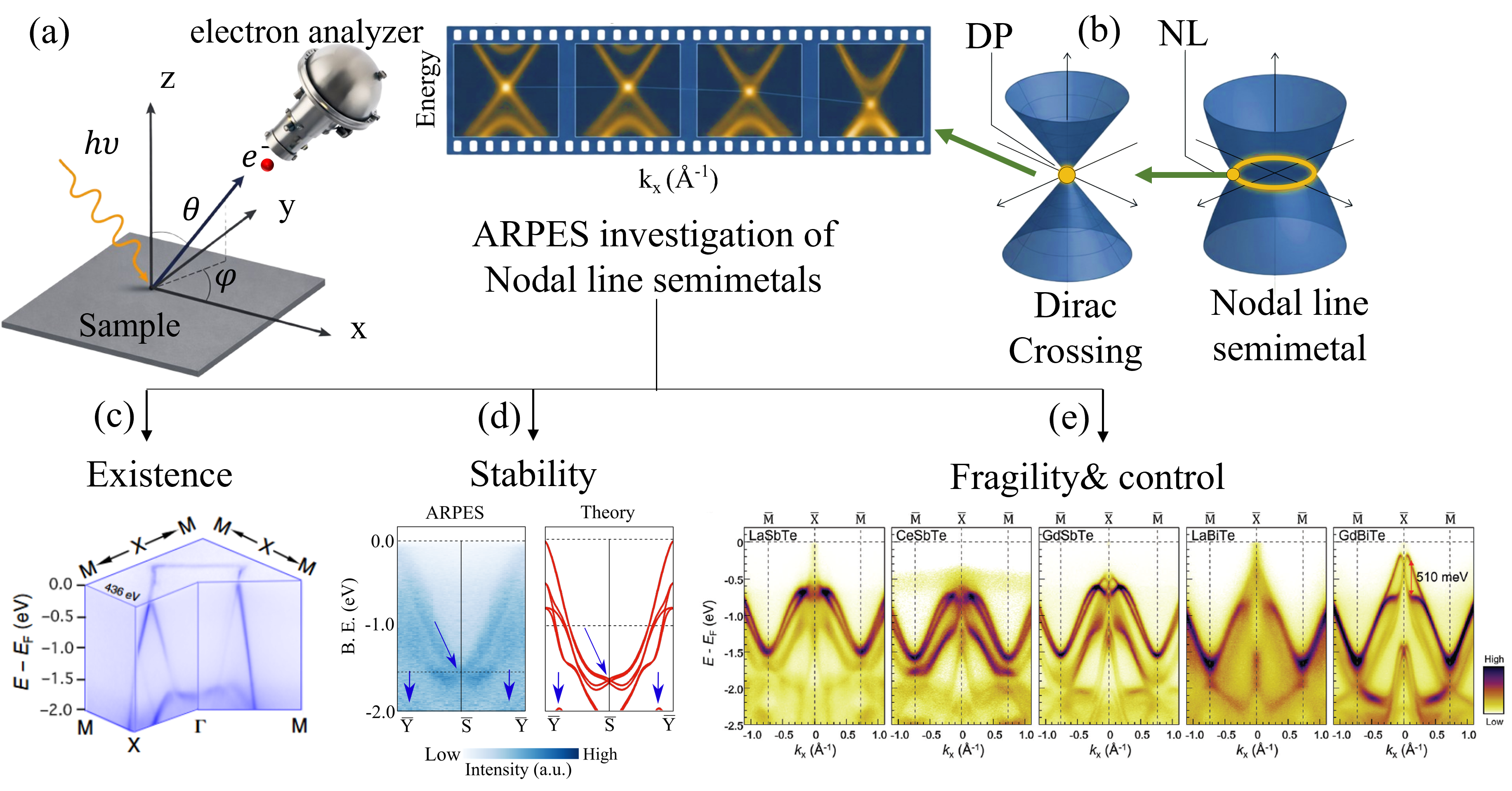
Figure 2: (a) ARPES setup schematic; (b) distinction between point (Dirac) and nodal-line crossings; (c) ab initio 3D nodal-ring; (d) ARPES-theory comparison for ZrAs2 validating symmetry-enforced crossings; (e) impact of spin-orbit coupling in R-Sb-Te systems.
The ZrSiX (X = S, Se, Te) family provides a textbook platform. ARPES maps reveal extended diamond-shaped contours and nearly perfect linearly dispersing crossings over several eV, with minimal SOC-induced gap in ZrSiS (∼10–20 meV), gradually increasing to ∼60 meV in ZrSiTe.
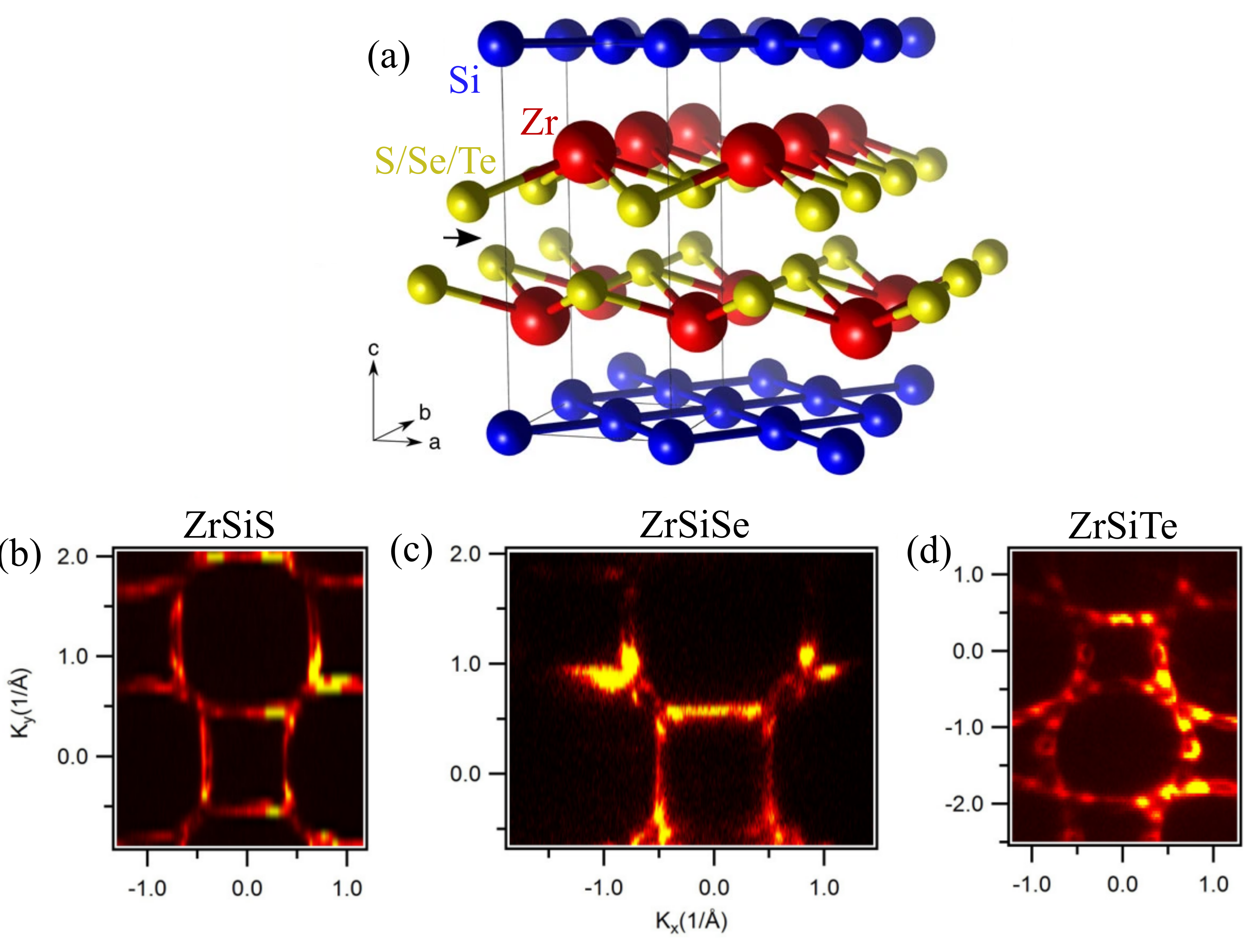
Figure 3: (a) ZrSiX crystal structure; (b–d) ARPES Fermi surfaces for ZrSiS, ZrSiSe, and ZrSiTe, highlighting the evolution of the nodal-line topology and the impact of SOC.
Nonsymmorphic-protected NLSMs such as ZrAs2 show multiple symmetry-enforced nodal lines, robust even against significant SOC (gap below 15–20 meV ARPES resolution). Photon-energy mapping confirms bulk versus surface character, while van Hove singularity–associated saddle points emerge and have been explicitly tied to surface-confined superconductivity.
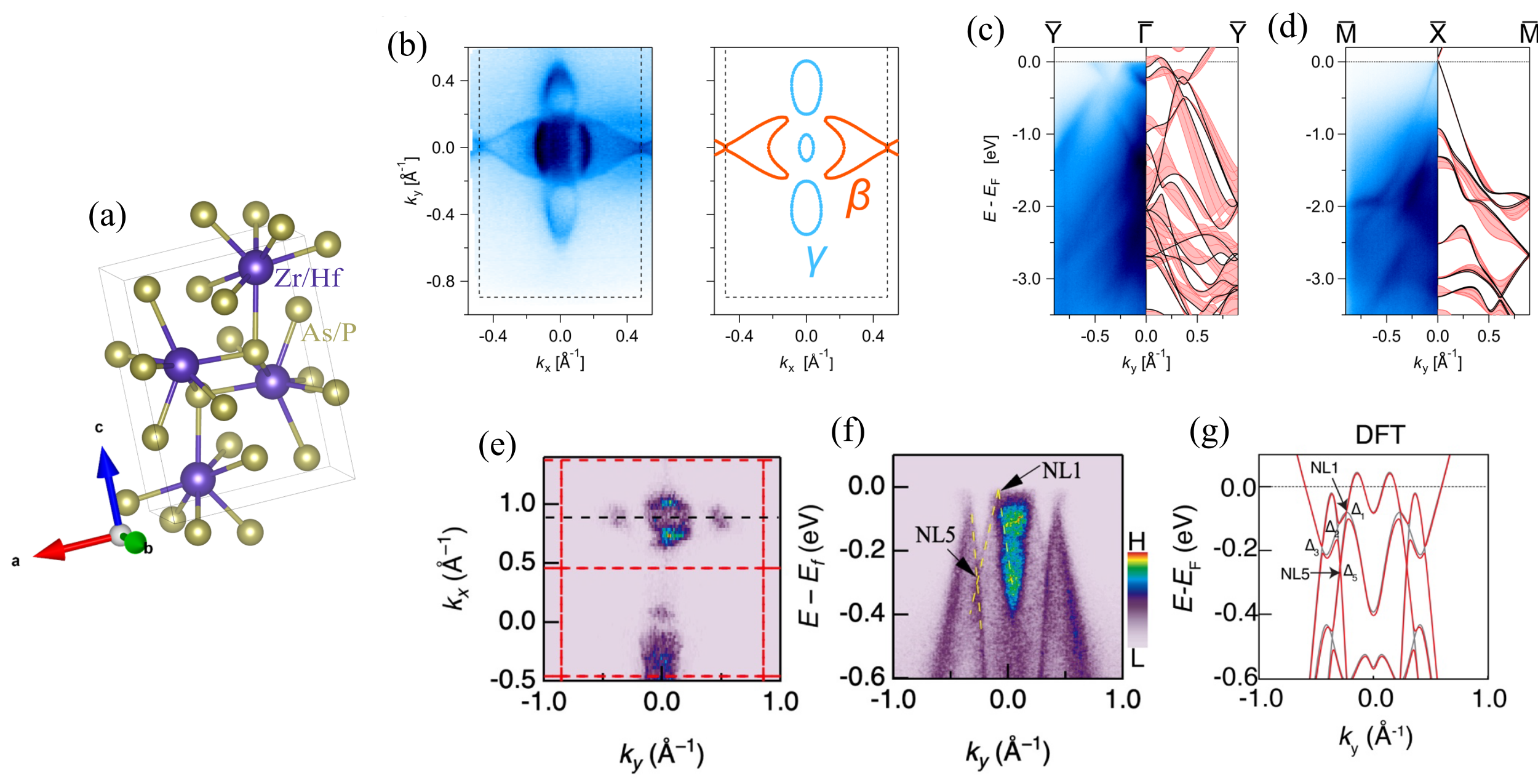
Figure 4: Comparison of nodal-line structure in ZrX2 (X = P, As): crystal architecture, ARPES Fermi surfaces, bulk dispersion, and surface–bulk correspondence.
Magnetic NLSMs and Topological Correlations
Magnetic order does not necessarily destroy nodal lines: the combined action of symmetries including magnetic space groups can stabilize nodes in magnetically ordered states, as evidenced in elemental Co (ferromagnetic) and YMn2Ge2 (antiferromagnetic) by ARPES. These materials demonstrate persistence of gapless or nearly gapless band crossings, with ARPES giving direct access to spin-polarized nodal lines.
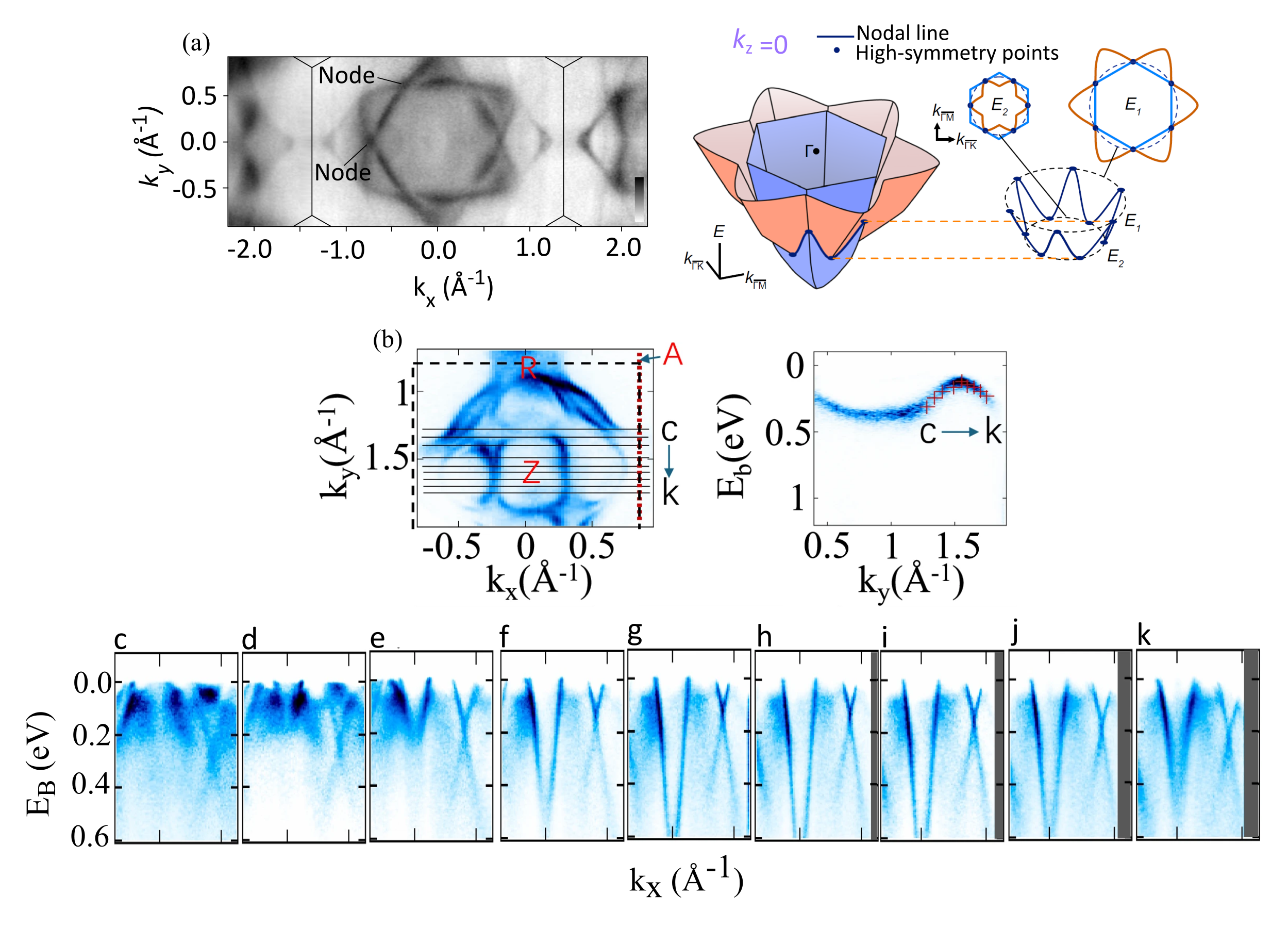
Figure 5: (a) Fermi-surface maps and schematic of magnetic nodal lines in elemental Co; (b–k) ARPES dispersions across YMn2GeZ20, revealing the topological evolution of band nodes in magnetic order.
Rare-earth antimonide tellurides (Z21SbTe) provide a systematic series where the interplay of 4Z22 magnetism, SOC, and chemical tuning can be precisely tracked. The nodal features remain intact across a series of antiferromagnetic transitions; SOC-induced gap opening—and thus the topological-to-trivial phase boundary—can be tuned through the rare-earth element.
Quantum Oscillations and Transport Phenomena
Macroscopic experimental signatures of nodal-line topology include quantum oscillations (Shubnikov–de Haas/dHvA), weak localization/antilocalization (WL/WAL), anomalous Hall/Nernst effects, and highly non-saturating magnetoresistance.
Berry phase quantization, extracted from the Landau fan diagrams of quantum oscillations, serves as a definitive indicator of the non-trivial topological nature of Fermi-surface orbits enclosing a nodal line (Z23 for loops, trivial for non-enclosing orbits).
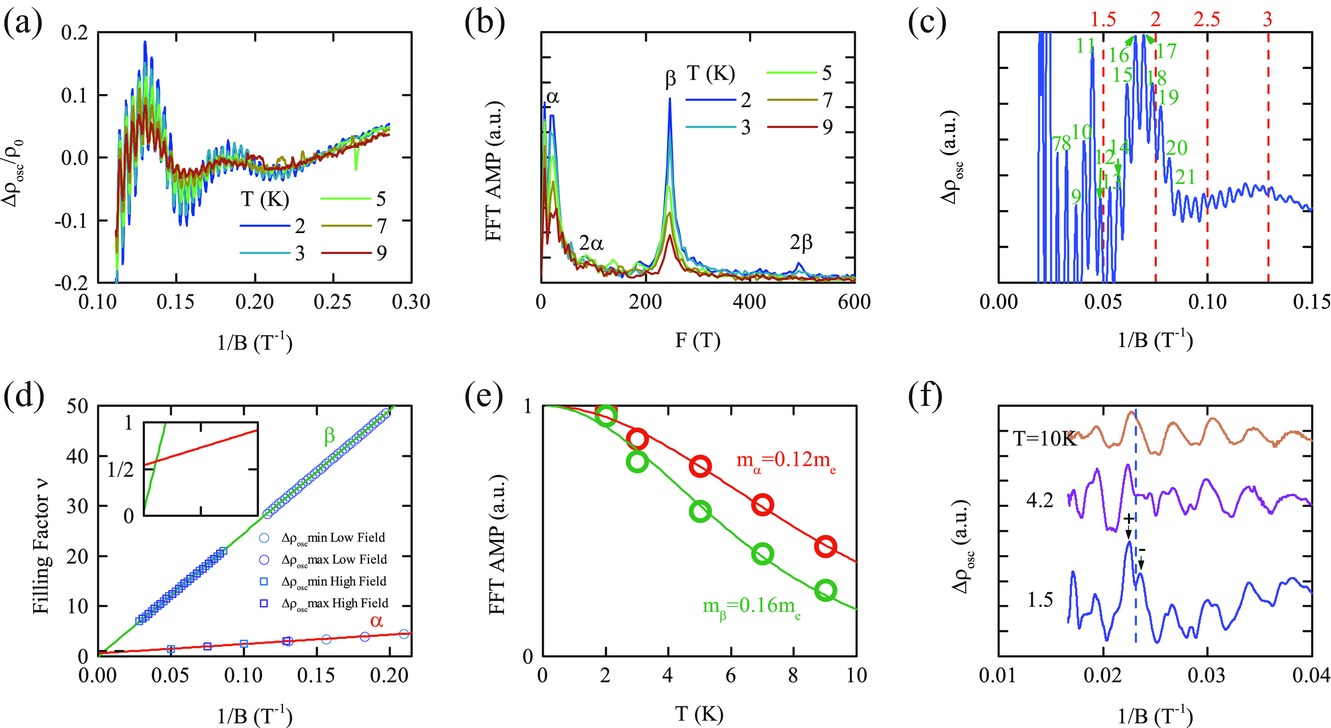
Figure 6: Quantum oscillation data and Berry phase analysis in ZrSiS; nontrivial phase extracted for orbits enclosing the nodal line.
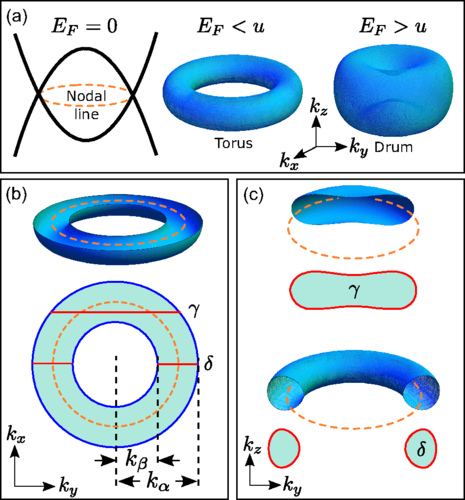
Figure 7: Geometry of the torus-shaped Fermi surface in NLSMs, showing both nodal and trivial cross-sectional planes and their influence on phase shifts in quantum oscillations.
Interaction effects, topological WAL, and dependence on disorder scale are further distinguished: SR disorder induces 3D quantum diffusion and WL, while LR disorder (expected in most NLSMs) yields strong WAL due to the Z24 Berry phase associated with poloidal backscattering on the Fermi torus.
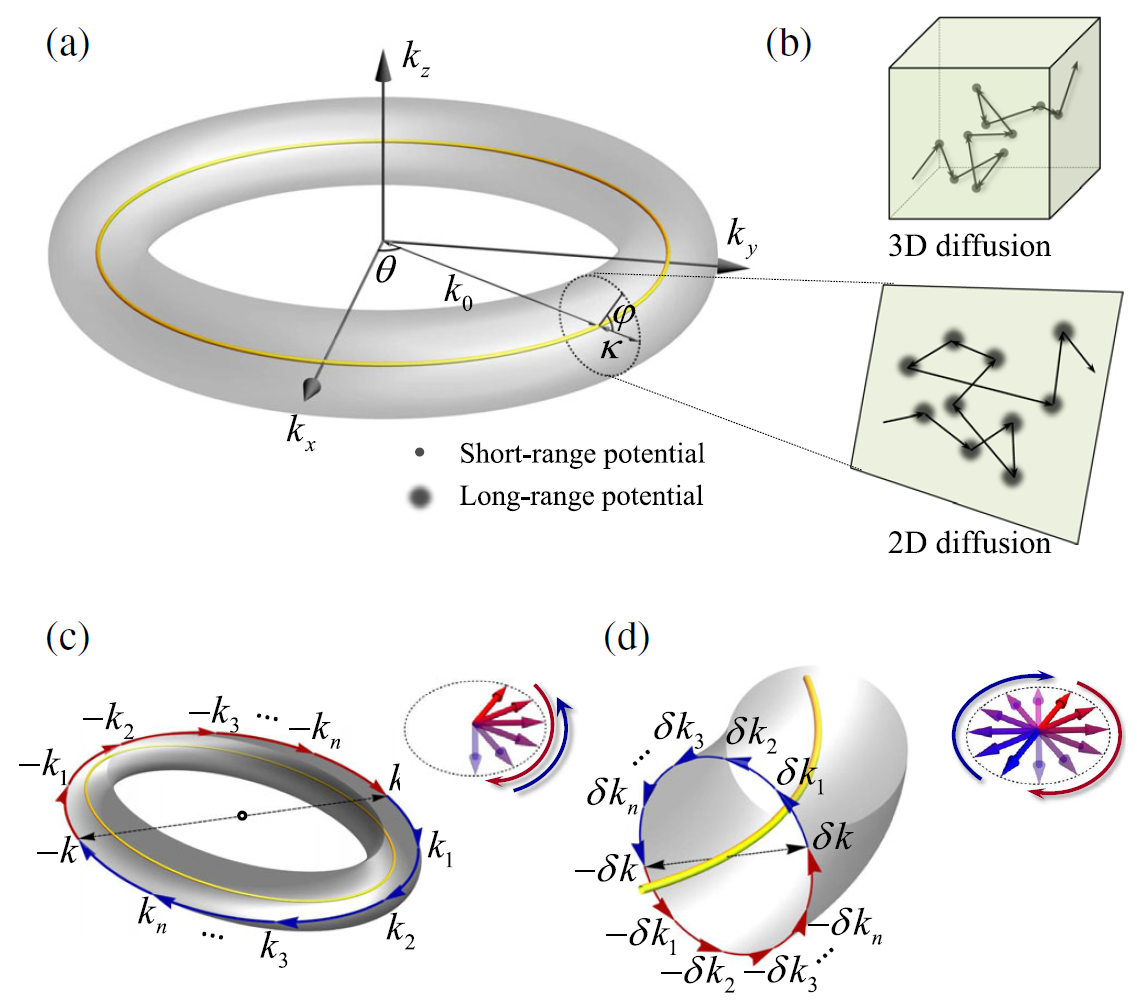
Figure 8: SR (c) and LR (d) scattering regimes; coherent backscattering and topological WAL in NLSMs due to spinor rotation around the Fermi torus.
Experimentally, WAL manifests as a sharp low-field peak in magnetoconductivity; its 2D nature and scaling validate the predicted topological interference effect for toroidal Fermi surfaces.
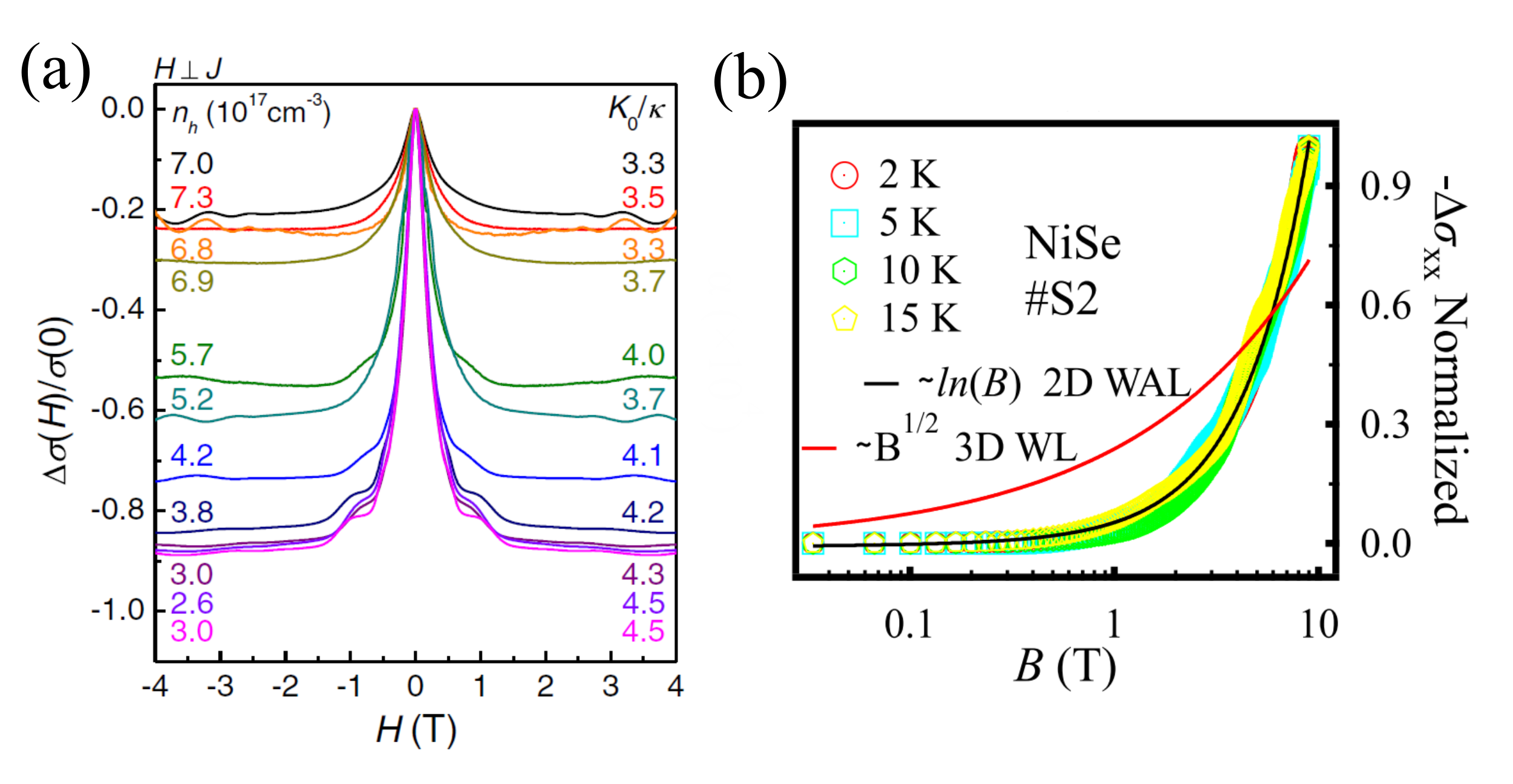
Figure 9: (a) Experimental WAL in SrAsZ25; (b) Comparison of 2D WAL and 3D WL fits in NiSe, signifying the role of disorder range and topology in quantum correction.
NLSMs regularly demonstrate extremely large, non-saturating magnetoresistance (MR), linear or quadratic depending on topological or compensation mechanisms, and sometimes highly anisotropic or butterfly-shaped MR consistent with theory and band calculations.
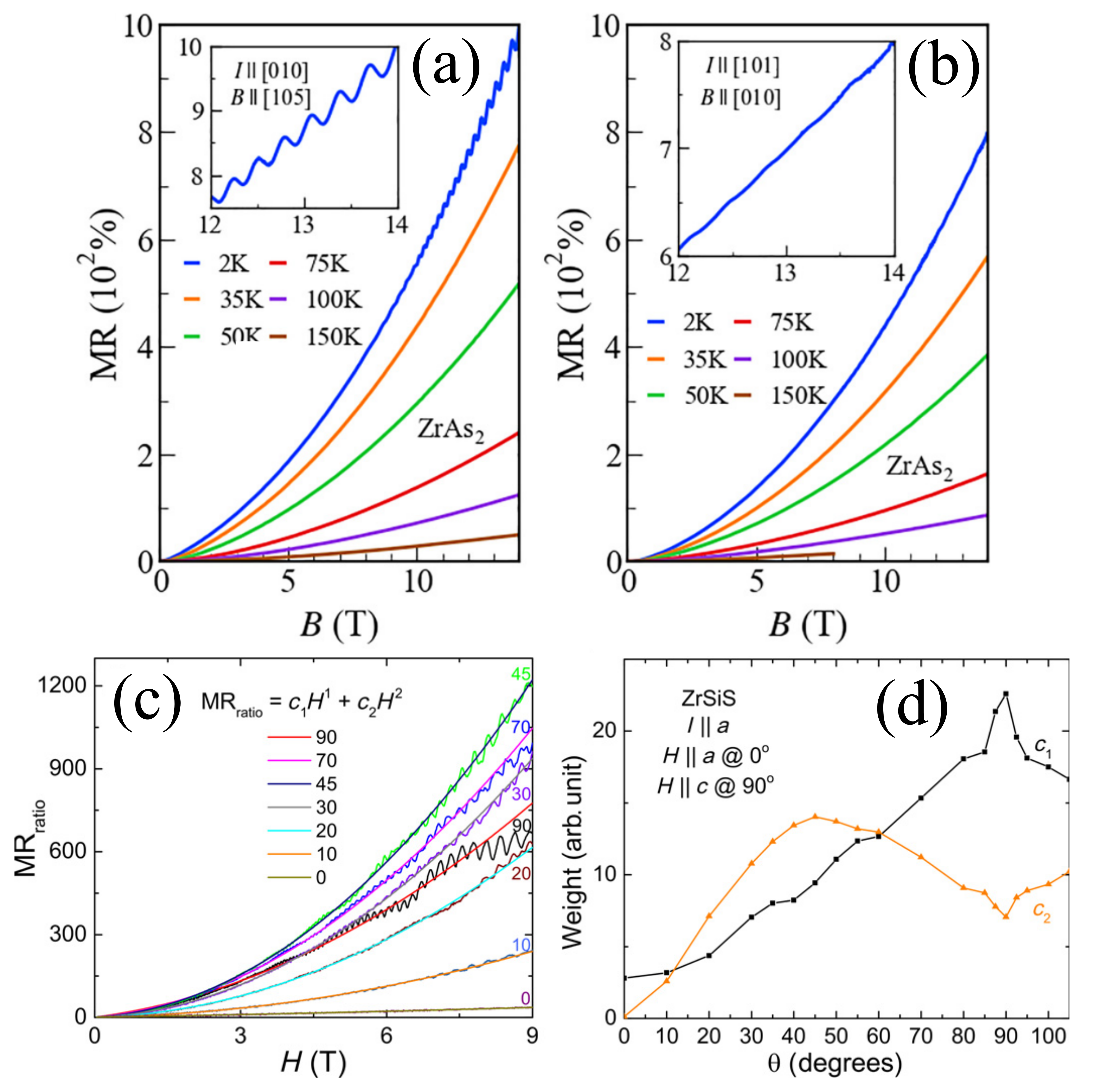
Figure 10: (a,b) Angle- and temperature-dependent non-saturating MR in ZrAsZ26; (c,d) Analysis of MR scaling in ZrSiS systems.
Anomalous Hall effect (AHE) arises intrinsically from Berry curvature near the nodal line, with several magnetic NLSMs (e.g., MnAlGe, FeZ27GeTeZ28) exhibiting Z29 values up to 20, attributed to Berry curvature accumulation at gapped nodal structures.
Chiral anomaly, traditionally associated with Weyl systems, also manifests in NLSMs via the observation of negative longitudinal magnetoresistance under parallel 21 and 22 fields. The effect has been observed in ZrSiS and ZrAs23, with quantitative transport fits to semiclassical anomaly models.
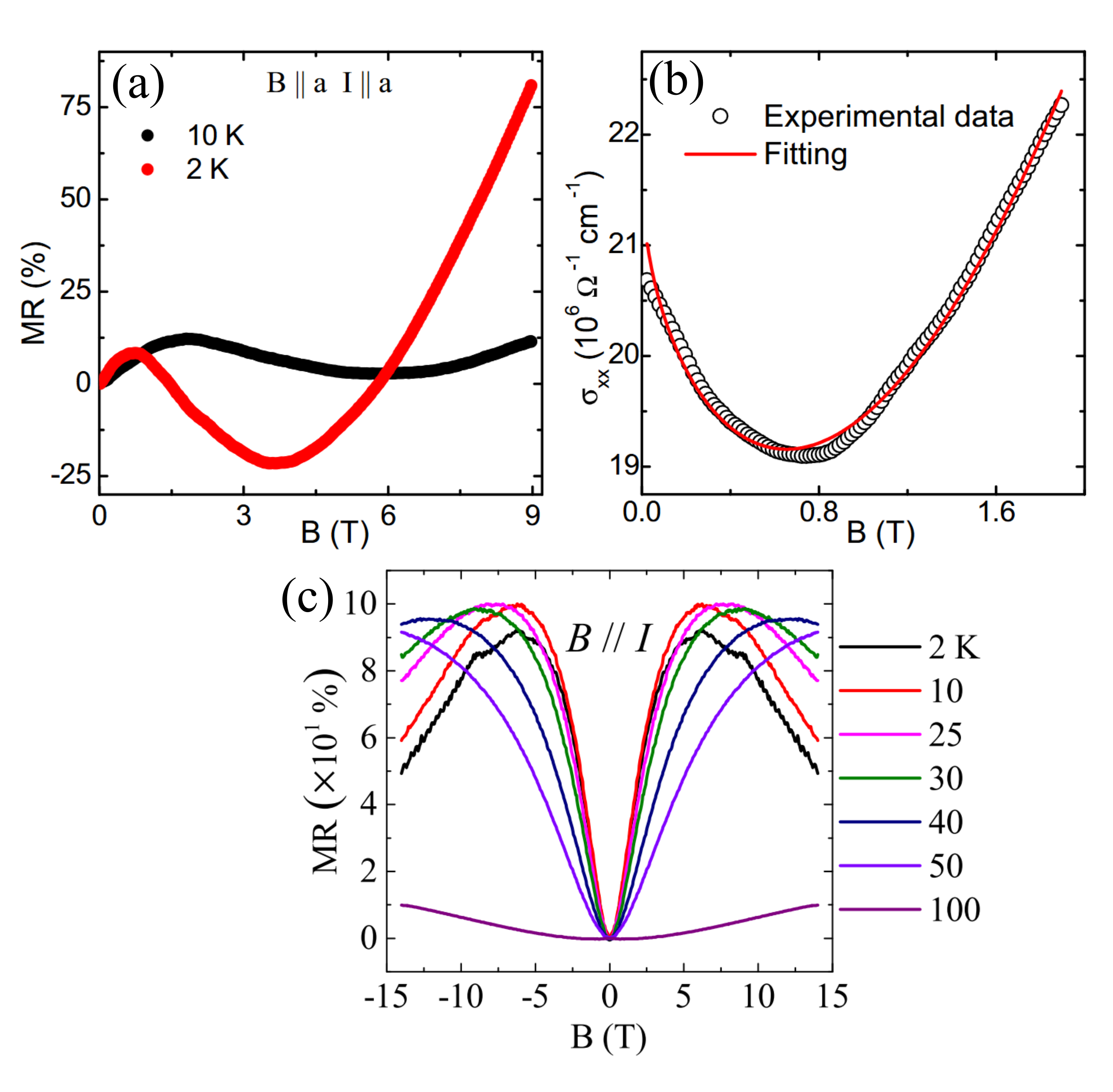
Figure 11: (a) Longitudinal MR in ZrSiS; (b) Chiral anomaly model fitting; (c) Chiral anomaly–associated NLMR in ZrAs24.
Bulk Probes: Resonant Inelastic X-ray Scattering and Topological Magnons
Beyond ARPES (surface-sensitive), resonant inelastic X-ray scattering (RIXS) offers momentum- and energy-resolved bulk probes for topological semimetals. RIXS detects dynamic signatures—particle-hole excitations, plasmons, collective modes—linked to nodal topology and symmetry constraints, with the possibility to reconstruct topological indices from symmetry-selective intensity patterns.
Detection of nodal-line topology has now extended to bosonic quasiparticles: magnon nodal lines, as in noncoplanar antiferromagnets (e.g., MnTe25), have been directly imaged with inelastic neutron and magneto-Raman scattering. These structures present pseudo-spin winding and can hybridize with phonons (magnon-polarons), producing pronounced effects in dynamical and thermal transport coefficients.
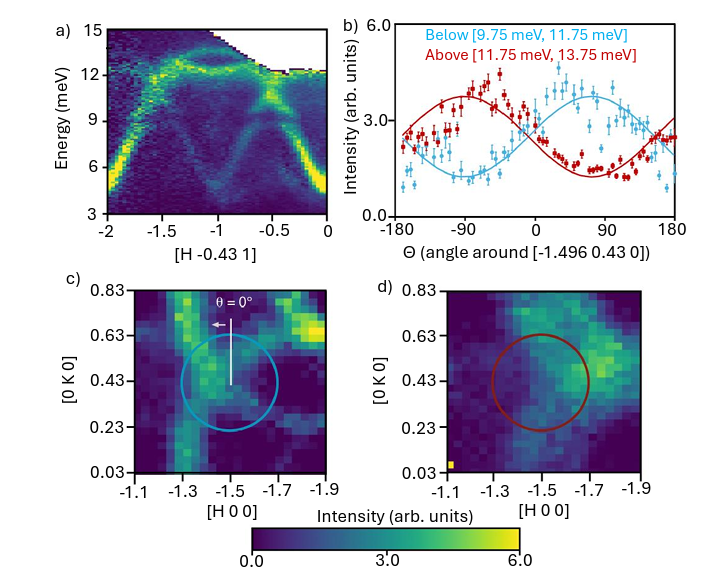
Figure 12: (a) Magnon dispersion intersecting nodal lines; (b) Bimodal angular dependence due to the topological band crossing; (c,d) 26-27 maps showing magnonic nodal loops in MnTe28.
Implications and Outlook
NLSMs expand the taxonomy of topological materials, providing platforms with tunable extended degeneracies amenable to symmetry engineering (e.g., via strain, chemical substitution, or magnetic order). The robust macroscopic transport anomalies, topological magneto-optical effects, and accessible surface states enable exploration of quantum anomaly physics and topological phase transitions in real materials. The high density of surface and bulk states at nodal energy can drive correlation instabilities, opening routes to unconventional superconductivity, intrinsic magnetism, or enhanced AHE and Nernst effects.
On the theoretical front, NLSMs motivate inquiry into topological invariants protected by complex symmetry algebras, the interplay of topology and magnetism/superconductivity, and the extension of topological constraints to bosonic excitations (magnons, phonons). The demonstration that both ARPES and RIXS can directly visualize bulk-protected nodal manifolds suggests new avenues for direct metrology of topological invariants and quantum geometry in solids.
Ongoing challenges include fully mapping the three-dimensional topology in strongly correlated or highly spin-orbit coupled systems, disentangling surface from bulk states in experiments, and elucidating the role of many-body effects. However, as experimental techniques such as RIXS, inelastic neutron scattering, and high-resolution ARPES evolve, the prospects for systematic topological material design and exploitation in next-generation electronics, spintronics, and quantum devices are significant.
Conclusion
This work consolidates the theoretical, spectroscopic, and macroscopic understanding of nodal-line semimetals, with comprehensive classification of symmetry protection mechanisms, systematic ARPES validation across material families, elucidation of emergent magnetotransport signatures, and the introduction of bulk spectroscopic detection methodologies. NLSMs lie at the confluence of crystalline symmetry, band topology, and collective quantum phenomena, and will continue to serve as versatile platforms for both fundamental study and technological development in topological condensed matter physics.
Reference:
"Nodal-Line Semimetals: Emerging Opportunities for Topological Electronics and Beyond" (2604.00596)