- The paper reveals a dramatic X-ray flux drop exceeding an order of magnitude, marking a transition from a high state to an X-ray weak state in SDSS J0005+2007.
- It employs extensive multi-mission X-ray monitoring and simultaneous optical/IR observations to distinguish between intrinsic coronal changes and variable absorption.
- The results imply that variable, clumpy disk winds likely modulate the X-ray emission without affecting the stable optical/UV continuum and BLR characteristics.
Extreme Long-Term X-ray Variability in the Quasar SDSS J000532.84+200717.4
Introduction
This work presents a comprehensive analysis of the extreme X-ray variability observed in the radio-quiet, type 1 quasar SDSS J000532.84+200717.4 (hereafter SDSS J0005+2007), classified as a Narrow-line Seyfert 1 (NLS1) at z=0.3814. The study is motivated by a pronounced transition in X-ray flux, from a nominal or typical state to a deep X-ray--weak phase, as measured across multiple epochs with XMM-Newton, Swift/XRT, EP-FXT, and ROSAT, complemented by contemporaneous optical spectroscopy and broad-band photometry. A key focus is distinguishing whether the extreme X-ray variability is driven by changes in the intrinsic corona of the quasar or absorption effects along the line of sight.
Observational Overview and Data Synthesis
Extensive XMM-Newton monitoring, supported by multi-mission archival data, identify two distinct X-ray flux regimes: a high state (H1–H5; prior to 2015) and a low state (L1–L9; 2015 onwards). Analysis reveals a decline in 0.2–10 keV X-ray flux exceeding an order of magnitude, with the source dropping into an X-ray--weak regime as defined by Δαox≲−0.3.
The long-term evolution is unambiguously illustrated in the representative XMM-Newton EPIC images, clearly differentiating epochs in which the source is robustly detected from those where it is marginal or undetected, reflecting the amplitude and persistence of variability.
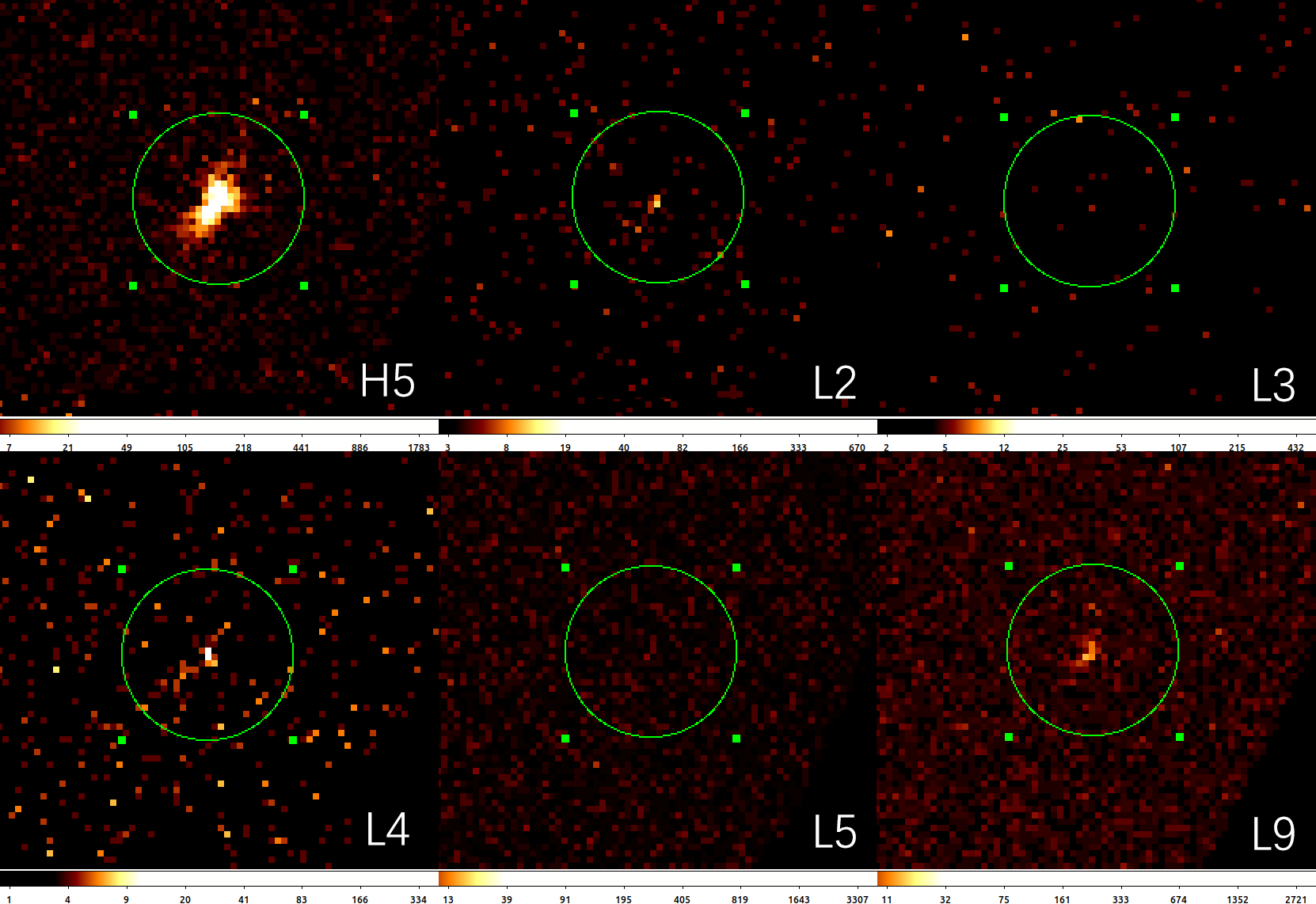
Figure 1: Representative XMM-Newton EPIC images at different flux states, depicting strong detection in the high state and weak or absent signal in several low states, evidencing extreme long-term X-ray variability.
The XMM-Newton EPIC-MOS light curve and auxiliary ROSAT, Swift, and EP-FXT constraints supply robust temporal sampling from 1991 through 2025, confirming persistent high flux over decades and the abrupt, enduring decline in the post-2015 low state. Inset rapid variability (on day timescales) during the low state suggests ongoing dynamical or line-of-sight changes within the central engine.
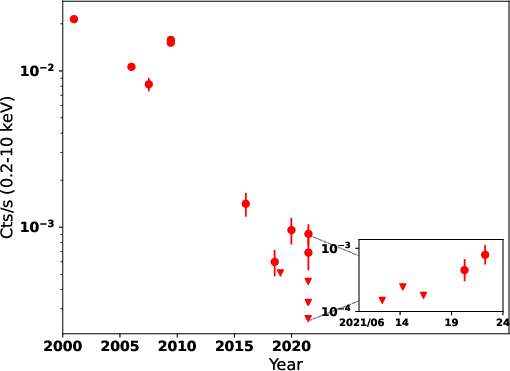
Figure 2: Light curve evidencing long-term decrease in count rate by more than an order of magnitude, with substantial short-term variations during low-flux epochs.
X-ray Spectral Characterization
High-state X-ray spectra are well-described by a soft power law (Γ=2.85–3.09) and a blackbody component, with the latter significantly improving fits. The transition to the low state, verified via stacked spectra, reveals not only severe flux suppression (order of magnitude weaker) but also spectral hardening (Γ∼1.45), inconsistent with a simple reduction of the high-state continuum and strongly suggestive of intervening absorption or intrinsic coronal modulation.
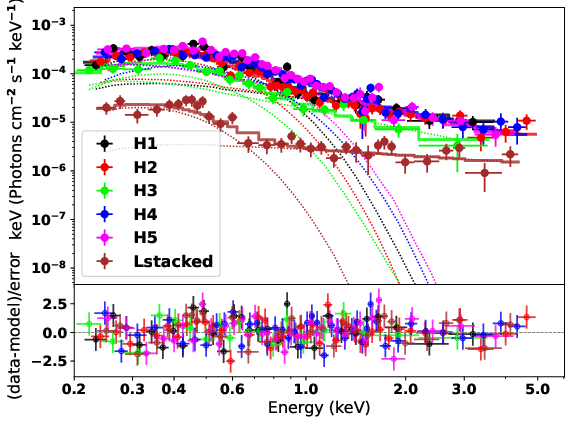
Figure 3: Unfolded XMM-Newton EPIC X-ray spectra and best-fit models across flux states, illustrating the clear change in spectral slope and normalization.
When an ionized partial-covering absorber model (zxipcf) is adopted—holding the high-state intrinsic continuum fixed—the low-state X-ray spectrum is acceptably fit with NH∼7×1022 cm−2, logξ∼2.3, and a covering fraction >0.7. However, parameter uncertainties remain sizable due to limited photon statistics.
Multi-Wavelength Variability and Correlation
Broad-band analysis combining X-ray, ultraviolet (Swift/UVOT UVW2), optical (CRTS, ZTF, Pan-STARRS, Gaia), and mid-infrared (WISE/NEOWISE) light curves enables assessment of emission region coupling. Despite the dramatic X-ray flux evolution, the optical and mid-infrared bands are stable over years to decades, with only mild ultraviolet changes (∼0.3 mag), which broadly track but do not mirror the X-ray variability. Optical/NIR spectroscopic diagnostics spanning a decade confirm stable continuum and line properties, with no significant change to broad emission-line profiles or luminosity.
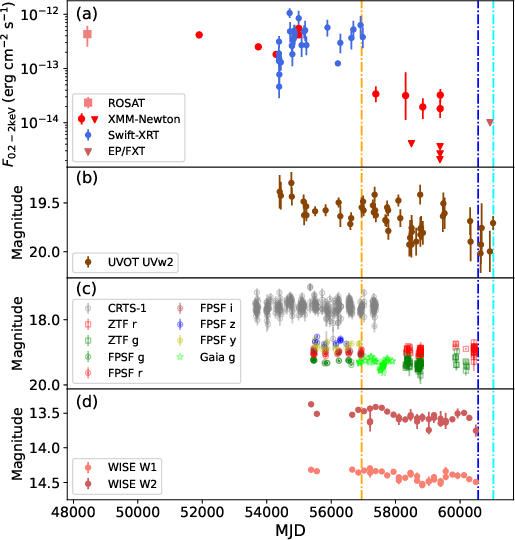
Figure 4: Multi-wavelength light curves from X-ray to IR, showing extreme X-ray variability contrasted with the remarkable stability of optical and mid-IR emission.
The invariance of the broad emission lines and optical SED demonstrates the persistence of the underlying accretion disk and associated broad-line region (BLR) photoionizing flux, strongly arguing against a global accretion state change.
Optical Spectroscopic Stability
Multi-epoch, flux-calibrated optical spectra reinforce the lack of significant secular changes in the BLR or narrow emission features, while single-epoch virial black hole mass and Eddington ratio estimates (MBH∼8×10⁷M⊙, λEdd∼0.24) place SDSS J0005+2007 securely among luminous NLS1 systems. The rest-frame equivalent widths of Mg II are systematically lower than in typical quasars, consistent with characteristics of weak-line quasars (WLQs), but not definitively classifying the source as such in the absence of UV data.
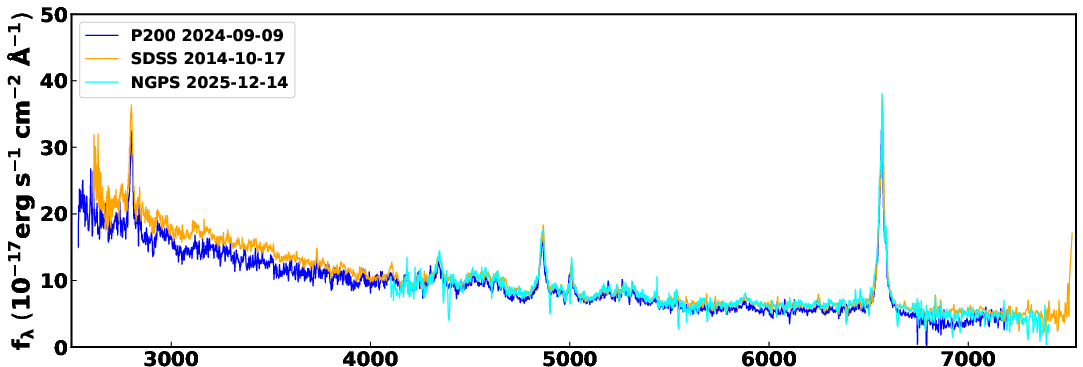
Figure 5: Optical spectra across three epochs, evidencing negligible changes in continuum shape and broad emission-line profiles.
Broadband SED Evolution and X-ray Weakness
Spectral energy distributions (SEDs) constructed for the X-ray high and low states, and compared to the mean radio-quiet quasar SED template normalized to the same Δαox≲−0.30 flux, show that while the IR–UV SED remains stable, the X-ray emission is strongly suppressed in the low state. This produces a migration in the location of SDSS J0005+2007 in the Δαox≲−0.31–Δαox≲−0.32 plane from the locus of typical type 1 QSOs (Δαox≲−0.33) in the high state to values Δαox≲−0.34 in the low state—a shift corresponding to an X-ray weakness factor Δαox≲−0.35. The deepest low state yields Δαox≲−0.36.
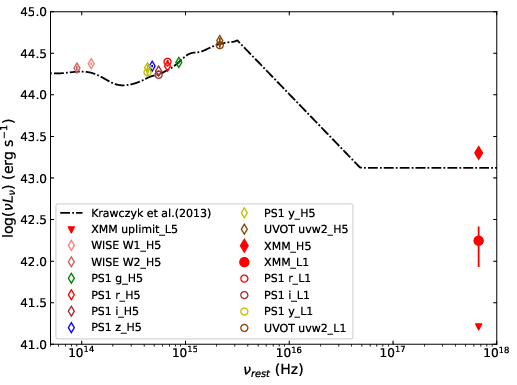
Figure 6: IR-to-X-ray SEDs in X-ray high and low states, compared with a typical radio-quiet quasar; only the X-ray component shows dramatic change.
Interpretation and Physical Constraints
The data robustly exclude a TDE scenario (persistent X-ray emission over Δαox≲−0.3720 years, unchanged optical line profiles, and a BH mass near the Hills limit). The pronounced wavelength-dependent variability, maintenance of BLR properties, and SED shape during the low state require that the accretion disk structure and global photoionizing luminosity are largely intact. Thus, the dramatic X-ray changes must originate in the compact corona or, more plausibly, reflect variable absorption local to the nucleus.
The observed spectral hardening in the low state is naturally explained by time-variable, ionized, partial-covering absorption (e.g., clumpy inner disk winds, as invoked in WLQs and some NLS1s). Residual short-term X-ray variability during the low state further supports the presence of rapid changes in absorber covering fraction or column. The observed timescales are consistent with absorber clumps transiting the unresolved X-ray source at sub-parsec radii.
Context with X-ray–Weak AGN Populations
The flux evolution and SED changes in SDSS J0005+2007 are fully consistent with those observed in classical X-ray–weak quasars such as PHL 1811 and PHL 1092, as well as several recently reported objects showing transient X-ray weakness (e.g., SDSS J1539+3954, SDSS J1350+2618, SDSS J1521+5202, see Figure 7). The identification of a transition from a normal to an X-ray–weak state in SDSS J0005+2007 provides compelling evidence that extreme X-ray weakness can manifest as a transient phase in otherwise typical quasars, rather than requiring fundamentally distinct population properties.
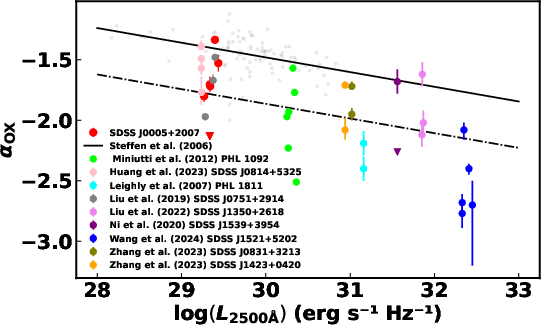
Figure 7: X-ray-to-optical slope (Δαox≲−0.38) vs. Δαox≲−0.39; SDSS~J0005+2007 tracks from the locus of normal AGN into the extreme X-ray–weak regime.
Implications and Future Prospects
This analysis constrains the origin of dramatic X-ray variability in AGN, supporting models where variable inner-disk winds—possibly radiatively driven and highly clumpy—modulate the observed X-ray emission without affecting the optical/UV continuum or BLR photoionization. Such structures could be generically present in luminous NLS1s and related high-Eddington sources. The ability to robustly distinguish between variable absorption and intrinsic coronal state changes remains limited by photon statistics and spectral coverage in the low state; next-generation X-ray time-domain missions will provide more stringent tests. Continued monitoring will allow constraints on recurrence times and correlations between absorption events and any emergent outflow or wind features in the rest-frame UV.
Conclusion
SDSS J0005+2007 exhibits extreme, persistent X-ray suppression by factors up to Γ=2.850, while retaining normal accretion disk and BLR characteristics. The evidence supports a scenario in which variable, largely dust-free, clumpy gas internal to or coincident with the BLR (e.g., disk winds) modulates the nuclear X-ray flux. The results imply that extreme X-ray weakness can be a transient, not necessarily permanent, property of otherwise typical quasars, and underscore the need for coordinated, high-cadence X-ray and multi-wavelength campaigns to resolve the dynamics of AGN central engines and their interplay with winds and circumnuclear media.
Reference: "X-ray variability of SDSS J000532.84+200717.4: from a normal state to an X-weak state" (2604.00476)