- The paper introduces an extended observer that decouples cavity detuning, forward drive, and receiver drifts, enabling targeted fault diagnostics.
- The paper employs baseband modeling and adaptive integration to accurately estimate phase perturbations and ensure robust field regulation.
- The paper validates its approach using Monte Carlo simulations, demonstrating improved fault attribution and enhanced operational resilience.
Extended State Observer for Localized Fault Awareness in RF Accelerating Structures
Introduction and Motivation
Stability and precise control of RF fields in particle accelerators are essential for energy transfer efficiency, beam quality, and overall system reliability. Modern facilities, such as LANSCE, operate under diverse conditions and face operational challenges arising from time-varying beam loading, thermal-induced detuning, and component-induced phase drifts. While conventional digital LLRF systems can stabilize amplitude and phase using PI feedback and advanced FPGA-based architectures, their observers typically do not differentiate between physical sources of disturbance. All such effects—be it from cavity detuning, forward or receiver chain drifts—are lumped into an aggregate disturbance vector. This lack of interpretability hinders effective fault diagnostics, rapid troubleshooting, and proactive maintenance.
This work introduces a rigorous observer framework that augments the traditional cavity field observer with states to estimate the evolution of cavity detuning, forward drive, and receiver chain phase drifts. By disentangling these contributions, the framework enables robust regulation and reliable localization of emerging faults.
Baseband Cavity Modeling and Disturbance Channels
The cavity system is modeled in the complex baseband envelope representation, which is standard in vector control for RF systems. The observer is designed to function within a sampled-data environment, representative of actual FPGA-based digital LLRF platforms. The state-space consists of the real and imaginary parts of the cavity field, driven by a control input that is subject to a forward-chain phase drift, and observed through a receiver-chain that can introduce additional rotational phase errors. Detuning, modeled as an offset from the nominal resonance frequency, dynamically alters system response depending on mechanical and thermal mechanisms.
The model structure is summarized as follows:
- Forward Drift: A phase rotation accumulated between the LLRF FPGA output and the cavity input, captured as an evolving state.
- Detuning: Local resonance shifts induced primarily by thermal, Lorentz, and microphonic mechanisms, estimated from steady-state discrepancies in reflected and forward signals.
- Receiver Drift: Downstream rotation from analog receiver chain variability, modeled as a state acting on the observation path.
These subsystems, when properly estimated, allow for a fine-grained decomposition of measured amplitude and phase errors into their root causes.
Extended Observer Architecture
The observer architecture differentiates itself from standard ESOs by explicitly modeling the phase drift in the forward and receiver chains, as well as the cavity detuning, each with tailored estimation strategies:
- Forward Drift Observer: Uses the known generator output and the measured pre-cavity signal to estimate aggregate forward-chain drift through a low-pass adaptive integrator.
- Detuning Observer: Utilizes reflected and forward wave measurements, applying a gradient-based integrator to minimize innovation energy and identify detuning in real time.
- Receiver Drift Observer: Infers slow-phased rotation between the predicted cavity state and post-digitization receiver output, again via adaptive integration, allowing the regulation to realign feedback with the true cavity field while separating receiver artifacts.
- Residual Disturbance: Remains as a catch-all for unmodeled dynamics after explicit estimation of the aforementioned terms.
The full observer operates in closed loop with the LLRF system, updating parameter estimates at each feedback interval.
Control Synthesis: Feedforward and Feedback
Regulation is enforced through a combination of adaptive feedforward and LQR-based feedback:
- Feedforward: Adjusts the drive command using the most current observer states to achieve target field values in one step, accounting for all identified drifts and detuning.
- Feedback: Corrects remaining tracking errors using an adaptive gain generated from online linearization of the baseband state-space matrices.
This dual-mode strategy ensures robust tracking under stochastic disturbances.
Monte Carlo Evaluation: Regulation and Fault Identification
A comprehensive Monte Carlo analysis was performed with 10,000 realizations per observer architecture to statistically assess both regulation precision and disturbance localization. Each realization includes randomized, realistic profiles for detuning, forward and receiver chain drifts, and baseband disturbances, with Gaussian noise applied throughout all measured channels.
- Regulation Performance: Both the proposed and standard observers achieve low amplitude and phase error rates. However, the proposed architecture demonstrates improved phase margin control, especially in scenarios with significant receiver drift, due to its ability to separate and negate receiver-induced errors.
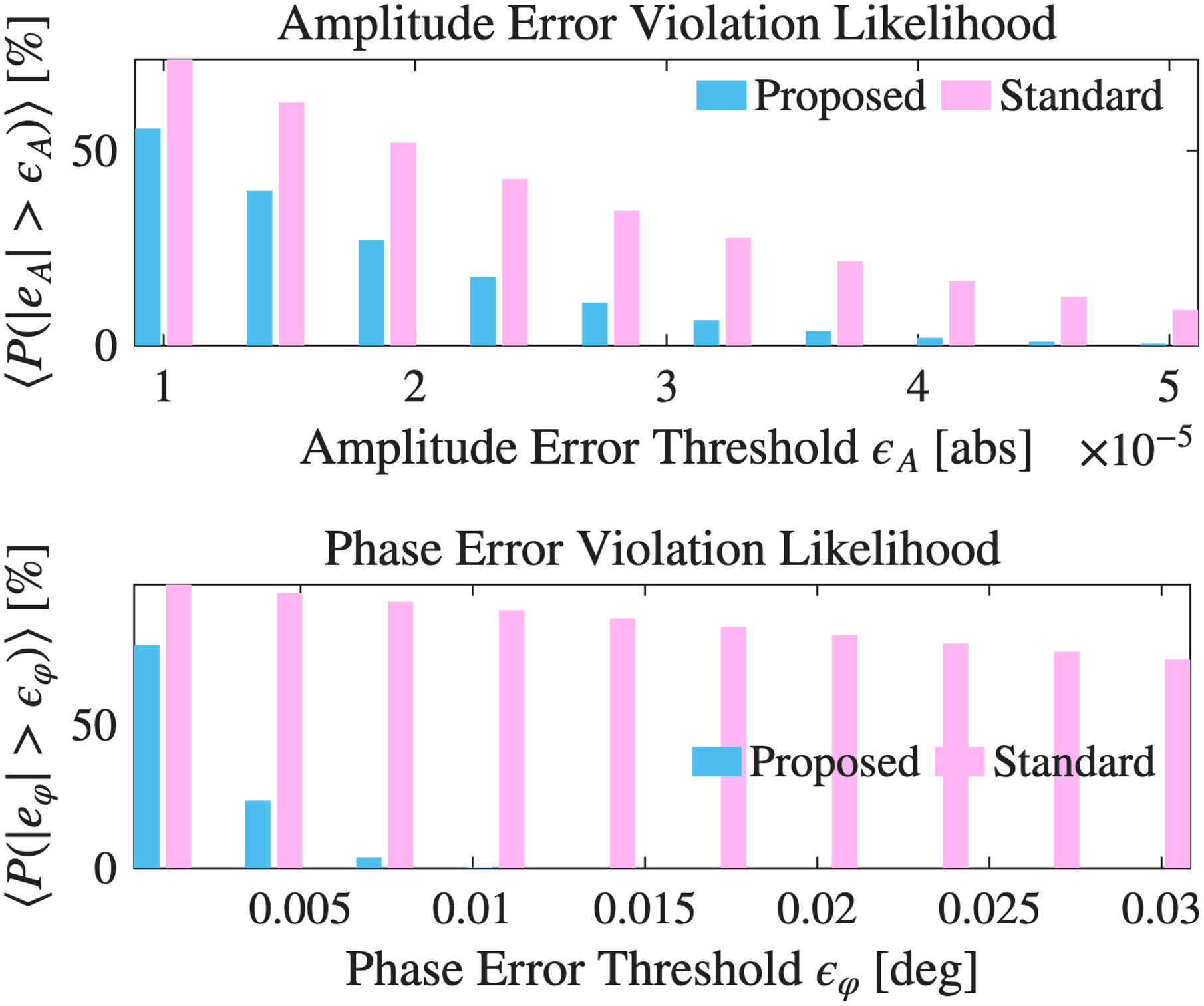
Figure 1: Likelihood that the average amplitude and phase regulation errors over time exceed the thresholds specified.
- Fault Localization: The core advancement is observed in the reliability of fault attribution. The proposed observer exhibits a significantly lower likelihood of false localization—i.e., misattribution of disturbance to the wrong subsystem. As extraction mechanisms are physically grounded within the observer state update, the separation between sources is maintained even under strong noise and correlated drift signals. In contrast, the standard observer that lumps all disturbances together shows substantially higher rates of confusion between detuning, forward-chain, and receiver-chain disturbances.
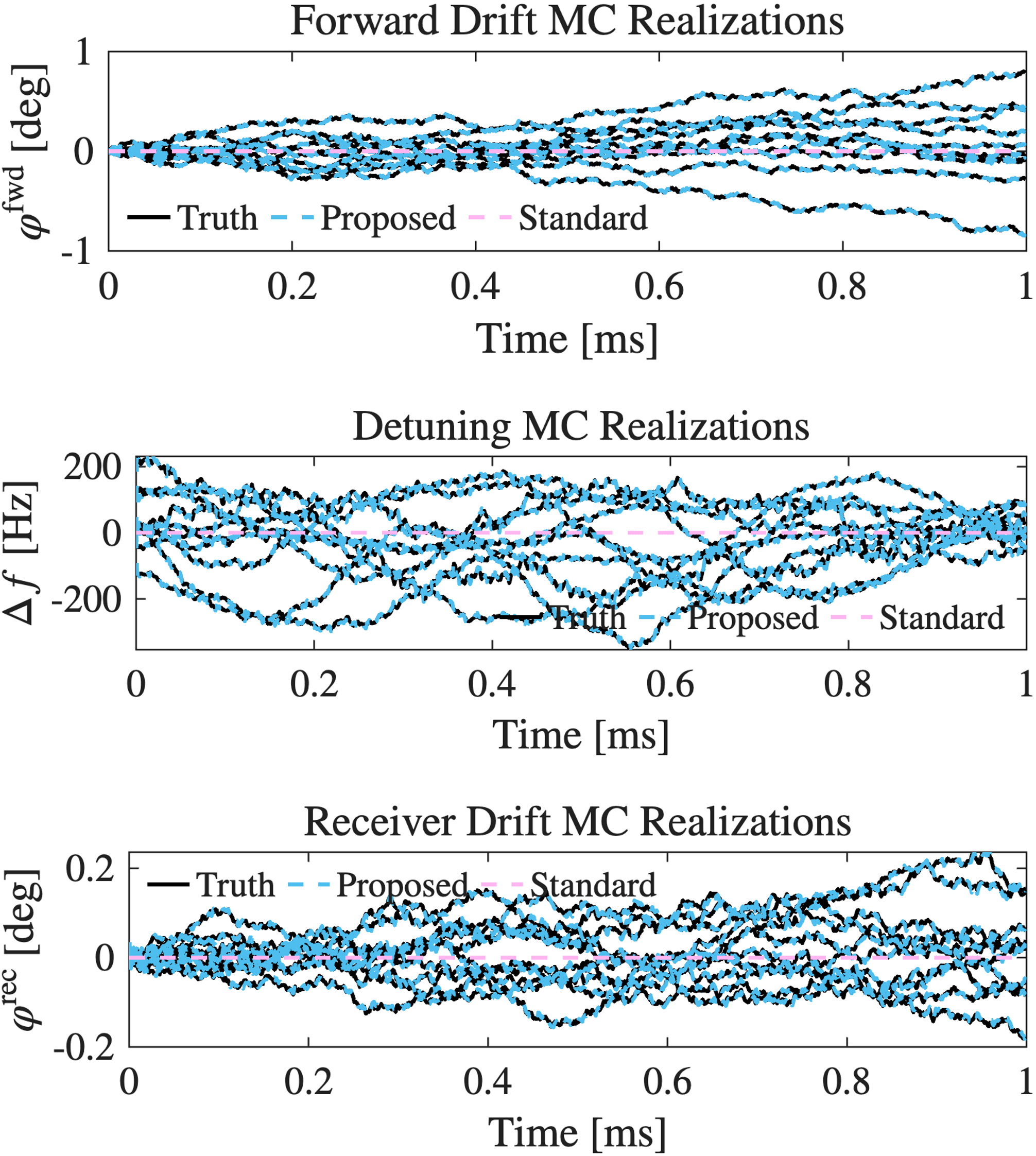
Figure 2: Representative MC realizations of true and estimated forward-path phase drift, detuning, and receiver-path phase drift for the proposed and standard observers.
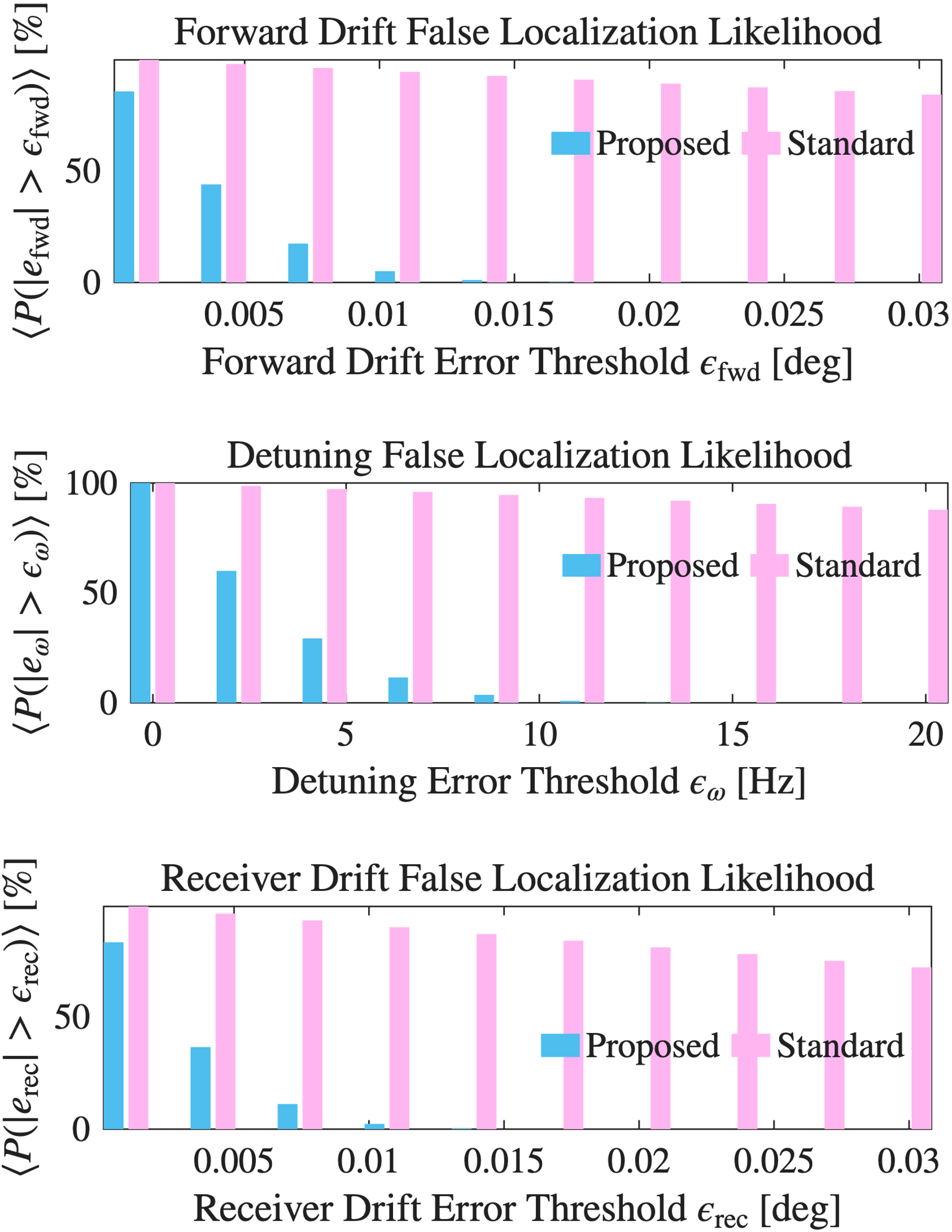
Figure 3: Likelihood that the average error over time between the true and estimated disturbances exceeds the specified thresholds.
Implications and Future Directions
Explicit disturbance channel identification delivers substantial operational benefits for large-scale linac-based accelerator facilities. Accurate separation of fault mechanisms enables targeted maintenance, reduces mean time to failure recovery, and supports the development of automated supervisory control and machine protection protocols. The interpretability also provides a direct path toward integrating higher-level diagnostic logic, further supporting commissioning and operation at high beam intensities.
From a theoretical perspective, the proposed framework underscores the value of observer augmentation with measurement-based, physically interpretable states, especially in domains where multiple subsystems induce overlapping signatures in control-relevant measurements. Rigorous stability analysis of these observers in the presence of compound nonlinearity and drift remains a pertinent direction. Future developments may integrate mechanical detuning models, adaptive gain scheduling, or extend the observer design to address non-Gaussian and temporally inconsistent noise characteristics.
There is a clear trajectory for experimental deployment within operational RF stations, where the observer dynamics can be further tuned using real-world hardware data. The framework is also compatible with the continuing trend toward FPGA-based, model-aware digital LLRF systems, and can be integrated into machine learning pipelines for predictive maintenance and anomaly detection.
Conclusion
The presented observer framework for localized fault awareness in RF accelerating structures addresses the key limitation of standard field observers by explicitly modeling and estimating forward drive drift, receiver chain drift, and detuning within the baseband representation. Monte Carlo analysis confirms that this approach achieves regulation performance on par with conventional methods while providing exponentially improved reliability in fault localization. The resulting diagnostic interpretability is directly applicable to improving lifecycle management and operational resilience for large-scale accelerator RF systems. The methodology lays a foundation for the development and integration of next-generation, model-aware, and self-diagnosing RF control architectures.