- The paper reexamines Subaru HSC data and demonstrates that previously claimed microlensing events are variable stars, not planetary-mass PBHs.
- It employs a revised DIA pipeline with Gaia DR3 and PS1 catalogs to ensure high-precision photometry in crowded M31 fields.
- The findings underscore that RR Lyrae and other variable stars dominate the candidate list, reinforcing strict limits on compact dark matter candidates.
No Planetary-mass Primordial Black Holes toward the Andromeda Galaxy: A Critical Reanalysis
Introduction
The recent analysis of microlensing events toward the Andromeda Galaxy (M31) serves as a critical testing ground for the hypothesis that planetary-mass primordial black holes (PBHs) constitute a significant fraction of dark matter. This essay reviews the work "Eppur non si trovano Vol. 2: No Planetary-mass Primordial Black Holes toward the Andromeda Galaxy" (2604.00111), which presents a comprehensive reanalysis of Subaru Hyper Suprime-Cam (HSC) high-cadence photometric data previously leveraged to claim evidence for a substantial population of planetary-mass PBHs.
Background and Problem Statement
Sugiyama et al. (2026) conducted a search for short-timescale (duration < 1 day) gravitational microlensing events using Subaru HSC data toward M31, identifying twelve candidate events. These detections were interpreted as evidence for a large population of PBHs with masses in the range 10−7–10−6M⊙, potentially accounting for up to 80% of the dark matter. However, these results are at odds with the null results of prior microlensing surveys toward the Magellanic Clouds, including the OGLE and EROS experiments, which set much stricter upper bounds on PBH abundance.
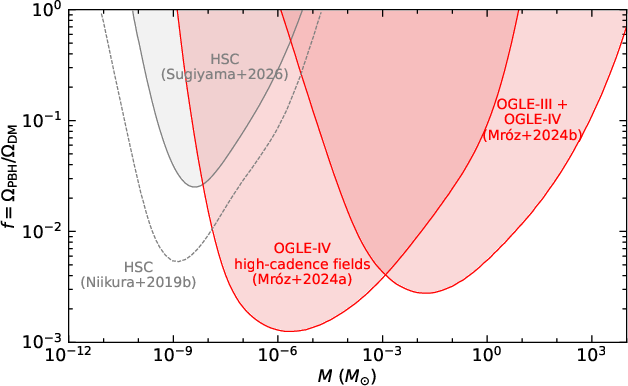
Figure 1: The most stringent 95% upper limits from gravitational microlensing studies on the fraction of dark matter in the form of PBHs and other compact objects; the solid and dashed curves show the results of recent Subaru analyses compared to those from OGLE.
Furthermore, the derived event rates, spatial clustering, and impact parameter statistics reported by Sugiyama et al. conflict with theoretical expectations for genuine microlensing events originating from a dark matter halo population.
Data Reprocessing and Methodological Advances
Mroz and Udalski (2604.00111) retrieved the identical set of Subaru HSC observations as Sugiyama et al., including data from 2014, 2017, and 2020, covering multiple nights (see Table 1 in the original text for the observational breakdown). The reanalysis pipeline, adapted from the OGLE DIA framework with tailored parameter choices for HSC image characteristics, facilitated high-precision photometry in the crowded fields of M31. Rigorous astrometric and photometric calibration employed Gaia DR3 and PS1 Stack Object catalogs to ensure accuracy in both coordinates and zero points.
Results: All Candidates Are Variable Stars
Comprehensive examination of the twelve microlensing candidates yielded light curves spanning all available nights, not merely the event discovery intervals. The temporal evolution reveals strong evidence against their microlensing interpretation:
- Asymmetric Light Curves: Most candidates exhibit rapid rise and slow decline profiles, inconsistent with symmetric single-lens microlensing.
- Variability Across Nights: Many objects demonstrated detectable flux variability well outside the event night, strongly indicative of intrinsic stellar variability.
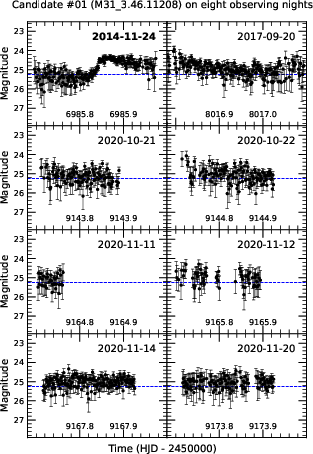
Figure 2: Full Subaru HSC light curve of candidate event #1, originally flagged as a 'secure' microlensing event, now unambiguously classified as an RR Lyrae star.
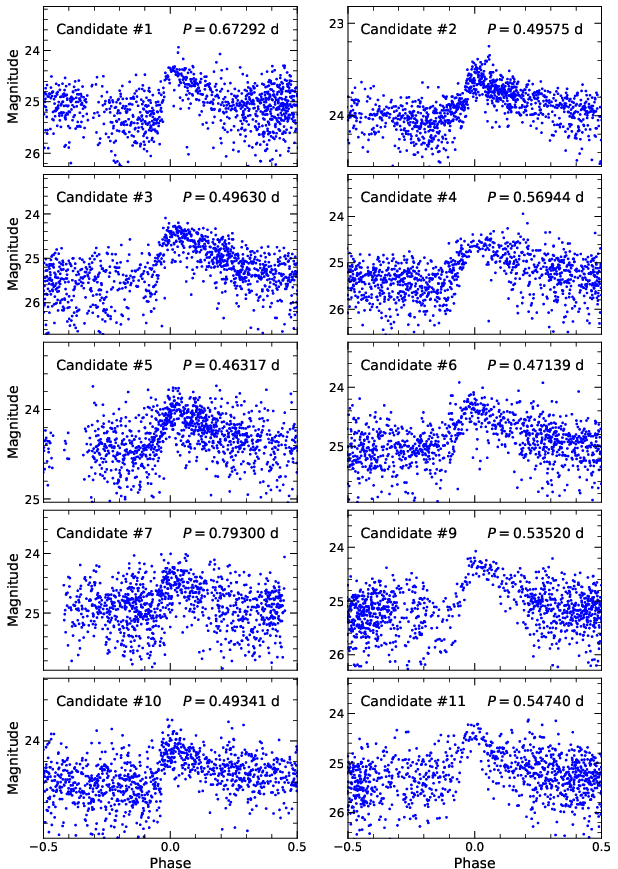
Figure 3: Phase-folded light curves for ten candidates, showing characteristic RR Lyrae pulsation profiles rather than microlensing symmetry.
Of the twelve candidates, ten were classified as RR Lyrae stars, one as an eclipsing binary, and one as an unclassified variable likely of stellar origin. This reclassification is supported by both the morphology and amplitude of their phase-folded light curves, with recovered pulsation periods typical for RR Lyrae and comparable to previously catalogued variables.
Visualization of stacked difference images around the event maxima provides further confirmation, with only the variable stars identified in the relevant fields.
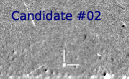
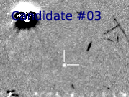
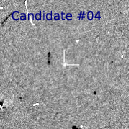
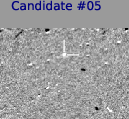
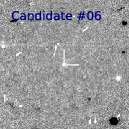
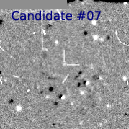
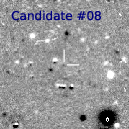
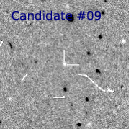
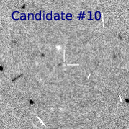
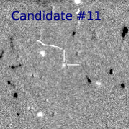
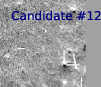
Figure 4: Stacks of ∼15 difference images centered on the peaks of the purported microlensing events, revealing variability signatures typical of stellar variables.
Statistical and Theoretical Inconsistencies
The spatial and temporal distributions of the Sugiyama et al. sample further undermine the PBH interpretation:
- Temporal Clustering: Five events in 2014 and seven in 2017 were detected within runs of 17 and 32 minutes, respectively, while the extensive 2020 observations yielded zero events. This is inconsistent with the temporal uniformity predicted for microlensing.
- Spatial Distribution: All candidates are found in the M31 halo, not in the disk where microlensing optical depth is maximized, but where RR Lyrae are prevalent.
Implications for PBH Dark Matter Constraints
The absence of genuine microlensing events in these high-cadence Subaru HSC data is fully consistent with prior OGLE and EROS limits, which constrain the fraction of dark matter in planetary-mass PBHs to ≪1%. The superficially weaker upper limits derived from the Subaru data—under the assumption of all candidates being false positives—are attributed to differences in finite-source effects and event detection efficiency calibrations.
The analysis underscores the necessity for rigorous, objective variable-star rejection procedures in microlensing searches, particularly in the regime of faint (r-band $24.5$–$26$ mag) source populations probed with large telescopes.
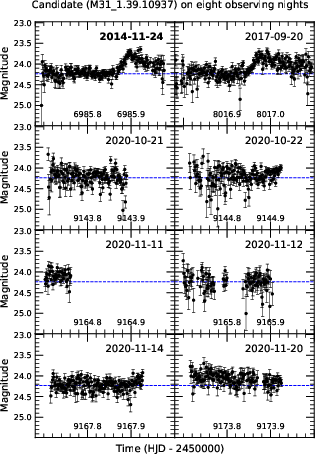
Figure 5: Full Subaru HSC light curve of the original Niikura et al. (2019) candidate event, displaying characteristic variability over multiple nights, reclassified as an RR Lyrae.
Implications and Future Directions
Practically, the results invalidate recent claims for detectable planetary-mass PBH populations in M31 and support a cosmological framework wherein PBH contributions to dark matter are negligible in this mass regime. Theoretically, this data strengthens the case for non-compact-object dark matter candidates and illustrates the limitations of current microlensing strategies when variable star contamination is not exhaustively mitigated.
From an observational perspective, it is evident that high-cadence, short-duration photometric surveys are insufficient on their own; multi-epoch, long-baseline datasets are essential to exclude variable star interlopers robustly. Forthcoming and ongoing wide-field microlensing surveys utilizing DECam, Rubin Observatory LSST, and Roman Space Telescope will need to adopt stringent variable-star vetting pipelines to avoid similar pitfalls. The photometry pipeline adaptations presented here offer a model for future surveys.
Conclusion
The independent reanalysis of the Subaru HSC M31 dataset decisively demonstrates that all previously identified short-timescale microlensing candidates are variable stars, chiefly RR Lyrae, with no compelling evidence for planetary-mass PBHs constituting dark matter. These results align with the strongest extant microlensing limits and invalidate previous claims of a substantial PBH population toward M31. The study highlights the critical need for robust variable-star rejection and long-duration monitoring in future microlensing searches. The constraints from M31 will, with improved analysis, continue to set leading bounds on compact dark matter components, particularly in the planetary-mass window.