- The paper presents a novel game theoretic framework integrating agent-based network dynamics and DRL to model authorship disputes and credit negotiation.
- The model shows that strategic (DRL-driven) agents lower destructive conflicts and drive higher manuscript completion rates despite similar ultimatum frequencies.
- The simulation highlights the equalizing effects of reputational feedback, promoting long-term collaborative stability and tangible productivity gains.
A Game Theoretic Model of Power Dynamics in Academic Co-Authorship
Introduction
The proliferation of multi-author collaborations has heightened the complexity of credit allocation and amplified the frequency of disputes over authorship order in scientific research. The paper "Friends, Foes, and First Authors: A Game Theory Model of How Power Plays Rewrite Academic Co-Authorship Networks" (2603.29834) formulates a networked, agent-based framework for understanding strategic and myopic agent behavior in evolving co-authorship networks. The model combines a detailed micro-level ultimatum subgame for authorship order negotiation with macro-level network dynamics, incorporating reinforcement learning-driven agents and reputational feedback mechanisms.
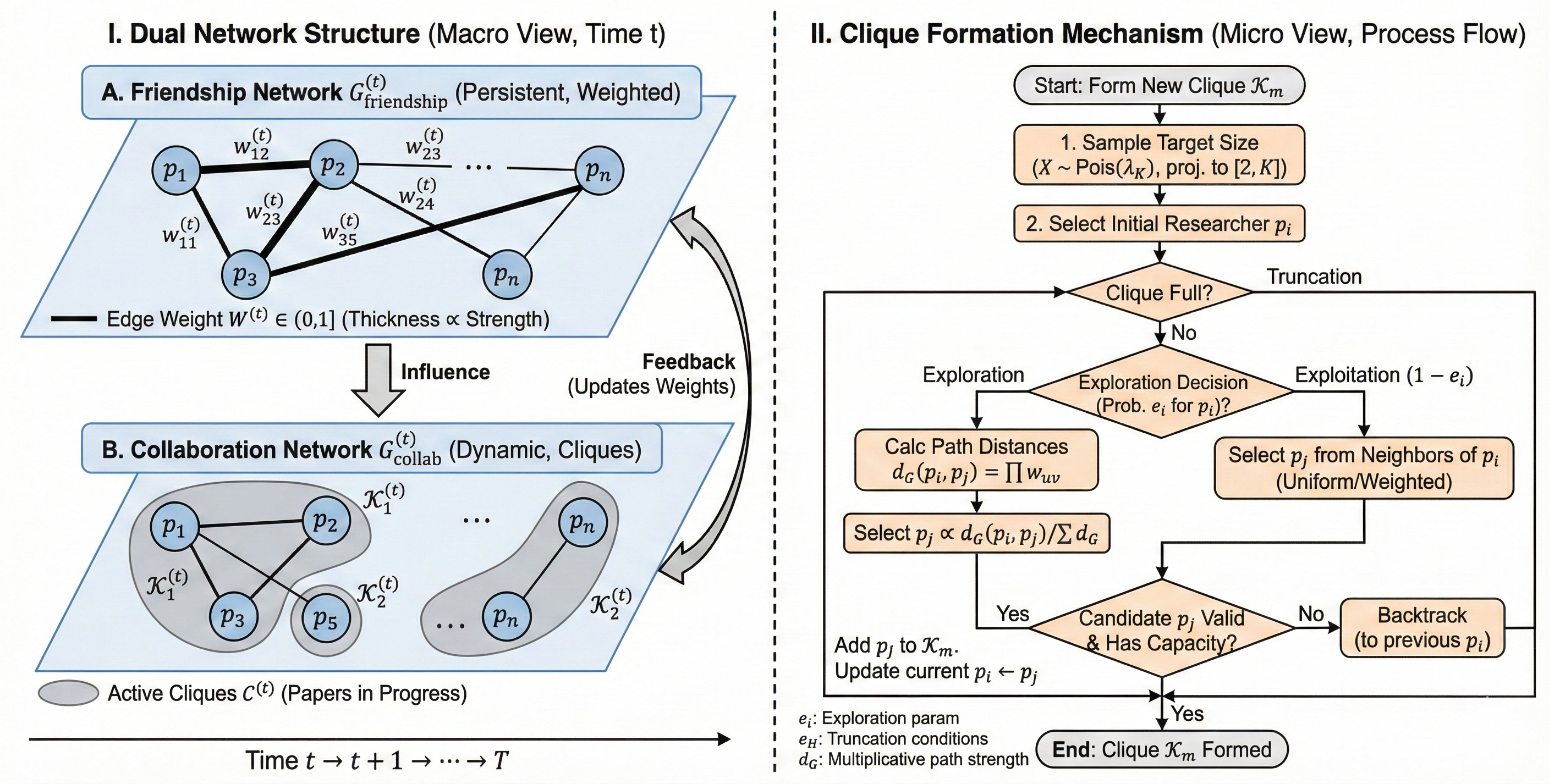
Figure 1: A schematic view of the proposed model.
The model comprises three interlocked modules: (1) a dynamically evolving weighted friendship network, (2) a collaboration formation and action protocol shaped by exploration–exploitation trade-offs, and (3) an ultimatum subgame governing credit negotiation within project cliques.
Collaborations are generated via Poisson-sampled clique sizes and network-weighted recruitment, balancing exploitation of local strong-tie cliques against exploration for new connections. At each step, ongoing projects unfold through effort contributions, with discrete opportunities for agents to demand improved authorship positions via ultimatums. The crux of the model is the co-authorship ultimatum protocol: project members can issue demands for position upgrades, which must be accepted unanimously to take effect. If rejected, initiators may withdraw (with a penalty) or insist, which—if chosen—destroys the manuscript and imposes comprehensive reputational and utility costs.
Reputational penalties propagate through the friendship network upon destructive events, designed via a distance-weighted attenuation, effectively shaping future collaboration opportunities for agents.
A subset of agents is endowed with forward-looking, DRL-based policies, which maximize long-term cumulative, discounted utility. These policies internalize reputational externalities and are parameterized with rich state representations, including project, agent, and network features, and trained using Double DQN with extensive off-policy experience replay.
Macro-Level Outcomes and Population Dynamics
The simulation systematically varies the proportion of strategic (DRL-trained) agents in the population, spanning the simplex from purely greedy to purely strategic regimes. Core metrics include per-paper ultimatum rates, paper completion and destruction rates, distributional productivity statistics, and network structure diagnostics.
Key findings:
- The per-paper incidence of ultimata remains invariant to population composition (≈1 per paper), contradicting the intuition that forward-looking agents resolve disputes through appeasement.
- The mechanism for improved outcomes in strategic populations arises not from decreased contestation but from the suppression of destructive insistence: strategic agents never destroy manuscripts post-rejection, in stark contrast to myopic peers (who do so for ≈12% of ultimata in a pure-greedy regime).
- As the proportion of strategic agents grows, paper destruction rates are driven asymptotically to zero, with the completion rate rising from 0.85 to 0.97 and mean completed papers per agent increasing from 15.2 to 16.9.
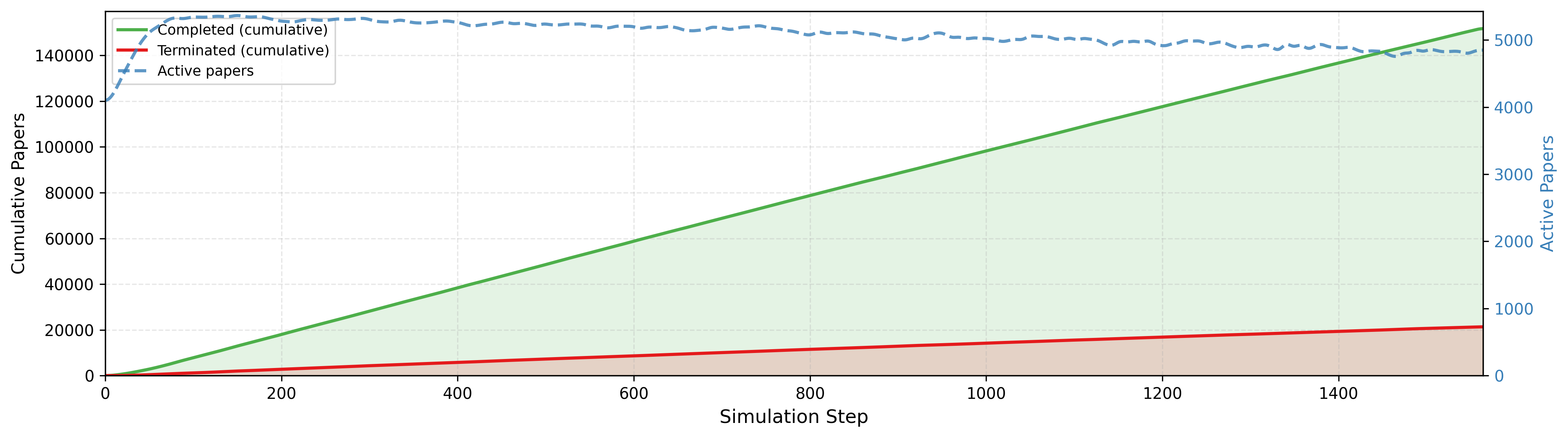
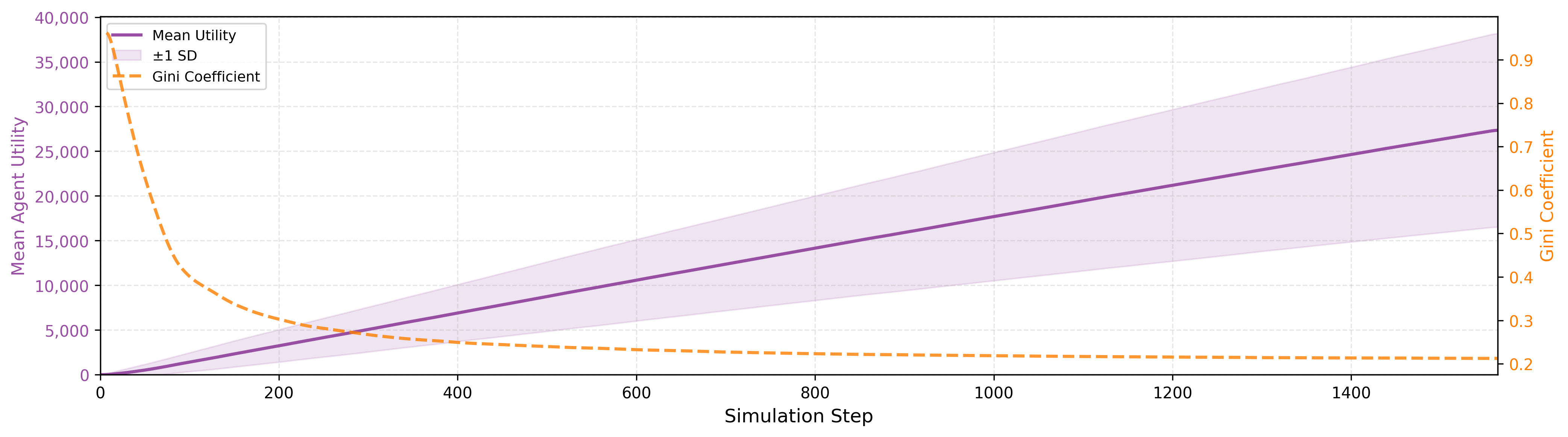
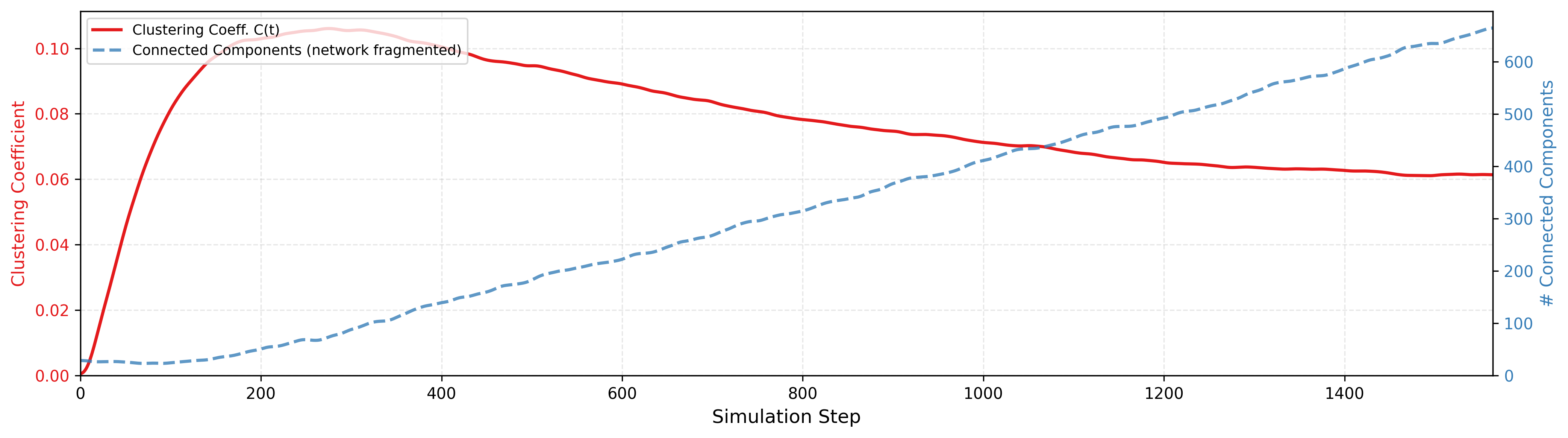
Figure 2: Cumulative completed (green) and terminated (red) papers together with the number of active papers (blue, right axis).
The productivity distribution displays a convergent equalization as strategic agent prevalence increases. The utility advantage for strategic agents peaks when rare (e.g., a 30.8% premium at 10% prevalence) and diminishes as they become dominant, reflecting competitive erosion.
Mechanistic Dissection: Micro-Behavior and Temporal Dynamics
At the individual level:
- Initiation Rates: Strategic and greedy agents raise ultimatums at statistically identical rates, refuting hypotheses of strategic passivity.
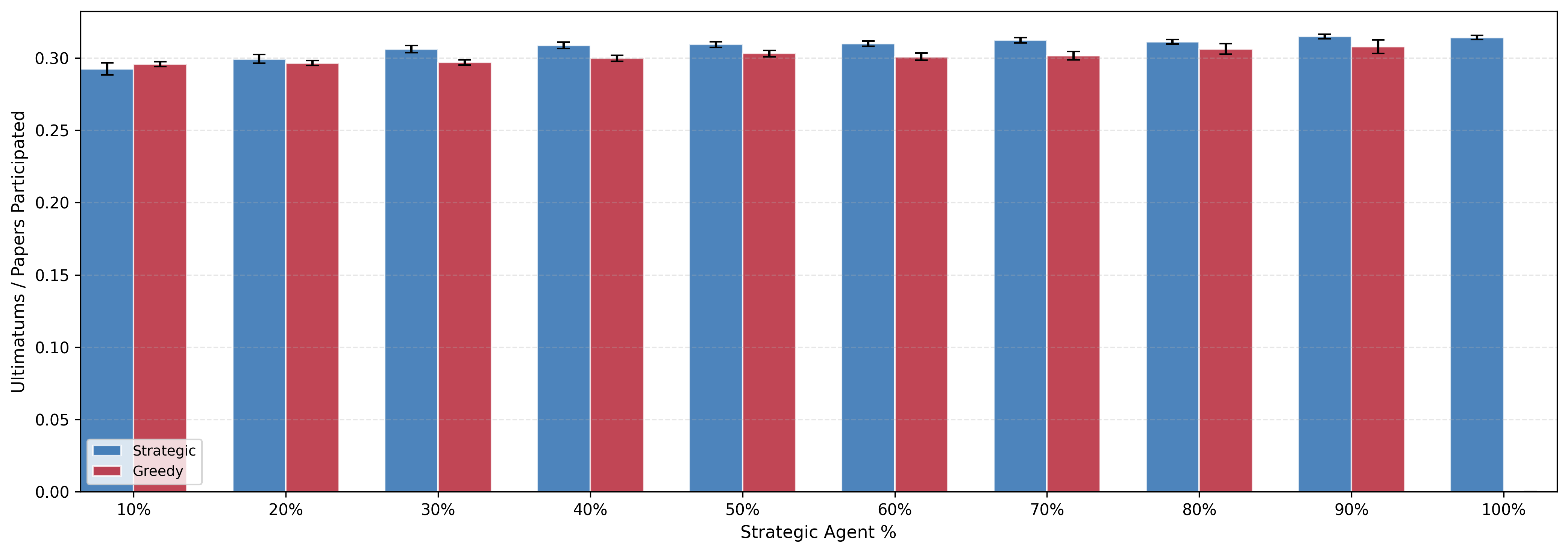
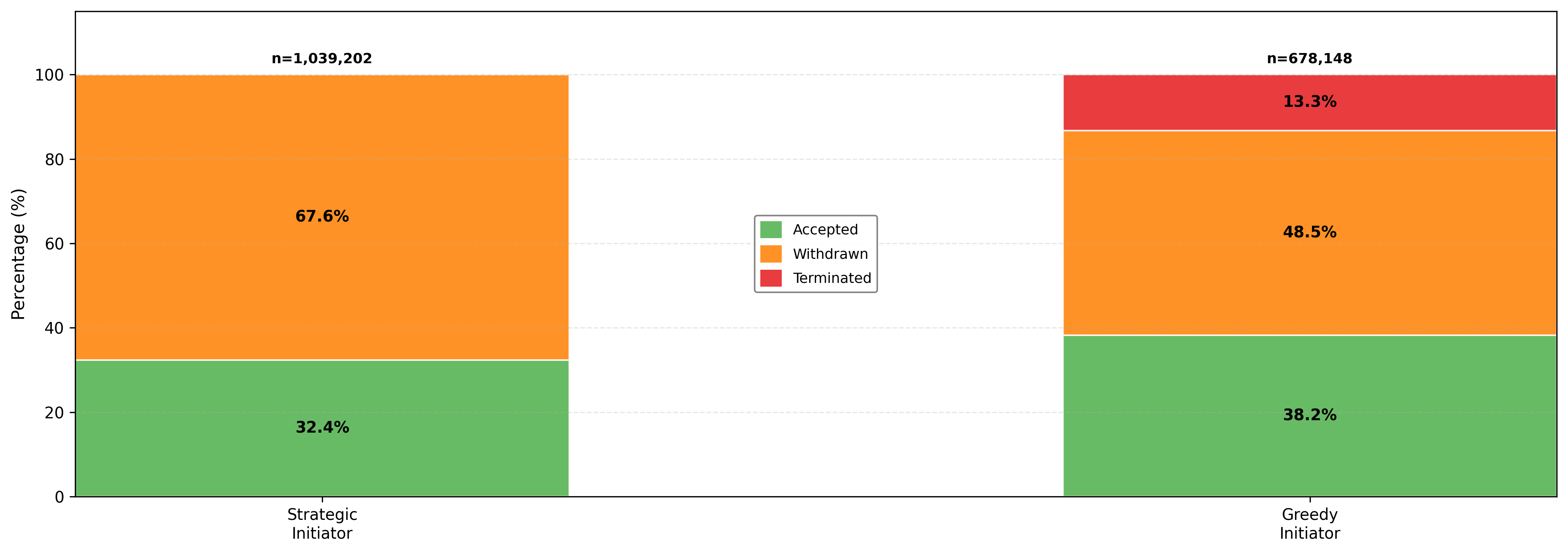
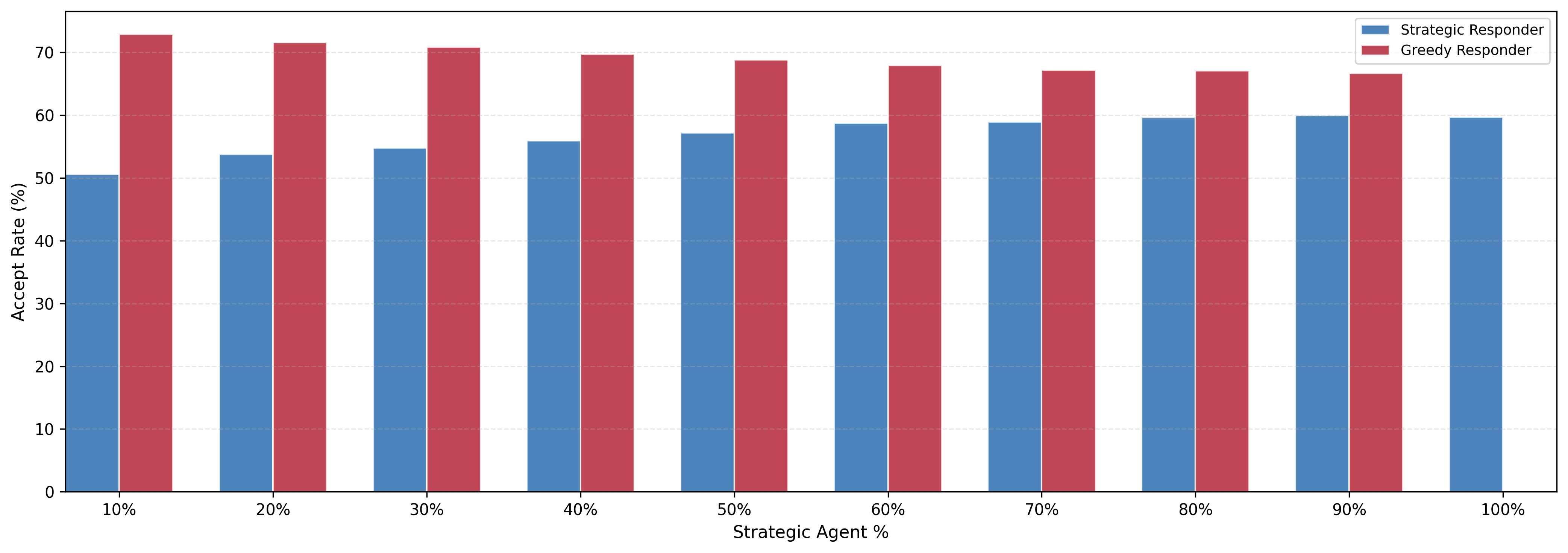
Figure 3: Per-agent initiation rate (ultimatums raised per paper participated) for strategic (blue) and greedy (red) agents, with ±1 SE error bars; rates are nearly identical across all compositions.
- Response Behavior: Strategic agents are more selective in accepting incoming ultimatums (accepting 51-60% versus 67-73% in greedy responders), thereby defending their own positional utility more aggressively.
- Escalation Control: The endogenous learning of strategic agents focuses on withdrawal post-rejection, avoiding utility destruction and reputational collapse.
Timing analysis reveals strategic agents shift their ultimatum issuance to later project stages and are more likely to avoid terminal conflict, resulting in robust collaboration stability.
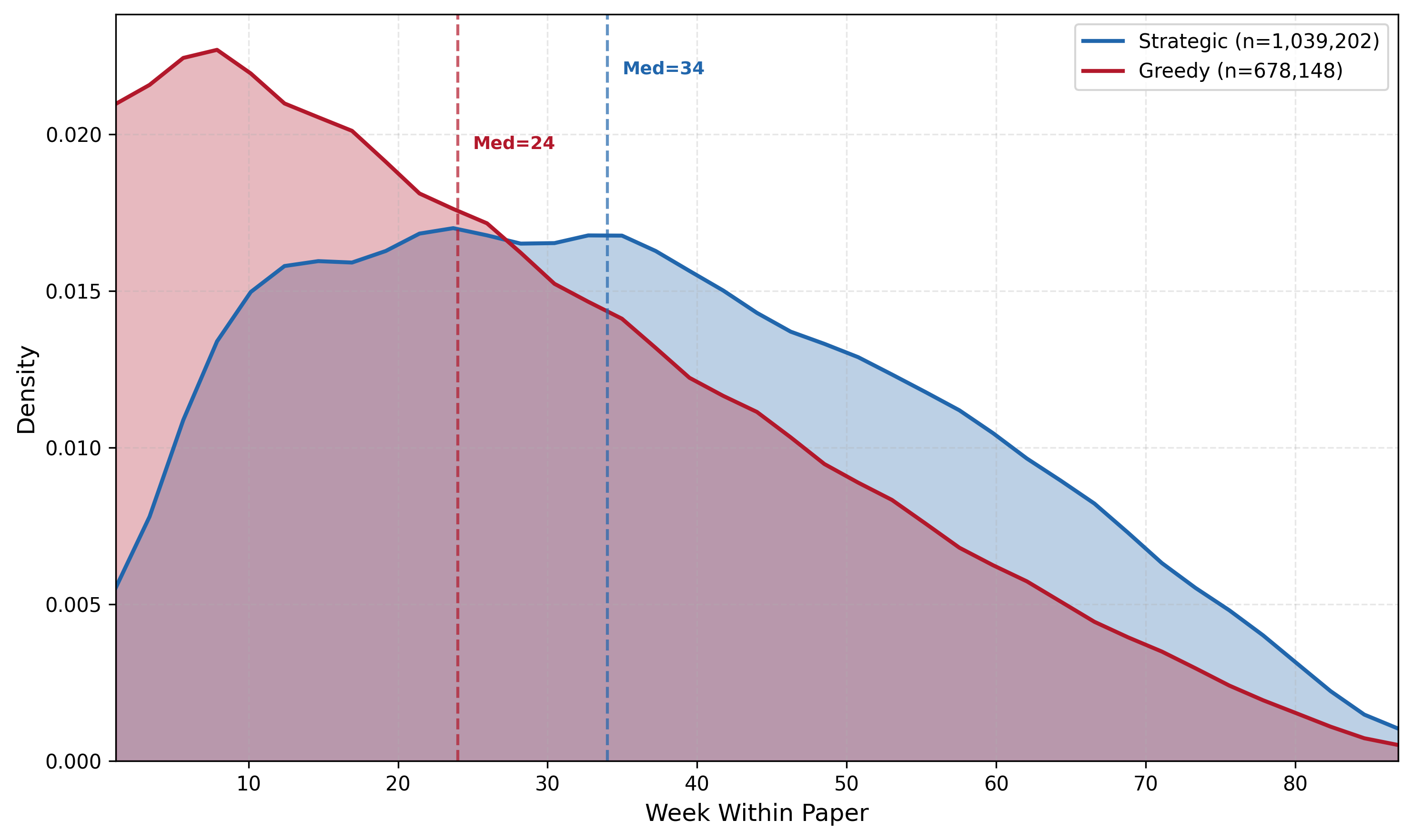
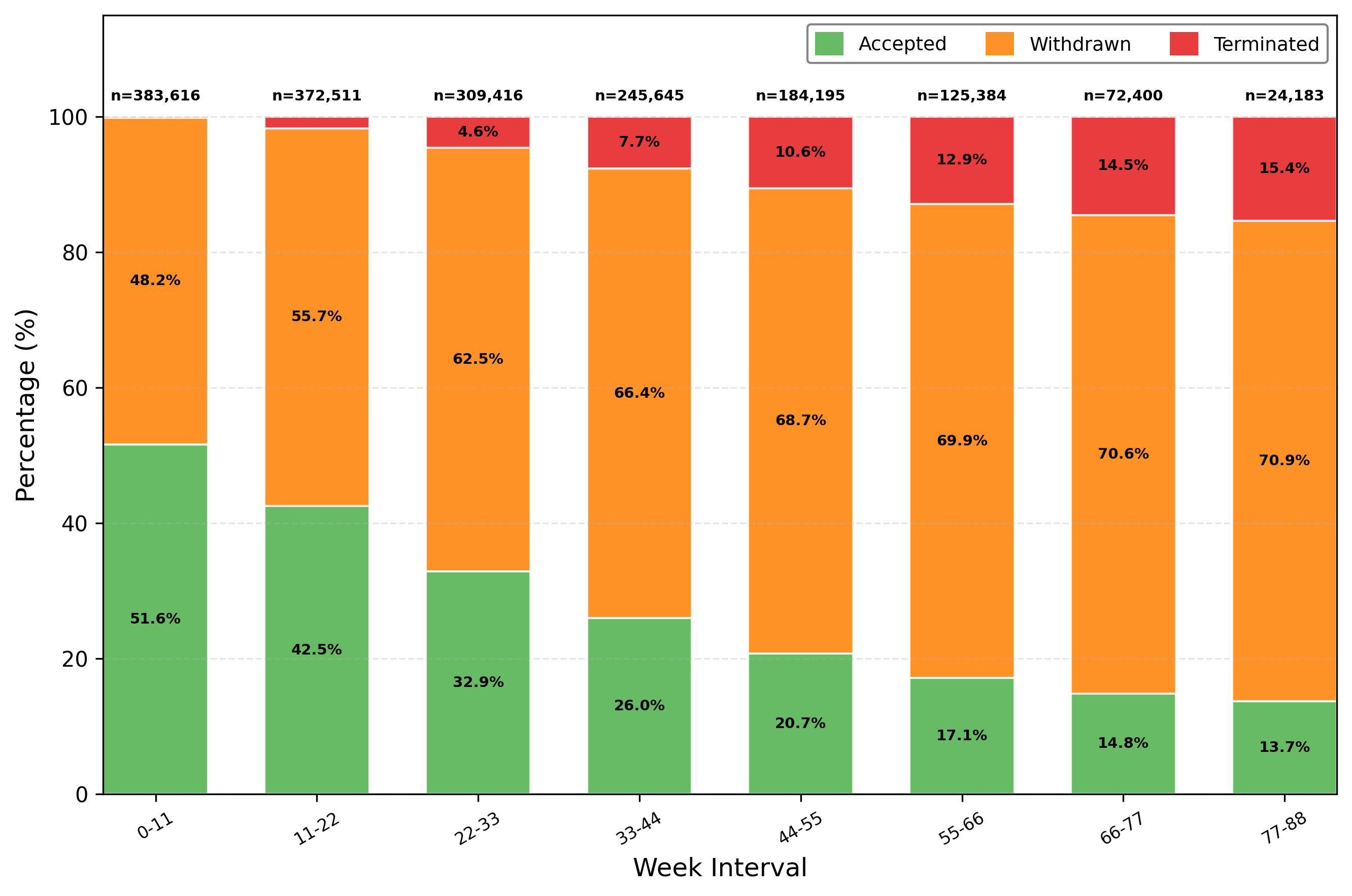
Figure 4: Density of the week at which ultimatums are raised, shown separately for strategic (blue) and greedy (red) agents.
Productivity and Inequality
The productivity, measured as papers completed per agent, is log-normal with heavy tail truncation as strategic prevalence increases. The presence of strategic agents leads to a decrease in the top-performer share and compresses distributional outliers, indicating an equalizing effect.
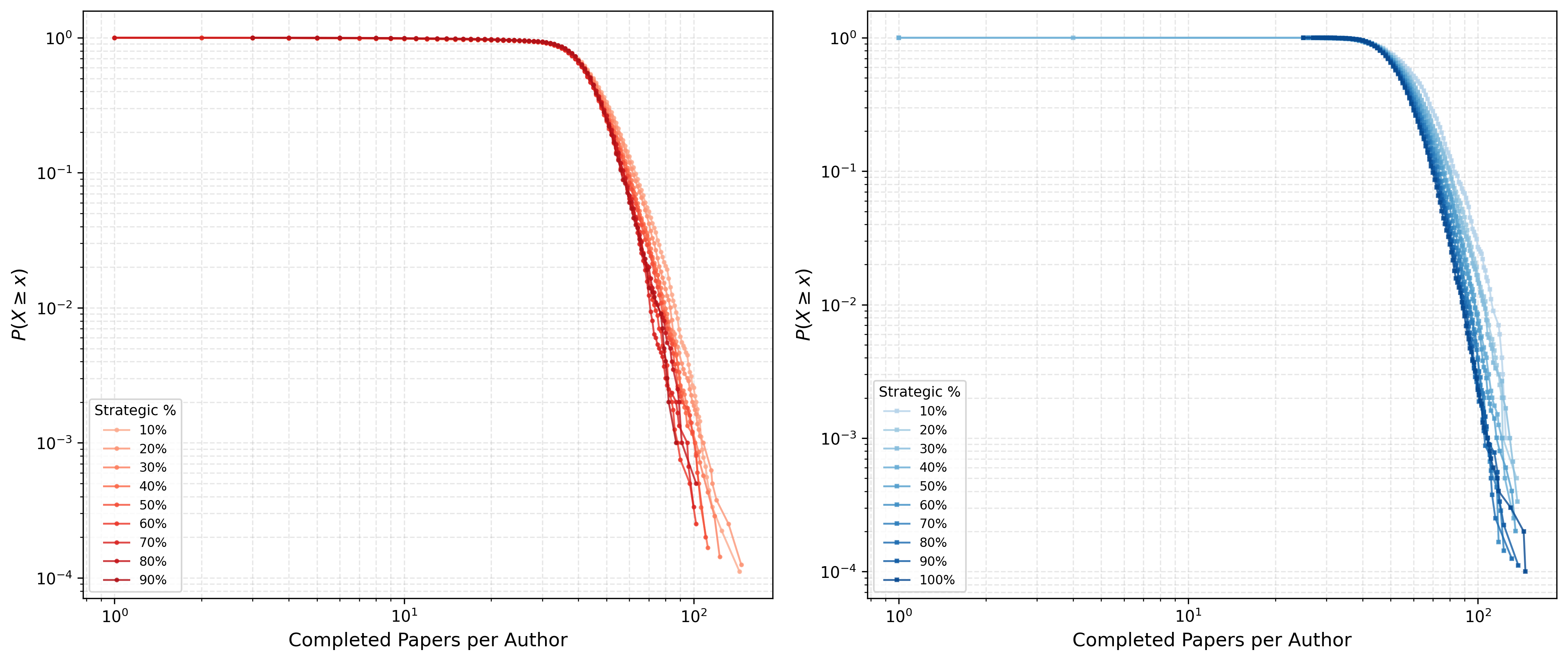
Figure 5: Productivity CCDF by agent type across population compositions. Greedy productivity is largely invariant to population composition (left), while strategic productivity compresses and shifts leftward with increased strategic prevalence (right).
The Gini coefficient stabilizes (0.21–0.23) across all population mixtures, implying that increased strategic rationality does not exacerbate output inequality.
DRL Policy Training and Convergence
The DRL policy undergoes 500-episode training over 30-year simulated academic careers. Training is characterized by monotonic improvements in average utility and completion rates and an acute decline in manuscript destruction. Importantly, these outcomes are obtained without centralized coordination or explicit modeling of other agents’ policies.
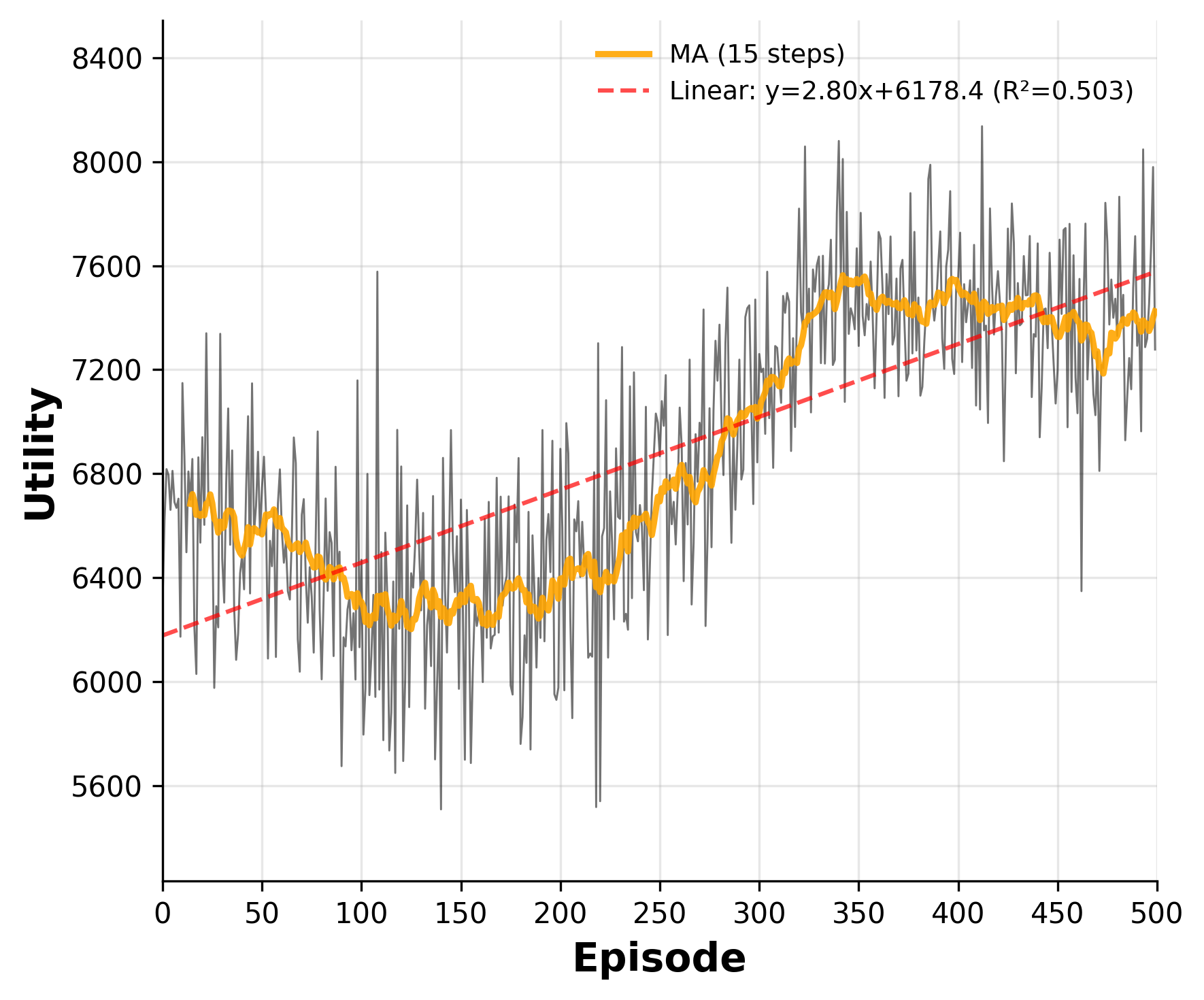
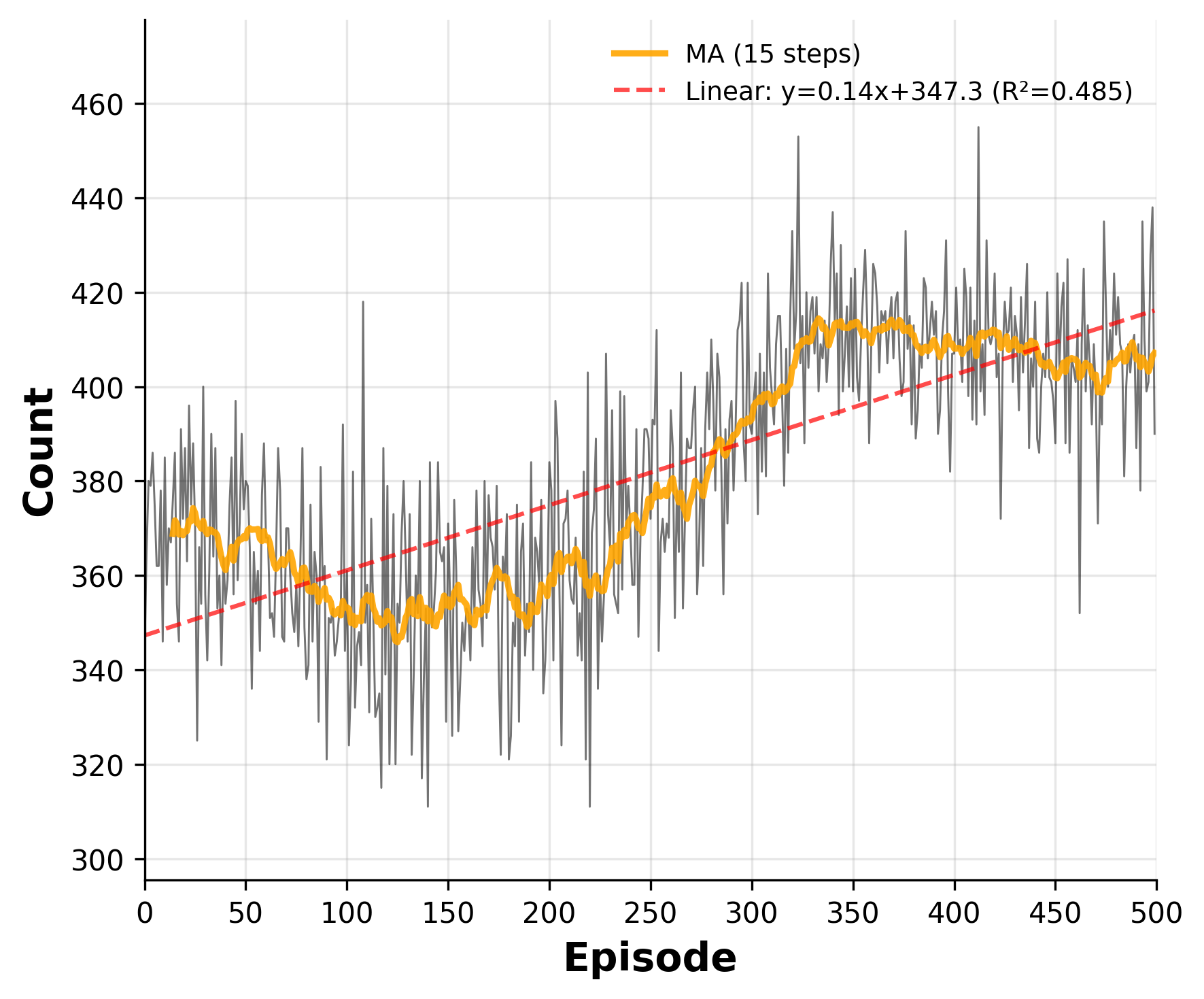
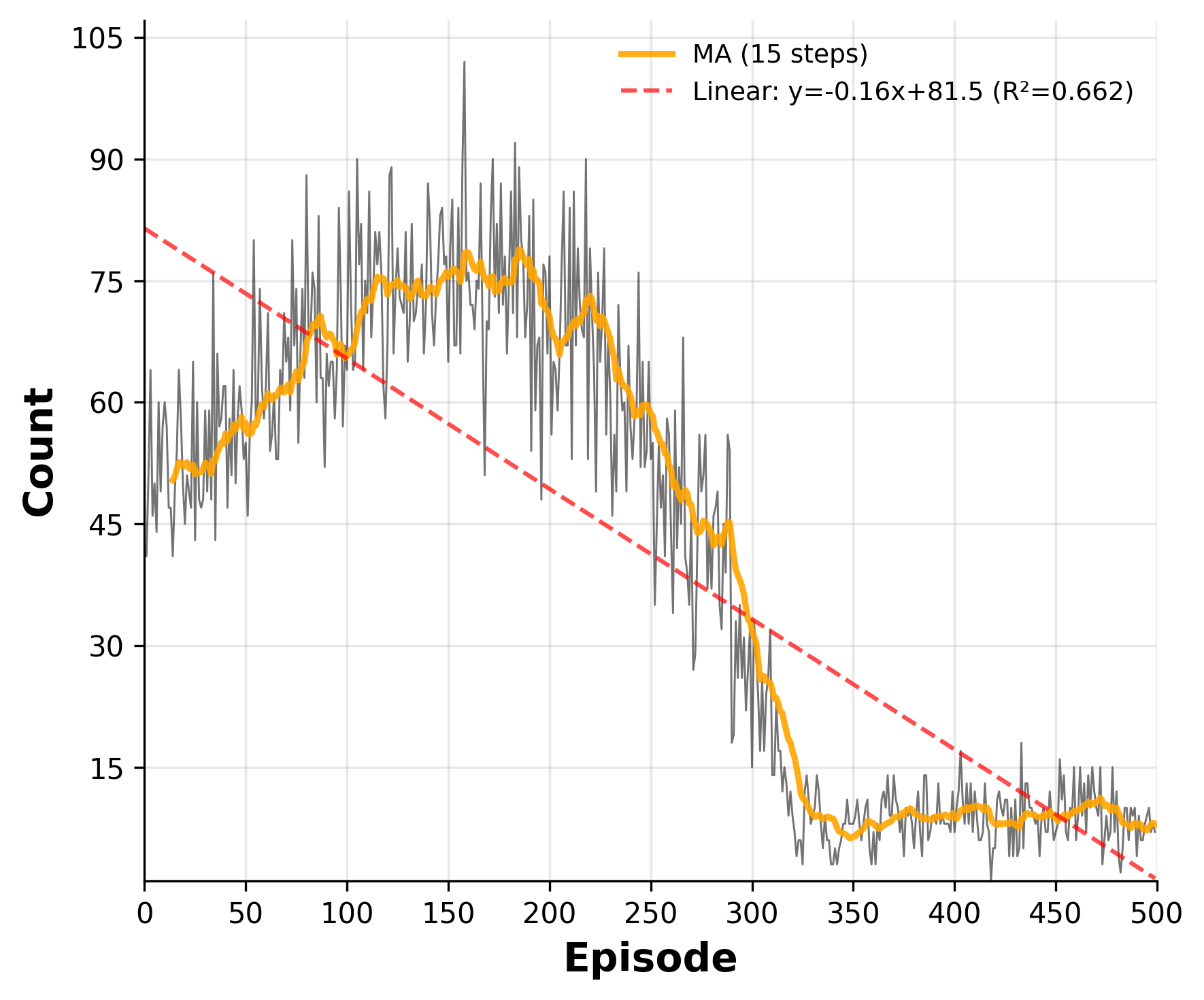
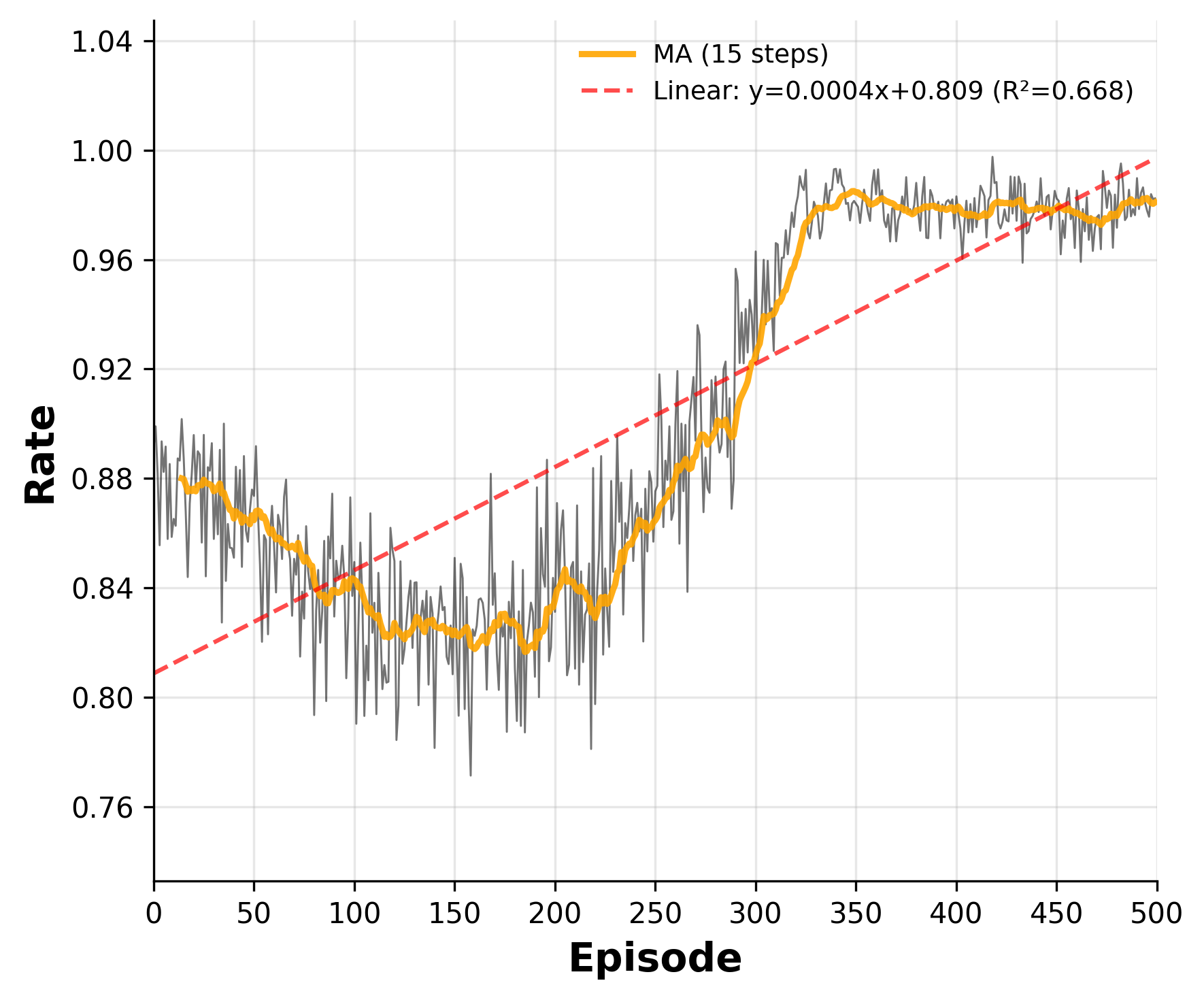
Figure 6: Average utility per episode.
Theoretical and Practical Implications
From a theoretical viewpoint, the results sharpen previous single-project ultimatum game findings [lazebnik2023academic] by demonstrating that forward-looking agent behavior, under network-embedded, repeated interaction and reputation feedback, naturally converges to policies that suppress destructive outcomes. Rather than reducing the surface-level incidence of contestation, Nash equilibrium selection operates via implicit propagation of long-run (network-mediated) externalities.
Empirically, the model supports the hypothesis that reputational spillovers and the shadow of the future are critical to sustaining collaborative stability in academic systems. The implication is that policy interventions to codify reputational feedback or limit the destructiveness of disputes may improve aggregate productivity without exacerbating inequality.
Open theoretical questions include:
- The impact of partial observability regarding reputational states or project durations.
- Agent heterogeneity in discounting, risk aversion, and social capital accumulation strategies.
- Endogenizing tie formation and network rewiring to capture field-specific or institutionally mediated power structures.
From an applied perspective, the DRL framework offers a generative testbed for institutional design, where interventions (e.g., reward/penalty reparameterization) can be rapidly prototyped and evaluated for welfare and equity impacts.
Conclusion
This paper delivers a rigorous, simulation-based analysis of strategic power plays in academic co-authorship networks, substantively clarifying the roles of learning, reputation, and network topology in shaping collaborative outcomes. The core insight is that long-run rationality and reputationally mediated incentives can robustly eliminate destructive disputes without suppressing contestation or concentrating advantage, suggesting a path to both resilient and equitable scientific collaboration systems.

