- The paper demonstrates that conventional magic angles split into three distinct non-Hermitian magic angles via Hatano-Nelson asymmetric hopping, resulting in completely isolated flat bands.
- Numerical diagonalization of the moiré continuum model uncovers complex energy spectra with nested eigenvalue loops, confirming a nontrivial point-gap topology and non-Hermitian skin effect.
- Topological phase transitions are tracked by biorthogonal Chern numbers, showing that increased nonreciprocity leads to topological charge annihilation and suppression of higher topological phases.
Non-Hermitian Magic Angles and Topological Phase Suppression in Twisted Bilayer α-T3 Lattices
Introduction and Theoretical Framework
The paper "Emergence of Non-Hermitian Magic Angles and Topological Phase Transitions in Twisted Bilayer α-T3 Lattices" (2603.29779) analyzes the interplay of non-Hermiticity and moiré physics in bilayer α-T3 lattices interfaced with aligned hBN substrates. The α-T3 lattice interpolates between graphene (α=0) and the dice limit (α=1), with inherent sublattice structure enabling flat-band emergence via quantum interference. By introducing Hatano-Nelson-type asymmetric hopping (parameter T30), the study breaks reciprocity of Dirac states, leading to complex energy dispersions and fundamentally non-Hermitian band structures. Sublattice symmetry breaking is simulated via a staggered mass term, T31, from hBN alignment.
The continuum model follows the Bistritzer-MacDonald scheme for moiré pattern construction. Interlayer coupling is encoded through momentum transfer vectors connecting shifted Dirac points, with plane-wave truncation setting the Hilbert space dimension. The Hamiltonian is diagonalized numerically across the moiré Brillouin zone (mBZ) to extract spectral and topological properties.
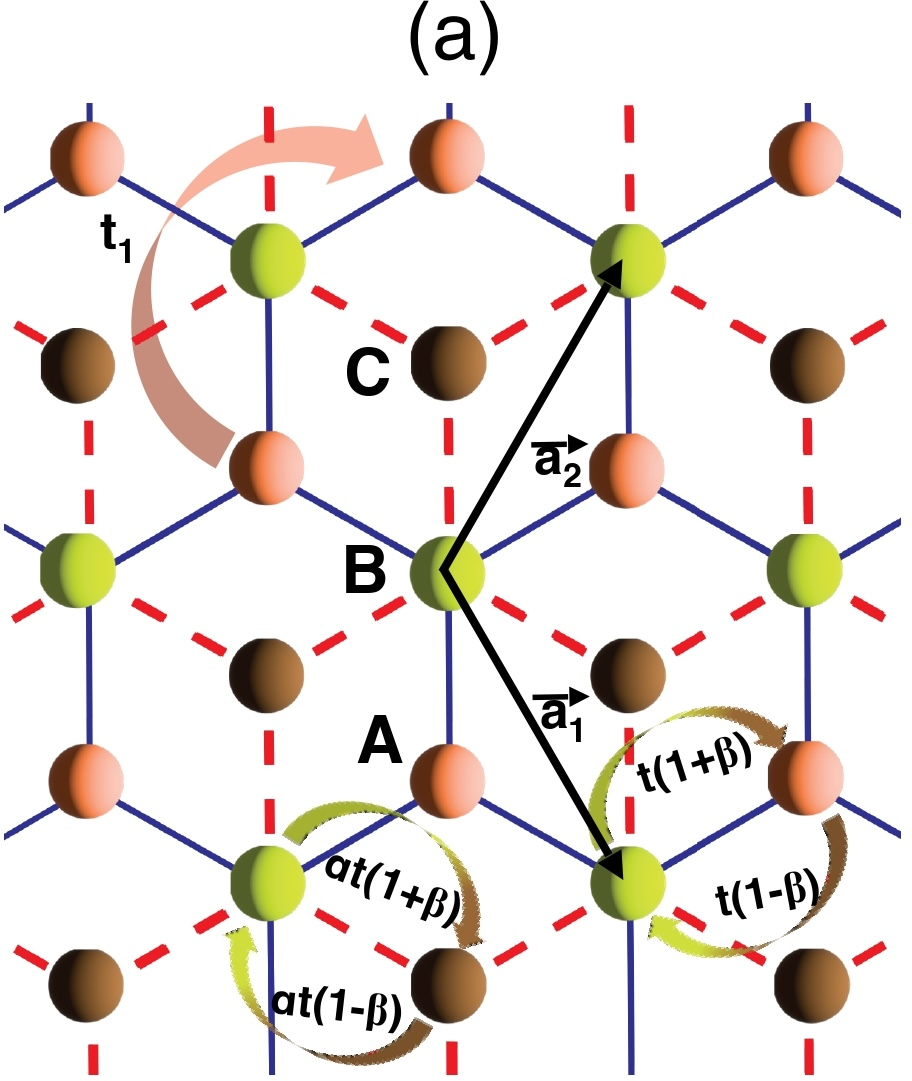
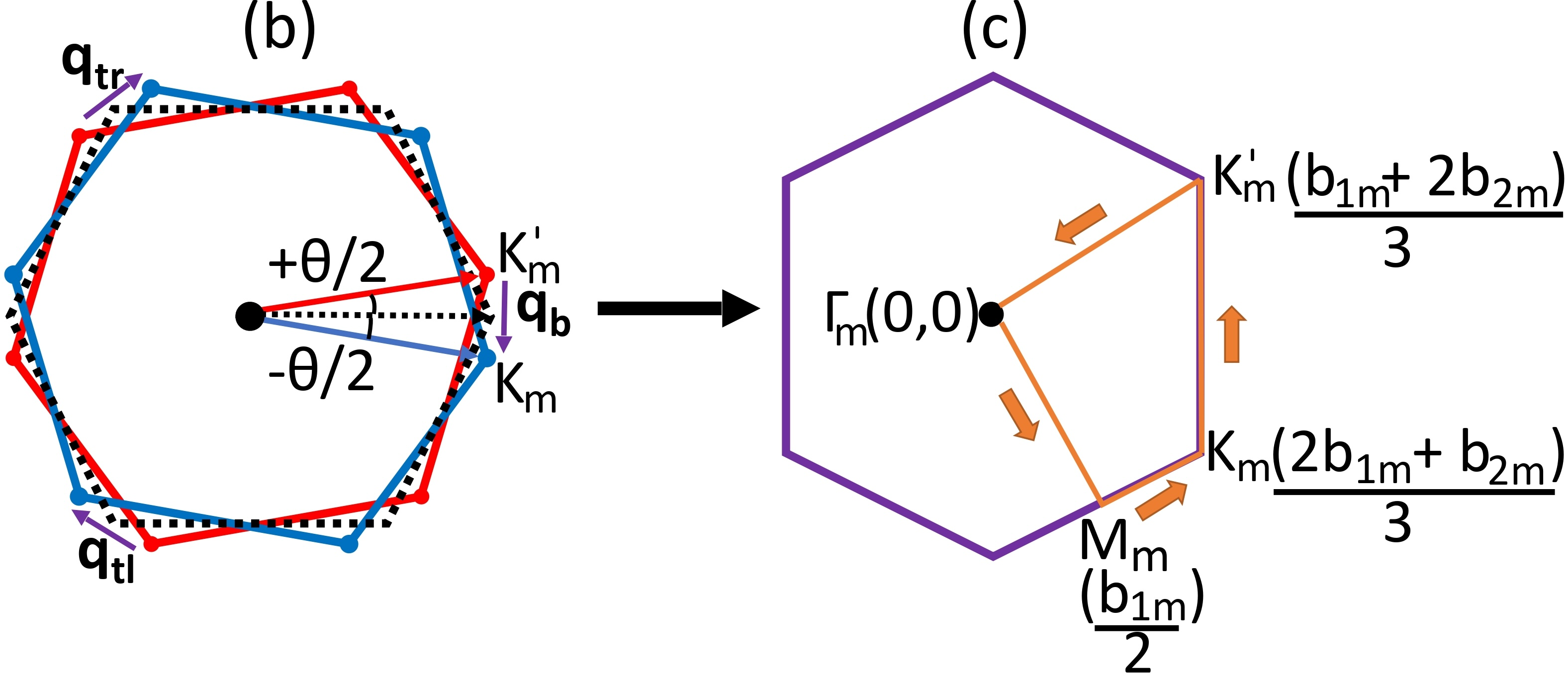
Figure 1: Schematic of the T32-T33 lattice with asymmetric hopping, and rotated Brillouin zones for the two layers; high-symmetry mBZ paths are indicated for band calculations.
The central result is the splitting of the Hermitian magic angle into three distinct non-Hermitian magic angles (NHMAs) in the dice regime (T34). At these T35, both real and imaginary parts of the bandwidth of the isolated flat band near T36~meV vanish within numerical precision, indicating complete spectral isolation. The NHMAs are robust against staggered mass perturbations and arise strictly from non-Hermitian quantum interference.
Numerically, bandwidth analysis reveals:
- For T37, T38 and T39 both vanish at α0, with locations invariant under changes in α1.
- As α2 decreases towards graphene, flat bands broaden, and spectral localization becomes independent of α3, a consequence of atomic decoupling.
- The isolated bands remain flat and decoupled unless lattice interference conditions are tuned.
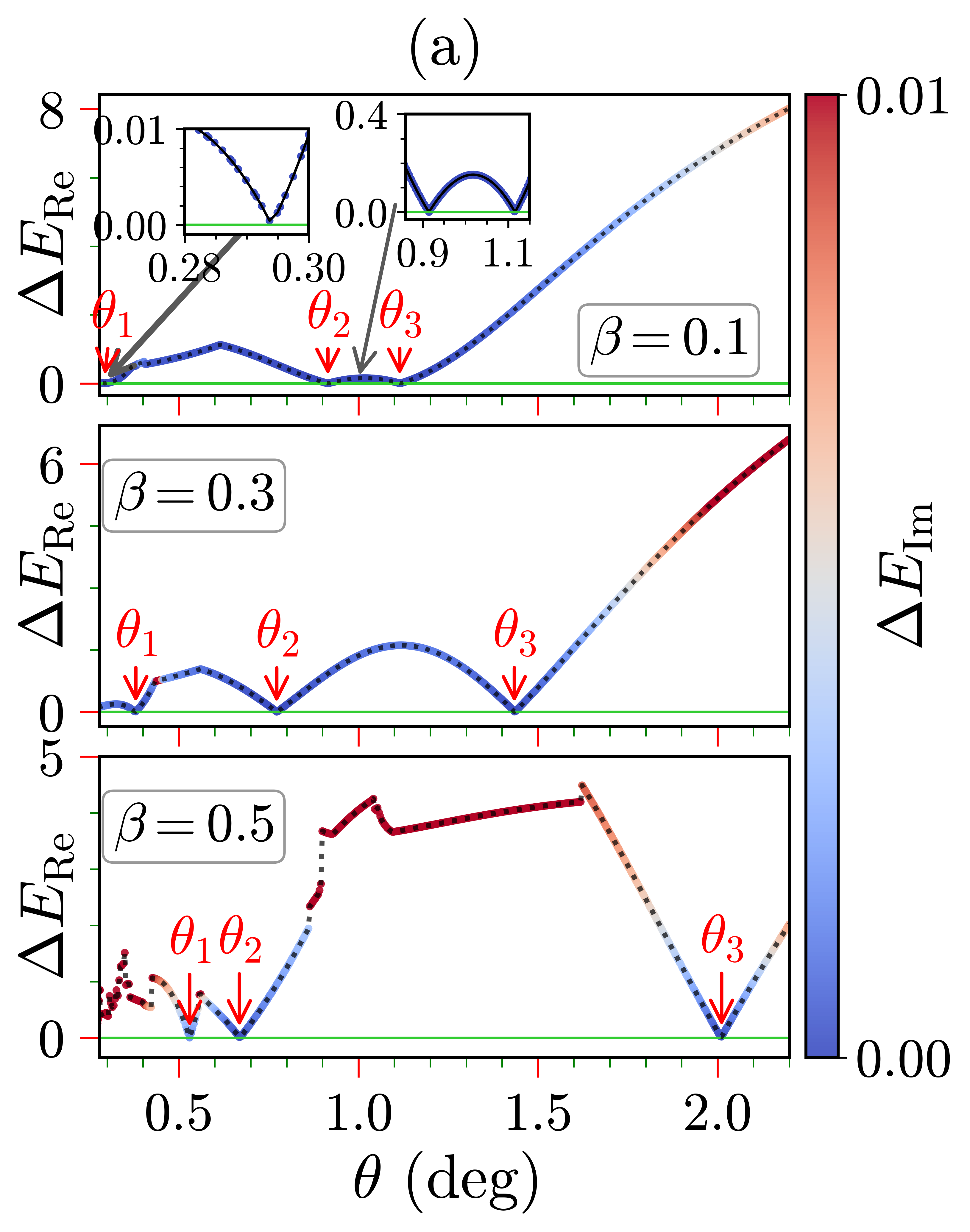
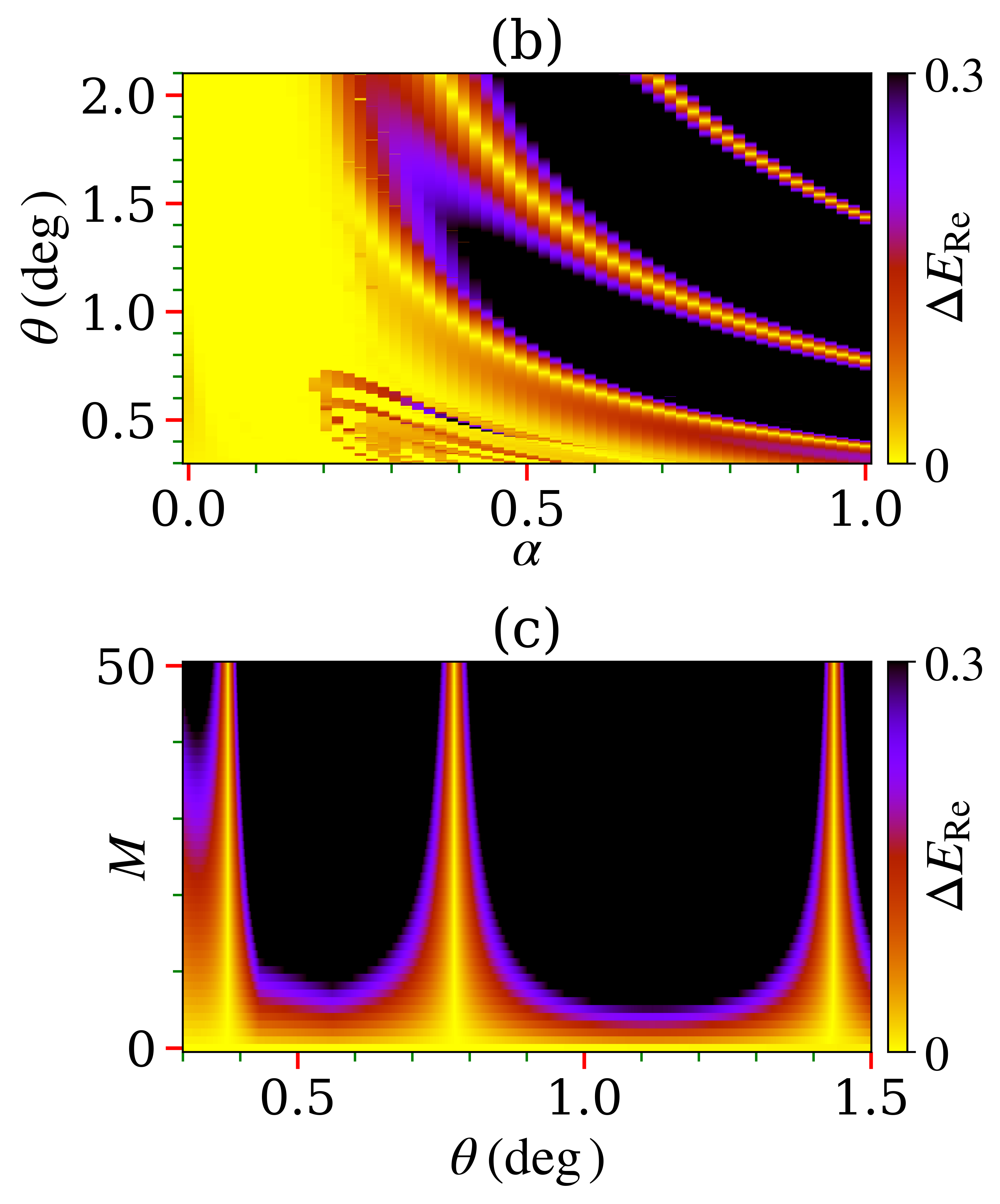
Figure 2: Bandwidth versus twist angle for various α4 values, phase diagram in α5 plane, and robustness of NHMAs against α6.
Complex Eigenspectra and Point-Gap Topology
Band calculations along high-symmetry paths confirm that at NHMAs, flat bands are dispersionless and spectrally isolated, with imaginary energy pinned to zero in the mBZ. The absence of band touchings eliminates the presence of exceptional points associated with EMAs in non-Hermitian tBG, confirming these NHMAs are due to pure quantum interference effects.
Mapping the full eigenspectrum in the complex energy plane under increased α7 shows:
- Scattered eigenvalues condense into sharply defined, nested loops, signifying nontrivial point-gap topology.
- Loop area and geometry strongly depend on both α8 and α9, with microscopic spans (typically T30~meV).
- These loops are signatures of non-Hermitian skin effect (NHSE): under OBC, bulk states localize at boundaries.
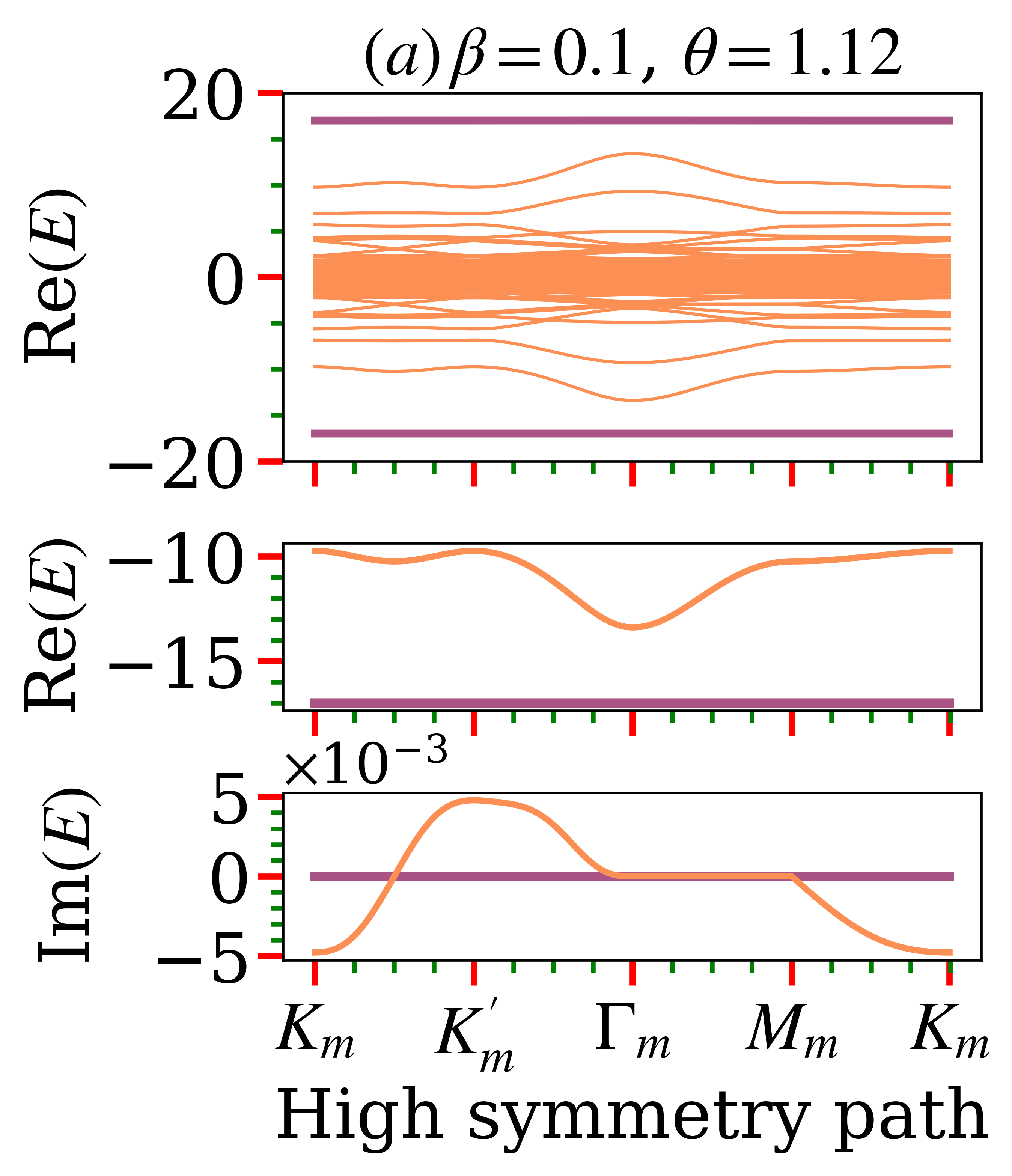
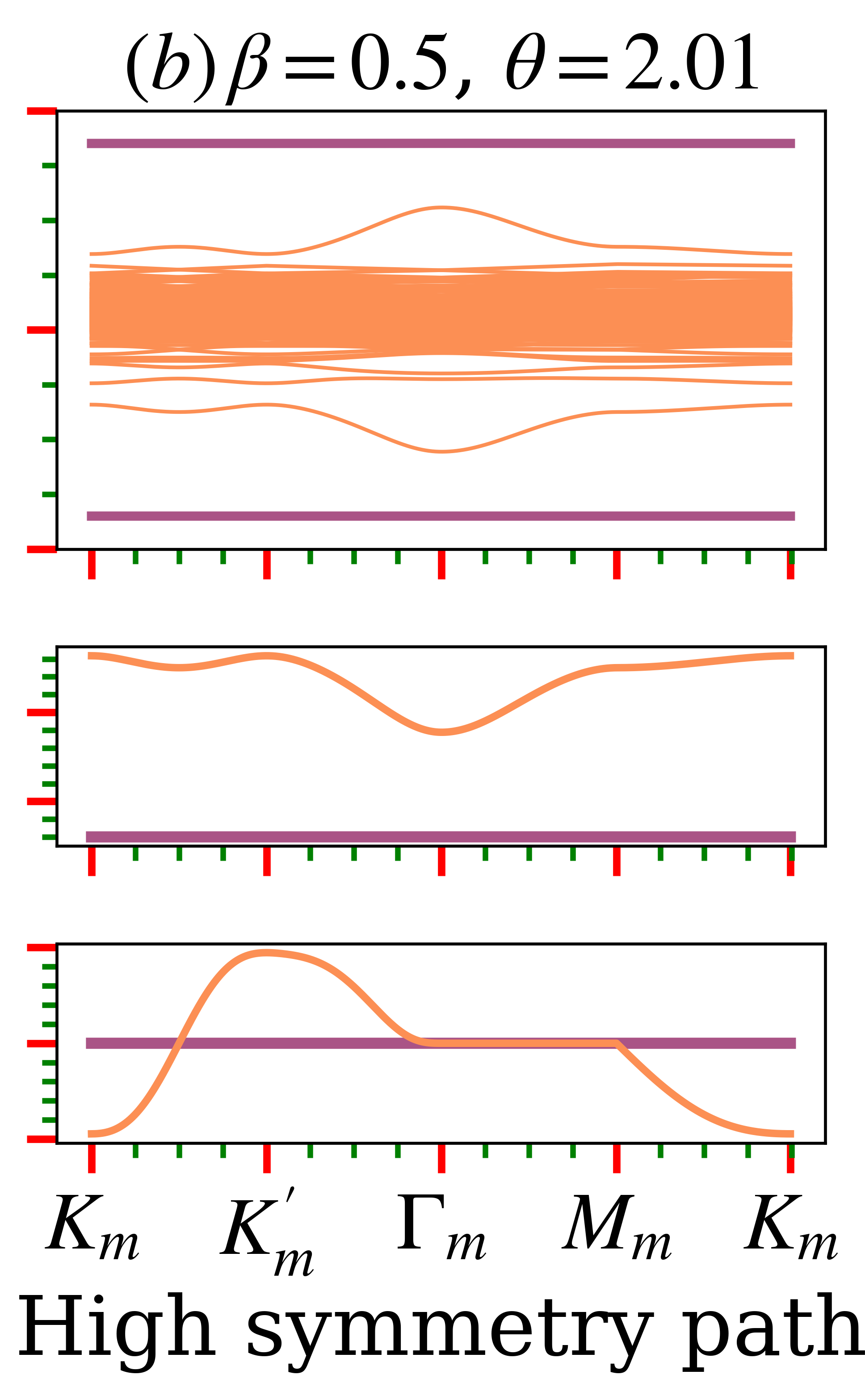
Figure 3: Complex energy bands at two NHMAs; zoomed real/imaginary parts confirm spectral isolation of flat bands.
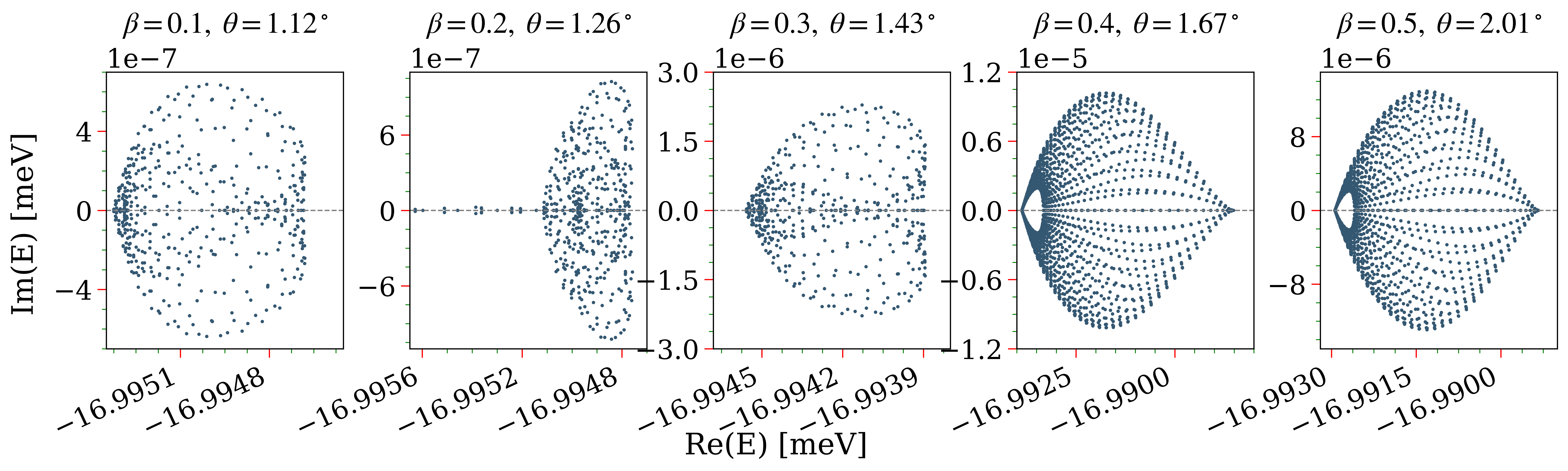
Figure 4: Complex spectral distribution for increasing T31 along the third NHMA, showing evolution from scattered to loop-like eigenvalue organization.
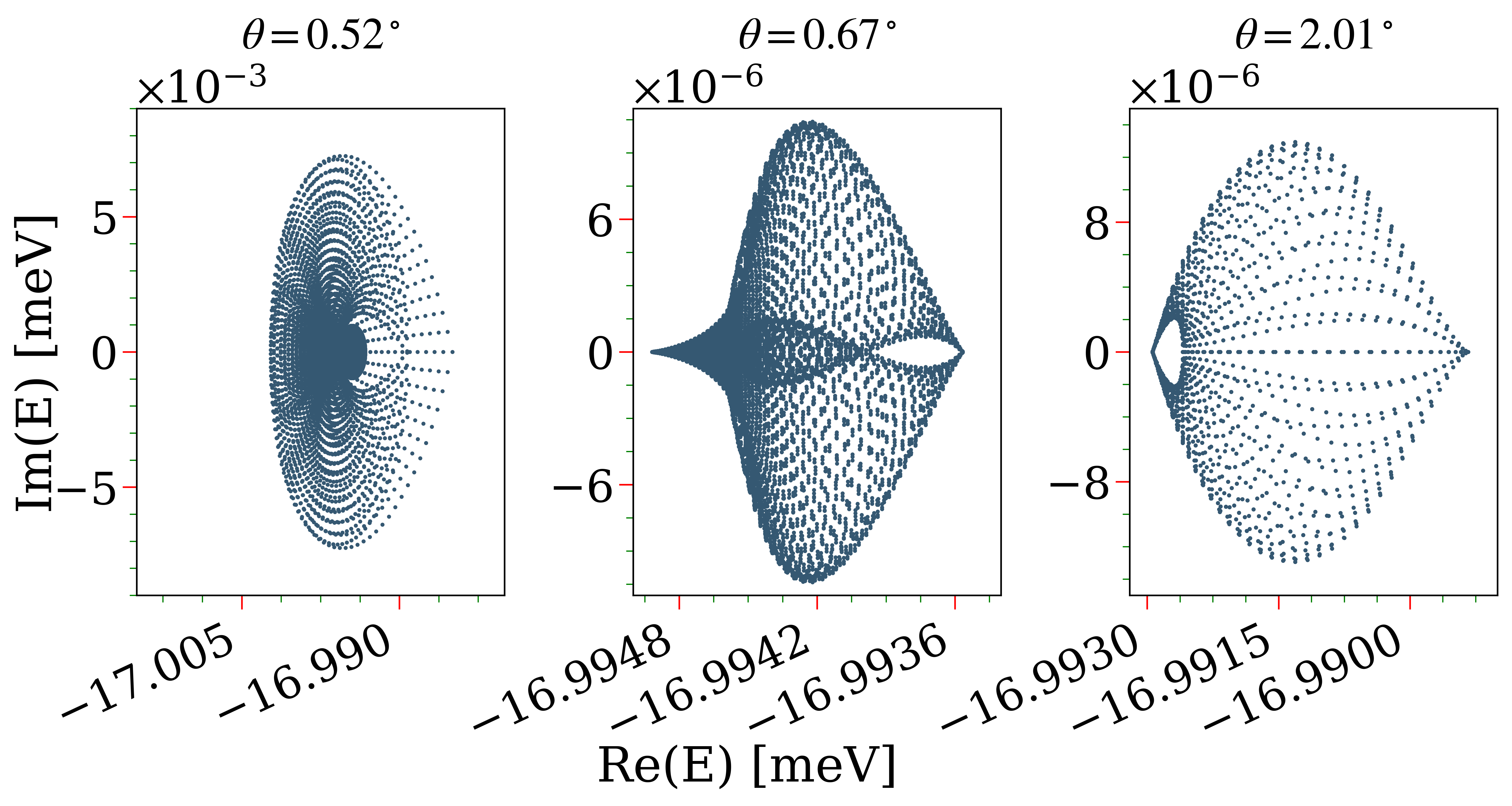
Figure 5: Complex eigenvalue loops at all three NHMAs for T32; geometric characteristics vary considerably across magic angles.
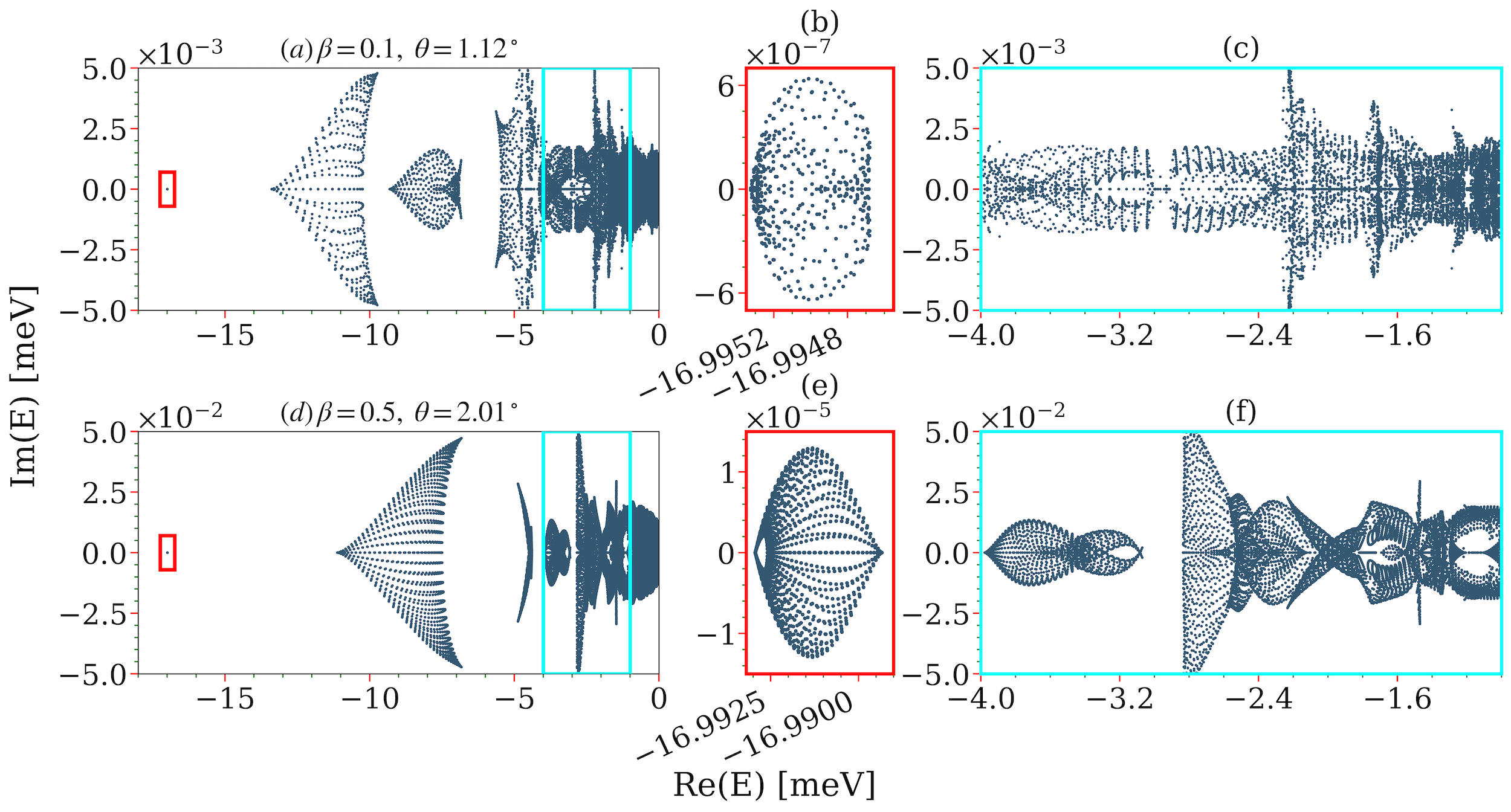
Figure 6: Extended energy window reveals robust spectral pinning for flat bands; dispersive moiré bands show macroscopic loop formation at large T33, confirming NHSE.
Topological Phase Transitions and Charge Annihilation
Topological characterization employs the biorthogonal Chern number T34, using left/right eigenvector bases. The real part of the direct band gap T35 between flat and nearest dispersive band tracks gap closing events marking topological transitions. Key observations:
- For T36, as T37 varies, system transitions from T38 to T39 and back, with gap closures at phase boundaries.
- Increasing α0 causes gap-closing boundaries to approach and merge, shrinking the α1 phase window.
- At α2, critical boundaries coalesce, topological charges annihilate, and intermediate α3 phase is suppressed: only α4 remains.
- This is analogous to Weyl node annihilation in 3D semimetals, here induced by non-Hermiticity and quantum interference in the lattice.
Phase diagrams in α5 show that, as α6 decreases, topological phases shrink and trivial α7 regime emerges due to decoupling of the central sublattice.
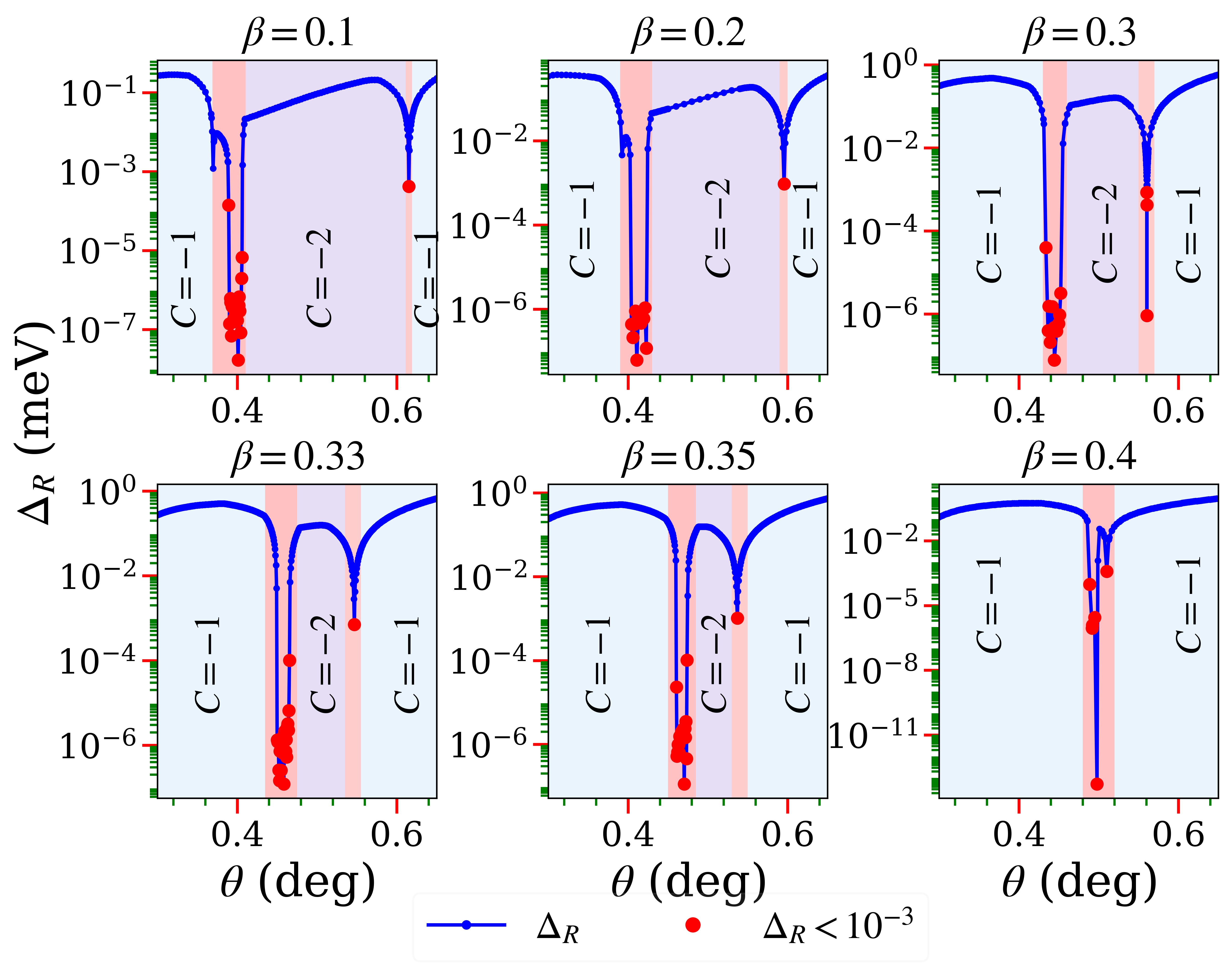
Figure 7: Evolution of α8 and biorthogonal Chern number α9 over T30 for several T31; topological suppression occurs at large T32.
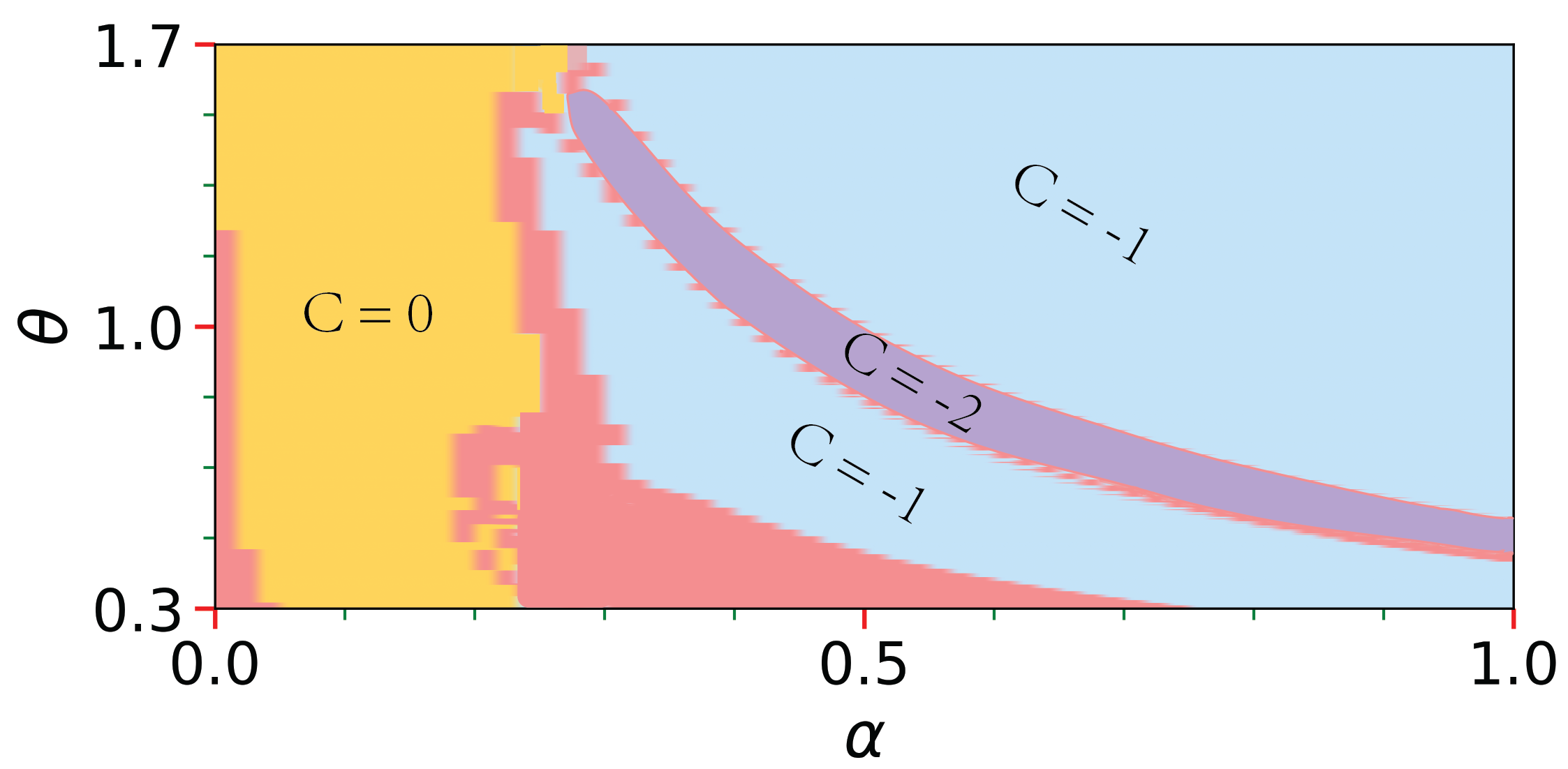
Figure 8: Phase diagram of T33 in T34 plane for fixed T35. Distinct T36, T37 phases near dice limit; trivial T38 region as T39.
Implications and Outlook
The study demonstrates that non-Hermiticity not only induces nontrivial point-gap topologies (leading to NHSE) and isolated flat bands, but also fundamentally destabilizes higher topological phases under strong asymmetric hopping. The NHMAs are uniquely robust against substrate-induced symmetry breaking, setting them apart from Hermitian magic angles and exceptional point-driven EMAs.
Practically, results indicate avenues for engineering robust flat-band states immune to substrate disorder, and for tuning topological phase transitions (and their suppression) via controlled nonreciprocal hopping. The presence of NHSE in moiré lattices could impact transport and boundary-state engineering in 2D materials, and the unique separation of flat-band and dispersive physics places twisted α0-α1 systems as a versatile playground for non-Hermitian band topology.
Theoretically, the pairwise annihilation of topological charges provides a clear mechanism for transition to trivial band topology, demonstrating that enhanced nonreciprocal dynamics can destroy higher-order topological features. Interplay between quantum geometry, moiré folding, and non-Hermiticity is critical for future exploration of flat-band-driven strongly correlated phases in material platforms beyond standard tBG.
Conclusion
Twisted bilayer α2-α3 lattices with Hatano-Nelson asymmetric hopping exhibit a unique splitting of the magic angle into three robust non-Hermitian magic angles, hosting isolated flat bands with both real and imaginary dispersion suppressed. These NHMAs are stabilized by quantum interference and immune to substrate effects, with the band structure evolving to nontrivial point-gap topology and NHSE as non-Hermiticity increases. Topological phase transitions, tracked by biorthogonal Chern invariants, are suppressed at strong nonreciprocity via pairwise annihilation of gap-closing boundaries, leaving only trivial topological phases. The work provides a rigorous framework for understanding and tuning non-Hermitian topological phenomena in moiré superlattices and sets the stage for future studies on correlation effects in engineered flat-band non-Hermitian systems.