- The paper presents experimentally feasible protocols that extend quantum gas microscopes to perform joint measurements of conjugate variables via momentum-to-position mapping.
- It details two methods: Husimi-Q microscopy for quantum-limited joint position-momentum measurements and averaged-mode microscopy for spatially resolved momentum moments via spin mapping.
- The techniques enable enhanced diagnostics of sharp potential features, quantum vortices, and many-body correlations, paving the way for advanced studies in quantum thermometry and state tomography.
Phase-Space Microscopes for Quantum Gases: Joint Measurement Protocols and Access to Momentum-Weighted Observables
Introduction
This paper presents a set of experimentally feasible protocols for extending quantum gas microscopes (QGMs) to enable phase-space resolved measurements on ultracold atomic gases (2603.29568). By mapping momentum onto auxiliary degrees of freedom—either spatial or spin—and implementing specific POVMs, these protocols allow the measurement of conjugate variables and spatially resolved, momentum-weighted observables. The work distinguishes between Husimi-Q phase-space microscopy—realizing a joint measurement of position and momentum with quantum-limited noise—and averaged-mode phase-space microscopy, which provides spatial maps of momentum moments with, in principle, arbitrary spatial resolution. The formalism and proposed experiments exploit recent advances in matter-wave optics and atomic control, enabling new types of probes for quantum many-body systems.
Phase-Space Microscopy: Protocols and Quantum Measurement Theory
Husimi-Q Phase-Space Microscopes
A primary contribution is the detailed realization of the Husimi-Q phase-space microscope in ultracold atomic systems. The approach employs a T/4 pulse in a harmonic trap to map momentum to position (the Fourier plane), followed by the application of a spatially dependent impulse coupling position to an auxiliary coordinate (typically a transverse spatial dimension, z). Restoration to real space then encodes the initial momentum as displacement in the auxiliary dimension, which is subsequently measured. This protocol implements a measurement equivalent to the Positive Operator-Valued Measure (POVM) associated with the phase-space Husimi-Q function, exactly matching the Arthurs-Kelly protocol for joint measurements of non-commuting observables.
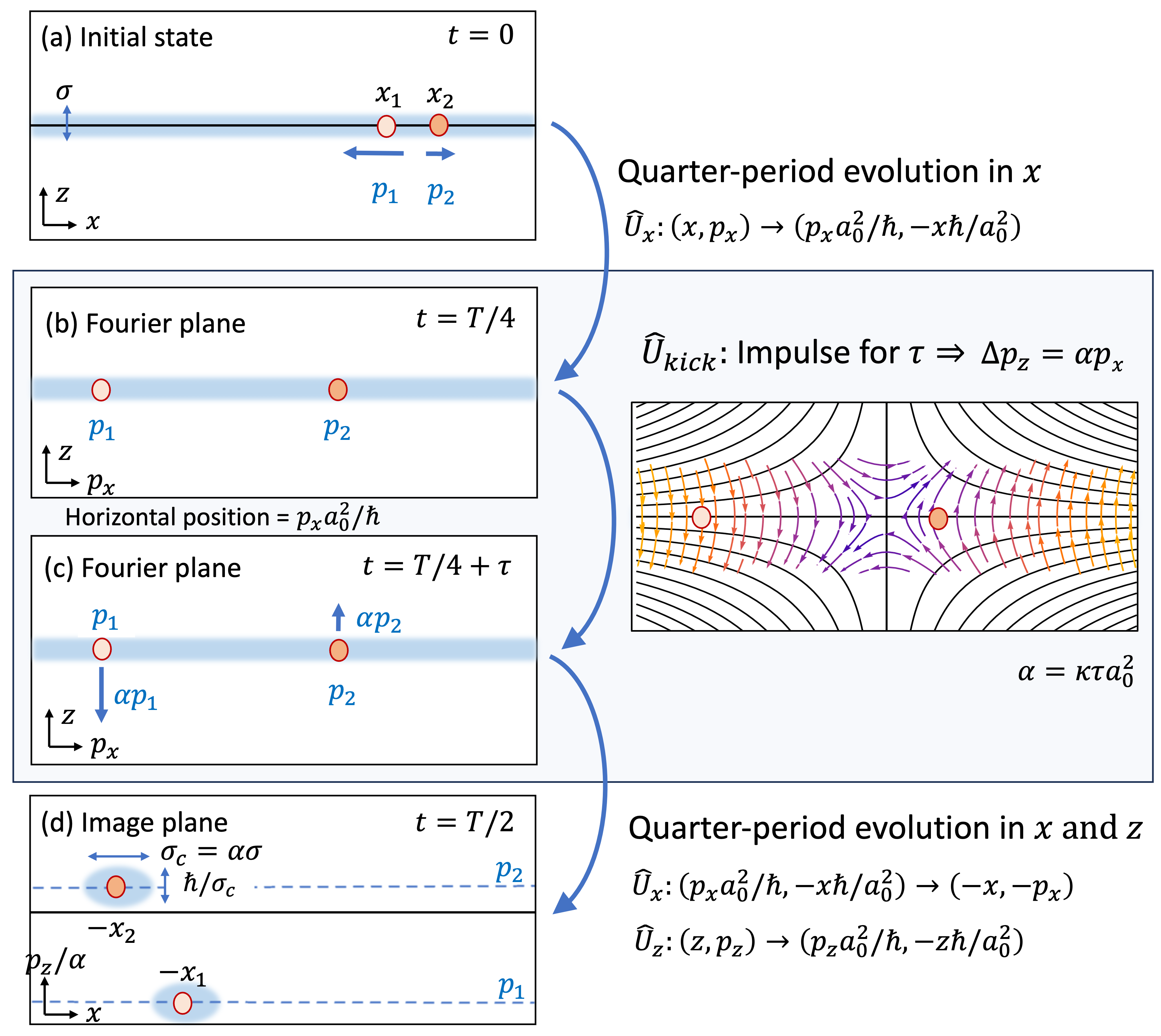
Figure 1: Protocol for mapping momentum to an auxiliary dimension to realize a 1D Husimi-Q phase-space microscope.
Crucially, the protocol allows tuning of the measurement uncertainty distribution between x and px via the width of the z ground state and the kick strength, subject to the quantum uncertainty relation. The result is direct sampling from the coherent-state (Husimi-Q) representation of the one-body state, admitting further generalization to higher dimensions and to more complex momentum mappings through the auxiliary space.
Averaged-Mode Phase-Space Microscopes
Beyond the Husimi-Q paradigm, the authors propose protocols for measuring spatial distributions of momentum moments using finite-dimensional auxiliary spaces—notably, spin-S manifolds. Through resonant, spatially structured Rabi pulses or quadratically varying Zeeman shifts in the Fourier plane, information about different moments of the momentum distribution is mapped onto populations of spin states. Subsequent projective measurement of the spin yields spatially resolved data for quantities such as the local kinetic energy density, higher order (e.g., quartic) momentum densities, and possibly higher moments for large S.
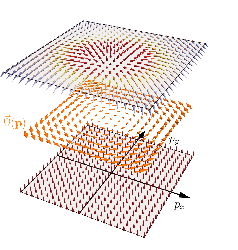
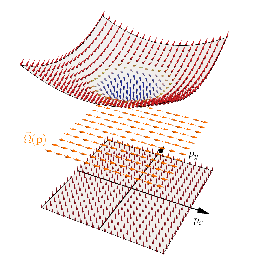
Figure 2: Protocols to map moments of the momentum density to an auxiliary spin state in averaged-mode phase-space microscopes.
Projective measurements on S^z provide access to spatial maps of density, kinetic energy density, and higher moments. In contrast to Husimi-Q microscopy, these procedures do not incur quantum-limited uncertainty due to simultaneous measurement of conjugate variables—thus, the achievable spatial resolution is limited by technical noise rather than quantum bounds.
Physical Applications and Diagnostic Power
Resolving Short-Range Physics Beyond Optical Resolution
One immediate application is the diagnosis of sharp features in real-space potentials, such as edges or barriers, whose intrinsic lengthscale is smaller than the optical imaging resolution. A conventional QGM observes a blurred density profile, insensitive to features below the point spread function width. The Husimi-Q microscope, with comparable spatial resolution, can nonetheless detect the presence of high-momentum tails generated by the sharp potential—enabling local diagnosis of step thickness and other nonlocal features.
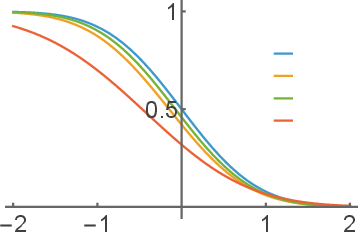
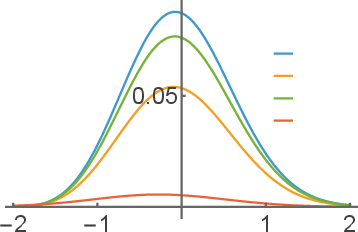
Figure 3: Sensitivity of phase-space microscopy to sharp potential steps; high-momentum tails remain detectable even when the edge is sub-resolution.
Probing Quantum Vortices and Topological Structures
Averaged-mode phase-space microscopy allows direct imaging of kinetic energy density and quartic momentum density around topological excitations such as vortices. The spatial maps of these quantities reveal distinctive peaks and ring structures tracing the core and associated circulation, as confirmed by calculations for standard vortex ansätze.
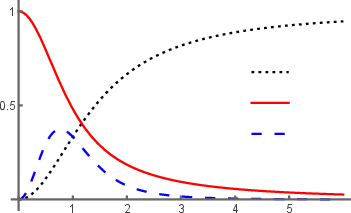
Figure 4: Density, kinetic energy density, and quartic momentum density profiles for a 2D quantum vortex.
Thermometry, Tan's Contact, and Many-Body Correlations
The ability to perform local kinetic energy measurements offers a pathway to spatially resolved thermometry, including the detection of temperature gradients, second sound, and non-equilibrium dynamics. Mapping higher moments via quartic densities provides direct sensitivity to Tan's contact—a key measure of short-range correlations and interaction effects—in spatially inhomogeneous systems. These capabilities surpass the purely global or integrated measurements available in traditional time-of-flight or Bragg probes.
The authors underscore that phase-space resolved acquisition of many-body observables opens the possibility of new diagnostic tools for strong correlation, hidden order, and even local entanglement structure, akin to POVM-based protocols used in the context of lattice spin and particle-number measurements.
Implications and Theoretical Outlook
The protocols detailed in this work extend the quantum gas microscope platform far beyond position-basis measurements, equipping experimentalists with tools for local, quantum-efficient, and flexible probing of phase-space structure. On the theoretical side, phase-space resolved observables are central to the characterization of nonclassical (e.g., squeezed, entangled) states, and the ability to perform POVMs on coherent or spin-coherent bases has direct implications for quantum tomography, state verification, and studies of quantum measurement itself.
The immediate use-cases for the proposed techniques include:
- Real-space resolved Bragg spectroscopy without excitation,
- High-fidelity studies of quantum turbulence and vortex dynamics,
- Measurements of quantum depletion and condensate fraction in the presence of spatial inhomogeneities,
- Exploration of exotic topological and strongly correlated states via high-order correlation functions and spatially-dependent momentum distributions,
- Integration with machine learning approaches for automated identification of phases, transitions, or spatial patterns.
Practically, the protocols are compatible with current-generation QGMs, leveraging technological advances in matter-wave lensing, optical control of atomic spin manifolds, and high-dimensional imaging. The potential for extension to full 2D phase space Husimi-Q measurements with large-spin atoms is highlighted as an avenue for further experimental development.
Conclusion
The paper provides a systematic, operationally explicit framework for phase-space microscopy in ultracold atomic gases, enabling quantum-limited, spatially resolved measurements of phase-space distributions and momentum-weighted observables. These protocols bridge quantum measurement theory and experimental reality, setting the stage for a new generation of diagnostic tools and fundamental tests in quantum many-body systems. Their implementation will facilitate advances in quantum simulation, thermodynamics, and the study of nonequilibrium and strongly correlated phenomena.

