- The paper shows a novel beam-steered architecture that achieves centimeter-level 3D localization using a single LED and photodiode.
- It employs model-based estimators (GLS, WLS, NL) with GA-driven beam orientation optimization to minimize the position error bound below 1.5 cm.
- The proposed design shifts complexity to the lighting infrastructure, enabling low-latency, cost-efficient performance compared to multi-anchor approaches.
Model-Based Beam-Steered Optical Wireless Positioning with Single-LED Single-Photodiode for 3D Localization
Introduction and Context
This work presents a significant advance in model-based Optical Wireless Positioning (OWP) by demonstrating a centimeter-level accuracy 3D localization architecture using only a single beam-steered LED transmitter and a single photodiode (PD) receiver. Existing high-precision OWP methods conventionally require dense, multi-LED infrastructures or multi-element receiver arrays, resulting in elevated hardware cost and deployment complexity. The central contribution lies in exploiting advances in agile beam-steering and consolidating positioning functionality to a single NIR transmitter and cost-effective PD, thereby shifting infrastructure burden from the mobile device to the lighting installation and reducing system complexity.
The architecture leverages the irradiance modulation achievable via beam steering, circumventing the need for cameras, receiver rotation, or PD arrays. By systematically steering the LED through K known orientations and capturing the variation in received-signal-strength (RSS) at fixed PD positions, the measurement data admits robust inference of both LED-to-PD direction and distance through radiometric and geometric modeling. This enables full 3D localization in a minimally-instrumented setting without the physical or training-data overheads of multi-anchor or fingerprinting approaches.
The system comprises a static LED transmitter at a fixed known position t=[0,0,H]T, capable of beam steering along a finite, optimized set of orientations {nt,i}i=1K, illuminating a test volume where a single PD receiver resides at unknown position r. The transmitter emits NIR optical power, steering its main lobe through K predetermined directions, while a single PD oriented vertically captures RSS samples per orientation. The key measurement model is a standard AWGN-perturbed Lambertian channel:
Pr,i=PthLOS,i+ni,
where hLOS,i encodes the orientation-dependent LOS channel gain, parameterized by the transmitted direction and PD location (Figure 1).
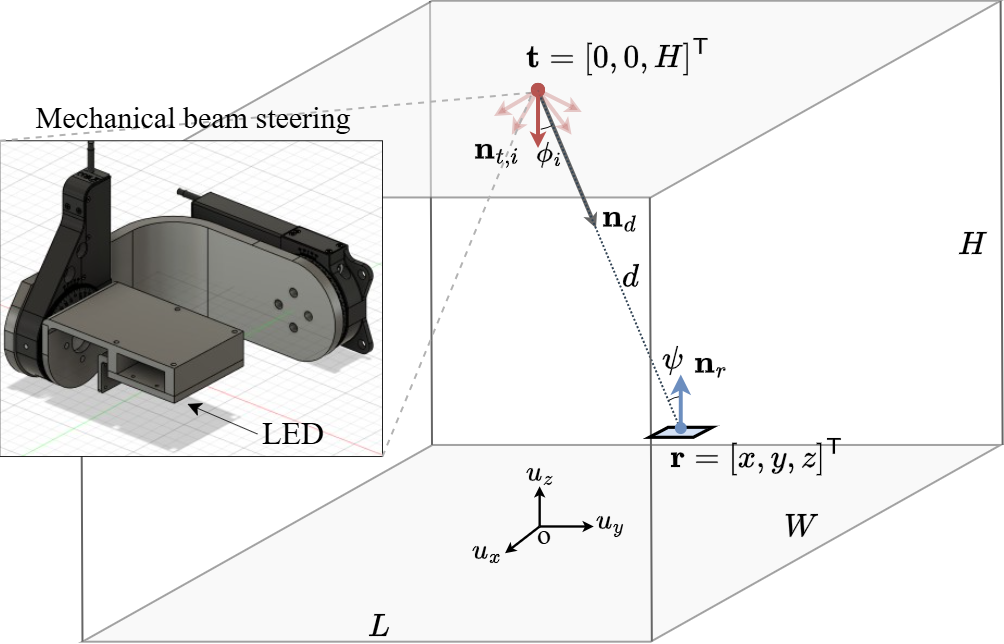
Figure 1: Single-LED/single-PD geometry. The LED at t steers through K orientations; the PD is at unknown r.
Centimeter-level positioning accuracy is enabled by aggregating signal energy measurements across a carefully designed set of transmitter orientations, with SNR and geometric diversity crucial for robust 3D inference.
Position Error Bound Analysis and Orientation Optimization
Fundamental performance is characterized by the Cramér–Rao lower bound (CRLB) for unbiased 3D position estimation, computed via the Fisher information matrix over the composite joint distribution of the t=[0,0,H]T0 mean power observations (corresponding to t=[0,0,H]T1 directions plus a final alignment step). The Position Error Bound (PEB) is employed as a scalar summary of estimator variance, providing a principled basis for design and evaluation.
The informativeness of the measurement set depends critically on the choice of steering orientations. To optimize the orientation set, the authors formalize a GA-based search minimizing the root-mean-square PEB over the testbed volume, under practical optical and mechanical constraints on the hardware.
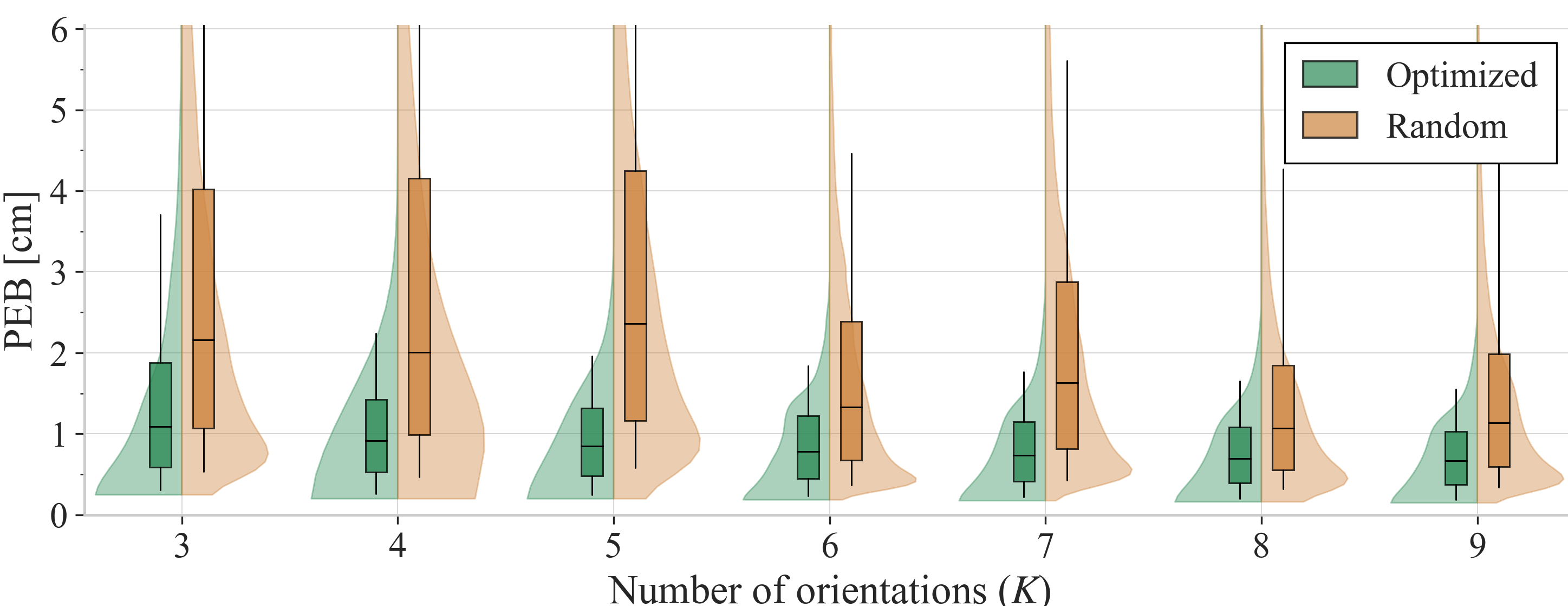
Figure 2: Distribution of the PEB across all testbed receiver locations, contrasting GA-optimized and random steering patterns.
The results show that carefully optimized orientation sets exhibit median PEB below 1.5 cm for t=[0,0,H]T2 to t=[0,0,H]T3, achieving as low as 0.74 cm at t=[0,0,H]T4. This is supported by spatial heat maps demonstrating uniformity and minimization of error, particularly in the central region of the workspace, with the GA solution outperforming random steering selection (Figure 3).
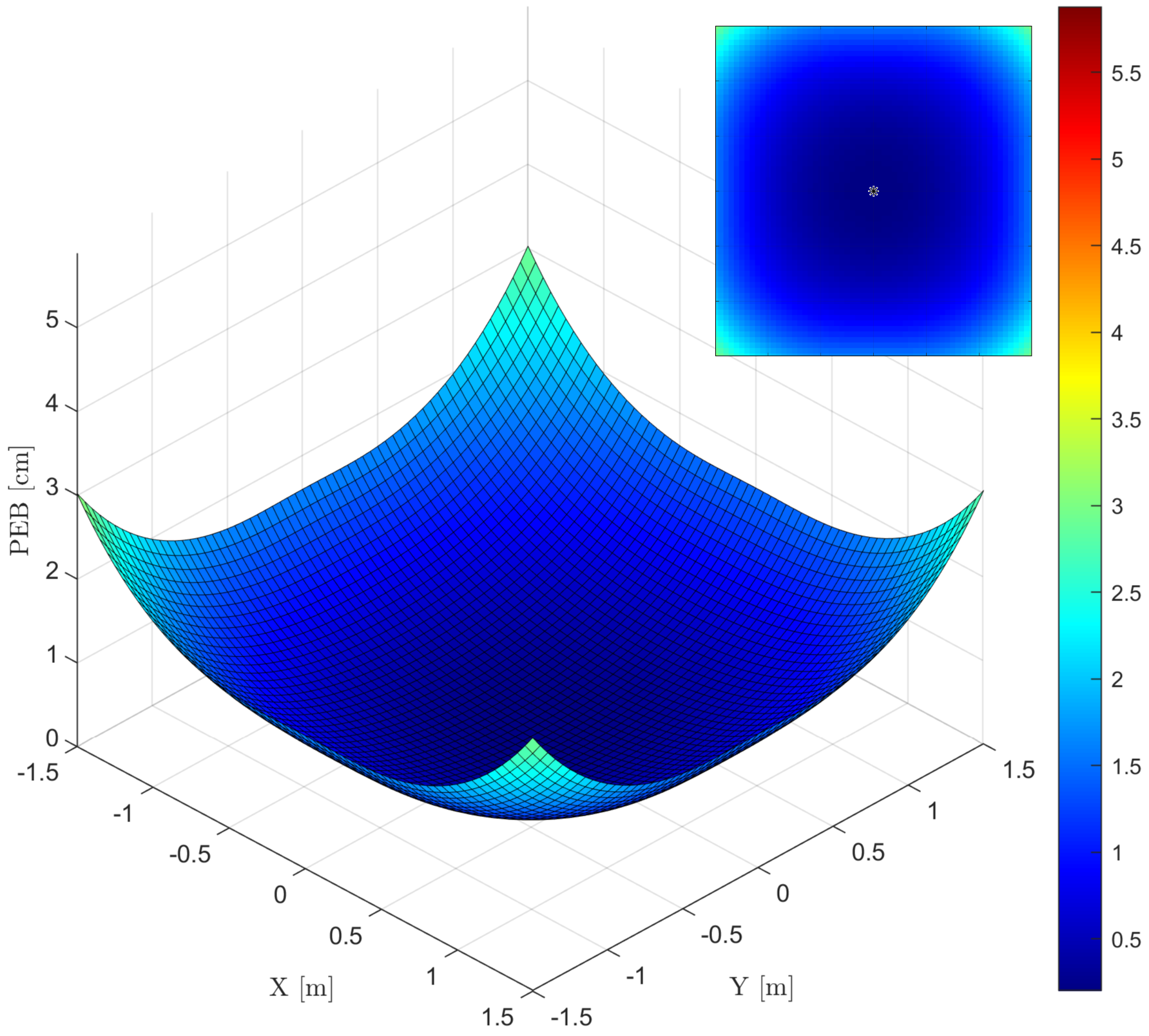
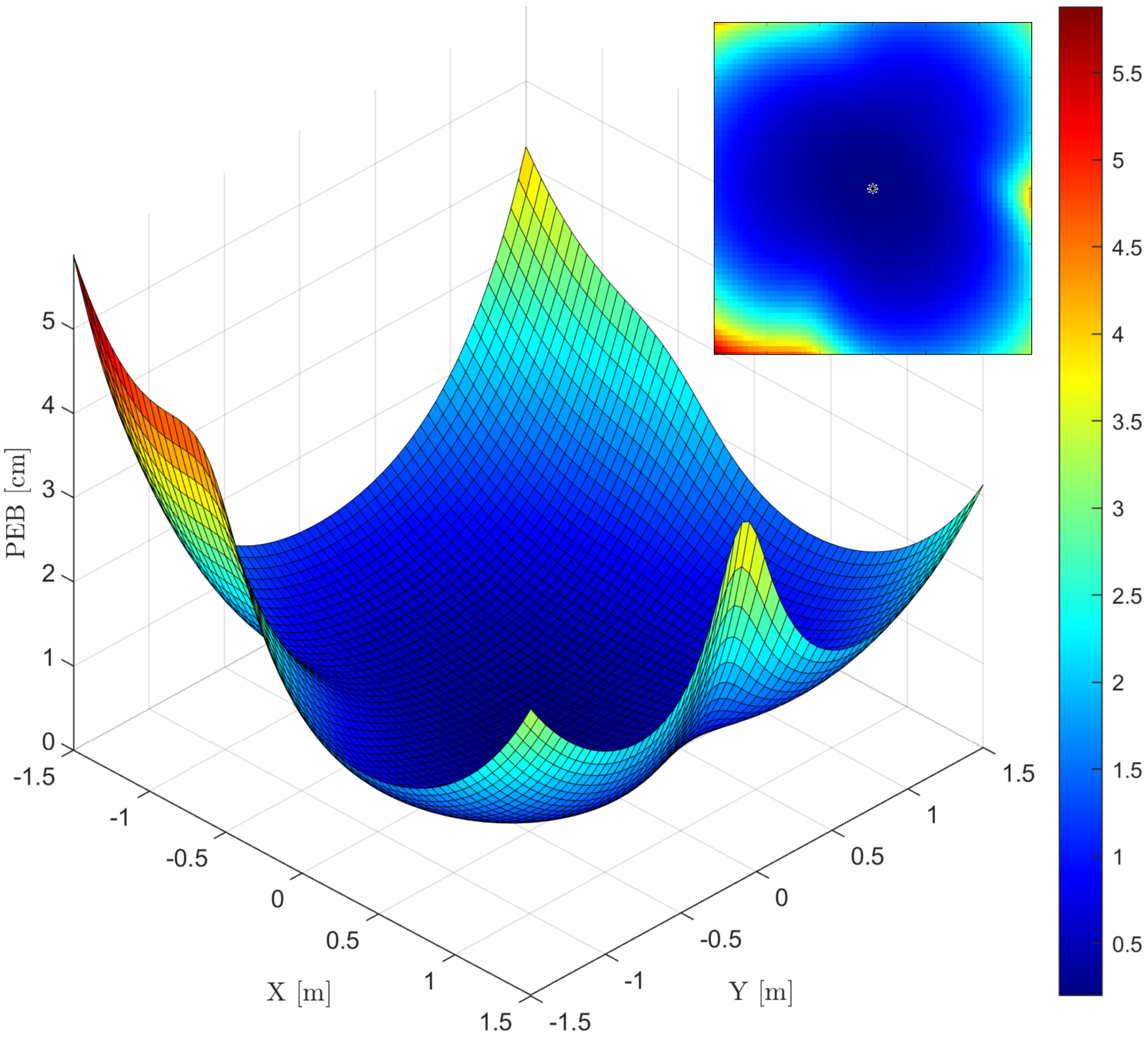
Figure 3: PEB heat maps in a t=[0,0,H]T5 floor at t=[0,0,H]T6 m, optimal (a) vs random (b) orientation sets for t=[0,0,H]T7.
The analysis reveals that at least t=[0,0,H]T8 orientations are needed for Fisher identifiability, with rapid improvements in estimator variance for t=[0,0,H]T9, but with diminishing returns in the high-{nt,i}i=1K0 regime. The design space is further explored regarding LED directivity ({nt,i}i=1K1) and SNR, evidencing that orientation diversity remains effective across channel conditions (Figures 4 and 5).
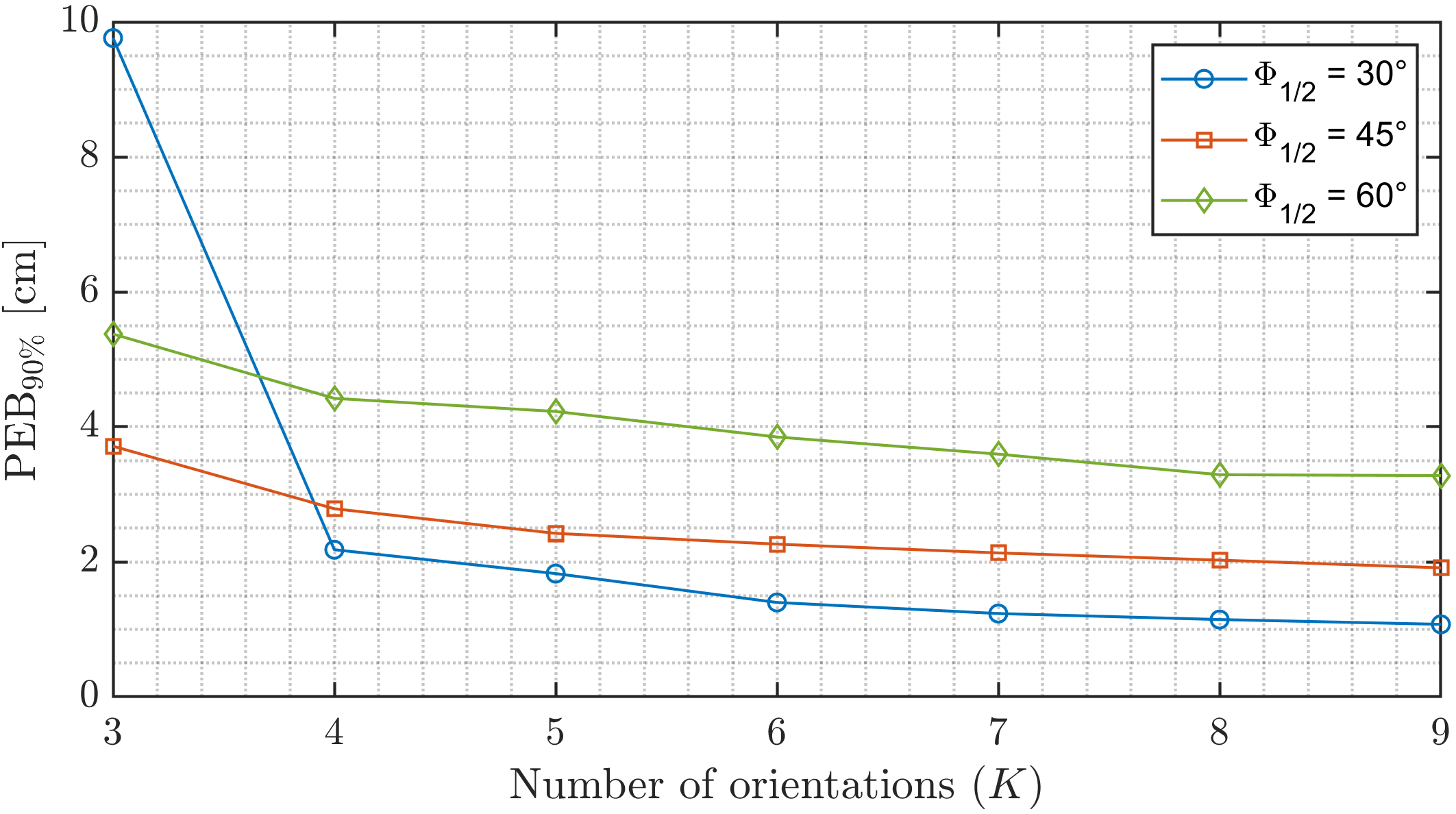
Figure 4: {nt,i}i=1K2 versus orientation count {nt,i}i=1K3, for several LED directivities.
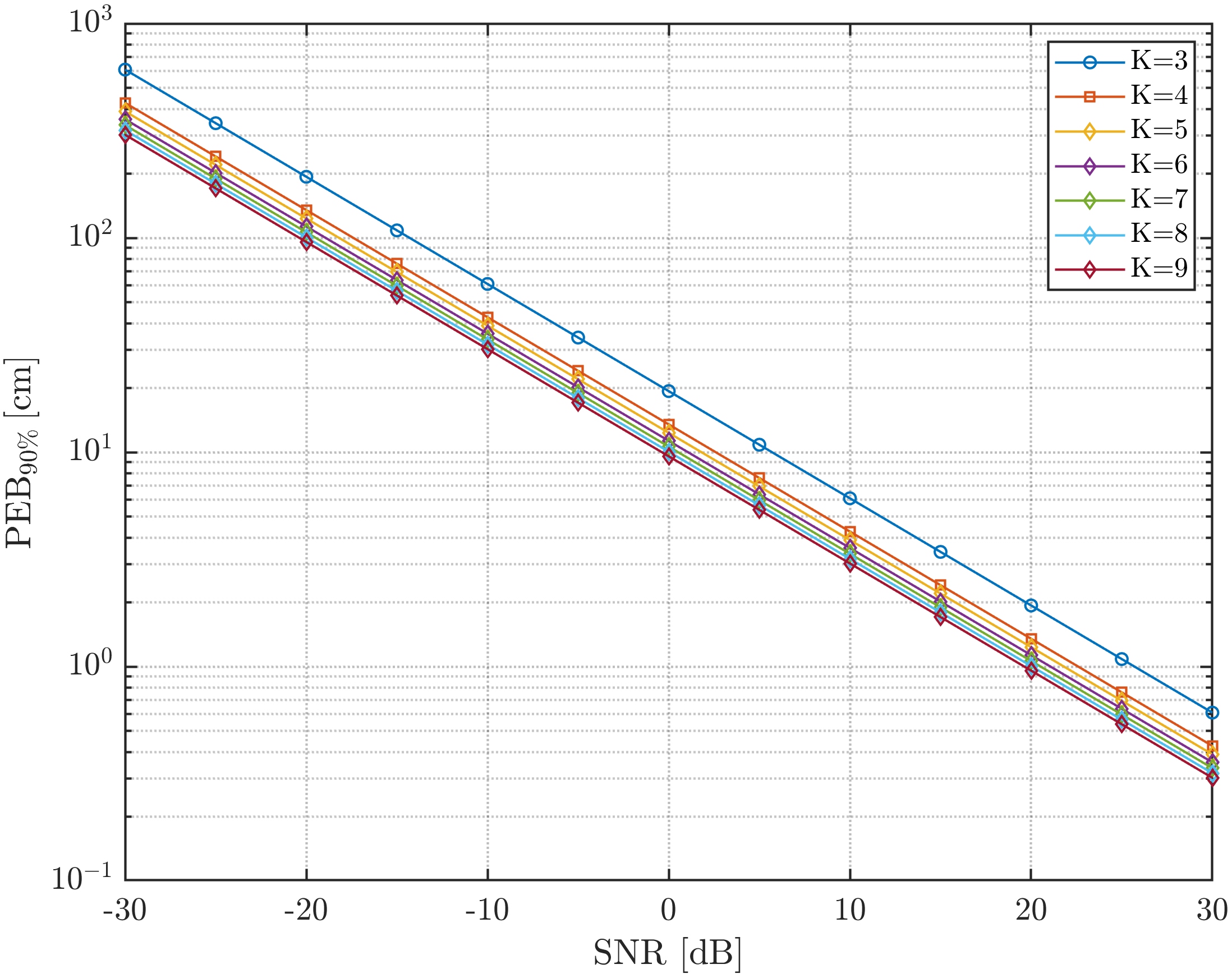
Figure 5: {nt,i}i=1K4 as a function of SNR for different {nt,i}i=1K5.
Estimator Development: Nonlinear and Linear Methods
The joint estimation problem is addressed with three model-based approaches:
- Constrained Nonlinear Estimator (NL): Directly minimizes the squared residuals between measured RSS and the full nonlinear radiometric model, subject to geometric constraints.
- Generalized Least Squares (GLS): Leverages a power ratio-based linearization, accounting for inter-orientation error correlations via the full {nt,i}i=1K6 covariance.
- Weighted Least Squares (WLS): Approximates the GLS cost with diagonal weights, substantially reducing computational burden but neglecting cross-orientation correlations.
All estimators adhere to a two-step process: estimate the direction vector via measurements under {nt,i}i=1K7 orientations, then recover the range/distance via a final measurement in the estimated direction. The GLS and WLS approaches admit closed-form solutions via eigen-decomposition of compact {nt,i}i=1K8 covariance matrices, justifying their low latency and amenability to real-time implementation.
Exhaustive simulation in a {nt,i}i=1K9 mr0 volume with realistic noise models and beamforming constraints demonstrates performance. Cumulative error distributions reveal that GLS tracks the CRLB most closely, with WLS incurring a small performance loss due to decorrelation. The constrained nonlinear method's performance critically depends on set co-design, and, without explicit weighting, is less robust to low-SNR or low-gain orientations (Figure 6).
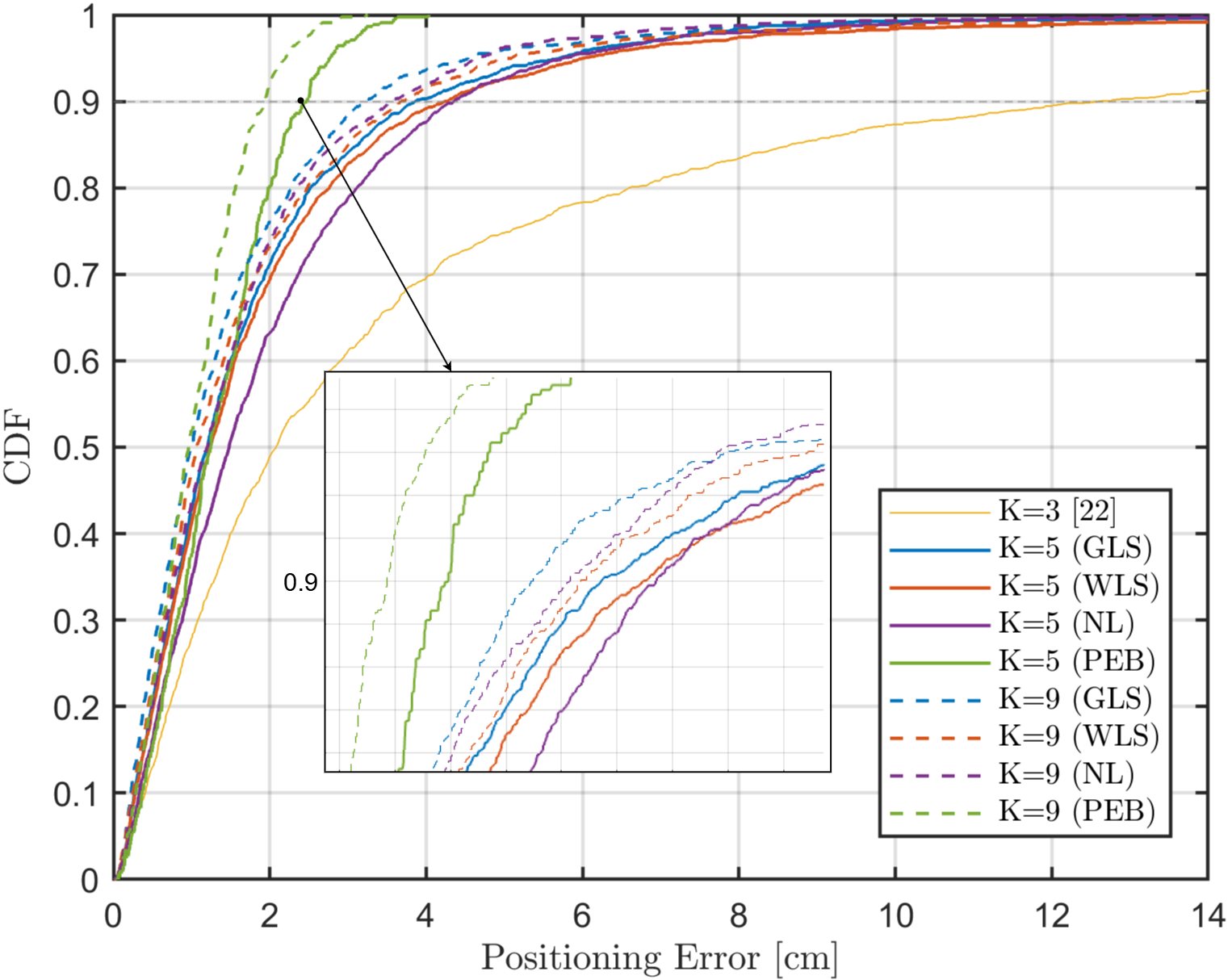
Figure 6: CDF of position estimation error for r1 for baseline, GLS, WLS, and NL estimators.
Strong numerical results include GLS achieving 2.72 cm RMSE and 3.86 cm at the 90th error percentile for r2, within r3 the CRLB (1.55 cm). Increasing r4 further narrows the bound gap (2.41 cm RMSE for GLS at r5, CRLB of 1.21 cm). Inference time is highly favorable for linear methods: sub-r6 ms for GLS/WLS vs r7100 ms for NL at r8 (Figure 7).
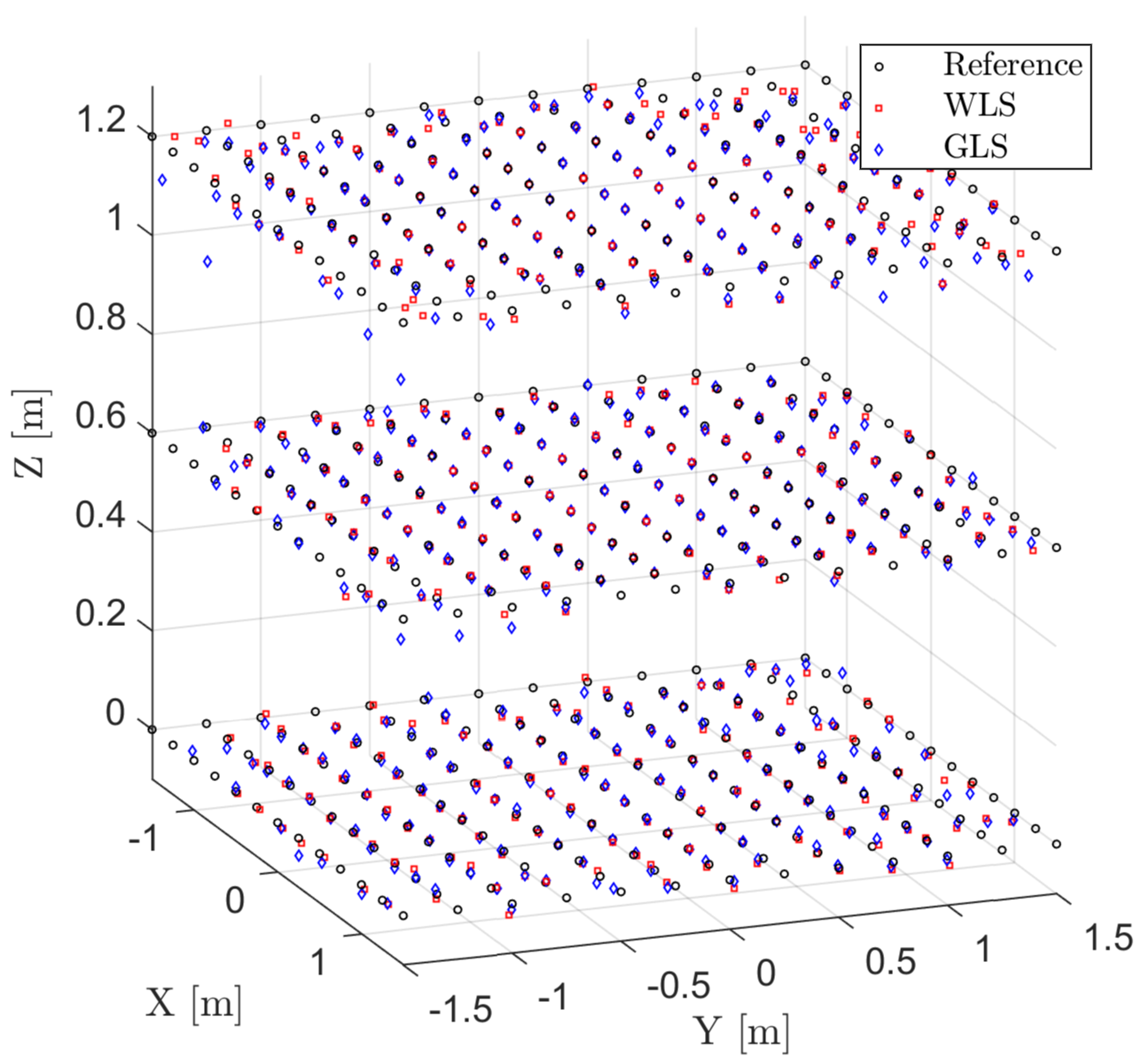
Figure 8: 3D position estimates for GLS and WLS at three different receiver heights for r9.
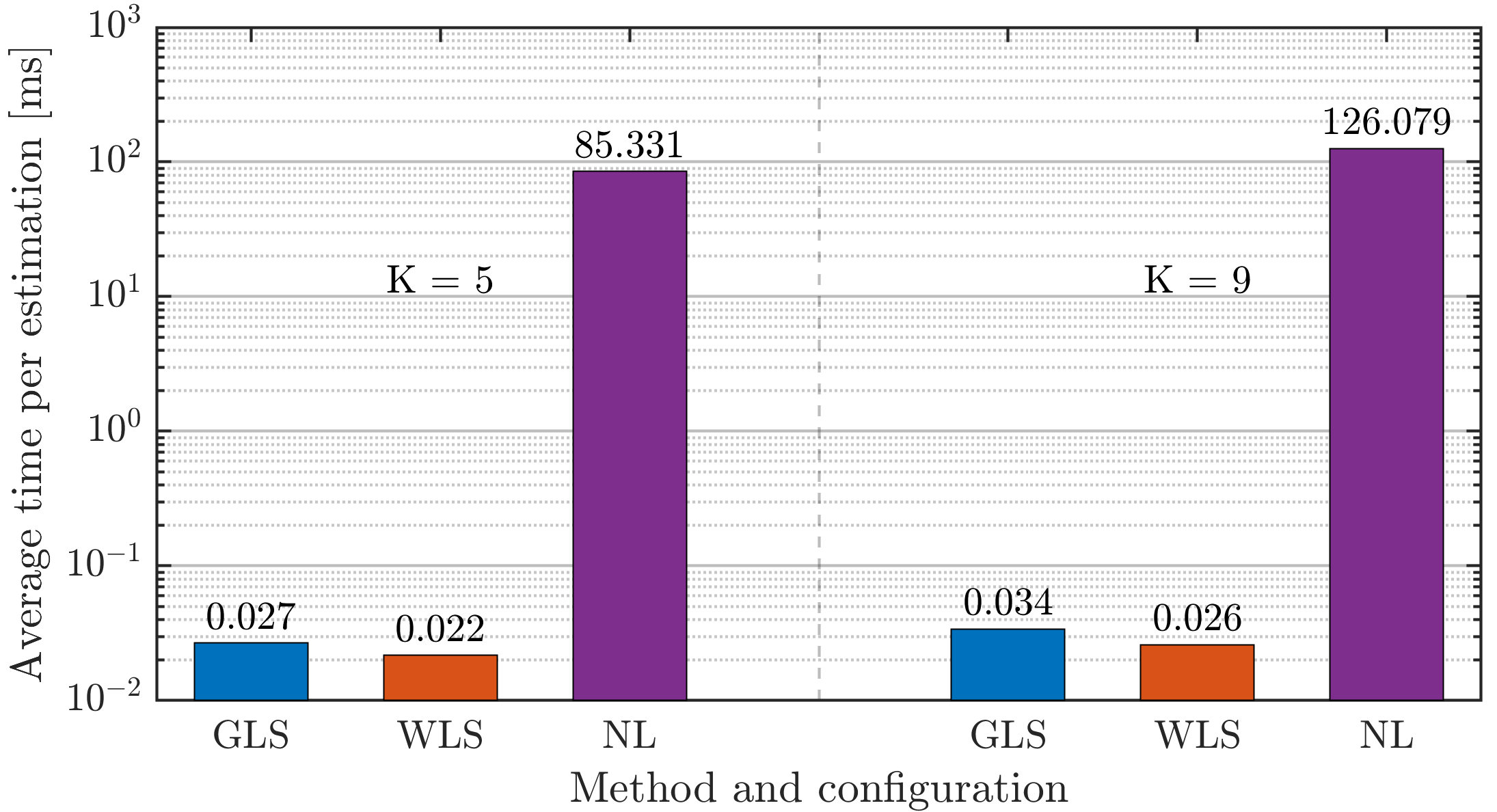
Figure 7: Computational latency for NL, GLS, and WLS estimators, highlighting microsecond-level operation for linear methods.
Compared to existing approaches, the results substantially reduce error and complexity, obviating dense PD arrays, user-side rotation, or hardware modifications. The architecture is readily extensible to multi-user scenarios, as the steering schedule can be shared among multiple receivers.
Implications and Future Developments
The architecture's deployment-friendliness is noteworthy. Shifting complexity to the infrastructure (narrow-beam steering at a single NIR source) and limiting user hardware to a single vertical PD maximizes cost and power efficiency, while mitigating calibration and installation burdens typical of multi-anchor solutions.
Theoretically, the work underscores the value of model-based, physically grounded estimators, which enjoy robustness to domain shift, interpretable performance metrics, and sample efficiency compared to black-box or data-driven localization paradigms. The closed-form linearization approach demonstrates that optimal estimators can be both computationally efficient and statistically near-optimal when covariances are accurately accounted for.
Potential future directions include:
- Physics-informed learning: Integrate gray-box estimator architectures that use the explicit physical model and learn residual corrections, balancing interpretability with domain adaptation.
- Experimental validation: Physical testbed demonstration is needed, especially with commercial beam-steering hardware and under ambient interference and occlusions.
- Integrated sensing and communication: Extend framework to joint optical wireless communication and positioning (LiFi), leveraging the same infrastructure for dual purpose.
- Multi-user and dynamic environments: Study scalability and update strategies for highly dynamic, multi-agent settings.
Conclusion
The proposed beam-steered single-LED, single-PD OWP solution establishes a new state-of-the-art for 3D model-based indoor localization with low cost, infrastructure-light deployment, and exceptional performance. The combination of formal CRLB analysis, GA-driven steering optimization, and closed-form estimator design yields an efficient, interpretable, and practically deployable solution that approaches theoretical performance limits. The research provides a compelling path for future OWP/LiFi system architectures in indoor navigation, robotics, and smart environments.
Reference:
"Model-Based Beam-Steered Optical Wireless Positioning with Single-LED Single-Photodiode for 3D Localization" (2603.29400)