- The paper presents a co-design framework that synthesizes safety controllers for networked control systems by incorporating robust estimation of communication-induced state errors.
- It employs LMIs for joint controller and invariant set synthesis, ensuring safety under disturbances and communication imperfections.
- Empirical results in a truck-trailer cruise control scenario validate that closed-loop safety is maintained within prescribed bounds despite non-ideal communication conditions.
Communication-Aware Synthesis of Safety Controllers for Networked Control Systems
Introduction
The paper "Communication-Aware Synthesis of Safety Controller for Networked Control Systems" (2603.29392) addresses the synthesis of safety controllers for discrete-time linear NCS subject to unknown disturbances and imperfect communication. Unlike earlier methodologies that presuppose ideal communication channels, this approach considers real-world network-induced imperfections—such as packet loss, delays, and bandwidth limitations—and formalizes safety guarantees via robust invariant sets without explicitly modeling the communication channel. Instead, channel impacts are encapsulated in estimated state error bounds, which are then incorporated jointly with controller synthesis.
The framework considers a discrete-time linear plant with a state-feedback controller. Imperfect uplink communication (sensor to controller) leads to state estimation errors, modeled via a Kalman filter. The communication error is neither stochastically nor deterministically parameterized with a specific model, but bounded using properties of the Kalman filter error covariance. The closed-loop evolution is thus:
x(k+1)=(A+BK)x(k)+BKeup(k)+d(k),
where eup(k) is the communication-induced state estimation error and d(k) is a bounded disturbance. The main control objective is the synthesis of a state-feedback gain K and a safety set S such that all closed-loop trajectories initialized in S remain therein for all time steps, under the combined effects of disturbances and communication errors.
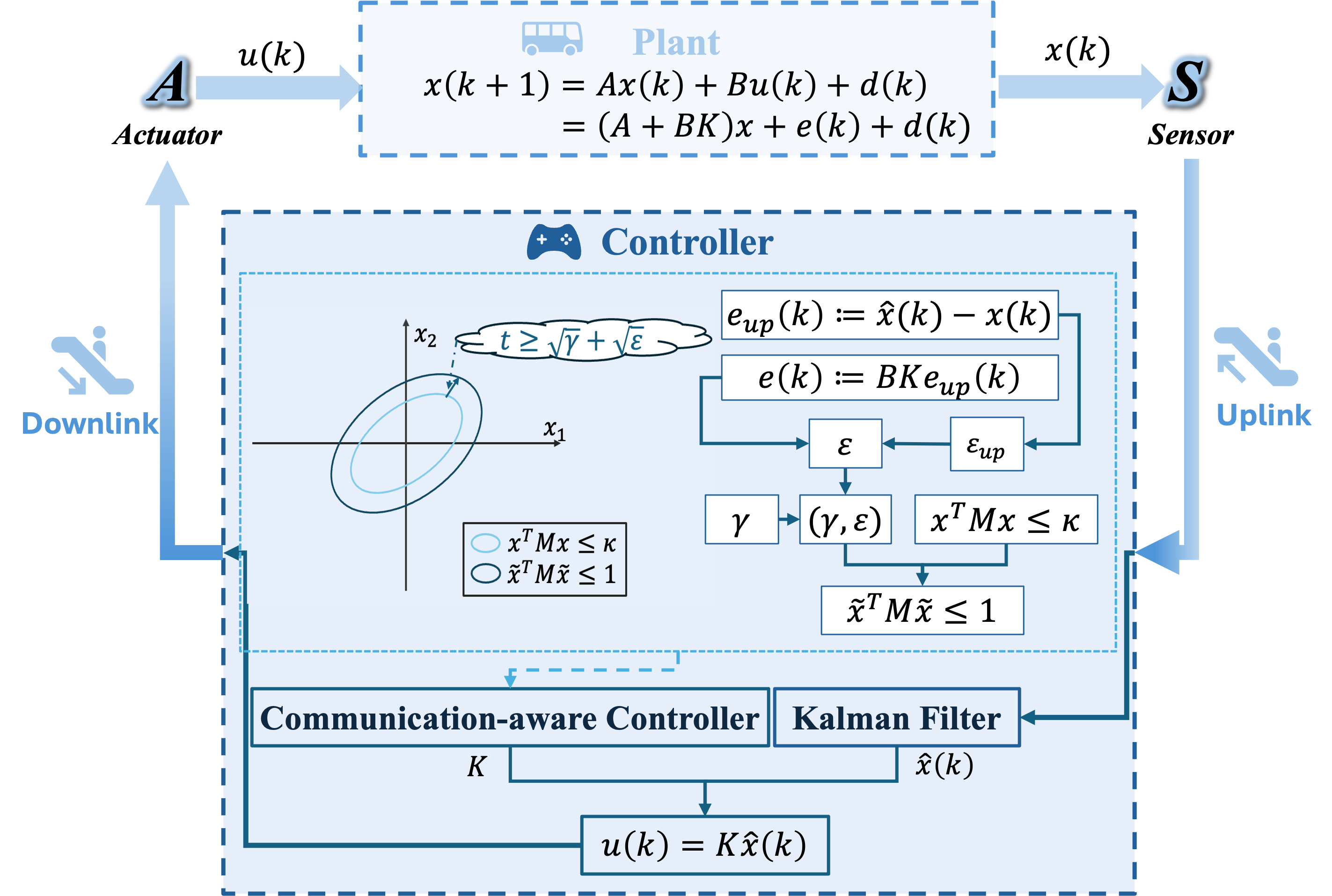
Figure 1: Overall Architecture of the Communication-aware Control System.
Communication Error Bound Analysis
A salient technical contribution is the computable upper bound on the system state estimation error due to communication unreliability, leveraging Kalman filter theory without requiring channel-specific statistics or models. The error covariance recursion is upper-bounded in terms of the closed-loop dynamics, establishing a feedback-coupled dependency between the controller K and communication robustness.
Given channel-induced estimation inaccuracy, the steady-state error bound depends on the spectral radius of A+BK. When this is contractive (gˉ2≤1), the error bound converges. The state error upper bound is then a function of the closed-loop operator norm and disturbance/innovation covariances, explicitly encapsulated in the synthesis pipeline.
Safety Controller Synthesis via Robust Invariant Sets
Safety is enforced through the concept of (γ,ε)-robust safety invariant (RSI) sets: ellipsoidal sets that remain invariant under all admissible disturbances and any communication-induced error satisfying the derived bound. The synthesis task is formalized as a joint optimization problem: maximize the volume of the invariant set eup(k)0 (subject to the system, input, and state constraints), simultaneously selecting eup(k)1 so that the communication error bound and ellipsoidal invariance conditions are both satisfied.
The invariance and safety requirements are encoded as a set of LMIs that are solved via semidefinite programming. This yields both the controller and the invariant set, resolving their mutual dependence iteratively:
- Co-design paradigm: The communication error bound depends on the closed-loop controller, while controller feasibility is constrained by the error bound—necessitating iterative or coupled synthesis.
- Convexity: The LMI-based formulation ensures computational tractability.
- Input constraints: The synthesis guarantees that inputs remain within specified hard bounds under all uncertainties.
Empirical Validation: Cruise Control Case Study
The framework is instantiated on a truck-trailer cruise control problem, which is representative for NCS under realistic operating conditions. The coupling between the vehicles is represented as a spring-damper system. The plant operates under state constraints (on position and velocity) and control limits (on truck acceleration). Multiple communication imperfections are considered in the simulation: random packet loss, quantization, bandwidth limitation, and time delay.
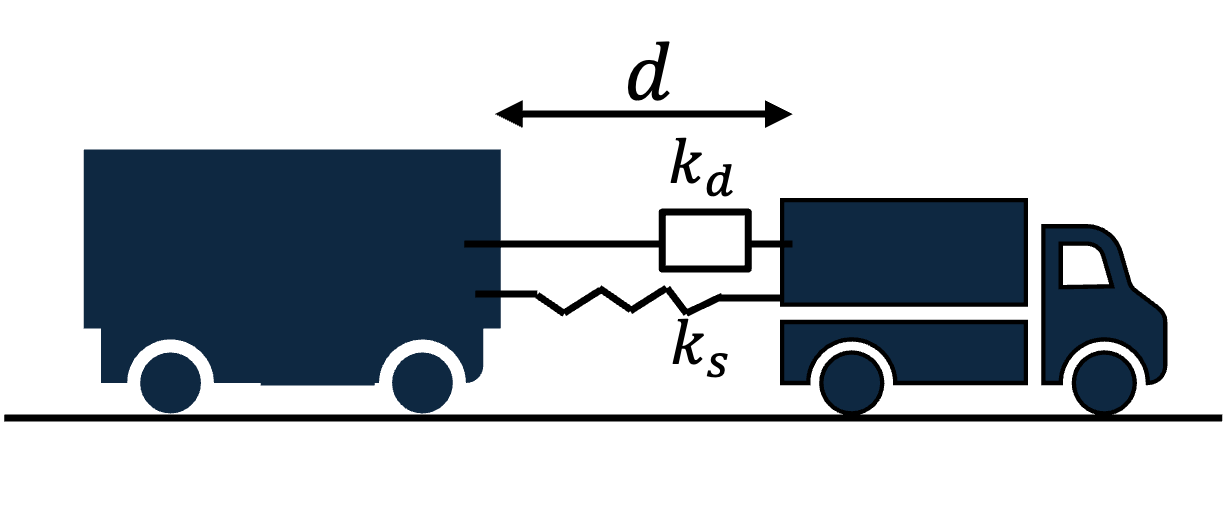
Figure 2: Cruise control for a truck-trailer system with specified spring-damper parameters.
By applying the synthesized communication-aware controller:
- All closed-loop state trajectories sampled from the invariant set remain within the prescribed safety envelope throughout 200 time steps, even under simultaneous communication errors and external disturbances.
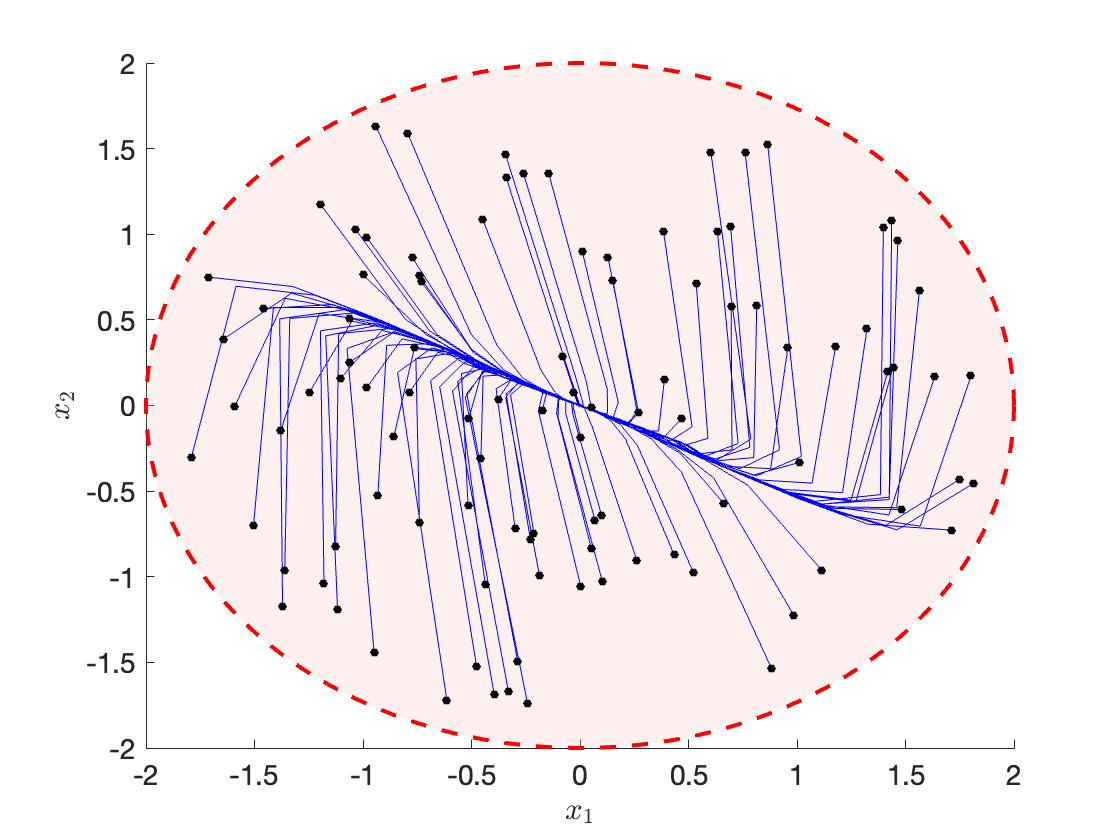
Figure 3: State trajectories of the system evolving within the eup(k)2-RSI set under communication constraints.
- Control actions respect all input bounds across sampled trajectories.
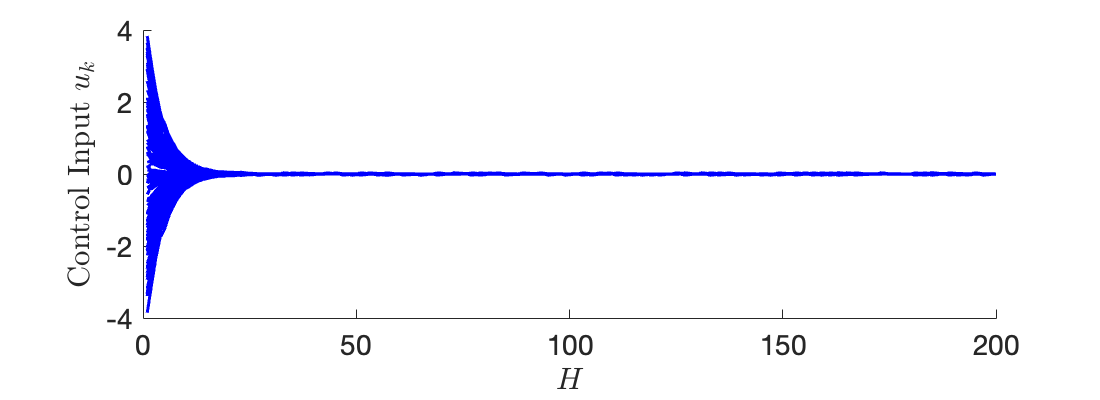
Figure 4: Control inputs eup(k)3 applied to the system.
- The maximum observed system state error (eup(k)4) remains well below the computed theoretical bound (eup(k)5).
These results provide strong experimental validation that safety is maintained under a diverse range of communication imperfections, supporting the theoretical claims on formal safety guarantees.
Implications and Future Prospects
The approach broadens the applicability of formal safety certification in NCS by removing the restrictive requirement for explicit channel models. The mutual coupling between control synthesis and communication error—which typically induces intractability—is addressed by a numerically efficient convex optimization framework. The use of ellipsoidal RSI sets offers computational and theoretical advantages for higher-dimensional plants.
Practical implications include applicability to diverse CPS domains (e.g., automotive, industrial automation, robotics) where network-induced uncertainties are commonplace and domain-agnostic safety controllers are desirable. The methodology can be extended beyond linear settings through robust or data-driven set-approximation technologies.
Looking forward, the framework establishes a solid foundation for integrating communication-aware formal safety constraints into higher-level AI-based decision layers. For example, it could serve as a supervisory “sandbox” for learning-enabled or black-box controllers, ensuring safety even as most of the decision-making stack is handled by non-transparent policies.
Conclusion
This paper presents a mathematically rigorous and computationally efficient co-design framework for safety controller synthesis in discrete-time linear NCS affected by general communication errors and disturbances (2603.29392). By jointly analyzing estimation errors via Kalman theory and embedding them into an LMI-based controller synthesis pipeline, robust safety is certified without explicit channel modeling. Numerical results on a truck-trailer system highlight the effectiveness and practicality of the method. The proposed methodology has direct relevance for safety-critical CPS and offers a promising path for certifiable integration with intelligent, learning-based controllers.

