- The paper introduces an RCP that integrates mandates from 15 authorities into five compliance domains, ensuring robust asset tokenization.
- It employs a modular design with RBA, smart contracts, and continuous monitoring to enforce compliance from issuance to settlement.
- Comparative evaluation shows RCP exceeds legacy ERC standards, achieving compliance with 25 of 31 control items for enhanced interoperability.
Regulatory Compliance Protocol for Asset Interoperability in Tokenized Capital Markets
Protocol Design and Rationale
The Regulatory Compliance Protocol (RCP) is engineered to integrate multifaceted regulatory controls for asset tokenization across both Traditional Finance (TradFi) and Decentralized Finance (DeFi) systems. Unlike legacy ERC protocols, RCP assimilates the regulatory mandates from 15 major financial authorities, categorizing requirements into five domains: Traceability, Confidentiality, Enforceability, Finality, and Tokenizability. These domains encapsulate 31 granular control items, covering identity verification, asset freezing, transaction limits, role-based permissions, expiry settings, and legal document attachment.
RCP achieves this by establishing a standardized protocol layer—neutral to jurisdictional idiosyncrasies and adaptable to evolving regulatory landscapes. Mechanisms such as Risk Based Approach (RBA) for KYC/AML are embedded, enforcing compliance from issuance, trading, settlement, and redemption phases of digital assets. RCP's modular design facilitates compatibility with distributed ledger infrastructures and EVM-based smart contracts, surpassing the coverage and control granularity of ERC-1400 and ERC-3643.
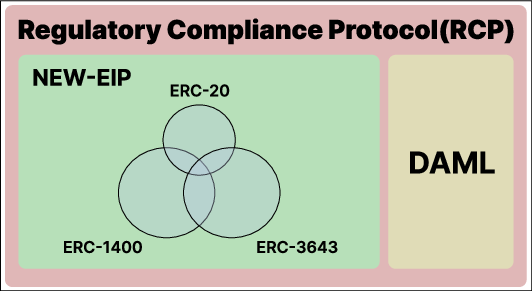
Figure 1: Regulatory Compliance Protocol structure emphasizing multi-domain controls and modular compliance mechanisms.
Scenario Methodology and Control Implementation
Bond Issuance and Lifecycle
RCP provides stringent regulatory assurances throughout bond issuance, trading, and settlement. The protocol instantiates compliance at every stage:
Carbon Credit Tokenization
In the carbon credit scenario, RCP integrates legal document management, role-based permissioning, token divisibility/expiration, and blacklist enforcement. The protocol enables non-fungible token issuance with rigorous compliance across lifecycle stages. Regulatory bodies leverage RCP to monitor and intervene in trading, enforce audit trails, and ensure asset recovery or burn as needed for environmental finance constructs.

Figure 3: Flow of Carbon Credit scenario, showing asset issuance, compliance checks, trade restrictions, and burn mechanisms.
TradFi-DeFi Interoperability
RCP synergizes with DLTs such as DAML, enabling granular rights modeling, privacy enforcement, and atomic settlement across TradFi and DeFi domains. This scenario demonstrates mediation of regulatory barriers, ensuring bidirectional asset flows with comprehensive compliance and operational finality. DAML contract abstractions are employed for privacy-sensitive data, leveraging RCP for regulatory controls and oraclizer services for cross-chain asset transfers and settlement.

Figure 4: Flow of interoperability scenario between TradFi and DeFi, highlighting the atomicity and regulatory integration of asset flows.
Comparative Evaluation and Superiority
Quantitative analysis of regulatory coverage reveals that legacy protocols (ERC-20, ERC-1400, ERC-3643) meet only a fractional subset of the 31 RCP requirements—primarily those related to Finality and Tokenizability. The new protocol proposal (NEW-EIP), structured around RCP, achieves compliance with 25/31 items at the protocol layer, with the remaining six addressable via DLT extensions. Regulatory acceptance is further substantiated by the tabulated institutional compliance matrix, which demonstrates that NEW-EIP covers the majority of regulatory provisions required by entities such as IOSCO, FATF, BIS, HKMA, EU, and FINRA.
The explicit functional integration of regulatory controls—blacklist management, forced liquidation, role-based permissioning, asset class management, and legal document anchoring—renders RCP-based tokenization services uniquely qualified for issuance, trading, and settlement of traditional financial assets in a manner that is both legally robust and operationally efficient.
Implications and Future Directions
RCP establishes a neutral, scalable benchmark for regulatory control in tokenized capital markets, facilitating secure and compliant interoperability between legacy financial systems and modern DeFi constructs. The practical implications include:
- Regulatory Certainty: Minimization of legal risk and enhanced global investor trust via transparent compliance.
- Operational Interoperability: Seamless asset exchange across jurisdictions and platforms, supported by modular integration with DLTs and smart contracts.
- Market Efficiency: Fractional ownership, automated settlement, and enhanced liquidity without compromising regulatory mandates.
Future developments are expected in protocol extensibility, with real-time regulatory updates, advanced privacy-preserving techniques, and integration with emerging asset classes. The refinement and adoption of RCP may drive institutional acceptance, enabling broader financial innovation and market expansion.
Conclusion
The Regulatory Compliance Protocol delivers a comprehensive technical foundation for asset tokenization, laying the groundwork for secure, compliant, and interoperable capital markets. By standardizing and enforcing the multi-domain recommendations of global financial authorities, RCP represents a substantive advancement over existing ERC standards, enabling robust tokenization of traditional financial assets and facilitating innovation in both TradFi and DeFi sectors (2603.29278).
