- The paper introduces a three-step diagnostic protocol to validate genuine chaotic behavior in planar systems by rigorously differentiating artifacts from true chaos.
- It demonstrates that regularization techniques applied to the CDK model remove spurious chaos, confirming that irregularities vanish under smoothing.
- Numerical diagnostics in nonsmooth ODEs reveal robust chaos characterized by positive Lyapunov exponents, broadband spectra, and fractal dimensions.
Diagnostic Criteria for Distinguishing Planar Chaos in Singular and Nonsmooth Systems
Introduction
This paper presents a comprehensive assessment of chaos diagnostics in two-dimensional autonomous ODE systems with singularities or nonsmooth terms (2603.29243). It articulates a precise, reproducible protocol for differentiating genuine chaotic behavior from artifacts arising due to singularities, non-Lipschitz vector fields, or discretization errors. Emphasis is placed on the Cummings-Dixon-Kaus (CDK) model, its regularization, and a nonsmooth model featuring genuine chaos. Theoretical claims are corroborated by rigorous bifurcation analysis and numerical benchmarks, leading to a proposed standard protocol for future explorations of chaos in low-dimensional dynamical systems.
Chaos Diagnostic Protocol and Conceptual Framework
The authors articulate a diagnostic approach grounded in the mathematical constraints of the Poincaré-Bendixson theorem, which precludes true chaos in smooth, autonomous planar flows. The protocol asserts that, for a claim of chaos to be valid in such systems, invariance under time step refinement, parameter perturbation, and persistence after smoothing or regularization is required. Genuine chaotic attractors must be validated through positive Lyapunov exponents, broadband spectra, and fractal dimension estimates, while apparent chaos tied to singularities or artifacts must be systematically excluded.
This methodology unifies previous isolated analyses, providing conceptual clarity on the distinction between robust low-dimensional chaos and complexity arising from violations of smoothness or uniqueness.
The Cummings-Dixon-Kaus Model: Apparent Chaos and Regularization
A central focus is the CDK model, which describes neutron star magnetization dynamics via a singular planar vector field:
x˙=x2+z2xz−ax z˙=x2+z2z2−bz+b−1
Numerical simulations of the unregularized model reveal erratic, aperiodic trajectories and strong sensitivity to initial conditions (Figure 1). These characteristics resemble classical chaos, yet the model's singularity structure invalidates the direct application of the Poincaré-Bendixson theorem.
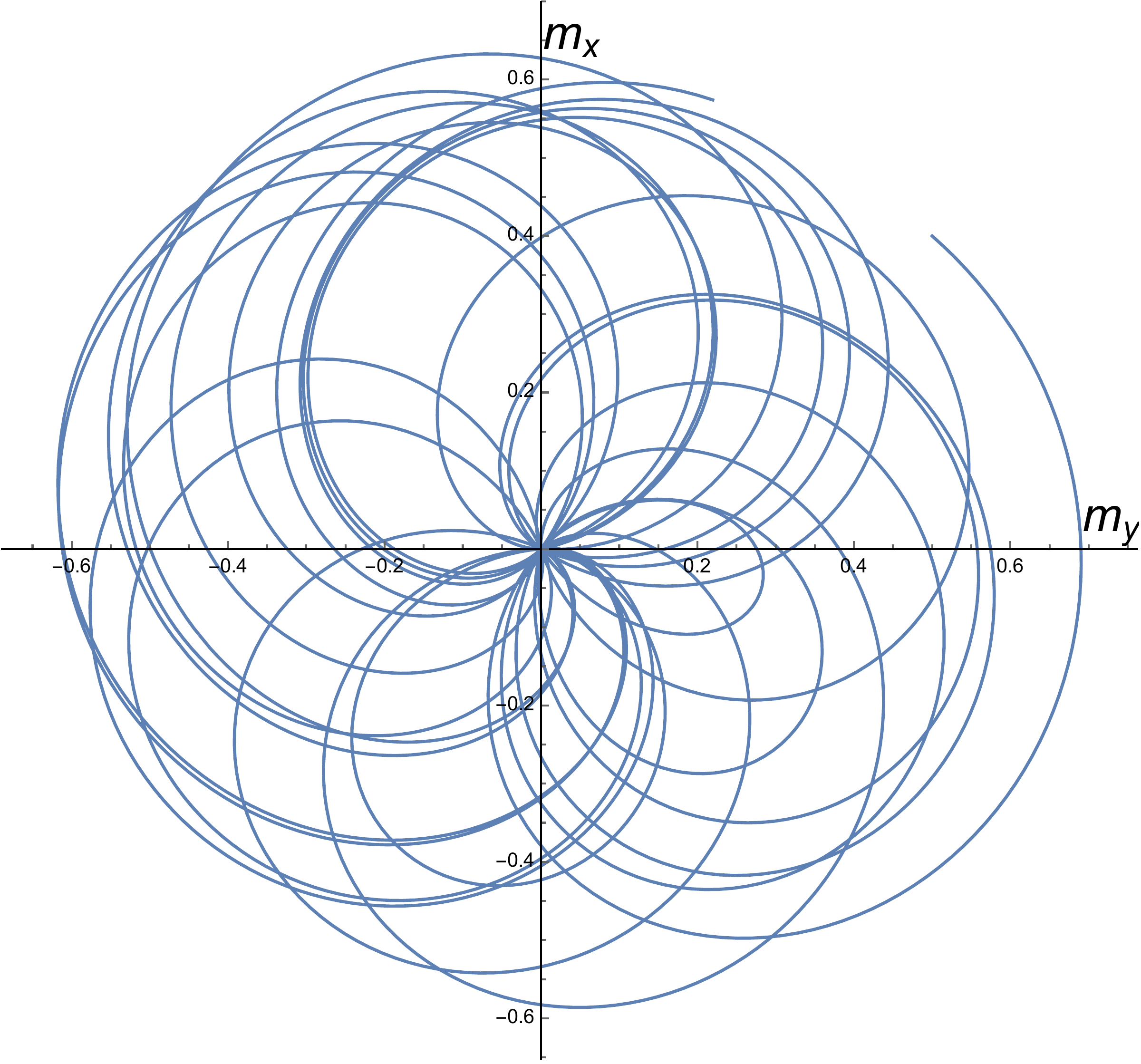
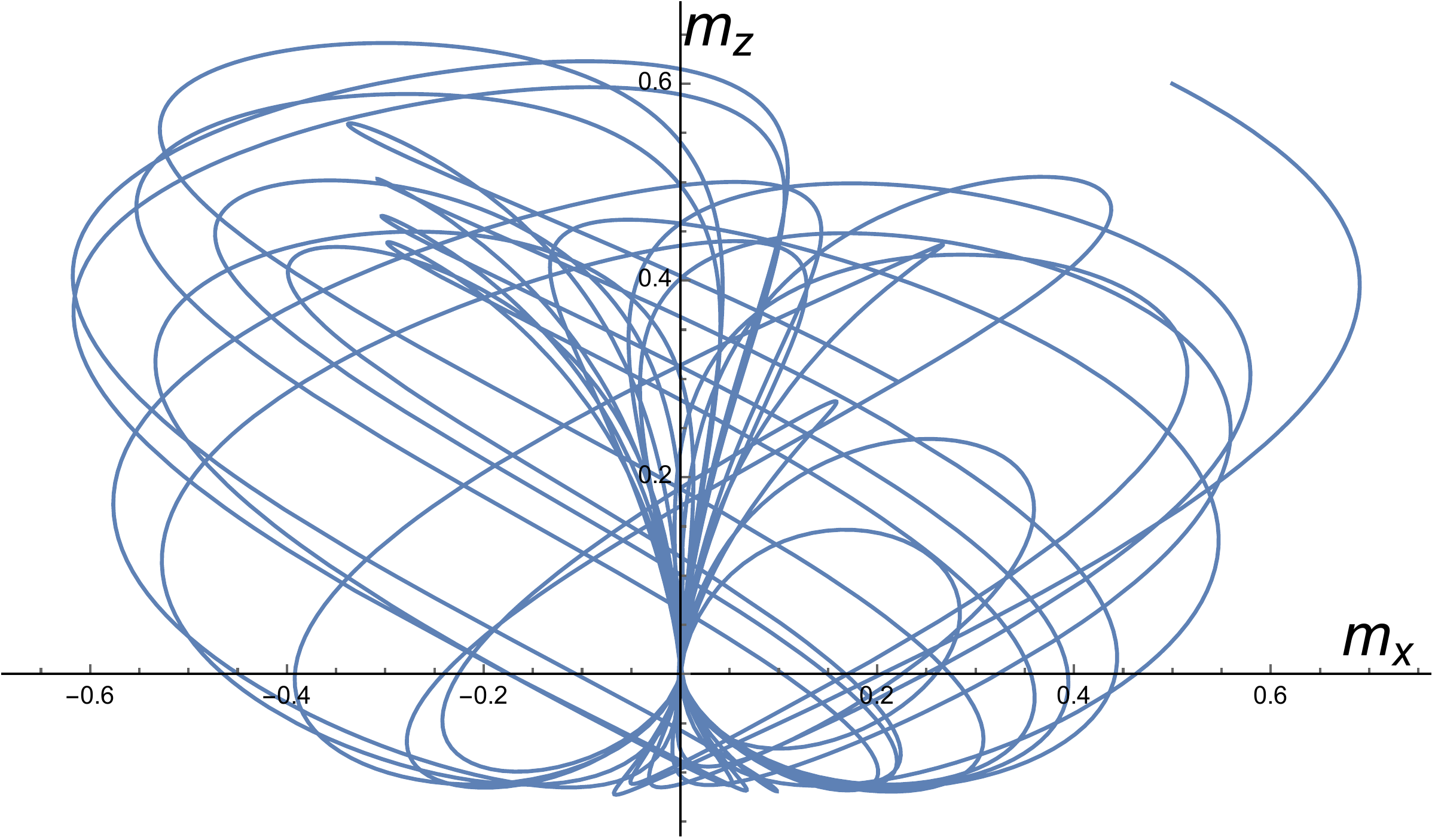
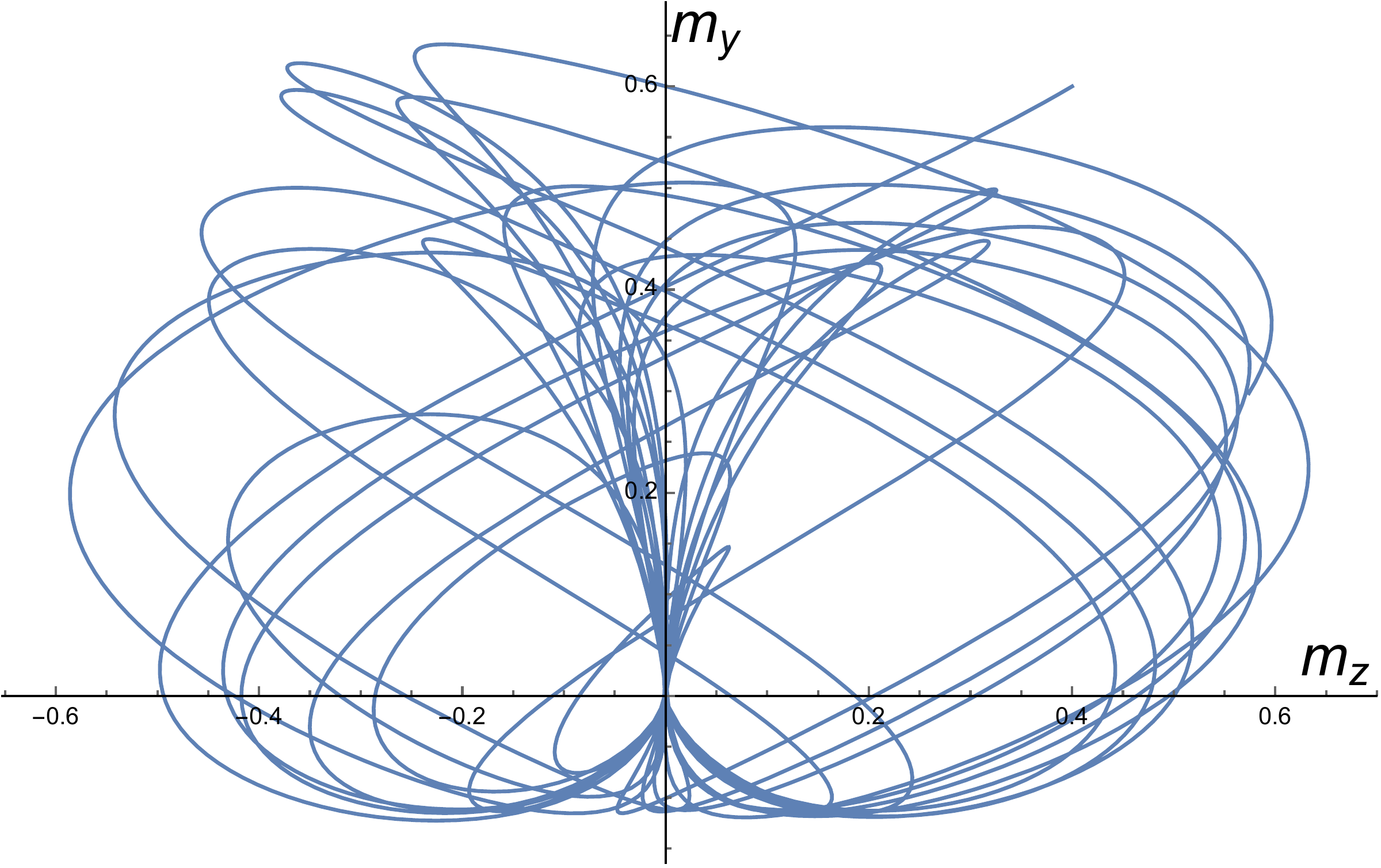
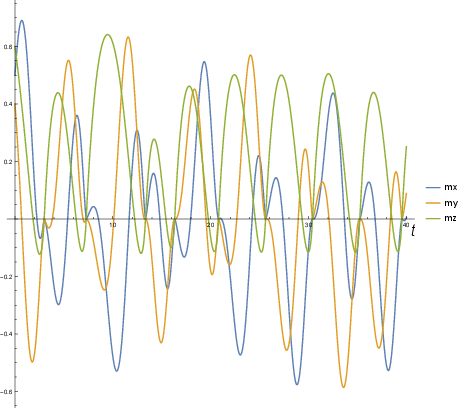
Figure 1: Phase portraits of the three-dimensional CDK system for representative parameter ratios; projections highlight the sensitivity to initial conditions near singularity as well as irregular temporal behavior.
However, by applying blow-up regularization, the authors restore global smoothness and demonstrate that the regularized field is topologically equivalent to the original system on annuli excluding the singularity. The regularized system, being polynomial and globally defined, now admits rigorous phase-plane analysis, conclusively ruling out chaotic attractors.
Regularization transforms complex recurrent structures into dynamics with elliptic sectors and infinite families of homoclinic orbits, but no true chaos. Figure 2 and Figure 3 sequentially display the dynamics before and after regularization, clarifying the transition from apparent to non-chaotic complexity.
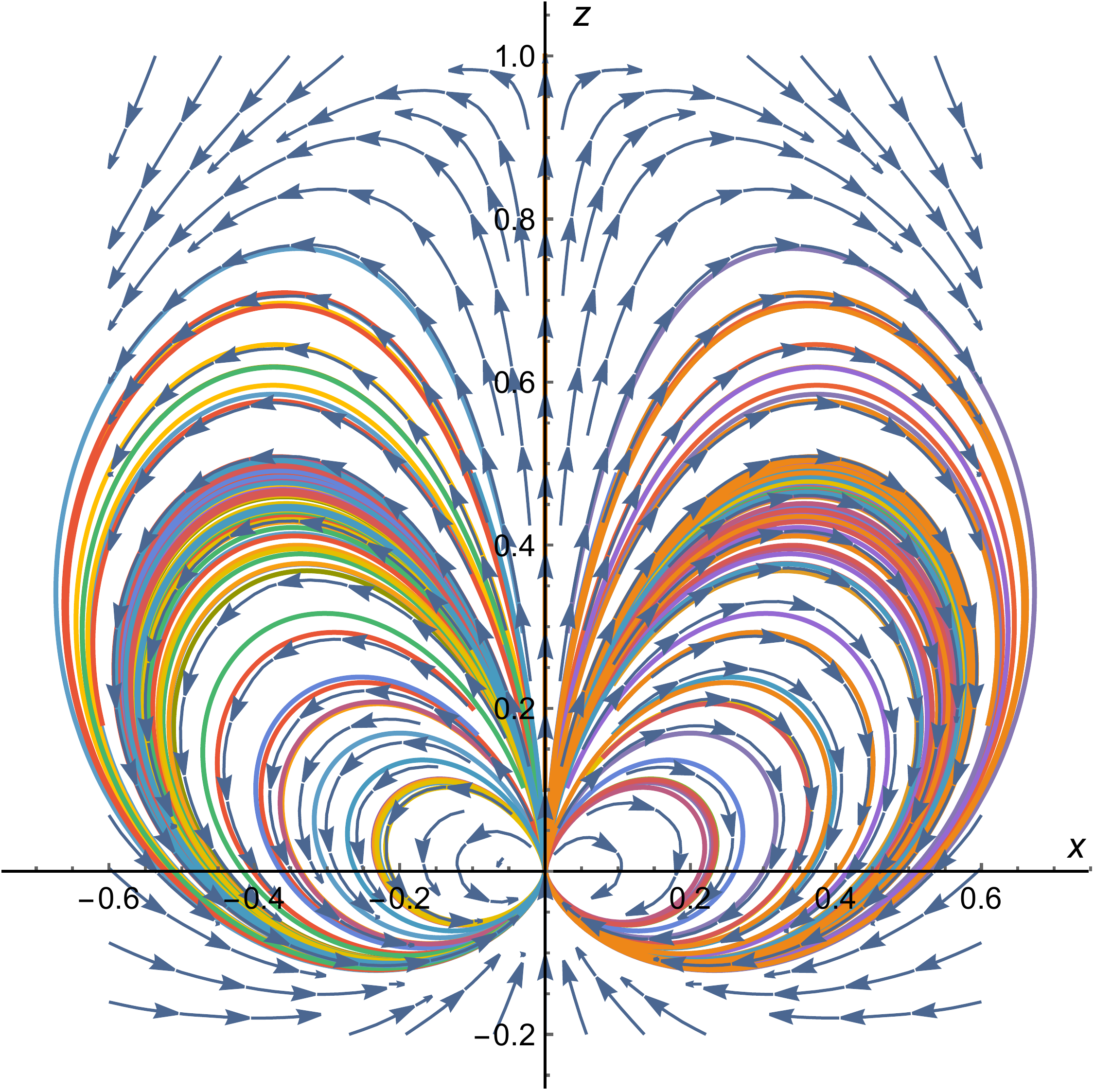
Figure 2: Phase portrait and some trajectories of the two-dimensional singular CDK system showing sensitivity and recurrent deflection near the origin.
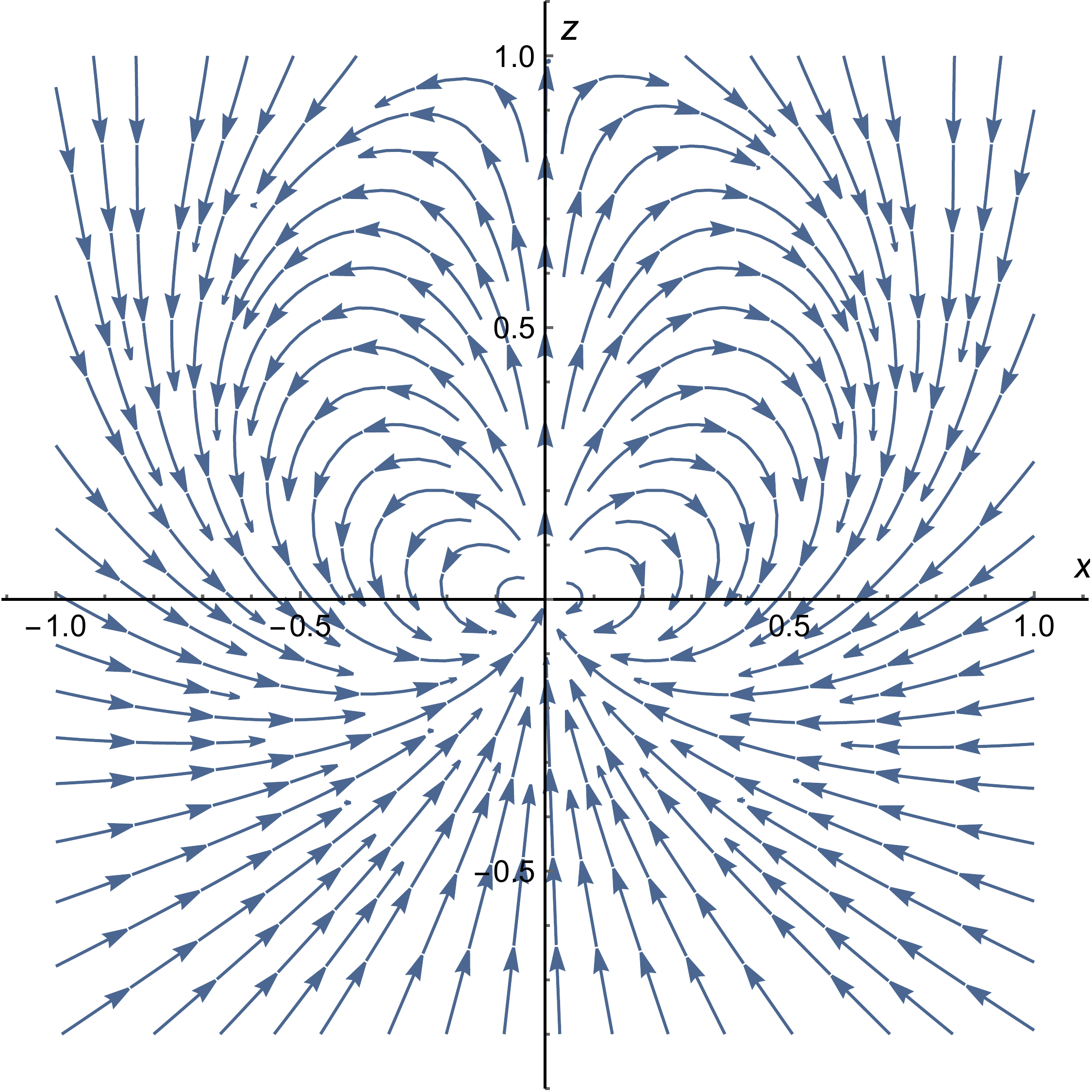
Figure 3: Phase portrait of the regularized two-dimensional CDK system, revealing removal of spurious chaos and preservation of structural features like elliptic sectors.
These results refute claims of deterministic chaos in the singular CDK flow. The paper asserts that dynamics vanishing under smoothing should not be classified as genuine chaos, regardless of their transient complexity.
Nonsmooth Systems: Robust Planar Chaos
The study then shifts focus to a nonsmooth two-dimensional ODE featuring a ∣x∣ term:
x˙=x2+y2xy,y˙=x2+y2y2−ay−b∣x∣
The violation of smoothness invalidates the Poincaré-Bendixson theorem, allowing for the presence of chaotic invariant sets in a planar, autonomous context.
Comprehensive numerical diagnostics—positive Lyapunov exponents, sustained aperiodicity, broadband spectra, and fractal geometry—are established as signatures of robust chaos in the nonsmooth regime. Figure 4 shows the chaotic attractor’s geometry, while Figure 5 illustrates long-term temporal unpredictability.
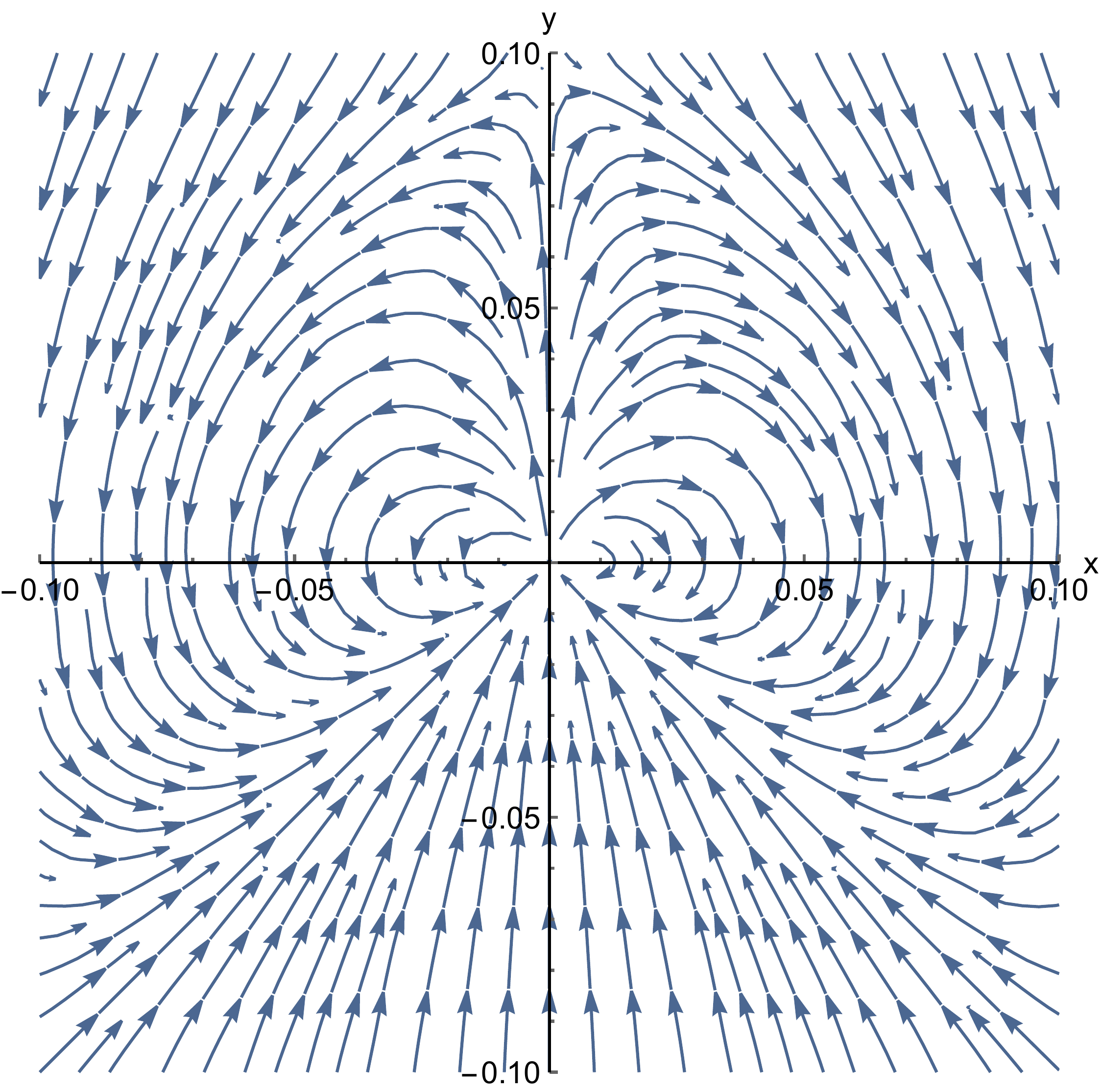
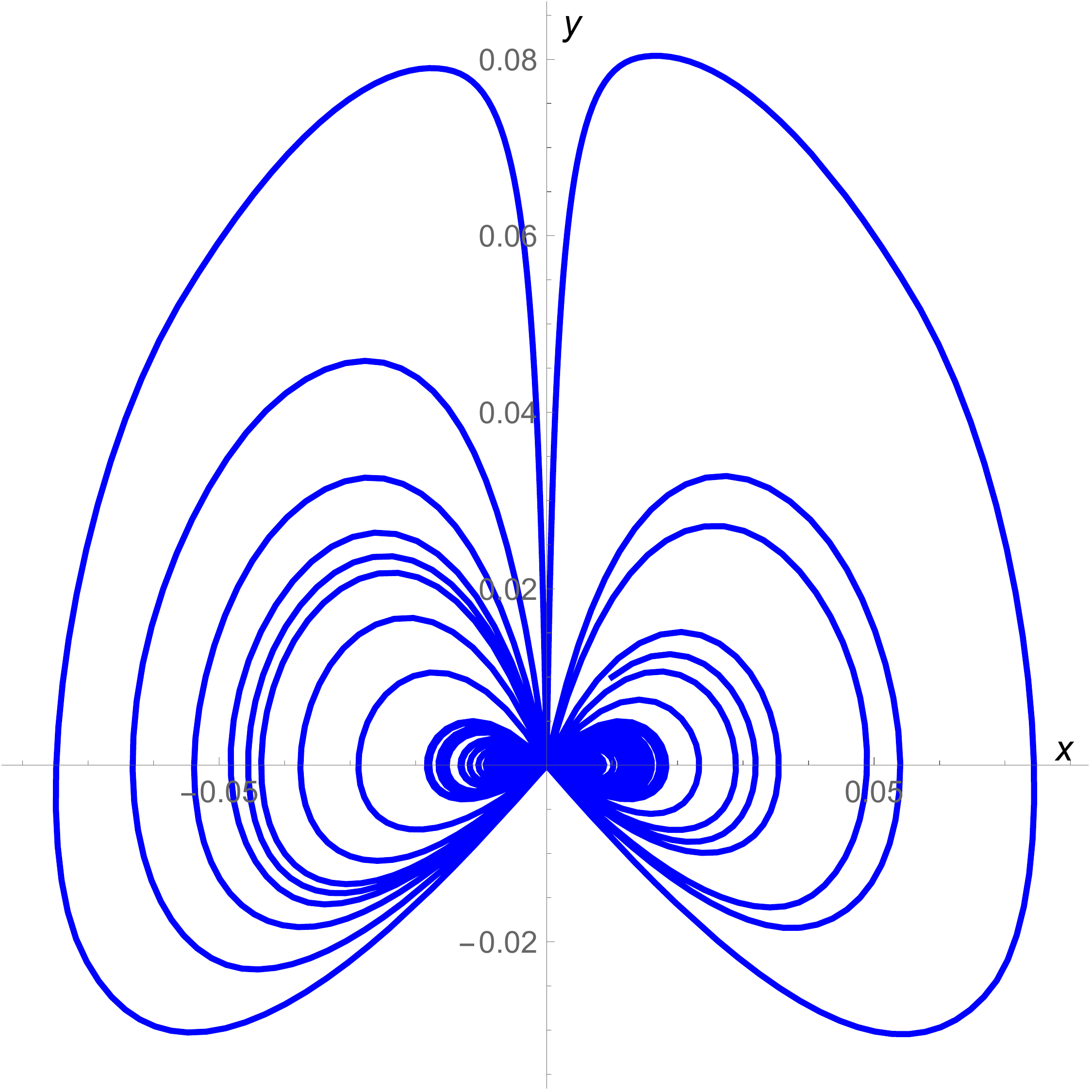
Figure 4: Phase portrait and representative trajectories of the two-dimensional nonsmooth system, displaying a symmetric, butterfly-shaped strange attractor.
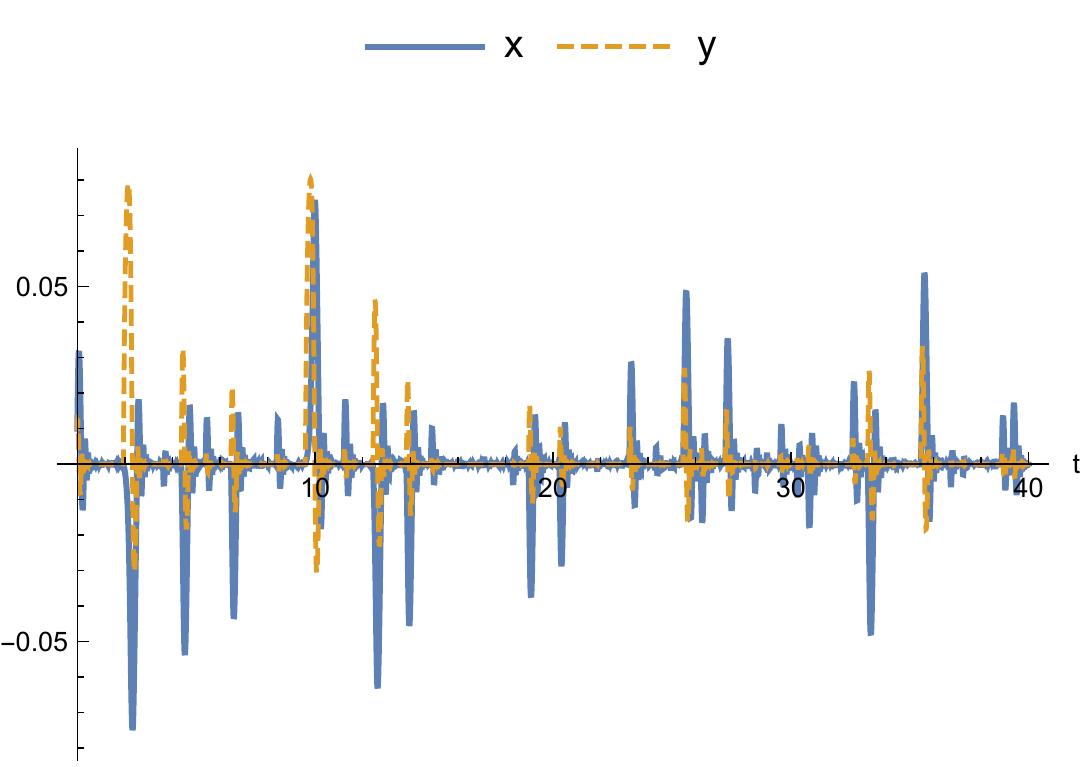
Figure 5: Time series of x(t) and y(t) in the nonsmooth system, demonstrating sustained and aperiodic oscillations.
The authors report strong numerical evidence, including a largest Lyapunov exponent converging to λ1≈1.25 and a fractal dimension estimated as D≈1.89 (Figure 6).
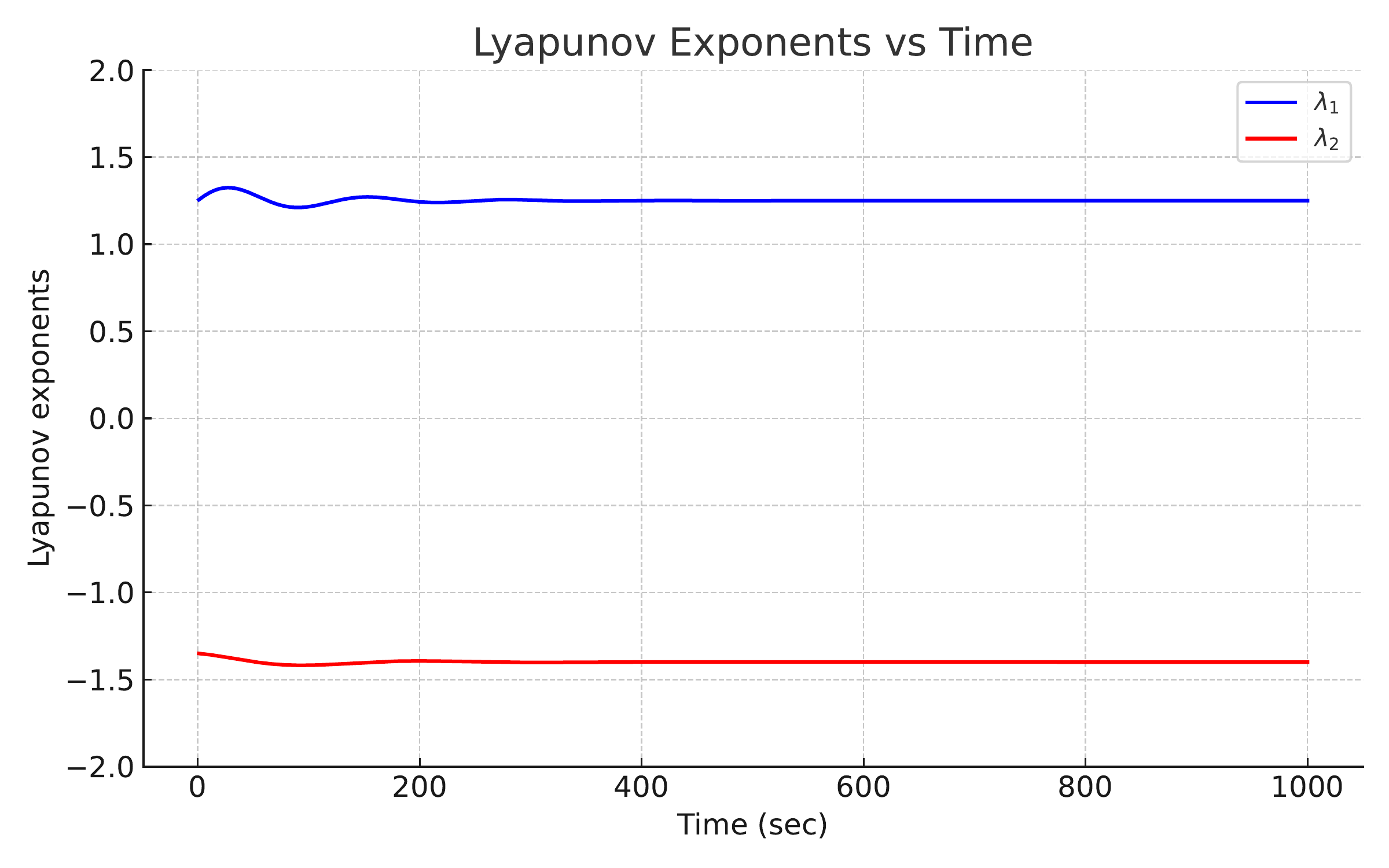
Figure 6: Lyapunov exponent convergence in the nonsmooth system; λ1>0 stabilizes, confirming the presence of chaos.
A systematic scan over parameter a reveals a period-doubling cascade, culminating in chaos via a universal route. The bifurcation diagram (Figure 7) supports the Feigenbaum scaling scenario, with Feigenbaum ratios converging rapidly to δ≈4.67.
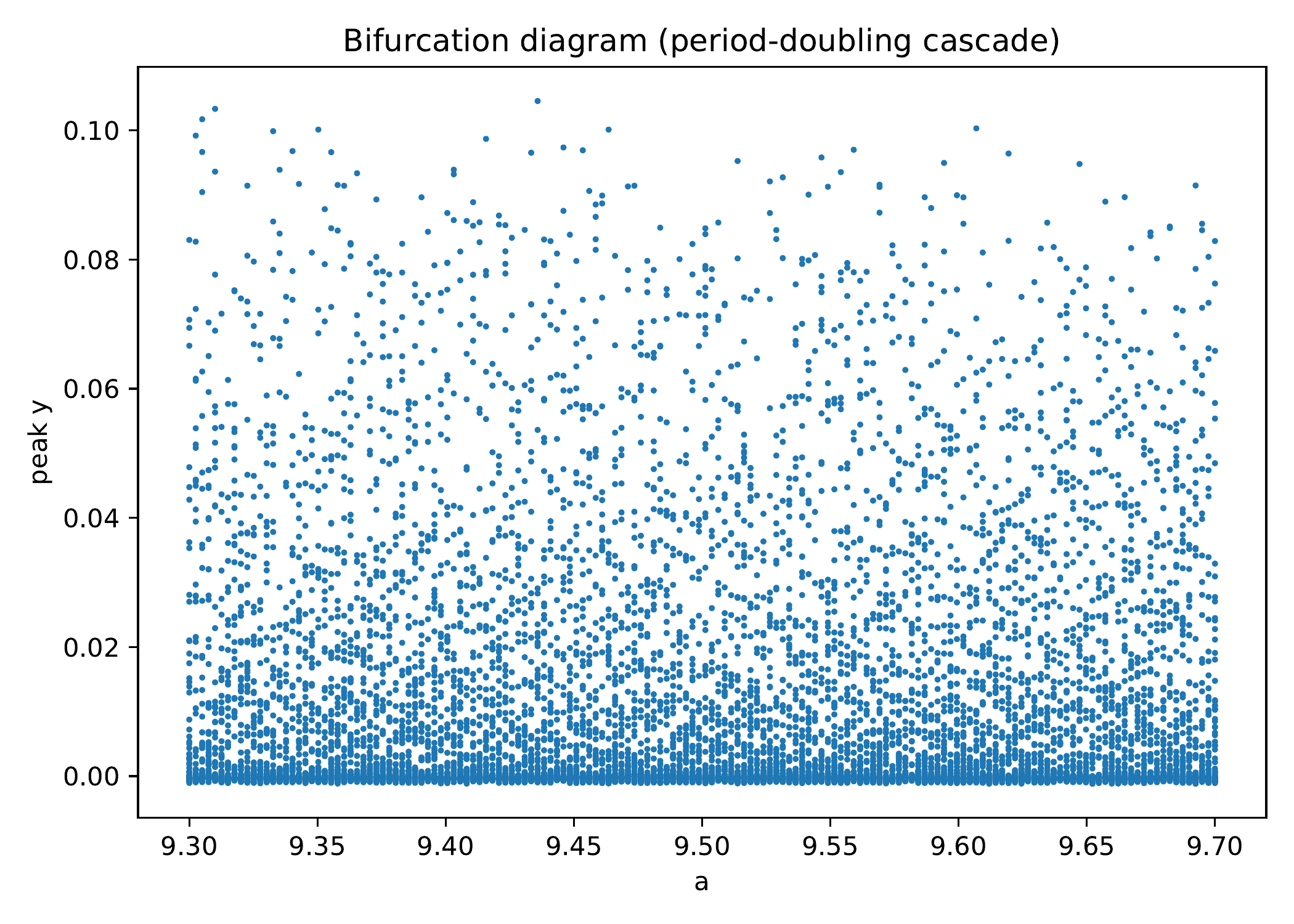
Figure 7: Bifurcation diagram of the nonsmooth system, showing successive period-doubling bifurcations and the onset of chaos as ∣x∣0 decreases.
These findings establish that nonsmooth, planar, autonomous systems can possess robust deterministic chaos, in contradiction to the classical paradigm restricted to smooth flows.
Implications, Limitations, and Outlook
The paper’s methodology elucidates persistent misconceptions about the origin of chaos in low-dimensional systems. It refines the assessment criteria for chaos in engineering and physics models involving singularities or discontinuities (e.g., vibro-impact oscillators, electronic switching circuits). Practically, the three-step diagnostic protocol—(i) regularization, (ii) numerical refinement, (iii) invariant-set analysis—sets a reproducible and systematic standard for future studies.
Theoretically, these results underscore the necessity of differentiating between irregularity arising from lack of uniqueness or smoothness (often physically spurious) and genuine strange attractors in systems violating the classical hypotheses. Singular behaviors, even if recurrent or intricate, should be interpreted as mathematical artifacts unless validated by persistence under smoothing.
Future research will benefit from this protocol in the analysis of hybrid systems, hidden attractors, and models with physically relevant nonsmooth phenomena. The suggested integration of numerical, analytical, and experimental benchmarks will inform both applied investigations and theoretical advances in planar chaos.
Conclusion
This work consolidates chaos diagnostics in planar singular and nonsmooth ODEs into a coherent, reproducible protocol. It demonstrates that, while singularities can induce chaos-like irregularity, only nonsmooth systems robustly support genuine planar strange attractors. The integration of regularization techniques, rigorous numerical tests, and invariant-set diagnostics provides a practical and mathematically justified framework for distinguishing between spurious and authentic low-dimensional chaos (2603.29243). This approach offers a concise reference for further theoretical and applied studies seeking to assess chaos in planar dynamical systems.