- The paper's main contribution is the derivation of computable Edgeworth expansions with explicit error bounds for high-dimensional sphericity testing under incomplete data.
- It employs cumulant calculations and Monte Carlo simulations to demonstrate improved finite-sample accuracy over classical asymptotic methods.
- The methodology provides a practical framework for rigorously controlling test size in multivariate analyses with missing data.
Computable Error Bounds for High-Dimensional Edgeworth Expansions in Sphericity Testing with Two-Step Monotone Incomplete Data
Introduction
This work undertakes a rigorous analysis of the sphericity test for a single multivariate normal sample under high-dimensional, two-step monotone incomplete data. The null hypothesis, H0:Σ=σ2Ip, with alternative H1:Σ=σ2Ip, is foundational in multivariate analysis, with implications for methods such as PCA and tests of independence. In high-dimensional settings and presence of incomplete data, traditional large-sample asymptotic results for the likelihood ratio test (LRT) under H0 are inadequate, exhibiting significant inaccuracies in both test level and power.
The principal contribution here is the derivation of Edgeworth expansions for the null distribution of the LRT statistic under two-step monotone incomplete data, with computable explicit error bounds. Edgeworth expansions provide higher-order correction terms to asymptotic approximations, which are crucial for finite-sample accuracy in high dimensions. Theoretical findings are supported by Monte Carlo simulations that systematically compare Edgeworth expansions against conventional asymptotic results, demonstrating significantly improved accuracy, especially with increasing p.
High-Dimensional LRT under Two-Step Monotone Incomplete Data
The two-step monotone missing framework considered splits the data into N1 samples observed on all p variables and N2 additional samples observed only on a subset p1<p, with N=N1+N2, p=p1+p2. This is a highly relevant scenario for real-world high-dimensional datasets.
The authors generalize the LRT for sphericity to this setting, carefully deriving MLE of the covariance blocks and reduced forms for the test statistic. Previous expansions, e.g., John’s test and its corrections, or first-order chi-square approximations as in Mauchly and Gleser, prove empirically deficient as H1:Σ=σ2Ip0 increases. The deficiencies are quantitatively confirmed via simulations, particularly in maintaining test size.
Edgeworth Expansion Derivation and Properties
Edgeworth expansion for the null distribution of H1:Σ=σ2Ip1 is developed via precise calculation of cumulants to arbitrarily high order, leveraging properties and expansions of the multivariate gamma function and polygamma functions associated with the LRT's distribution. For the standardized statistic H1:Σ=σ2Ip2, cumulants H1:Σ=σ2Ip3 are explicitly bounded in closed form, enabling rigorous control of the remainder in the Edgeworth series.
The expansion is
H1:Σ=σ2Ip4
where H1:Σ=σ2Ip5 are functions of standardized cumulants and H1:Σ=σ2Ip6 is the Hermite polynomial of order H1:Σ=σ2Ip7.
Bounding arguments show, under regularity (H1:Σ=σ2Ip8), all standardized cumulants decay with rate H1:Σ=σ2Ip9, where H00 grows with H01 (sample size for the complete part) and H02. This guarantees the asymptotic validity of the Edgeworth expansion, with remaining error shrinking polynomially.
Explicit Computable Error Bounds
An outstanding feature of this work is the explicit computable upper bounds for the error of the Edgeworth expansion, derived by analytic estimation of the Fourier inversion integral separating the characteristic functions of the exact and expanded statistics.
The bounds are constructed as
H03
where H04, H05, H06 are prescribed in terms of the problem parameters and numerical quadratures, and the minimization is numerically tractable over a grid of H07.
Multiple upper bounds (BOUND1–BOUND4) are presented, differing in the degree of numerical and analytic tightness or simplifications adopted, all convergent as H08 when regularity conditions are satisfied.
Numerical Experiments
Comprehensive Monte Carlo analysis is performed with H09 replicates per configuration, systematically varying p0. For test significance levels p1, and over a wide range of high-dimensional and high-missing setups, the Edgeworth approximations yield Type I error biases (p2) systematically near zero, while classical (systematic) expansions (p3) show marked deviations that grow with p4.
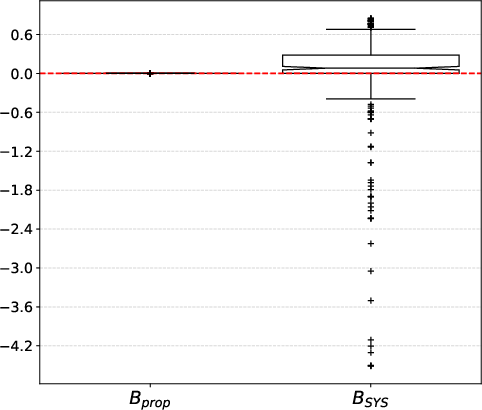
Figure 1: Box plot of the biases p5 and p6, demonstrating the uniform superiority of the Edgeworth expansion in controlling the error across simulation scenarios.
This improved accuracy is maintained as either the proportion of missingness or dimensionality increases. For visual clarity, line graphs of p7 and p8 traced over varying p9 are provided.
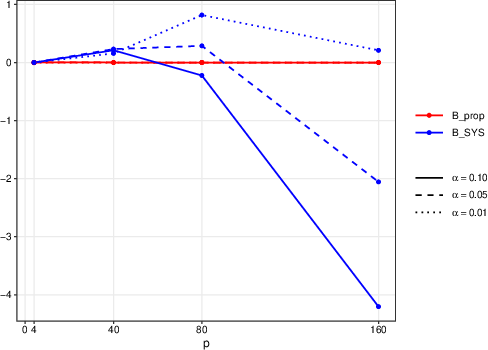
Figure 2: Line graph of N10 and N11 for fixed N12 and varying N13, emphasizing growing bias in classical approximations and persistent accuracy of the Edgeworth method.
Extensive tabulated results confirm that the maximum absolute error (MAE) between the empirical and Edgeworth approximation is always smaller than the provided error bounds (N14–N15), validating the non-asymptotic sharpness of the theoretical guarantees.
Theoretical and Practical Implications
This work establishes that Edgeworth expansions with rigorously computable bounds are uniquely suited to provide usable distributional approximations in the finite-sample, high-dimensional, incomplete-data sphericity testing context—where classical first- or second-order expansions systematically fail. The methodology makes it possible to rigorously control nominal test levels, enhancing reliability for high-throughput data or experimental designs with partially observed factors.
Error bounds provided are not only theoretically convergent but practical in actual analysis, computable with standard quadrature and optimization libraries. This enables their immediate application in clinical, genetic, or high-dimensional scientific studies where missing data is the norm.
The formal methods developed can be extended to several other high-dimensional hypothesis testing scenarios with complex data missingness, e.g., MANOVA, covariance structure testing, or multi-sample generalizations. The explicitness of the error bounds makes these results suitable as a template for deriving Cornish-Fisher expansions for critical values, offering another avenue for improvement in test-type control.
Conclusion
An exact Edgeworth expansion for the null distribution of the sphericity LRT under two-step monotone incomplete data has been derived, with non-asymptotic computable error bounds that are both theoretical and practical. Simulations evidence the superiority of these expansions over asymptotic alternatives across a full range of dimensional and missing data regimes. The ability to control and numerically evaluate approximation errors positions these results as highly relevant for modern high-dimensional multivariate analysis, providing a pathway for principled inference even when classical theory fails.

