- The paper introduces a segment-wise analytical framework calibrated by high-fidelity LBM simulations to study the drag crisis in fractal tree geometries.
- It shows that increasing fractal complexity attenuates the drag crisis, with large-diameter branches undergoing canonical transitions while finer branches remain in a higher-drag regime.
- The study highlights that pruning may inadvertently elevate peak aerodynamic loads, challenging conventional urban forestry practices.
Drag Crisis in Fractal Trees: Simulation and Analytical Perspectives
Introduction
This work addresses the aerodynamic drag crisis in fractal tree geometries using large-scale cumulant lattice Boltzmann simulations on adaptive meshes, supplemented by an analytical segment-wise drag estimation framework. It systematically elucidates how structural complexity modulates drag characteristics across tree-height-based Reynolds numbers ReH spanning from 103 to 109. Key numerical results demonstrate that drag crisis manifests in tree-like structures, but its sharpness and onset are strongly mediated by branching architecture and ambient turbulence intensity. Implications for urban forestry practice, particularly regarding pruning and its effect on aerodynamic loading, are drawn from both the mechanistic analysis and the parametric trends.
Fractal Tree Model Generation and Simulation Approach
Fractal tree models are generated using a parametric L-system formalism, providing precise control over branching generation (n), scaling ratios, and segment geometry. The trees are composed of recursively subdividing cylindrical segments, where increasing n augments architectural complexity and branch fineness.
Simulation of airflow utilizes a GPU-optimized lattice Boltzmann method with cumulant collision operator on octree-based adaptive meshes, achieving high spatial resolution in the vicinity of the tree structure. Meshes comprise up to 901 million cells, with finest Δx/H near $1/2048$ adjacent to branches (especially for high-complexity, high-n trees).
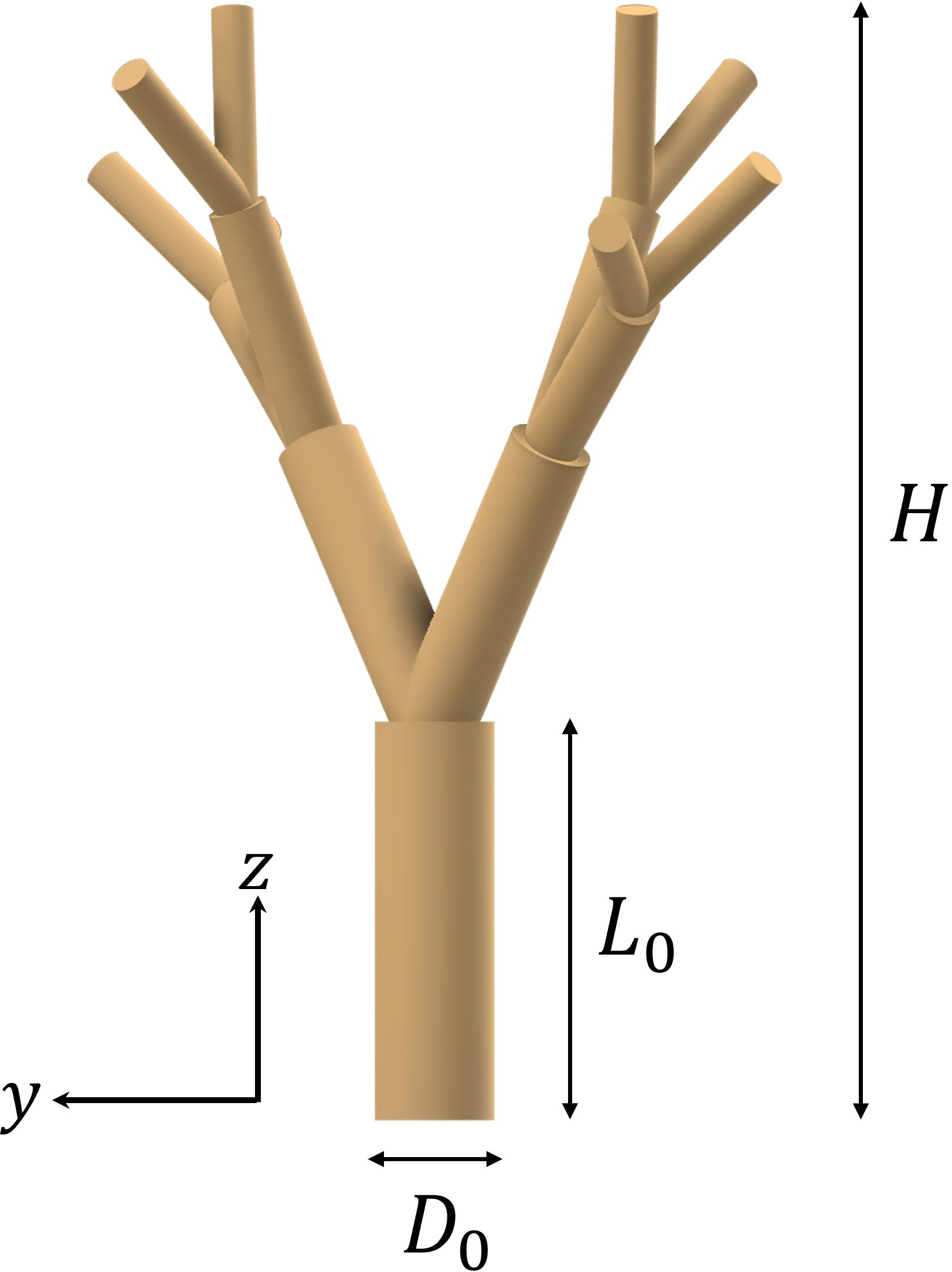
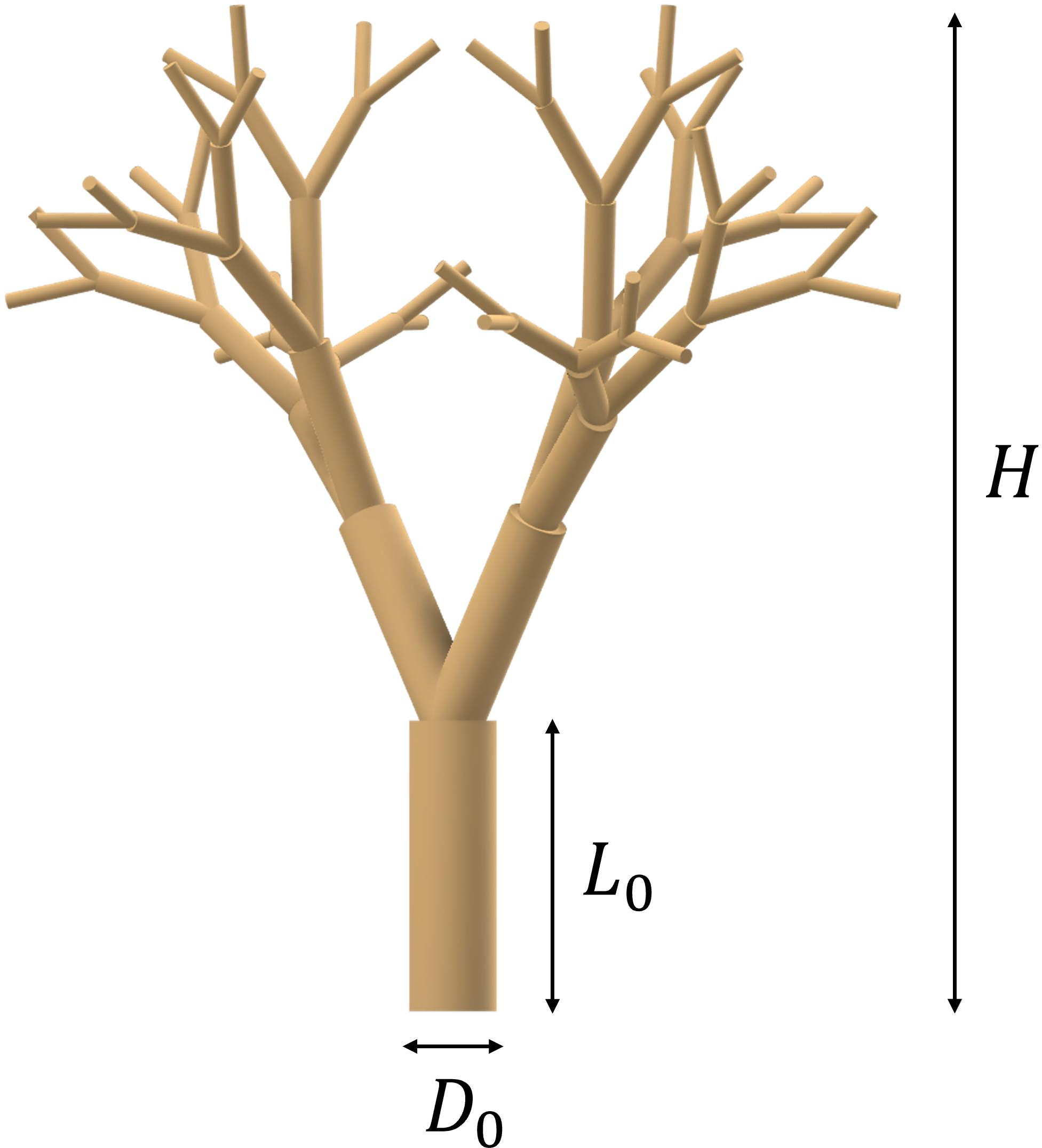
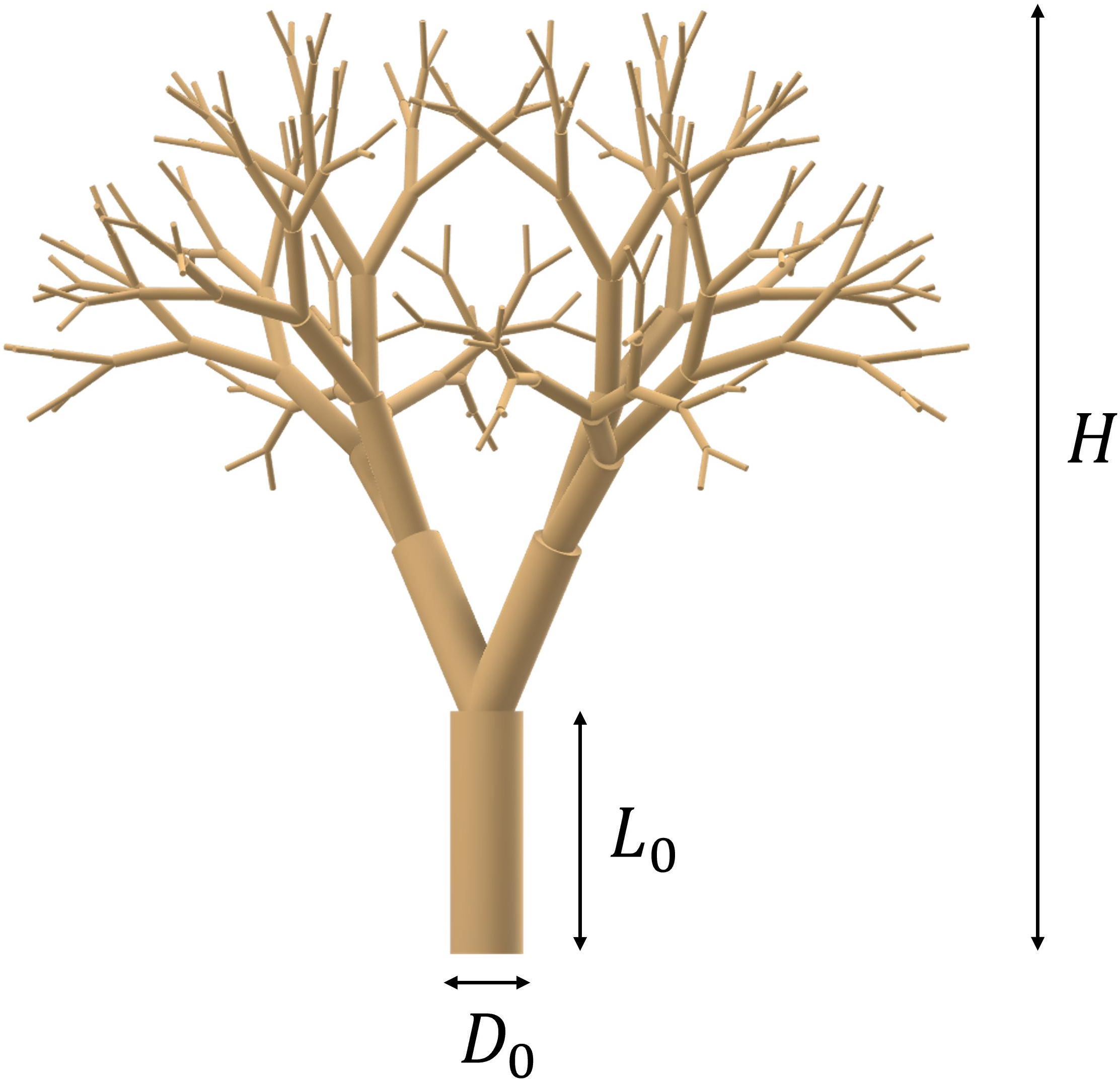
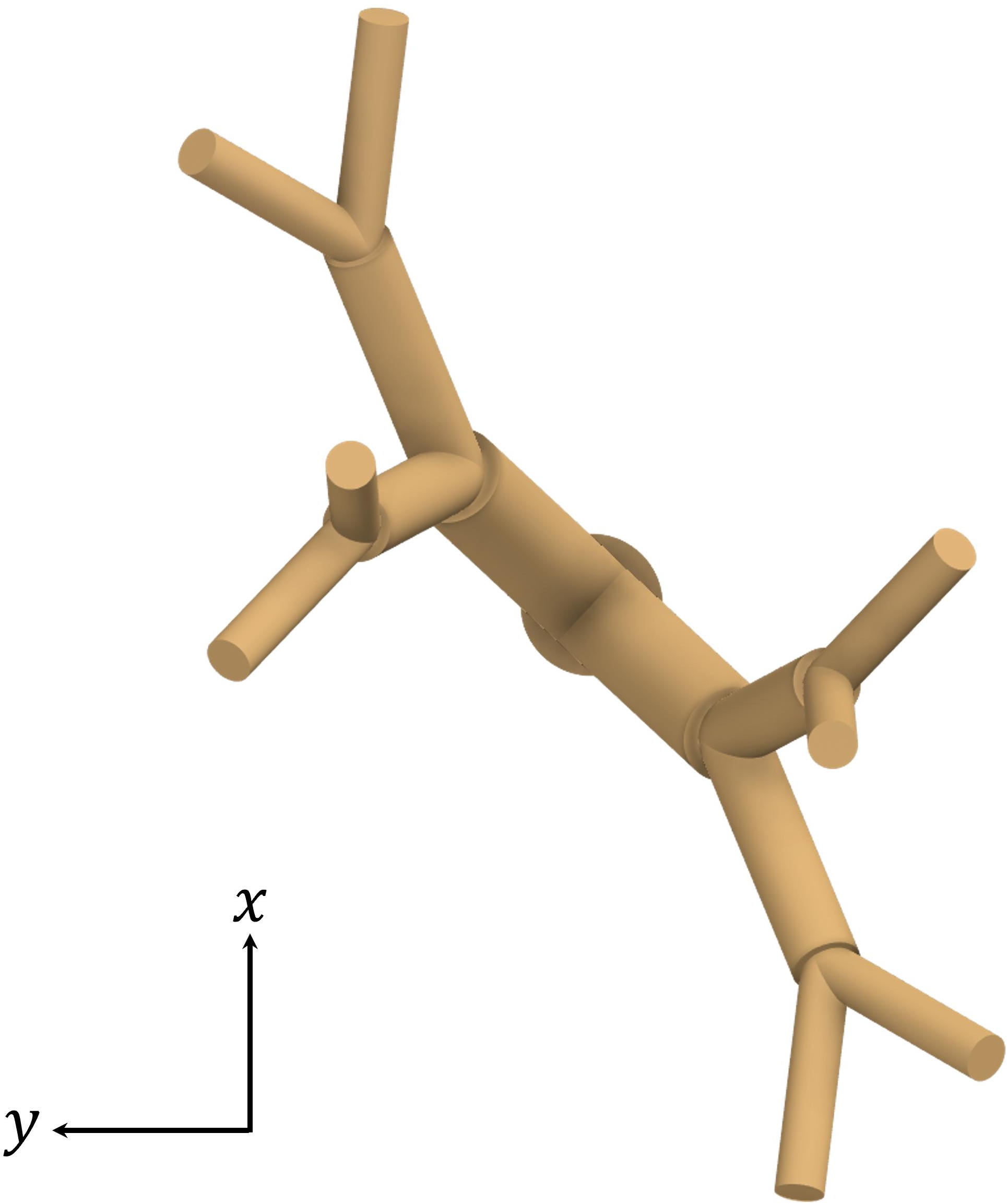
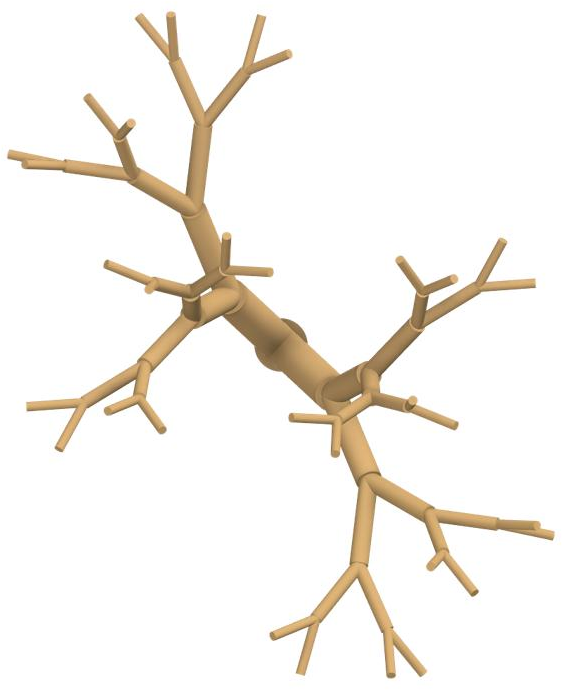
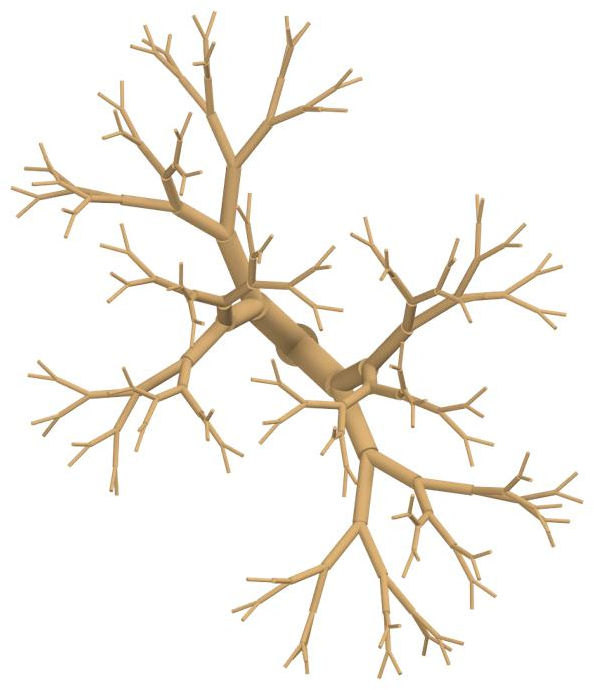
Figure 1: Side and top views of fractal tree models for n=4, $6$, and 1030; increasing 1031 generates higher branching complexity.
The computational domain (1032) is configured with uniform inflow, and trees are modeled as rigid, non-deforming bodies.
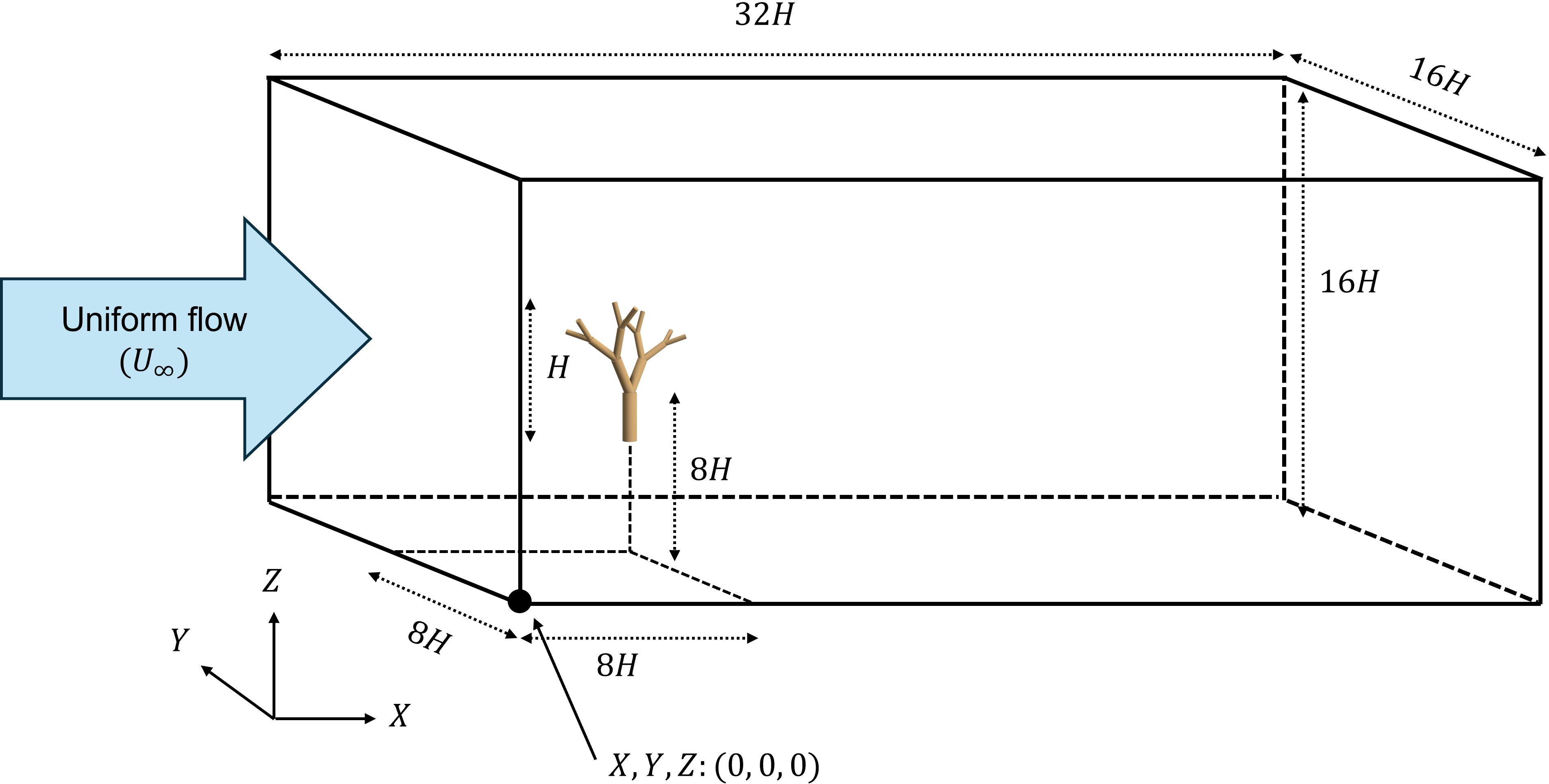
Figure 2: Domain configuration, showing tree placement relative to inflow and the Cartesian grid orientation used for simulations.
Adaptive mesh refinement localizes computational effort, resolving flow around fine branches while minimizing redundancy in the far field and wake.
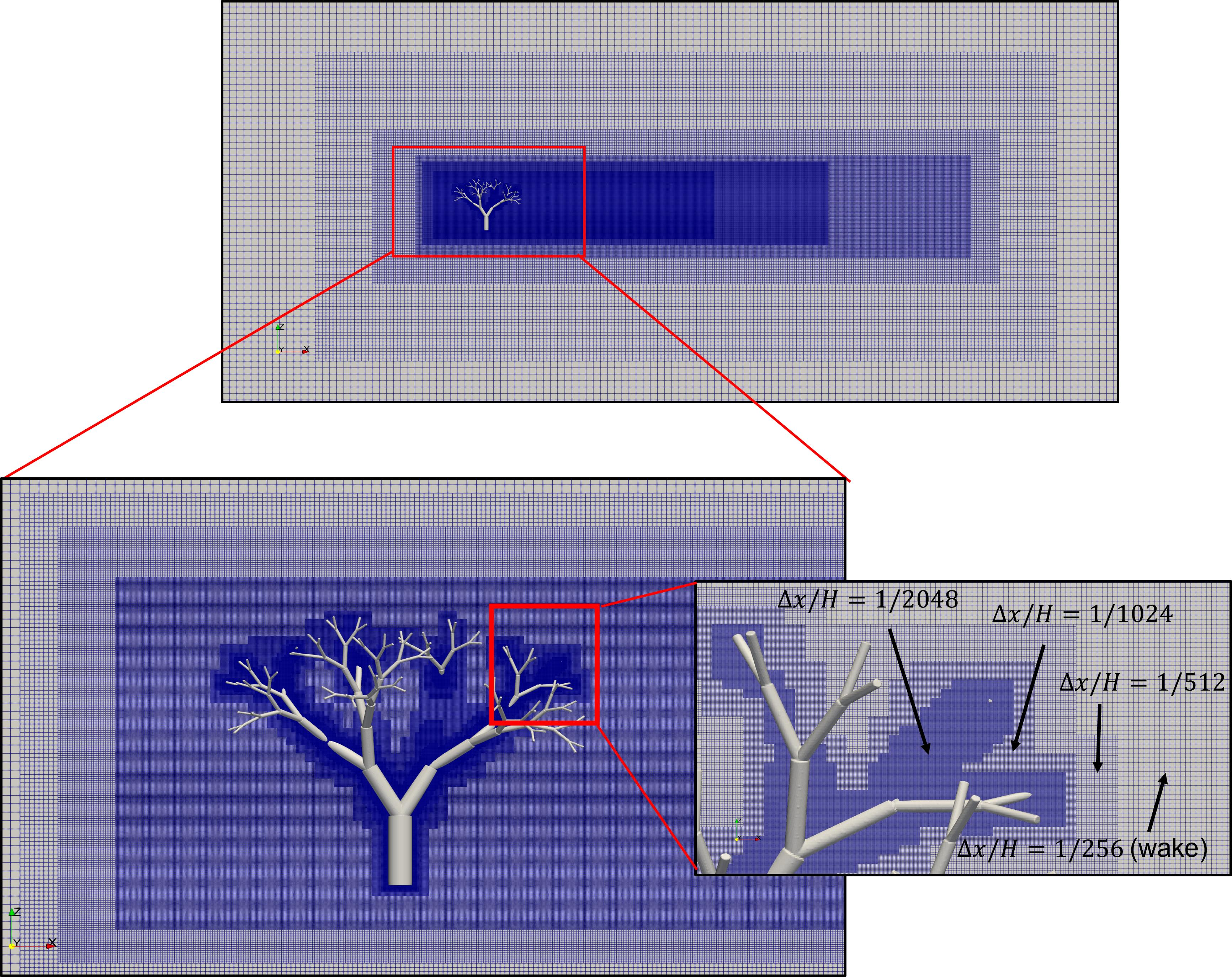
Figure 3: Hierarchical mesh demonstrating progressive refinement from the bulk domain to the smallest branches and wake regions.
Analytical Drag Estimation Framework
The analytical framework decomposes the tree into an assembly of cylindrical segments, assigning to each an orientation with respect to the freestream and evaluating both friction and pressure drag components individually. Empirical drag laws for smooth circular cylinders parameterized by local Reynolds number and incidence angle are applied to each branch, and forces are projected along the streamwise axis before aggregation.
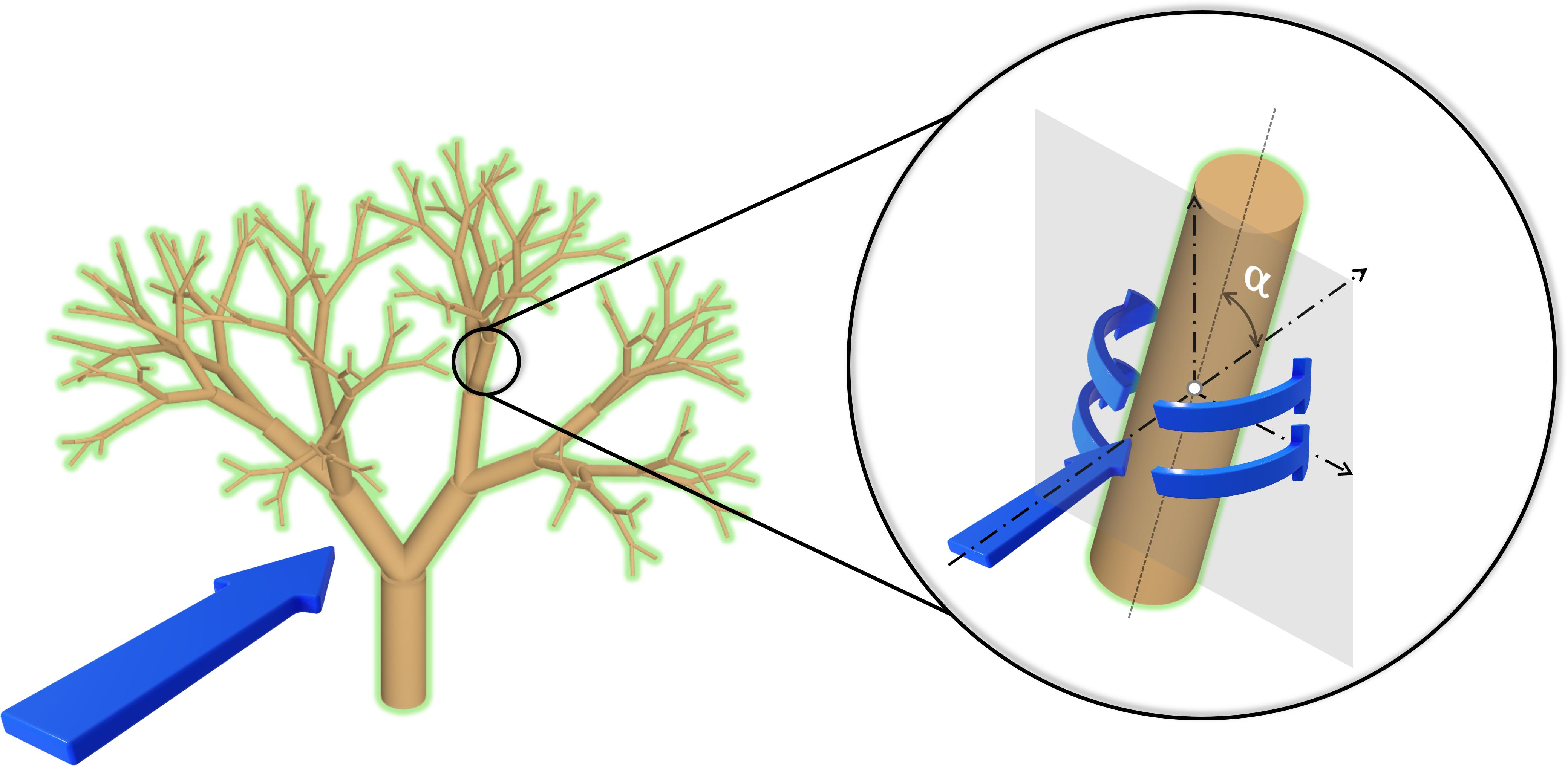
Figure 4: Analytical decomposition: each segment's contribution is computed given diameter, length, and orientation relative to the inflow (angle 1033).
This model is calibrated and validated using direct LBM data in regimes below 1034, then extrapolated to higher 1035 for crisis predictions.
Simulation and Analytical Model Results
LBM simulations reveal the dependence of normalized total (1036), friction (1037), and pressure (1038) drag coefficients on 1039 and branching generation 1090. Increasing 1091—prior to the drag crisis—yields a monotonic reduction in both 1092 and 1093, consistent with classical behavior of isolated cylinders. For a fixed 1094, 1095 increases with 1096 due to the proliferation of low-diameter, low-Re branches, while 1097 remains nearly invariant.
Analytical estimates systematically overpredict 1098 and 1099 (by up to 40%) due to lack of explicit wake-sheltering in the model, but reproduce qualitative trends across n0 and n1 (average n2 discrepancy is about 10%).
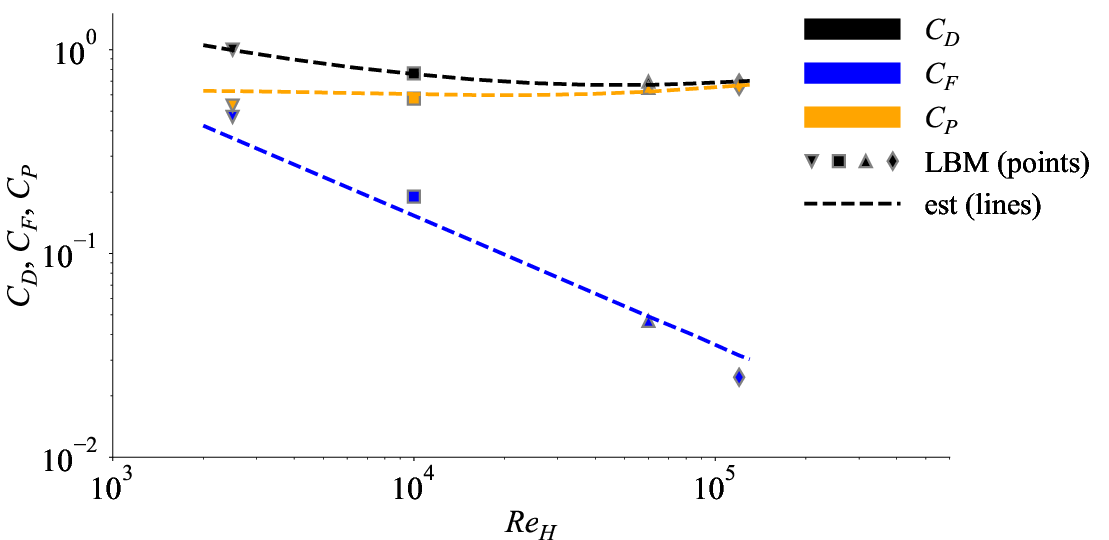
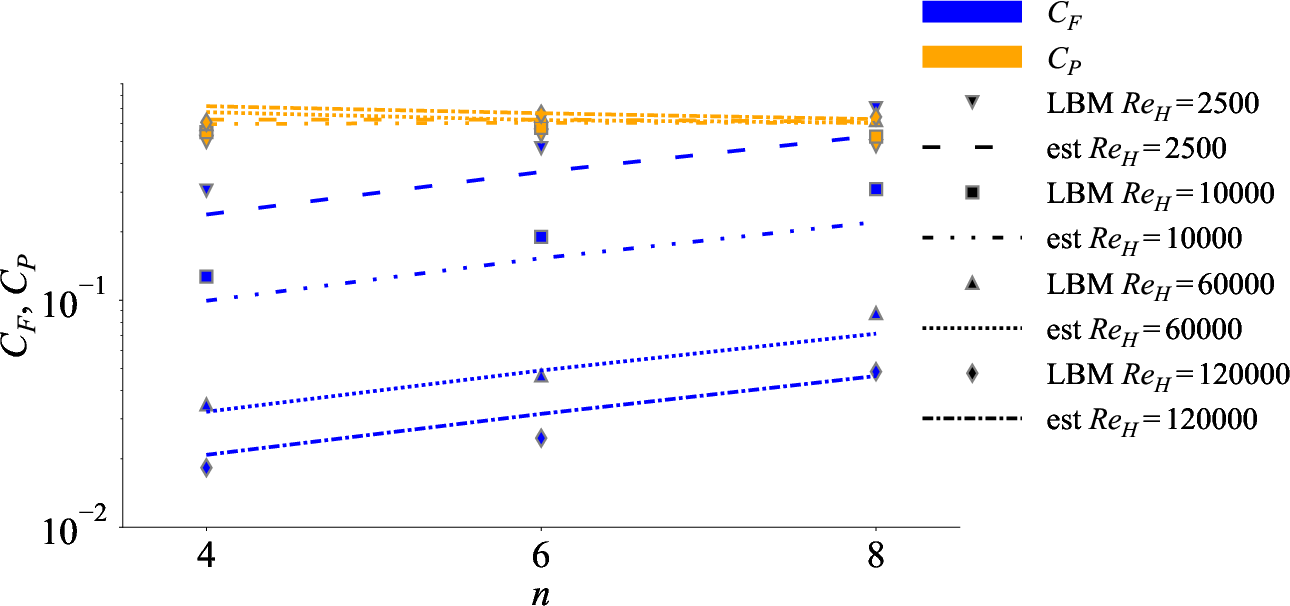
Figure 5: Reynolds-number dependence of drag coefficients for n3, comparing LBM (points) and analytical model (lines) after normalization.
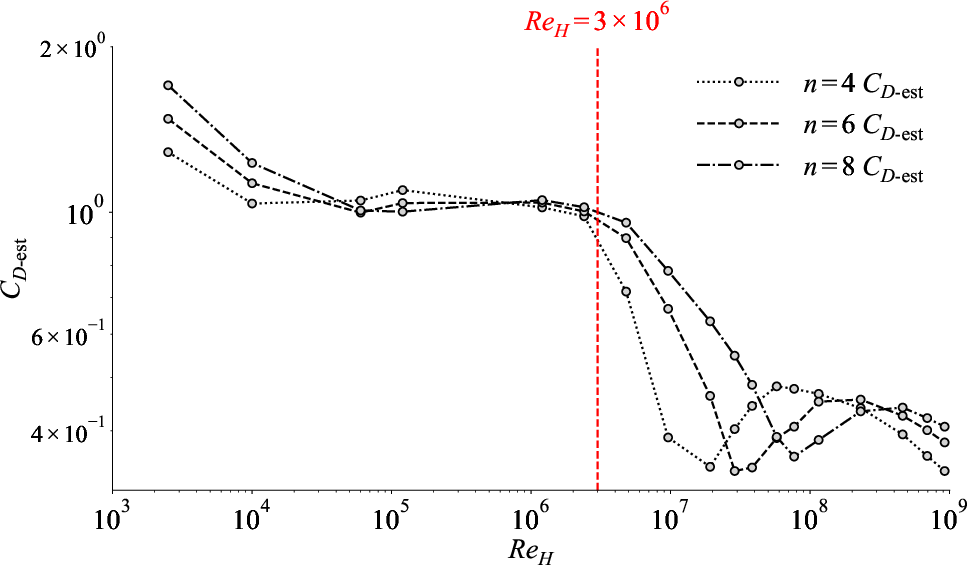
Figure 6: Estimated drag coefficients for each structural complexity versus n4; the predicted onset and gradient of the drag crisis shifts as n5 increases.
Drag Crisis in Fractal Trees: Main Trends
The extended analytical model predicts that the drag crisis in fractal trees emerges near n6 in uniform inflow. As complexity (n7) increases, the drag crisis becomes progressively attenuated—the crisis threshold for thin distal branches is never reached, resulting in a muted and broadened crisis at the whole-tree scale. This behavior is traced to the diameter distribution within the tree: only large-diameter (proximal) elements experience the canonical drag crisis, whereas finer (distal) segments remain in their pre-crisis (higher-drag) regime.
Inflow Turbulence Effects
Atmospheric turbulence, parameterized by a realistic streamwise turbulence intensity (n8), modifies the drag crisis envelope: the onset shifts to lower n9 and reduction in n0 becomes more gradual, mimicking the trend for canonical cylinders in turbulent crossflow. However, the dependence of the crisis sharpness on n1 remains robust.
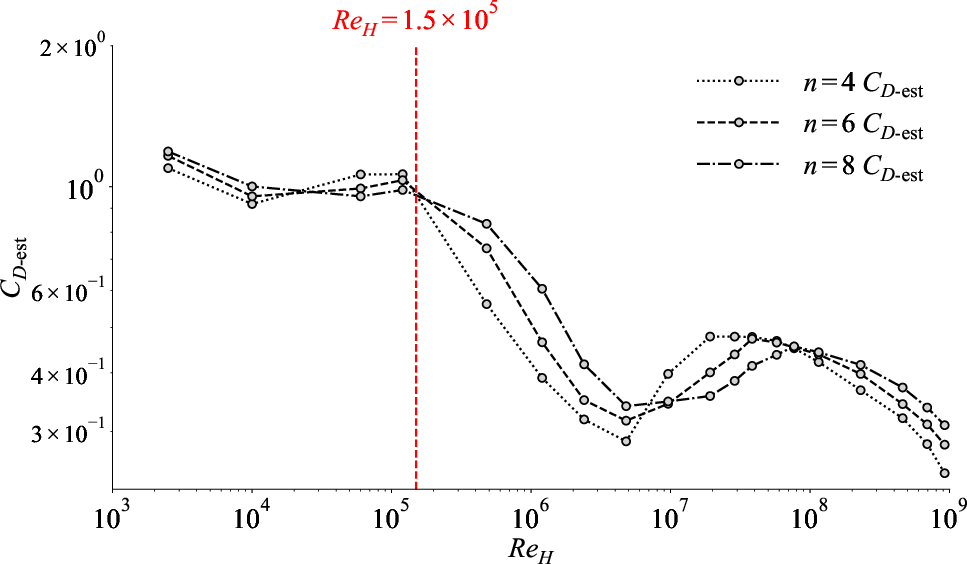
Figure 7: Turbulent inflow (n2) shifts and smooths the drag crisis onset; the dependence on structural complexity persists.
For typical urban trees (n3–n4 m height, in wind n5–n6 m/s), these data imply operation in the crisis or post-crisis n7 regime.
Implications for Urban Forestry and Structural Management
The analysis demonstrates that increasing tree complexity (larger n8) leads to smoother and less dramatic drag crisis transitions, while pruning (reducing n9) sharpens the crisis and can counterintuitively elevate aerodynamic loads under strong wind conditions. Consequently, a simplistic assumption that pruning always diminishes wind loading is refuted: depending on wind regime, pruned trees may incur larger peak drags than their more complex (unpruned) counterparts, especially in supercritical Δx/H0. This suggests the necessity of reassessing vegetation-drag parameterizations and maintenance strategies used in urban design and hazard mitigation.
Conclusion
By integrating high-fidelity DNS with an analytically tractable segment-wise drag model, this study provides a comprehensive framework for predicting tree-scale aerodynamic drag—including crisis phenomena—across structural and flow regimes previously inaccessible to direct measurement or simulation. The dependence of drag crisis sharpness and onset on fractal complexity is elucidated, and turbulence-modified predictions are afforded. These findings underscore that reducing morphological complexity via pruning does not guarantee lower aerodynamic loading, especially in strong winds, and that practical guidelines must account for regime-dependent drag reversal related to crisis behavior.
Future investigation should couple these frameworks with more detailed foliage modeling and flexible-body dynamics to more accurately predict wind loads in fully realistic urban vegetative canopies.

