- The paper demonstrates a quantum M2-brane method that computes the Wilson loop exactly at one-loop order, avoiding non-planar string corrections.
- It employs T-duality and an M-theory uplift to transform the problem into a M2-M5 brane framework, using spectral ζ-function regularization for the partition function.
- Supersymmetric cancellations in the fluctuation spectrum eliminate higher-genus corrections, confirming non-renormalization properties in the AdS3×S3×T4 background.
Wilson Loop in AdS3×S3×T4 from Quantum M2-Brane
Introduction and Context
This work establishes an M-theory framework for analyzing quantum corrections to supersymmetric Wilson loops (WL) in type IIA string theory on AdS3×S3×T4 with RR flux, via the quantum partition function of an M2 brane in AdS3×S3×T5. The construction leverages the T-duality between the IIB D1-D5 and IIA D2-D4 near-horizon solutions, together with the 11d uplift to M2-M5 systems, extending techniques previously demonstrated in the AdS4/CFT3 (ABJM) correspondence [Giombi-Tseytlin, (Giombi et al., 2023)]. The strategy is to compute the one-loop determinant for fluctuations about an AdS2×S1 M2-brane configuration, which in the IIA limit descends to the evaluation of WL expectation values in the dual 2d (4,4) superconformal CFT.
The methodology builds on established semiclassical and one-loop analyses for string and M2-brane probes in holographic setups, notably in AdS5×S5 and AdS4×CP3 supergravities [Giombi-Tseytlin, (2020.08512)], and generalizes the calculation of the string/M2-brane partition function near minimal surfaces.
M2-M5 Supergravity Solution and Its Reductions
The starting point is the intersecting M2-M5 solution in 11d supergravity, parametrized by integer charges Q2, Q5, and geometric moduli encoding the AdS3×S3×T40 torus [Tseytlin, 1996bh]. The near-horizon geometry yields AdS3×S3×T41, with a natural identification of the circular AdS3×S3×T42 as the "11th dimension". Upon dimensional reduction (identifying the 11th direction with one of the AdS3×S3×T43 directions), one retrieves the type IIA D2-D4 system; after T-duality, the D1-D5 frame is recovered in type IIB. The effective M2-brane tension and action, relevant for semiclassical expansion, are given in terms of these parameters, with explicit scaling in AdS3×S3×T44 and AdS3×S3×T45, and the string coupling entering through the geometric moduli.
The M2-brane probe for the Wilson loop maps to an AdS3×S3×T46 minimal surface in AdS3×S3×T47, with the brane wrapping AdS3×S3×T48. In the IIA framework, this corresponds precisely to the string worldsheet describing the WL in AdS3×S3×T49.
One-Loop Partition Function: Spectrum and Evaluation
The central technical result is the explicit computation of the quadratic fluctuation spectrum for the M2-brane probe. In static gauge, the spectrum consists of bosonic and fermionic towers labeled by momentum AdS3×S3×T50 along the AdS3×S3×T51. Notably, the mass spectra for each AdS3×S3×T52 assemble into long AdS3×S3×T53 AdSAdS3×S3×T54 supermultiplets, such that—theoretically—the total logarithmic UV divergences in the one-loop determinant vanish under AdS3×S3×T55-function regularization:
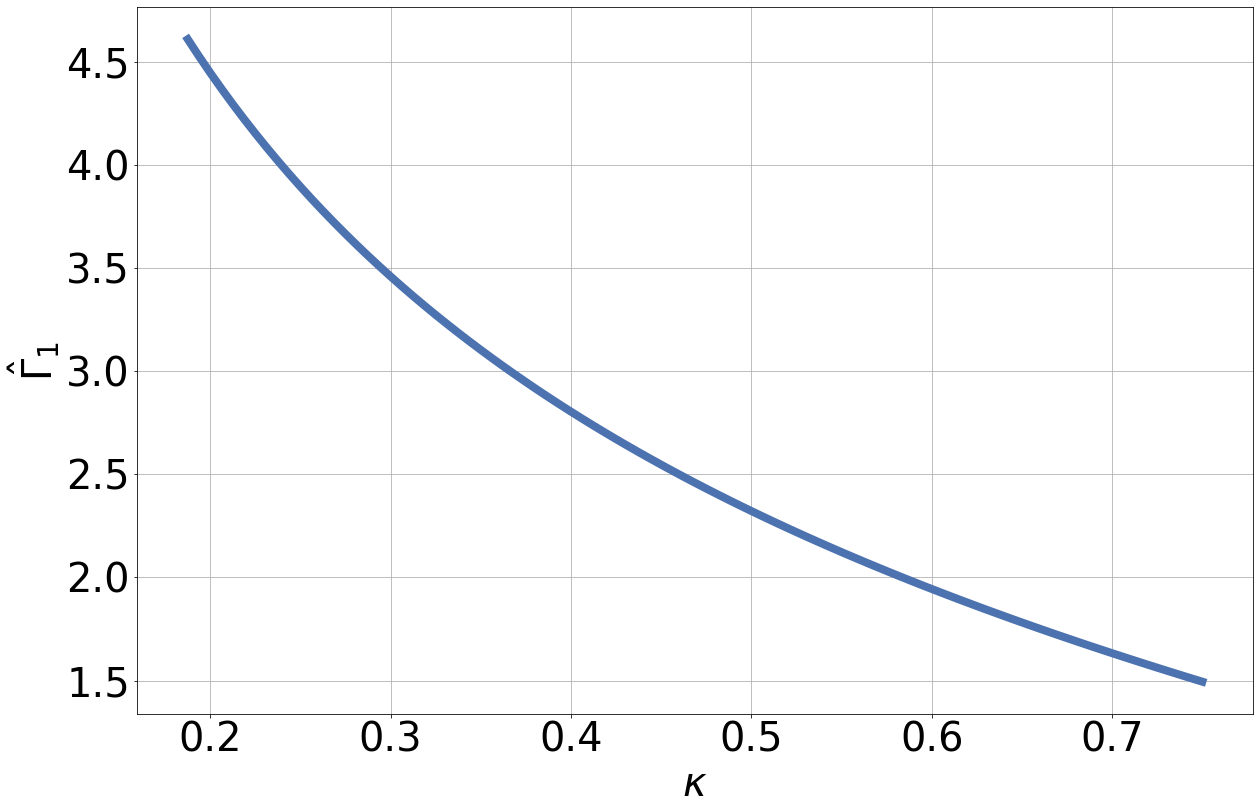
Figure 1: AdS3×S3×T56 plotted versus the parameter AdS3×S3×T57, demonstrating the regularization of the one-loop correction across parameter space.
The finite piece of the one-loop effective action AdS3×S3×T58 is, for sufficiently large AdS3×S3×T59 (or small type IIA coupling), given by
AdS4/CFT30
with AdS4/CFT31 the effective Kaluza-Klein parameter controlling the AdS4/CFT32 radius and RR flux quantum. The partition function and thus the WL expectation value is: AdS4/CFT33
where AdS4/CFT34 is the on-shell M2-brane action and AdS4/CFT35 is the dimensionless M2 tension.
For smaller AdS4/CFT36 values (non-perturbative regime), modifications arise due to the presence of exceptional low-lying AdS4/CFT37 modes with AdS4/CFT38, reflected in a nontrivial structure for AdS4/CFT39 (see Figure 1).
Comparison to ABJM and Higher-Genus Corrections
A central result—contrasting with the ABJM (AdS2×S10) setting—is that the M2-brane one-loop factor is exactly proportional to the leading string theory result, with no infinite AdS2×S11 expansion (no higher-genus string corrections in AdS2×S12), as opposed to the AdS2×S13 prefactor in ABJM [Giombi-Tseytlin, (Giombi et al., 2023)]. The absence of subleading corrections persists for the entire class of WL insertions discussed here, and matches the structure found in certain AdS2×S14 duals of 3d SCFTs [Gautason-Nix, (Gautason et al., 6 Nov 2025)].
This result suggests that in the specific AdS2×S15 background with RR flux, the expectation value of the 1/2-BPS Wilson line operator is one-loop exact to all orders in the AdS2×S16 expansion, at least in the large AdS2×S17 (planar) regime. This is strongly reminiscent of the behavior of protected observables such as the central charge (from AdS2×S18 free energy) in large AdS2×S19 holography.
Generalization: Mixed Flux Backgrounds and Other Observables
The analysis is extended in the appendix to (4,4)0 backgrounds with mixed NSNS-RR flux, accessible via modular transformations of the (4,4)1 fiber in the 11d perspective. The (4,4)2 M2 solution continues to exist with rescaled parameters, and the one-loop structure remains analogous, with the effective parameter (4,4)3 replaced by its mixed-flux version depending on (4,4)4 (integer fluxes) and geometric moduli. The pure NSNS background is found to be singular in this probe computation.
Potential directions for further development include extension to two-loop corrections (which remain open even in the (4,4)5 context [Beccaria-Kurlyand-Tseytlin, (Beccaria et al., 13 Jan 2026)]), application to non-BPS "non-planar" anomalous dimensions, and generalization to surface defect observables in higher-dimensional holographic duals.
Implications
From the AdS/CFT perspective, this result provides a nontrivial check and refinement of the dictionary between string/M-theory observables and protected 2d CFT quantities in the D1-D5 system. The M2-brane quantization methodology, pioneered in ABJM [Giombi-Tseytlin, (Giombi et al., 2023); Beccaria-Giombi-Tseytlin, (Beccaria et al., 2023)], is now shown to extend qualitatively to the AdS(4,4)6/CFT(4,4)7 duality, but with much simpler non-planar structure for the observable considered.
Practically, this enables precise predictions for the strong-coupling expansion of supersymmetric WLs in candidate (4,4)8 2d SCFTs with symmetric orbifold deformations (with recent advances in CFT data extraction from worldsheet amplitudes [Jiang, (Jiang, 26 Jan 2026); Chester-Zhong, (Chester et al., 2024)] potentially providing further testing ground). The absence of higher-genus corrections may further serve to constrain holographic CFT construction and the structure of non-planar corrections in the duality.
Conclusion
This paper demonstrates that the M-theory uplift of type IIA string theory on (4,4)9 enables a controlled computation of the quantum corrections to supersymmetric Wilson loops via the semiclassical quantization of the M2-brane. The key technical outcome is that the one-loop contribution is one-loop exact in the large RR flux (planar) regime, with all higher-genus corrections vanishing for the observables studied, in sharp contrast to the AdS5×S50 (ABJM) case. The methodology is robust, extends to mixed-flux backgrounds, and has significant implications for non-planar holography in AdSAdS5×S51/CFTAdS5×S52 contexts.

