- The paper introduces the inaugural large-scale Burmese handwritten digit dataset with 87,561 images across ten classes.
- It details a community-driven capture using smartphone digitization and a two-tier validation pipeline, ensuring high data integrity.
- Baseline CNN models achieve up to 99.83% accuracy, yet script-specific ambiguities underscore the need for advanced, tailored recognition methods.
BHDD: A Comprehensive Benchmark for Burmese Handwritten Digit Recognition
Dataset Collection and Methodology
The Burmese Handwritten Digit Dataset (BHDD) provides the inaugural large-scale benchmark for handwritten digit recognition in Myanmar script. The dataset comprises 87,561 unique 28×28 grayscale images spanning ten digit classes (0–9). Collection was orchestrated using a community-driven protocol involving over 150 contributors from diverse age groups and occupations, primarily based in Yangon with supplementary samples from multiple regions. Data was collected on both plain and grid A4 sheets, with each contributor producing sheets per digit class.
Samples underwent smartphone-based digitization, leveraging a custom Android application for adaptive thresholding and real-time contour-based extraction. This user-in-the-loop method enabled contributors to validate extracted digits prior to submission, significantly curbing extraction errors arising from non-uniform photo quality and lighting (Figure 1).
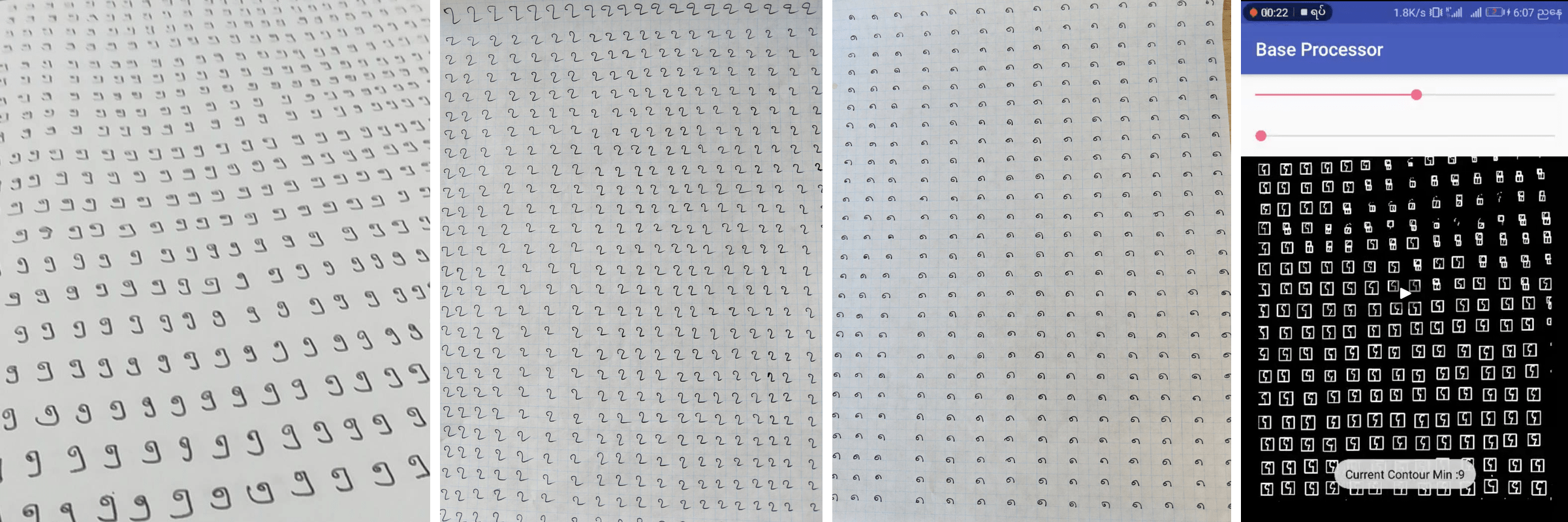
Figure 1: Sample collection sheets on plain paper (left) and grid paper (middle two), and the mobile preprocessing app (right) that let contributors verify digit extraction before submission.
A two-tier validation pipeline enforced data integrity: annotated samples were manually reviewed via chatbot-based tools followed by centralized engineering inspection. The final dataset is verified to be entirely duplicate-free, with strict disjoint writer partitions between the train (60,000 images, balanced at 6,000 per class) and test (27,561 images, unbalanced, mirroring collection frequencies) splits (Figure 2).
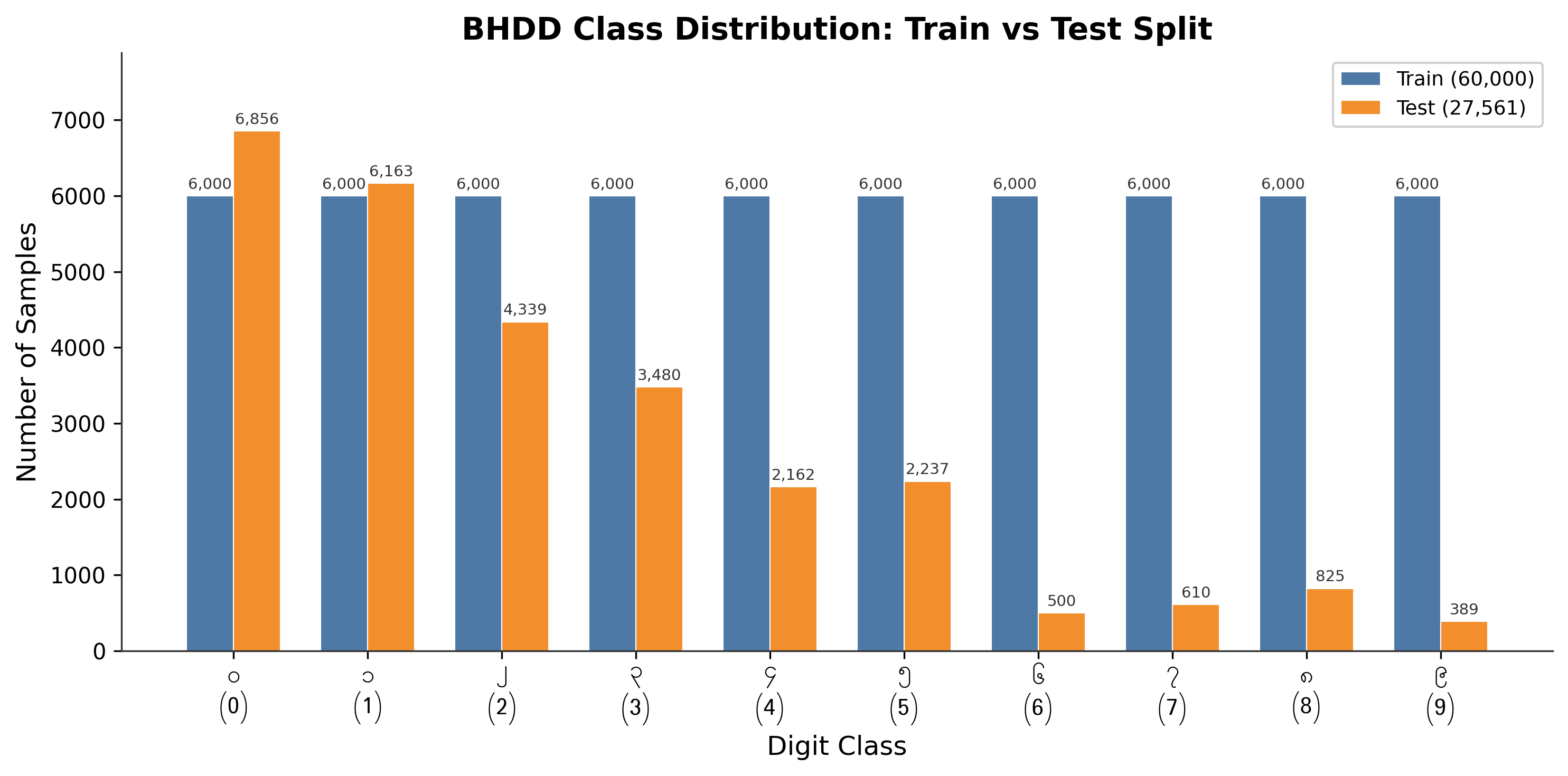
Figure 2: Training set (balanced, 6,000 per class) vs. test set (unbalanced, 6,856 down to 389).
Statistical and Morphological Analysis
The BHDD offers extensive statistical scrutiny. Pixel-level properties show substantial variation across classes; for example, class 0 (full circle) has the highest average intensity and ink coverage, while class 2 (a thin hook-shaped glyph) is sparser (Figure 3). Distributional analysis employs both log-scale histograms and class-conditional kernel density estimates.
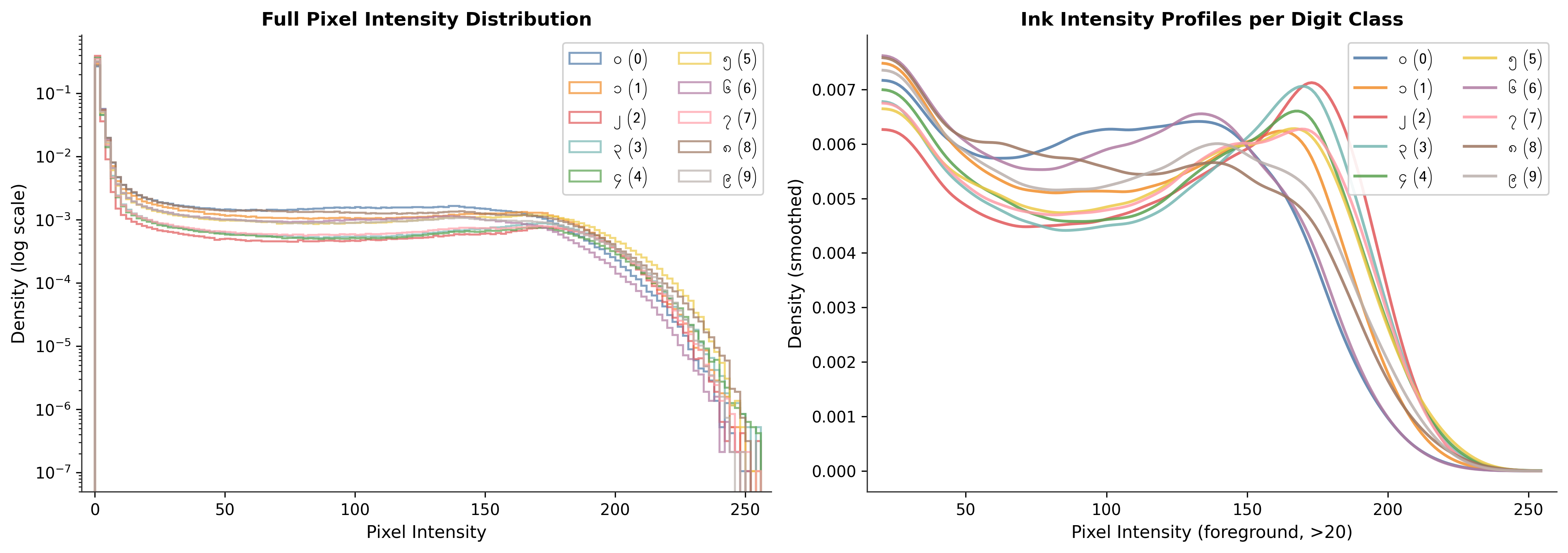
Figure 3: Pixel intensity distributions per class. Left: log-scale histogram. Right: per-class kernel density estimates.
Averaged class prototypes, generated by superimposing all training examples per class, yield sharp, high-contrast mean images, implying narrow intra-class morphological variance and a high degree of writer consensus on digit archetypes (Figure 4). However, within-class pixel variance maps delineate frequent divergence zones at stroke endpoints and salient curve junctions, especially for structurally complex digits (e.g., class 8, a spiral) (Figure 5).
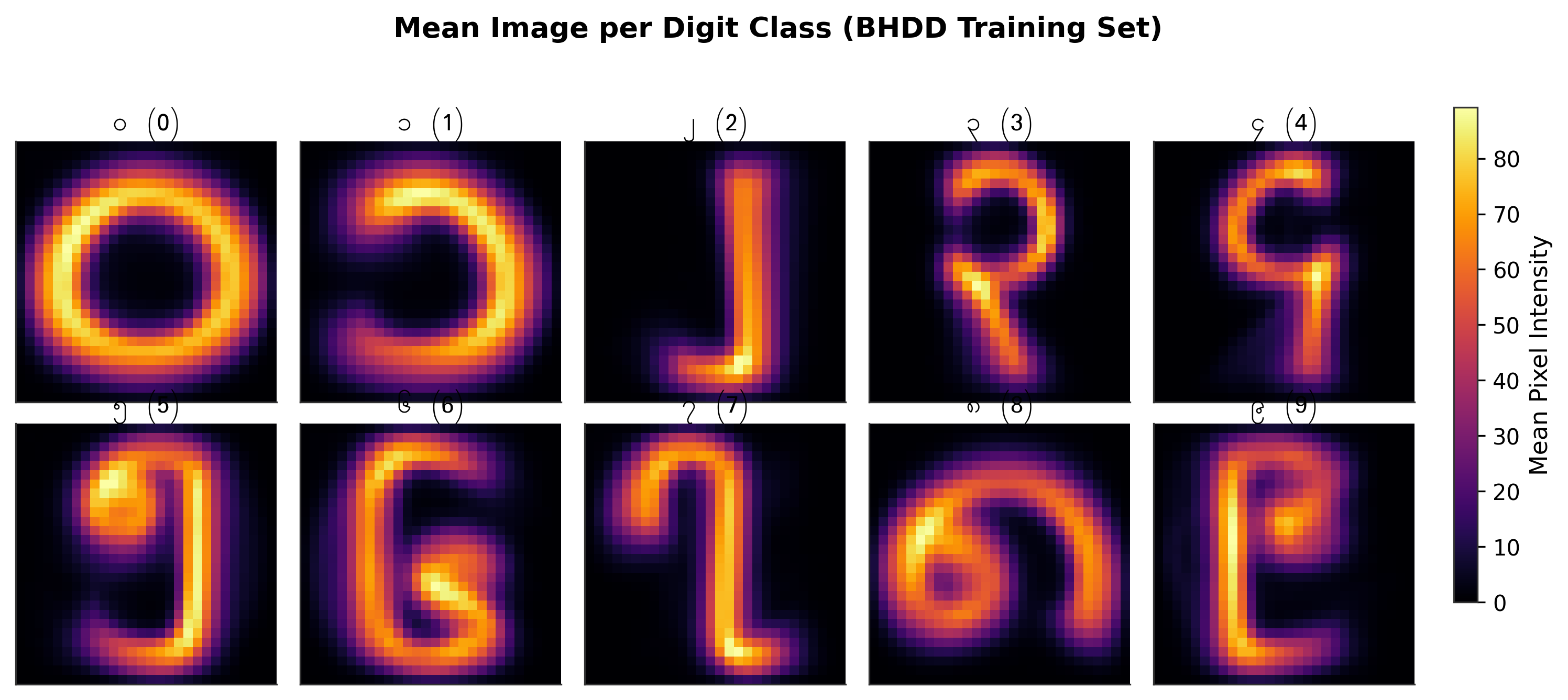
Figure 4: Mean image per class (6,000 training samples each). Sharp shapes show consistent digit forms across writers.
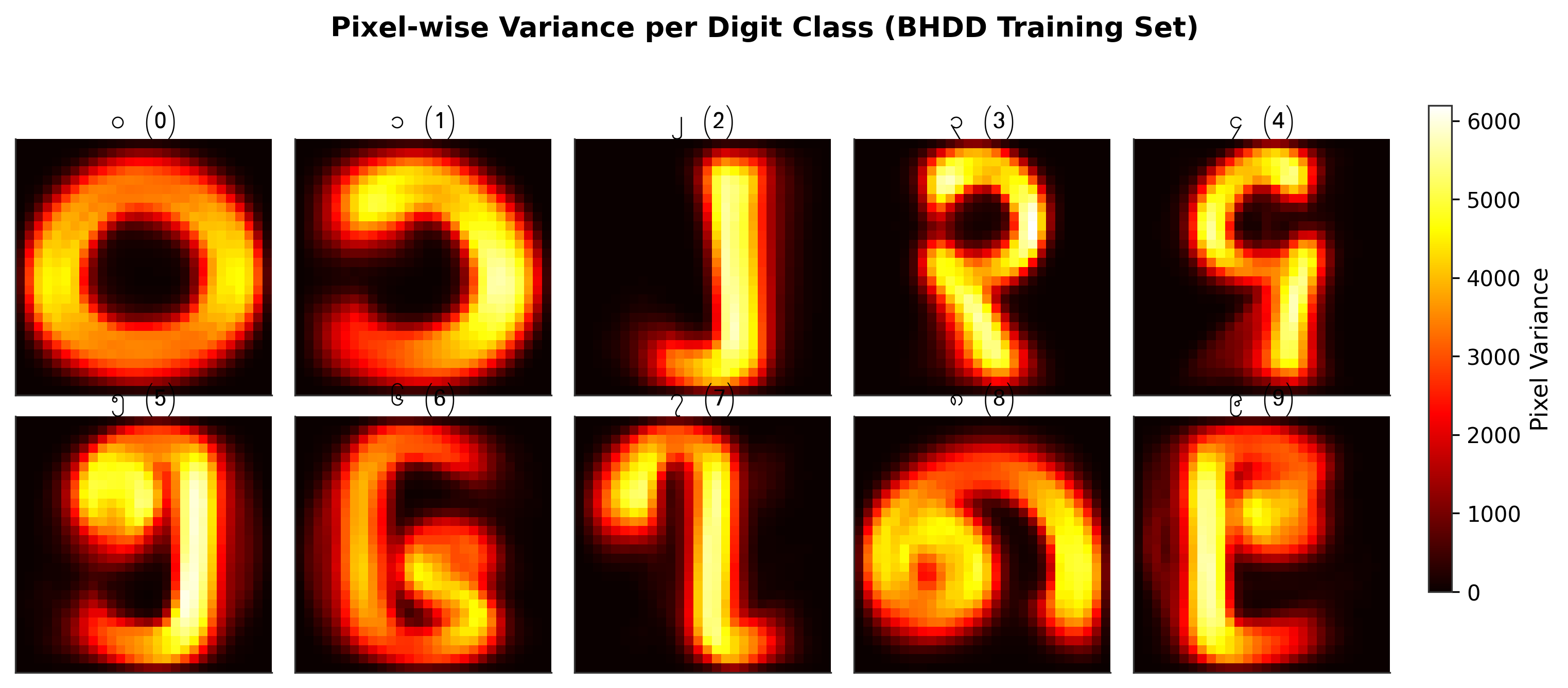
Figure 5: Per-class pixel variance. Bright areas mark where writers differ most.
To further contextualize intra-class diversity, the paper provides morphological grids that sample high-variance classes, visualizing differences in stroke morphology, thickness, and curvature (Figure 6).
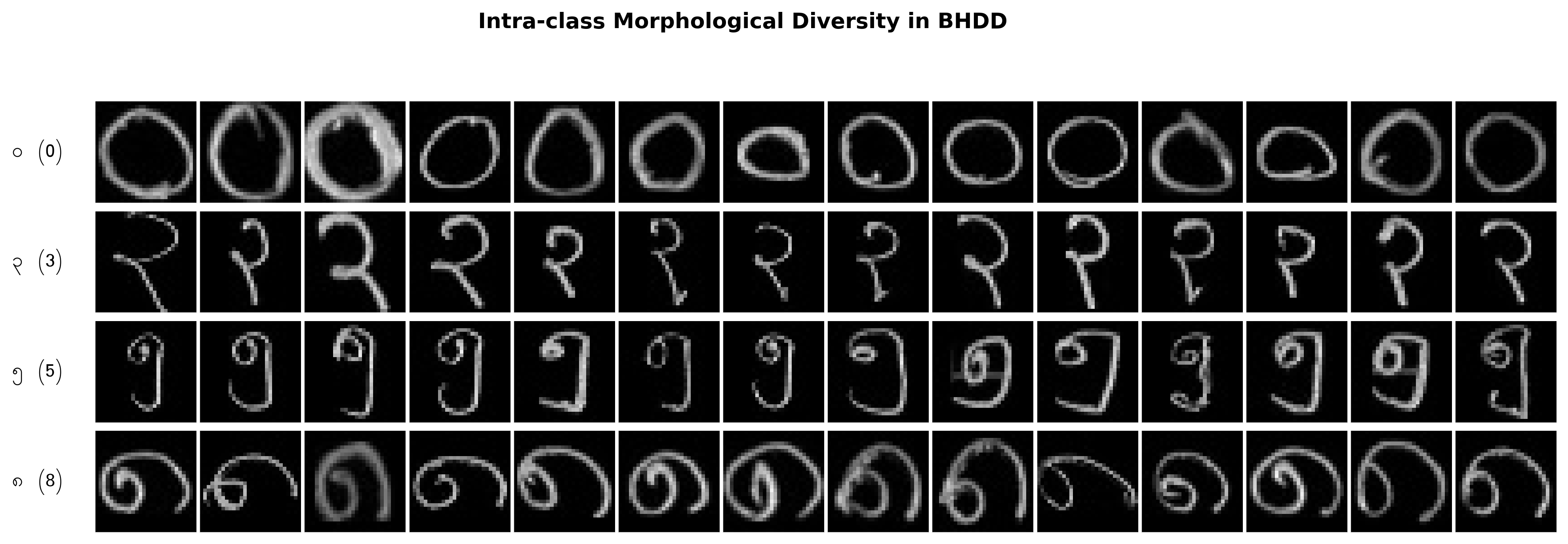
Figure 6: Writing style variation within classes 0, 3, 5, and 8.
Script-Specific Recognition Challenges
Myanmar digits are characterized by round, often looped forms as a result of palm leaf manuscript traditions. This design induces high confusability between certain pairs. The model error analysis identifies the 0–1 pair as particularly problematic—the only discriminative cue being a subtle gap in class 1 versus a closed circle in class 0. Other significant confounds include 0 vs 8, 3 vs 1, and 5 vs 8. Illustrative confusion instances are provided in Figure 7, while the confusion matrix from the best-performing model demonstrates that nearly all residual errors are localized to these pairs (Figure 8).
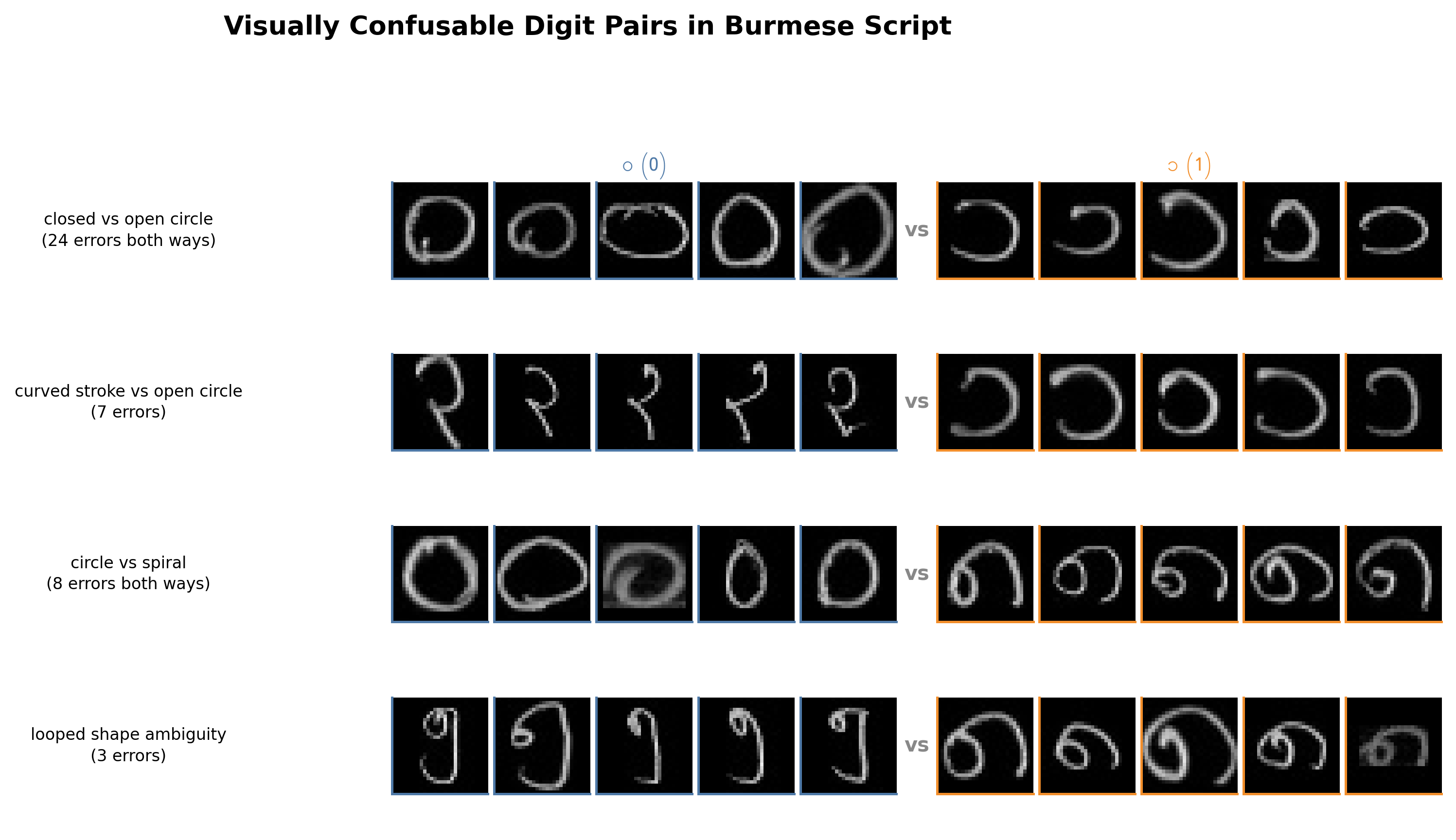
Figure 7: Commonly confused digit pairs with error counts from the improved CNN.
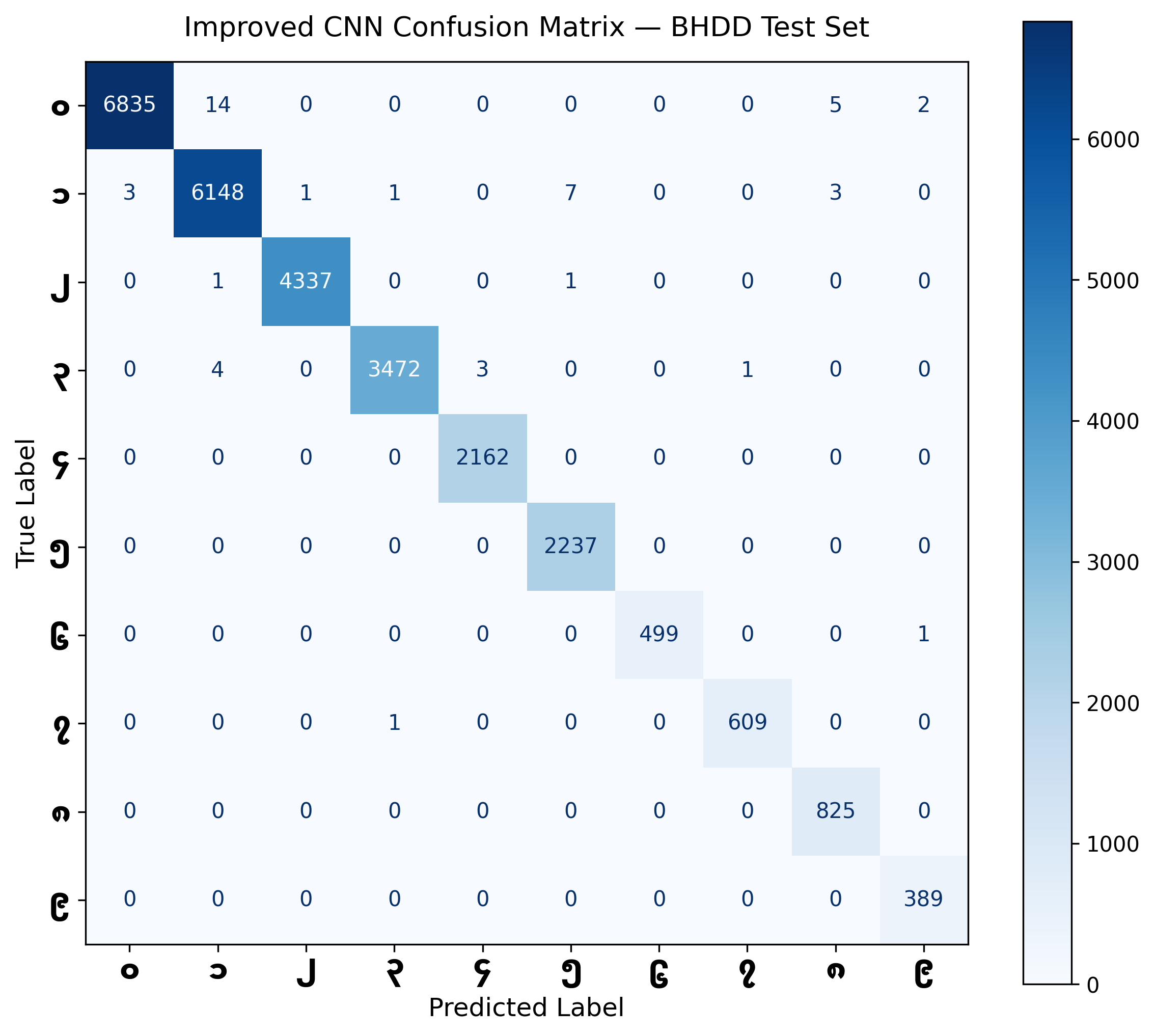
Figure 8: Improved CNN confusion matrix. Nearly all off-diagonal entries are zero. The 0–1 pair dominates the remaining errors.
Three baseline architectures are evaluated:
- MLP: Two hidden layers (256, 128 units), ReLU, Adam, achieving 99.40% accuracy.
- CNN: Two conv layers (32, 64 filters), max pooling, dropout, 99.75% accuracy.
- Improved CNN: Three convolutional layers with batch normalization, two max-pooling stages, lightweight data augmentation (random rotations, translations, scaling), and nearly the same parameter count as the basic CNN. This configuration achieves 99.83% accuracy and a macro F1 of 0.998.
The improved CNN misclassifies just 47 out of 27,561 test samples, with the majority of errors attributable to visually overlapping digit pairs. The baseline performance demonstrates the dataset’s tractability for modern deep architectures, while the nontrivial error modes highlight the necessity of script-aware approaches for achieving perfect recognition in Myanmar script.
Practical and Theoretical Implications
The availability of BHDD fills a major gap for Myanmar script OCR research, enabling rigorous benchmarking, reproducibility, and standardized model comparison for a previously underrepresented language. The dataset’s disjoint writer splits and robust curation enable controlled studies in writer adaptation, domain generalization, and script-specific inductive bias modeling.
From a practical standpoint, BHDD is well-suited for real-world OCR pipelines embedded in financial, governmental, and educational applications—contexts in which handwritten numerals remain prevalent across Myanmar. The error analysis suggests that further improvements likely hinge on either leveraging explicit stroke-based features, integrating sequence models to capture pen trajectory priors, or deploying self-supervised pretraining tailored for low-resource scripts.
Theoretically, the results reinforce that, even for visually similar scripts, deep neural systems exploit subtle global and local pixel patterns to resolve class ambiguities. However, challenging pairs persist when intra-class morphology collapses the discriminative signal—offering a test bed for advanced metric learning, hybrid neural-symbolic approaches, or few-shot transfer techniques that better capture the underlying script structure.
Looking forward, the extension of BHDD to consonants, word-level, and sentence-level handwriting—along with testbeds for unbalanced and writer-variant splits—will be instrumental for closing the performance gap between digit and full-script recognition.
Conclusion
BHDD represents the first large-scale, curated benchmark for Burmese handwritten digit recognition. The dataset’s methodological rigor, in-depth statistical analysis, and clear documentation of script-specific challenges make it an essential reference point for Myanmar script OCR research. Strong baseline results demonstrate that modern CNNs perform exceptionally well, yet nontrivial visual ambiguities remain unsolved. Future work will likely focus on extending the dataset, modeling full-character and word-level handwriting, and addressing the unique confusability patterns imposed by Myanmar's round script morphology.