- The paper demonstrates that high-res FUV imaging from AstroSat-UVIT resolved star-forming regions and interaction signatures in a close dwarf galaxy pair in HCG 77.
- It employs combined UV, optical, and IR SED modeling to derive stellar masses, SFRs, and dust properties, revealing bursty star formation in the blue compact dwarf.
- The study identifies a tidal dwarf galaxy candidate and highlights how tidal interactions trigger distinct star formation episodes in low-mass group environments.
AstroSat-UVIT Observations of a Possibly Interacting Dwarf Galaxy Pair in HCG 77
Introduction and Scientific Context
The implications of galaxy interactions for morphological transformation and star formation regulation are well established in extragalactic astronomy, with resonant relevance for low-mass, gas-dominated dwarf systems. In this study, far-ultraviolet (FUV) imaging from the Ultra-Violet Imaging Telescope (UVIT) onboard AstroSat is employed to investigate a close projected pair within Hickson Compact Group 77 (HCG 77), specifically PGC 56121 and PGC 56125, along with a candidate tidal dwarf galaxy (TDG) at the tip of a tidal tail. The scientific emphasis is twofold: (1) resolving the spatial distribution of recent star formation; (2) constraining the physical parameters indicative of the evolutionary state and interaction history of the system via SED modeling.
HCG 77, previously classified as a four-member compact group, is reconsidered here, based on updated redshift and morphological data, as a system primarily composed of PGC 56121, PGC 56125, and the TDG candidate J15491758+214951179, with the other putative members being unlikely to be physically bounded due to discrepant recession velocities.
UVIT FUV Imaging and Field Properties
High-resolution FUV imaging is critical for identifying compact and diffuse star-forming regions, given its sensitivity to massive, short-lived stellar populations. The UVIT observations attained ≲1.3′′ FWHM, a significant enhancement over the legacy near-UV data (e.g., GALEX), allowing for robust deblending in crowded group environments.
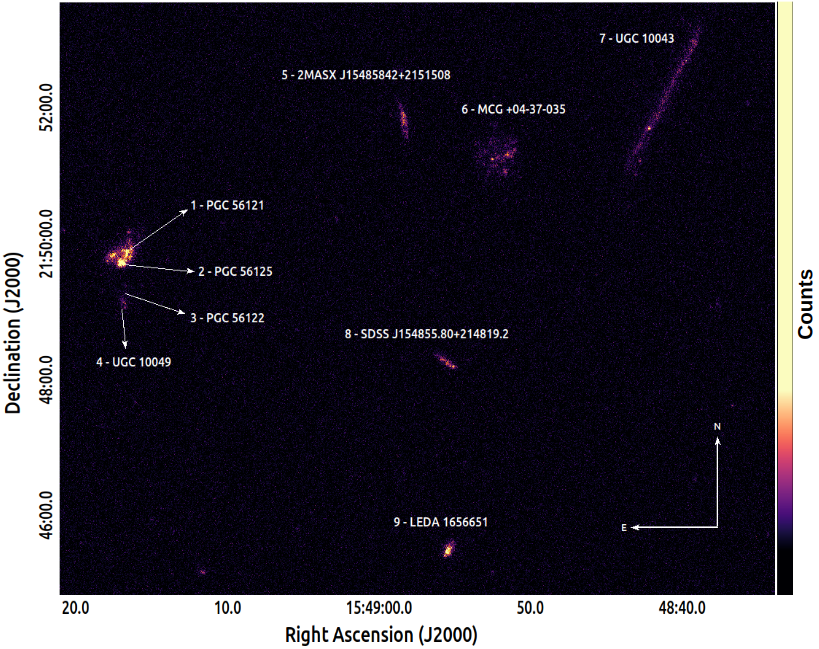
Figure 1: Far-UV images of galaxies in the field of view of the UVIT telescope while observing the HCG~77 region.
The FUV field presents not only the central pair and TDG candidate but also several neighboring galaxies, notably the edge-on spiral UGC 10043 and the disturbed MCG+04-37-035, which are both dynamically relevant for interpreting the tidal debris and HI kinematics in this environment.
To isolate distinct star-forming regions, surface brightness contour analysis was undertaken using SAOImage DS9, overlaid with SDSS optical data for contextual identification of stellar and gaseous features.
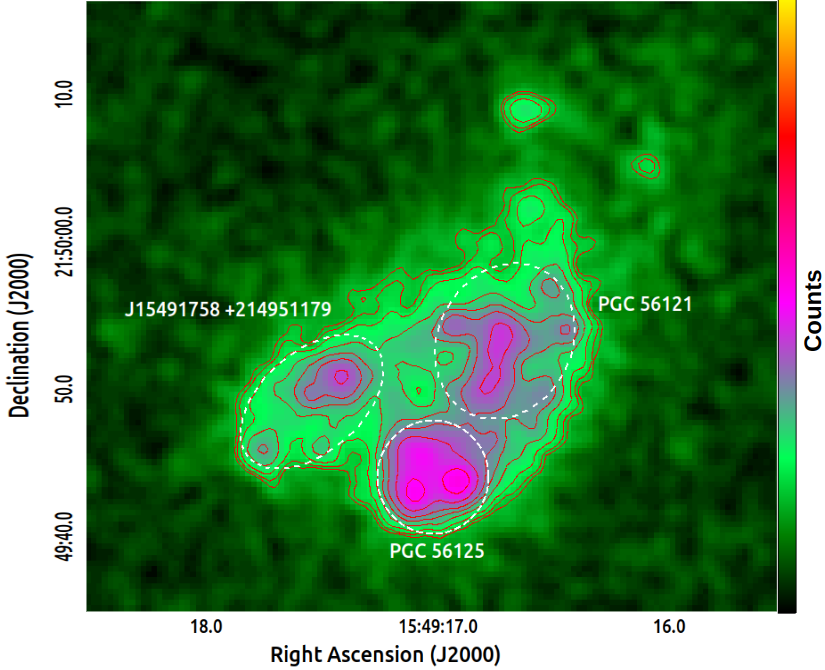
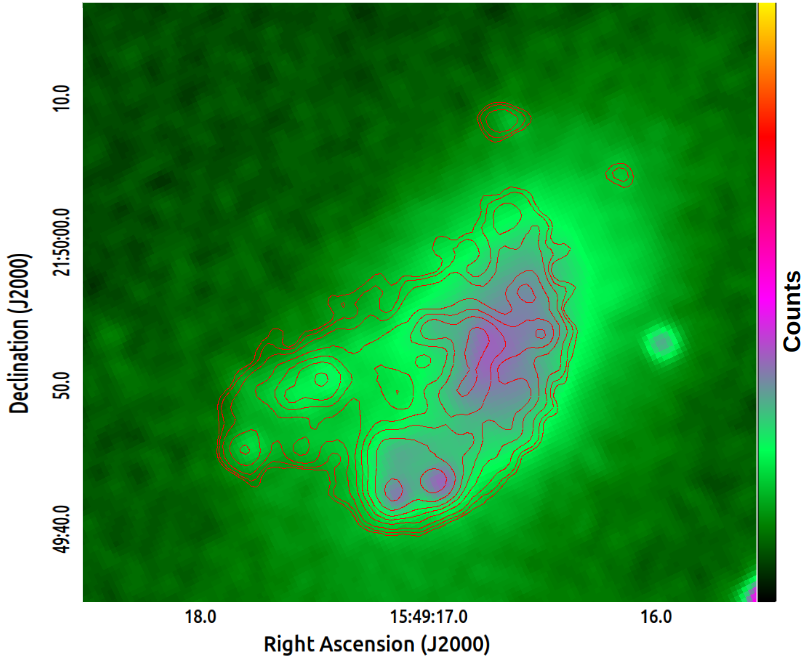
Figure 2: Surface brightness contour map of PGC 56121, PGC 56125, and J15491758+214951179, distinguishing active star-forming regions and extended diffuse emission.
The FUV-bright zones correspond to sites of recent or ongoing star formation, while more diffuse emission, particularly along apparent tidal tails, is suggestive of disrupted ISM and the presence of stellar debris.
A systematic photometric segmentation, with both automated (Source Extractor) and manually defined regions, allows for a detailed inventory of compact SF knots, background estimation, and tidal features.
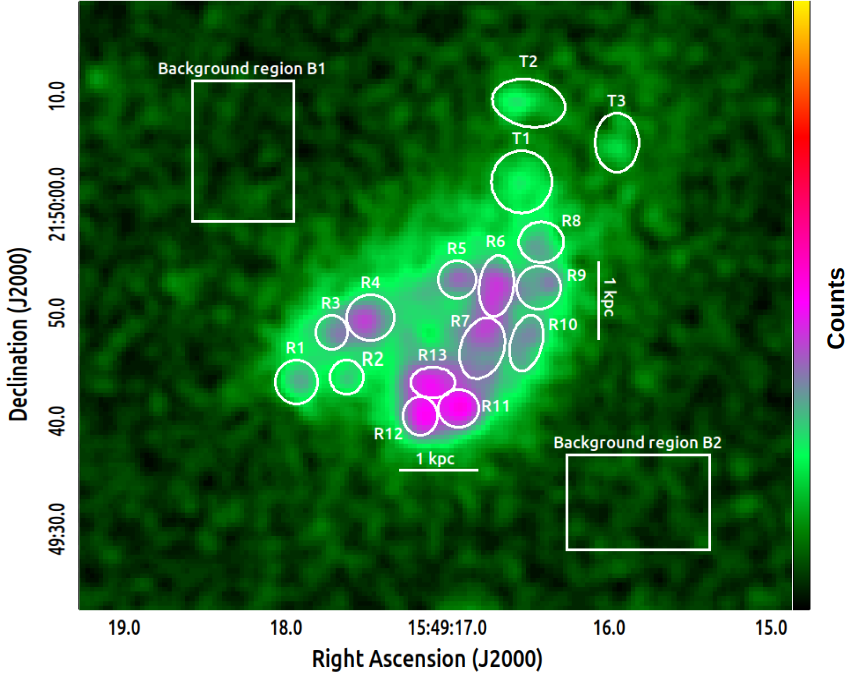
Figure 3: Identification of 13 main star-forming regions (R1–R13), background zones (B1,B2), and three tidal tail regions (T1–T3) within the interacting system.
Star formation rates (SFRs) derived for these regions, through FUV luminosity calibrated with extinction corrections, span 10−4–10−2 M⊙ yr−1 (see Table 1 of the manuscript), consistent with stochastic SF episodes typical of low-mass group environments and elevated with respect to isolated dwarfs.
SED Modeling: Physical Parameter Inference
Multiwavelength (UV, optical, IR) photometry for PGC 56121, PGC 56125, and J15491758+214951179 was synthesized via MAGPHYS, yielding robust estimations of stellar mass, dust mass, SFR, specific SFR (sSFR), dust luminosity, and metallicity, with Bayesian credible intervals extracted from the posterior distributions.
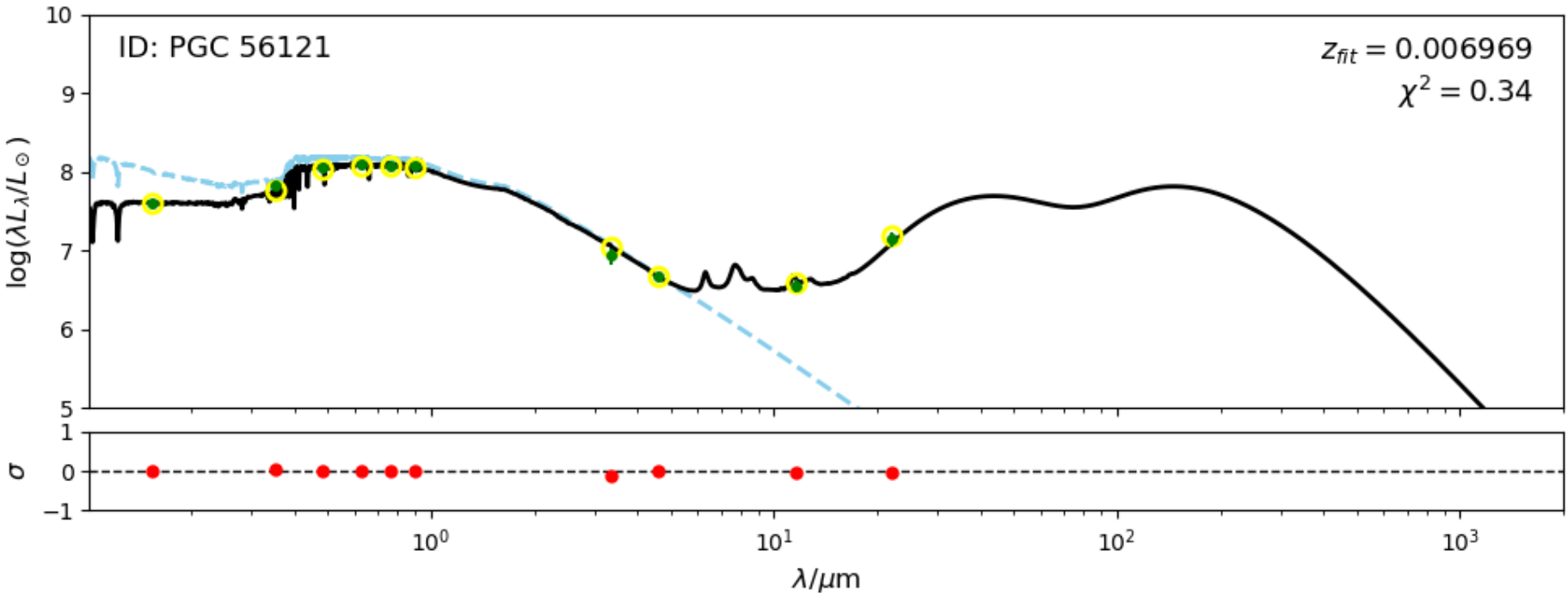
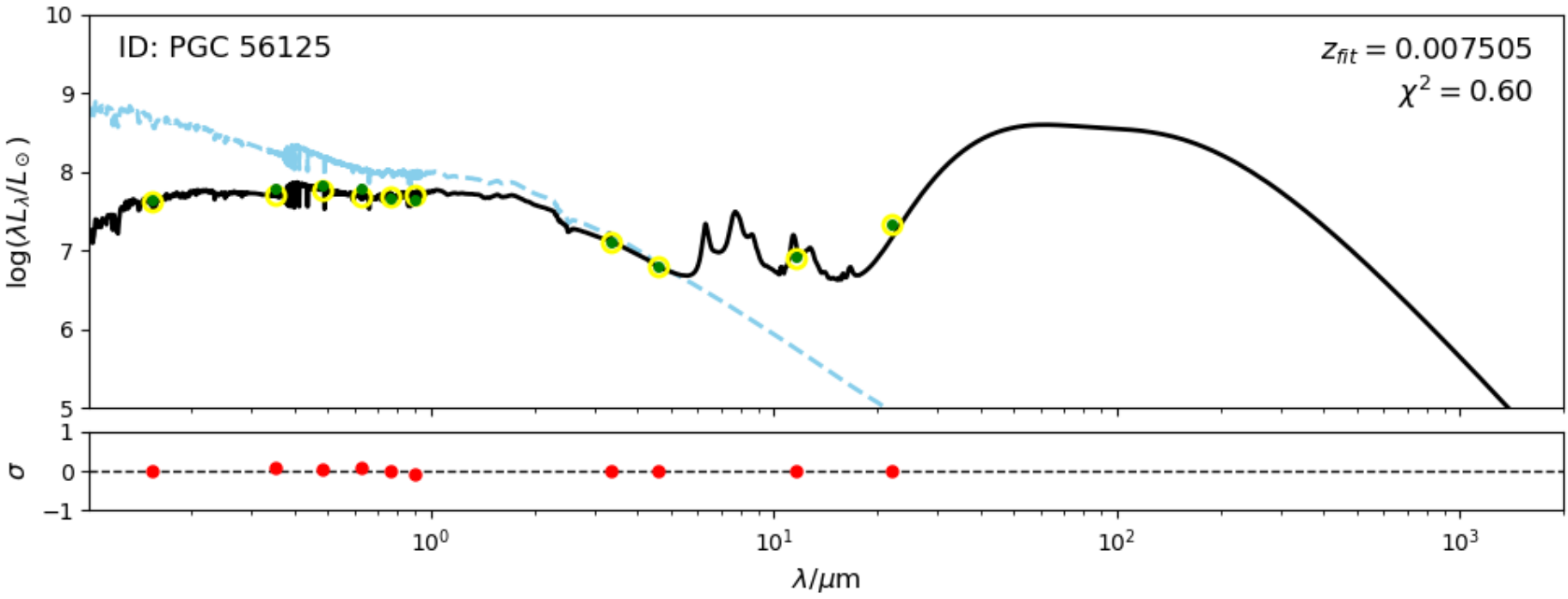
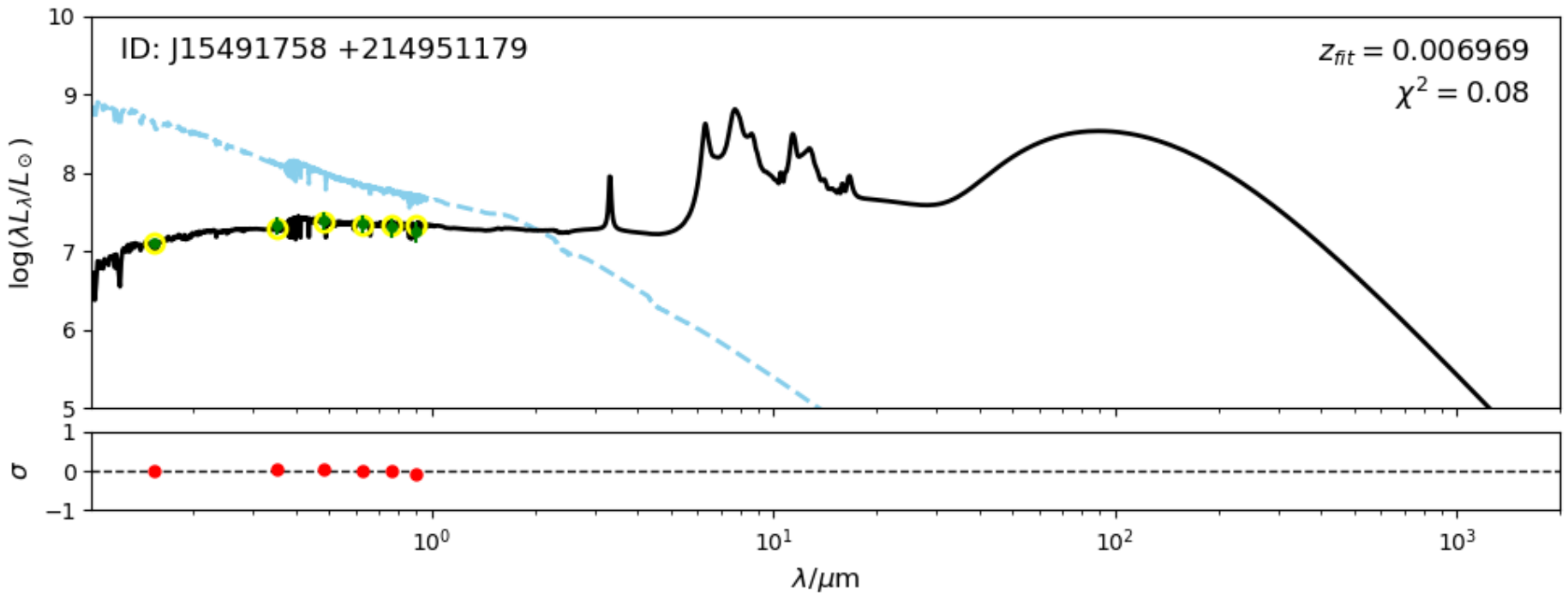
Figure 4: Integrated SEDs for PGC 56121, PGC 56125, and J15491758+214951179, displaying observed points, best-fit models, and residuals.
PGC 56121 is classified as an irregular barred Magellanic system with M∗∼1.2×10⁸ M⊙, SFR ∼1.2×10⁻² M⊙ yr−1, low metallicity (Z/Z⊙∼0.022), and moderate dust content. PGC 56125 emerges as a blue compact dwarf (M∗∼2.6×10⁷ M⊙), but despite its lower stellar mass, shows a somewhat elevated SFR (8×10⁻² M⊙ yr−1) and super-solar metallicity—likely reflecting rapid ISM enrichment and recent accretion of pre-enriched tidal matter.
Notably, the sSFRs indicate a transition: PGC 56125 is experiencing a bursty phase, whereas PGC 56121 is comparatively quiescent. The dust attenuation parameter μ shows a higher ambient ISM fraction in PGC 56125, hinting at distinct ISM conditions, possibly driven by the recent interaction.
Likelihood distributions further substantiate parameter constraints:
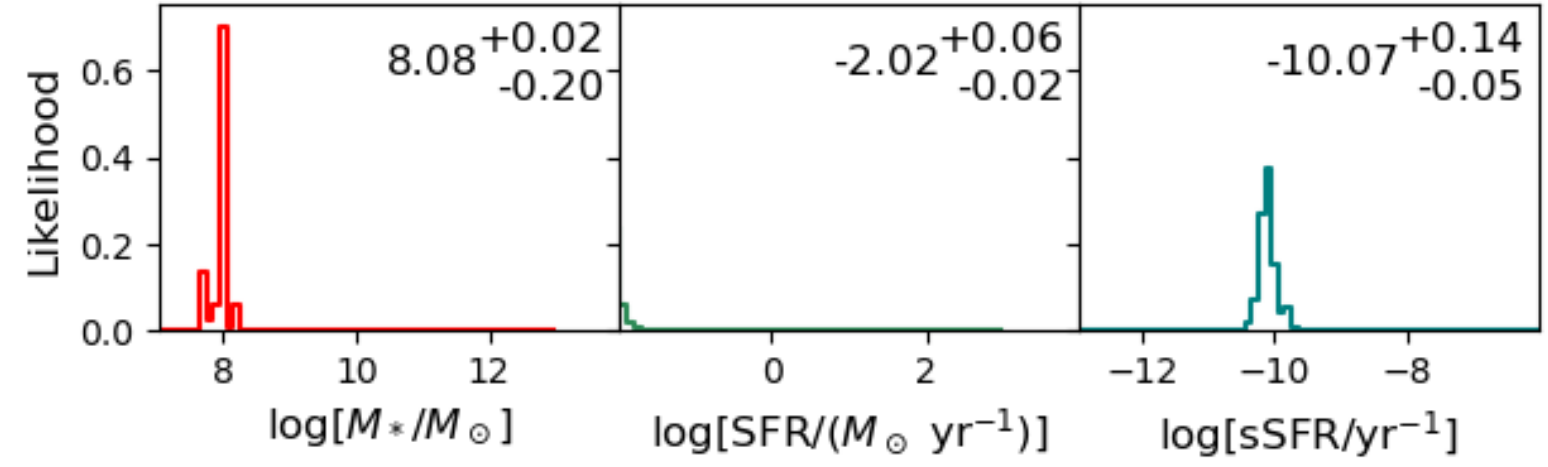
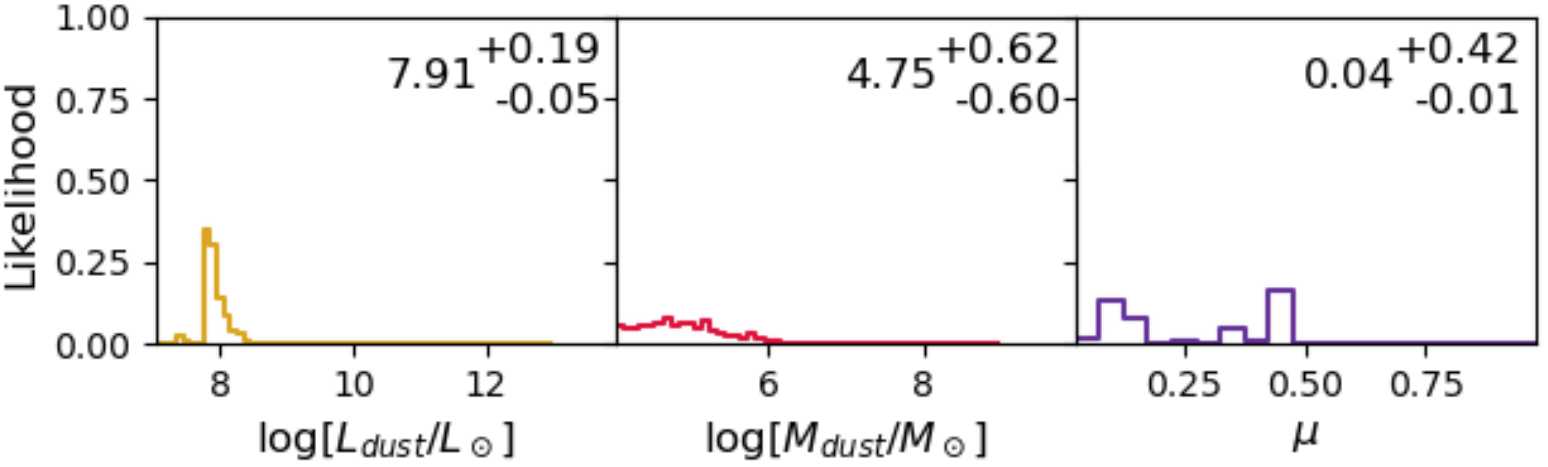
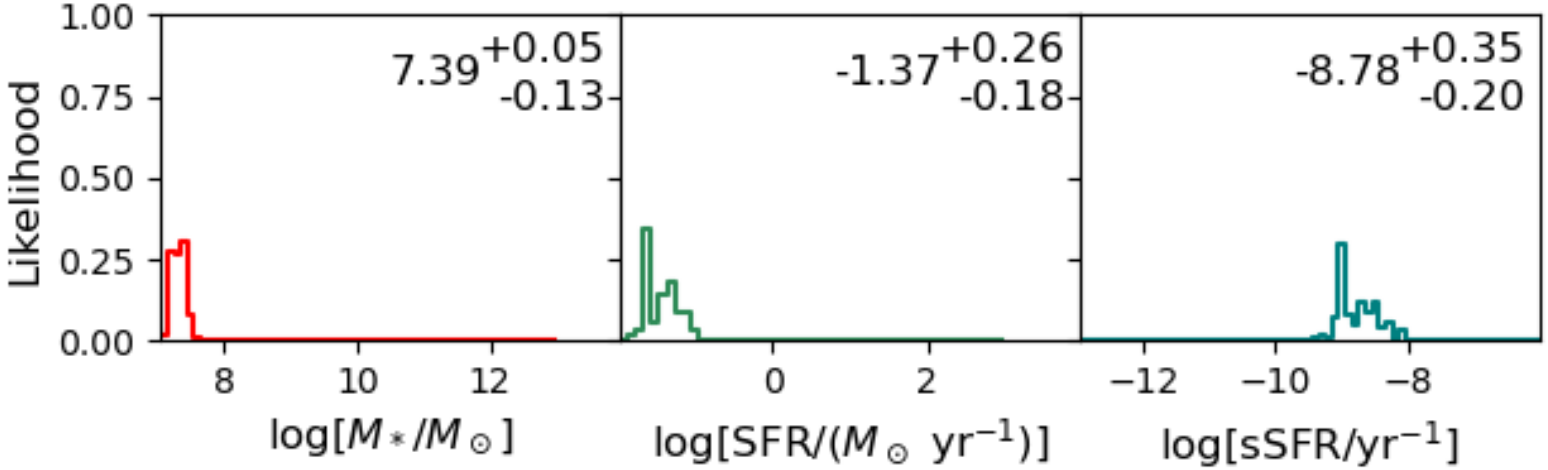
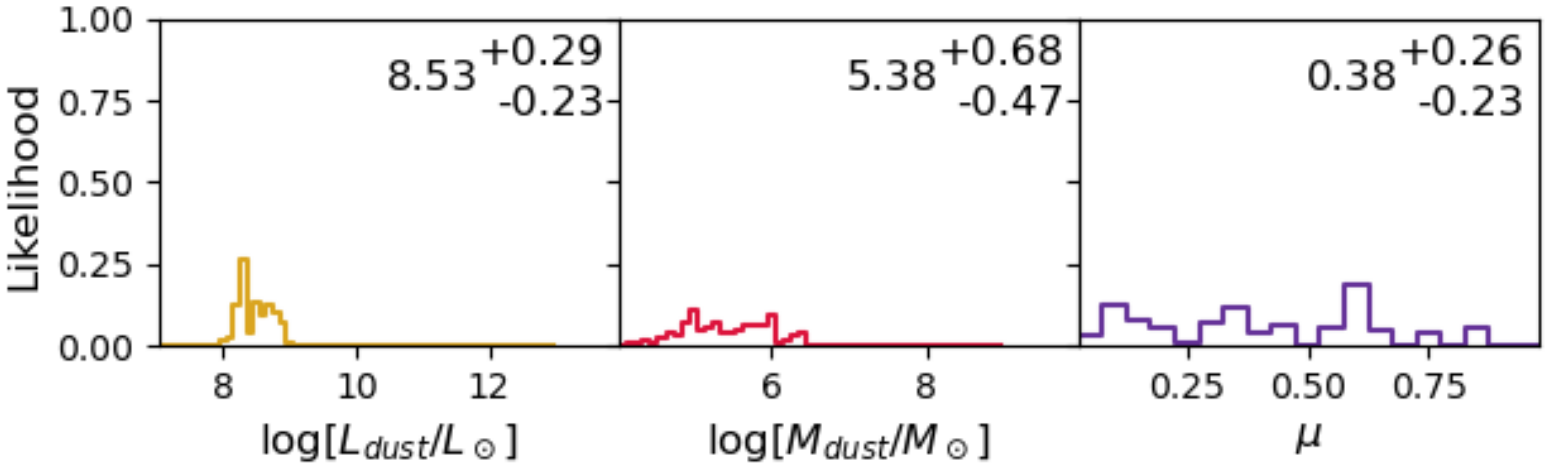
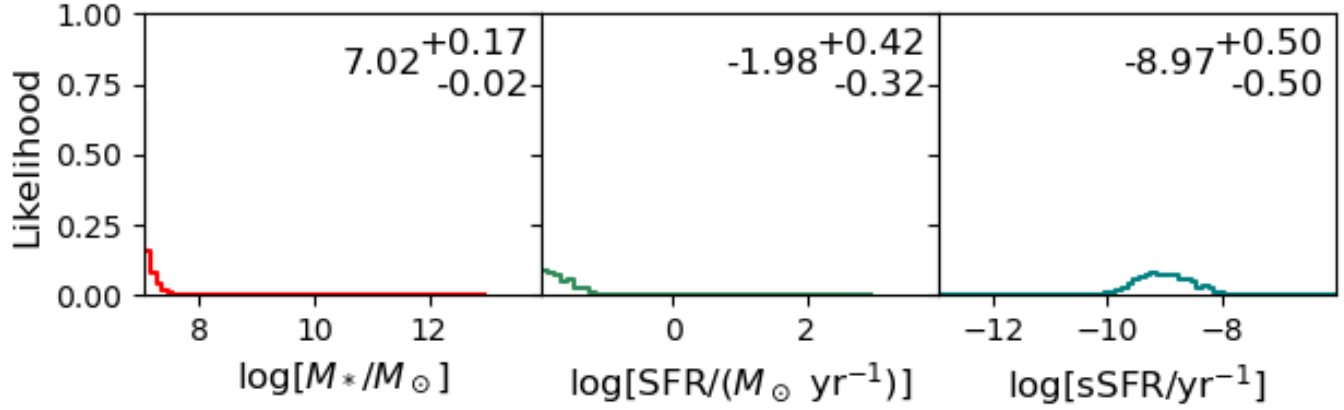
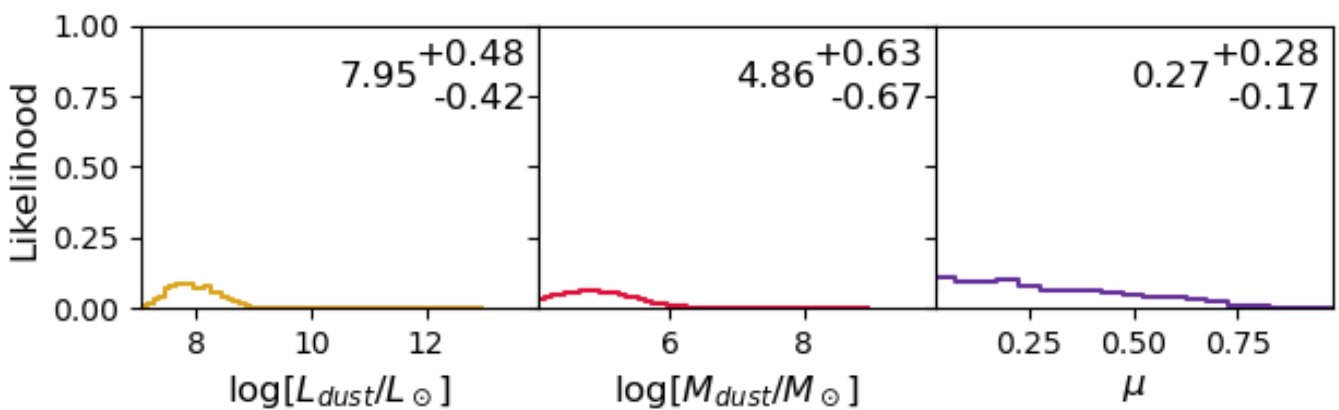
Figure 5: Posterior probability distributions for stellar and dust masses from SED fitting, highlighting the credible intervals for each primary object.
The candidate TDG (J15491758+214951179) at the tidal tail’s extremity shows M∗∼6×10⁶ M⊙, g−r∼0.041, and a low metallicity, all compatible with expectations for newly formed, tidal-born objects composed of pre-enriched material. The color and mass hierarchy match the discriminants from population studies of TDG prevalence and formation scenarios.
Interaction Scenario and Group Dynamics
The spatial and kinematic configuration indicates that PGC 56121 and PGC 56125 are viewed in close projection but may be separated along the line of sight. Nevertheless, the presence of a contiguous tidal structure, enhanced SFR, and evidence from HI velocity fields suggests physical association and interaction.
The integration of HI mapping and optical morphological data validates the hypothesis that UGC 10043, MCG+04-37-035, and HCG 77 constitute a small dynamically connected group, with ongoing tidal stripping shaping both stellar and gaseous components. The measured SFRs and environment-driven enhancement are consistent with external triggering, in line with simulations and empirical studies of dwarf-dwarf interaction-induced starbursts.
Implications and Future Prospects
This study benchmarks the utility of high-resolution FUV imaging and SED modeling for resolving the star formation—interaction nexus in low-mass group environments. The robust detection of a TDG candidate, supported by metallicity, color, and mass indicators, highlights the recurrent role of tidal interactions in dwarf galaxy evolution and baryonic assembly.
Longitudinal multi-wavelength follow-up (deep spectroscopy, resolved HI mapping) is crucial for confirming the physical association and kinematics of J15491758+214951179, as well as for assessing its potential for long-term survival against dissolution in the group potential. Improved IR data would refine mass and dust estimates for the TDG.
Further, detailed comparison with hydrodynamic simulations will clarify the relative roles of internal versus external triggers in the ISM turbulence and SF cycle in compact group dwarfs. The detection methodology demonstrated here is scalable for future UV missions and for large samples, informing population statistics of TDG formation and the contribution of minor interactions to the stellar mass assembly in the low-mass regime.
Conclusion
In summary, FUV imaging with UVIT/AstroSat has enabled the spatially resolved census of star formation and robust SED-based physical characterization of an interacting system in HCG 77, resolving it into an irregular dwarf, a blue compact dwarf, and a plausible TDG formed in situ. The results underscore the heightened SF activity and morphological complexity induced by tidal dynamics in compact groups. These findings contribute key empirical constraints on the end states of interaction-driven evolution in the dwarf regime, with ramifications for hierarchical galaxy evolution models and the census of non-hierarchical satellite formation channels.