- The paper establishes a resonance-based mechanism using RP resonances to show how states further from equilibrium can relax faster.
- It demonstrates the mechanism in a kicked Ising chain with numerical validation, revealing crossover in Bures distance dynamics.
- It highlights that complete symmetry breaking in initial states produces strong Mpemba effects with accelerated algebraic decay in equilibration.
Quantum Many-Body Mpemba Effect through Resonances: An Expert Analysis
Introduction and Motivation
The Mpemba effect, originally observed as hot water freezing faster than cold under certain conditions, has long challenged the intuition and theoretical expectations of relaxation phenomena. Its quantum analogue, the Quantum Mpemba Effect (QME), generalizes the paradox to quantum systems, where an initial state farther from equilibrium approaches equilibrium more rapidly than a state closer to equilibrium, given identical dynamics. Although QME has been observed in both open and closed quantum systems, its microscopic origin—especially in generic, closed, chaotic many-body systems—remained unresolved. “Quantum Many-Body Mpemba Effect through Resonances” (2603.11788) establishes a rigorous, resonance-based mechanism for QME in such systems, leveraging Ruelle-Pollicott (RP) resonances, and shows that symmetry-breaking initial states can accelerate local equilibration even further.
Framework: RP Resonances and Local Equilibration
The central theoretical advance is the recasting of subsystem equilibration in terms of RP resonances. For a closed quantum system with unitary dynamics (e.g., a kicked Ising chain), the relaxation of local observables is not governed by the global unitarity but by the effective, non-Markovian dynamics induced on subsystems. These dynamics can be decomposed spectrally using the truncated propagator in the quasi-momentum basis, yielding RP resonances. The leading RP resonance, defined by the eigenvalue closest to the unit circle, determines the slowest decaying component—and thus the late-time equilibration.
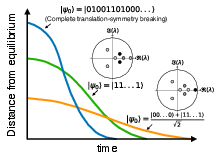
Figure 1: RP resonances as eigenvalues λ in the complex plane; the state’s overlap with the slowest-decaying mode dictates subsystem equilibration rates, enabling the QME.
Crucially, QME occurs when the overlap of the initial global state with the leading (slowest) RP resonance is smaller for the state farther from equilibrium, resulting in accelerated relaxation. This is analogous to the mechanism elucidated in open Markovian systems in terms of Liouvillian eigenmodes but generalized here to closed, strongly non-Markovian many-body settings.
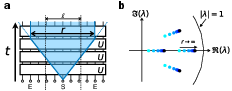
Figure 2: Construction of the truncated propagator and extraction of RP resonances, highlighting the significance of mode structure for local observable dynamics.
Quantitative Demonstration in the Kicked Ising Chain
To demonstrate and numerically validate the theory, the authors analyze the chaotic kicked Ising chain, a paradigmatic model with experimentally accessible implementation. They consider families of initial global product states parameterized by θ, whose reduced Bures distance to equilibrium D(0) and projection onto the dominant RP mode ∣c1,0∣ can be computed. The theoretical prediction: the QME emerges for pairs where the farther state from equilibrium has a significantly suppressed slow-mode overlap.
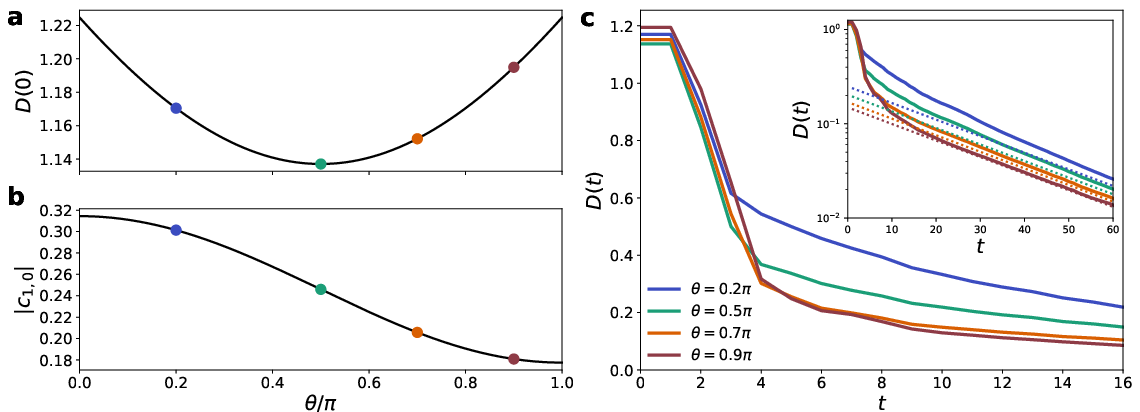
Figure 3: Numerical verification of QME with Bures distance dynamics in the kicked Ising chain; intersections indicate faster equilibration of a less equilibrated initial state.
The time evolution of Bures distance D(t) for various θ verifies these predictions: the Bures distance curves for different initial states cross, marking the reversal of relaxation rates predicted by RP resonance-based theory. The asymptotic analytic predictions match numerics at late times, with minor discrepancies attributed to finite truncation in extracting the resonance structure.
Strong QME via Complete Symmetry Breaking
A major conceptual advance in the paper is the identification of a 'strong' QME arising from initial conditions that completely break translational symmetry. For such states—including certain number-theoretical sequences (e.g., Legendre sequences)—the overlap with slowest RP modes becomes distributed over a continuum in momentum space, fundamentally altering the late-time relaxation law from simple exponentials to forms with algebraic prefactors (t−1/2 or stronger). Thus, symmetry breaking not only alters but can accelerate equilibration beyond what is attainable in symmetric settings.
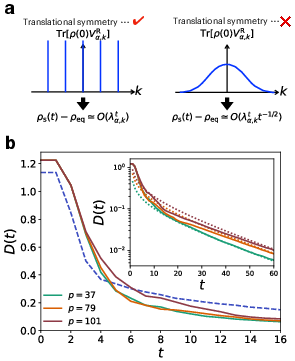
Figure 4: Contrasting overlap structure and relaxation pathways between translationally symmetric and fully broken initial states; algebraic speedup emerges in the latter.
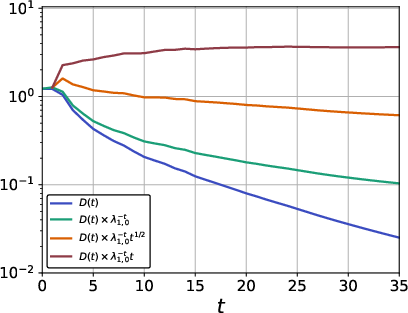
Figure 5: Enhanced decay of Bures distance D(t) for 'Legendre sequence' initial states compared to symmetric initial conditions, confirming the strong QME via symmetry breaking.
An even more pronounced algebraic enhancement can occur by choosing initial states such that overlaps with the dominant resonance vanish (e.g., using de Bruijn sequences), resulting in decays like D(t)∼t−1, as confirmed numerically by the authors.
Implications and Future Directions
The results provide a unifying, microscopic understanding of the QME in generic chaotic quantum many-body systems, bridging earlier open-system approaches and extending resonance concepts to closed-unitary dynamics. The formalism developed here enables predictions for complex observables—not limited to linear expectation values but including nonlinear quantities such as quantum Fisher information and Rényi entropies—due to the comprehensive access to the reduced density matrix dynamics.
Experimentally, the predictions are directly testable in kicked Ising platforms realized in ion traps and superconducting quantum processors. The theoretical structure naturally suggests several future extensions: research into many-body systems with conserved quantities (hydrodynamic slow modes), continuous-time dynamics, and systems with long-range interactions (which modify the effective light cone and thus the resonance structure).
The demonstration that symmetry-breaking initial conditions can catalyze or even qualitatively alter local relaxation has operational relevance for state-preparation and cooling protocols—a direction of great interest in quantum technology, as highlighted by related works [Ares2025, Westhoff2025].
Conclusion
“Quantum Many-Body Mpemba Effect through Resonances” (2603.11788) delivers a rigorous, resonance-based framework for anomalous relaxation in chaotic quantum many-body systems, directly connecting initial state structure to dynamical equilibration via RP resonances. The identification of strong QME through symmetry breaking not only generalizes previous results but opens new avenues for dynamical control and theoretical analysis of nonequilibrium quantum matter. This work is likely to serve as a foundation for the further exploration of resonant dynamics, state preparation, and explicit protocols leveraging the QME in both theory and experiment.

