Landau level spectroscopy in current solid state physics
Published 26 Feb 2026 in cond-mat.mtrl-sci | (2602.23129v1)
Abstract: Landau level spectroscopy plays an important role in modern condensed-matter physics. In this technique, electrons in a solid are subjected to quantizing magnetic fields and probed experimentally, often through optical methods. Direct and detailed insights into the electronic properties of crystalline materials are obtained, particularly the properties related to their band structure. Landau level spectroscopy enables the precise extraction of key parameters such as effective mass, carrier density, mobility, and band gap, and serves as a powerful tool for studying interactions between electrons and other quasiparticles in solids. Over its more than seventy-year history, Landau level spectroscopy has been applied mainly to semiconductors and semimetals. Today, its scope also includes graphene-based systems, surface and bulk states in topological materials, and other emergent systems with a narrow or vanishing band gap. In this work, we review the fundamentals of Landau level spectroscopy and illustrate them with selected examples from the literature.
The paper demonstrates that optical Landau level spectroscopy accurately extracts band parameters such as effective mass, carrier density, and gap size.
The paper utilizes advanced techniques like FTIR and high-field measurements to resolve scaling regimes across semiconductors, graphene, and topological materials.
The paper reveals that deviations from ideal scaling laws, observed in materials like TaAs, highlight the impact of band curvature, disorder, and spin-orbit interactions.
Authoritative Summary of "Landau level spectroscopy in current solid state physics" (2602.23129)
Introduction and Historical Overview
Landau level spectroscopy constitutes a pivotal approach for interrogating the electronic band structure of crystalline materials under high magnetic fields. By probing transitions between quantized Landau levels, this contactless, optical technique enables the precise extraction of band parameters including effective mass, carrier density, mobility, and gap size, and has been extensively applied across semiconductors, semimetals, graphene-based systems, and topological materials.
The genesis of Landau level spectroscopy rests with cyclotron resonance experiments, notably those performed on germanium in the 1950s, which provided compelling evidence for quasiparticles with distinct band masses. Quantum oscillation measurements such as Shubnikov–de Haas or de Haas–van Alphen effects established the notion of Landau quantization, delineating periodic oscillations in physical observables as a function of reciprocal magnetic field. Subsequently, optical Landau level spectroscopy matured into a versatile probe for band structure, facilitating direct analysis of interband and intraband excitations.
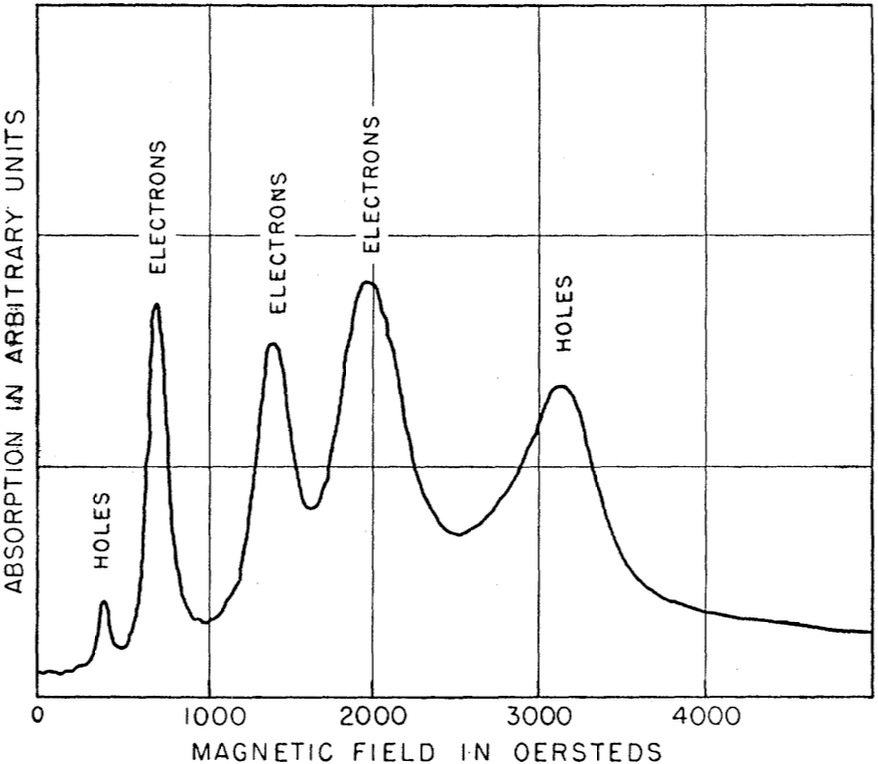
Figure 1: Early cyclotron resonance measurement on germanium, demonstrating resonant absorption associated with electrons and holes at 4 K.
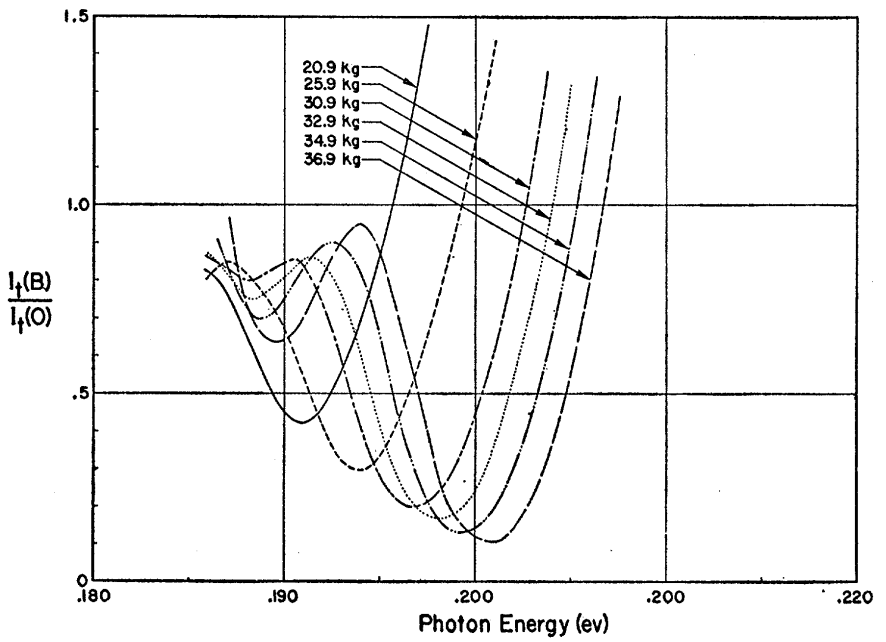
Figure 2: Magneto-transmission in InSb reveals interband Landau level transitions, observable at relatively low fields and room temperature.
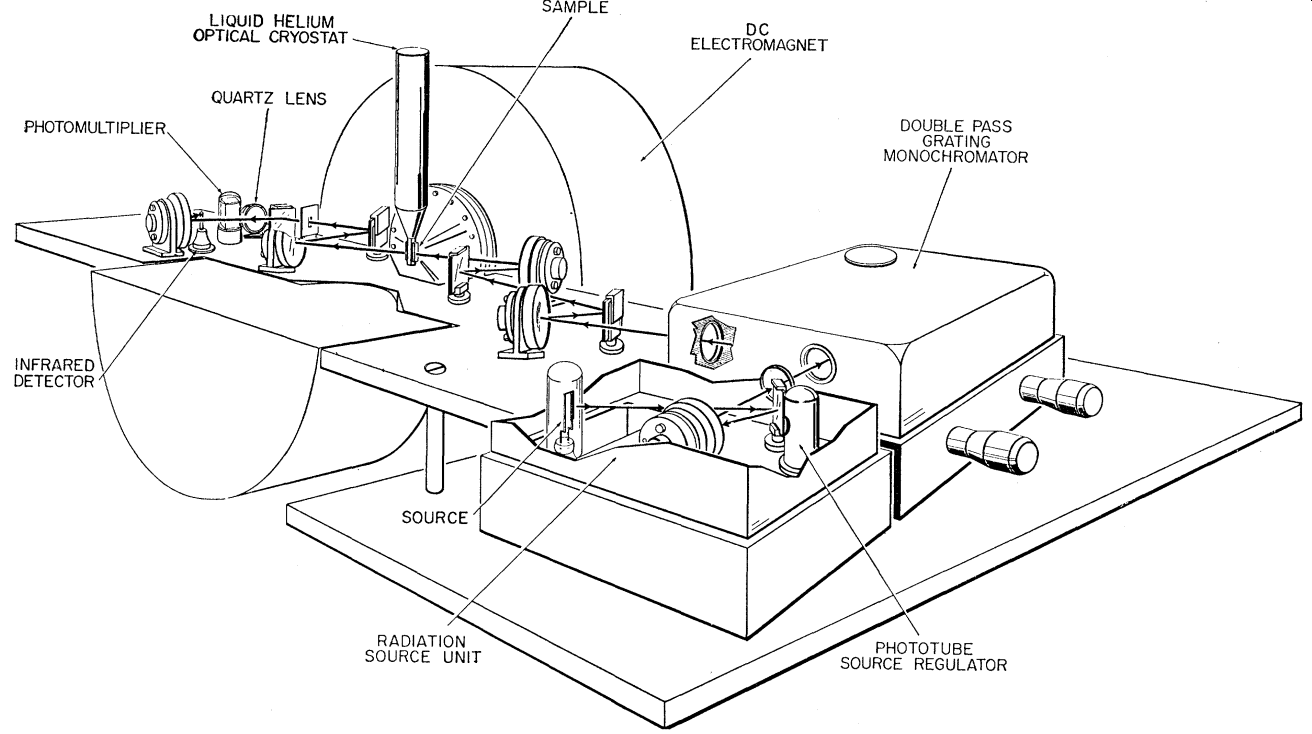
Figure 3: Schematic of a prototypical Landau level spectroscopy setup, predating the adoption of Fourier transform spectrometers.
Cyclotron Motion and Quantum Landau Quantization
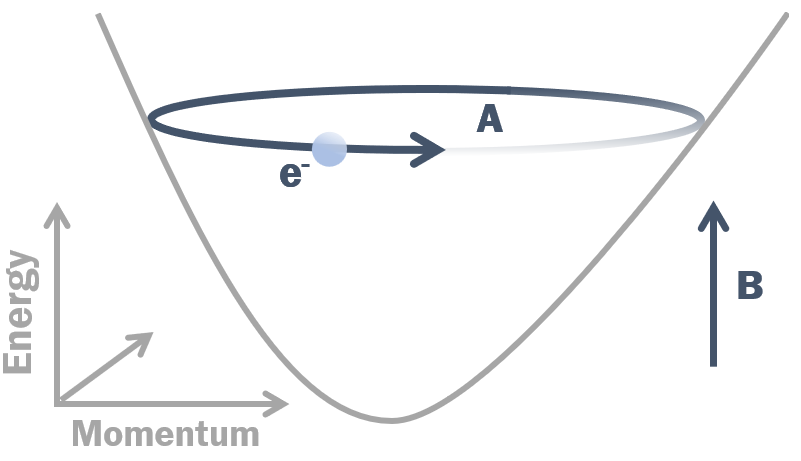
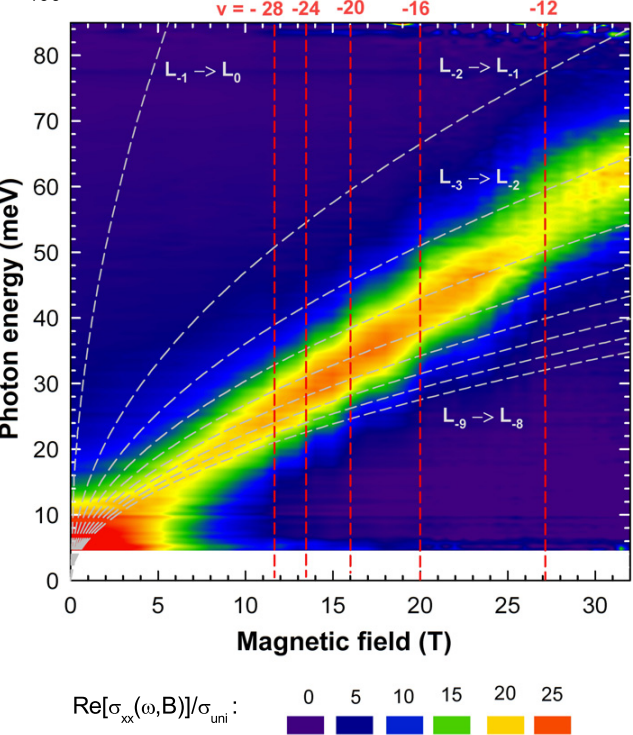
The classical motion of carriers subjected to a uniform magnetic field is characterized by the cyclotron frequency ωc=∣q∣B/m; resonance occurs for incident photon frequencies matching ωc. In solids, the cyclotron mass, mc=2πℏ2dEdA, is determined by the energy-dependent area A of the cyclotron orbit in k-space. This framework is applicable to both parabolic and non-parabolic (e.g., conical) bands, as demonstrated in graphene, where the transition from quasi-classical (linear-in-B) to fully quantum (B-scaling) regimes is evident.
Figure 4: Carrier cyclotron motion in an arbitrary band; area dependence defines mc.
Figure 5: Magneto-absorbance in highly doped graphene showing quasi-classical cyclotron resonance and the transition towards Landau quantization.
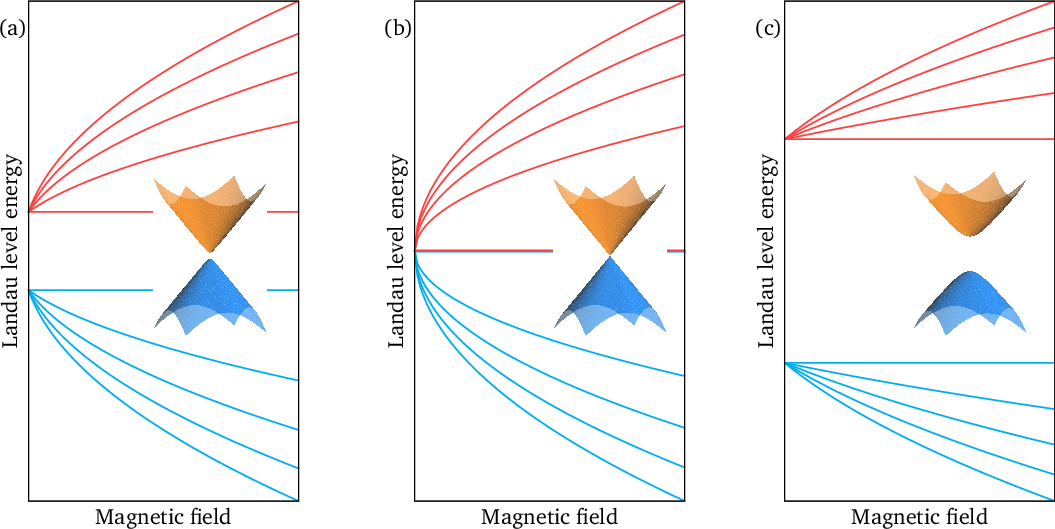
In sufficiently strong fields (ωcτ≫1), Landau quantization discretizes the density of states, altering optical, transport, and thermodynamic properties. The massive Dirac model serves as a unifying description, with Landau level energies En=Δ2+v22eℏnB capturing both massless (Δ=0) and gapped (ωc0) behavior. The ωc1 scaling of Landau levels in gapless systems is a distinctive signature for Dirac/Weyl fermions, while linear-in-ωc2 dependence typifies conventional parabolic bands.
Figure 6: Landau level schemes for massive Dirac electrons; ωc3 and linear-in-ωc4 scaling reflect gapless and gapped regimes, respectively.
Optical Excitations and Spectroscopic Implementation
Landau level spectroscopy in the optical domain is fundamentally deciphered via the real part of the optical conductivity, ωc5, computed from the Kubo-Greenwood formalism. The absorption spectrum is dictated by Landau level degeneracy, valley/spin factors, occupation, energy conservation, and matrix element selection rules.
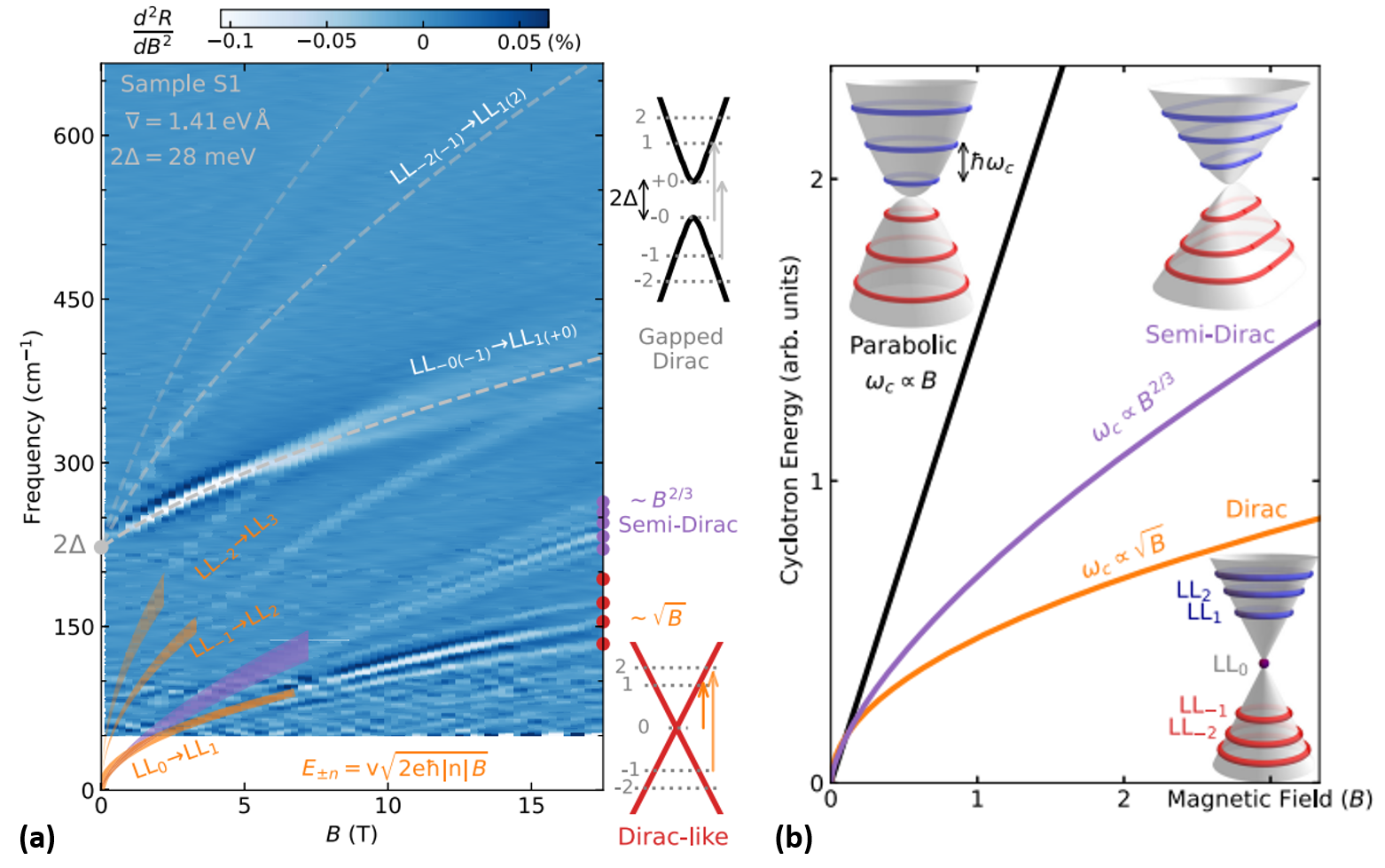
Figure 7: Magneto-reflectance of ZrSiS delineates three series of Landau level excitations, illustrating conical, parabolic, and semi-Dirac bands.
Notable numerical results include:
Magneto-transmission and reflectance in ZrSiS manifesting three scaling regimes (sub-linear, ωc6, and ωc7) corresponding to distinct band structure sections.
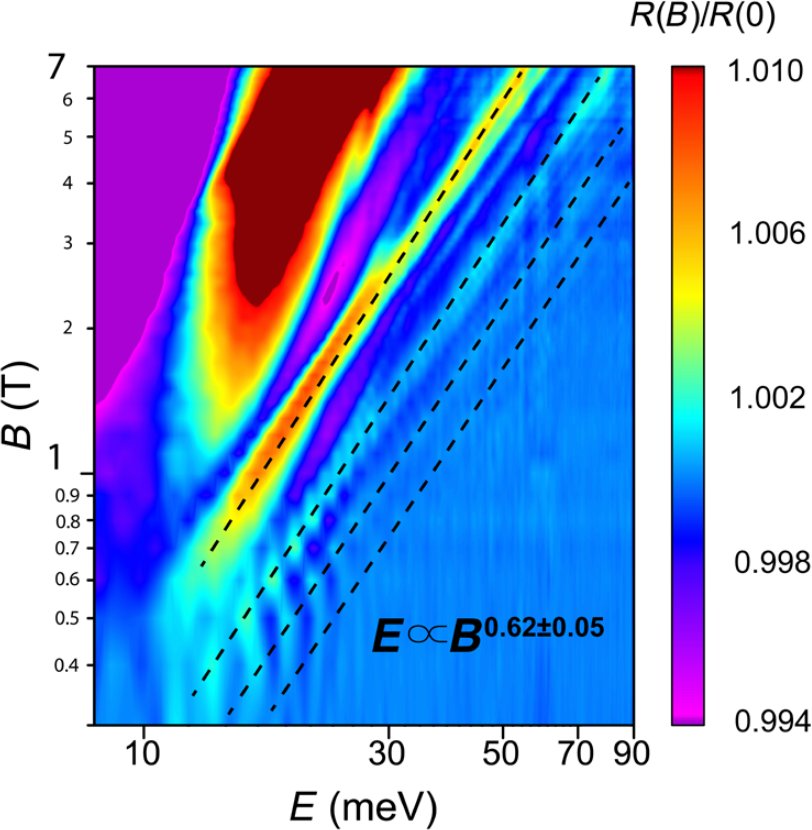
Observed scaling exponents for TaAs deviate from ideal Weyl values (ωc8 vs. ωc9), attributed to band curvature and saddle point effects.
Figure 8: Reflectance in TaAs as a function of mc=2πℏ2dEdA0, with inter-Landau-level transitions scaling as mc=2πℏ2dEdA1.
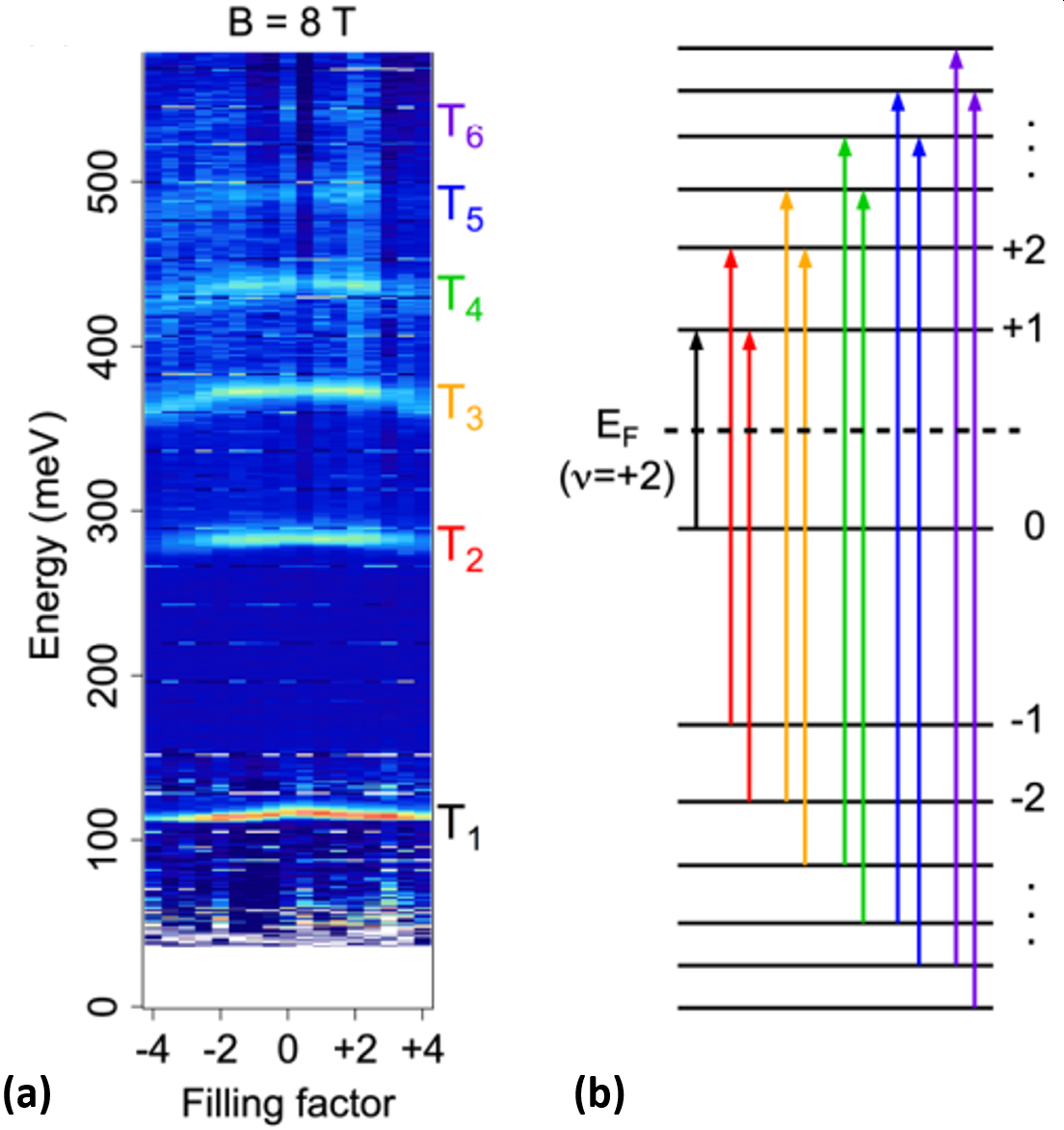
Figure 9: Magneto-absorbance in graphene as a function of carrier density, demonstrating filling-factor-dependent transitions.
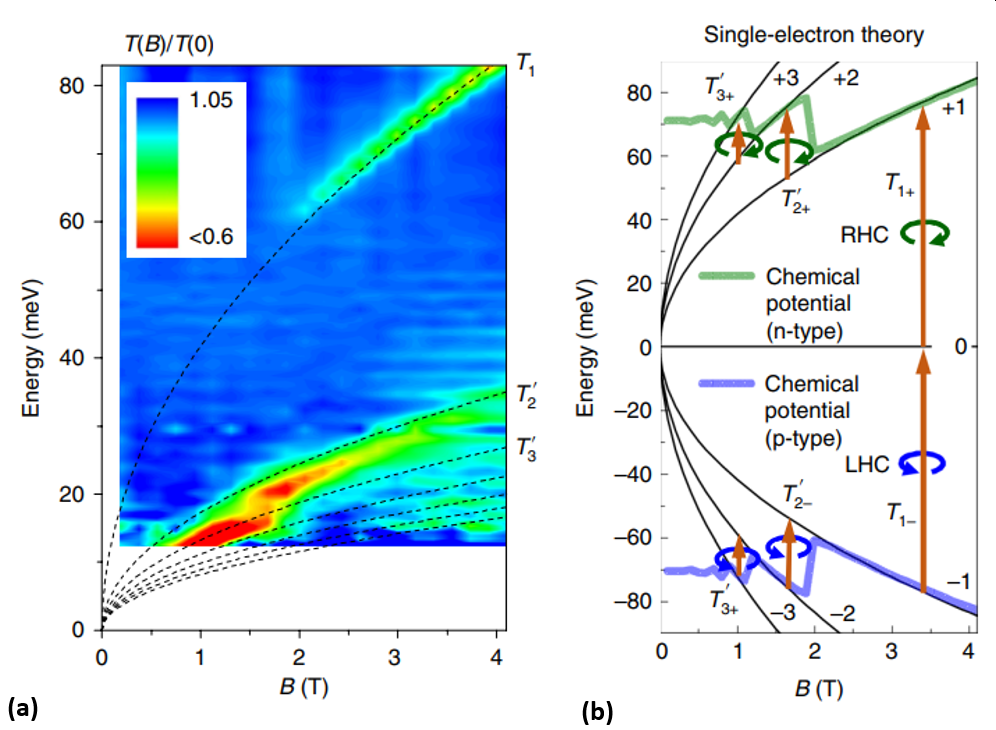
Figure 10: Magneto-transmission in h-BN encapsulated graphene; computed chemical potential tracks mc=2πℏ2dEdA2/mc=2πℏ2dEdA3 doping under variable field.
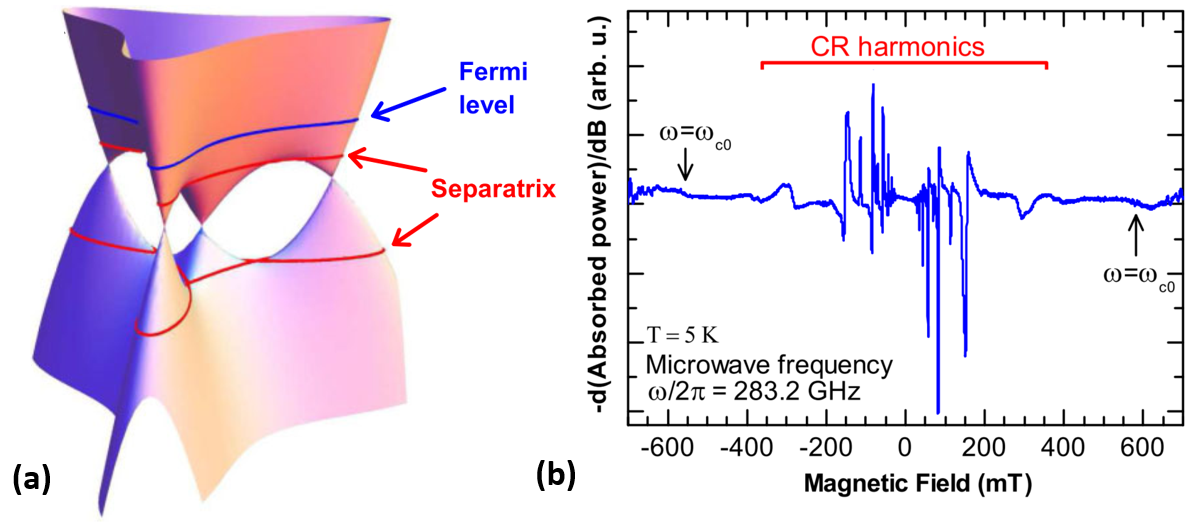
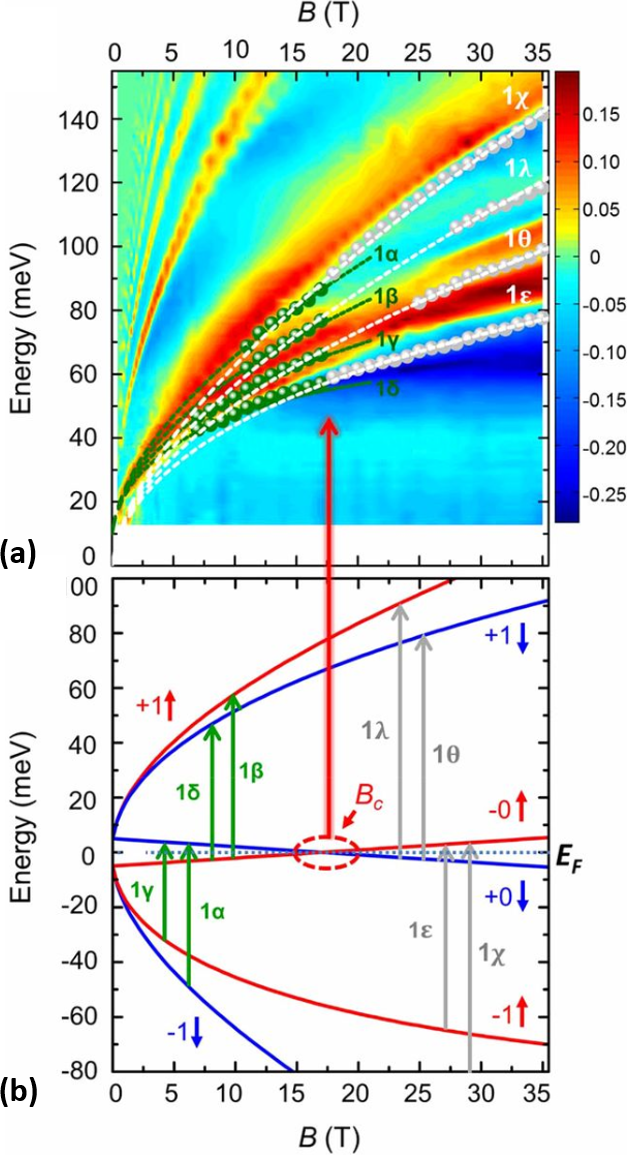
The linewidth and resonance shape encode information on carrier scattering (neutral, charged impurities) and disorder, while occupation factors directly yield Fermi level and density without transport probes. Selection rules, highly sensitive to symmetry and experimental geometry (Faraday vs. Voigt), may activate higher harmonics and spin-flip transitions, particularly in cases of reduced symmetry (graphite, ZrTemc=2πℏ2dEdA4).
Figure 11: Trigonally warped bands in graphite at the mc=2πℏ2dEdA5 point yield cyclotron resonance harmonics.
Figure 12: Spectroscopic evidence for Zeeman-split Landau level quartets in ZrTemc=2πℏ2dEdA6 due to strong spin-orbit coupling.
Instrumentation and Experimental Advances
The deployment of superconducting and resistive electromagnets now enables measurements in fields exceeding 40 T, or even hundreds of T in pulsed regimes. The evolution from monochromatic sources to broadband, interferometry-based Fourier transform spectrometers has dramatically expanded spectral reach and accuracy.
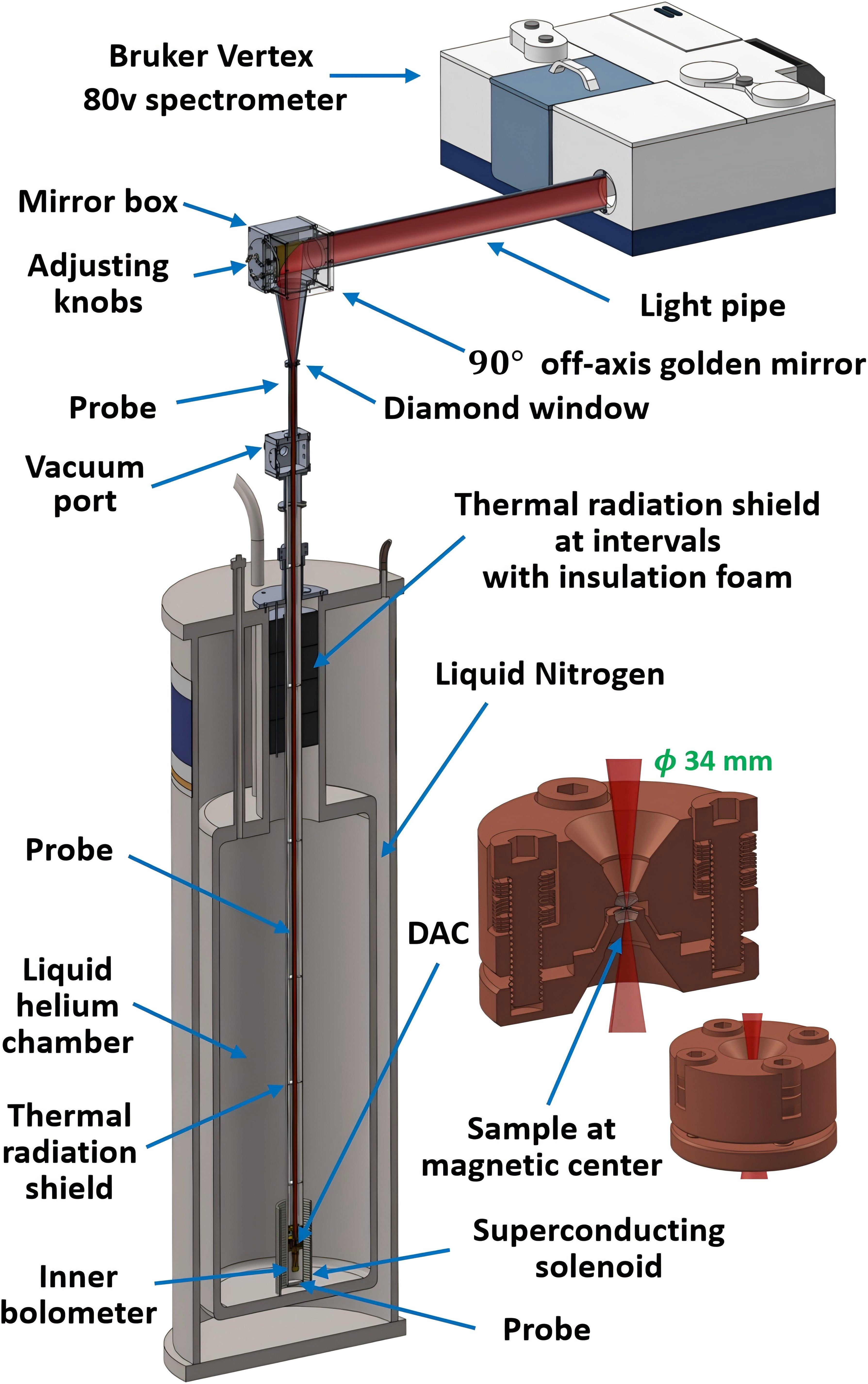
Figure 13: Typical THz/infrared Landau level spectroscopy setup: FTIR spectrometer, superconducting coil, and DAC for high-pressure studies.
Contemporary experiments utilize ellipsometry, EPR, Raman, time-domain THz, and near-field optical techniques. SNOM and magneto-Raman provide spatial resolution below the diffraction limit, facilitating spectroscopy on micron-scale 2D crystallites.
Implications, Perspectives, and Future Directions
Landau level spectroscopy will continue to underpin band parameter identification and exploration in emergent materials—including magnetic topological insulators and strongly correlated systems. Anticipated advances lie in:
High spatial resolution magneto-spectroscopy for micro-scale and low-dimensional systems.
Time-resolved experiments enabled by pulsed and THz sources, crucial for carrier dynamics, relaxation pathways, and electron interactions.
Further development of non-optical methods (STM/STS, magneto-ARPES under field), broadening access to Landau quantization signatures in nanomaterials and surfaces.
Critical theoretical implications involve the rigorous testing of band models (Dirac, Kane, Rashba), quantifying deviations from ideal scaling laws, and dissecting interaction effects (excitonic, polaronic, electron–electron). The method's ability to probe high-index or complex Landau levels may also elucidate quantum geometry and topological band features.
Conclusion
Landau level spectroscopy remains a cornerstone for high-precision investigation of crystalline solids, providing unrivaled access to band structure, effective masses, and gap properties. Its broad applicability—from semimetals to topological matter—ensures continued relevance despite the proliferation of alternative spectroscopic methods. Ongoing advances in magnet technology, optical instrumentation, and spatially resolved probes will further elevate its capabilities, ensuring a central role in condensed matter investigation and emerging quantum material research.
“Emergent Mind helps me see which AI papers have caught fire online.”
Philip
Creator, AI Explained on YouTube
Sign up for free to explore the frontiers of research
Discover trending papers, chat with arXiv, and track the latest research shaping the future of science and technology.Discover trending papers, chat with arXiv, and more.