MIP Candy: A Modular PyTorch Framework for Medical Image Processing
Abstract: Medical image processing demands specialized software that handles high-dimensional volumetric data, heterogeneous file formats, and domain-specific training procedures. Existing frameworks either provide low-level components that require substantial integration effort or impose rigid, monolithic pipelines that resist modification. We present MIP Candy (MIPCandy), a freely available, PyTorch-based framework designed specifically for medical image processing. MIPCandy provides a complete, modular pipeline spanning data loading, training, inference, and evaluation, allowing researchers to obtain a fully functional process workflow by implementing a single method, $\texttt{build_network}$, while retaining fine-grained control over every component. Central to the design is $\texttt{LayerT}$, a deferred configuration mechanism that enables runtime substitution of convolution, normalization, and activation modules without subclassing. The framework further offers built-in $k$-fold cross-validation, dataset inspection with automatic region-of-interest detection, deep supervision, exponential moving average, multi-frontend experiment tracking (Weights & Biases, Notion, MLflow), training state recovery, and validation score prediction via quotient regression. An extensible bundle ecosystem provides pre-built model implementations that follow a consistent trainer--predictor pattern and integrate with the core framework without modification. MIPCandy is open-source under the Apache-2.0 license and requires Python~3.12 or later. Source code and documentation are available at https://github.com/ProjectNeura/MIPCandy.
Paper Prompts
Sign up for free to create and run prompts on this paper using GPT-5.
Top Community Prompts
Explain it Like I'm 14
What this paper is about
This paper introduces MIP Candy (MIPCandy), a Python/PyTorch toolkit that helps researchers build, train, and test computer programs that “draw around” important parts in medical scans (this task is called medical image segmentation). Think of it as a set of smart tools and templates that make it much easier to go from raw medical images to a working, testable AI model—without writing tons of glue code.
Medical scans are often 3D (like a loaf of bread made of thin slices) and stored in special formats (like DICOM or NIfTI). MIPCandy focuses on handling these tricky details and gives you a complete, flexible pipeline you can easily customize.
What questions the paper tries to answer
The authors aim to solve three big problems:
- How can we make it fast and easy to build a full medical image segmentation pipeline, without forcing everyone to re-implement the same parts?
- How can we keep everything flexible, so researchers can swap in their own models, losses, and settings without fighting a rigid system?
- How can we make training less of a “black box” and more transparent, so you can see what’s working, what isn’t, and when to stop training?
How the authors approached the problem
The team built a modular framework (like Lego blocks that snap together) with smart defaults. You can get a full working setup by writing just one method that builds your model. Here are the main ideas, explained in everyday language:
- Modular pipeline from end to end:
- Data loading for medical formats (DICOM, NIfTI, etc.)
- Training with sensible defaults (optimizer, loss, scheduler)
- Validation and testing
- Inference (making predictions) and evaluation
- LayerT (flexible model “blueprints”): Instead of creating lots of different code versions for every layer choice (e.g., which activation or normalization), LayerT works like a reusable recipe card. You pick the types of layers (like “use 3D conv + group norm + GELU”) and MIPCandy plugs them into your model at build time—no need to create new classes for every combination.
- Dataset inspection and smart patch sampling: Medical images are big. MIPCandy scans your dataset to find the “interesting parts” (regions with actual organs or tumors) and focuses training on those areas. It also computes helpful stats (like class balance and intensity ranges) and supports k-fold cross-validation (like splitting the class into k groups so everyone gets a turn being the test set).
- Training helpers with transparency:
- Deep supervision: gives the model feedback at different scales (like checking your work at each step, not just at the end).
- EMA (Exponential Moving Average): keeps a smooth “average model” that often predict more steadily (imagine smoothing your grades over time).
- Auto-recovery: if training is interrupted, you can resume exactly where you left off.
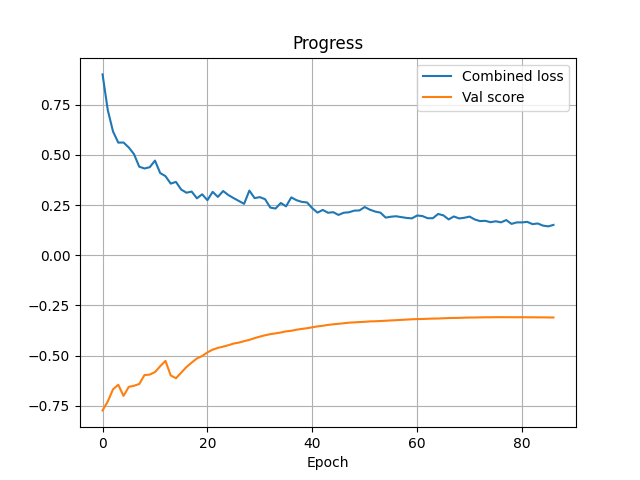
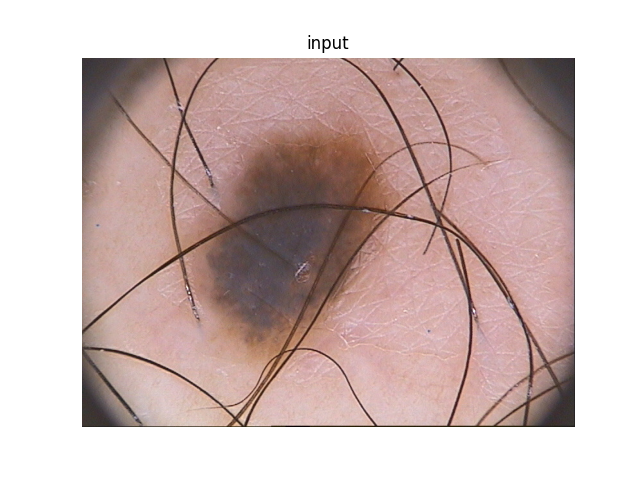
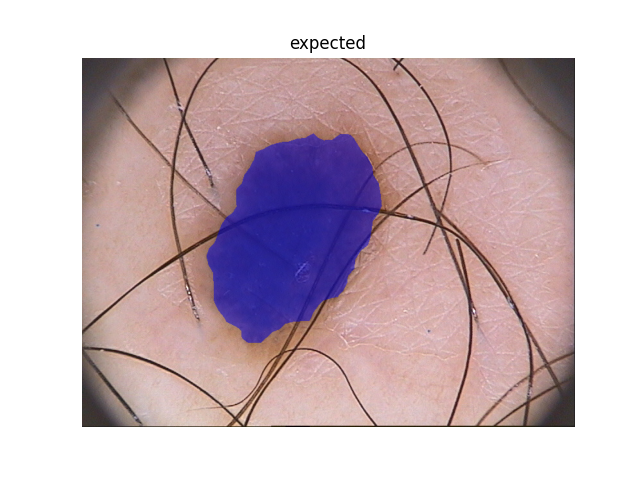
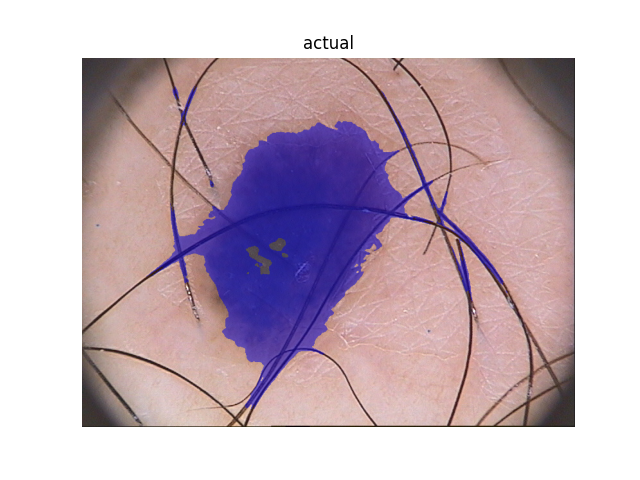
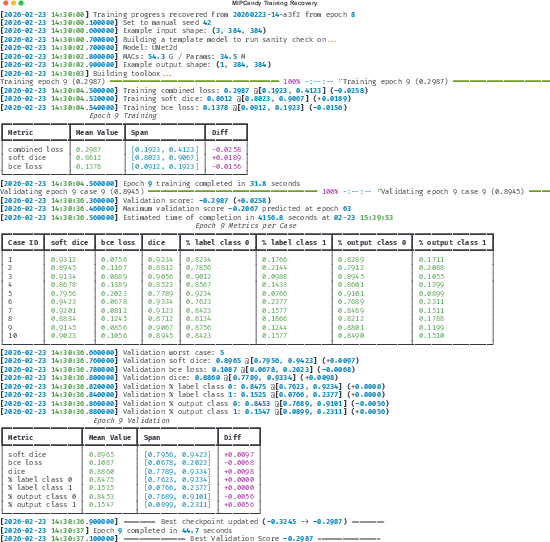
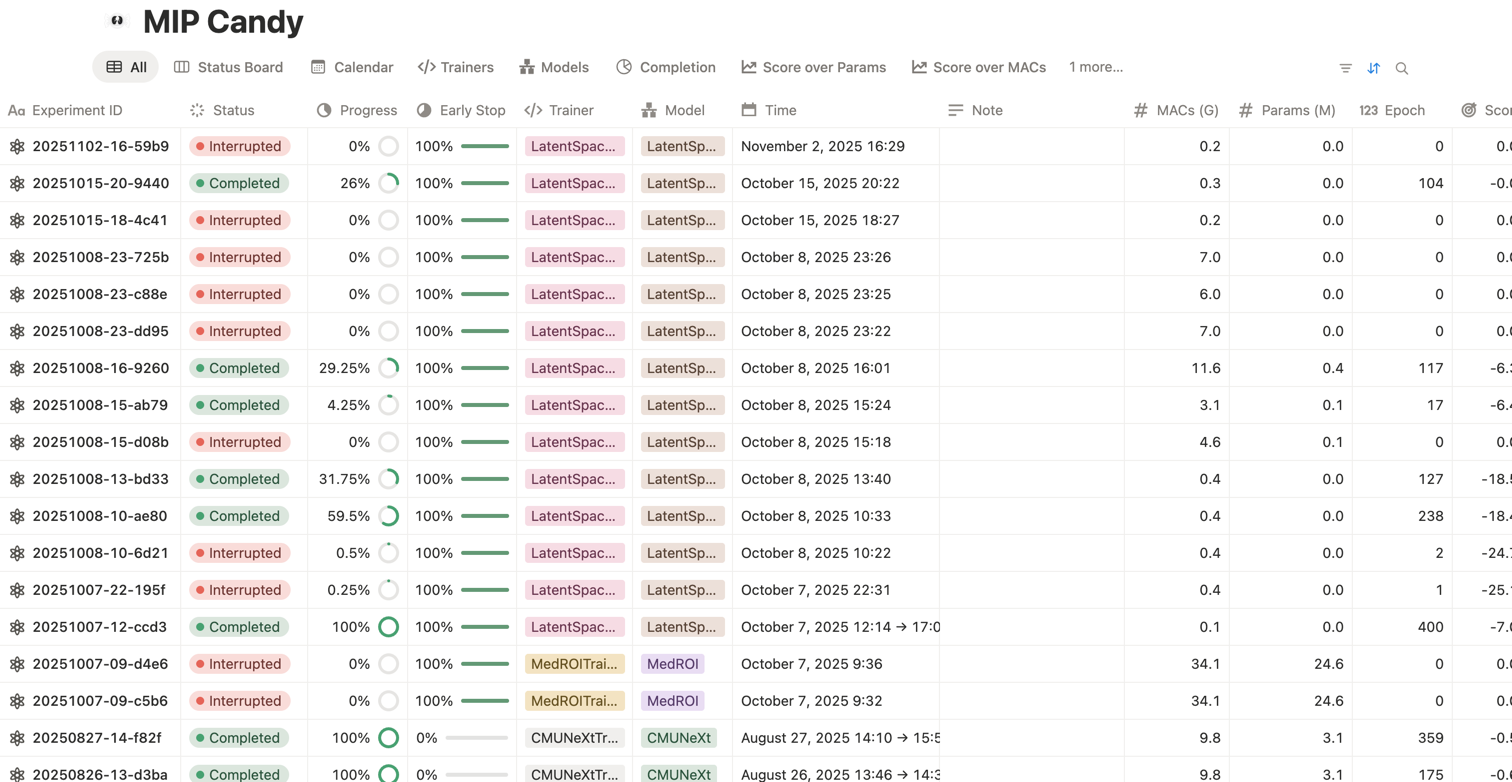
- Live tracking and visuals: MIPCandy makes plots, shows per-epoch results, highlights the worst validation case (so you know where it fails), and can log to popular tools like Weights & Biases, Notion, and MLflow.
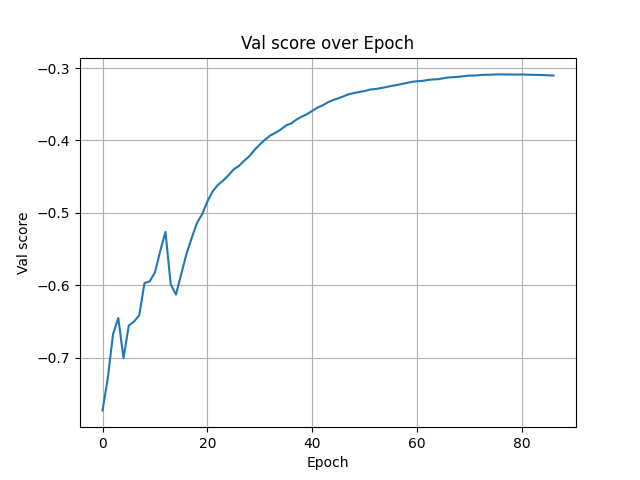
- Validation score prediction (curve fitting): As training goes on, MIPCandy fits a smooth curve to your validation scores to estimate how good the model might get and when it will likely peak. This gives you an ETA and helps decide when to stop training instead of guessing.
- Bundles (plug-and-play models): Common architectures like U-Net, UNet++, V-Net, MedNeXt, and UNETR are packaged as “bundles.” You can pick one and get training/inference running with just a few lines of code, then customize if needed.
What the paper found and why it matters
Rather than reporting a single benchmark score, this paper delivers a practical tool with several important outcomes:
- You can build a complete medical segmentation pipeline by writing only one method (build_network), because the framework handles the rest for you.
- It’s both complete and flexible:
- Complete: It covers data loading, training, evaluation, logging, and inference.
- Flexible: Every piece can be swapped out—use their defaults or plug in your own components.
- It makes training understandable:
- You get real-time charts, worst-case previews, and estimated time to a best score.
- You can resume training after a crash without losing progress.
- It reduces repeated work:
- Shared datasets, metrics, and model bundles standardize how things are done, saving time and reducing bugs.
- It’s open-source (Apache-2.0) and modern (Python 3.12+), so it’s ready for research teams to adopt and extend.
These features help researchers move faster, make better decisions during training, and compare experiments more fairly and clearly.
What this could mean going forward
MIPCandy can speed up research on medical AI by:
- Lowering the barrier to building strong, reliable segmentation systems.
- Encouraging fair comparisons and better teamwork through consistent logging and results.
- Making experiments more transparent, so problems are spotted early and fixed sooner.
- Supporting a growing ecosystem of plug-in model bundles and tools.
The authors plan to add more evaluation metrics (like surface distances), better handling for large images (sliding window inference), and support for learning with fewer labels (semi/self-supervised methods). All of this points toward faster, more trustworthy progress in medical image analysis—potentially helping doctors and patients by improving how we detect and track diseases in scans.
Knowledge Gaps
Knowledge Gaps, Limitations, and Open Questions
Below is a concise list of what remains missing, uncertain, or unexplored in the paper, framed to be actionable for future researchers:
- Absence of quantitative benchmarking: No head-to-head comparisons against nnU-Net, MONAI, TorchIO, or baseline PyTorch pipelines on standard datasets (e.g., MSD, BraTS, PH2), including accuracy, training time, GPU memory, and inference latency.
- Limited metric suite: Current evaluation focuses on Dice-family metrics; lacks surface-distance metrics (Hausdorff, ASSD), calibration metrics (ECE/Brier), region-level metrics (lesion-wise F1), and clinical utility indicators (e.g., volume error).
- Validation score definition and prediction: The use of negated combined loss as a unified validation score and quotient regression for extrapolation is not validated; missing:
- Empirical correlation with final task metrics (e.g., Dice vs. loss-derived score).
- Robustness of rational-function fitting under noisy/plateau trajectories, different loss functions, and early warm-up period choices.
- Failure case analysis and safeguards when predictions are misleading.
- Sliding window inference: Not currently supported; essential for large 3D volumes. Open questions include optimal window size/overlap selection, halo handling, stitching strategies, and performance trade-offs vs. full-volume inference.
- Data augmentation coverage: The augmentation capabilities are not detailed beyond ROI-based patching; unclear support for strong, geometry-preserving and intensity transformations (elastic deformations, bias field, gamma, noise, motion artifacts), augmentation scheduling, and modality-aware pipelines.
- DICOM and rich metadata handling: Although SimpleITK is used, explicit support for DICOM I/O, per-series orientation/spacing normalization, and robust reorientation/resampling pipelines is unspecified; potential inconsistencies in handling anisotropy and multi-sequence alignment remain unexplored.
- Dataset splitting rigor: -fold splitting is mentioned but the guarantees (patient-level grouping, site-level stratification, prevention of leakage across folds, class-balancing) are unspecified; needs documented strategies and empirical checks.
- ROI detection methodology: The “statistical foreground shape” and ROI derivation are not formalized or validated; unclear robustness across modalities, class imbalance levels, and pathologies; default oversampling rate (33%) lacks justification.
- Deep supervision weighting: The fixed scheme is not compared to alternatives (e.g., linear, learned, curriculum-based weights) or validated across architectures/tasks; sensitivity analyses are missing.
- EMA benefits and trade-offs: EMA support is provided but not empirically studied; unclear when it helps, how decay is chosen, and interactions with deep supervision and schedulers.
- LayerT generality and limits: While effective for conv/norm/activation substitution, it is unclear how LayerT handles:
- Complex parameter dependencies (e.g., group norm with dynamic groups, transposed conv, attention blocks).
- Weight initialization policies and reproducibility across re-assemblies.
- State serialization/deserialization edge cases for modules assembled at runtime.
- Distributed and large-scale training: Although “PyTorch-native” implies compatibility, there is no demonstrated support for DDP, FSDP, ZeRO, or multi-node training, nor guidance on checkpointing, synchronization, and experiment tracking at scale.
- Caching and I/O throughput: The performance implications of SimpleITK I/O and safetensors for large 3D datasets are not measured; missing guidance on caching strategies, asynchronous prefetching/queuing (as in TorchIO), and CPU/GPU pipeline balance.
- Post-processing operations: Common segmentation post-processing (connected-component filtering, hole filling, class topology constraints, morphological refinements) are not described or packaged; impact on clinical metrics is unexplored.
- Reproducibility and determinism: No documented guarantees or recipes for deterministic runs (global seeding, CuDNN determinism, transform randomness control) and how these interact with multi-worker DataLoaders and mixed precision.
- Privacy and governance: Logging predictions and previews to external services (W&B, Notion, MLflow) raises PHI risks; no de-identification safeguards, access controls, or compliance guidance (HIPAA/GDPR) are provided.
- Task generalization beyond segmentation: Bundles focus on segmentation; explicit support, APIs, and exemplars for detection, registration, and multi-task learning are pending, including evaluation protocols and specialized losses.
- Interoperability with existing ecosystems: The paper does not detail bridges to MONAI/TorchIO dictionaries, transform graphs, or clinical data managers; migration paths and compatibility layers are unclear.
- Hyperparameter defaults: “Researched defaults” are stated (e.g., SGD with momentum 0.99, polynomial LR), but not justified across tasks or compared to widely used alternatives (AdamW, cosine decay, one-cycle), nor accompanied by ablations.
- Documentation and testing: The extent of unit/integration tests, CI, and coverage for critical components (I/O, LayerT, recovery, predictors) is unspecified; onboarding materials for non-PyTorch experts (e.g., radiology teams) are not discussed.
Practical Applications
Immediate Applications
The items below translate the paper’s contributions into concrete, deployable use cases across sectors, with suggested tools/workflows and key feasibility notes.
- Rapid prototyping of medical image segmentation pipelines with one-method setup
- Sectors: Healthcare, Software, Academia
- Description: Stand up end-to-end training/evaluation in minutes by implementing only build_network with the SegmentationTrainer preset.
- Tools/products/workflows: “Starter” training templates; internal model baselines; hackathon-ready code skeletons.
- Specific dependencies/assumptions: GPU(s) recommended; Python 3.12+; PyTorch; data in supported formats.
- Reproducible k-fold benchmarking and experiment tracking
- Sectors: Academia, Healthcare R&D, Software/MLOps
- Description: Use built-in k-fold split, metric logging, and multi-frontend tracking (W&B/Notion/MLflow) to run rigorous benchmarks and publish artifacts.
- Tools/products/workflows: Lab “experiment ledger” synced to Notion/MLflow; benchmark harnesses for papers or internal reports.
- Specific dependencies/assumptions: Account/API access for external trackers; institutional privacy policies for logging; stable storage for checkpoints.
- Dataset inspection and ROI-based patch sampling to reduce compute and improve data quality
- Sectors: Healthcare, Pharma (imaging trials), Academia
- Description: Automatically compute foreground bounding boxes, class distributions, intensity stats; train with ROI sampling to cut memory/compute and surface dataset issues.
- Tools/products/workflows: Dataset Inspector CLI; ROI Sampler presets; data QA reports for class imbalance and missing labels.
- Specific dependencies/assumptions: Dataset in supported formats (e.g., nnU-Net raw, NIfTI/MHA); representative training split for inspection.
- Failure-mode surfacing for annotation triage and QC
- Sectors: Healthcare, Annotation vendors, Academia
- Description: Worst-case previews and per-case tables highlight problematic scans for targeted re-annotation or protocol fixes.
- Tools/products/workflows: “Model QA dashboard” aggregating worst-case previews; reviewer queues for annotation fixes.
- Specific dependencies/assumptions: Workflow to loop feedback to labelers; careful handling of PHI in previews/logs.
- Resource planning and automatic early stopping using validation score prediction (ETC)
- Sectors: Software/MLOps, Cloud, Academia
- Description: Quotient regression estimates maximum achievable score and time-to-plateau to guide early stopping and cluster scheduling.
- Tools/products/workflows: “Compute Planner” that prioritizes jobs by marginal expected gain; scheduler hooks for Slurm/Kubernetes.
- Specific dependencies/assumptions: Warm-up epochs needed for stable fits; historical curves improve reliability; integration with job schedulers.
- Rapid ablation studies via LayerT, deep supervision, and EMA toggles
- Sectors: Academia, Healthcare R&D
- Description: Swap conv/norm/activation at runtime; enable deep supervision/EMA with one flag to accelerate architecture and training-strategy ablations.
- Tools/products/workflows: Ablation harness scripts; configuration sweeps.
- Specific dependencies/assumptions: Consistent seeds and logging; sufficient compute for fair comparisons.
- Research-grade inference for organ/tumor volumetry and pre-surgical planning prototypes
- Sectors: Healthcare R&D, Pharma (radiology endpoints)
- Description: Use bundled Predictors (U-Net, UNETR, etc.) for batch/file-level export to .png/.mha to build volumetry and planning proofs-of-concept.
- Tools/products/workflows: Batch inference pipelines; result export and report generation.
- Specific dependencies/assumptions: Not a clinical device; further validation required; sliding-window inference for very large volumes is future work.
- Teaching labs and workshops in medical imaging DL with minimal code
- Sectors: Education, Academia
- Description: Use 8–10-line examples and generated training artifacts to teach end-to-end 2D/3D segmentation, metrics, and experiment hygiene.
- Tools/products/workflows: Course notebooks; hands-on labs for k-fold CV and training transparency.
- Specific dependencies/assumptions: Classroom GPU access (local or cloud); curated open datasets (e.g., PH2, BraTS).
- Incremental adoption in existing PyTorch/MONAI stacks
- Sectors: Software, Academia
- Description: Drop-in use of MIPCandy datasets, losses, metrics, or trainers alongside existing code to reduce maintenance.
- Tools/products/workflows: Hybrid pipelines that reuse legacy models with MIPCandy trainers/metrics.
- Specific dependencies/assumptions: Version compatibility (PyTorch, Python 3.12+); small glue code for data adapters.
- Clinician-facing result communication with 3D previews
- Sectors: Healthcare
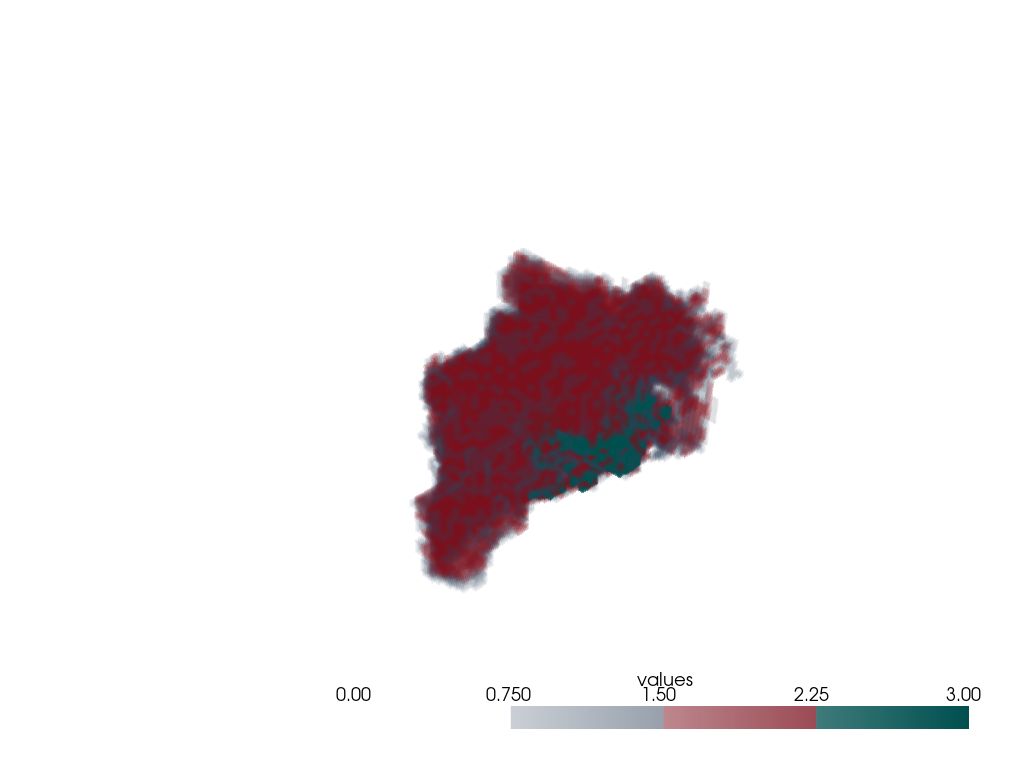
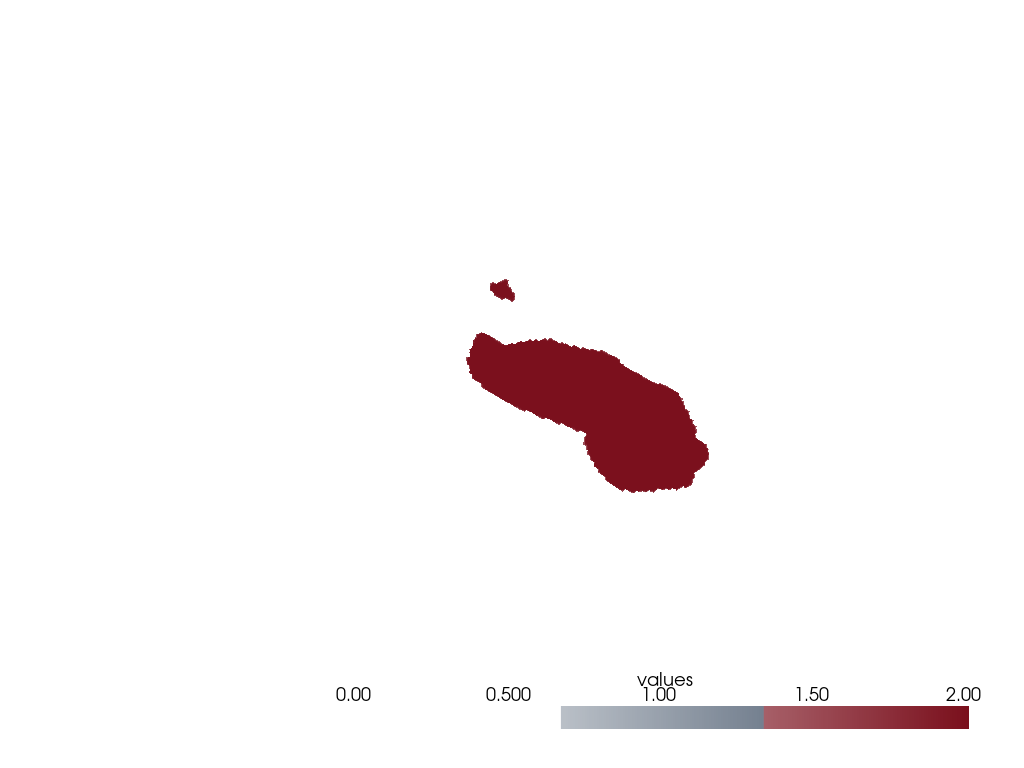
- Description: Auto-generated PyVista renderings of labels/predictions support case reviews and interdisciplinary meetings.
- Tools/products/workflows: Report attachments for tumor delineations; case galleries of successes/failures.
- Specific dependencies/assumptions: Headless rendering or export to image/video formats as needed; hospital IT policies for media.
Long-Term Applications
These rely on further research, scaling, integration, or validation before broad deployment.
- PACS/RIS-integrated clinical segmentation for treatment planning
- Sectors: Healthcare
- Description: Integrate predictors into clinical viewers for radiotherapy contours and surgical planning.
- Tools/products/workflows: DICOM-native inference services; contour review/acceptance workflows.
- Specific dependencies/assumptions: Robust DICOM I/O; sliding-window/tiling for large volumes; surface-distance metrics (Hausdorff/ASSD) for QA; regulatory validation and monitoring; data governance.
- Curated model bundle hub/marketplace for task-specific solutions
- Sectors: Healthcare, Software
- Description: Distribute vetted bundles (e.g., liver, prostate, cardiac MRI) with consistent Trainer/Predictor interfaces.
- Tools/products/workflows: Versioned bundle registry; CI for compatibility; model cards and governance.
- Specific dependencies/assumptions: Curation and maintenance; licensing; security scanning; dataset access for reproducible baselines.
- Active learning loops driven by worst-case detection
- Sectors: Healthcare, Annotation services, Academia
- Description: Prioritize unlabeled/low-confidence cases for annotation to continually improve models.
- Tools/products/workflows: Labeling platform integrations (e.g., CVAT/Label Studio); feedback APIs; data drift monitors.
- Specific dependencies/assumptions: Human-in-the-loop ops; PHI-safe pipelines; uncertainty/failure heuristics beyond worst-case previews.
- Enterprise-wide compute governance using ETC for scheduling and budgeting
- Sectors: Software/MLOps, Finance/IT
- Description: Forecast training ROI to allocate GPU hours and control cloud spend.
- Tools/products/workflows: Scheduler plugins (Kubernetes/Slurm) that pause/terminate low-ROI runs; budget dashboards.
- Specific dependencies/assumptions: Historical learning-curve models; org policy alignment; integration engineering.
- Expansion beyond segmentation to detection and registration bundles
- Sectors: Healthcare, Industrial NDT, Robotics
- Description: Package detection/registration workflows using the same trainer–predictor pattern to cover broader clinical/industrial tasks.
- Tools/products/workflows: Registration pipelines for pre/post-op scans; defect detection in industrial CT.
- Specific dependencies/assumptions: New losses/metrics; algorithmic R&D; domain-specific validation datasets.
- Regulatory-grade transparency and auditing for clinical AI governance
- Sectors: Policy, Healthcare
- Description: Use per-epoch metrics, failure-case logs, and training-state provenance as audit artifacts for approvals and post-market surveillance.
- Tools/products/workflows: Immutable experiment logs; secure artifact storage; compliance dashboards.
- Specific dependencies/assumptions: Standardized reporting schemas; secure/on-prem trackers (vs. cloud W&B/Notion); alignment with regulatory guidance.
- Memory-efficient, large-volume inference at scale
- Sectors: Healthcare, Industrial CT
- Description: Deploy sliding-window/tiling inference (planned) for whole-body or ultra-high-res scans without exceeding memory.
- Tools/products/workflows: Distributed inference services; streaming I/O and chunked export.
- Specific dependencies/assumptions: Implementation of sliding-window inference; performance tuning; I/O throughput.
- Cross-domain adoption for 3D perception (geospatial LiDAR, materials, energy)
- Sectors: Energy, Manufacturing, Geospatial, Robotics
- Description: Reuse LayerT, ROI sampling, and training transparency for 3D non-medical segmentation tasks.
- Tools/products/workflows: Adapters for LAS/LAZ/point cloud formats; industrial CT pipelines.
- Specific dependencies/assumptions: Data-format bridges; alternative metrics (IoU, boundary distances); domain annotations.
- Federated/multi-center training with MIPCandy components
- Sectors: Healthcare, Academia
- Description: Plug trainers, datasets, and metrics into federated learning frameworks for privacy-preserving model development.
- Tools/products/workflows: FL orchestration (e.g., Flower, NVFLARE); site-local training with global aggregation.
- Specific dependencies/assumptions: Integration with FL stacks; secure comms; heterogeneous hardware support.
- AutoML/HPO integration using validation-curve forecasting
- Sectors: Software, Academia
- Description: Use quotient regression as an early stopping/“freeze or continue” signal in hyperparameter optimization loops.
- Tools/products/workflows: Optuna/Ray Tune plugins leveraging ETC; portfolio schedulers.
- Specific dependencies/assumptions: Further empirical validation across tasks; robust early-curve diagnostics.
Common assumptions and dependencies (across applications)
Most applications assume access to GPU-accelerated compute; Python 3.12+; PyTorch; storage for checkpoints/artifacts; and datasets in supported formats (NIfTI/MetaImage; note that comprehensive DICOM workflows may need additional engineering). External experiment trackers (W&B, Notion, MLflow) require secure configuration to avoid logging PHI. Ultra-large-volume inference will benefit from the planned sliding-window capability. Clinical use requires rigorous validation, appropriate metrics (e.g., surface distances), and compliance with regulatory and data-governance requirements.
Glossary
- Anisotropic spacing: Unequal voxel spacing across different axes in volumetric images, which complicates training and preprocessing. "acquired with anisotropic spacing"
- Average symmetric surface distance: A surface-based evaluation metric that averages boundary distances between two segmentations in both directions. "surface-distance metrics (Hausdorff distance, average symmetric surface distance)"
- Bounding box (foreground): The minimal axis-aligned box that encloses foreground (labeled) regions in an image or volume. "foreground bounding boxes"
- Class imbalance: A situation where some classes have far fewer examples than others, common in medical datasets and affecting loss/metrics. "the class-imbalance and small-dataset regimes"
- DICOM: A standard format for medical imaging that encodes images and metadata used in clinical workflows. "(NIfTI, DICOM, MHA)"
- Dice similarity coefficient: An overlap measure between predicted and ground-truth segmentations, often used as a metric or loss. "Dice-family metrics---binary_dice, dice_similarity_coefficient, and soft_dice---"
- Dice–cross-entropy loss: A combined loss that balances region overlap (Dice) with per-pixel classification (cross-entropy). "a combined Dice--cross-entropy loss"
- Exponential moving average (EMA): A technique that maintains a smoothed version of model parameters by exponentially decaying past values. "EMA via PyTorch's AveragedModel can be enabled with a single flag."
- Foreground oversampling: Preferentially sampling patches that contain labeled voxels to counter class imbalance during training. "foreground oversampling (default: 33\% of patches contain foreground)"
- Gradient clipping: Limiting the magnitude of gradients to stabilize training and prevent exploding gradients. "and gradient clipping."
- Hausdorff distance: A surface-based metric measuring the maximum boundary deviation between two segmentations. "surface-distance metrics (Hausdorff distance, average symmetric surface distance)"
- Isotropic resampling: Resampling image data so voxel spacing is equal along all axes. "optional isotropic resampling"
- k-fold cross-validation: A validation strategy that partitions data into k folds to estimate generalization by training/evaluating across splits. "-fold cross-validation"
- LayerT: A deferred module configuration descriptor that enables runtime substitution of layer types without subclassing. "LayerT, a deferred module configuration mechanism that enables runtime substitution of convolution, normalization, and activation layers without subclassing"
- MACs (Multiply–Accumulate operations): A proxy for computational cost, counting multiply–accumulate operations in a model. "reports MACs and parameter count."
- MetaImage (MHA): A medical imaging format (commonly .mha/.mhd) supporting volumetric data and metadata. "supporting NIfTI, MetaImage, and raster formats."
- Modality: The imaging technique or channel type (e.g., MRI sequences), encoded as metadata in medical images. "voxel spacing, orientation, and modality."
- Nesterov acceleration: An optimization technique (Nesterov momentum) that anticipates gradient updates for faster convergence. "SGD with momentum 0.99 and Nesterov acceleration"
- NIfTI: A widely used neuroimaging file format for volumetric medical images with associated metadata. "(NIfTI, DICOM, MHA)"
- One-hot (encoding): A representation where each class is encoded as a binary vector with a single 1 indicating the class. "covering boolean, one-hot, and soft-probability formats."
- Patch-based sampling: Training on smaller cropped regions (patches) from large images/volumes to manage memory and improve efficiency. "patch-based sampling of medical images."
- PyVista: A 3D visualization library for rendering meshes and volumes via VTK. "interactive PyVista meshes"
- Quotient regression: A regression approach that fits a ratio of polynomials to model trajectories (e.g., validation scores). "validation score prediction via quotient regression"
- Rational function: A function expressed as the ratio of two polynomials, used to model validation score trajectories. "a rational function "
- Region of interest (ROI): A selected subregion likely to contain relevant structures, used to guide patch sampling and training. "region-of-interest (ROI) shape"
- Safetensors: A binary tensor storage format designed for speed and safety (zero-copy deserialization). "use the safetensors format"
- SimpleITK: A toolkit for reading, writing, and processing medical images across formats. "via SimpleITK"
- Sliding window inference: Performing inference by moving a window across large volumes to produce full-size predictions. "sliding window inference for large volumes"
- Soft Dice: A differentiable variant of the Dice metric computed on probabilistic outputs, used for training and evaluation. "Dice-family metrics---binary_dice, dice_similarity_coefficient, and soft_dice---"
- Voxel: The volumetric counterpart of a pixel; the smallest unit in a 3D medical image. "assigning a semantic label to each voxel"
- Volumetric data: 3D image data representing volumes rather than 2D images. "high-dimensional volumetric data"
Collections
Sign up for free to add this paper to one or more collections.