- The paper presents exact charged AdS black hole solutions in 4D EGB gravity with Euler-Heisenberg nonlinear electrodynamics, highlighting modifications in horizon structure and stability.
- The paper demonstrates that higher-curvature and nonlinear electromagnetic corrections modify thermodynamic properties, induce phase transitions, and influence Joule-Thomson expansion behavior.
- The paper analyzes particle geodesics and the ISCO shift, offering insights into strong-field dynamics with implications for astrophysical modeling and gravitational wave studies.
Thermal Aspects and Particle Dynamics of Euler-Heisenberg AdS Black Holes in 4D Einstein-Gauss-Bonnet Gravity
Introduction and Context
The paper "Thermal aspects and particle dynamics of Euler-Heisenberg AdS black hole in 4D Einstein Gauss-Bonnet gravity" (2602.18945) investigates Einstein-Gauss-Bonnet (EGB) gravity in four dimensions, coupled to nonlinear electrodynamics (NLED), specifically the Euler-Heisenberg (EH) effective Lagrangian. The study provides a detailed analysis of exact charged AdS black hole (BH) solutions and their associated thermodynamic and dynamical properties. Of particular interest are the nontrivial modifications of horizon structure, thermodynamic criticality, Joule-Thomson (JT) expansion, and geodesic motion, arising from higher-curvature and nonlinear electromagnetic (EM) corrections.
Black Hole Solutions in EGB Gravity with EH NLED
The field equations are obtained from the action that incorporates the Einstein-Hilbert term, the Gauss-Bonnet (GB) invariant, and the Euler-Heisenberg nonlinear EM Lagrangian. Using the regularization technique allowing nontrivial GB contributions in D=4 (Glavan-Lin prescription), static spherically symmetric solutions with an AdS asymptotic are found. The line element is parametrized by the event horizon radius r+, mass M, electric charge Q, GB coupling α, and the EH nonlinearity parameter a. The metric function is nontrivially modified by both higher-curvature and nonlinear EM terms.
The analysis shows that the model admits multiple horizons (event, Cauchy, and cosmological), with their existence and locations crucially depending on α and a. The physical root corresponds to the negative branch in the metric. The modification in horizon structure compared to standard Reissner-Nordström-AdS and Born-Infeld cases is pronounced for strong-coupling regimes (Figure 1).
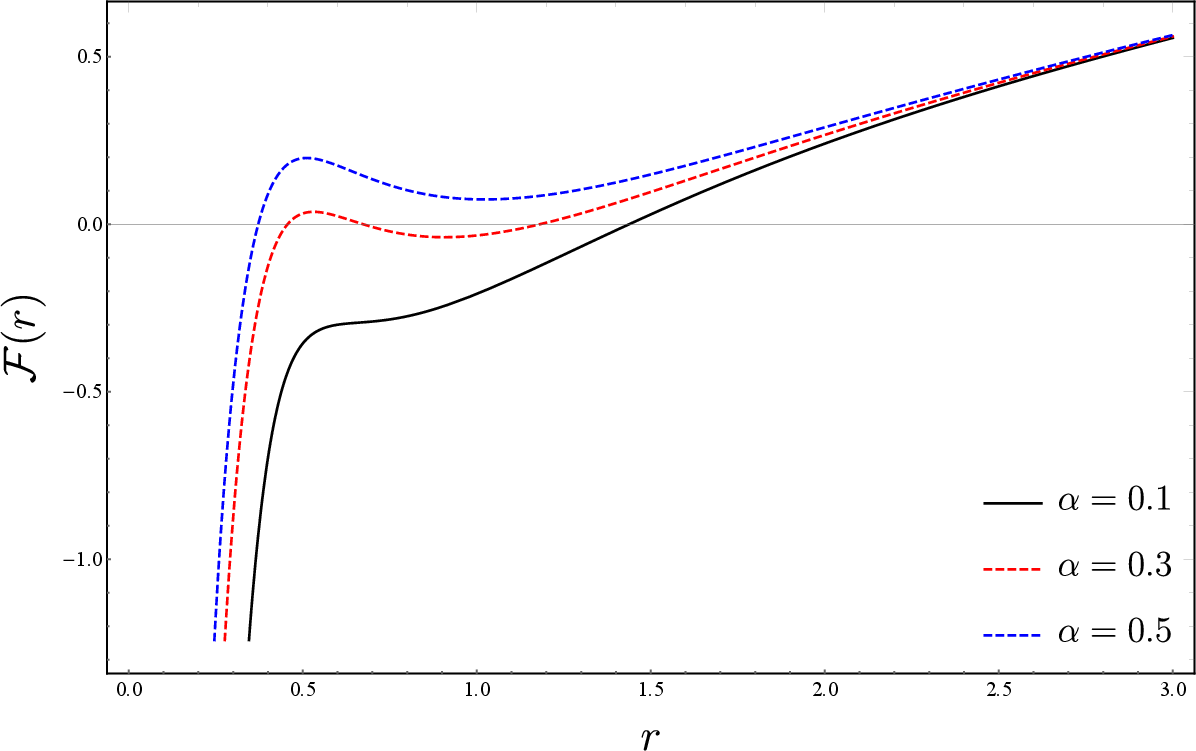
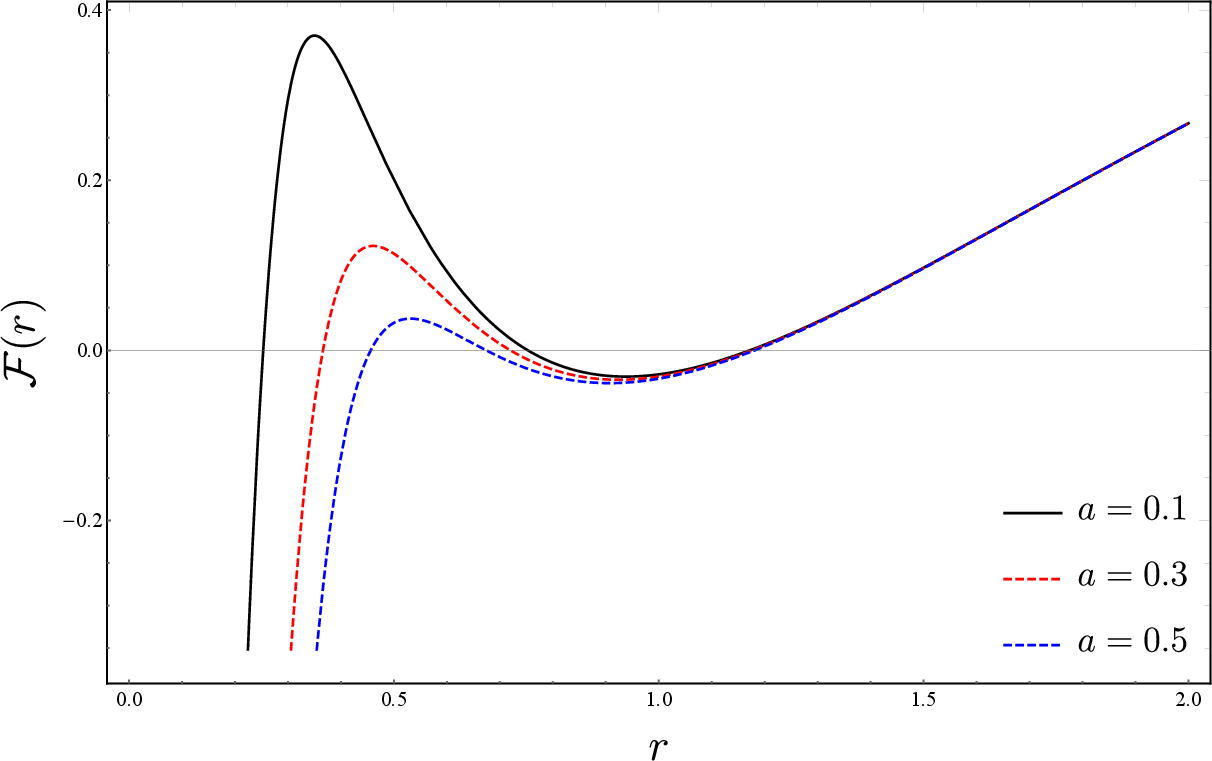
Figure 1: Metric function F(r) for varying a and α, demonstrating the impact of higher-curvature and nonlinear electromagnetic corrections on the horizon structure.
Thermodynamic Properties and Criticality
Thermodynamic quantities are computed in the extended phase space formalism, where the cosmological constant Λ is identified with pressure P. The BH mass is interpreted as enthalpy. The presence of α introduces a logarithmic correction to the Bekenstein-Hawking entropy, breaking the standard area law.
The Hawking temperature is derived and is sensitive to both GB and EH terms. The temperature as a function of r+ shows a non-monotonic structure with a minimum, separating small and large BH branches. The GB coupling α raises the local maximum of mass and shifts the phase transition points toward lower r+, while the EH parameter a delays the onset of instability, signifying an interplay between gravitational and electromagnetic sectors (Figure 2, Figure 3).
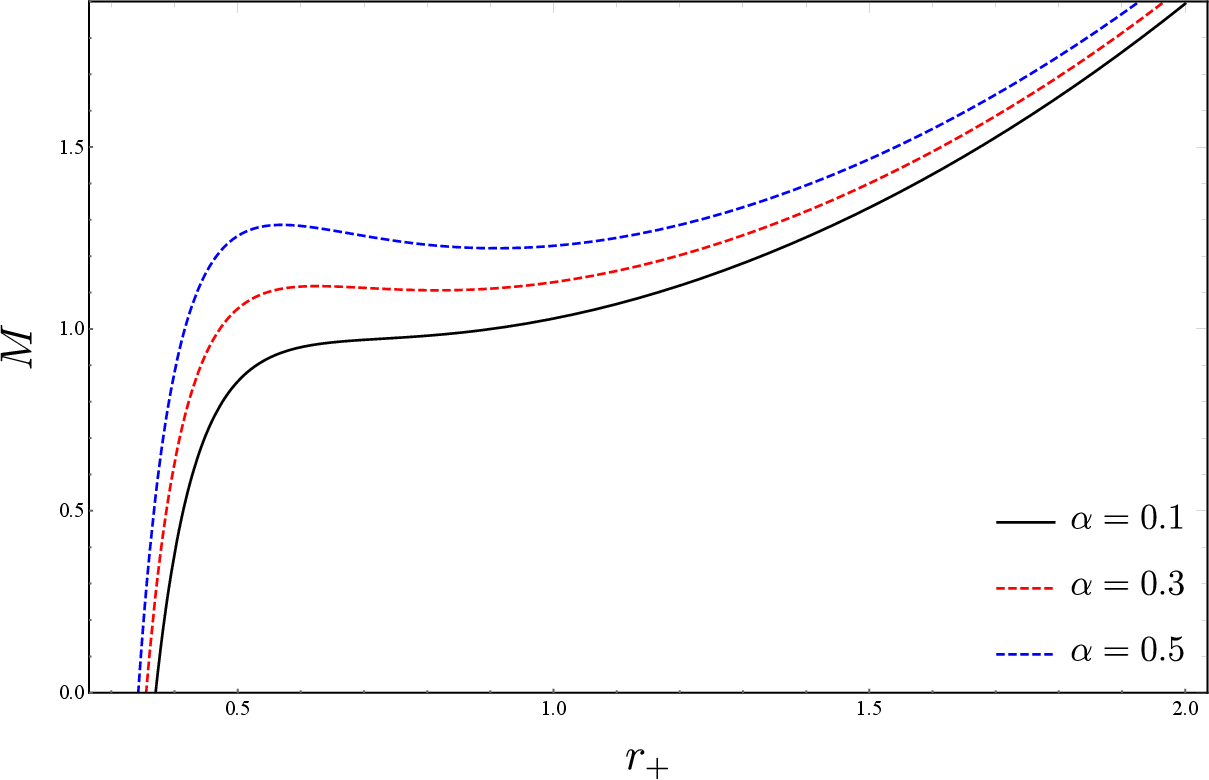
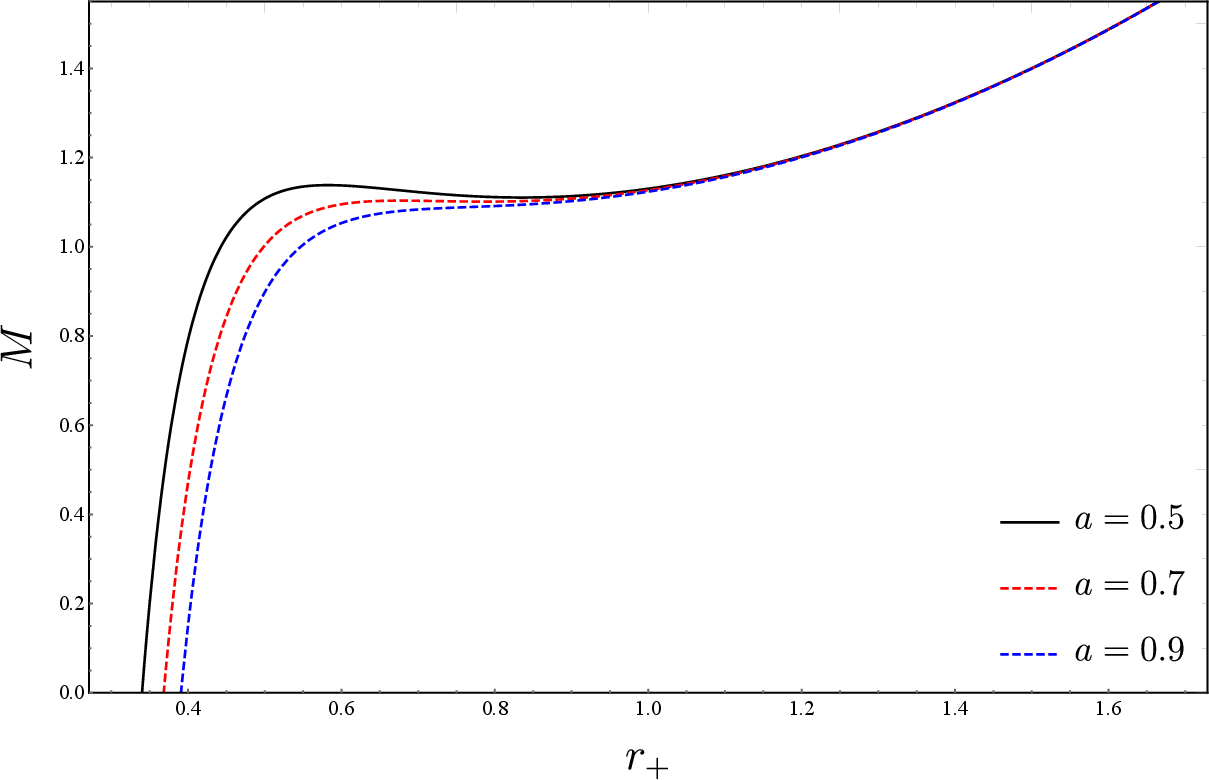
Figure 2: Mass M versus r+ for different α and a, indicating nontrivial turning points and the influence of higher curvature and NLED.
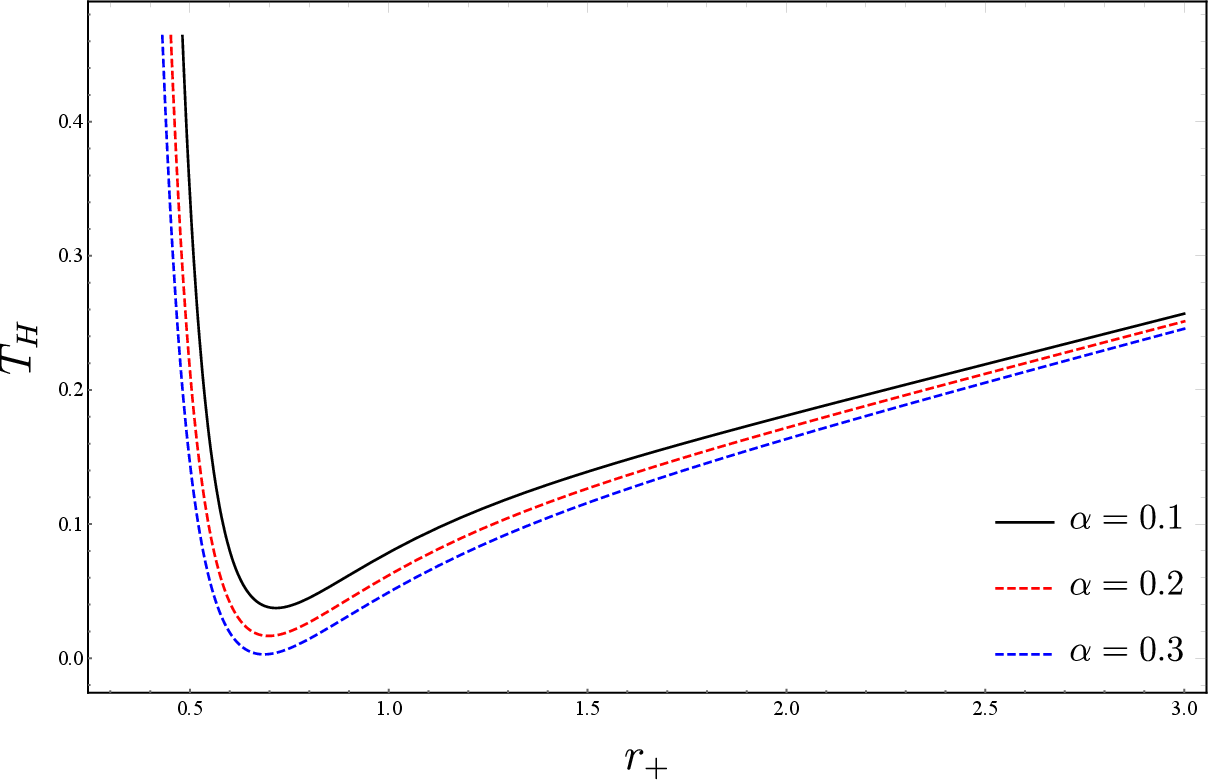
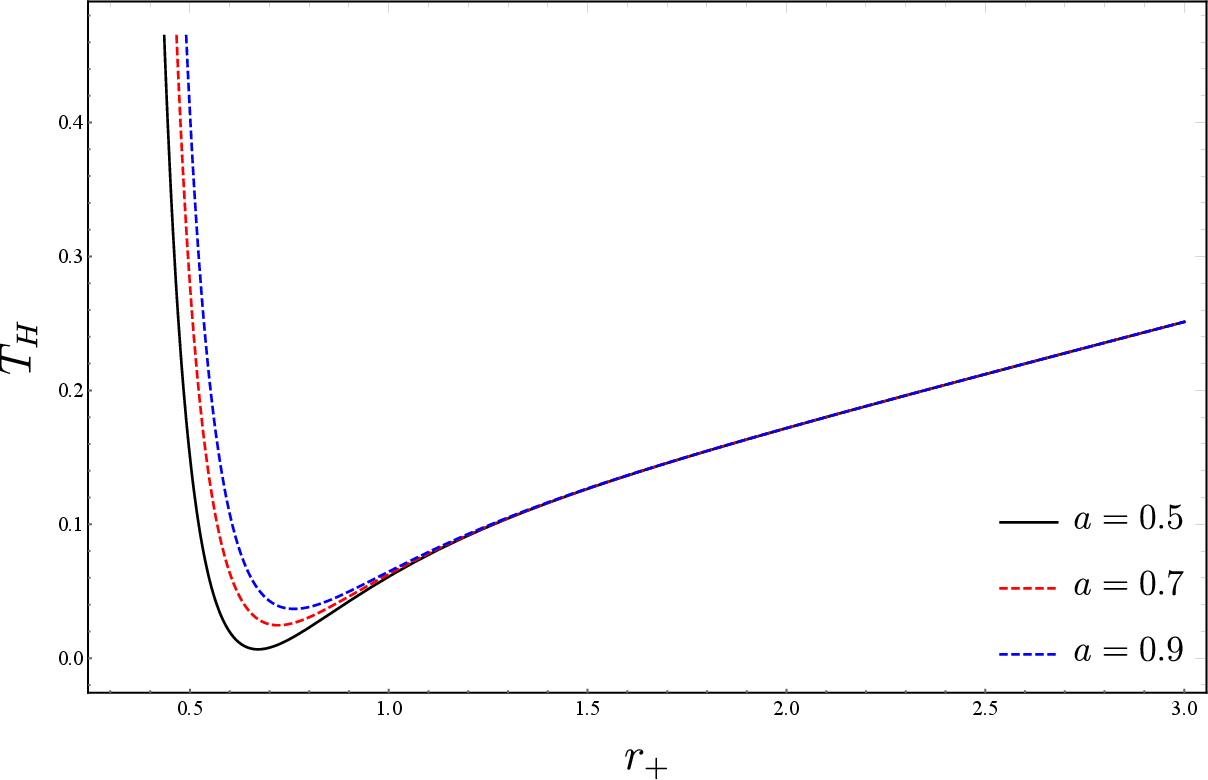
Figure 3: Hawking temperature TH versus r+ for varying parameters, manifesting shifted minima and modified stability regions.
The heat capacity CP exhibits divergence at the minimum of TH, indicating a second-order phase transition and revealing a parameter-dependent phase structure (Figure 4).
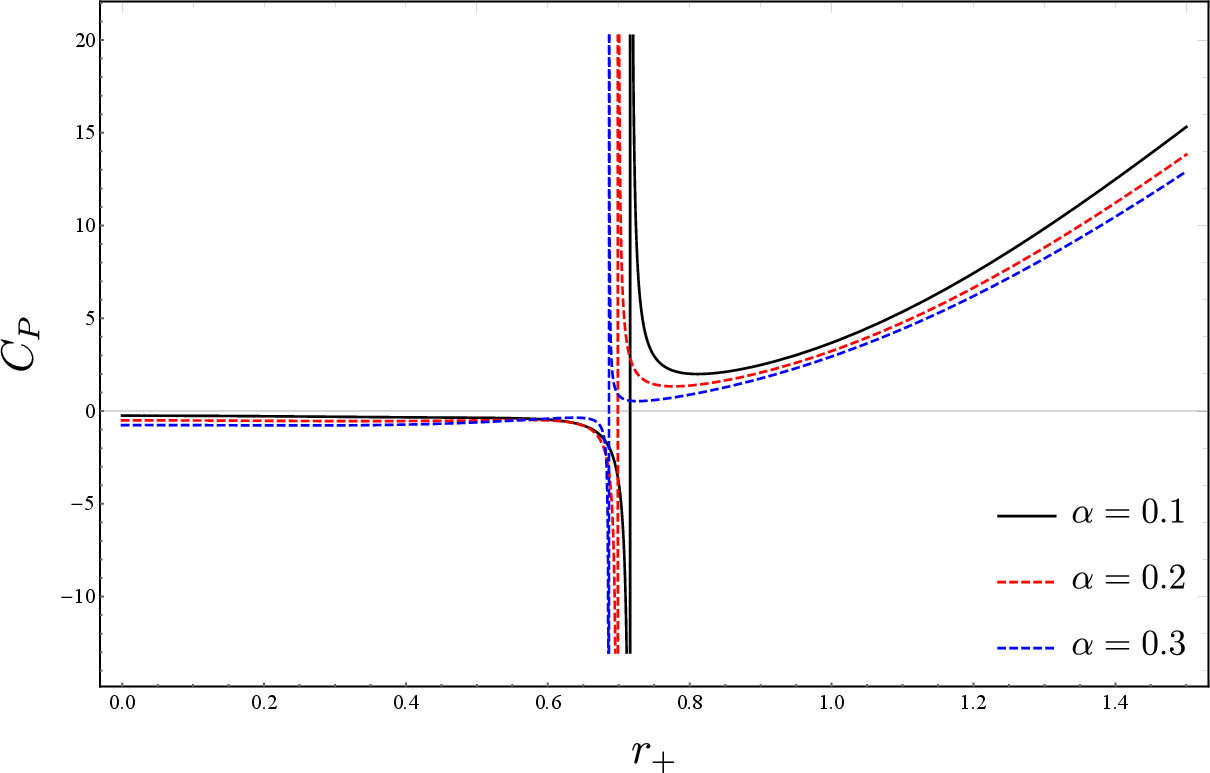
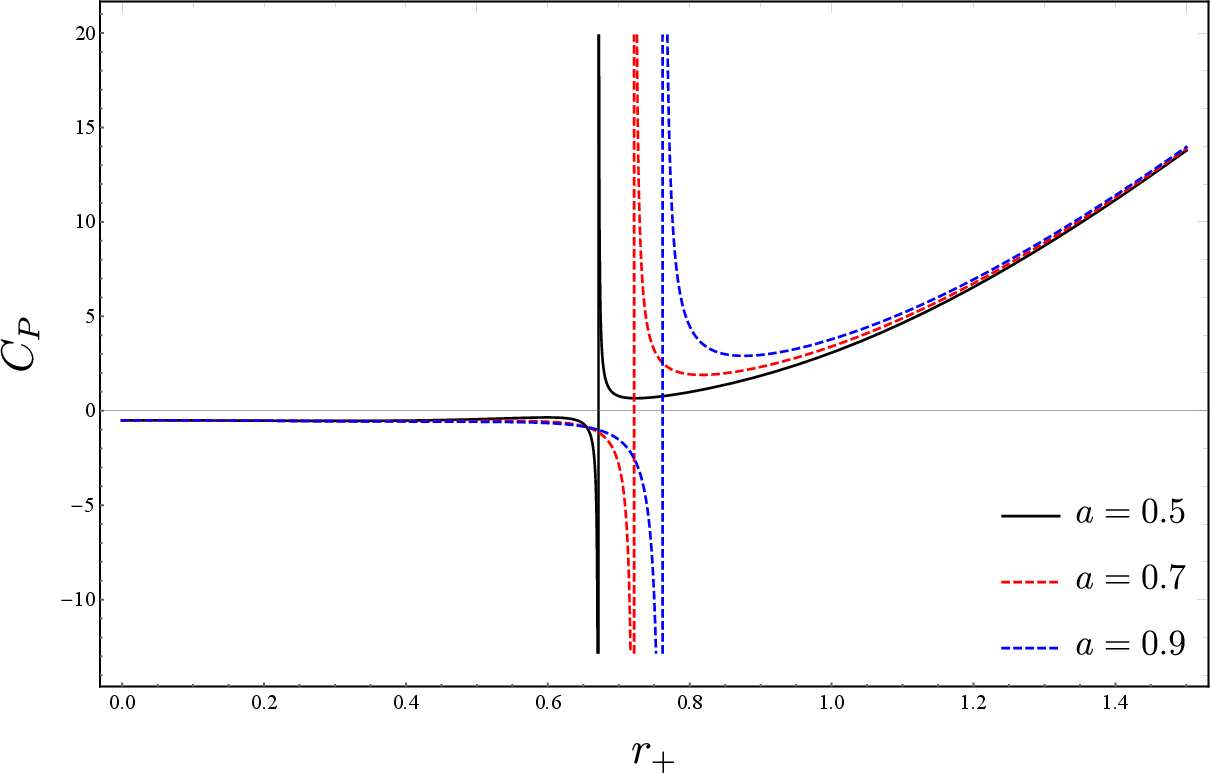
Figure 4: Heat capacity CP against r+, showing regions of stability and instability, and the critical dependence on α and a.
Isotherms in the P-r+ plane display non-monotonic behavior and critical points. The GB coupling significantly enhances the critical pressure, while the NLED contribution opposes this effect (Figure 5).
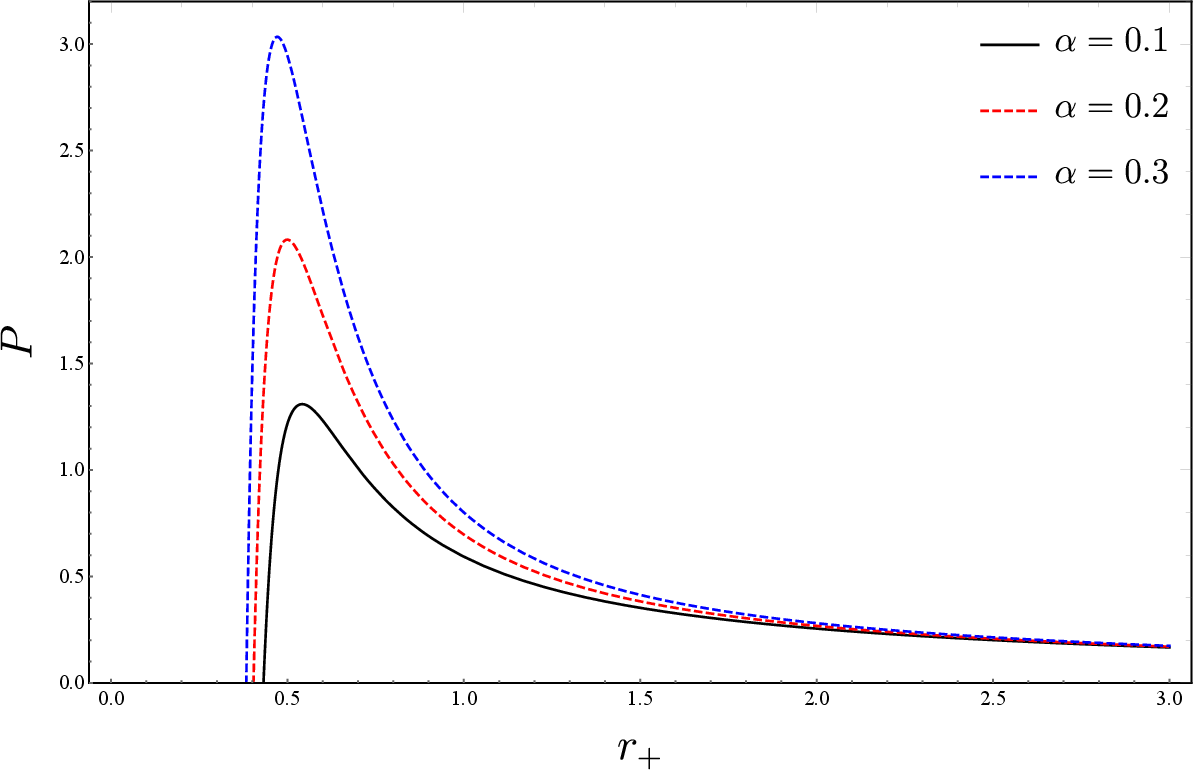
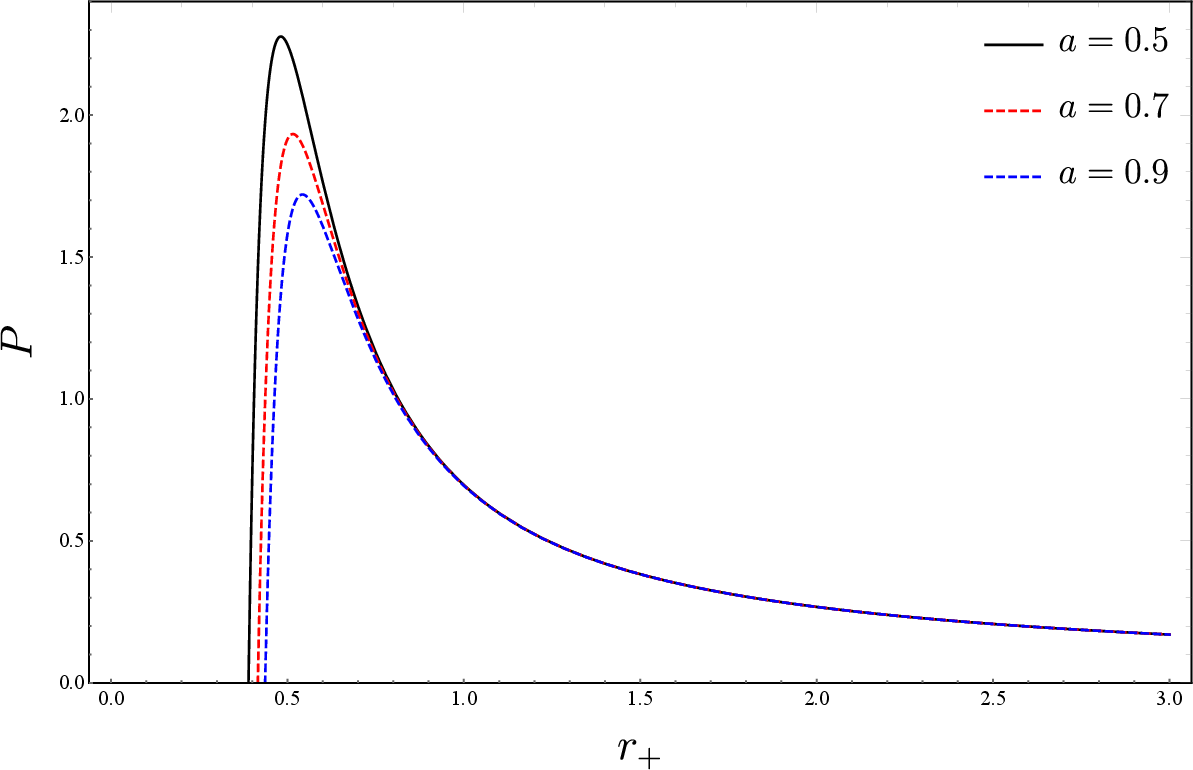
Figure 5: Thermodynamic pressure P as a function of r+ for various α and a, with visible critical points shifting under parameter variation.
Numerical solutions give the critical temperature Tc, pressure Pc, and horizon rc; α dominantly controls the critical exponents, while the influence of a is sub-leading.
Joule-Thomson Expansion and Inversion Curves
The JT expansion is analyzed by considering isenthalpic (constant mass) processes in the extended thermodynamic phase space. The JT coefficient μJ is computed analytically and shown to acquire both positive and negative values, allowing for distinct cooling (expansion-induced temperature drop) and heating regions depending on r+, α, Q, and a.
Plots of μJ versus r+ demonstrate that both GB and EH corrections nontrivially affect the loci of inversion points—the transition between heating and cooling regimes. Specifically, increasing α shifts inversion points outward, while increasing Q enhances the size of the cooling region.
Isenthalpic and inversion curves in the T-P plane further illustrate these effects. The inversion curve partitions the phase space, and its steepness and domain are highly sensitive to a, α, and Q. Notably, stronger NLED corrections (higher a) compress the viable cooling region, while higher charge expands it.
Dynamical Structure: Geodesics, Stability, and ISCO
The geodesic equations are obtained for the background metric, leading to effective potentials governing test particle orbits (Figure 6, Figure 7). The structure of Veff(r) reveals the existence and deformation of stable and unstable circular orbits.
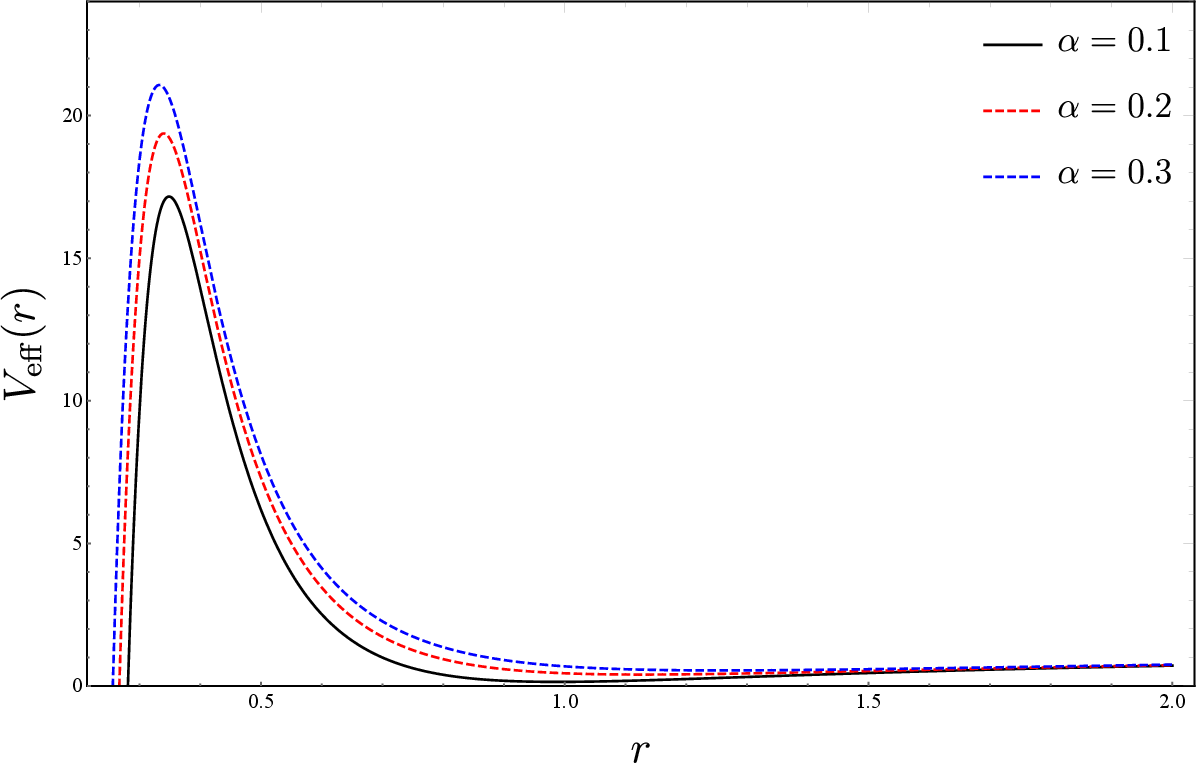
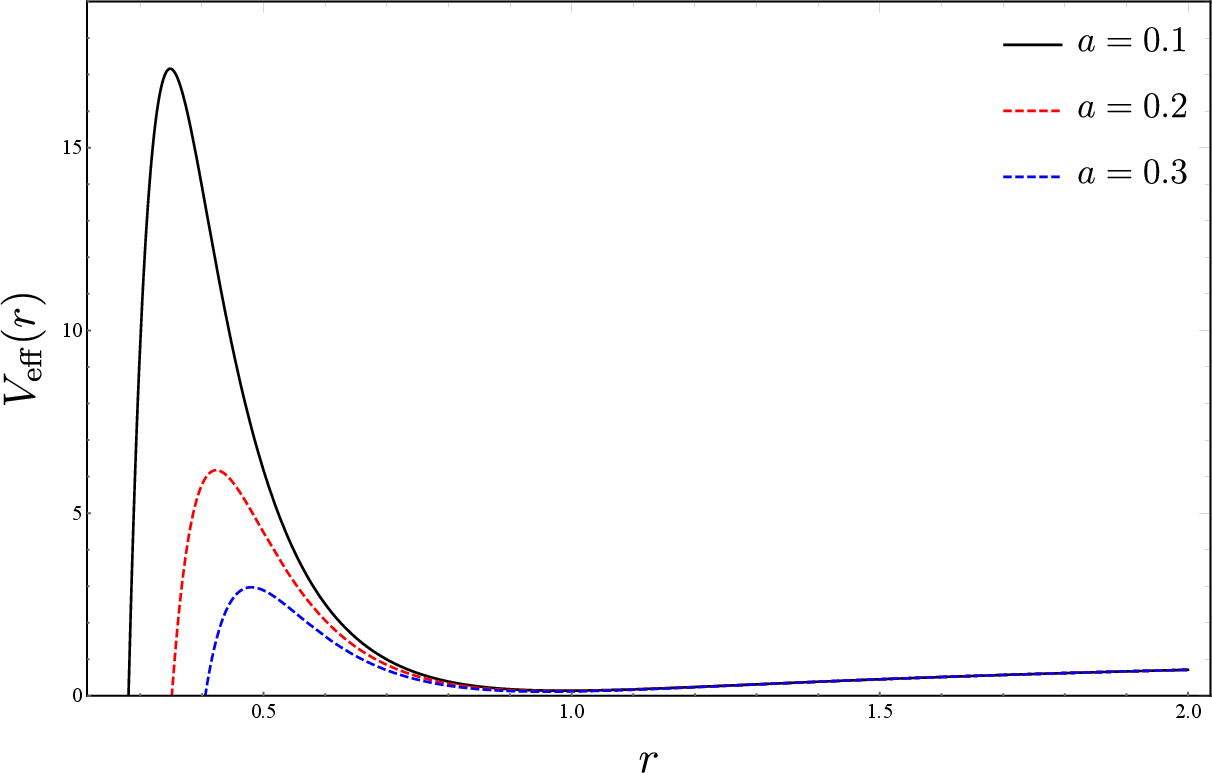
Figure 6: Effective potential Veff(r) for massive particles with varying a and α, showing how parameter variations alter the potential barrier.
Both α and a modify the barrier height, the location of extrema, and stability regions. GB terms tend to enlarge regions of stability (shifting ISCO outward), while NLED reduces them. The Keplerian frequency ΩK's profile is computed, with corrections manifest in the fall-off and peak location (Figure 8).
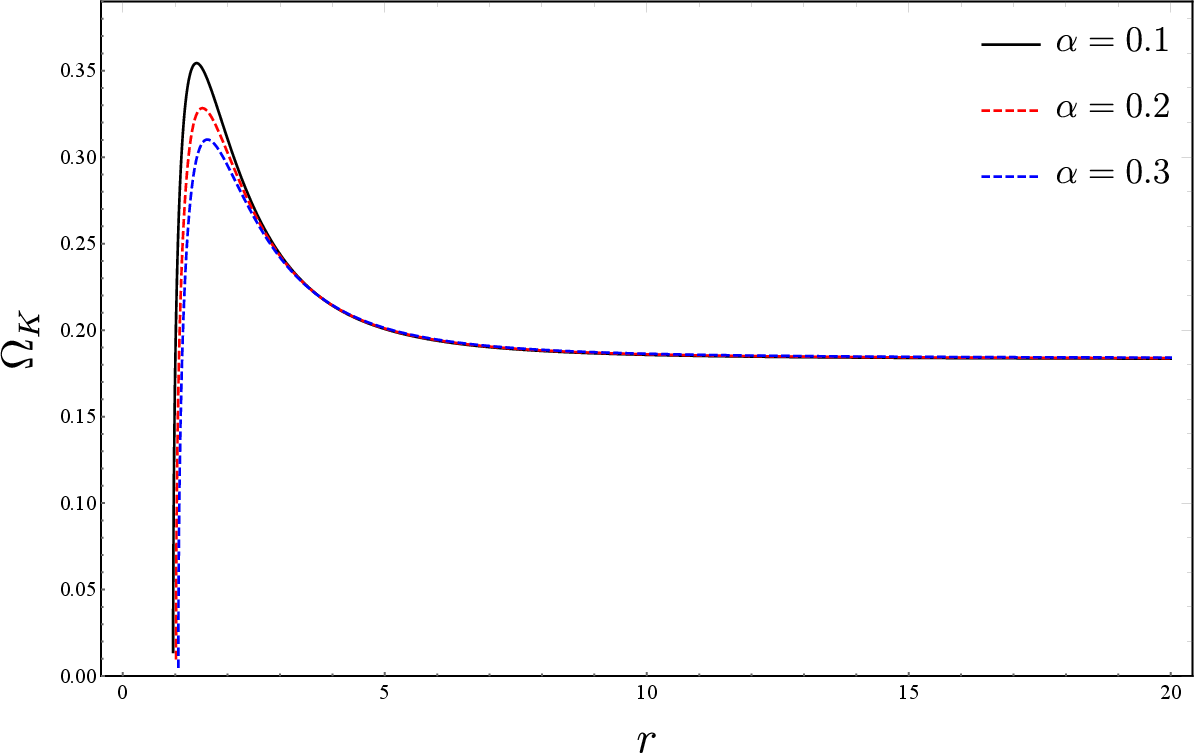
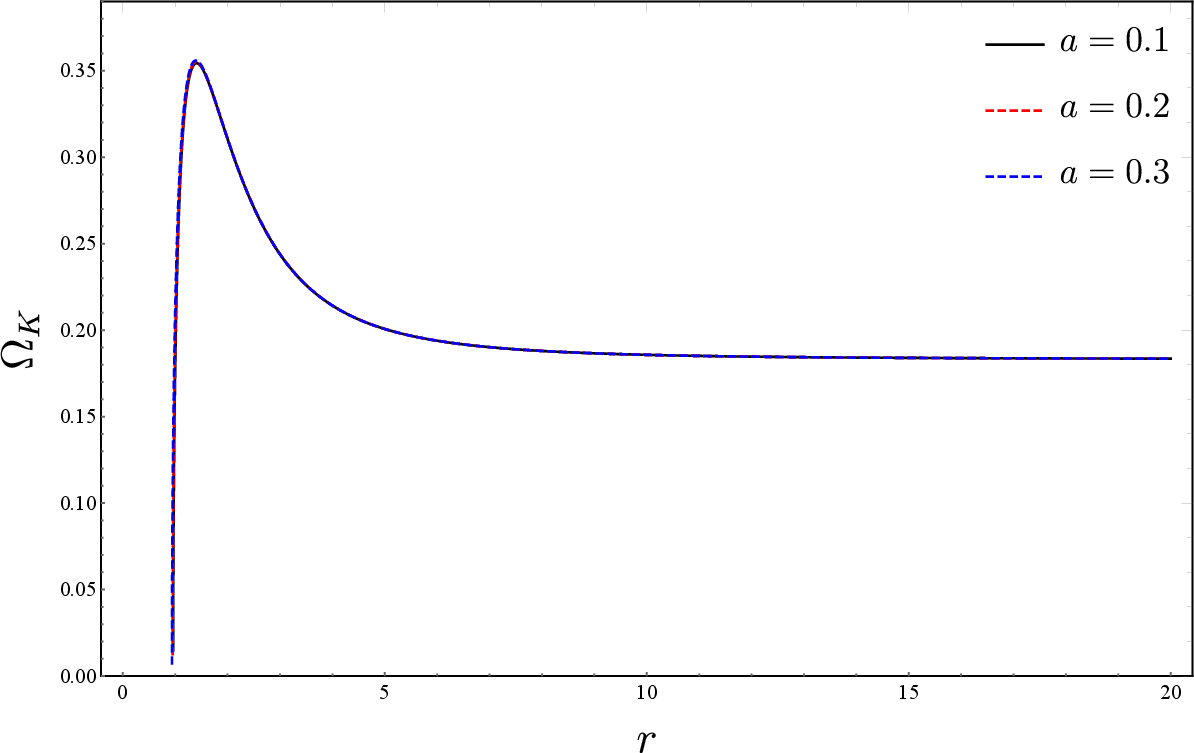
Figure 8: Keplerian frequency ΩK as a function of radius, modified by α and a.
Radial epicyclic frequencies Ωr2 are plotted, establishing the ISCO location via zero crossing (Figure 9). Higher α shifts ISCO outward, while higher a has the opposite effect.
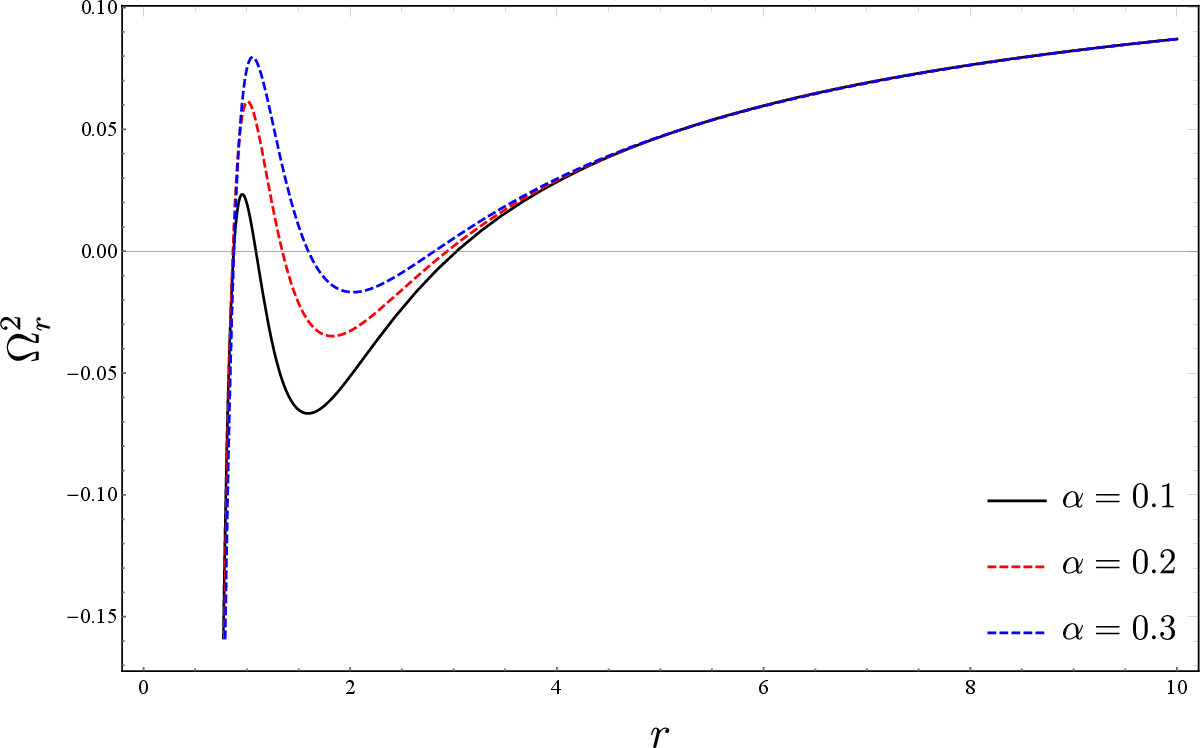
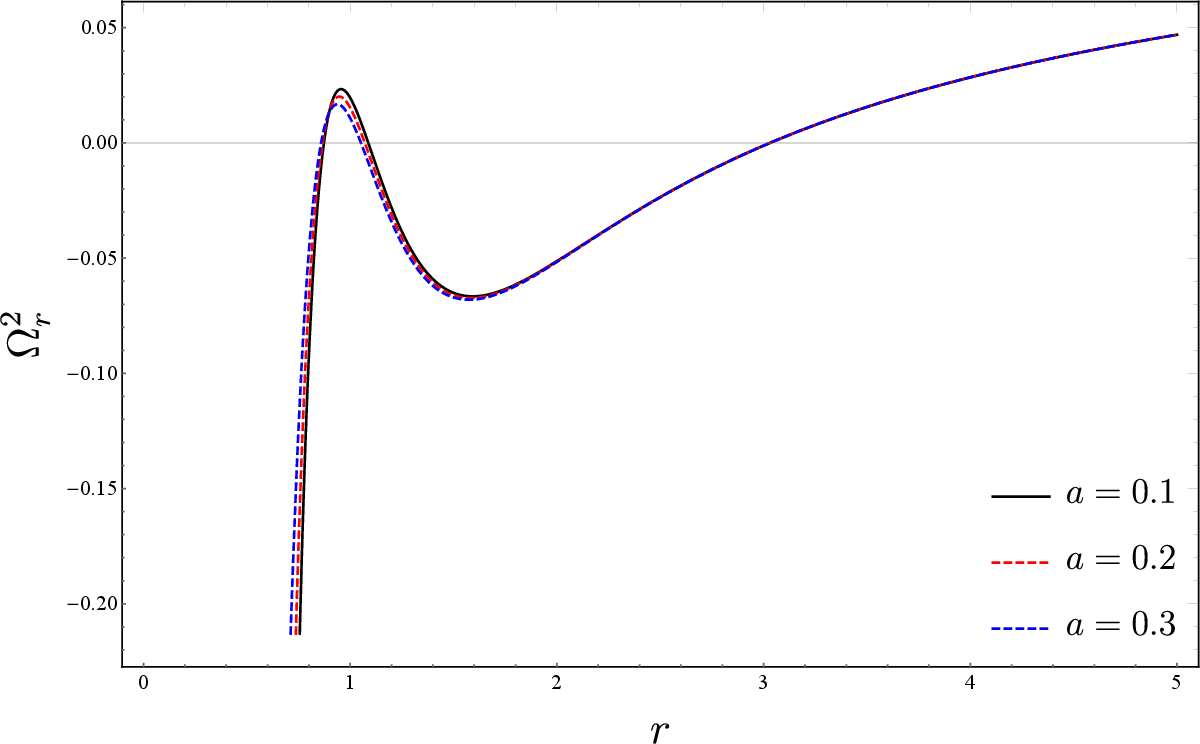
Figure 9: Radial profiles of epicyclic frequency Ωr2, with GB and NLED corrections affecting the ISCO position and radial stability.
The analysis of possible trajectories, bound orbits, plunging and scattering regimes is exhaustive, quantitatively clarifying the ways in which strong-field dynamics are influenced by additional couplings.
Implications and Future Directions
The findings demonstrate that in four dimensions, the combined presence of EGB higher-curvature and EH NLED terms results in substantial deviations from the Reissner-Nordström and Born-Infeld paradigms. The modifications impact both global thermodynamic quantities and local dynamical stability. Practically, this has implications for astrophysical modeling of compact objects, accretion disk structure (ISCO location), and gravitational wave emission from inspiral events. Theoretically, the work reveals the importance of nonlinear quantum corrections (such as those arising from effective QED) and higher-derivative gravity in dictating both macroscopic and microscopic properties of strong-field spacetimes.
Open extensions include the study of perturbations (quasinormal modes), shadow geometry, and the exploration of rotating counterparts in the same theoretical setting, providing further linkage to observable effects and possible constraints on deviation parameters in modified gravity and nonlinear EM.
Conclusion
This study establishes a comprehensive framework for analyzing BH solutions with combined EGB and EH corrections in AdS backgrounds. It provides detailed analytical and numerical results for thermodynamic criticality, JT expansion, and dynamical structure, elucidating the hierarchy of corrections and their distinct physical manifestations. The prominent role of higher-curvature gravity and nonlinear EM is emphasized in the strong-field regime, with potential consequences for both astrophysical observations and fundamental gravity/EM theory.

