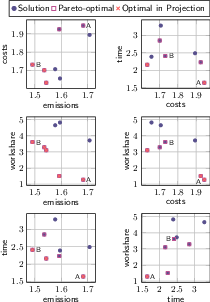
- The paper introduces a novel QUBO-based model that integrates real-world supply chain constraints with quantum optimization to achieve Pareto-optimal solutions.
- It employs two hybrid solvers, IQTS and HBS, leveraging tree decomposition and bilevel iterative frameworks to rapidly converge on high-quality solutions.
- Empirical results demonstrate effective trade-offs among key performance indicators such as cost, emissions, and workshare, paving the way for scalable quantum-enhanced logistics.
Hybrid Quantum-Classical Optimization for Multi-Objective Supply Chain Logistics: An Authoritative Essay
The paper "Hybrid Quantum-Classical Optimization for Multi-Objective Supply Chain Logistics" (2602.05364) develops a rigorous QUBO-based model for the assignment and routing aspects of a real-world supply chain, specifically the Airbus aircraft manufacturing logistics. The challenge is characterized by multi-factorial objectives, including minimizing carbon emissions, cost, production time, and supplier workshare fulfillment, while respecting operational constraints such as PBS-induced part dependencies, double sourcing, multimodal transport, and strict workshare quotas.
The authors formalize the assignment problem via QCBO, subsequently scalarizing the multi-objective landscape through weight selection to yield a QUBO amenable to quantum and quantum-inspired computation. Key innovations in modeling include:
- Explicit structuring of part dependencies using PBS, enabling tree decomposition approaches for scalable solution strategies.
- Detailed integration of multimodal routes, warehouse hub transshipment, and transport volumetrics into the objective calculations, yielding high-fidelity KPI measurements for cost and emission.
- Rational approximation schemes for part values and source shares, enabling box constraint translation into equality constraints for QUBO penalty incorporation.
The preprocessing pipeline—combining Dijkstra-based route optimality pruning and solution-space feasibility reduction—reduces the QUBO variable count to 2416, compressing an underlying solution space with combinatorial complexity on the order of 10300.
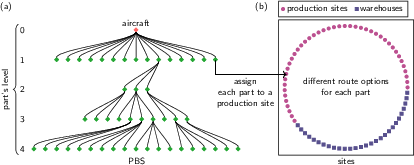
Figure 1: Problem sketch: PBS-induced part dependency structure (a) and supply chain site network with production sites and warehouses (b) underlying the assignment QUBO.
Hybrid Solver Architecture
The study introduces two hybrid quantum-classical solvers: IQTS and HBS, each leveraging domain structure and modular algorithmic architecture for tractable solution search.
IQTS exploits the PBS tree structure to facilitate decomposition into subproblems, solved via QAOA (quantum) or simulated annealing (classical/quantum-inspired). The heuristic sequence incorporates specialized routines—ISG for feasible solution generation, ISF for constraint-based repair, and ISI for localized improvement. Subproblem selection (set by the subtree size m and variable count n) maximizes correlation and structure for quantum optimization, with empirical results indicating rapid convergence within 50 iterations.

Figure 2: Algorithmic architecture sketch: IQTS and HBS solvers and their modular components.
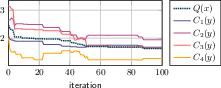
Figure 3: Convergence of IQTS showing objective improvement versus iteration index.
HBS: Hybrid Quantum-Classical Bilevel Solver
HBS orchestrates a bilevel iterative process, concurrently applying CACm, IBP, and QAOA subsolvers for candidate refinement, with hyperparameter adaptation governed by DAS. The solution set is merged via energy-based selection, and feasibility is ensured by ISF. This framework is readily extensible, generalizable to arbitrary QUBO forms, and is scalable due to its modular solver mix and parallelizable architecture.
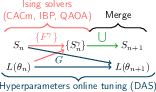
Figure 4: HBS framework: solver collaboration and hyperparameter tuning dynamics.
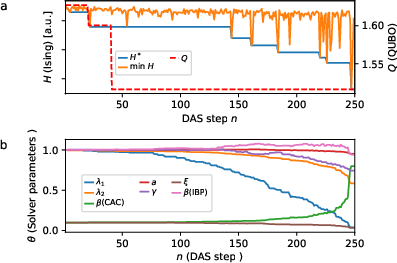
Figure 5: Simulation results: bilevel optimization convergence and hyperparameter trajectory.
Experimental Results and Comparative Analysis
Experiments utilize IonQ's Aria-1 (25-qubit trapped-ion) and AWS Braket SV1 simulator, with classical computational baselines for comparison. The experiment set spans multiple scalarization weight configurations and primary source share variations, assessing KPI Pareto frontier expansion, solution hypervolume, and impact of quantum versus classical subsolvers.
Key findings:
(Figures 5 & 6)
Figures 5 & 6: Example solution visualizations: route networks (cost/emission weighted) and site/supplier workshare fulfillment.
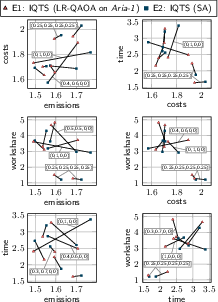
Figure 7: Comparative analysis: KPI shifts for solution pairs using IQTS with QAOA vs. IQTS with SA.
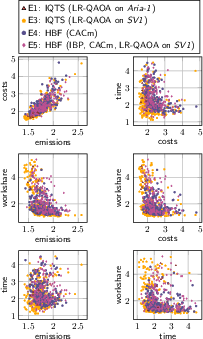
Figure 8: Solution space exploration: supply chain configuration diversity across solvers.
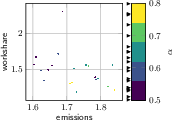
Figure 9: Impact of primary source share α on KPI solution distributions.
Implications and Future Directions
The proposed hybrid quantum-classical frameworks successfully map industrially relevant supply chain logistics to a QUBO form optimized via state-of-the-art quantum and quantum-inspired solvers. Though no performance advantage is currently observed with Aria-1-scale hardware, the architecture admits seamless integration with Ising machines and anticipated larger-scale quantum devices.
Practical implications include:
- Modular methodologies for integrating real-world constraints into quantum optimization.
- Empirically validated approach for Pareto frontier estimation, enabling operational supply chain design under multi-KPI trade-offs.
- Scalability and flexibility for future quantum hardware or specialized optical Ising machines (CIM, TFLN platforms).
Theoretical directions encompass algorithmic advances in hyperparameter tuning, solver ensemble composition, and constraint management. Inclusion of geometric packing, production scheduling, and expanded KPI sets are straightforward extensions. Additional GPU acceleration for Ising solvers and integration with advanced quantum platforms is indicated.
Conclusion
This paper advances a formally grounded, computationally tractable method for multi-objective supply chain logistics, leveraging hybrid quantum-classical optimization algorithms. The dual-solver architecture (IQTS and HBS) attains high-quality Pareto-optimal solutions under realistic constraints, with scalable performance across classical and quantum-inspired approaches. The modeling techniques and experimental results lay the groundwork for large-scale industrial applications on future quantum hardware, while delineating key avenues for further research in quantum combinatorial optimization for supply chain analytics.