- The paper introduces an intrinsic calibration method using RF saturation of cesium atoms, eliminating geometry-based calibration errors.
- The paper employs a global fit algorithm to adjust calibration parameters across detuning, RF current amplitude, and static fields, accounting for quadratic Larmor frequency effects.
- The paper validates the method through noise analysis, demonstrating sensitivity near photon shot-noise limits with broad applications in geophysics, biomedicine, and communications.
Summary of "Intrinsic Atomic Calibration of Oscillating Magnetic Fields in ULF and VLF Bands" (2602.02210)
Introduction
The paper discusses a methodology for absolute calibration of radio-frequency (RF) magnetic fields in the ultra-low frequency (ULF) and very-low frequency (VLF) ranges using Radio Frequency Optically Pumped Magnetometers (RF-OPMs). RF-OPMs are critical in various applications such as non-destructive testing, medical diagnostics, and low-frequency communications, due to their high sensitivity and large tuning range. The calibration approach introduced avoids the geometric and electrostatic response issues seen in inductive sensors like fluxgates, search coils, and SQUID magnetometers, relying instead on intrinsic atomic properties and RF broadening of the Cs magnetic resonance.
Method and Apparatus
The calibration leverages the saturation of atomic response to oscillating magnetic fields. This allows for calibration based on atomic gyromagnetic ratios without the dependency on coil geometry.
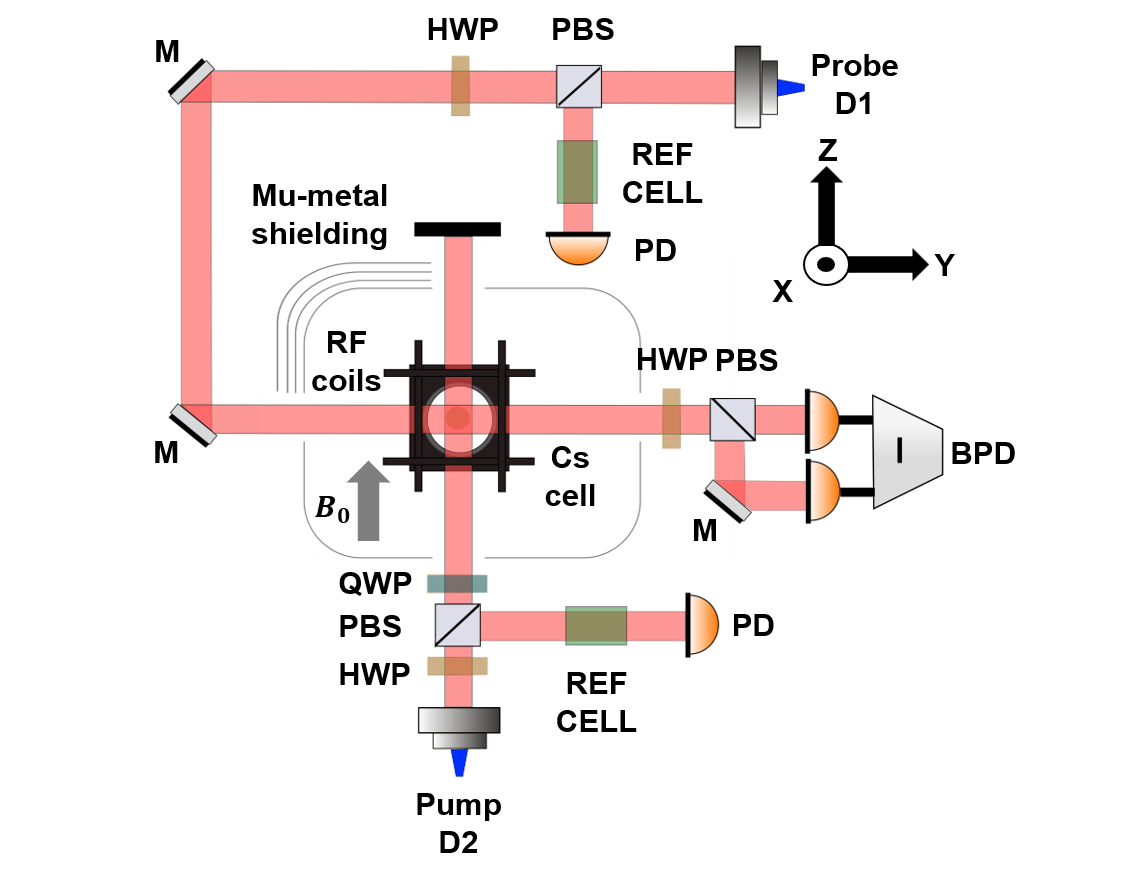
Figure 1: Schematic of apparatus used, demonstrating the components of the RF-OPM.
The RF-OPM setup included key components such as volume holographic grating (VHG) pumps, Distributed Bragg Reflector (DBR) lasers, mu-metal magnetic shielding, and paraffin-coated caesium cells, designed to optimize the polarisation lifetime of the atomic sample.
A configuration of perpendicular laser beams was used to probe the caesium sample, inducing σ+ transitions and maximizing polarisation lifetime with an anti-relaxation coating. The system applied both static and RF magnetic fields to manipulate the atomic spins and calibrate the magnitude of oscillating fields achieved through precise RF saturation response analysis.
Results
Calibration Against RF Saturation
The calibration exploits the saturation characteristic of the RF resonance. By incrementally increasing the RF driving strength, the system transitions from non-saturated regions to saturated ones, as the Rabi rate approaches the atomic relaxation rate.
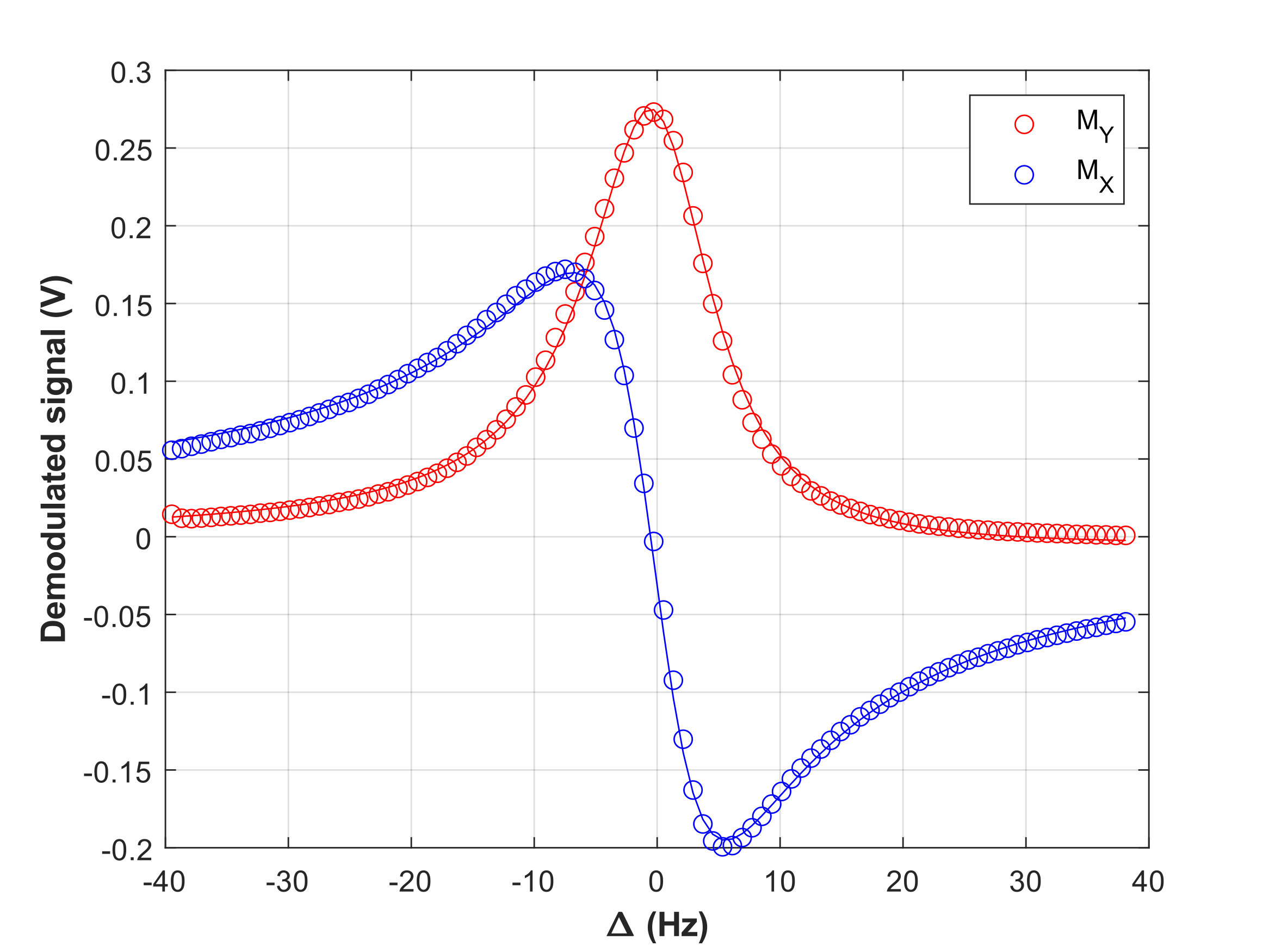
Figure 2: Demonstrates the magnetic resonance response as a function of RF frequency sweep, indicating fitting parameters.
Saturation analysis enables robust calibration by correlating the saturation dip in resonant peaks to the RF amplitude, providing a method to adjust RF field amplitudes accurately without dependency on instrumental geometry.
Field Response at Different Larmor Frequencies
The paper notes a quadratic relation between the apparent RF coil calibration and the Larmor frequency due to spin-exchange relaxation contribution. The spin-exchange phenomena, although small, contribute significantly to the system, necessitating careful adjustment during calibration.
Global Fit
The authors employed a global fit algorithm across varying parameters (detuning, RF current amplitude, static field amplitude) to consolidate their calibration approach, ensuring consistent and reliable results across experimental conditions.
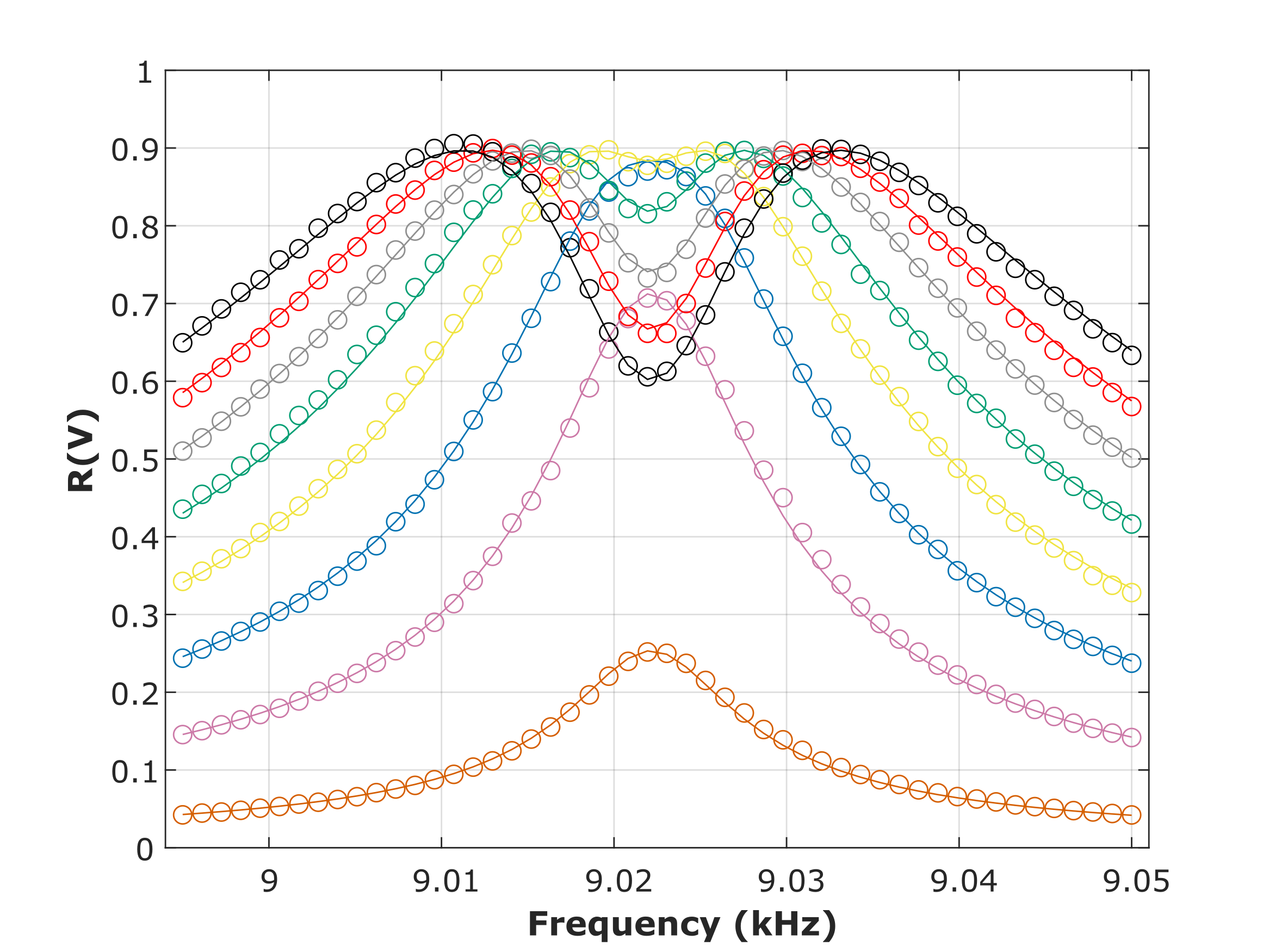
Figure 3: Multiple resonant responses at various frequencies and RF drive levels.
Calibrated OPM Response
By using calibrated test signals, the magnetometer's sensitivity and operational noise floors were evaluated. The study's comprehensive noise analysis identified primary noise sources, confirming that sensitivity reached close to photon shot-noise limits.
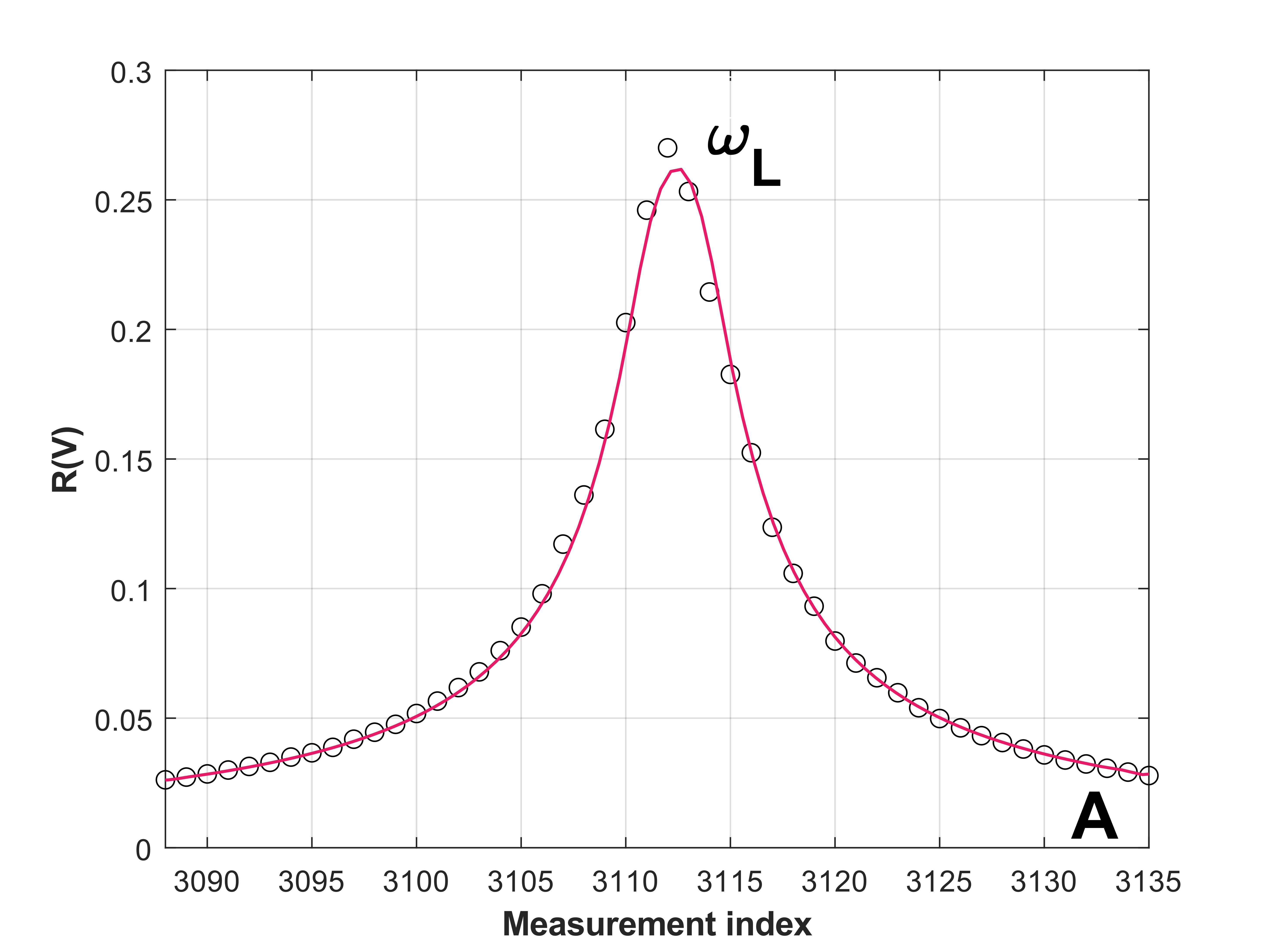
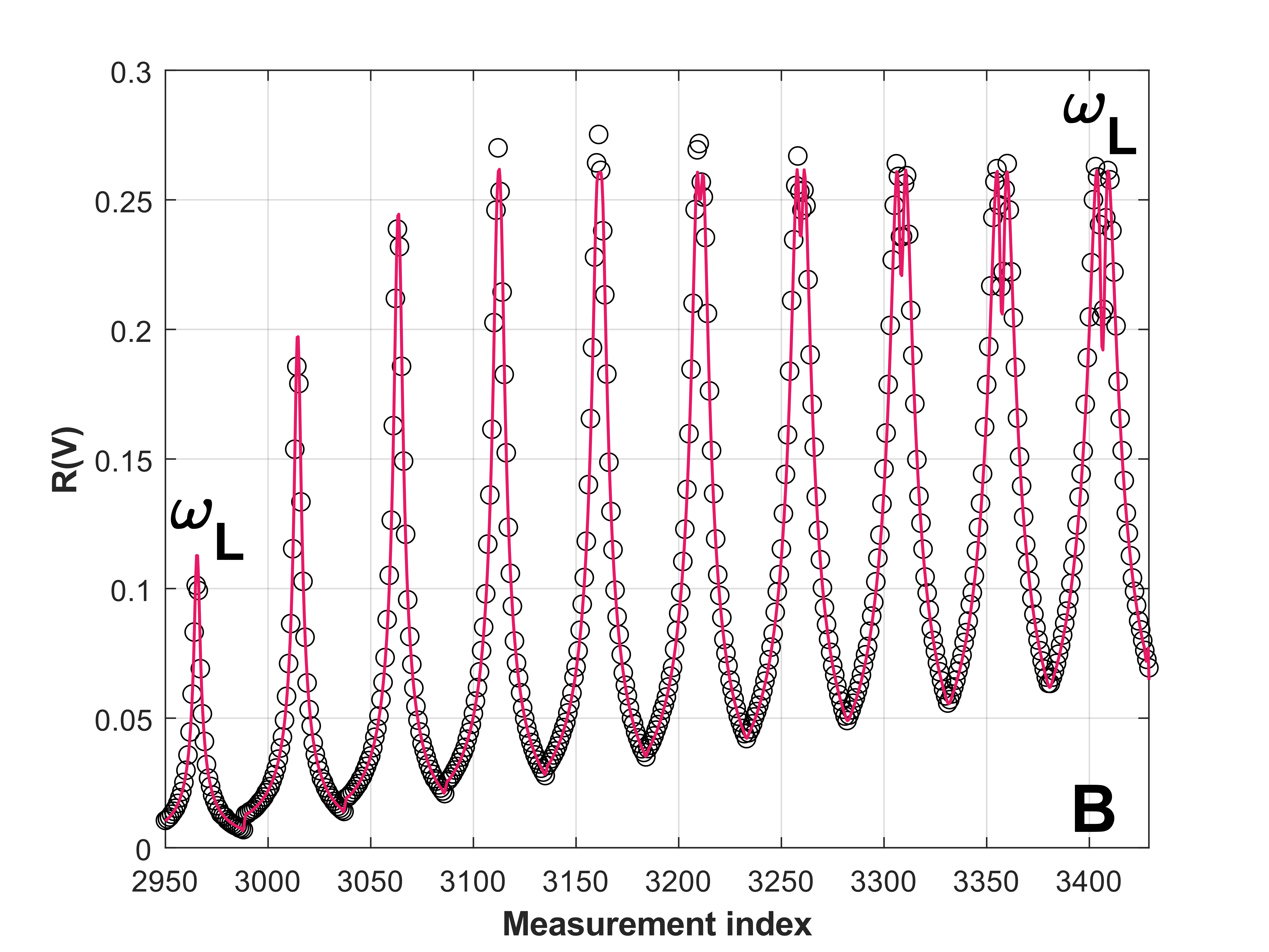
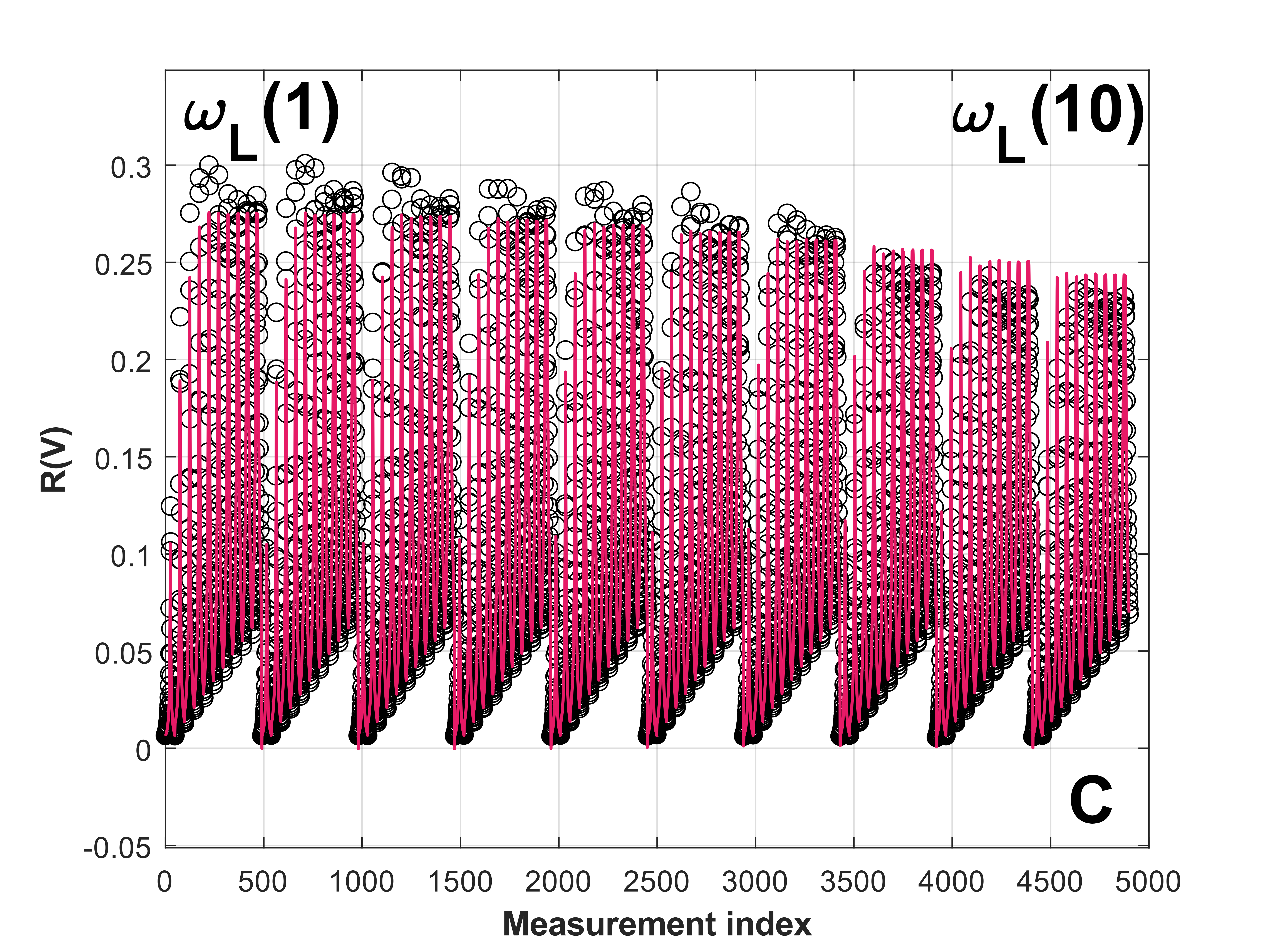
Figure 4: Depicts resonance responses with varying modulation and static fields, illustrating the fitting model's applicability.
Conclusion
This paper presents a thorough calibration procedure independent of coil or environmental influences, particularly suited for low-frequency regime applications. By relying on intrinsic atomic properties, the calibration method offers a stable and transferable standard, critical for applications like geophysical surveying, biomedical imaging, and communications. The work establishes an empirical framework to handle challenges associated with varying Larmor frequencies and is adaptable for prolonged operation in challenging environments.
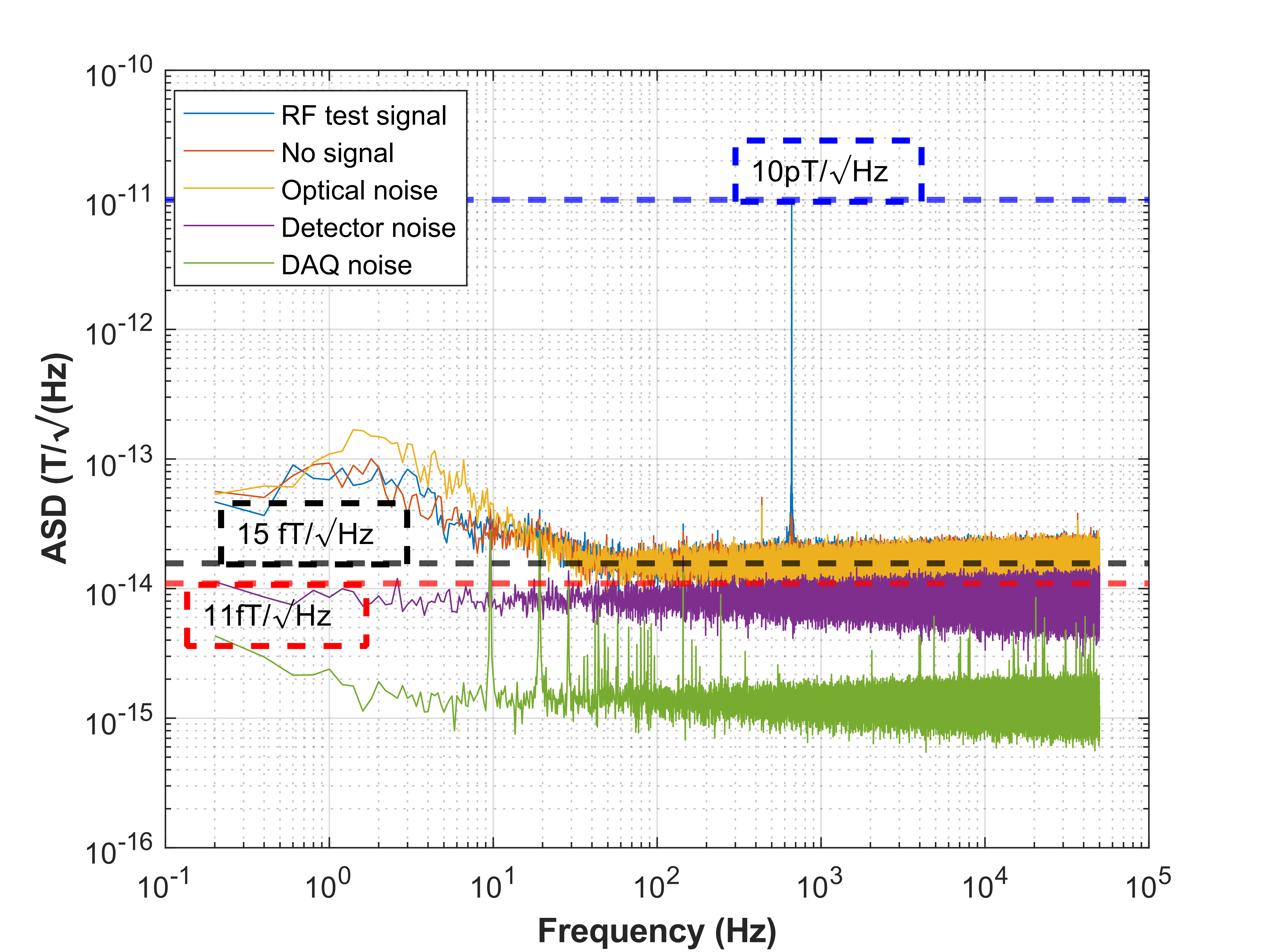
Figure 5: Analysis of different sources of noise in the magnetometer system, highlighting the photonic noise limits.
This intrinsic calibration model presents an opportunity for significant advancements in applications requiring precise, reliable magnetic field detection, free from traditional calibration constraints.