- The paper quantifies sandwich attacks on Ethereum by analyzing over 149 million transactions and tracking user behavioral adaptations.
- The paper employs robust detection methods that distinguish public from private routing, revealing cumulative migration trends after repeated attacks.
- The paper highlights systemic vulnerabilities in private channels, where concentrated attacker activity underpins significant exploitation risks in MEV.
Behavioral Adaptation and Private Channel Exploitation in Ethereum MEV
Introduction
This paper presents a detailed empirical analysis of user adaptation and private order flow exploitation in the context of Maximal Extractable Value (MEV) on Ethereum. The authors focus on sandwich attacks, quantifying user responses to these adversarial events and evaluating the effectiveness of private transaction routing as a mitigation strategy. Leveraging transaction-level data from November 2024 to February 2025 enriched with mempool visibility and MEV-specific annotations (via ZeroMEV and MempoolDumpster), the study provides systematic detection and economic quantification of sandwich attacks in both public and private channels.
Data Overview and Visibility Trends
The dataset spans four months and covers over 149 million Ethereum transactions. Visibility labeling distinguishes transactions broadcast through the public mempool versus those submitted privately. Notably, the share of private transactions rises from 31.8% in November to 50.1% in February, signaling a significant shift in user routing behavior (Figure 1).
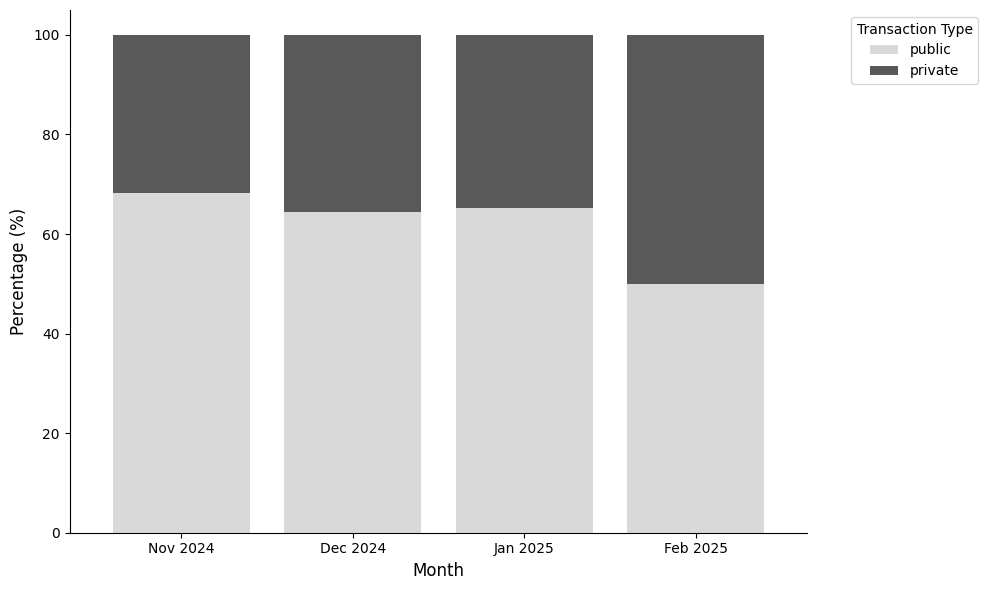
Figure 1: Monthly distribution of public vs. private transactions (Nov 2024 -- Feb 2025).
Detection Methodology for Sandwich Attacks
The study employs a robust detection protocol, leveraging enriched MEV labels and block-consistent ordering to capture legitimate sandwich events. A sandwich is identified by a triplet structure: a frontrun and backrun from the same attacker address, with one or more victim transactions sandwiched in between. Integrity constraints exclude self-sandwiches and ensure external victim targeting. The method distinguishes public and private sandwich events by mempool visibility, enabling quantification across routing domains.
Empirical Findings on Sandwich Attacks
Distribution and User Exposure
Analysis shows a heavy-tailed distribution in victimization: most addresses experience 1--3 sandwiches, but the tail extends beyond 100 events per address (Figure 2). High exposure correlates with increased transaction activity, suggesting systematic targeting of active users (Figure 3).
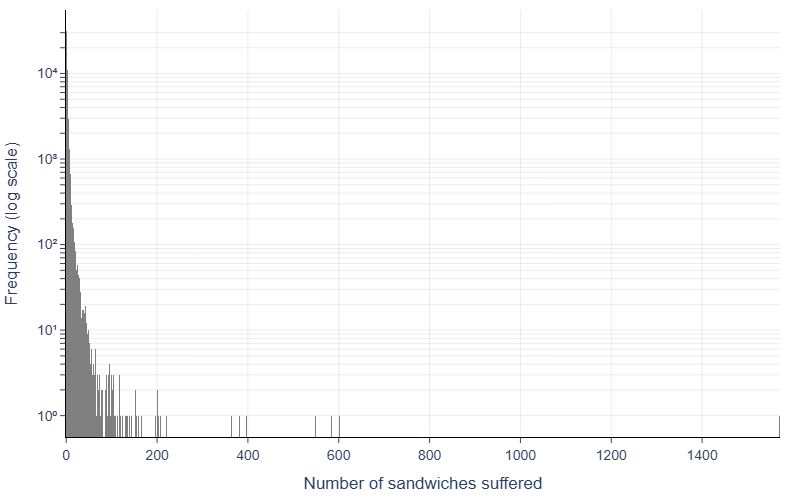
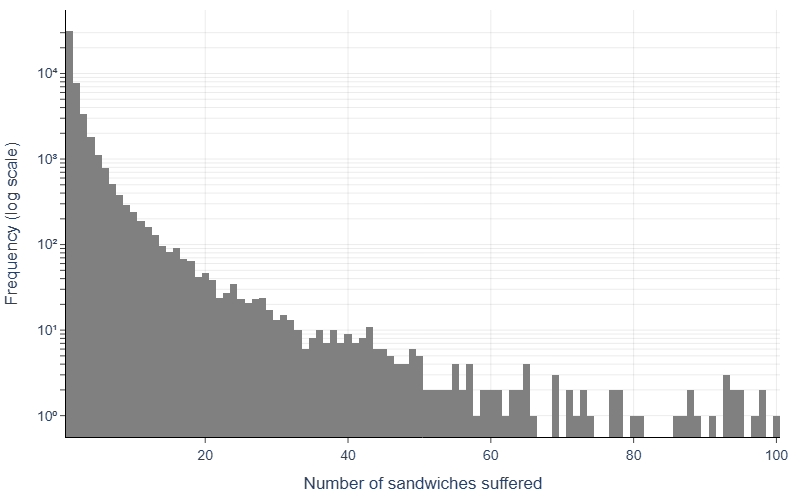
Figure 2: Distribution of sandwiches per address; the dense head and gradual decline in sandwich event frequency.
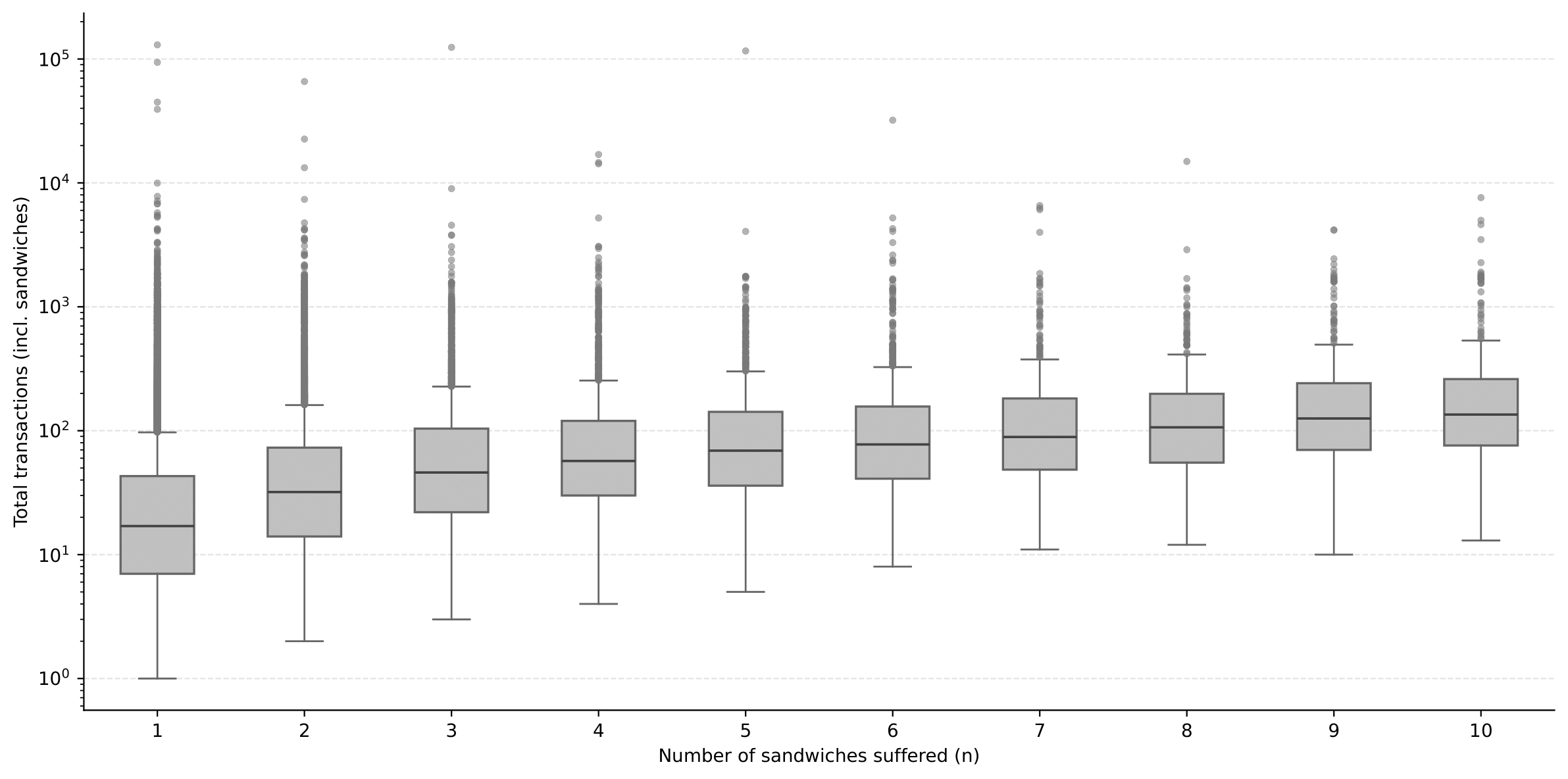
Figure 3: Total transactions (including sandwiches) as a function of the number of sandwiches suffered.
Behavioral Adaptation: Reactivation and Churn
Survival analysis, inverting Kaplan-Meier methodologies, tracks address reactivation post-sandwich. Results show a substantial portion of users resume activity within hours, indicating either MEV obliviousness or acceptance of MEV as transaction overhead. Churn peaks at 7.5% after the first sandwich attack but declines to 1-2% with repeated exposures, consistent with survivor bias (Figures 4 and 5).
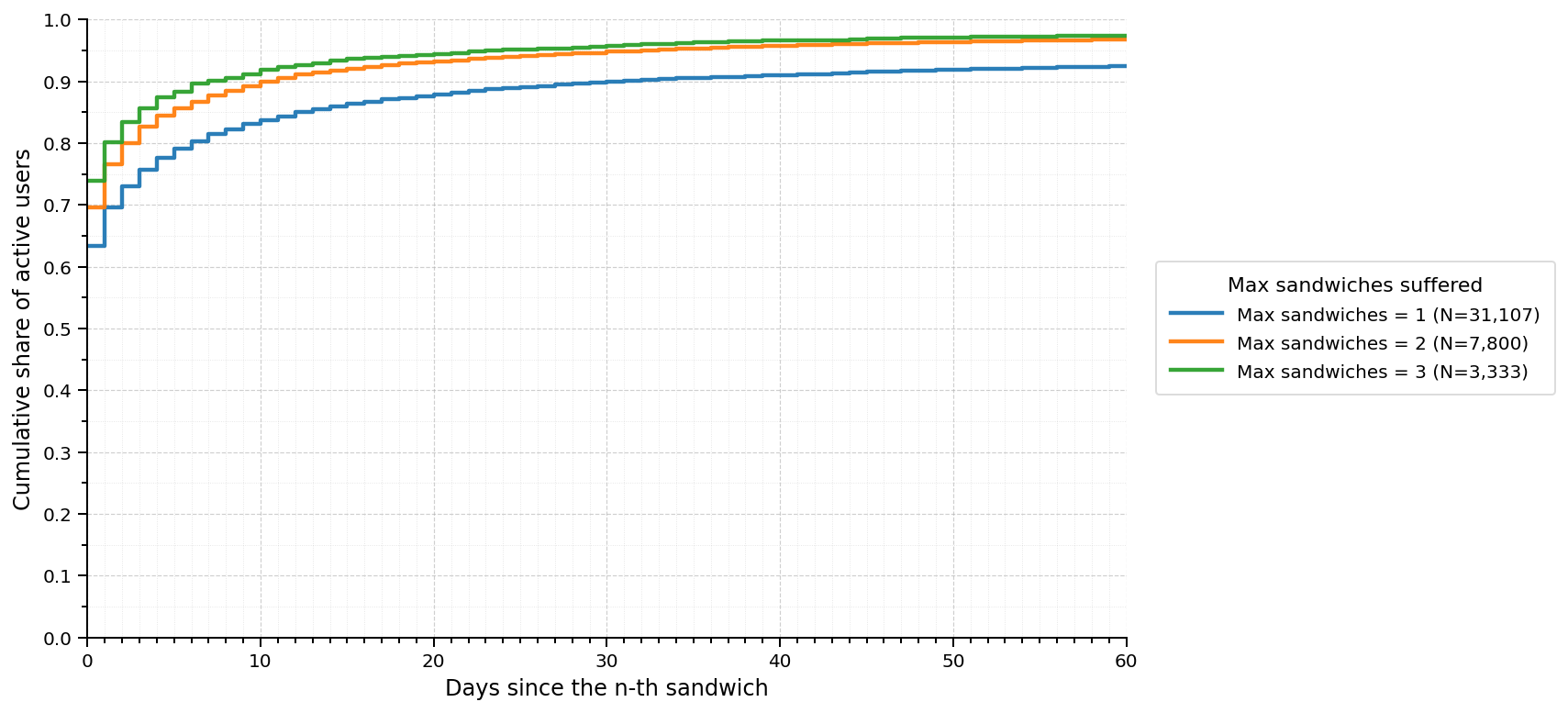
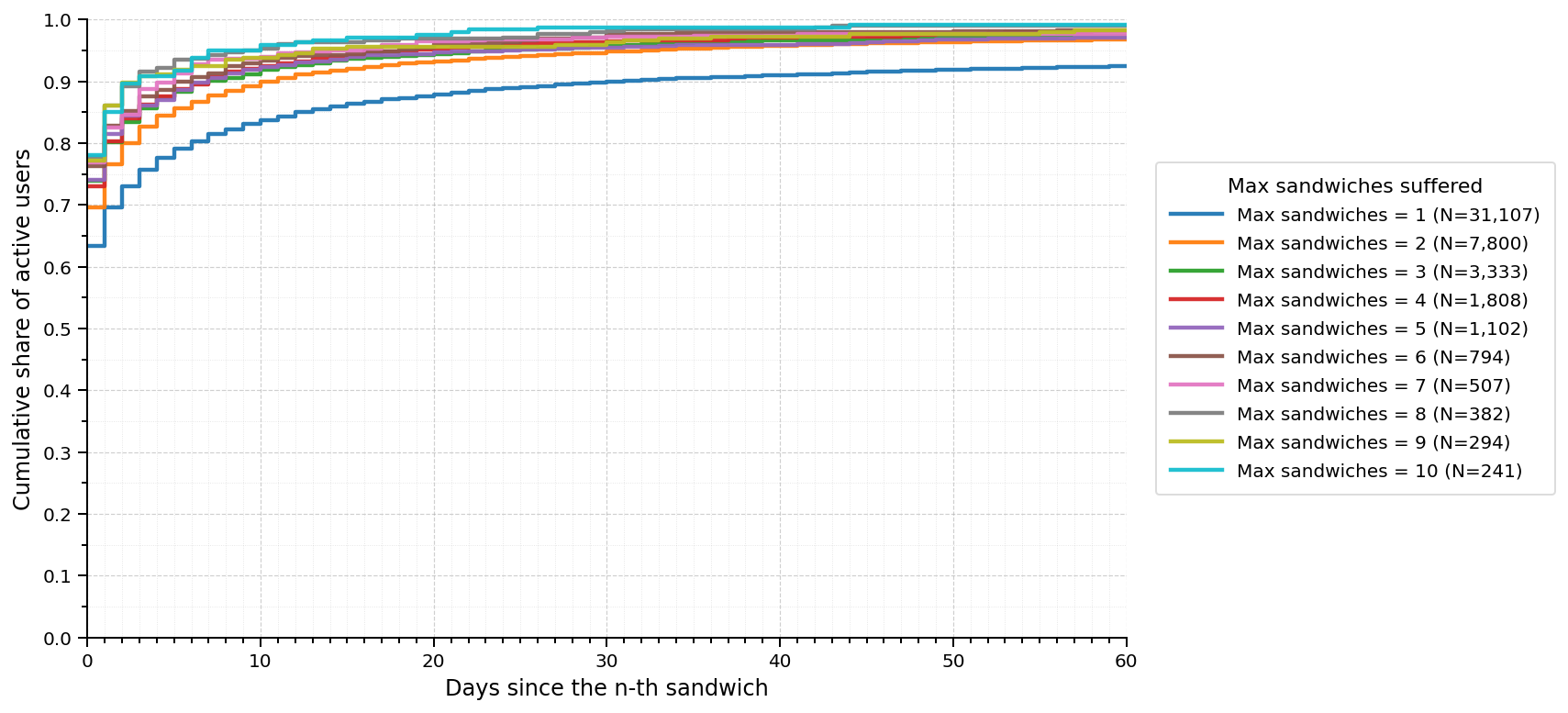
Figure 4: Cumulative incidence of address reactivation and private routing adoption after sandwich attacks.
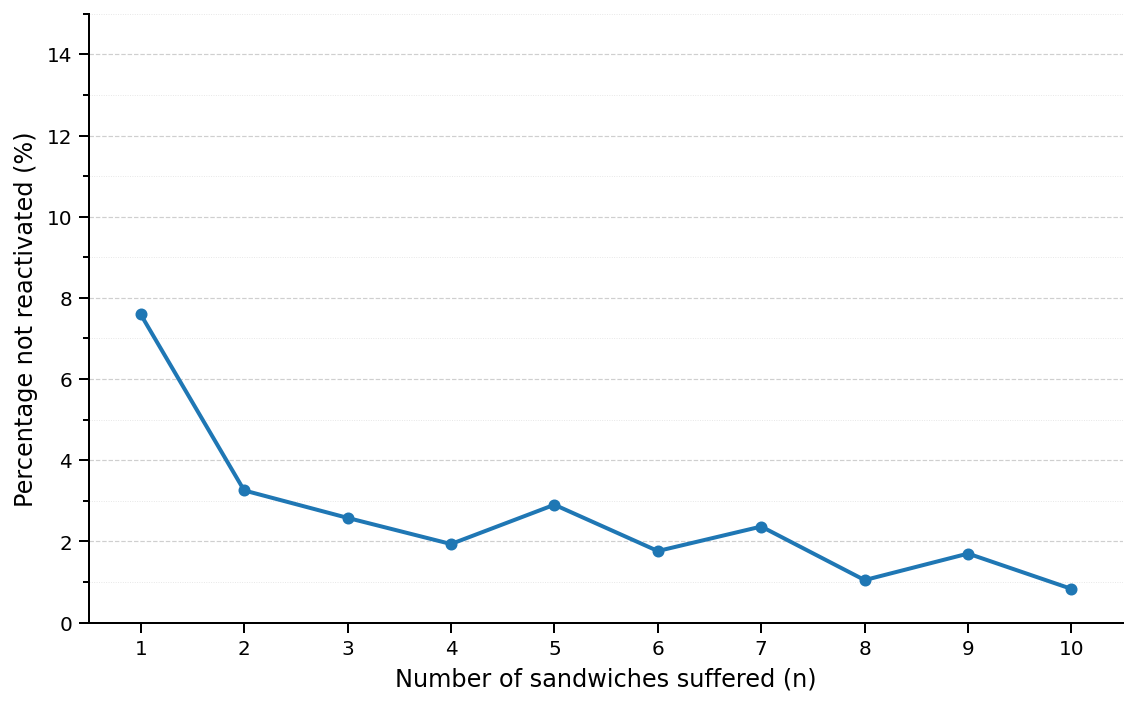
Figure 5: Non-reactivation share by sandwich index n; churn is highest at first exposure and declines with repeated attacks.
Private Routing Adoption Patterns
Among users suffering a sandwich attack, 37.2% migrate to private routing within 60 days; this rises to 54% after repeated exposures. Adoption is significantly higher among users who continue trading, reflecting a cumulative learning effect (Figures 6 and 7). Notably, adoption rates rise monotonically with additional sandwich exposures—suggesting delayed but adaptive mitigation strategies.
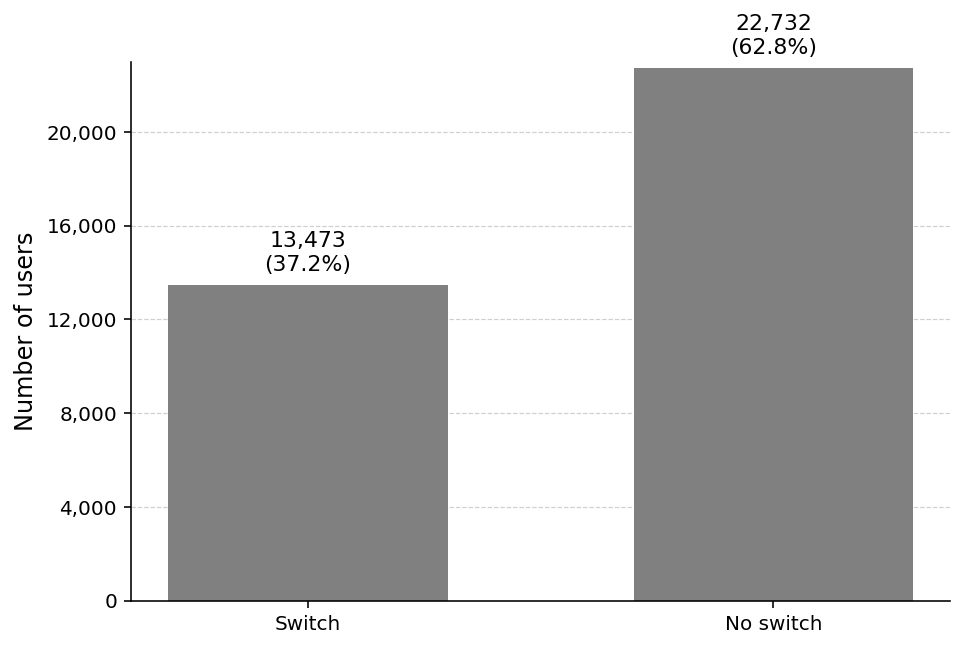
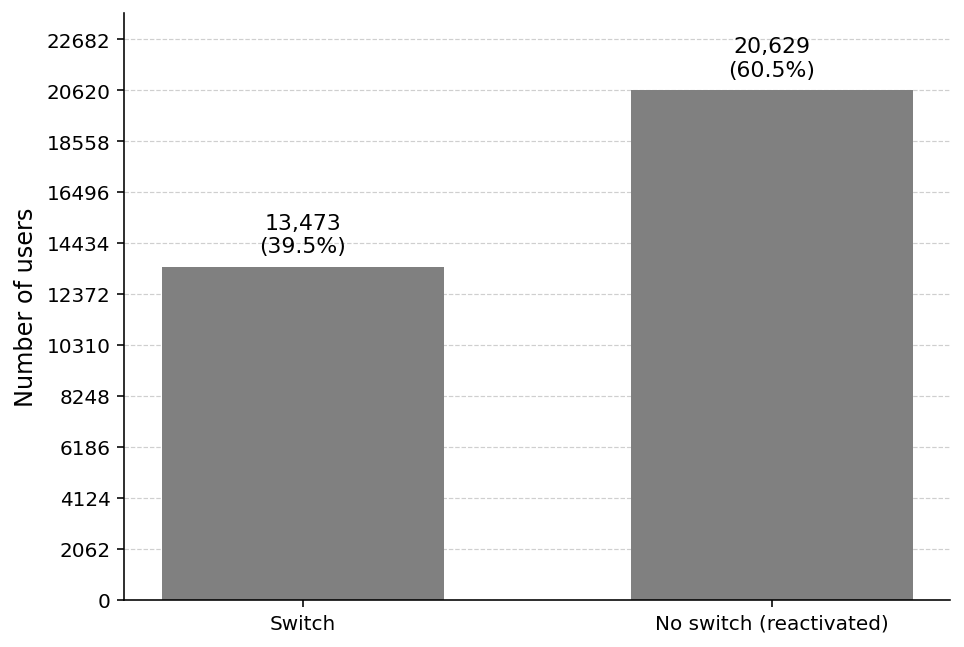
Figure 6: Private routing adoption following the first sandwich attack, for all users and conditional on reactivation.
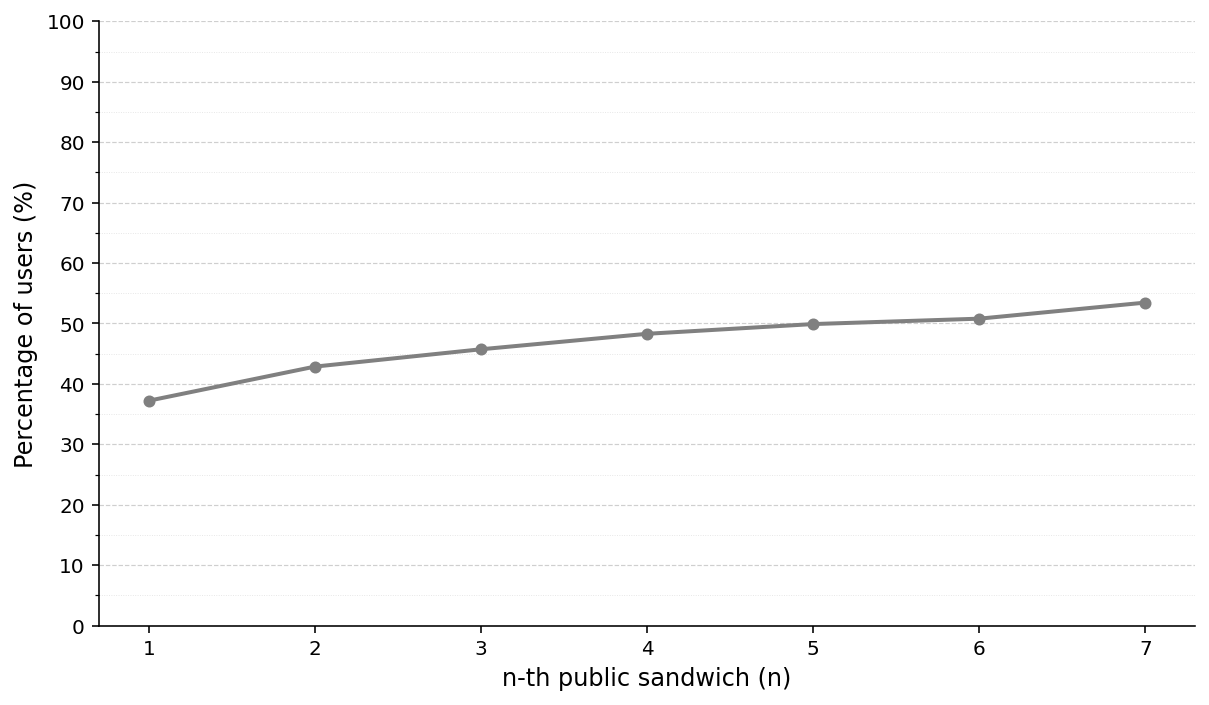
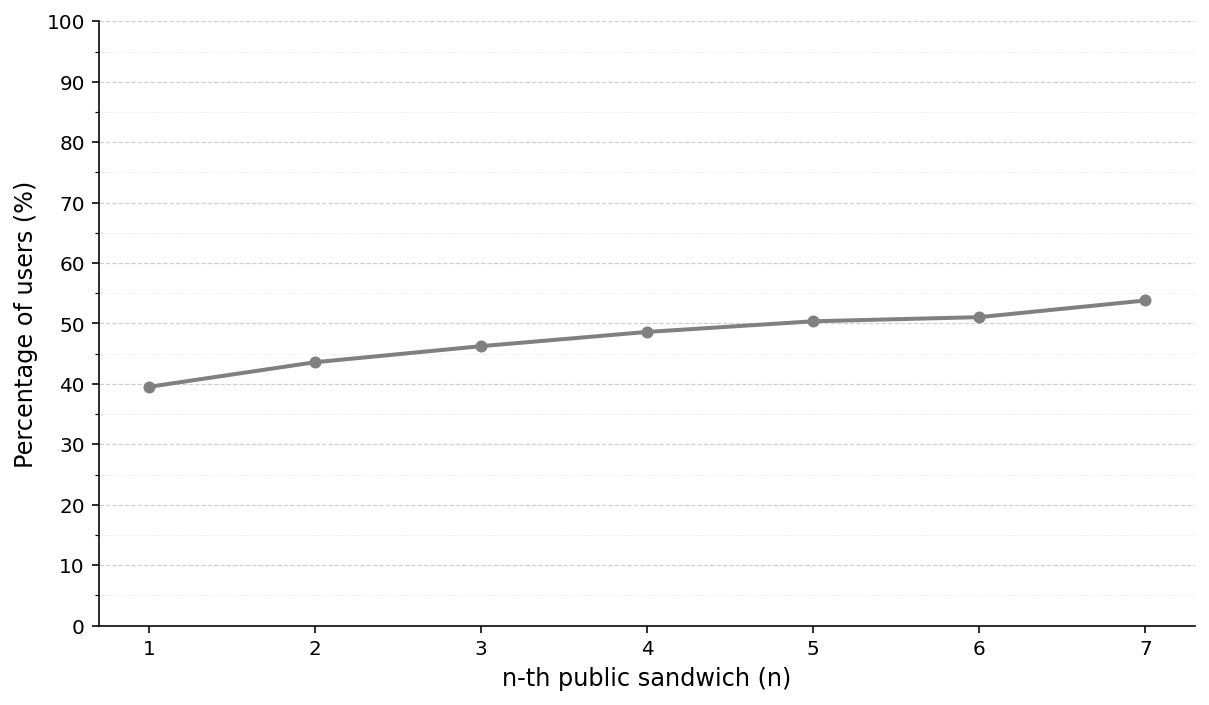
Figure 7: Private routing adoption rates across successive sandwich exposures, illustrating cumulative behavioral adaptation.
Loss analysis indicates losses are similar for switchers and non-switchers, refuting the hypothesis that economic damage is the primary driver of migration to private routing (Figure 8).
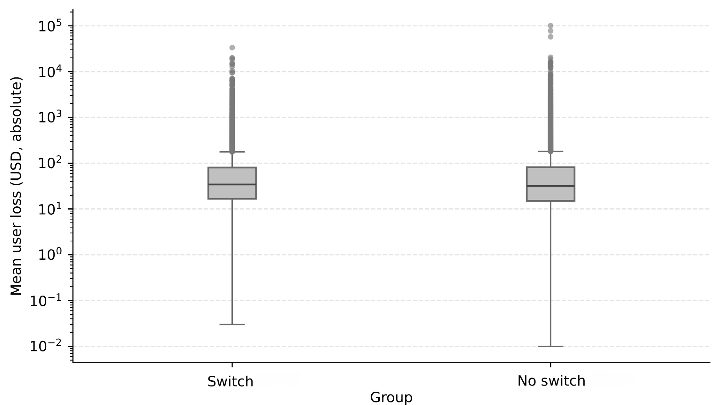
Figure 8: Comparison of user losses (USD) for addresses switching to private routing versus those remaining public.
Private-Path Sandwich Exploitation: Concentration and Attack Dynamics
The study finds that private routing does not confer immunity to MEV extraction. In Nov--Dec 2024, 2,932 private sandwich attacks affected 3,126 victim transactions, producing aggregate losses of $409,236 and attacker profits of$293,786. The attack ecosystem is highly centralized: a single bot executes 65% of private frontruns. Targeting is strongly concentrated on specific router and aggregator contracts, indicating systemic vulnerabilities rather than isolated incidents.
Implications and Future Directions
The results challenge the notion that private routing suffices for MEV protection. While migration to private channels is observed as a response to sandwich attacks, these infrastructures remain susceptible to exploitation and are often subject to centralization risks. This concentration—both in attacker and target contract distribution—suggests that individual user adaptation may unintentionally amplify systemic vulnerabilities.
Practically, protocol-level defenses (e.g., commit-reveal, encrypted intents, hardware enclaves) are necessary to mitigate extractability beyond superficial infrastructure changes. Theoretically, the interplay between behavioral adaptation, infrastructure centralization, and MEV risk underscores the urgency for designing systems that reduce adversarial ordering power at both the intermediation and protocol layers.
Conclusion
This study delivers robust evidence that private routing is frequently adopted but does not reliably ensure protection against MEV sandwiching. Private-path exploitation is highly concentrated among few actors and specific contracts, while user-level adaptation demonstrates cumulative but ultimately insufficient defensive reactivity. Future work should investigate protocol-level solutions and further analyze the attacker strategies and cross-domain leakage phenomena that compromise transactional privacy and fairness.

