- The paper demonstrates that network brokerage, rather than transaction volume, is crucial for determining influence in global aid.
- It employs bipartite network modeling, node embeddings, and UMAP to uncover latent structural features and functional organizational clusters.
- Findings highlight academic and foundation actors as strategic brokers that enhance coordination, resilience, and risk management in the global aid system.
The Structural and Functional Topology of Global Aid Networks
Introduction
This study presents a topological analysis of the global aid ecosystem, leveraging over 10 million transactions involving 2,456 organizations from the International Aid Transparency Initiative (IATI) corpus spanning 1967–2025. The research introduces a framework that departs from conventional aggregate volume assessments, employing bipartite network methodologies, node embeddings, and manifold learning to expose latent structural features, organizational clustering, and the distinctive brokerage roles of academic and foundation actors. The evidence demonstrates that network brokerage, rather than transaction magnitude alone, critically governs influence and system integrity in global aid.
Global Distribution and System Fragmentation
The spatial mapping of transaction density uncovers a highly global yet heterogeneous footprint, with regional corridors of intense activity concentrated in East Africa and South Asia, and enduring large hubs such as India and Bangladesh. However, this extensive reach does not correlate with systemic integration; instead, the global aid system exhibits substantial fragmentation and a pronounced long-tail distribution. Most countries and organizations operate at moderate transaction volumes, with significant clusters often remaining invisible in standard aggregate analyses.
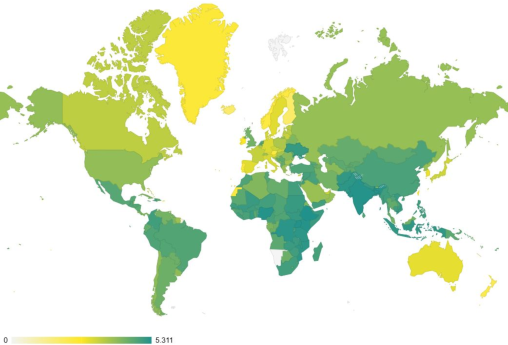
Figure 1: Global transaction density (logarithmic scale) reveals both a broad footprint and regional clustering, notably around East Africa and South Asia.
Spatial fragmentation raises coordination risks, as fragmentation is not only geographic but also functional and relational, mirroring findings in network science literature that highlight the predictive power of network integration versus mere financial flows for governance and development outcomes.
Functional Geometry and Organizational Clustering
By applying Uniform Manifold Approximation and Projection (UMAP) to high-dimensional node2vec embeddings of the bipartite aid network, the study reveals a two-dimensional latent structure governed by two principal axes: Humanitarian vs. Development actors (horizontal), and Funders vs. Implementers (vertical). This orthogonal partition generates quadrants that clarify organizational roles, with specific exemplars populating each region (e.g., OCHA as Humanitarian Funder, UNDP as Development Funder).
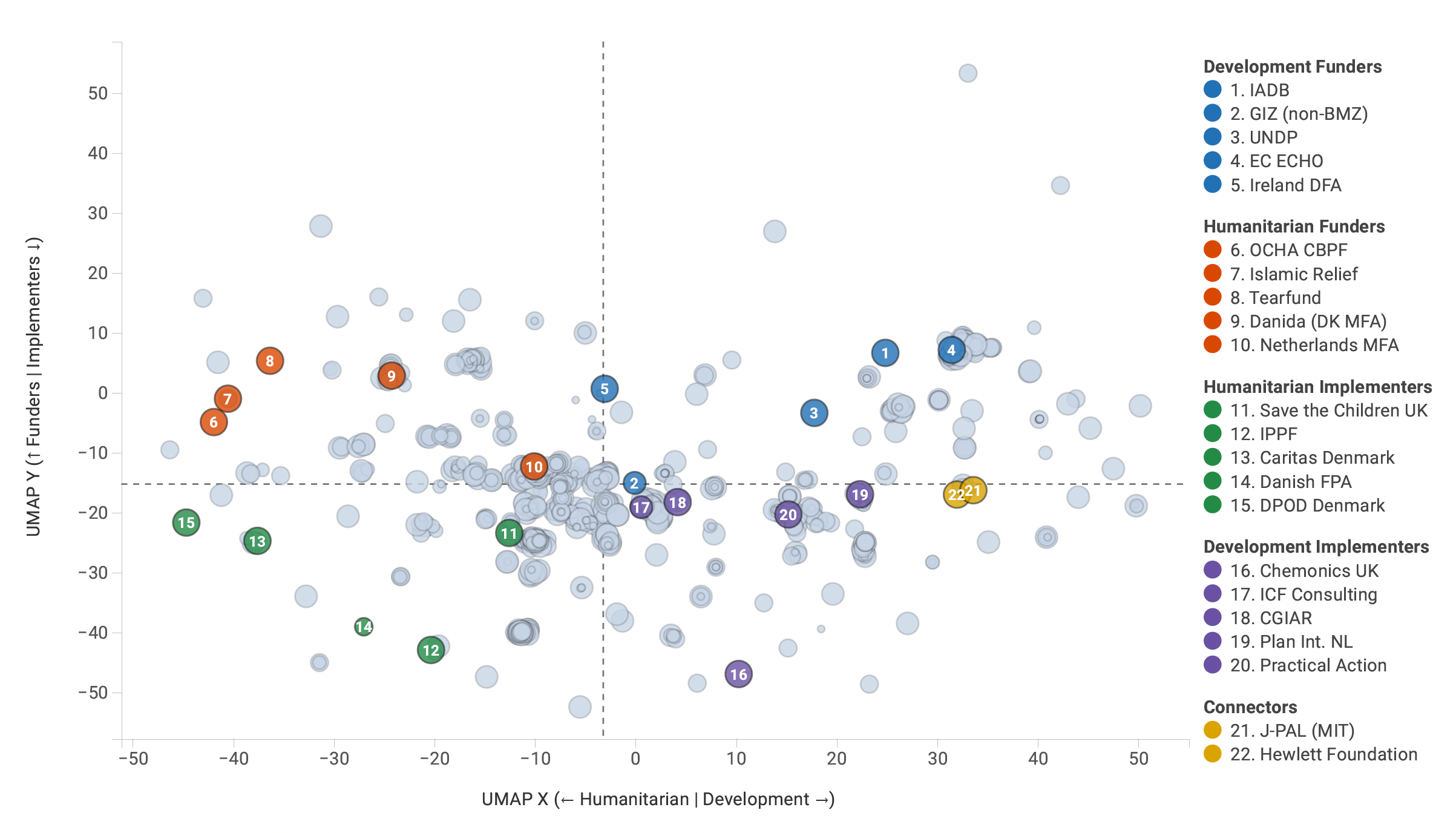
Figure 2: UMAP projection uncovers four functional clusters with bridging organizations located near the origin, spanning the humanitarian-development and funder-implementer divides.
Notably, structural holes between quadrants are prominent, and only a select subset of organizations occupy positions near the origin, evidencing their broker capacity in integrating otherwise insulated clusters. As demonstrated, knowledge brokers such as J-PAL and The Hewlett Foundation perform critical bridging roles between humanitarian and development, and between funders and implementers.
Network Centrality and the “Solar System” Architecture
The projection of the network into a collaboration graph based on co-investment relations produces a “solar system” delineation. Here, organizations are ranked by composite centrality (Hub Score), with node size reflecting transaction count and concentric rings indicating centrality tiers.
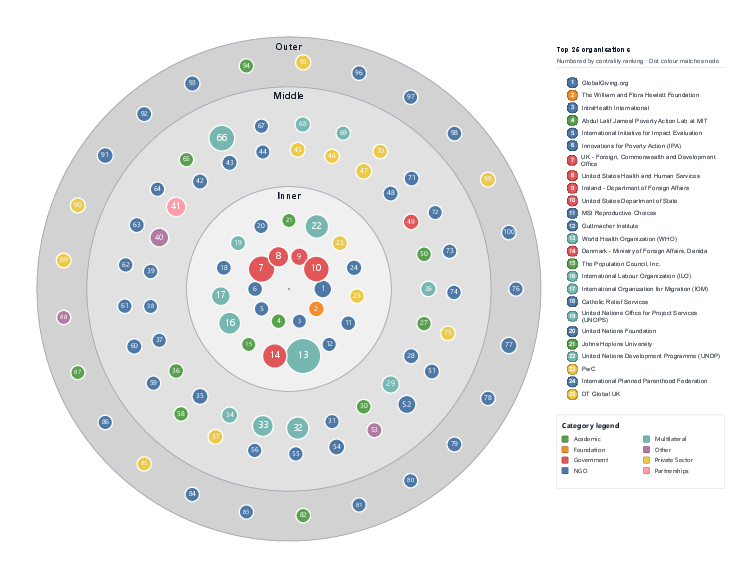
Figure 3: Central actors (inner rings) are visualized by centrality and transaction volume, distinguishing knowledge brokers with high influence but relatively low financial footprints.
A paradox emerges: financial giants (e.g., USAID, World Bank) share centrality with a distinct class of small-volume, high-centrality knowledge brokers (e.g., J-PAL, The Hewlett Foundation). This architecture validates the hypothesis that structural influence in the aid system is decoupled from aggregate budget, and instead follows the principles of brokerage and information diffusion.
Academic and Foundation Actors as Connectors
Statistical evidence underscores the uniquely central positions of academic and research institutions despite their lower transaction volumes; universities and research centers comprise 81 of the top 1000 most central organizations and 12 of the top 100, with median centrality scores surpassing those of larger actors. Foundations, although fewer in number, display similarly outsized brokerage capability. Detailed portfolio analysis, such as that of The Hewlett Foundation, reveals a strategic pattern of support aligned with top-100 central nodes, bridging technical, evidentiary, and implementation clusters.
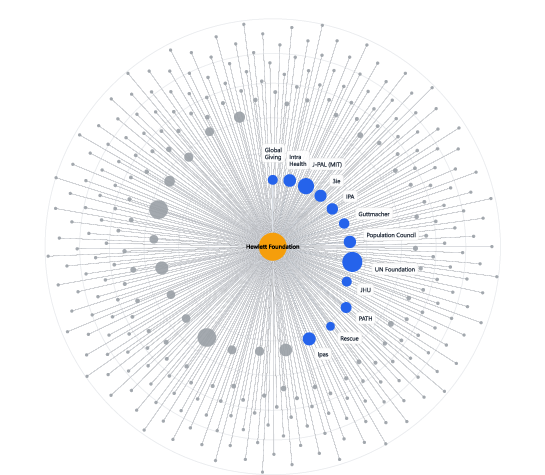
Figure 4: The Hewlett Foundation subgraph highlights extensive and diverse connectivity with top-ranked and bridging organizations across the global aid network.
Empirically, such brokers possess exceptionally high betweenness centrality, sitting on the shortest path between disconnected clusters and thus functioning as conduits for knowledge and coordination. Comparative analysis shows J-PAL and The Hewlett Foundation as positive outliers on betweenness metrics.
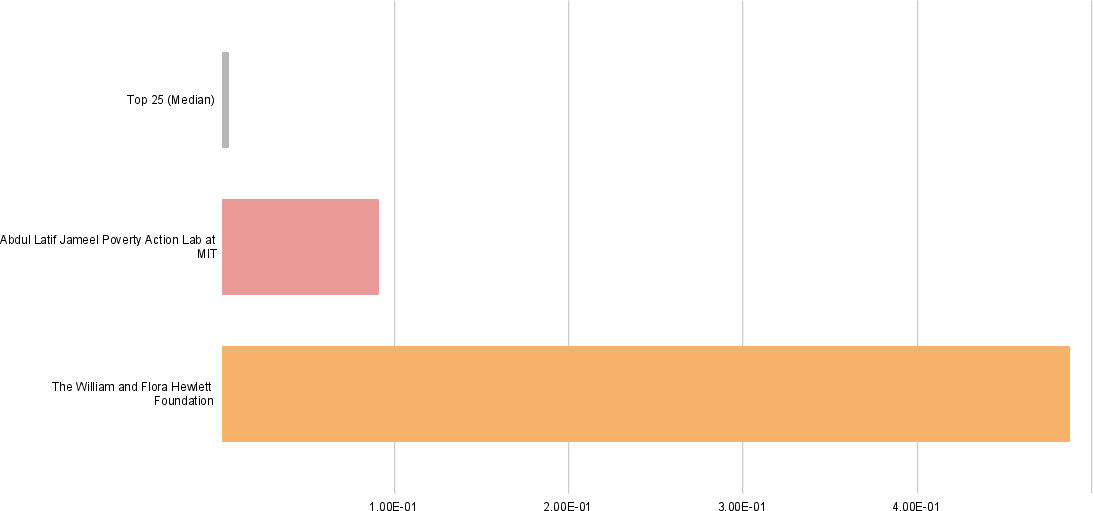
Figure 5: Betweenness centrality comparison illustrates the outlier status of top knowledge brokers who efficiently unite otherwise disconnected parts of the network.
Systems Theory Perspective: Resilience and Strategic Risk
The findings indicate that the global aid network is structurally fragile, conforming to a high-centrality core or “star” topology primarily composed of major donors (USAID, World Bank, European Commission). While robust against random loss, such a topology is highly susceptible to targeted shocks—e.g. abrupt withdrawal of a central donor can propagate rapid instability. Conversely, strengthening the intermediate layer of knowledge brokers increases mesh-like resilience, conceding more adaptive, distributed network integrity. This shift from volume-driven investment toward support for central brokers is consistent with network theory (polycentricity, weak tie theory) and recent organizational scholarship advocating complexity-oriented policy mechanisms.
Methodology and Validation
The methodological framework integrates large-scale data extraction, bipartite graph modeling, node2vec embedding, manifold dimensionality reduction (UMAP), and a battery of network centrality analyses (degree, betweenness, Hub Score, and correlation with PageRank on both network and web graphs).
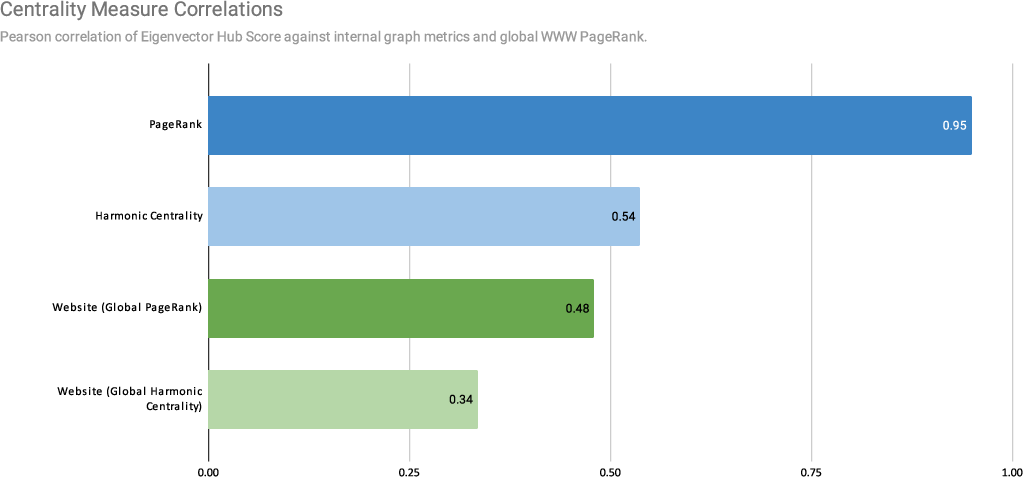
Figure 6: Hub Score exhibits high internal consistency (PageRank correlation r=0.95) and moderate correlation with global web centrality (r=0.48), supporting the validity of network brokerage measures.
The methodology robustly identifies critical transitions, systemic risks, and informs both practical targeting of partnerships and a revision of theoretical frameworks from volume-based to network-based aid analysis.
Implications and Future Directions
The study’s structural analysis yields actionable insights for policy, portfolio construction, and systemic risk management. Practically, aid donors should supplement “doer” (high-volume funder or implementer) collaborations with strategic investment in central knowledge brokers to ensure evidence diffusion, cross-cluster coordination, and systemic resilience. Theoretically, this work challenges the primacy of transaction volume as the metric of influence, advocating for a centrality-based framework defining aid effectiveness and network integrity.
These results justify further investigation into non-transparent and underrepresented network segments, dynamic adaptation to policy shock, and the use of hybrid brokerage mechanisms in other transnational systems (e.g., climate finance, pandemic response).
Conclusion
Mapping 10 million transactions across decades, this analysis conclusively demonstrates that the locus of influence in global aid stems from network position and brokerage, not volume. Academic and foundation actors, by virtue of their centrality, act as essential integrators, enabling evidence-based practice, reducing systemic risk, and enhancing coordination. Future strategies for global development and resilience should prioritize the identification and resource support of these structural brokers, redefining the operational and evaluative paradigm for global aid architecture.
Reference: "Who Connects Global Aid? The Hidden Geometry of 10 Million Transactions" (2512.17243)