Boltzmann to Lindblad: Classical and Quantum Approaches to Out-of-Equilibrium Statistical Mechanics
Abstract: Open quantum systems play a central role in contemporary nanoscale technologies, including molecular electronics, quantum heat engines, quantum computation and information processing. A major theoretical challenge is to construct dynamical models that are simultaneously consistent with classical thermodynamics and complete positivity. In this work, we develop a framework that addresses this issue by extending classical stochastic dynamics to the quantum domain. We begin by formulating a generalized Langevin equation in which both friction and noise act symmetrically on the two Hamiltonian equations. From this, we derive a generalized Klein-Kramers equation expressed in terms of Poisson brackets, and we show that it admits the Boltzmann distribution as its stationary solution while satisfying the first and second laws of thermodynamics along individual trajectories. Applying canonical quantization to this classical framework yields two distinct quantum master equations, depending on whether the friction operators are taken to be Hermitian or non-Hermitian. By analyzing the dynamics of a harmonic oscillator, we determine the conditions under which these equations reduce to a Lindblad-type generator. Our results demonstrate that complete positivity is ensured only when friction and noise are included in both Hamiltonian equations, thus fully justifying the classical construction. Moreover, we find that the friction coefficients must satisfy the same positivity condition in both the Hermitian and non-Hermitian formulations, revealing a form of universality that transcends the specific operator representation. The formalism offers a versatile tool for deriving quantum versions of the thermodynamic laws and is directly applicable to a wide class of nonequilibrium nanoscale systems.
Paper Prompts
Sign up for free to create and run prompts on this paper using GPT-5.
Top Community Prompts
Explain it Like I'm 14
Boltzmann to Lindblad: What this paper is about (in simple words)
This paper looks at how tiny systems—like molecules or quantum bits (qubits)—change over time when they interact with their surroundings. These systems aren’t isolated; they bump into other particles, lose energy (friction), and pick up random kicks (noise). The authors build a bridge from classical physics (Boltzmann’s ideas) to quantum physics (Lindblad’s framework) to describe such “open” systems in a way that is both physically correct and mathematically safe.
Their main message: if you add friction and noise in a careful, symmetric way in both the position and momentum parts of the equations, you get models that obey thermodynamics and stay “positive” (which means probabilities never become negative). This is essential for realistic simulations and for designing future quantum technologies.
The big questions the paper asks
To make the ideas easier to follow, here are the main questions the authors try to answer:
- How can we extend the classical rules for systems with friction and noise (like a ball rolling on a rough surface) into the quantum world?
- Can we build a quantum model that obeys both thermodynamics (energy and entropy rules) and stays mathematically well-behaved (never giving negative probabilities)?
- What is the right way to include friction and noise in quantum equations so the results are physically meaningful?
- Do different ways of writing the “friction operators” in quantum mechanics lead to the same basic conditions for a valid model?
How they approach the problem (with simple analogies)
The authors start with classical physics and carefully move to quantum physics. Here’s the journey:
Step 1: A better classical model (Langevin and Fokker–Planck)
- Imagine a toy car on a bumpy surface:
- Friction slows it down (energy flow from car to environment).
- Random bumps (noise) kick it in unpredictable ways (energy flow from environment to car).
- Traditional models add friction and noise only to the momentum (speed) equation. The authors propose adding friction and noise symmetrically to both position and momentum equations. Think of it as the environment affecting both “where” and “how fast” the car is.
- From these equations, they derive a “Klein–Kramers” or “Fokker–Planck” equation—this is like a recipe for how the probability of the car’s position and momentum changes over time.
- They show:
- The system settles into the usual Boltzmann (Gibbs) distribution at equilibrium (like how energy spreads evenly at a given temperature).
- The first law of thermodynamics (energy changes = work + heat) holds along individual paths.
- The second law (entropy never decreases overall) also holds and the “entropy production” is always non-negative.
- The diffusion and friction are related by Einstein’s rule: bigger friction means bigger noise at the same temperature (this is the fluctuation–dissipation relation).
Step 2: Moving to quantum mechanics (master equations)
- In quantum mechanics, you don’t track exact position and momentum; you track a “density matrix.” This is like a table that tells you the probabilities and relationships between different quantum states.
- To translate the classical equations into quantum form, they use “canonical quantization,” which replaces classical Poisson brackets (a way of measuring how variables influence each other) with quantum commutators (the quantum version of that rule).
- Doing this yields two versions of a quantum “master equation,” which tells how the density matrix evolves:
- One version uses Hermitian friction operators (these are “nicely behaved” operators, like well-balanced transformations).
- The other uses non-Hermitian friction operators (less strict but still useful).
Step 3: Checking the recipe (Lindblad form and positivity)
- The gold standard for safe quantum evolution is the Lindblad (GKLS) equation—a form that guarantees “complete positivity,” meaning probabilities stay valid (no negative values sneak in).
- The authors test their master equations on a simple quantum system: a harmonic oscillator (think of a mass on a spring).
- They find:
- The equations reduce to Lindblad form (and stay completely positive) only if friction and noise are included in both the position and momentum parts of the equations—symmetrically, just like in their classical setup.
- Both Hermitian and non-Hermitian versions require the friction coefficients to be positive and satisfy the same extra inequality to ensure complete positivity. That shared condition suggests a kind of “universality.”
The main results and why they matter
Here’s what the authors discovered and why it’s important:
- Symmetric friction and noise are essential:
- If you include friction and noise only in one equation (like only in momentum), the quantum model can produce negative probabilities (non-physical results), especially for certain initial pure states.
- Including friction and noise in both equations fixes this—making the evolution completely positive and consistent with thermodynamics.
- Thermodynamics works at the quantum level:
- They derive a quantum version of the first law (energy change = work + heat).
- They show the second law holds: entropy production is non-negative thanks to mathematical properties of quantum relative entropy.
- Universal friction condition:
- Whether the friction operators are Hermitian or non-Hermitian, the same positivity condition on friction coefficients appears. This hints at a deep underlying rule.
- Model comparison (on the harmonic oscillator):
- Two “full symmetric” models (Hermitian and non-Hermitian) are thermodynamically consistent and keep the density matrix positive at all times.
- Two “one-sided” models (friction/noise only in momentum), used in earlier works, can be okay for mixed states but may produce negative probabilities with pure states.
- The popular Caldeira–Leggett model, in the form studied here, breaks thermodynamic consistency and can produce negative probabilities during evolution.
What this means for science and technology
This work gives researchers a sturdy toolkit for modeling real quantum devices and nanoscale systems:
- It helps design reliable models for quantum computers, sensors, molecular electronics, and quantum heat engines—systems where noise and friction really matter.
- It ensures simulations won’t violate fundamental rules (like producing negative probabilities or breaking thermodynamics).
- It provides a clear path from classical stochastic mechanics (Boltzmann) to quantum open-system dynamics (Lindblad), making it easier to build and test new quantum technologies that operate far from equilibrium.
In short, the paper shows how to write “safe” and “thermodynamically sound” equations for quantum systems that live in the real world—where environments always push and pull on them.
Knowledge Gaps
Knowledge gaps, limitations, and open questions
Below is a consolidated list of concrete gaps and open directions that remain unresolved and could guide future research:
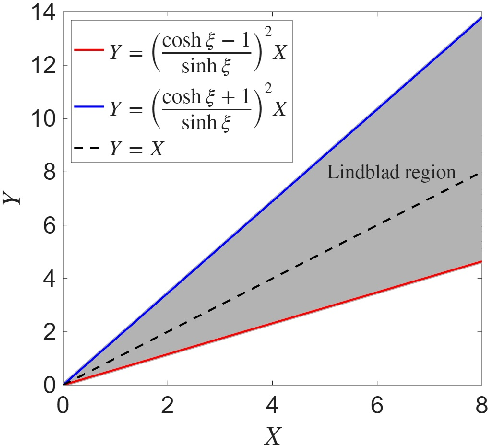
- Generality of complete positivity: Provide a proof (or counterexamples) that the proposed master equations are GKLS for arbitrary Hamiltonians , not just for the harmonic oscillator; derive necessary and sufficient conditions on for general spectra.
- Microscopic derivation and physical realizability: Map the phenomenological parameters (, ) and friction operators to explicit system–bath models and spectral densities; demonstrate a Stinespring dilation and identify regimes where the generator emerges from Born–Markov (and beyond) approximations.
- Quantum fluctuation–dissipation consistency: Incorporate the full quantum FDT (frequency-dependent ) instead of -scaled diffusion; include zero-point fluctuations to ensure correct behavior as .
- Zero-temperature limit: Analyze the behavior of and diffusion terms to verify physical dissipation and CP at zero temperature; reconcile with known zero-temperature master equations.
- Non-Markovian extensions: Generalize to colored noise/memory kernels and quantify how CP and thermodynamic consistency are modified; establish conditions under which non-Markovian embeddings remain thermodynamically sound.
- Multiple reservoirs and transport: Extend the framework to multiple baths at different temperatures/chemical potentials, define heat currents, prove the second law at steady state, and compare “local” vs “global” constructions in composite systems.
- Time-dependent driving and work: Treat general time-dependent Hamiltonians (not just c-number forces), define work and heat consistently with coherences, and derive entropy production under driving protocols.
- Discrete-variable systems: Adapt the formalism to systems without canonical (e.g., spins, qubits), proposing appropriate “friction operators” and testing CP, detailed balance, and Gibbs fixed points.
- Anharmonic and interacting many-body systems: Demonstrate applicability to anharmonic potentials and interacting systems; assess the computational tractability and accuracy of the integral/series expressions for .
- Operator-domain rigor: Establish conditions (domains, closability, dissipativity) ensuring the unbounded double-commutator dissipators generate a well-defined GKLS semigroup in infinite dimensions.
- Detailed balance and KMS condition: Prove (or refute) that the generator satisfies quantum detailed balance with respect to ; characterize deviations when only one channel is present.
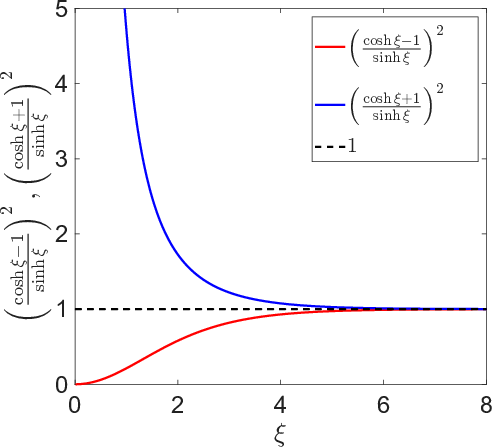
- Universality and calibration of the positivity constraint: State explicitly the friction-coefficient inequality ensuring CP, prove its necessity/sufficiency for general , and connect it to experimentally accessible parameters.
- Cross-correlated dissipation: Investigate whether cross terms (e.g., ) are needed for coupled modes or common environments; analyze their impact on CP and thermodynamic laws.
- Gauge fields and constraints: Extend to systems with electromagnetic coupling (minimal coupling), nontrivial geometry, or holonomic constraints in the quantum setting; specify operator choices ensuring gauge invariance and CP.
- Degenerate and continuous spectra: Provide complete constructions of for degenerate and continuous spectra, including regularization strategies and numerical stability analyses.
- Convergence to equilibrium: Prove uniqueness of the Gibbs steady state and obtain convergence rates (spectral gaps, log-Sobolev constants); identify conditions leading to metastability or multiple steady states.
- Benchmarking against standard models: Systematically compare predictions with Redfield, quantum optical GKLS, and exact QBM (e.g., Hu–Paz–Zhang), delineating temperature/coupling regimes where each model is accurate.
- Low-temperature thermodynamics: Quantify entropy production and verify compatibility with the Nernst theorem and ground-state cooling limits.
- Experimental validation pathways: Identify observables and platforms (optomechanics, trapped ions, superconducting circuits) to extract , test the predicted universality, and verify CP via state tomography.
- Numerical methods: Develop efficient algorithms (Krylov/Chebyshev expansions, commutator-free schemes) to compute for general , with error bounds and scalability assessments.
- Role of coherences in the first law: Clarify how quantum coherences contribute to heat vs work in the proposed energy balance; compare with two-point measurement and quantum-jump formulations.
- Strong coupling and Hamiltonian of mean force: Explore modifications when system–bath coupling is not weak, where the stationary state deviates from ; derive corrected generators and thermodynamic laws.
- Fluctuation theorems: Derive and test quantum fluctuation relations (Jarzynski, Crooks) within this dynamics and specify the assumptions required.
- One-channel approximations: Precisely characterize initial states and parameter regimes where models with only momentum- or position-channel dissipation preserve positivity; quantify breakdown timescales.
- Engineered nonthermal baths: Generalize to squeezed/structured reservoirs and determine how and diffusion terms must change to maintain CP and thermodynamic consistency.
Glossary
- Bernoulli numbers: A sequence of rational constants that appear in series expansions and number theory; here they arise in the power-series expression of friction operators. "where are the Bernoulli numbers , , ,..."
- Caldeira–Leggett approach: A standard model of quantum dissipation derived from coupling to a bath of oscillators, leading to a quantum Brownian motion master equation. "CaldeiraâLeggett approach \cite{caldeira1981,caldeira1983,caldeira1983bis}"
- Caldirola–Kanai equation: A phenomenological modification of Schrödinger dynamics that incorporates damping via a time transformation. "CaldirolaâKanai equation \cite{caldirola1941,kanai1948}"
- canonical quantization: The procedure replacing classical Poisson brackets with quantum commutators to obtain operator equations. "canonical quantization -- i.e., replacing Poisson brackets with commutator \cite{landauq,cohen}"
- canonical quantum distribution: The equilibrium density operator proportional to . "the canonical quantum distribution"
- commutator: The noncommutative bracket of operators defined by [A,B] = AB − BA. "where is the commutator of operators"
- complete positivity: A property of quantum evolutions (channels) ensuring positivity is preserved even when the system is extended by an arbitrary ancilla. "complete positivity of quantum evolution"
- decoherence: The loss of quantum coherence due to environmental interactions. "clarified the mechanisms of decoherence and environmental coupling \cite{schlosshauer2004,toth2014,schlosshauer2019}"
- density matrix: An operator that represents statistical mixtures of quantum states and encodes all observable averages. "describing the evolution of an open systemâs density matrix \cite{redfield1965,blum1981,lindenberg1990,zwanzig2001}"
- Dirac delta function: A distribution δ(t) that is zero everywhere except at zero and integrates to one, used to model idealized correlations. " is the Dirac delta function"
- Einstein fluctuation-dissipation relations: Relations connecting diffusion constants to friction and temperature, e.g., D = kB T β. "classical Einstein fluctuation-dissipation relations \cite{coffey,risken}"
- entropy production: The nonnegative contribution to entropy change arising from irreversibility in nonequilibrium processes. "positivity of entropy production"
- equipartition theorem: At thermal equilibrium each quadratic degree of freedom contributes to the average energy. "the classical equipartition theorem is obtained"
- Fisk-Stratonovich (interpretation): A stochastic calculus convention (α = 1/2) that treats noise in a symmetric (midpoint) manner. "the Fisk-Stratonovich () \cite{fisk,stratofp}"
- Fokker–Planck equation: A partial differential equation governing the time evolution of probability densities for stochastic processes. "This stochastic differential equation corresponds to the following Fokker-Planck equation for the probability density"
- geometric Brownian motion: A stochastic process with multiplicative noise; here it underlies the operator stochastic modeling leading to double commutators. "geometric Brownian motion, see Appendix A in Ref. \cite{giordano2025}"
- Gibbs distribution: The equilibrium probability density proportional to . "canonical or Gibbs distribution"
- Gibbs entropy: The ensemble entropy defined by . "Gibbs entropy of the system"
- Gorini–Kossakowski–Sudarshan–Lindblad (GKLS) equation: The general Markovian master equation for quantum dynamical semigroups ensuring complete positivity. "GoriniâKossakowskiâSudarshanâLindblad (GKLS) equation \cite{lindblad1974,lindblad1975,gorini1976,lindblad1976,pascazio2017}"
- Hänggi-Klimontovich (interpretation): A stochastic calculus convention (α = 1) emphasizing transport form of noise-induced drift. "the Hänggi-Klimontovich () \cite{hanggifp,klimofp}"
- holonomic (constraints): Constraints depending only on coordinates and time (not velocities); used here in stochastic thermodynamics of constrained systems. "including holonomic underdamped and overdamped systems \cite{pan,mura,annphys,giorda}"
- Itô (interpretation): A stochastic calculus convention (α = 0) where integrals are adapted to the present time, widely used in SDE theory. "the It^{o} () \cite{itofp}"
- Klein–Kramers equation: The phase-space Fokker–Planck equation describing coupled position–momentum dynamics. "generalized KleinâKramers equation \cite{klein,kramers}"
- Kronecker delta: The discrete identity symbol δij equal to 1 if i = j and 0 otherwise. " is the Kronecker delta"
- Langevin equation: A stochastic differential equation modeling dynamics with friction and random noise from a thermal bath. "generalized Langevin equation"
- Langevin thermal bath: An idealized reservoir producing linear friction and Gaussian white noise in Langevin dynamics. "The friction and noise forces (iii) and (iv) represent the so-called Langevin thermal bath \cite{langevin}"
- Liouville term: The Hamiltonian (phase-space flow) part of the evolution that preserves probability density. "the Liouville term"
- Liouville-von Neumann equation: The unitary quantum evolution equation for the density operator, dρ/dt = (1/iħ)[H0,ρ]. "Liouville-von Neumann equation"
- Lindblad-type generator: A generator of open-system dynamics of GKLS form that guarantees complete positivity. "reduce to a Lindblad-type generator"
- Markovian (dynamics): Memoryless dynamics where the future depends only on the present state, not on the history. "provides a fully Markovian and mathematically consistent framework for quantum dynamical semigroups"
- master equation: An equation governing the time evolution of the density matrix of an open system. "the quantum master equation, describing the evolution of an open systemâs density matrix"
- open quantum systems: Quantum systems coupled to environments, leading to noise, dissipation, and decoherence. "Open quantum systems play a central role in contemporary nanoscale technologies"
- Poisson brackets: Classical brackets {A,B} defining Hamiltonian dynamics via canonical variables. "expressed in terms of Poisson brackets"
- quantum Brownian motion: A model of dissipative quantum dynamics due to coupling with a thermal environment. "quantum Brownian motion \cite{caldeira1981,caldeira1983,caldeira1983bis,beretta1984,beretta1985,jannussis1985,ohba1997,cavalcanti1998}"
- quantum dynamical semigroups: One-parameter semigroups describing Markovian open-system evolutions in the GKLS framework. "quantum dynamical semigroups"
- quantum partition function: The partition function Zqu = Tr(e−H/(kBT)) characterizing equilibrium in quantum statistical mechanics. "the quantum partition function"
- quantum relative entropy: A measure of distinguishability between quantum states with key monotonicity properties. "monotonicity of quantum relative entropy \cite{lindblad1974,lindblad1975}"
- quantum thermodynamics: The extension of thermodynamic laws and concepts to quantum systems and processes. "quantum thermodynamics \cite{lebowitz1978,trushechkin2017,trushechkin2019,ruelle2001,pillet2002,kosloff2019,prior2010,campaioli2024}"
- Redfield equation: A perturbative master equation valid for weak system–environment coupling that does not always preserve positivity. "The Redfield equation, valid for weak systemâenvironment coupling \cite{redfield1965}"
- Sylvester or Lyapunov equations: Matrix equations of the form AX + XA = C, used here to solve for operator coefficients. "which are sometimes called the Sylvester or Lyapunov equations"
- tensor product: An operation combining vector (or operator) spaces, used to express correlations and composite systems. " is the tensor product of vectors"
- thermodynamic arrow of time: The directionality of time associated with entropy increase in thermodynamic processes. "the thermodynamic arrow of time \cite{maddox1985,lebowitz1993,guff2025}"
- underdamped and overdamped (regimes): Limits of weak and strong damping in dynamical systems, affecting relaxation behavior. "underdamped and overdamped systems"
Practical Applications
Immediate Applications
Below are actionable applications that can be deployed now, leveraging the paper’s thermodynamically consistent classical-quantum framework, the generalized Klein–Kramers equation, and the completely positive (CP) Lindblad-type quantum master equations derived via canonical quantization.
- Open-quantum-system simulation modules (software; quantum optics, optomechanics, superconducting/spin qubits)
- Description: Implement a “Lindblad-from-Hamiltonian” generator that, given a Hamiltonian H0, temperature T, and friction parameters, constructs dissipators using the symmetric friction/noise prescription (on both Hamilton equations) and the Hermitian friction operators Θ derived in the paper. Ensures complete positivity and correct thermalization to the Gibbs state, and exposes heat/work/entropy rates.
- Tools/workflows: Plugins for QuTiP, Qiskit Dynamics, Julia/JuliaQuantum; a “positivity auditor” that continuously checks density-matrix eigenvalues; an “entropy tracker” reporting entropy production and heat flux.
- Assumptions/dependencies: Markovian bath; access to H0 (or a reliable effective model); ability to compute Θ via eigenbasis or commutator-series expansions; calibrated temperature and friction coefficients satisfying the paper’s positivity inequality.
- Thermodynamically consistent reservoir engineering in labs (optomechanics, trapped ions, cQED)
- Description: Design and deploy dual-quadrature damping/noise (acting on both q and p) to stabilize oscillator-like modes while guaranteeing CP evolution and second-law consistency; replace ad hoc Caldeira–Leggett-type dissipators that can yield nonphysical dynamics.
- Tools/workflows: Control waveforms/circuitry that couple to both quadratures; thermalization and steady-state verification via energy and entropy flow diagnostics.
- Assumptions/dependencies: Experimental ability to engineer couplings to both quadratures; Markovian approximation valid on control time scales.
- Hardware model calibration and system identification with CP constraints (quantum computing and sensing)
- Description: Fit friction parameters (βp, βq) to measured relaxation/decoherence data while enforcing the paper’s positivity inequality and fluctuation–dissipation relations; produce physically valid device models for digital twins and control design.
- Tools/workflows: Noise spectroscopy and MLE fitting pipelines with CP and Einstein-relation constraints; automated sanity checks rejecting parameter sets that break positivity or thermodynamic consistency.
- Assumptions/dependencies: Sufficient tomographic or spectroscopic data; stable temperature; approximate Markovianity of the effective bath.
- Device-level modeling in molecular and nanoscale electronics (transport, heating, reliability)
- Description: Use the generalized classical Klein–Kramers equation (dual friction/noise) for semiclassical regimes and the CP quantum master equation for quantum regimes to predict nonequilibrium currents, heating, and relaxation while preserving detailed thermodynamic consistency.
- Tools/workflows: Nanoscale device digital twins; workflow: define H0 and potentials → build dissipator via Θ → simulate currents and heat/entropy flows under drive.
- Assumptions/dependencies: Valid effective Hamiltonians and bath models; parameterization of couplings; Markovian/weak-coupling regime or validated approximations.
- Molecular dynamics (MD) thermostatting with dual friction/noise (materials science, biophysics)
- Description: Introduce a “dual Langevin thermostat” acting on both momenta and coordinates to improve sampling of stiff potentials and preserve generalized equipartition; converge to the canonical distribution with Einstein relations Dp = kBTβp and Dq = kBTβq.
- Tools/workflows: New thermostat options in LAMMPS/GROMACS/HOOMD; reversible integrators plus Fokker–Planck consistency tests.
- Assumptions/dependencies: Correct parameterization of βp and βq; numerical stability and timestep control; validation against known ensembles.
- Verification/validation in academic and industrial modeling (academia/software quality)
- Description: Establish minimal checks—positivity of the density matrix, Gibbs steady state, entropy-production non-negativity—to flag and replace legacy dissipators (e.g., Caldeira–Leggett) that violate thermodynamics or CP in certain regimes.
- Tools/workflows: CI pipelines embedding positivity tests; benchmark suites comparing symmetric vs. legacy dissipators on standard models (harmonic oscillator, driven qubit).
- Assumptions/dependencies: Access to model equations and parameters; computational capacity for eigenvalue and entropy production tracking.
- Quantum thermodynamics bookkeeping in experiment and simulation (metrology, research)
- Description: Use the paper’s trajectory-level heat/work definitions and entropy-production formulae to quantify energetic flows during protocols and verify the second law via quantum relative-entropy monotonicity.
- Tools/workflows: Analysis notebooks and lab software to compute dE/dt, δQ, δW, and entropy production from time-series density matrices.
- Assumptions/dependencies: Time-resolved state estimates (e.g., via tomography or high-fidelity simulation); consistent temperature reference.
- Education and training (academia)
- Description: Update curricula and teaching labs to demonstrate why symmetric dissipators are required for CP dynamics and lawful thermalization; contrast with Redfield/Caldeira–Leggett limitations using the harmonic-oscillator case.
- Tools/workflows: Interactive notebooks; small-scale QuTiP demos; problem sets on CP and second-law checks.
- Assumptions/dependencies: Basic numerical environment; student exposure to Lindblad dynamics.
- Modeling guidelines and best practices (policy/standards)
- Description: Draft domain guidelines specifying that open-quantum models must ensure CP, converge to the Gibbs state at temperature T, and exhibit non-negative entropy production, with friction parameters respecting the positivity inequality found in the paper.
- Tools/workflows: Checklists for journals, consortia, and SDK vendors; reproducibility templates documenting baths, temperatures, Θ-construction method, and positivity margins.
- Assumptions/dependencies: Community consensus and buy-in; standardization bodies (IEEE/NIST) engagement.
Long-Term Applications
The following applications require additional research, engineering, scaling, or standardization before broad deployment.
- Quantum heat engines, refrigerators, and batteries designed with CP, thermodynamically consistent baths (energy, quantum tech)
- Description: Optimize performance bounds and cycle control using symmetric dissipators that guarantee lawful heat/work accounting and positivity across operating regimes.
- Tools/workflows: Co-design of Hamiltonians, controls, and engineered reservoirs; end-to-end simulation-to-prototype pipelines.
- Assumptions/dependencies: High-fidelity bath engineering coupling to both quadratures; scalability to multi-mode devices; validated Markovian approximations under drive.
- Quantum firmware for bath shaping and dissipative stabilization (quantum computing)
- Description: Embed real-time synthesis of effective baths (via control pulses and couplings) that realize the paper’s Θ-operators to stabilize target states or phases while ensuring CP dynamics.
- Tools/workflows: High-bandwidth AWGs, parametric couplers, and calibration stacks implementing dual-quadrature dissipation; online “positivity monitors.”
- Assumptions/dependencies: Accurate Hamiltonian identification; fast control relative to system timescales; robustness to model drift and cross-talk.
- Scalable many-body open-system simulators with guaranteed CP and thermodynamic consistency (materials discovery)
- Description: Extend Θ-construction to large Hilbert spaces via sparse methods, Krylov subspaces, tensor networks, or local approximations; include multiple baths and constraints.
- Tools/workflows: HPC libraries; hybrid CPU/GPU/Tensor-core implementations; automated error bounds on CP and second-law metrics.
- Assumptions/dependencies: Efficient approximations for Θ (commutator series truncation, locality assumptions); error-controlled coarse graining; validated temperature assignments.
- Noise-aware quantum error correction/mitigation with thermodynamic cost accounting (quantum software)
- Description: Incorporate physically informed dissipators into QEC/QEM design to balance logical error rates with energetic costs, avoiding nonphysical noise models that mislead mitigation strategies.
- Tools/workflows: Integration with QEC compilers/simulators; thermodynamic metrics as optimization objectives.
- Assumptions/dependencies: Effective Markovian reduction at code-cycle timescales; calibrated bath parameters; compatibility with control hardware.
- Dissipative state preparation and active quantum matter engineering (condensed matter/AMO)
- Description: Use symmetric, CP-preserving baths to stabilize nontrivial steady states or phases (e.g., squeezed, cat, or topological states) via controlled friction/noise on both Hamilton equations.
- Tools/workflows: Reservoir engineering blueprints combining unitary and dissipative control; verification via entropy production and steady-state characterization.
- Assumptions/dependencies: Precise multi-quadrature coupling; robustness to disorder; extensions beyond simple oscillator-like modes.
- Bio-quantum energy transfer models with CP dynamical generators (quantum biology)
- Description: Replace Redfield-like approximations with CP master equations that maintain positivity for pure and mixed initial states, improving reliability of predictions in light-harvesting simulations.
- Tools/workflows: Parameter inference from spectroscopy; multiscale modeling from atomistic to effective H0 with thermodynamically consistent baths.
- Assumptions/dependencies: Treatment of non-Markovian environments and structured spectral densities; validation against experiments.
- Certification standards for thermodynamic consistency of quantum devices (policy/regulatory)
- Description: Develop test protocols and certification criteria based on positivity, Gibbs steady state, and entropy-production non-negativity; inform procurement and safety for quantum technologies.
- Tools/workflows: Standard measurement suites; reporting formats for bath parameters and CP margins.
- Assumptions/dependencies: Agreement across industry and standards bodies; practical measurement accuracy.
- Widespread adoption of dual Langevin thermostats in MD packages (materials/biophysics)
- Description: Establish the symmetric thermostat as a mainstream option, with benchmarks showing advantages for stiff potentials and constrained systems; extend to holonomic constraints and overdamped limits.
- Tools/workflows: Community benchmarks; training materials; validated default parameter sets.
- Assumptions/dependencies: Demonstrated benefits vs. existing thermostats; negligible performance penalties.
- Hybrid classical-to-quantum modeling pipelines (nanoelectronics, optomechanics)
- Description: Calibrate baths and friction via classical generalized Klein–Kramers dynamics, then “lift” to quantum with canonical quantization and Θ-operators for predictive quantum simulations.
- Tools/workflows: Coupled classical/quantum toolchains; parameter transfer formats; validation suites across temperature/drive.
- Assumptions/dependencies: Regimes where classical calibration reliably informs quantum dissipators; consistent coarse-graining.
- Theory-driven design rules from universality of friction-coefficient constraints (cross-sector)
- Description: Exploit the paper’s finding that positivity constraints on friction are identical for Hermitian and non-Hermitian formulations to derive general, platform-agnostic dissipator design rules.
- Tools/workflows: Analytical bounds and numerical verifiers embedded in design software; educational resources.
- Assumptions/dependencies: Extension beyond harmonic and few-level systems; proofs for interacting, multi-bath scenarios.
Collections
Sign up for free to add this paper to one or more collections.