- The paper introduces mini-supernovae (mSNe) from WD–NS mergers, showing that viewing-angle effects cause orders-of-magnitude variations in brightness and evolution.
- The work employs a calibrated 2D semi-analytical model to simulate anisotropic ejecta dynamics, radiative transfer, and temperature profiles.
- The study finds that WD–NS mSNe are fainter and evolve more rapidly than standard supernovae, guiding strategies for multi-messenger observations.
Mini-Supernovae from WD–NS Mergers: Viewing-Angle-Dependent Transient Properties
Introduction
White dwarf–neutron star (WD–NS) mergers are among the most frequent double compact object mergers, yet their electromagnetic (EM) transients and associated gravitational wave signatures remain less thoroughly studied than binary neutron star (BNS) or neutron star–black hole (NS–BH) mergers. This paper presents a systematic exploration of the geometric effects on the thermal emission from WD–NS mergers, focusing on the anisotropic ejecta and the impact of observer viewing angle on the observed spectra and lightcurves (2512.04378). The authors introduce and justify the terminology "mini-supernovae" (mSNe) for the radioactively-powered transients from WD–NS mergers, reflecting their close similarity in physical mechanisms with standard supernovae, but with lower luminosities and more rapid evolution.
Ejecta Structure and Dynamics
The study employs a two-dimensional axisymmetric semi-analytical model for the post-merger ejecta, calibrated against previous hydrodynamical simulations. The unbound wind ejecta are intrinsically polar-dominated due to the launch geometry of accretion disk winds in these mergers, with mass and velocity distributions parameterized as functions of polar angle. A typical merger, in the fiducial scenario, ejects Mej≃0.3M⊙ and synthesizes M56Ni≃0.01M⊙.
The mass per solid angle follows a sharply increasing function from the equator to the pole, and the velocity profile is ellipsoidal, with maximum radial velocities reaching $0.1c$ along the poles and an order of magnitude lower in the equatorial direction. The ejecta follow homologous expansion from the time of merger, and their density evolution is computed accordingly.
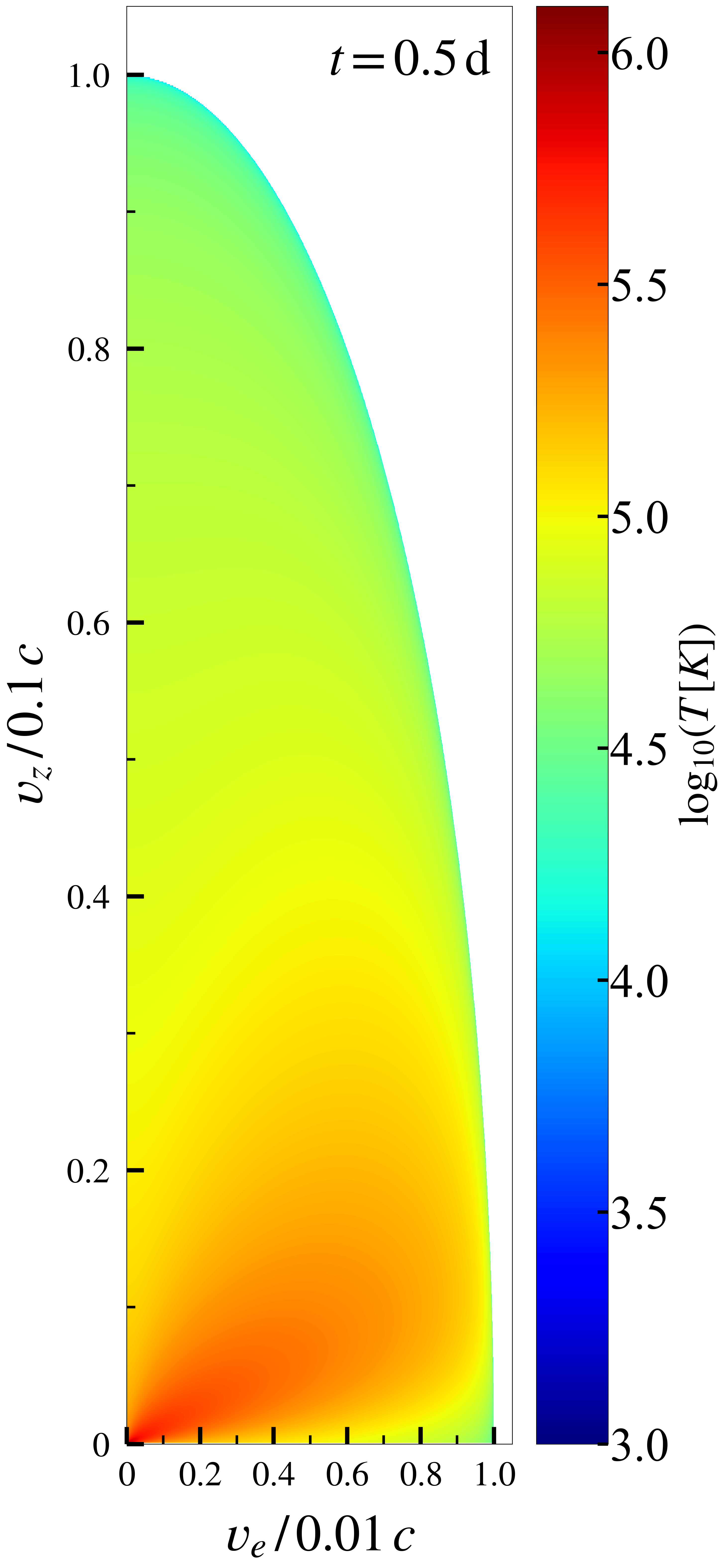
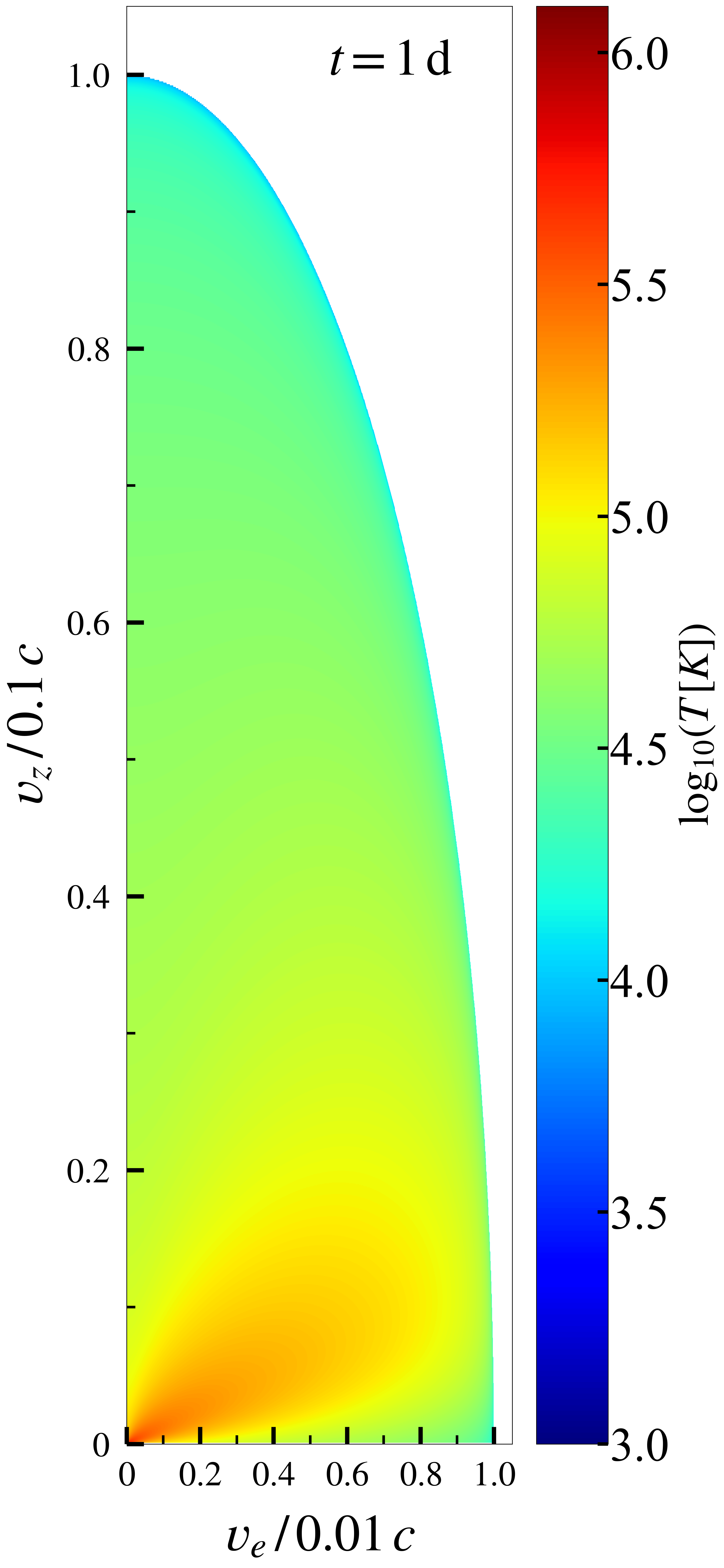
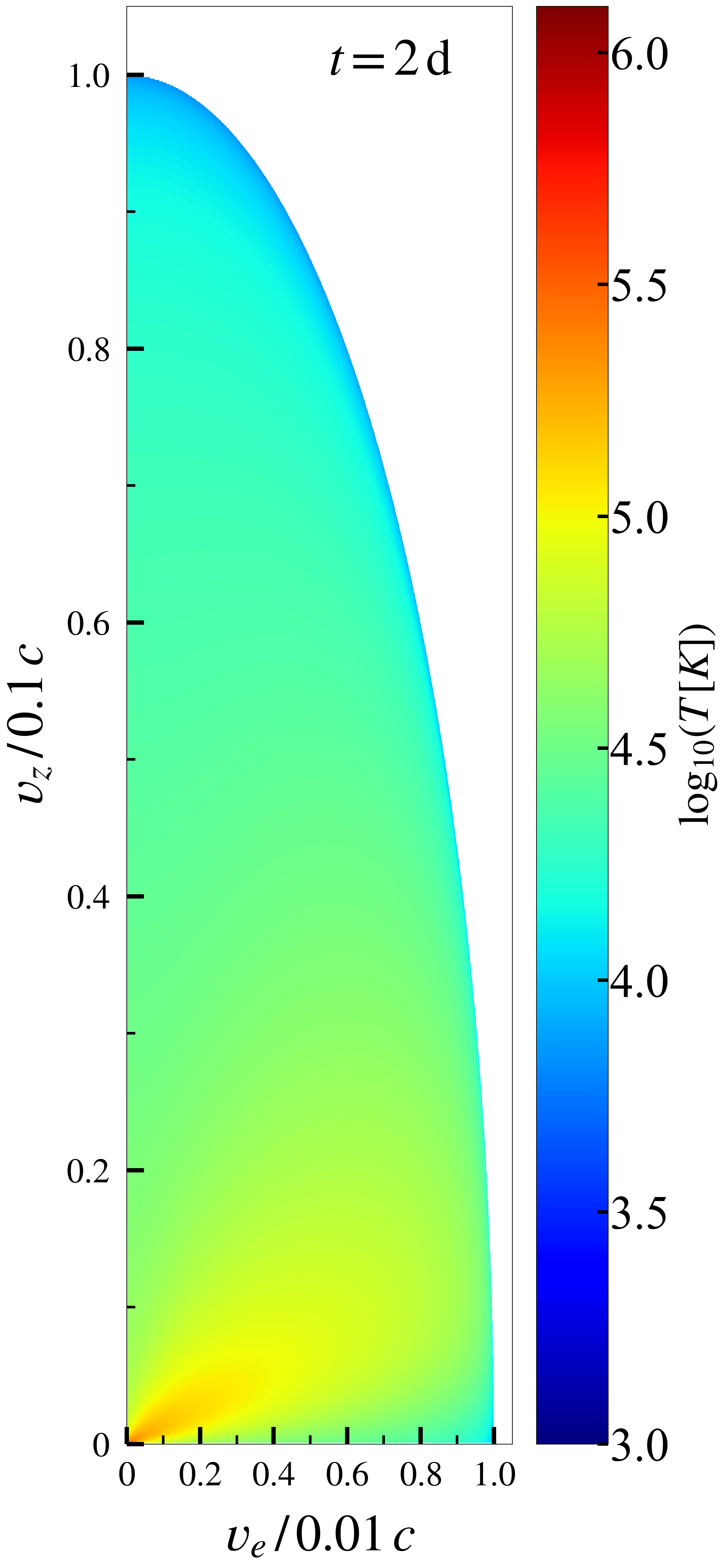
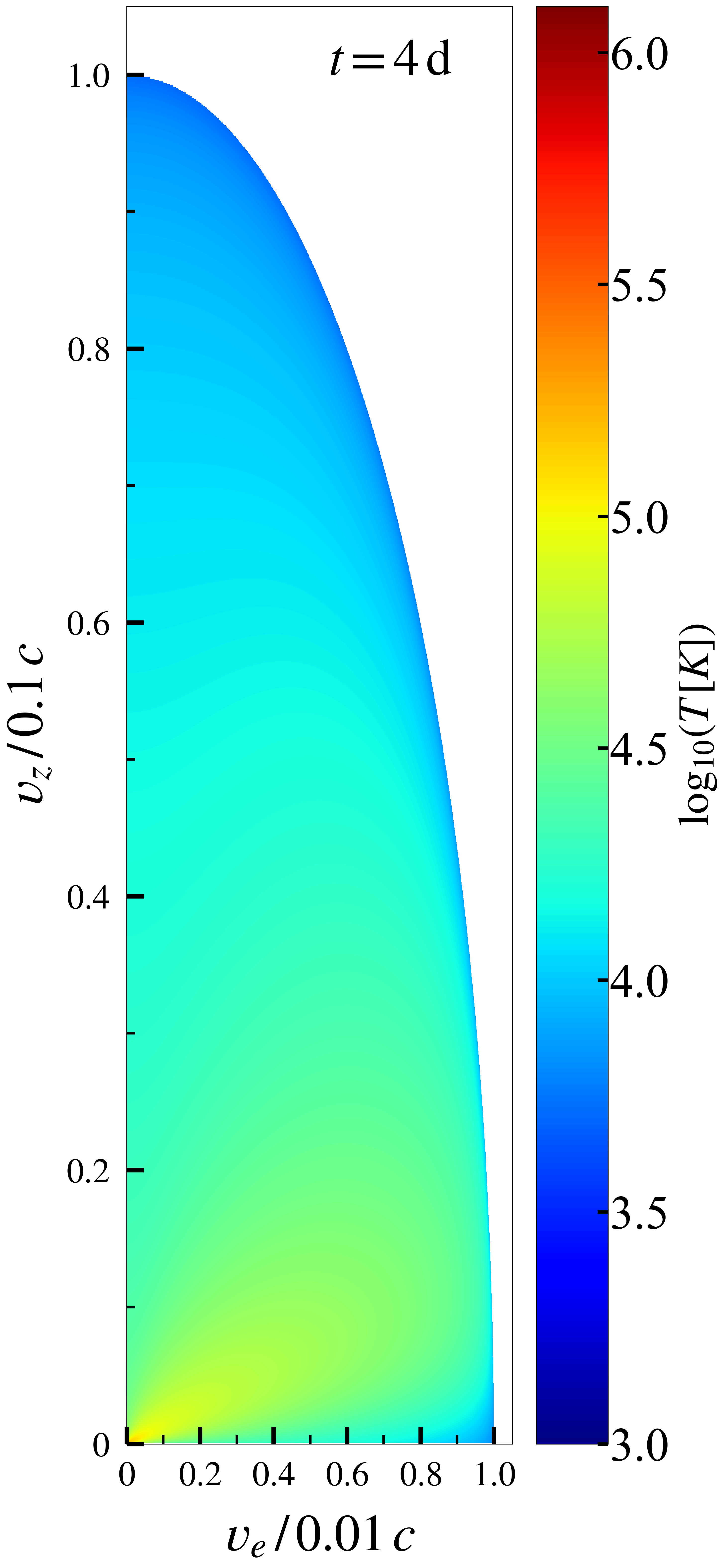
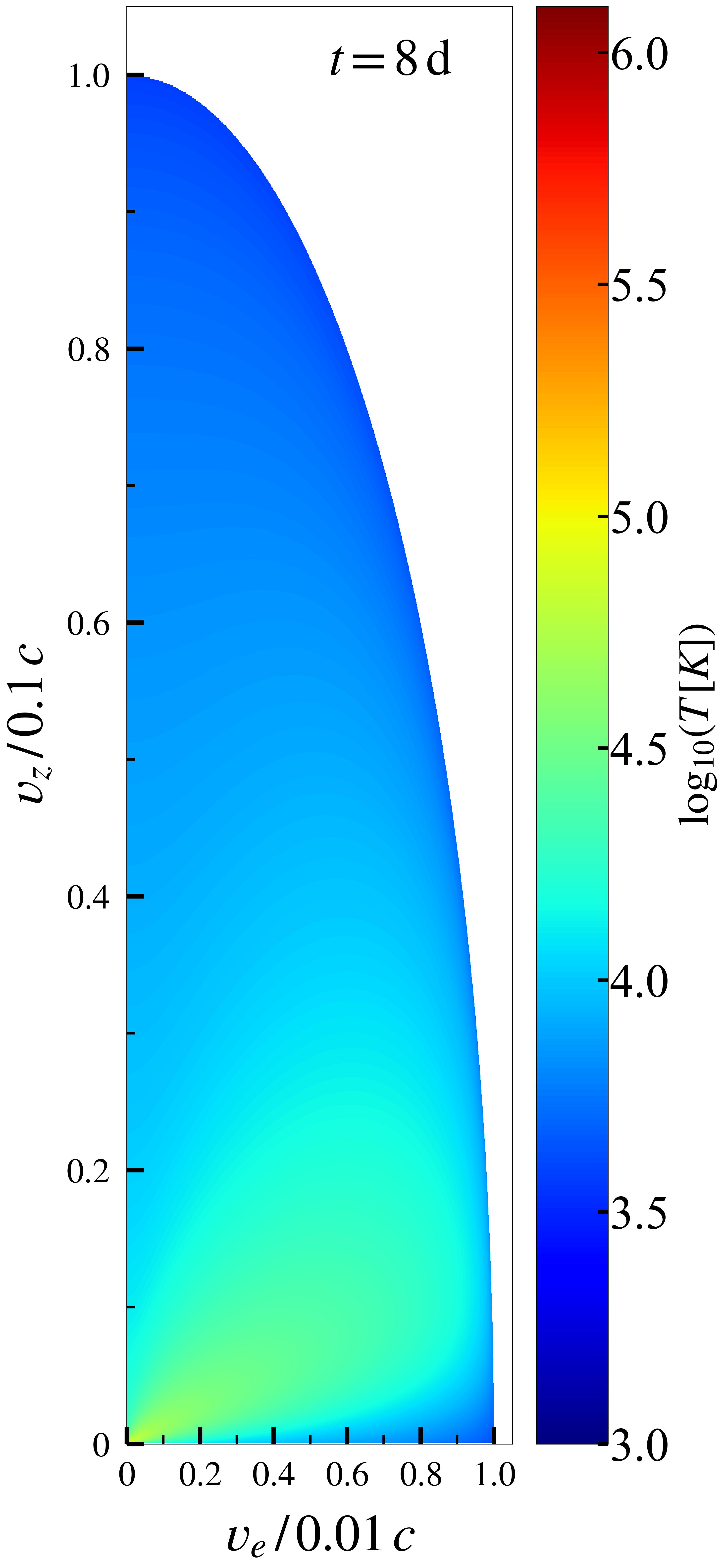
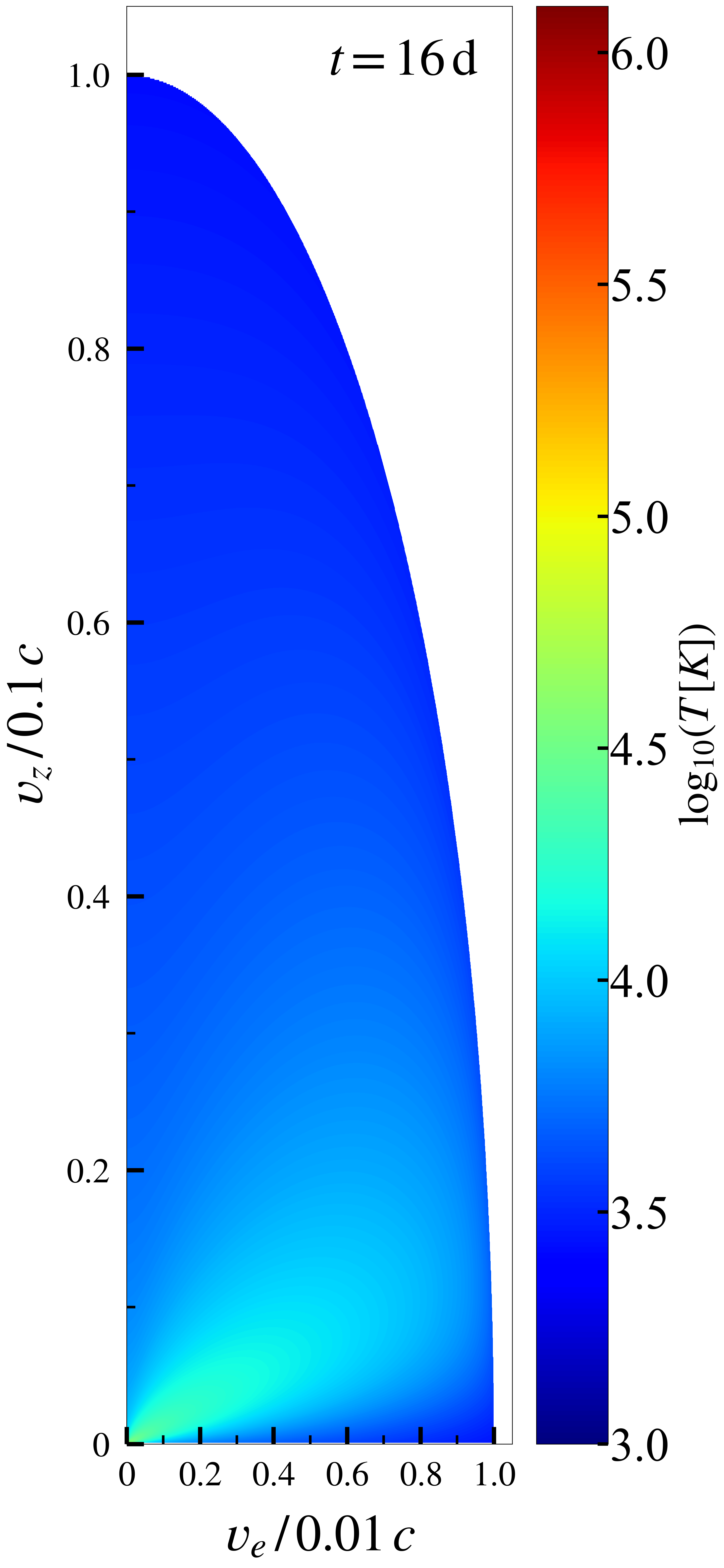
Figure 1: Sectional drawings of the temperature evolution within the ejecta at various epochs, highlighting rapid cooling and strong asphericity.
Radiative Transfer, Thermal Evolution, and Photosphere Geometry
The thermodynamic evolution of the ejecta is governed by adiabatic expansion, radioactive heating from 56Ni and 56Co decay, and photon diffusion. The authors model temperature profiles, photon diffusion surfaces, and the frequency-dependent emergent emission, including the effects of incomplete gamma-ray thermalization on late-time energy deposition.
Notably, the photospheric surface as seen by an observer is highly viewing-angle-dependent. For off-axis (large θview) observers, the line-of-sight penetrates deeper and hotter ejecta layers, and the projected photospheric area is larger, enhancing the observed flux. Conversely, along the polar axis, both the emitting area and the temperature at the photosphere are smaller.
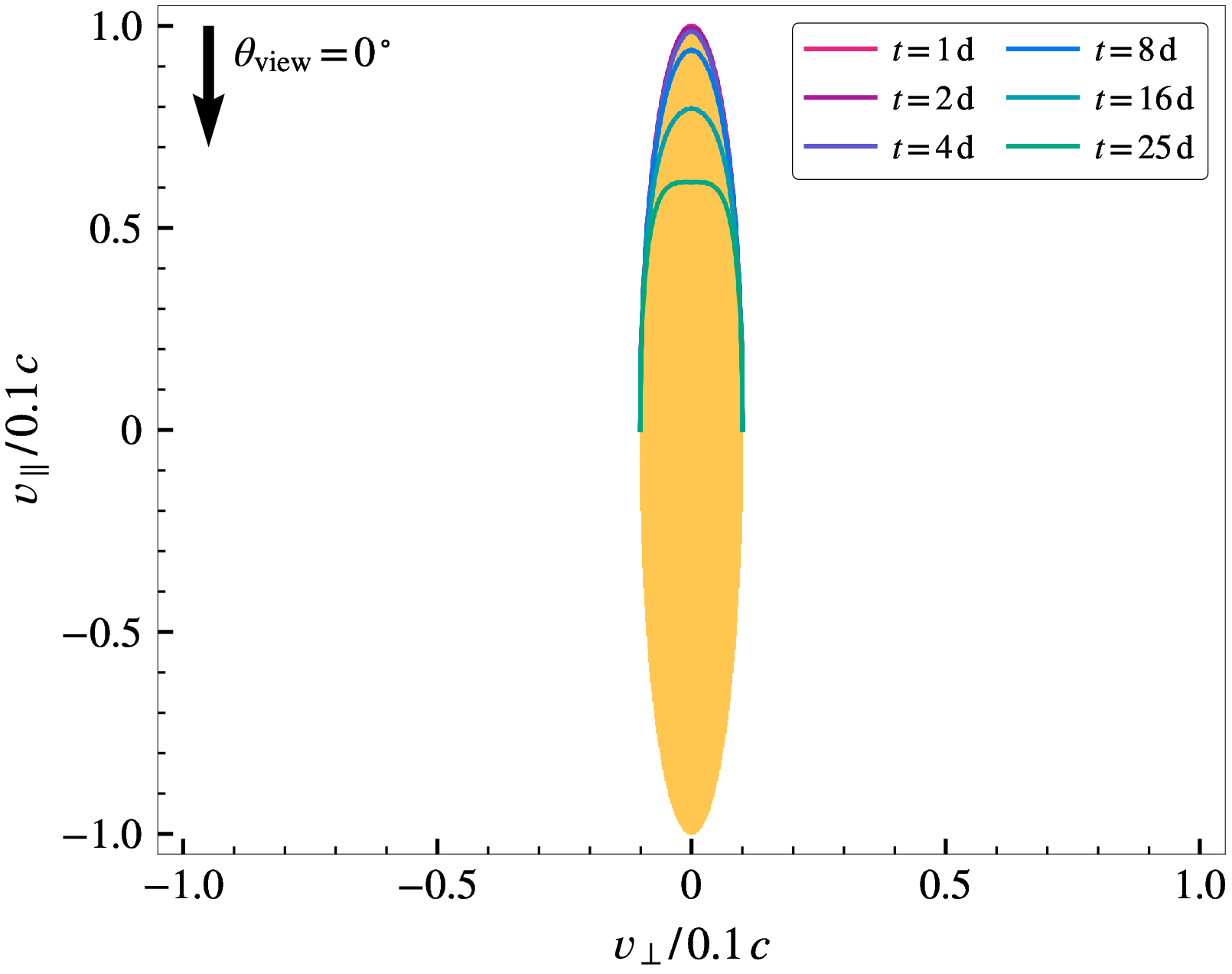
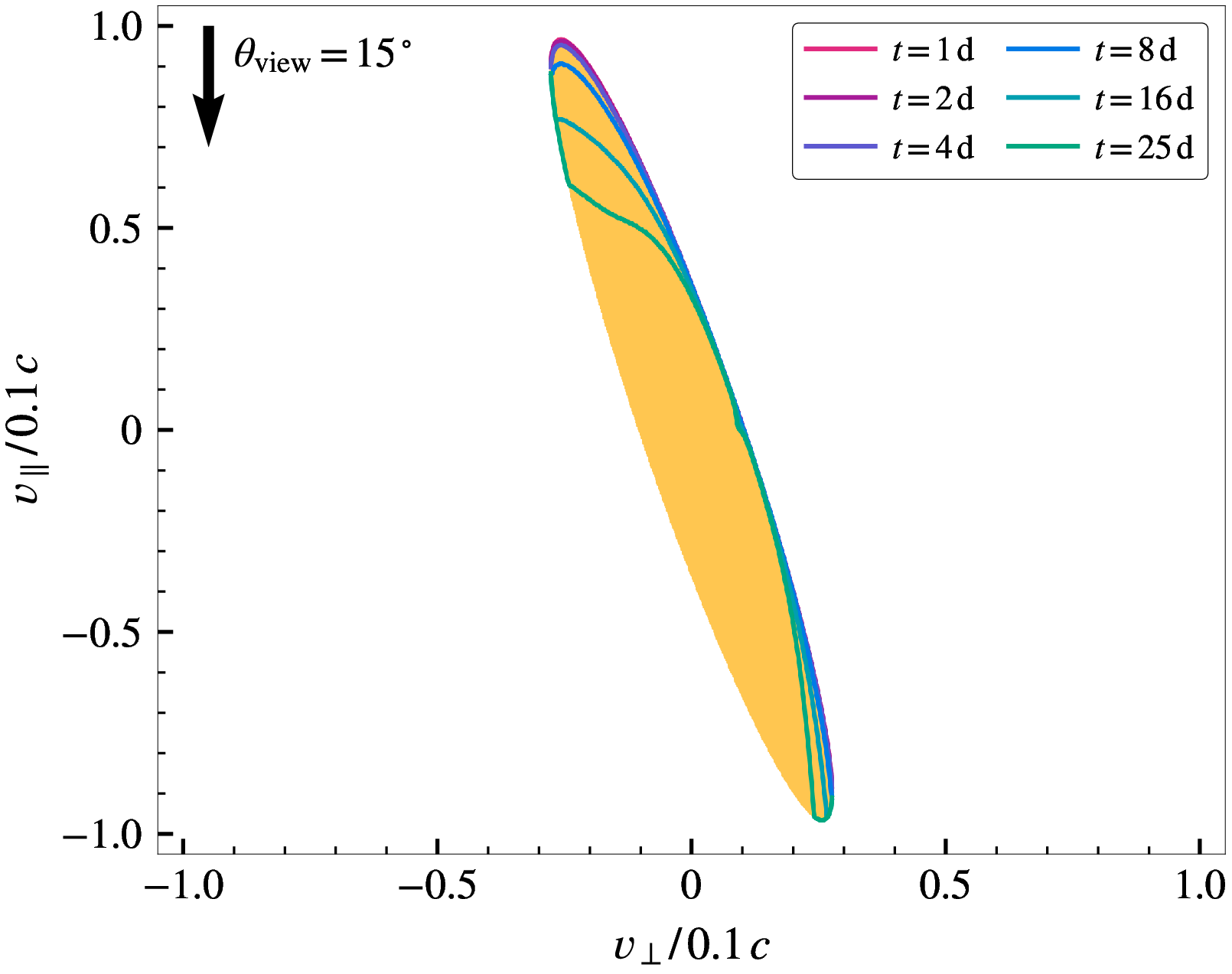
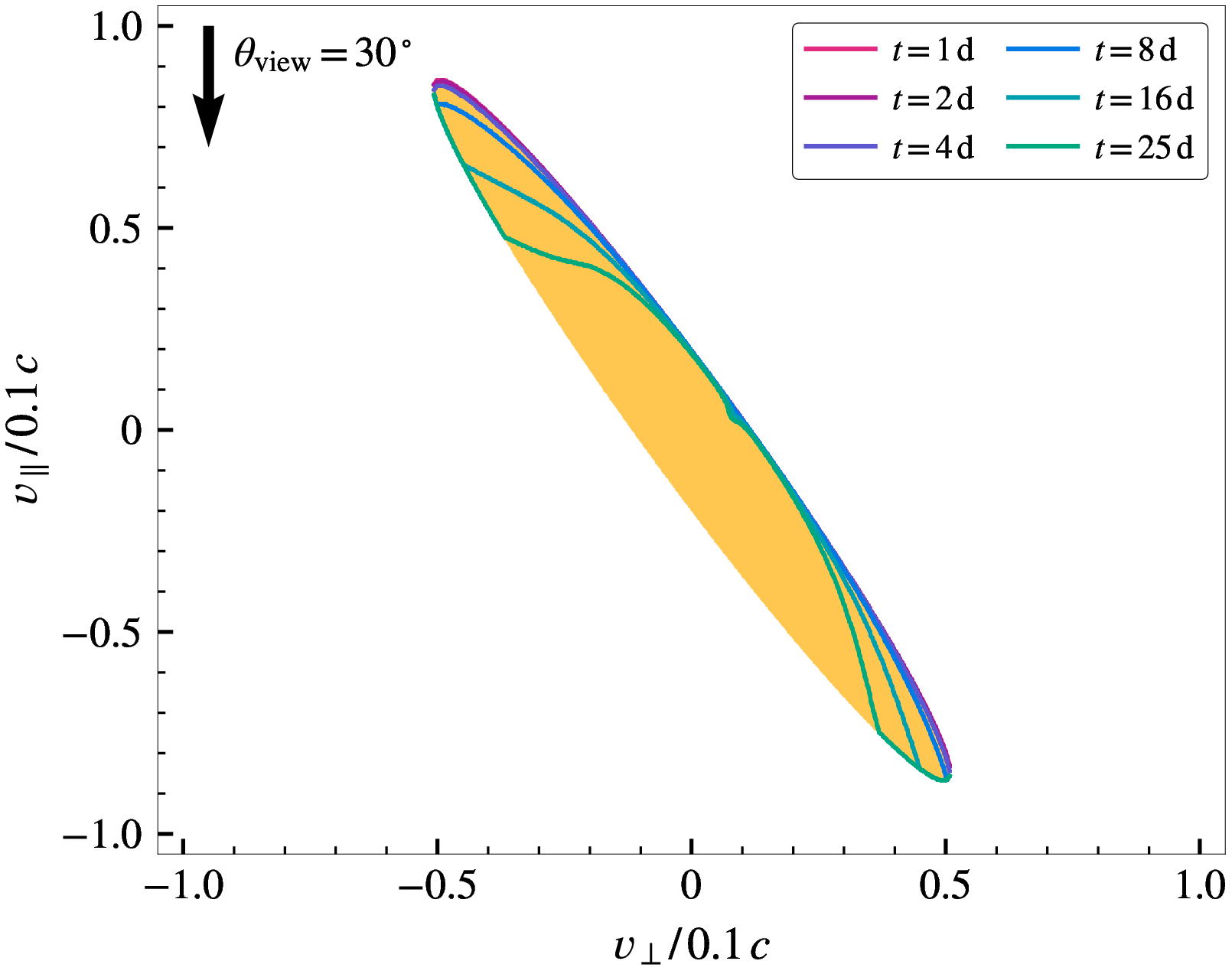
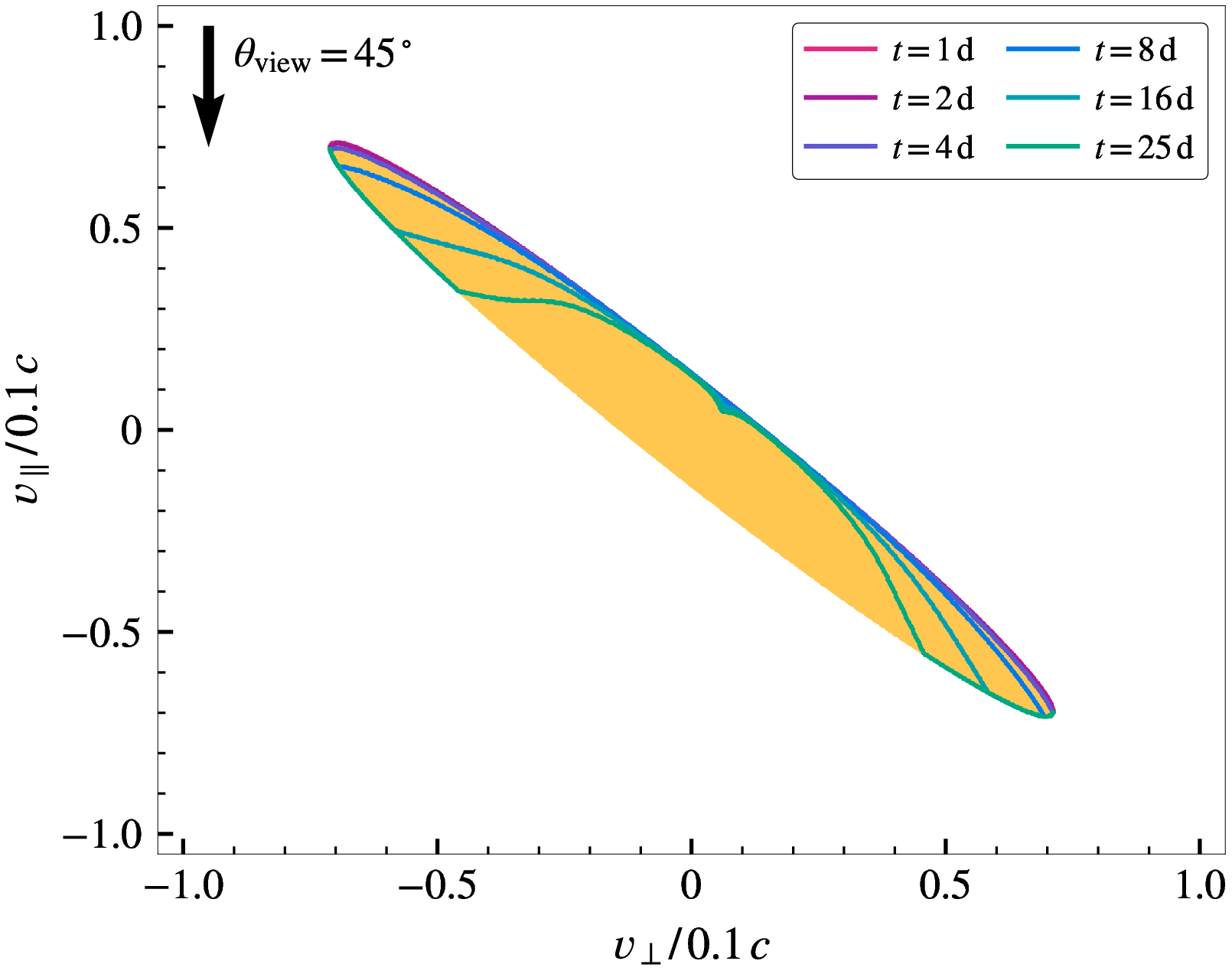
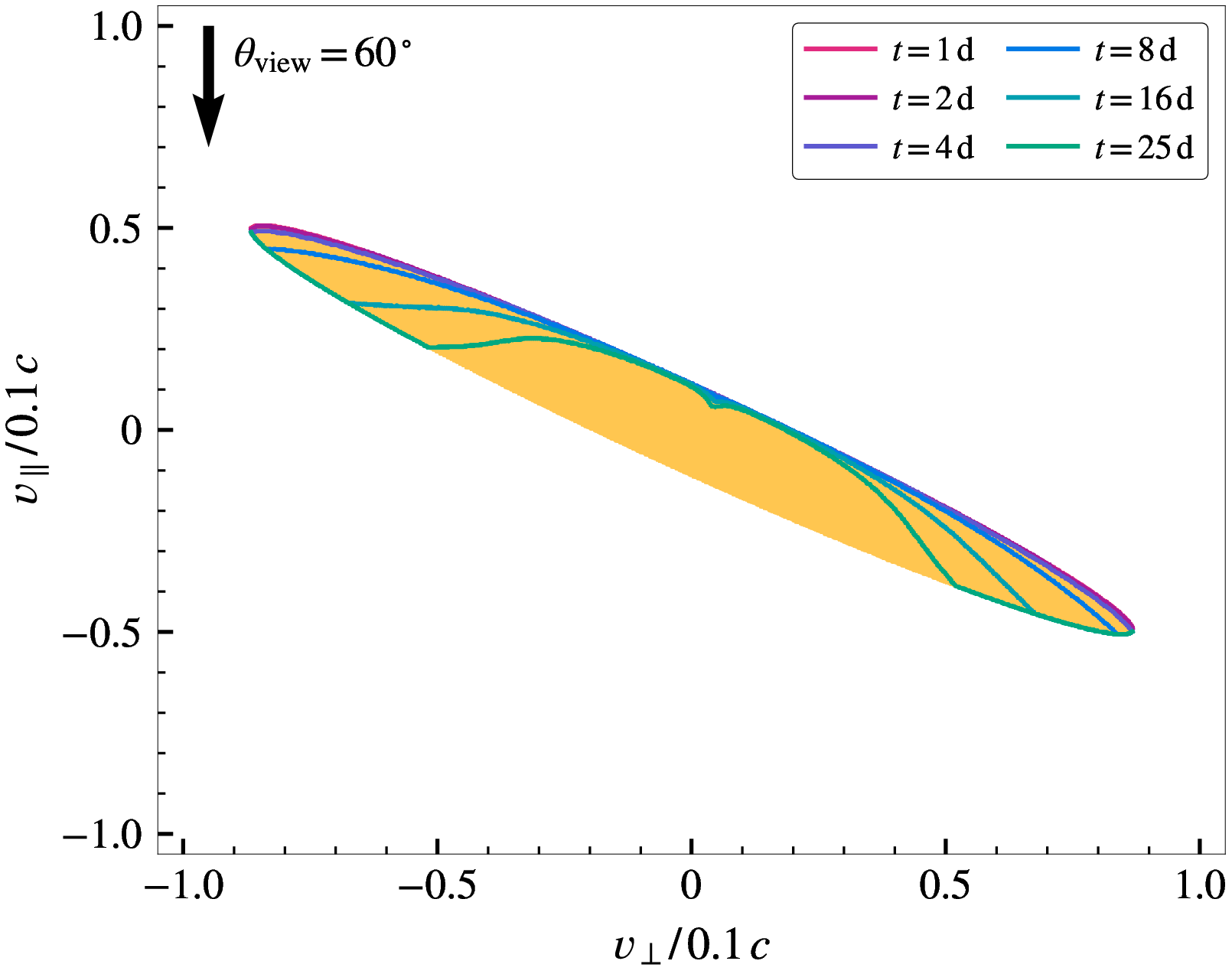
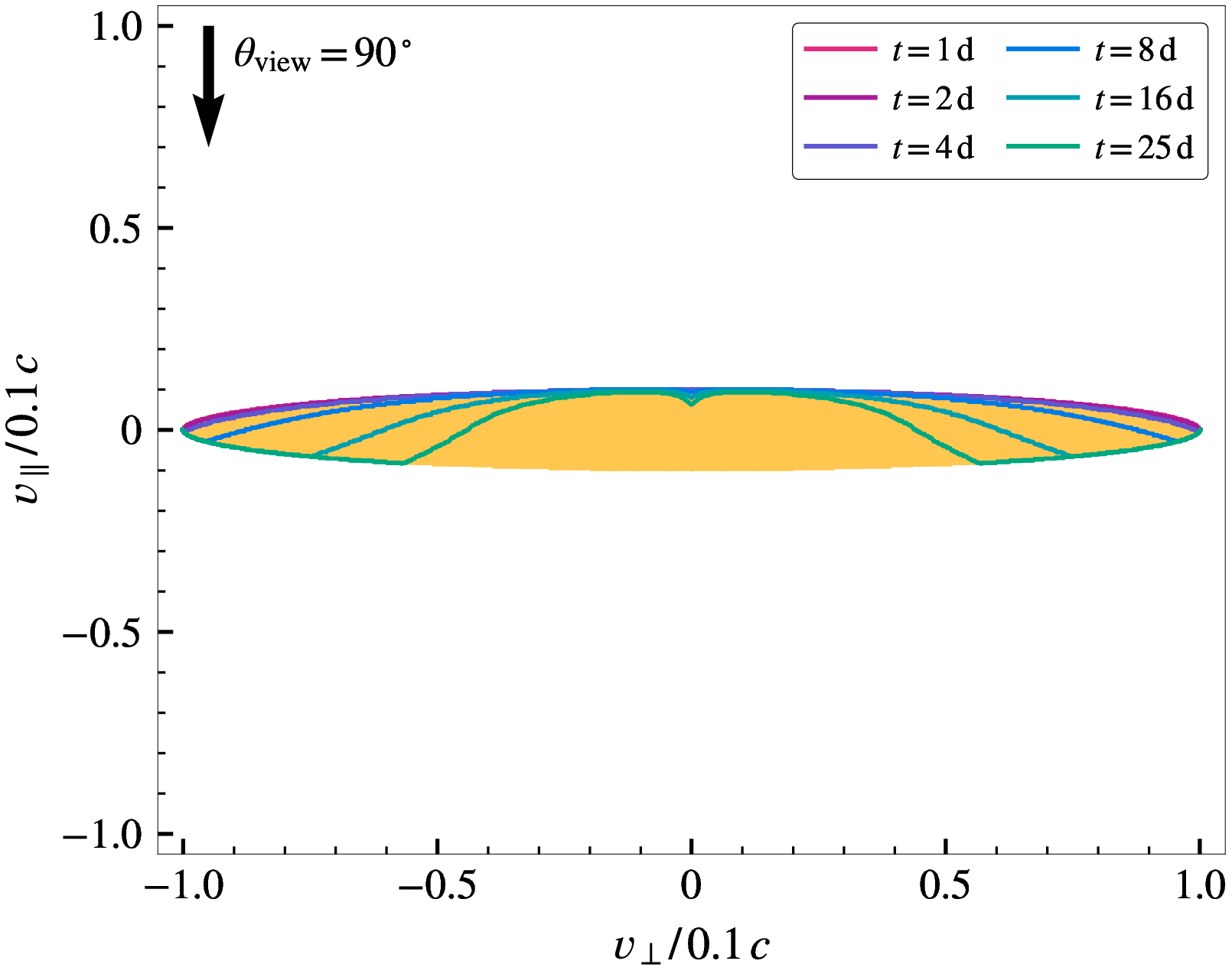
Figure 2: Sectional views of the velocity-space photosphere at multiple viewing angles and epochs, showing geometric dependence of observable layers.
Spectral and Lightcurve Predictions
Integrating over the evolving, anisotropic photosphere, the authors produce multi-epoch, multi-angle model spectra and synthetic ugriz lightcurves.
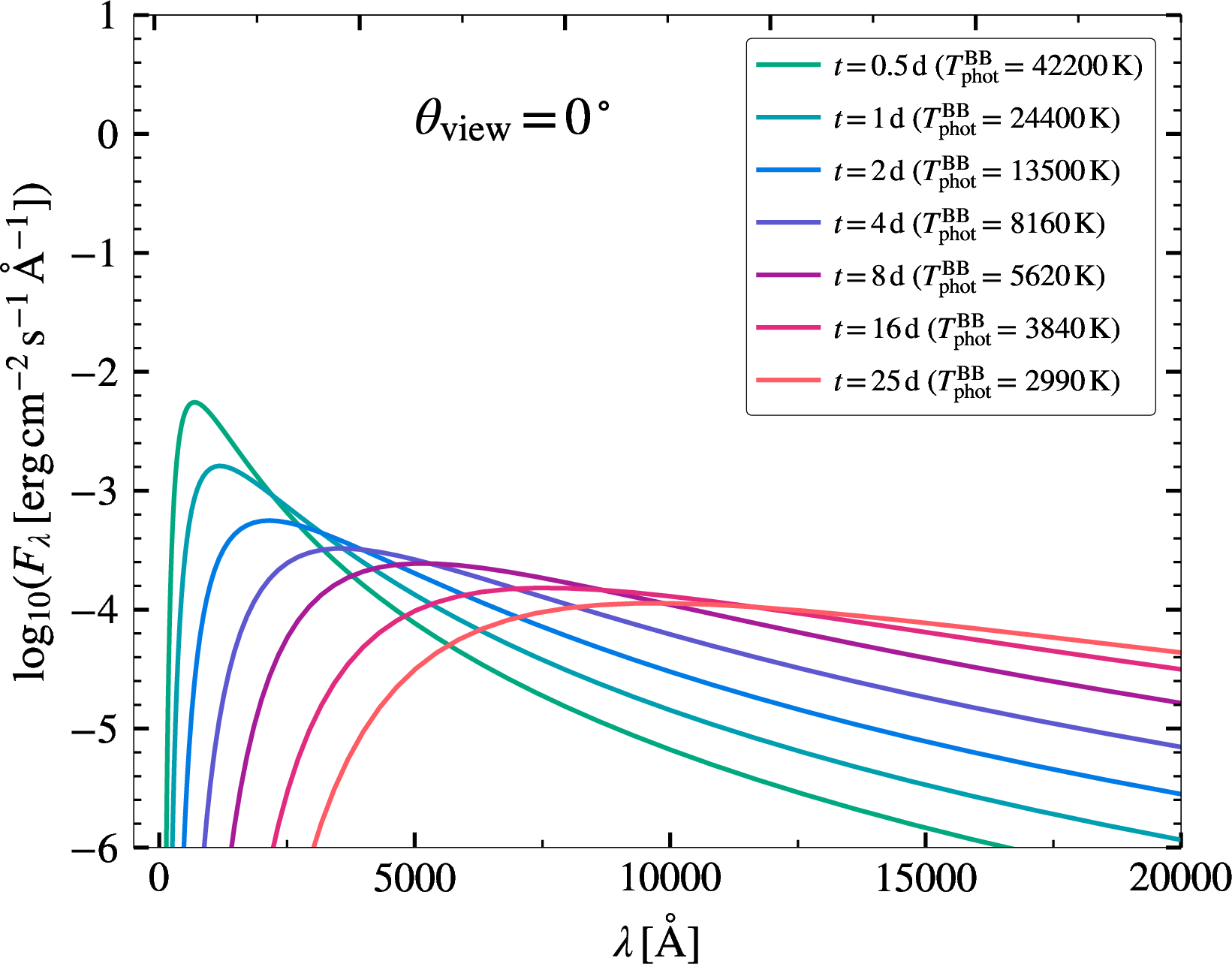
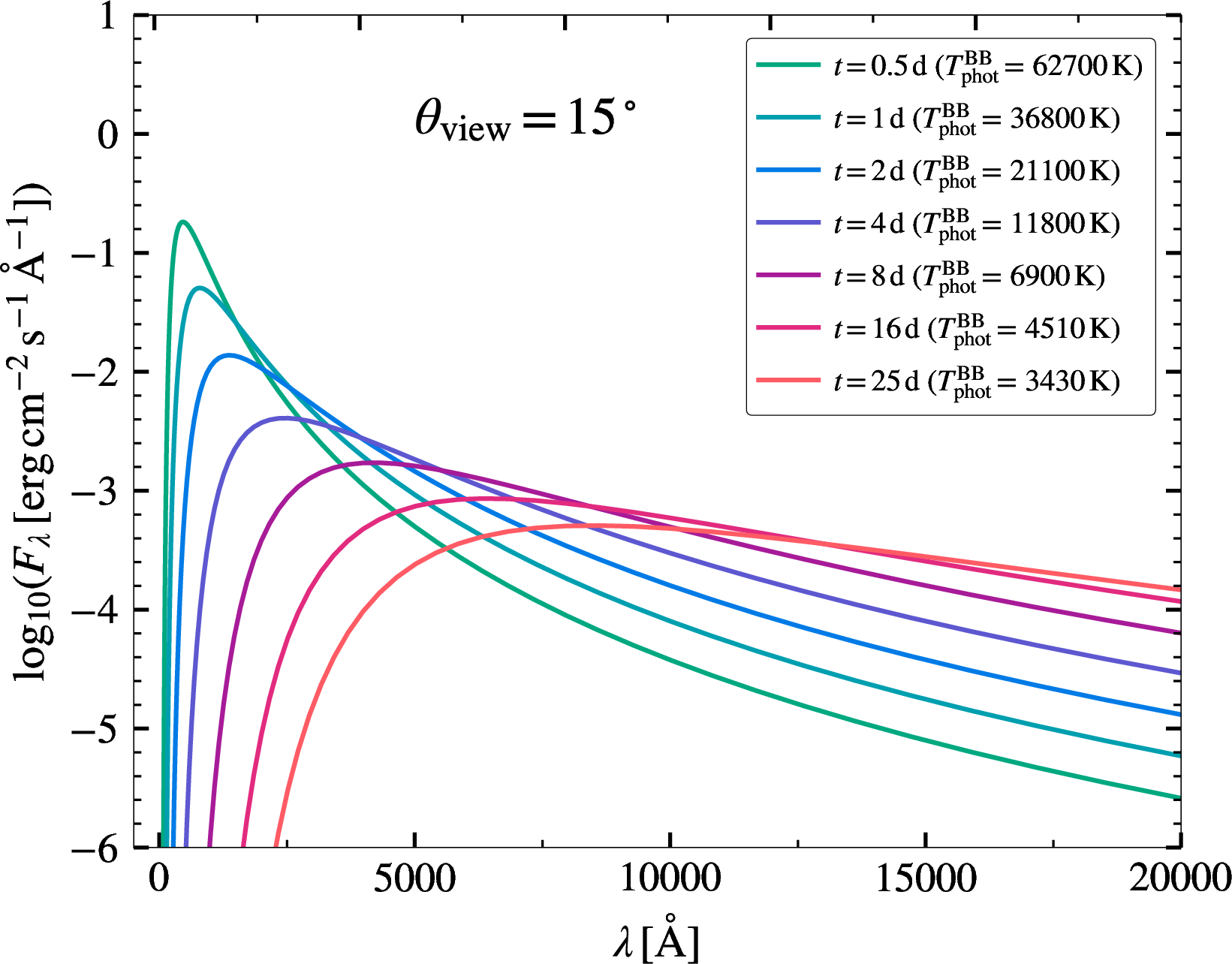
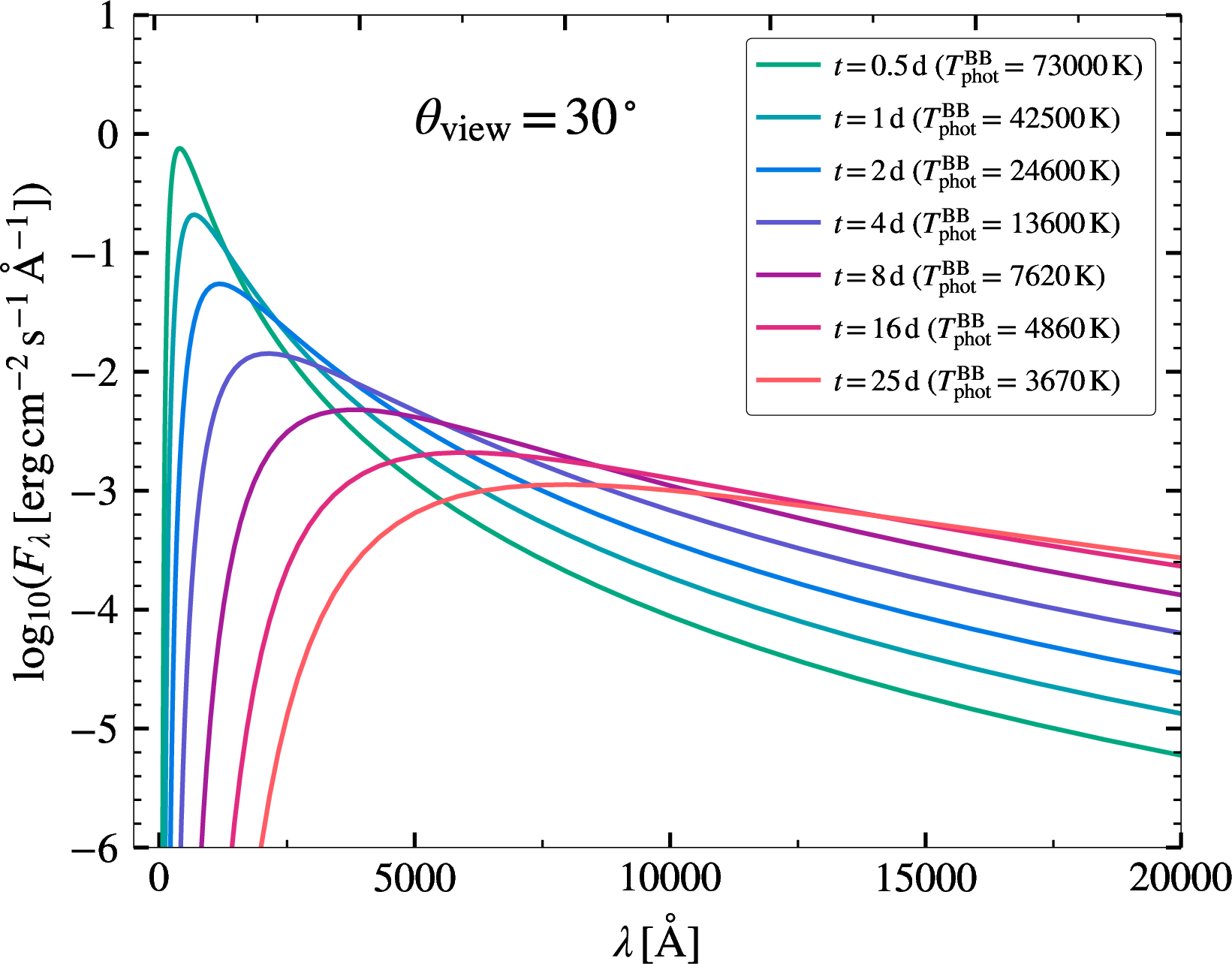
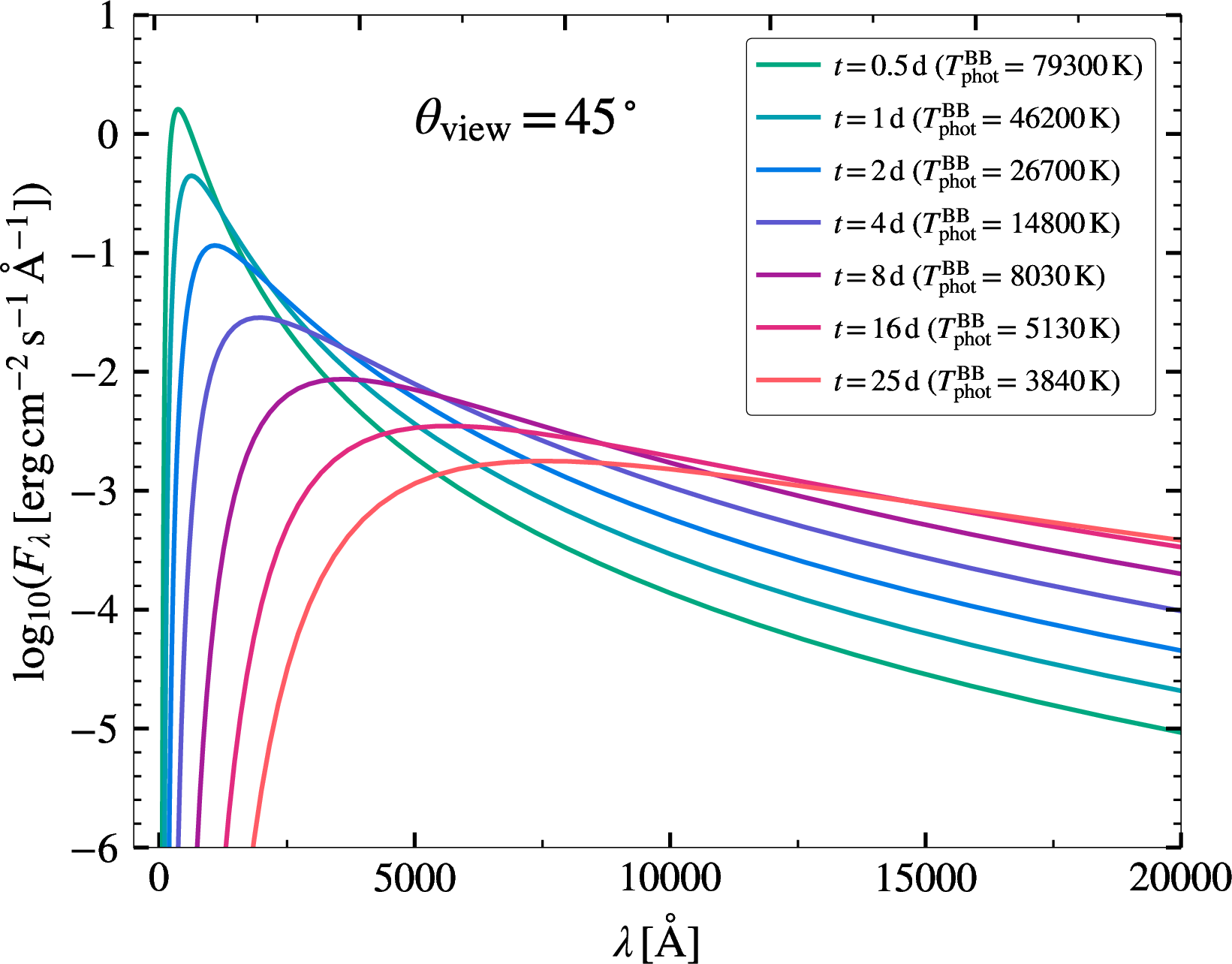
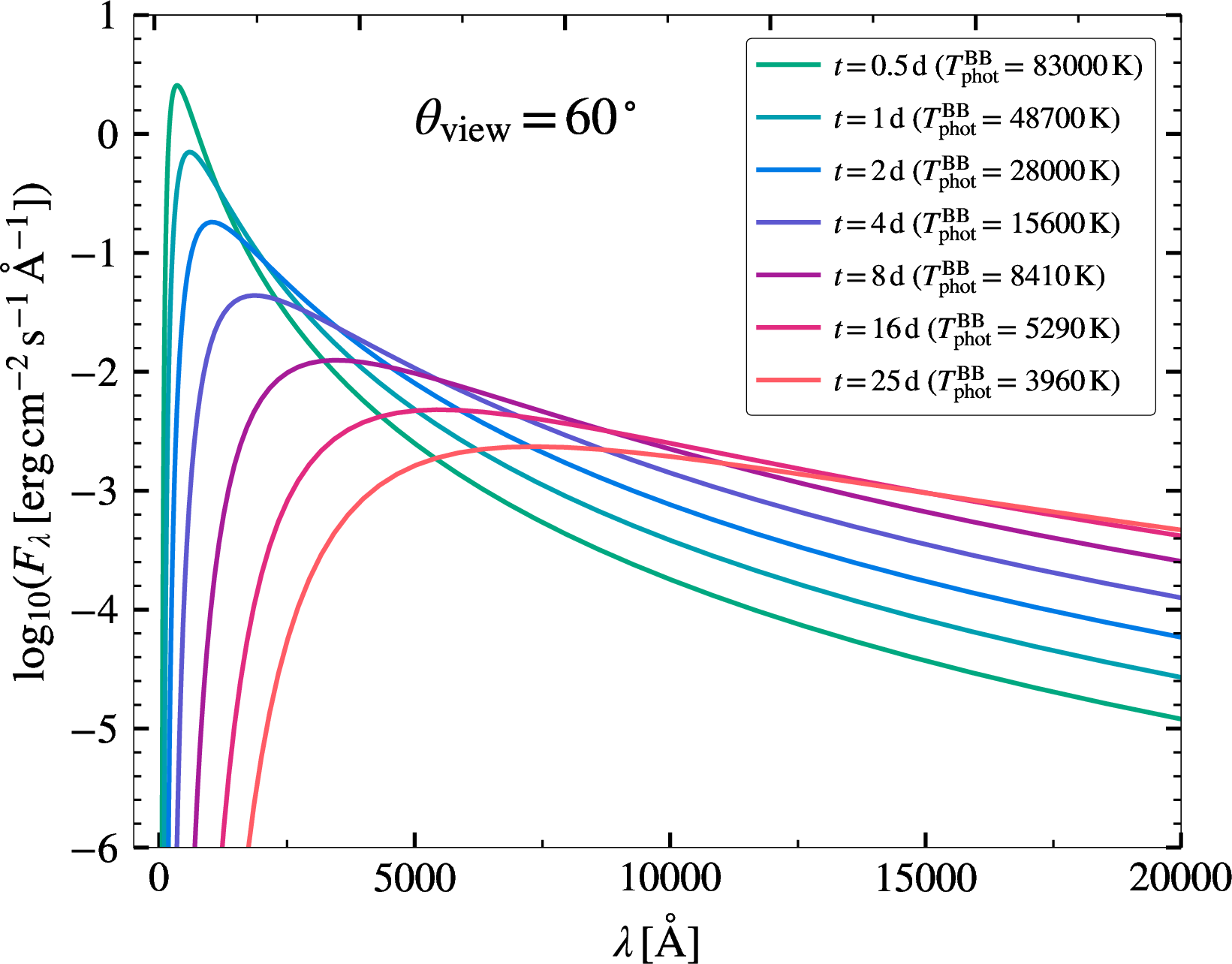
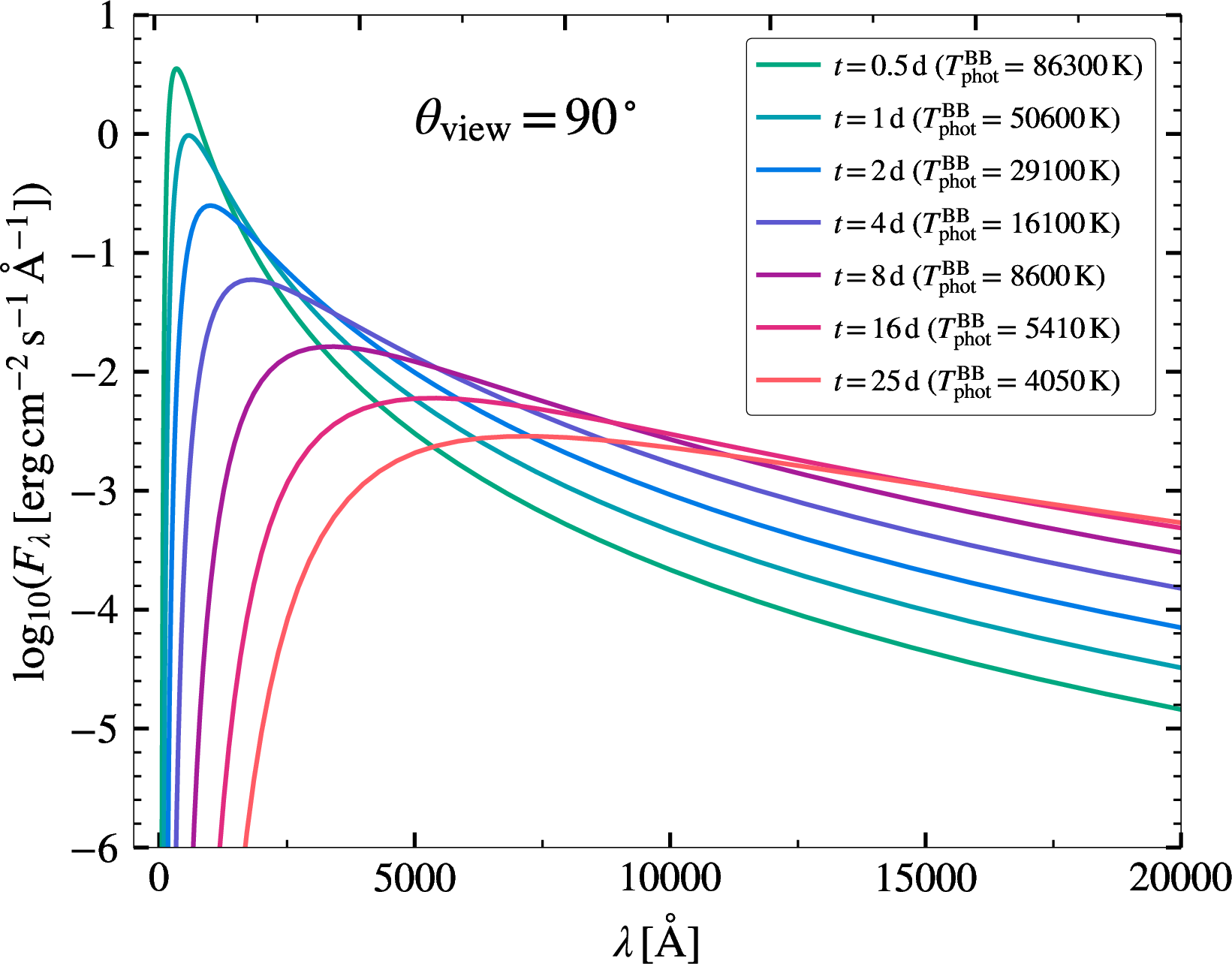
Figure 3: Emergent spectra of WD–NS mSNe for a range of viewing angles and epochs, showing hotter, brighter emission for equatorial observers at early times.
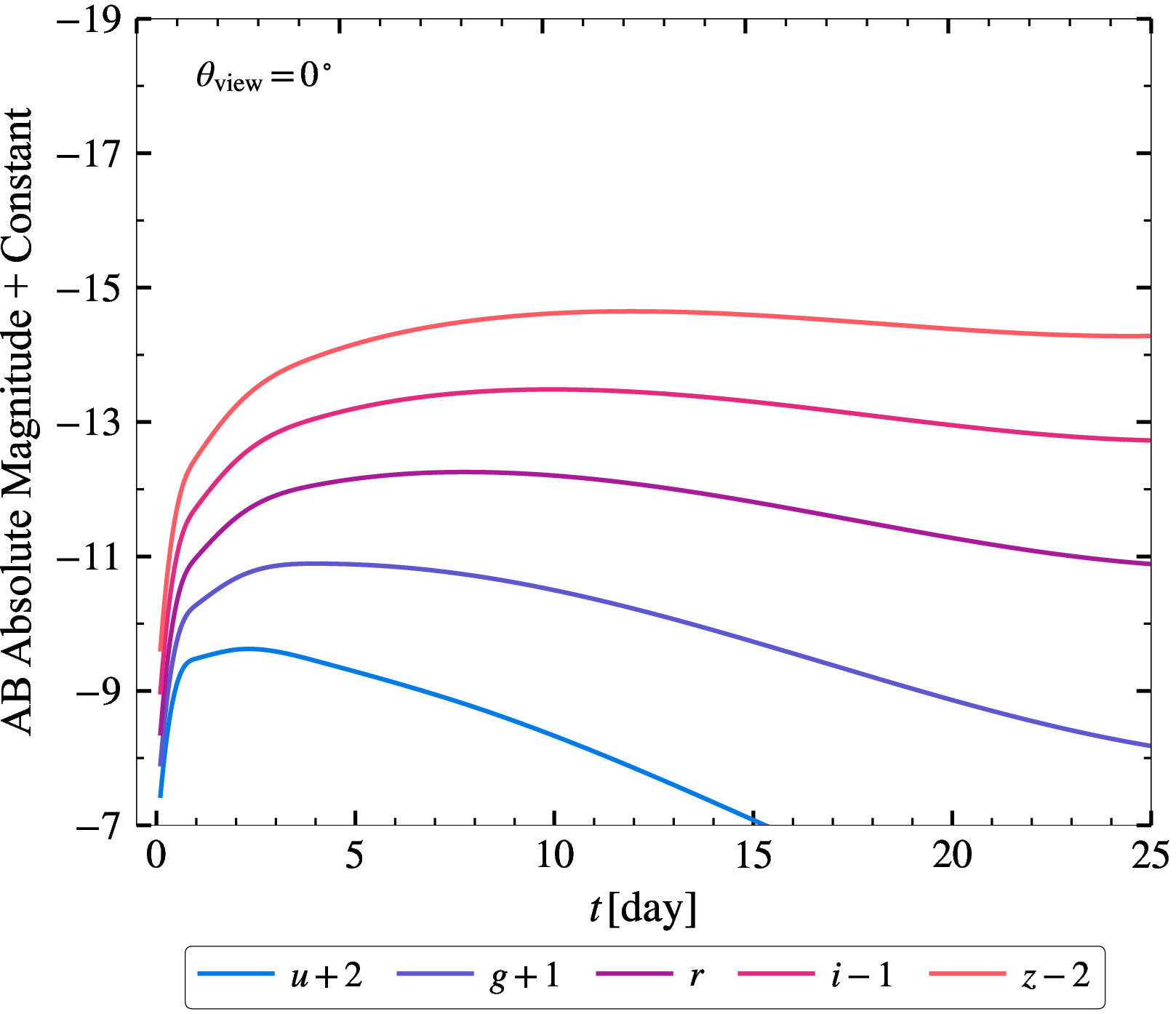
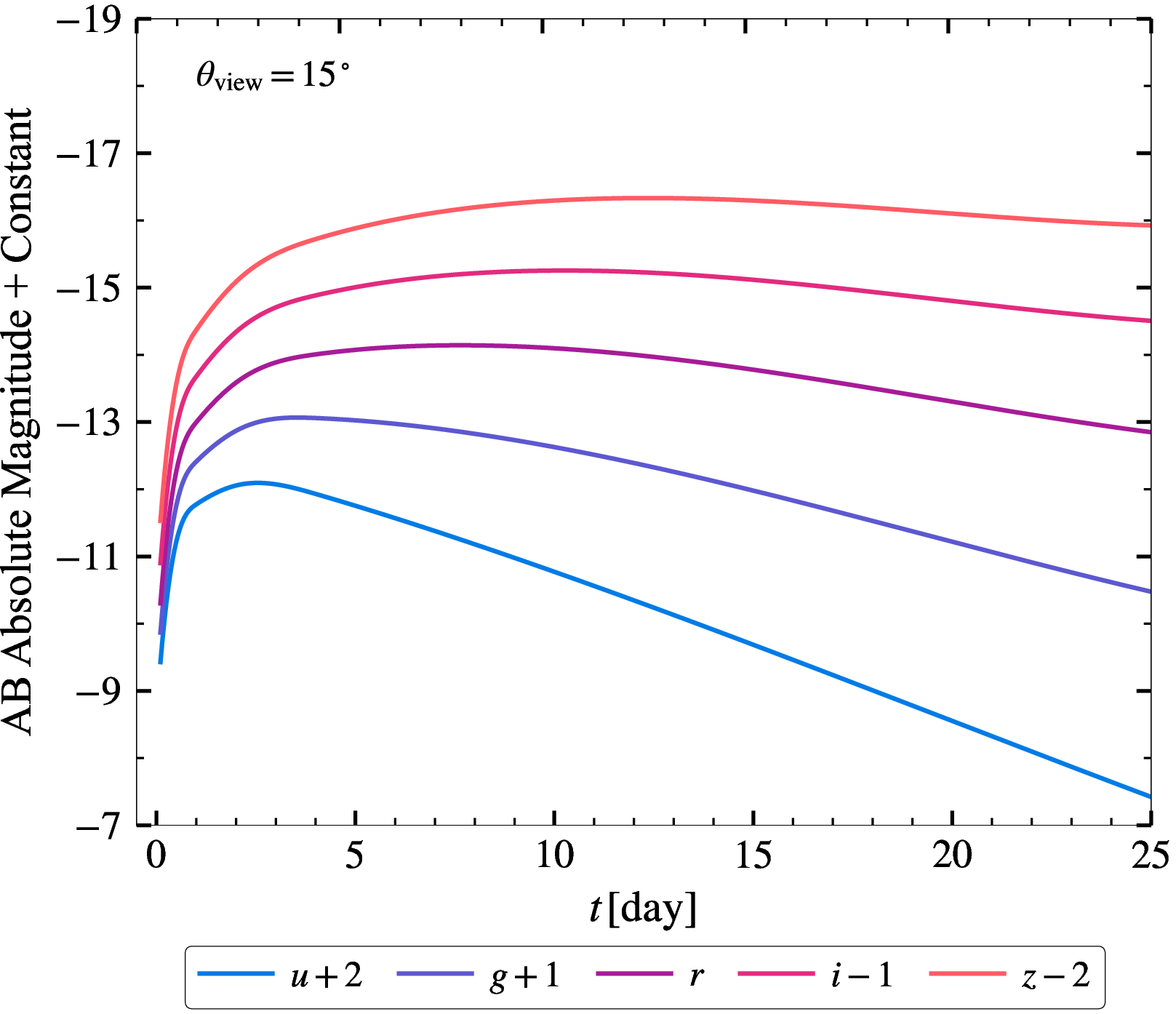
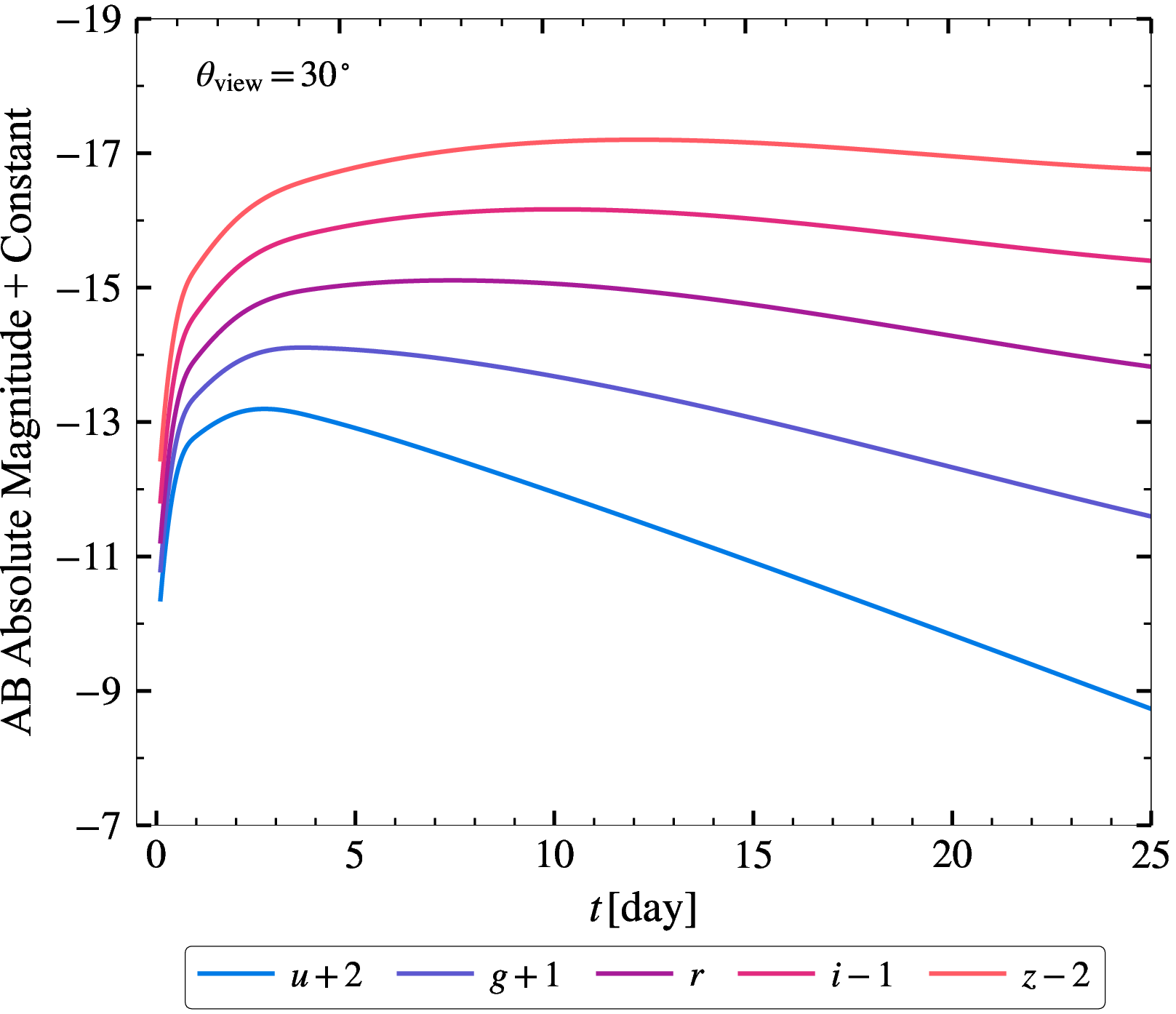
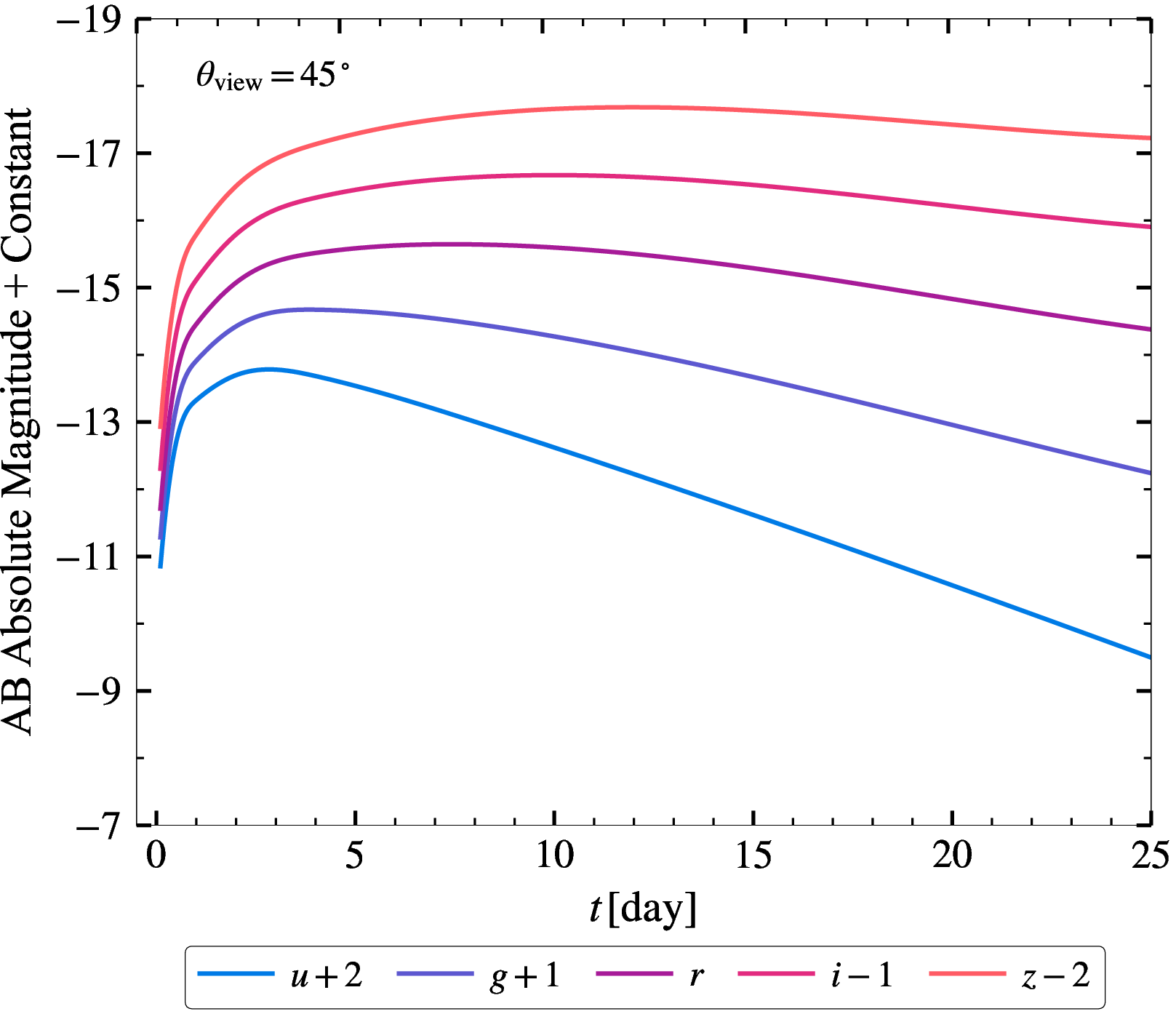
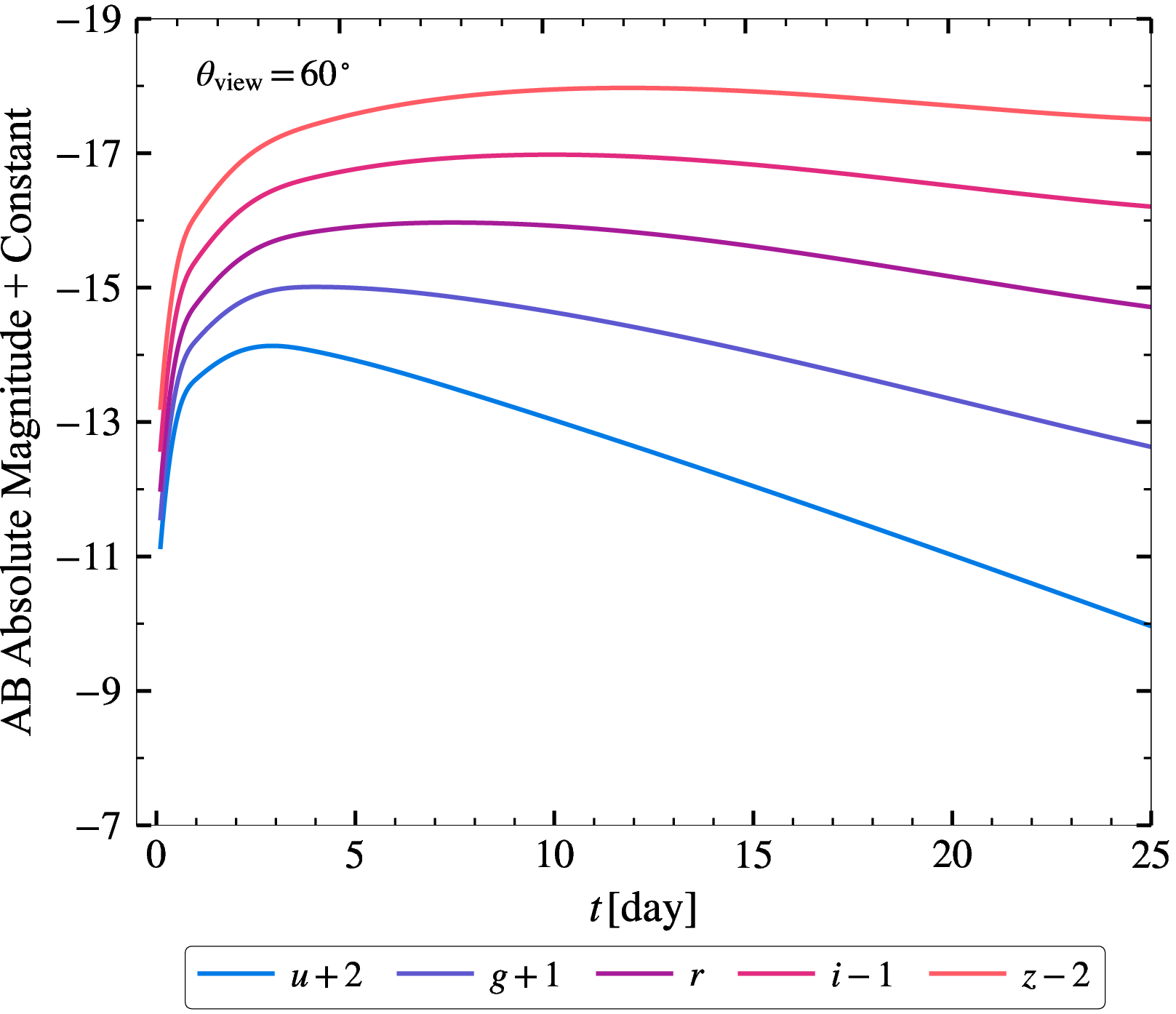
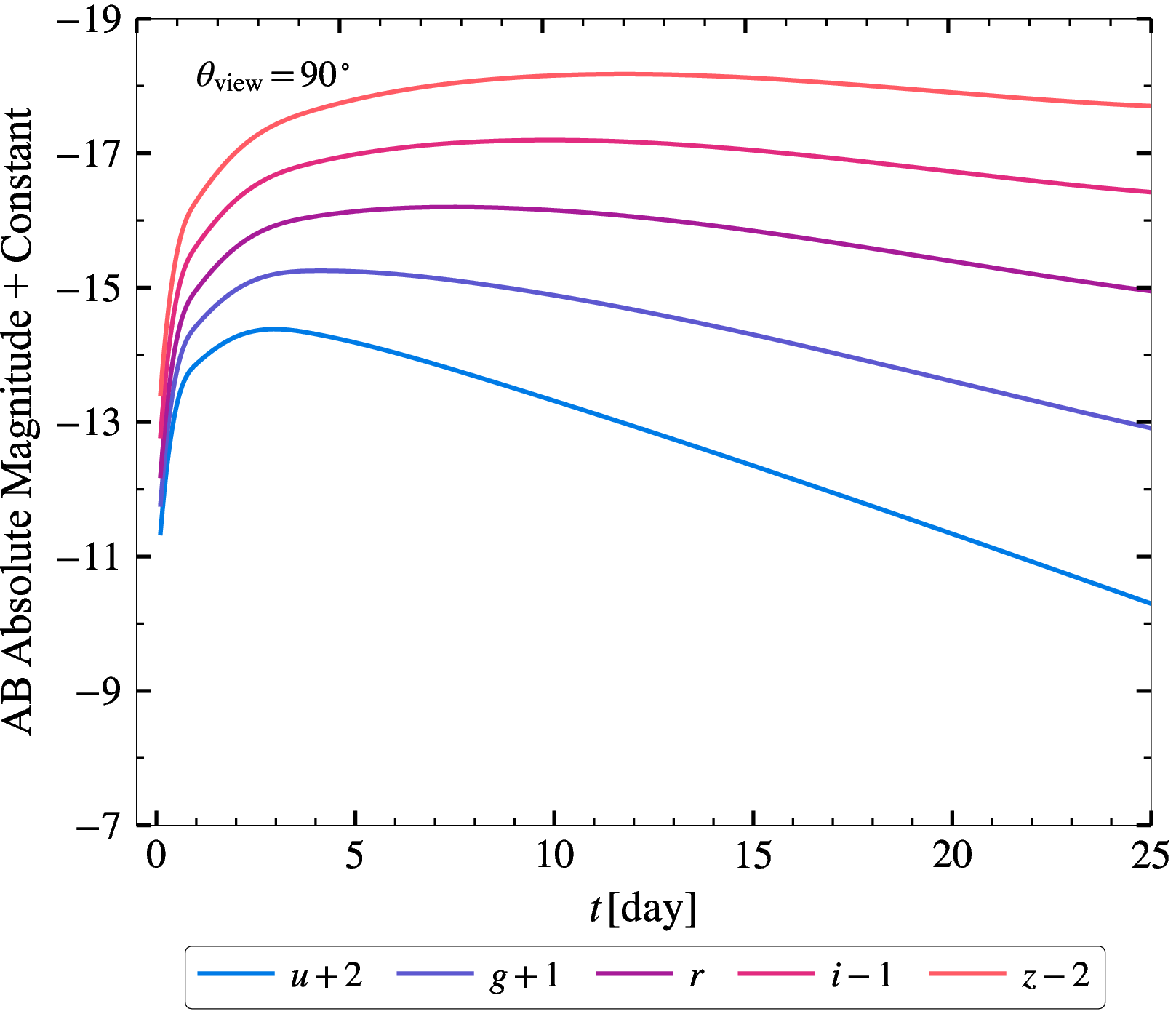
Figure 4: Viewing-angle-dependent ugriz lightcurves demonstrating up to 4 mag variation between polar and equatorial sightlines.
The expected optical peak absolute magnitudes range from −12 (polar) to −16 (equatorial), corresponding to peak luminosities of 1040--1042ergs−1. These peak 3–10 days post-merger, with longer, brighter, and slower-evolving lightcurves for typical ejecta mass and 56Ni content, and fainter, shorter transients for lower masses.
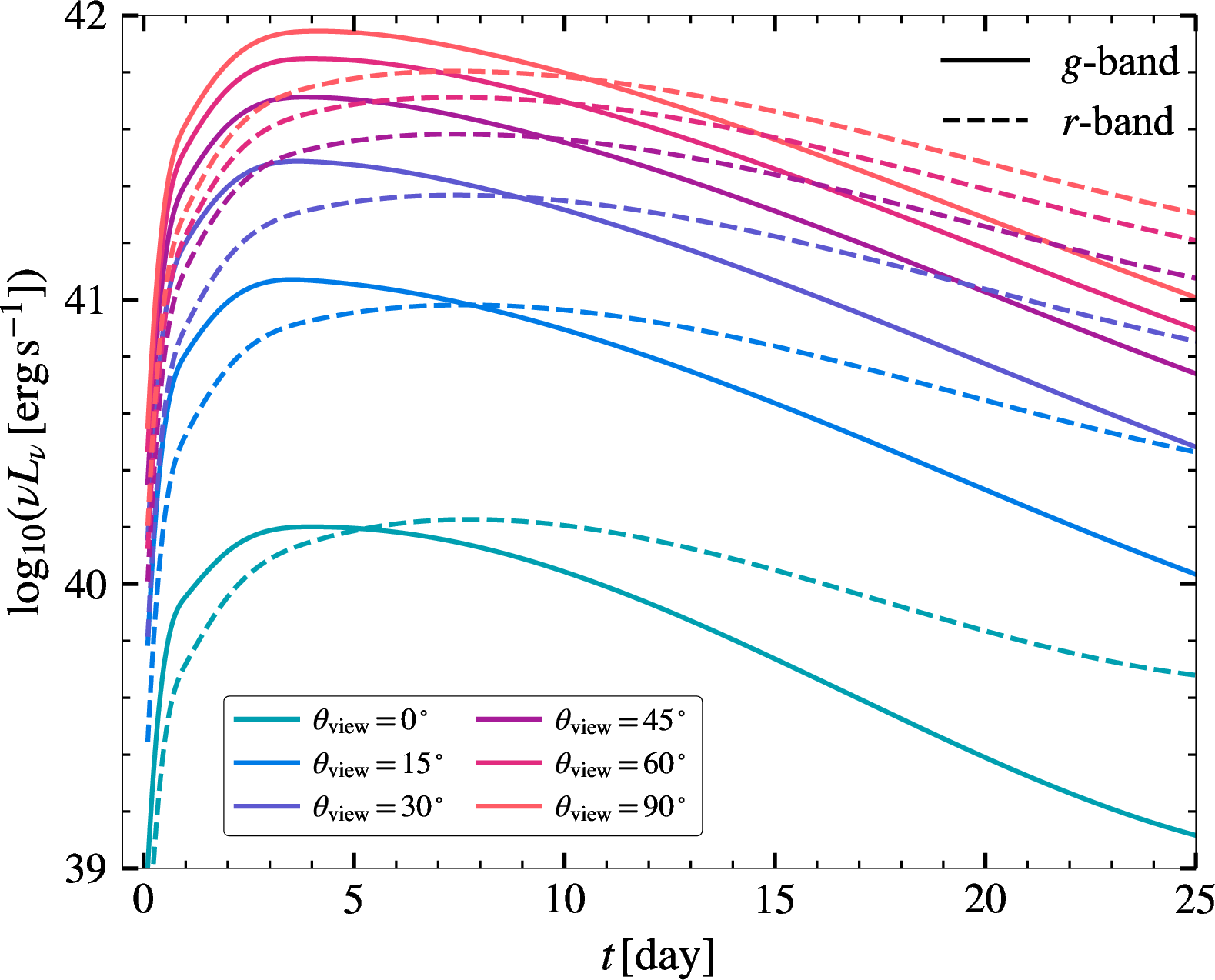
Figure 5: Optical luminosity lightcurves in g and r as a function of viewing angle, confirming strong dependence of both peak flux and timescale.
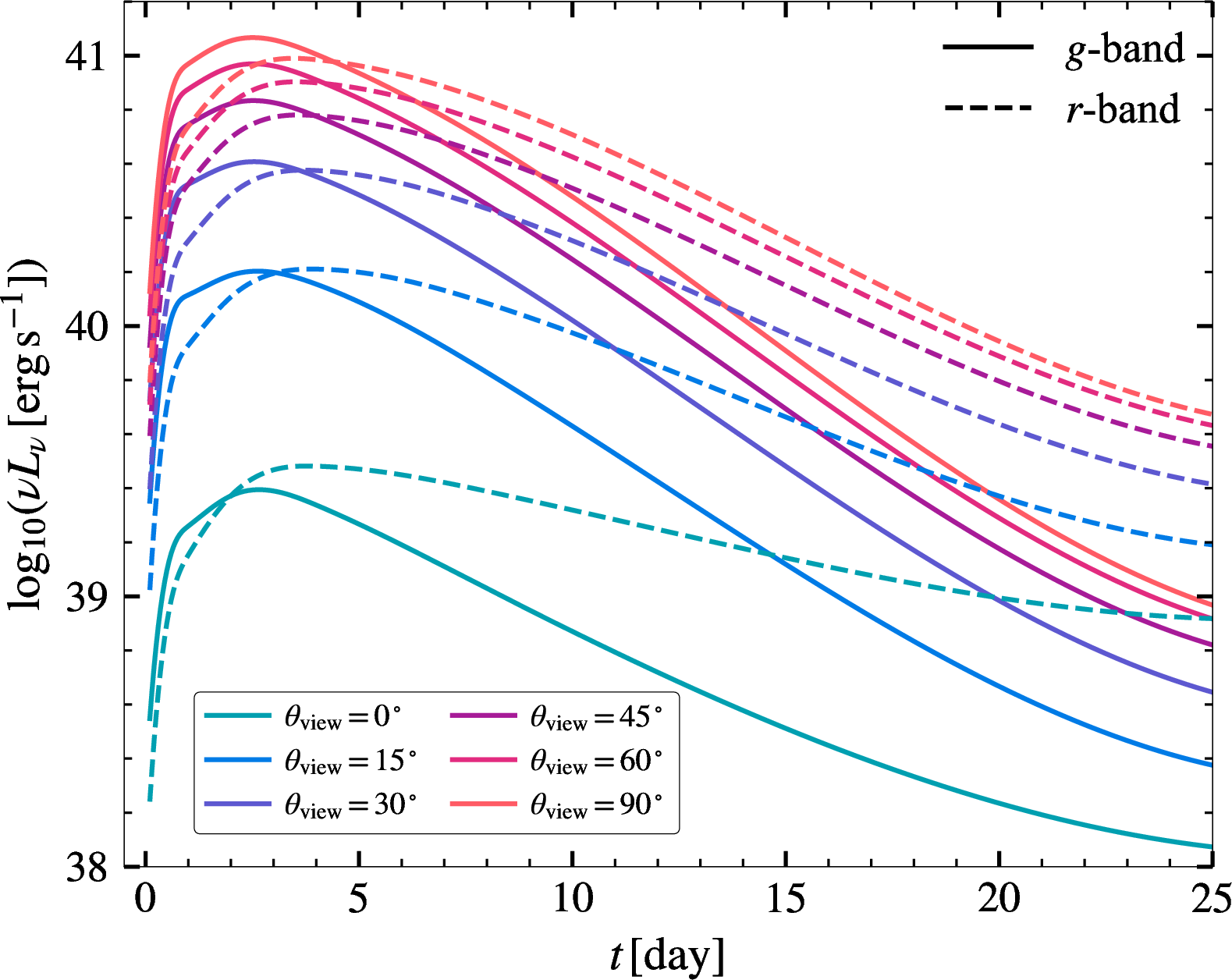
Figure 6: Corresponding g and r-band lightcurves for a case with an order of magnitude lower ejecta and 56Ni mass, showing rapid and faint mSNe curves.
Comparative Context and Implications
A parameter-space comparison shows that WD–NS mSNe populate a distinct region of optical transient luminosity-timescale space, lying dimward and at longer timescales than both kilonovae (from BNS/NS–BH) and normal supernovae.
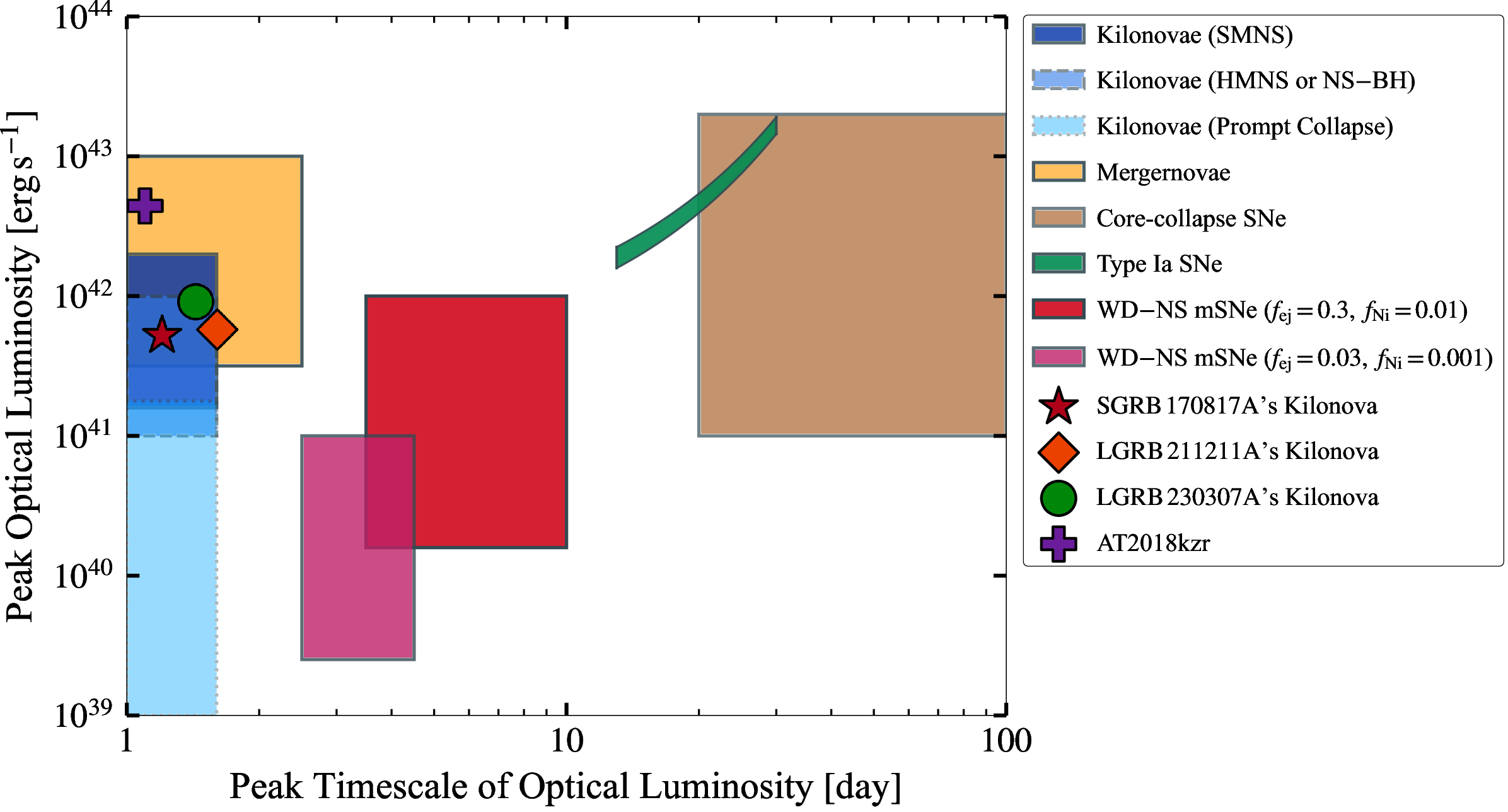
Figure 7: Peak optical luminosity versus peak timescale for various transients; WD–NS mSNe occupy the fainter, slower-evolving regime compared to canonical kilonovae and SNe.
A key result is the magnitude of viewing-angle dependence, with the most luminous and rapid transients appearing for equatorial observers, a reversal of the pattern seen in BNS kilonovae where polar viewing lines generally sample the hottest, fastest ejecta. This is a direct consequence of the ejecta geometry established in WD–NS mergers.
Additionally, the paper underlines that the absence of r-process nucleosynthesis in these proton-rich ejecta ensures that opacity is dominated by light and iron-peak elements, yielding bluer spectra than lanthanide-rich kilonovae.
Detection and identification of WD–NS mSNe will thus require EM surveys sensitive to relatively faint (∼−14 mag), fast-evolving, blue-hued optical transients, and multi-messenger association with gravitational waves (potentially in the decihertz regime). Spectroscopic confirmation of iron-peak and intermediate-mass elements, as well as the lack of lanthanides, would strongly support the WD–NS merger channel.
The study also briefly discusses alternative scenarios, such as the formation of a millisecond magnetar as a merger remnant, which can significantly re-energize the ejecta and produce even brighter and longer-lived transients, bridging mini-supernovae with the most luminous and energetic observed kilonovae.
Conclusion
This work provides a comprehensive, semi-analytic, angle-dependent modeling of radioactively-powered transients from WD–NS mergers. The results establish that WD–NS mSNe exhibit strong viewing-angle dependence in both their thermal spectral evolution and overall lightcurve morphology, driven by the anisotropic geometry of ejecta launched in the merger process. These transients are fainter and evolve more rapidly than standard supernovae, and, crucially, their emission properties can differ by orders of magnitude depending on observer orientation. The theoretical framework and predictions detailed herein have direct implications for observational search strategies and the interpretation of potential future multimessenger detections of WD–NS mergers, marking a critical advance in our understanding of this previously underexplored merger channel.

