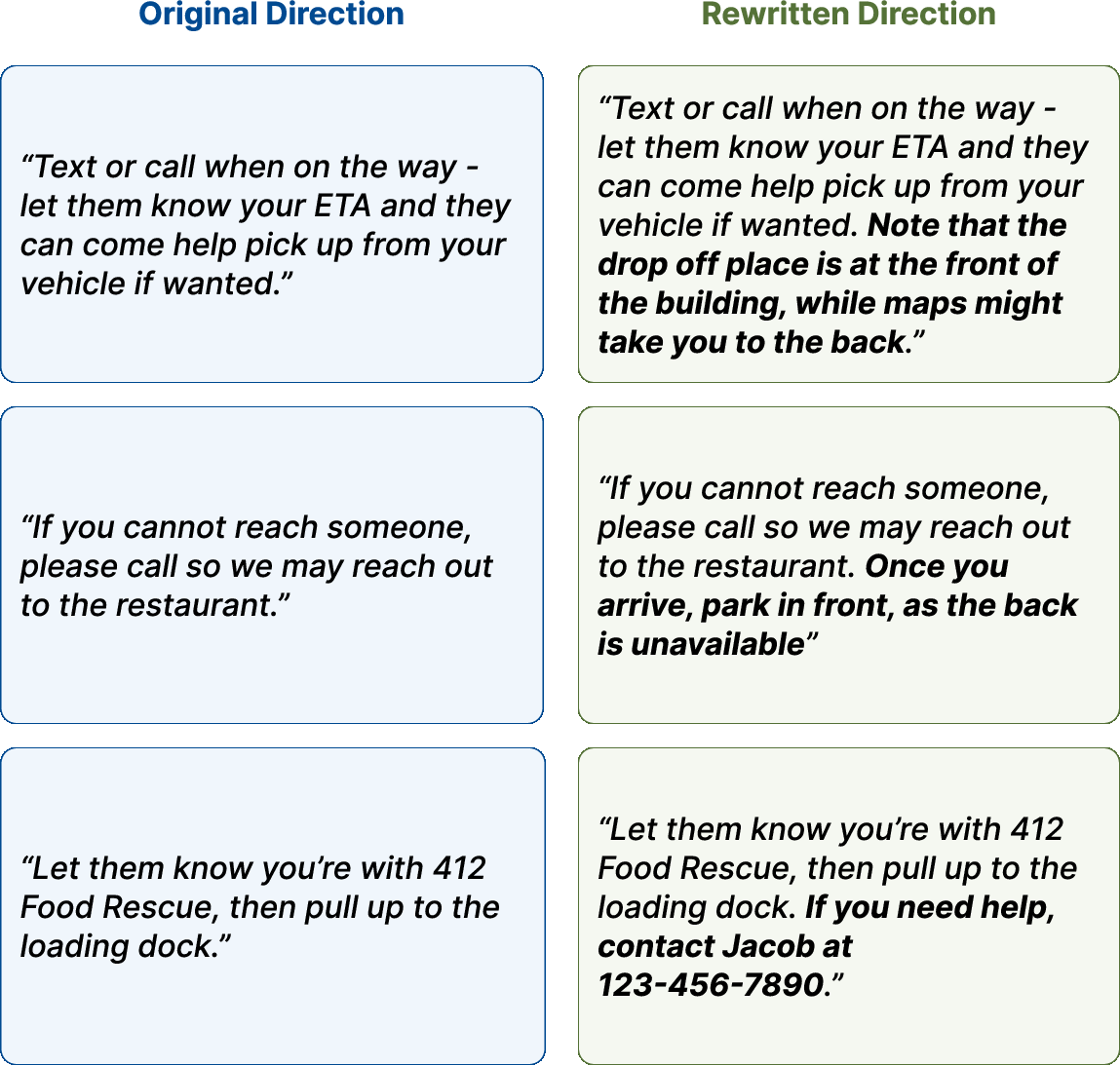
- The paper introduces RescueLens, a system leveraging LLMs to automatically triage and act on volunteer feedback, achieving 97.4% recall and 83.3% precision.
- It employs a two-stage approach with detailed feedback categorization and action recommendation, validated through rigorous evaluation and ablation studies.
- Deployment at 412 Food Rescue shows that focused interventions based on precise feedback trends can significantly reduce manual workload and improve volunteer satisfaction.
RescueLens: LLM-Powered Triage and Action on Volunteer Feedback for Food Rescue
Motivation and Background
Food rescue organizations serve a crucial dual function in society by mitigating food insecurity and reducing waste through redistributive logistics—coordinating transfers from donors with surplus to recipients in need, often relying on volunteer drivers as operational intermediaries. The operational scale produces considerable volunteer feedback, which is critical for early identification of logistical and relational challenges within the network. Traditionally, such feedback has been processed manually, introducing substantial overhead and inefficiencies in prioritizing actionable issues or trends due to limited organizational bandwidth and the high frequency of input.
Recognizing these limitations, "RescueLens: LLM-Powered Triage and Action on Volunteer Feedback for Food Rescue" (2511.15698) investigates the application of LLMs to automate and operationalize the analysis of volunteer feedback. The proposed tool, RescueLens, is designed and deployed in partnership with 412 Food Rescue—a major nonprofit operating in Pittsburgh—which offers a real-world ecosystem to validate system efficacy and organizational impact.
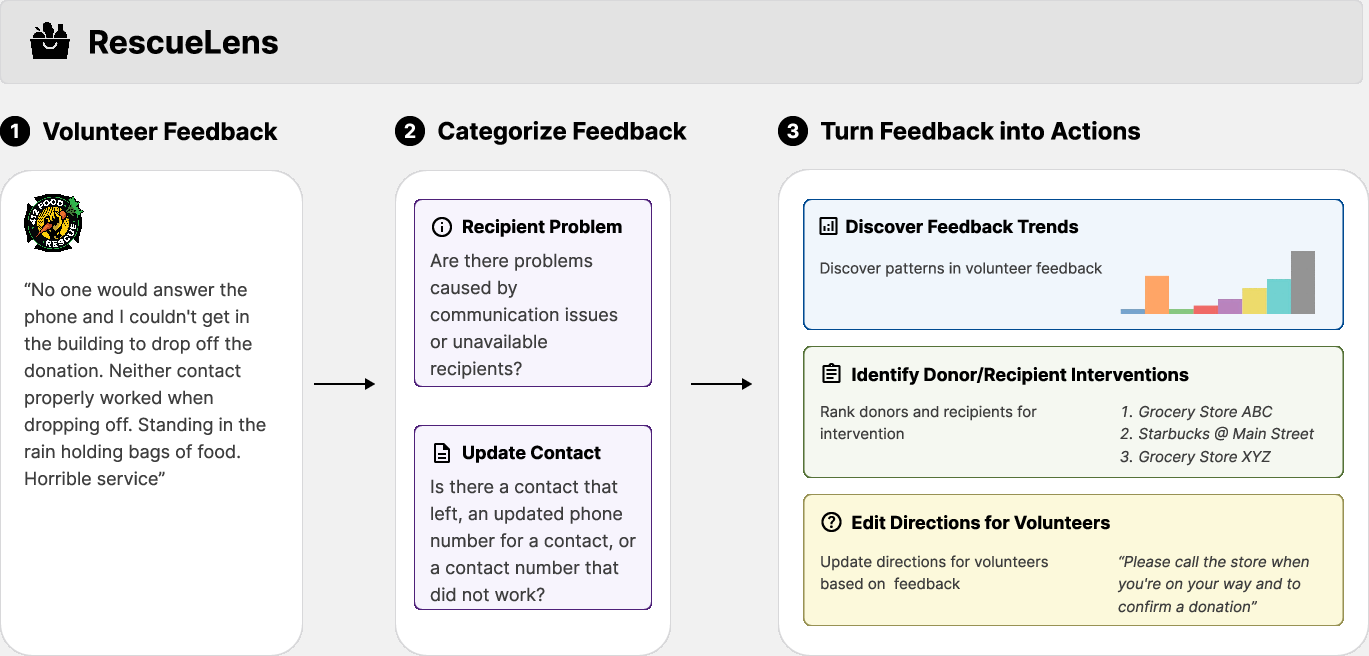
Figure 1: A schematic overview of RescueLens, illustrating the automated feedback categorization and downstream action modules.
System Design
RescueLens leverages an LLM-centric pipeline designed for minimal data regimes, prioritizing recall in the feedback triage phase to avoid loss of critical incidents. The system consists of two primary interrelated functional blocks: feedback categorization and recommendation of actions.
Volunteer Feedback Categorization
Operating on a historical dataset encompassing over 14,000 volunteer feedback instances within 200,000+ rescue trips since 2018, RescueLens uses in-context learning via prompt engineering atop GPT-4o mini. The domain-specific prompt combines a detailed scenario description with granular guidelines and curated few-shot examples, optimizing for both class balance and minimal ambiguity given the inherently subjective and ambiguous content of volunteer reports.
Seven action-deterministic feedback categories were defined via open coding and consensus among domain experts:
- Inadequate Food
- Earlier Pickup
- Donor Problem
- Recipient Problem
- Update Contact
- System Problem
- Direction Problem
The prompt design enforces task-specific granularity, which is shown via ablation to be critical for both precision and recall.
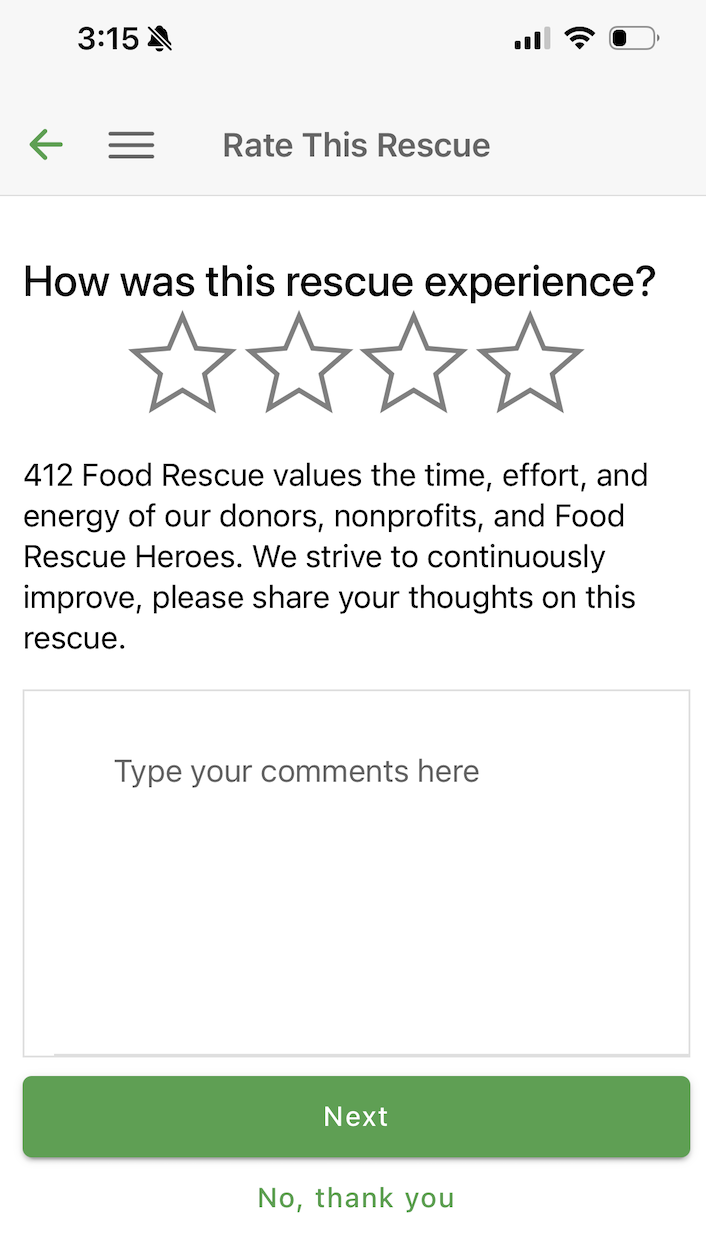
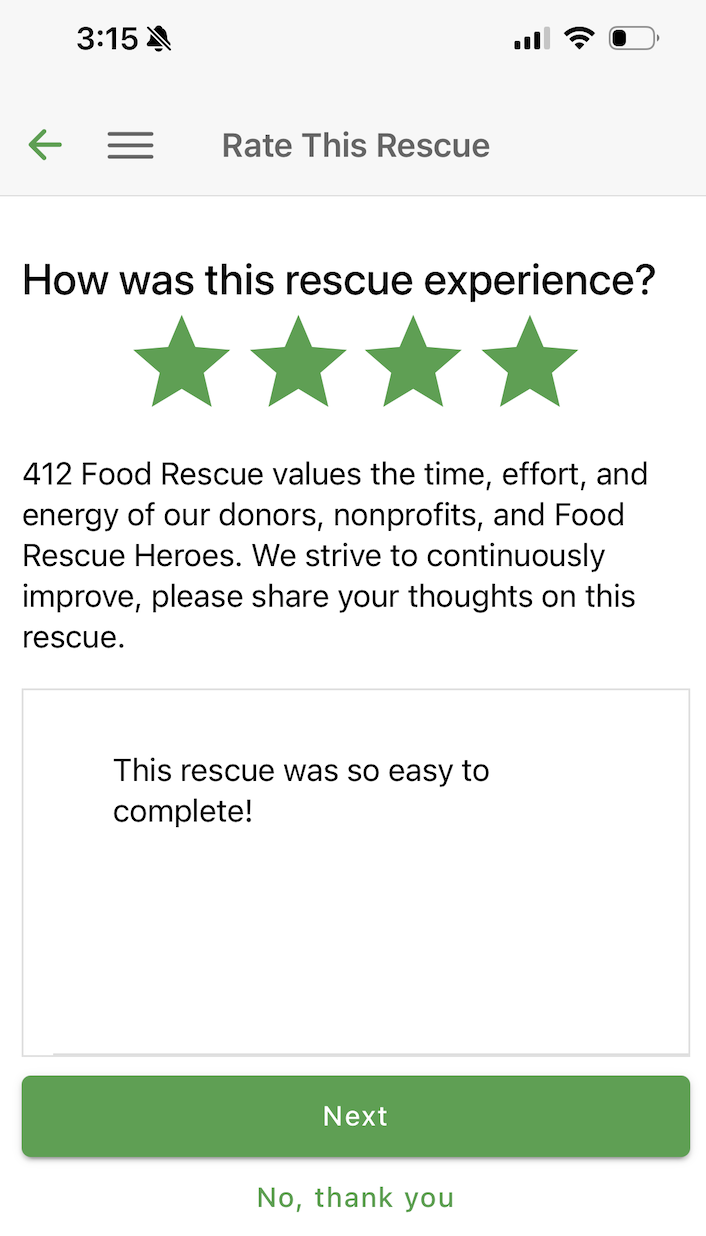
Figure 2: User feedback interface at 412 Food Rescue, where volunteers rate and describe their rescue trip experiences.
Action Modules
The insights from categorization feed two downstream modules tightly aligned with organizational operations:
- Donor and Recipient Prioritization: Scores are assigned based on the empirical rate of negative feedback/comments (incidence per trip), combining both explicit rating scores and extracted issue presence. Entities are ranked, enabling targeted interventions.
- Automated Direction Rewrites: For feedback identified as "Direction Problem," the LLM proposes additive corrections to the existing pickup/delivery directions. The rewrite logic is strictly additive and only triggers when explicit corrections are present in the comment, minimizing the risk of hallucination or unintended content erasure.
Empirical Evaluation
On an annotated set of 125 feedbacks, RescueLens achieves a recall of 97.4% and precision of 83.3% in flagging incident-relevant feedback, with a macro accuracy of 93.1% for the GPT-4o mini configuration. Compared to strong non-LLM baselines (TF-IDF/logistic regression and DistilBERT), which default to high-recall but extremely low precision regimes due to the rare issue prevalence, the LLM-based approaches deliver Pareto-efficient balance and meaningful cost reduction relative to large commercial LLM backbones.
Ablation studies demonstrate a 4–6% decrement in F1 and precision when prompt guidelines or few-shot examples are omitted, underscoring the necessity of domain-specific prompt construction.
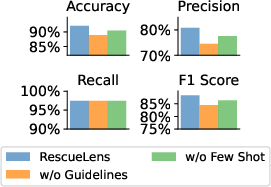
Figure 3: Ablation study showing performance drop without domain-specific guidelines and few-shot examples.
Direction Rewrite Quality
In a human evaluation (n=30, dual annotators), direction rewrites produced by the LLM module receive average scores exceeding 4.7/5 across helpfulness, novelty, and clarity axes, with 70% of outputs rated at ceiling on all criteria. This evaluation validates the module’s utility in generating actionable, volunteer-readable, and information-preserving updates.
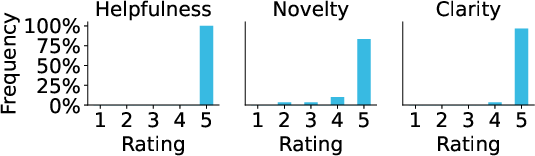
Figure 4: Distribution of human ratings for rewritten volunteer directions, showing high scores for helpfulness, novelty, and clarity.
Action Recommendations and Intervention Efficiency
Donor and recipient scoring based on feedback categorization produces a sharply tilted distribution: less than 0.5% of donors are responsible for over 30% of the actionable issues, despite representing only 2.5% of all trips. This output enables high-leverage operational focus.
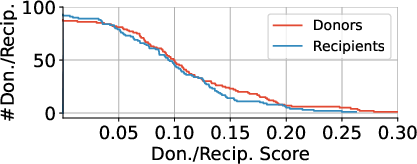
Figure 5: Distribution of donor and recipient issue scores, emphasizing concentration of issues among a small subset of entities.
Donor comment scores show a substantially negative correlation (r2=0.45) with trip ratings (lower trip satisfaction correlates with higher incidence of flagged donor issues), confirming that addressing high-ranked donors is likely to improve overall volunteer satisfaction.
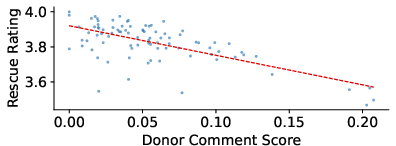
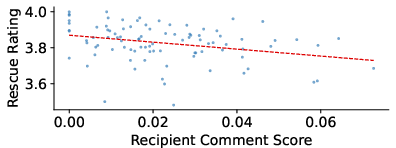
Figure 6: Correlation between donor/recipient comment scores and mean trip ratings; donor interventions have high leverage on satisfaction.
Additionally, a breakdown of issues among donors confirms that a handful dominate the negative incident landscape across multiple issue types, reinforcing the efficacy of focused interventions.
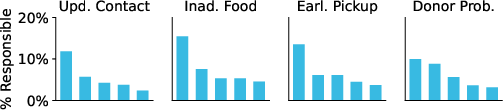
Figure 7: Identity and incidence of most problematic donors, highlighting the efficiency gains possible by addressing key actors.
The system demonstrably reduces organizer workload and experience fragmentation. Organizer interviews confirm RescueLens streamlines daily triage, supports empirical trend discovery, and enables rapid actionability, with daily and seasonal/quarterly trend monitoring now feasible at scale.
Practical Deployment and Organizational Integration
RescueLens is fully integrated as a database service and Slack/GUI interface at 412 Food Rescue. It runs daily classification and monthly aggregation. User-facing dashboards and proactive notifications ensure adoption and facilitate action tracking.
Notably, the tool’s deployment has illuminated critical practical lessons:
Implications and Future Directions
RescueLens validates the paradigm of cost-effective, prompt-centric, in-context LLM deployment for non-profit sectors constrained by limited data and compute. By automating the triage and initial action mapping of large volumes of subjective, highly-contextual user feedback, nonprofit organizers gain significant leverage, enabling both more targeted interventions and scalable process improvements.
Practically, RescueLens refines resource allocation by allowing organizations to focus on high-impact problem areas without exhaustive manual review. Theoretically, it demonstrates the feasibility of operationalizing LLMs for semi-structured data extraction without large-scale supervised finetuning.
Potential future directions include:
- Automated tracking and closing-the-loop on interventions (full feedback-action cycle).
- Extension to open question answering modules for ad-hoc volunteer support.
- Generalization to other nonprofits with different or evolving feedback taxonomies, leveraging RescueLens’s modular prompt and scoring architecture.
Conclusion
RescueLens exemplifies the structured deployment of LLMs for social impact: automating labor-intensive triage, surfacing high-leverage operational actions, and supporting ongoing process optimization in nonprofit logistics contexts. Its prompt-centric paradigm and high recall orientation provide a template for similar applications in structurally analogous domains, enabling nonprofit organizations to translate rich, textual volunteer feedback into efficient, scalable interventions without requiring large proprietary training datasets or complex custom model development.
RescueLens’s successful integration and positive organizational impact at 412 Food Rescue underscore the practical value and potential for domain-driven, prompt-engineered LLM tools in operational social good settings.