- The paper introduces a modified RBIS protocol to achieve sub-microsecond time synchronization in hybrid 5G-TSN networks.
- It demonstrates, through a comprehensive testbed setup with USRP units and oscilloscopes, that a moving average filter of size 1024 improves skew accuracy significantly.
- The experimental results highlight a synchronization precision within ±50 nanoseconds, paving the way for improved real-time industrial applications and future network scalability.
Cracking the Microsecond: An Efficient and Precise Time Synchronization Scheme for Hybrid 5G-TSN Networks
Introduction
The paper "Cracking the Microsecond: An Efficient and Precise Time Synchronization Scheme for Hybrid 5G-TSN Networks" (2511.14462) presents a comprehensive examination of the limitations and solutions for achieving precise time synchronization in hybrid wireless networks, specifically targeting 5G-TSN integration. Wireless communication demands such synchronization for industrial applications, where less than one microsecond is required to ensure deterministic behavior in automated environments. The study explores the use of a modified protocol to achieve these goals in a testbed setting, offering a feasible path towards high-precision synchronization in industrial 5G networks.
Protocol and Mapping
The authors introduce a time synchronization scheme based on the \gls{rbis} protocol, traditionally used in Wi-Fi networks, and adapted for 5G systems. The \gls{rbis} protocol is independent of network technology but requires the identification of a synchronization signal within the 5G infrastructure. It utilizes \gls{pbch} signals, which are inherently connected with key synchronization sequences in 5G networks, aligning timestamps and propagating synchronization metadata efficiently. This methodology allows for the alignment of user equipment (UEs) and macro-level network components by leveraging existing 5G broadcast capabilities to extend precision beyond that found in current setups.
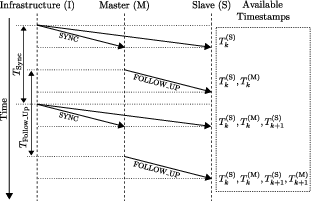
Figure 1: \gls{msc} demonstrating the technology-independent capabilities of the \gls{rbis} protocol applied to a 5G scenario.
Experimental Setup and Methodology
The experimental evaluation involves a composite setup including mini PCs, Universal Software Radio Peripheral (USRP) units, and oscilloscope measurements to ascertain clock offsets and skews. The practical implementation via \gls{oai} provides real-world validation through hardware that mimics industrial network configurations. The moving average filter reveals that a filter size of 1024 leads to significant accuracy improvements, reducing noise and refining the skew estimation which underpins the timing precision crucial for industrial applications.
Results and Discussion
The experimental results demonstrate an unprecedented precision, maintaining synchronization within ±50 nanoseconds even under stringent testing conditions. This achievement, over an extensive series of measurements, affirms the potential of the approach for real-time synchronization needs in demanding environments. The study discusses possible implications of propagation delay and similar concerns, countered effectively through adaptive technologies like \gls{ta}, making the synchronization scheme viable for diverse use cases.
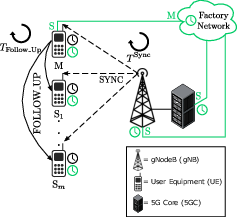
Figure 2: Architectural integration possibilities of the \gls{rbis} protocol, facilitating hybrid network synchronization including 5G and TSN components.
Implications and Future Developments
The implications of this research are significant for the evolution of industrial 5G and 6G networks. By achieving such precision, new avenues for applications that necessitate time-sensitive operations are opened, promising enhanced efficiency and further integration of IoT devices in industrial workflows. Future work could explore adjustments for propagation delays and broader implementation of the protocol beyond the controlled lab environment to verify its robustness in urban and rural deployments, as well as potential scalability for larger network areas.
Conclusion
The paper provides a detailed exploration into the synchronization capabilities of hybrid 5G-TSN networks, presenting a clear method for achieving precise sub-microsecond timing. Through detailed experimentation and protocol extension, the study paves the way for increased integration and reliability of time-sensitive applications in 5G and future 6G architectures, while ensuring practical and high-performance results applicable in real-world industrial environments.