- The paper proposes TarDGR, a framework that integrates task-aware retrieval augmentation to enhance dynamic recommendation generalization without manual labeling.
- It employs a Graph Transformer-based model combining semantic and structural encodings to accurately evaluate task-relevant historical subgraphs.
- Experimental results show improved Recall@20 and nDCG@20, highlighting the framework's robustness in evolving user-item interactions.
Task-Aware Retrieval Augmentation for Dynamic Recommendation
Introduction
The paper "Task-Aware Retrieval Augmentation for Dynamic Recommendation" (2511.12495) addresses the problem of dynamic recommendation systems, which aim to personalize suggestions by modeling how user-item interactions change over time. Traditional approaches that leverage dynamic GNNs face generalization challenges due to discrepancies between pre-training and fine-tuning data. This research introduces a novel framework, TarDGR, designed to boost generalization by integrating retrieval-augmented task-aware models.
Framework Overview
The core contribution of this work is the Task-Aware Retrieval-Augmented Dynamic Graph Recommendation (TarDGR), which enhances model generalization without the need for manual labeling of task-relevant data. TarDGR uses a Task-Aware Evaluation Mechanism to identify historical subgraphs that are semantically important to the task at hand. This approach allows for the creation of task-specific datasets, enabling the model to evolve with changing user preferences.
This framework incorporates a Graph Transformer-based Task-Aware Model that leverages semantic and structural encodings to identify and integrate relevant subgraphs at the inference stage. The integration process involves retrieving and fusing these subgraphs with the query subgraph, hence improving representation and mitigating the effects of temporal generalization issues.
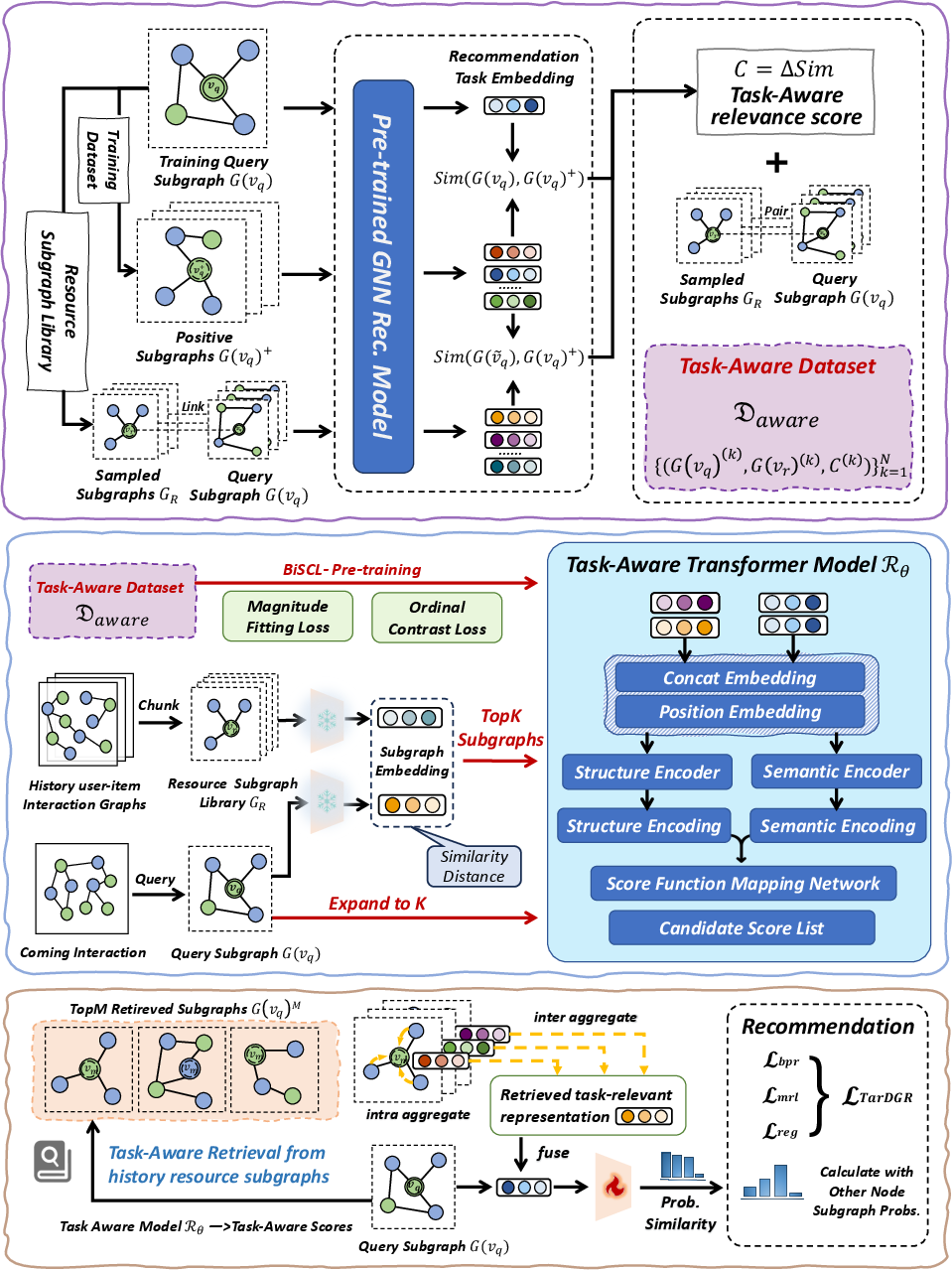
Figure 1: Overview of the TarDGR framework.
Methodology
Task-Aware Evaluation Mechanism
TarDGR introduces a Task-Aware Evaluation Mechanism that constructs task-specific supervision signals automatically. This mechanism evaluates the contribution of historical subgraphs by examining the semantic similarity between the fused query-candidate subgraph and positive recommendation samples, allowing for the differentiation between beneficial, harmful, and irrelevant subgraphs.
The task-aware model employs a Graph Transformer architecture to learn a hybrid of semantic and structural encodings. Semantic similarity is captured through attention mechanisms, while structural similarity is gauged using graph convolution layers. The ultimate representation aids in accurately estimating task relevance and enables robust knowledge transfer despite temporal shifts in data.
Inference Process
During inference, TarDGR dynamically retrieves task-relevant subgraphs from a resource pool, enhancing the query subgraph's representation. This retrieval-and-fusion process seeks to improve the generalization of temporal recommendations. This task-aware retrieval mechanism turns out to be crucial for mitigating temporal discrepancies and improving the recommendation system's performance on unseen data.
Experimental Evaluation
TarDGR's efficacy was tested on several datasets, consistently outperforming state-of-the-art methods. Results demonstrated clear improvements in Recall@20 and nDCG@20 metrics, highlighting the value of task-aware retrieval and fusion in dynamic recommendation environments.
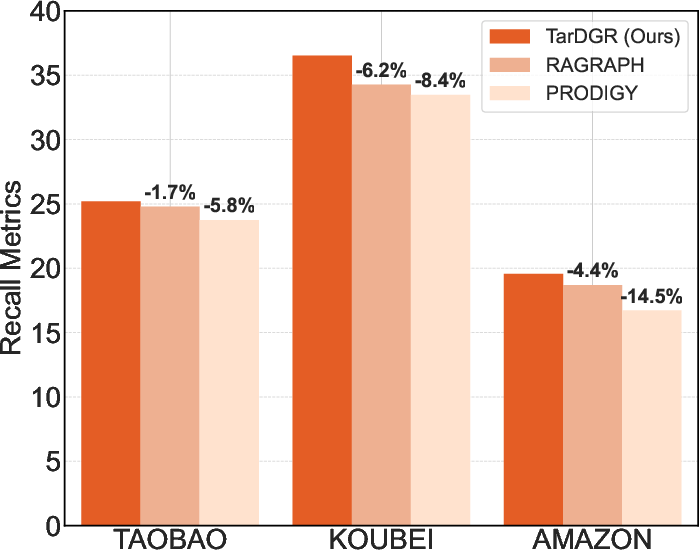
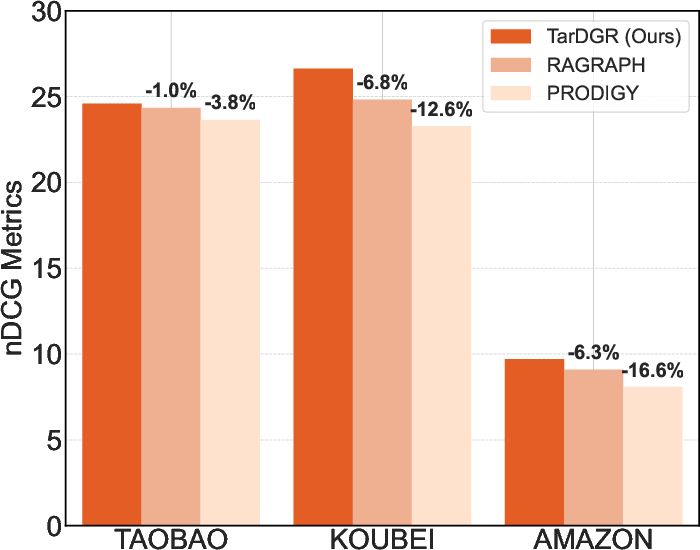
Figure 2: Performance comparison of TarDGR and other RAG methods.
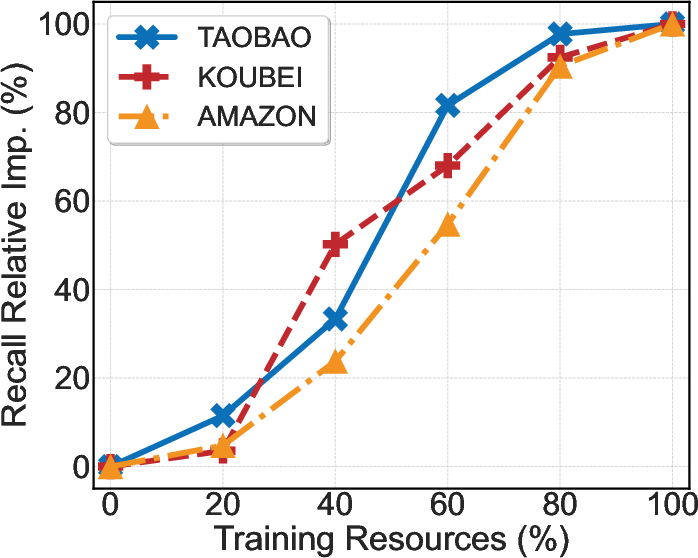
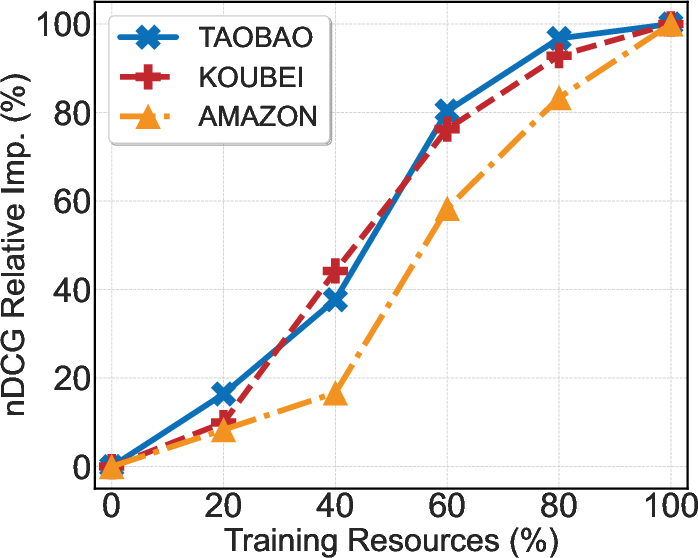
Figure 3: Training resource experiments for the Graph Transformer-based Aware Model applied to TarDGR.
Implications and Future Work
TarDGR offers a new path for enhancing dynamic recommendation systems, exhibiting improved generalization by effectively harnessing historical data. Its task-aware design ensures relevant information is used in a targeted manner, enhancing the model's adaptability to shifting user preferences. Future developments could involve extending the framework to other dynamic domains beyond recommendation, potentially leveraging task-awareness in more complex temporal environments.
Conclusion
The research introduces TarDGR, reimagining dynamic recommendation through task-aware retrieval-augmented strategies. This work demonstrates that incorporating task relevance into retrieval augmentation enhances model performance significantly across temporal shifts. As recommendation systems become more prevalent in real-time applications, such frameworks may provide the backbone for more resilient and accurate systems, bolstering personalization in dynamic user environments.

