- The paper introduces an AI-driven framework that integrates geometry generation, adaptive meshing, FEA simulation, and result analysis into a seamless end-to-end process.
- It employs natural language processing to convert engineering intent into validated CAD models, physics-aware meshes, and accurate simulation setups.
- Experimental results on 432 NACA4412 wing configurations demonstrate high mesh quality, efficient simulation, and strong industrial applicability.
FeaGPT: An End-to-End Agentic-AI for Finite Element Analysis
Introduction
The paper "FeaGPT: an End-to-End agentic-AI for Finite Element Analysis" introduces a novel AI-driven framework for automating finite element analysis (FEA) workflows. This framework leverages the capabilities of LLMs to interpret natural language specifications and execute complex geometry-mesh-simulation-analysis (GMSA) pipelines autonomously. Unlike existing solutions that automate specific FEA components, FeaGPT integrates the entire GMSA process, offering a seamless transition from engineering intent to validated computational results.
System Overview
The FeaGPT framework is designed to streamline the FEA process through a series of interconnected modules that transform natural language input into validated FEA outputs. The core components of the system include:
- Engineering Analysis Planning: Interprets natural language descriptions to formulate comprehensive simulation strategies.
- Geometry Generation: Utilizes FreeCAD's Python API to convert text specifications into parametric CAD models.
- Intelligent Meshing: Employs Gmsh for physics-aware adaptive mesh generation.
- FEA Simulation: Configures and runs the CalculiX solver to produce engineering metrics.
- Result Analysis: Applies data-driven methods for design optimization and parameter studies based on the analysis objectives.
These modules operate independently yet cohesively, maintaining data consistency and enabling efficient transitions between steps.
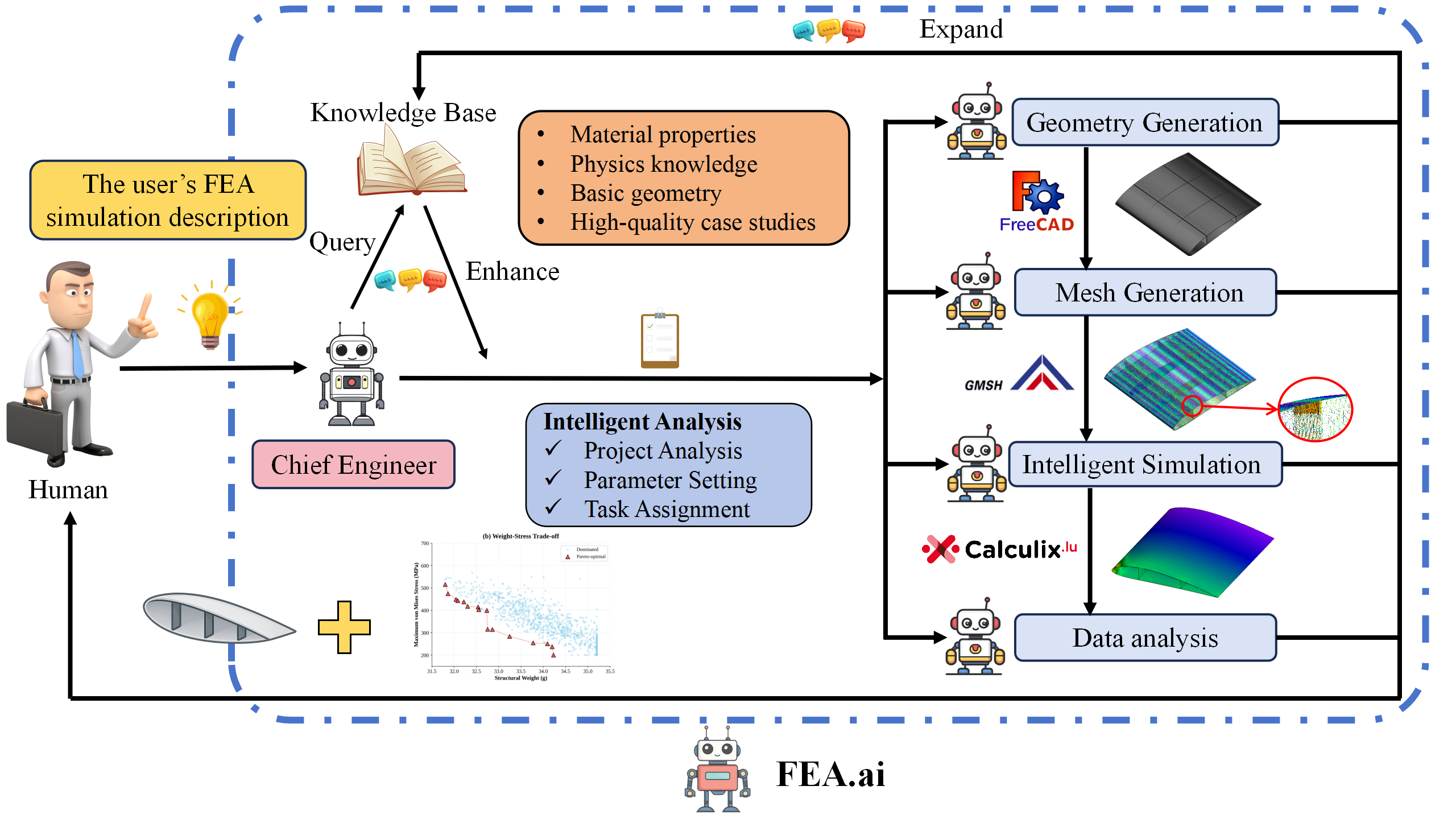
Figure 1: FeaGPT system architecture illustrating the complete GMSA (Geometry-Mesh-Simulation-Analysis) pipeline.
Implementation and Methodologies
Geometry Generation and Meshing
The geometry generation module intelligently selects between knowledge-augmented pre-defined patterns and novel synthesis based on the similarity of current requirements to known configurations. For standard designs, validated geometric definitions ensure consistency, while novel designs are synthesized through LLM-guided code generation.
Mesh generation employs Gmsh's adaptive refinement, automatically fine-tuning element sizes around critical regions such as high curvature areas and thin-walled structures. This adaptive approach ensures both precision and computational efficiency, creating high-quality meshes suitable for robust FEA.
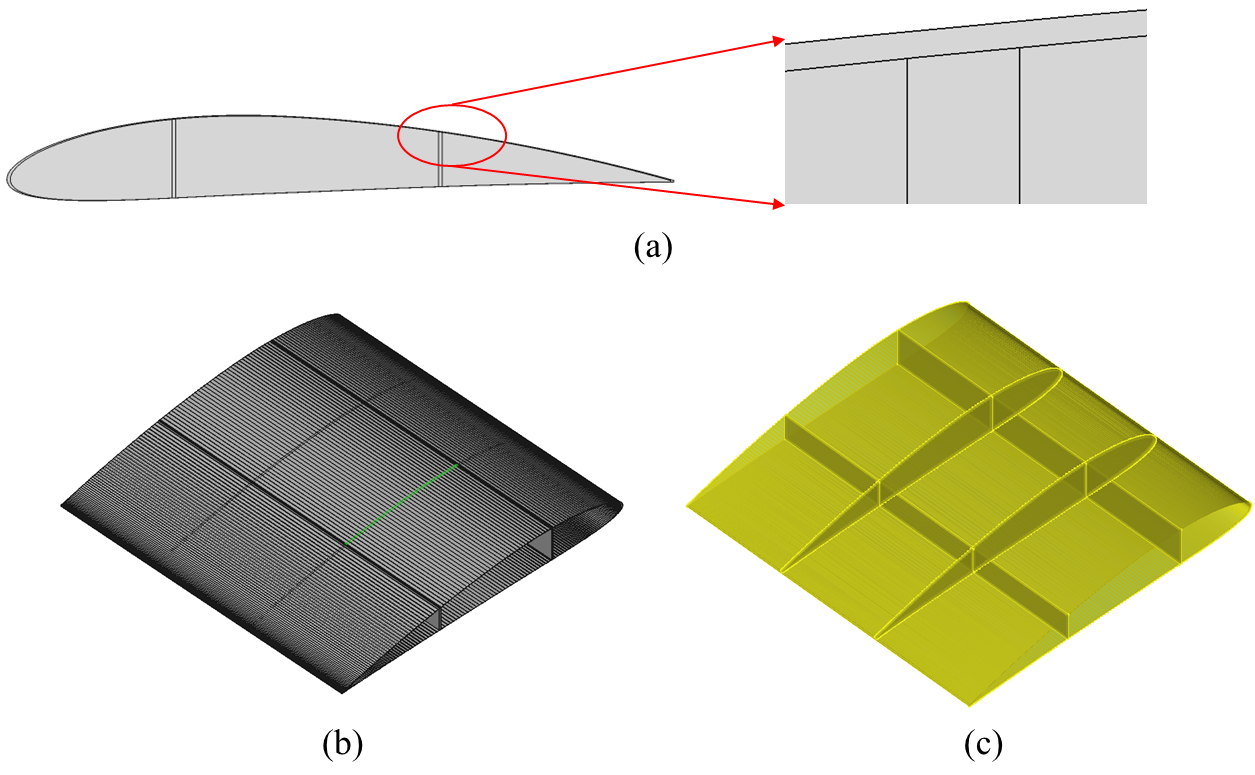
Figure 2: Geometric details of automatically generated NACA4412 wing structure.
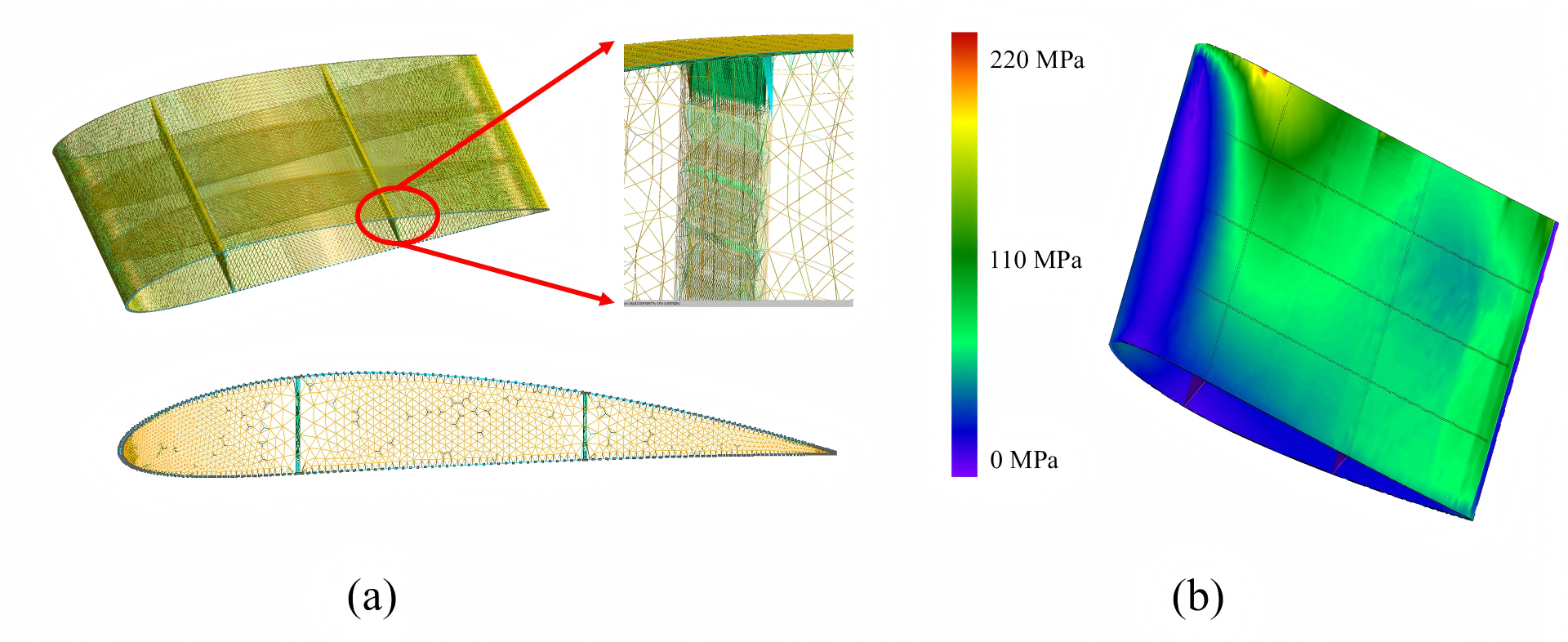
Figure 3: Adaptive mesh generation and FEA results for NACA4412 wing configurations.
Automated FEA Simulation
FeaGPT automatically configures FEA simulations by translating structured JSON specifications into CalculiX input files, ensuring alignment with the original engineering specifications. The system employs a strategy that balances reuse of validated configurations and adaptation to novel requirements, with semantic mappings enabling precise application of loads and constraints.
Results Analysis and Scalability
The framework's data analysis module can handle both single-design assessments and extensive parametric studies. It intelligently applies appropriate analysis methods, such as sensitivity analysis or Pareto optimization, based on the specified objectives. FeaGPT's batch processing architecture facilitates scalable execution of hundreds of designs, dynamically optimizing resource allocation and ensuring efficient completion of large-scale studies.

Figure 4: Comprehensive structural analysis of 432 NACA4412 configurations.
Experiments and Industrial Validation
The study conducted a large-scale parametric analysis of 432 NACA4412 wing configurations, showcasing the framework's capability to autonomously generate, simulate, and analyze diverse designs from simple natural language input. All configurations achieved high mesh quality, consistent FEA results, and were processed efficiently within a single day.
Further validating its industrial applicability, FeaGPT generated accurate CalculiX configurations for turbocharger components, demonstrating its effectiveness in rotating machinery analysis. This capability underscores the potential of natural language interfaces to democratize access to complex engineering simulations.
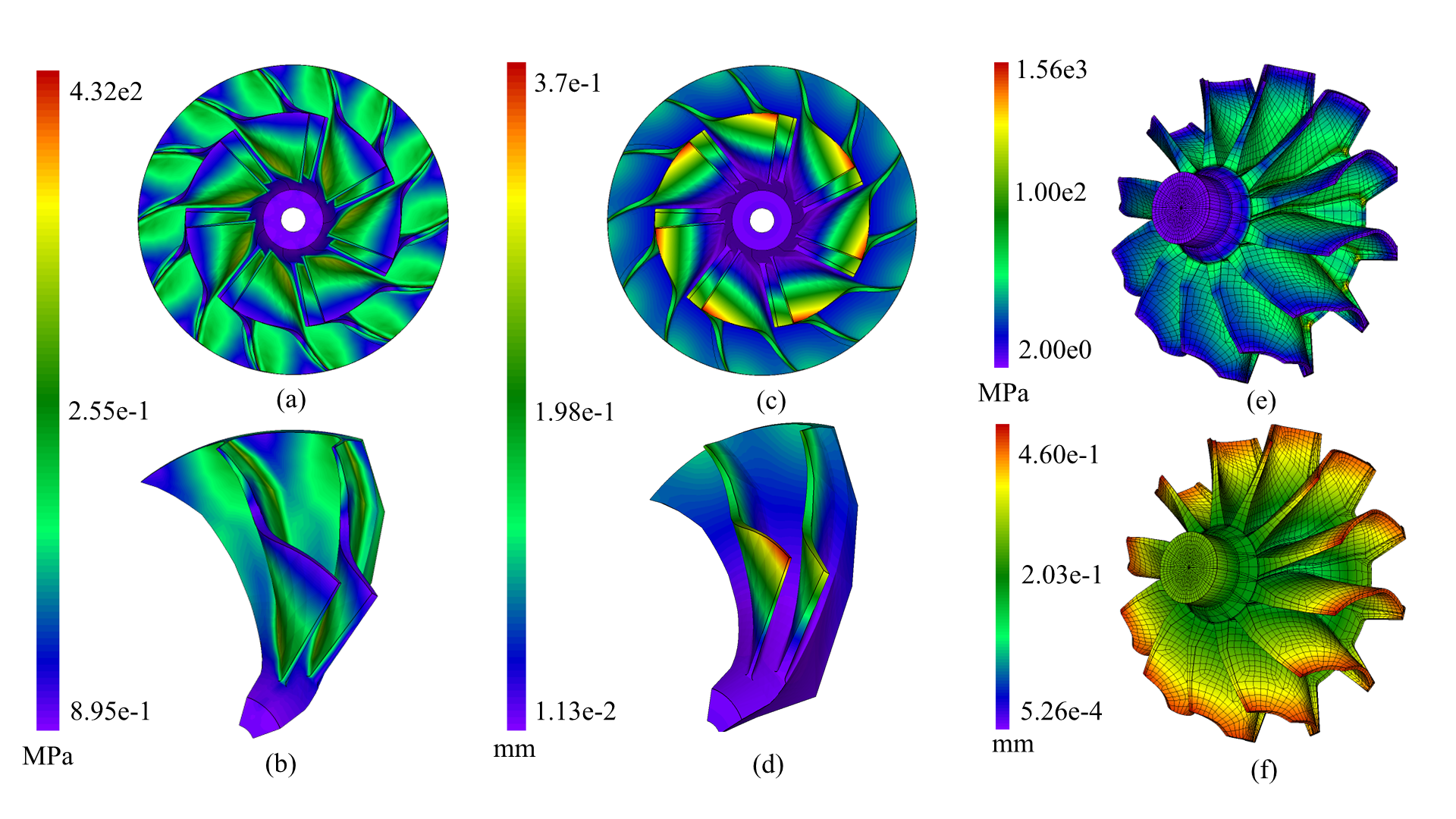
Figure 5: FEA results from FeaGPT-generated CalculiX configurations for turbocharger components under 110,000 RPM.
Conclusion
FeaGPT represents a significant advance in the automation of FEA workflows, capable of transforming natural language engineering specifications into complete analysis outputs. Its integration of LLM-driven natural language processing with robust engineering tools addresses both technical and accessibility challenges in computational mechanics. Future developments will aim to expand the framework's applicability to more complex multi-physics scenarios and further enhance its mesh generation capabilities.