- The paper presents the discovery and Bayesian validation of GJ 251 c—a habitable zone super-Earth candidate—using over two decades of precision radial velocity data.
- By employing chromatic RV extraction and Gaussian process modeling, the study effectively disentangles planetary signals from stellar activity.
- The favorable orbital parameters and imaging prospects of GJ 251 c position it as a prime target for next-generation direct imaging and atmospheric characterization.
Discovery and Characterization of a Habitable Zone Super-Earth Candidate Amenable to Direct Imaging
Introduction and Context
The paper presents a comprehensive analysis of the GJ 251 system, focusing on the detection and characterization of a candidate super-Earth, GJ 251 c, orbiting within the habitable zone (HZ) of a nearby early M dwarf. The study leverages over two decades of high-precision radial velocity (RV) data from multiple instruments (HIRES, CARMENES, SPIRou, HPF, NEID), advanced chromatic Gaussian process (GP) modeling, and robust Bayesian model comparison to disentangle planetary signals from stellar activity. The proximity of GJ 251 (5.58 pc) and the orbital properties of GJ 251 c make it a prime target for direct imaging with next-generation extremely large telescopes (ELTs).
Data Acquisition and Chromatic RV Extraction
The analysis utilizes a heterogeneous dataset, including visible and near-infrared RVs, with careful treatment of instrumental offsets and systematics. The NEID spectrograph's broad wavelength coverage enables the construction of "red" RVs by restricting analysis to orders with peak flux above 800 nm, exploiting the flux distribution of M dwarfs to mitigate activity-induced RV noise.

Figure 1: Science fiber flux as a function of wavelength for the GJ 251 NEID spectra, highlighting the dominance of red flux and the selection of orders for "red" RV extraction.
This chromatic approach is critical for distinguishing planetary signals from activity, as activity-induced RV variations are known to be wavelength-dependent, particularly in M dwarfs.
Periodogram and Activity Analysis
The RV time series is subjected to both Generalized Lomb-Scargle (GLS) and Bayes-Factor Periodogram (BFP) analyses. The dominant 14-day signal (GJ 251 b) is robustly detected across all datasets. A 54-day signal, corresponding to the candidate GJ 251 c, is most prominent in the redder HPF and SPIRou datasets, while activity indicators (linewidth, Hα, Ca IRT, KI, dET) show no significant power at this period.

Figure 2: GLS periodograms of GJ 251 RV data, showing the prominence of the 14-day and 54-day signals and the effect of chromatic RV extraction.
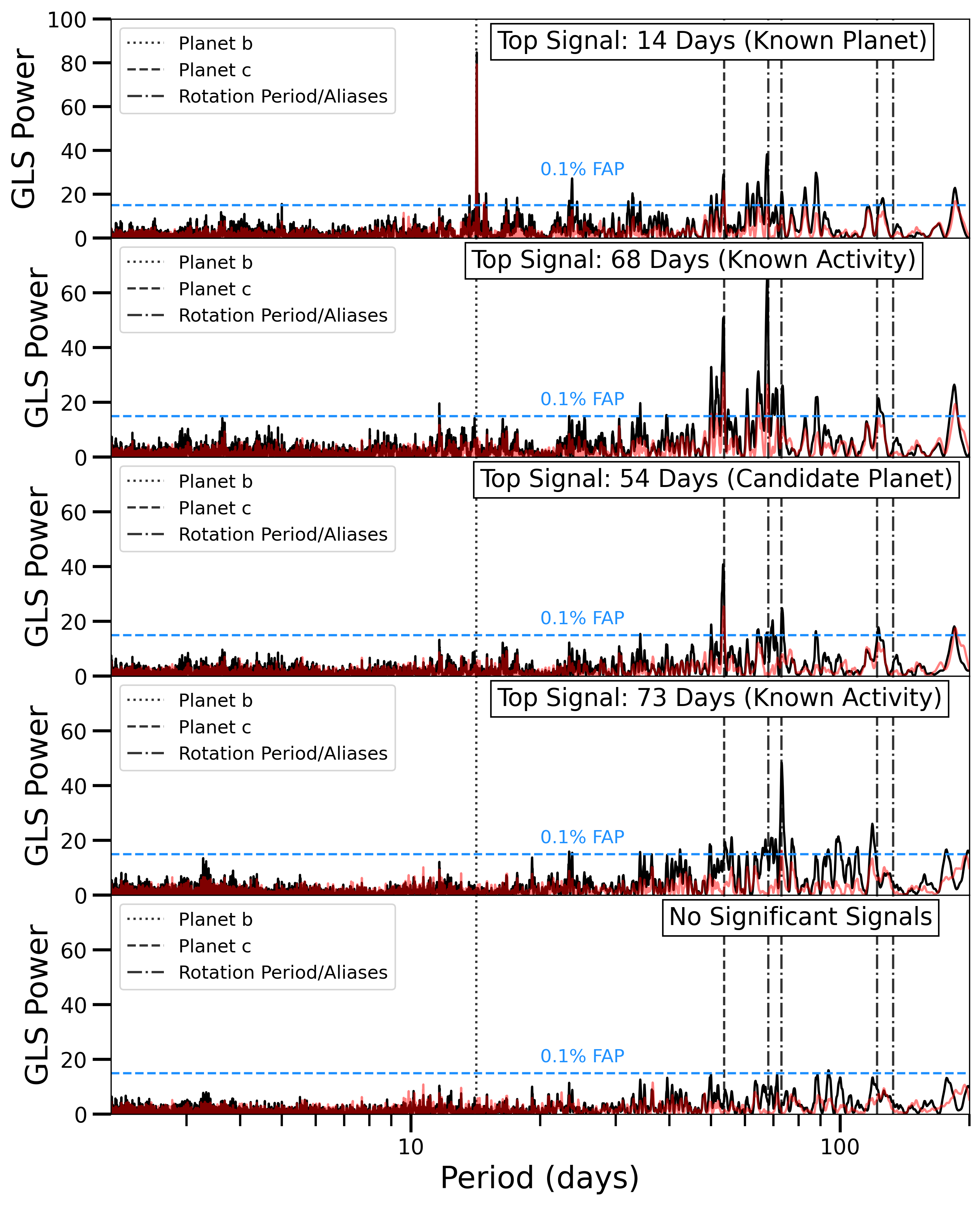
Figure 3: Sequential removal of dominant signals in GLS periodograms, revealing the persistence of the 54-day signal after subtraction of activity-related periodicities.
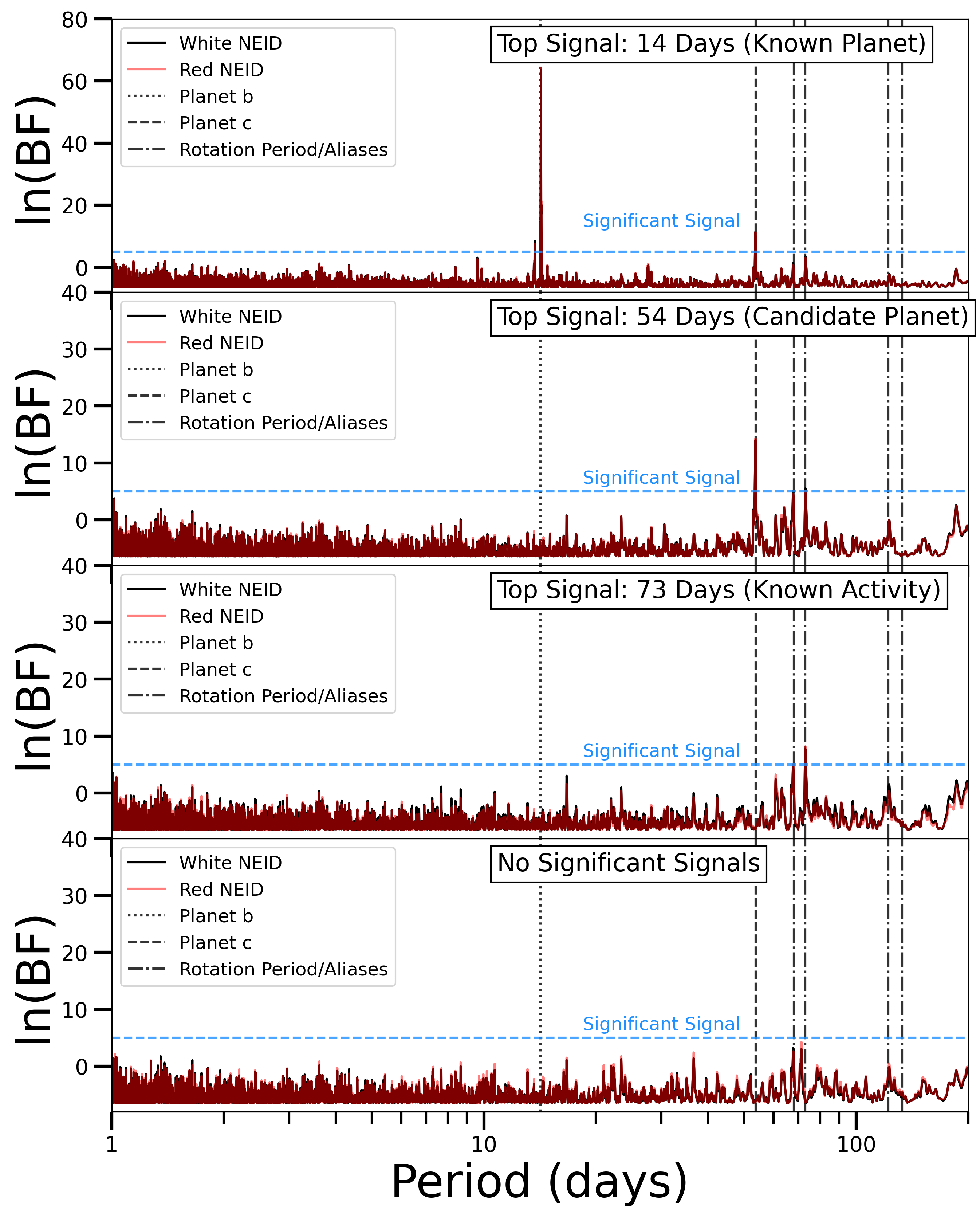
Figure 4: Bayes-Factor Periodograms (BFP) demonstrating the statistical significance of the 14-day and 54-day signals under correlated noise modeling.

Figure 5: Activity indicator periodograms, confirming the absence of significant power at 14 and 54 days, supporting a planetary origin for these signals.
The 68/73/120/130-day signals are attributed to stellar rotation and its harmonics, as corroborated by activity indicators and photometric rotation period estimates.
Bayesian Modeling and Model Selection
The RV data are modeled using Keplerian orbits for the planets and a suite of GP kernels to account for stellar activity. The analysis employs both standard quasi-periodic GPs and the chromatic GP formalism of Cale et al. (2021), which models wavelength-dependent activity across instruments in a unified likelihood.
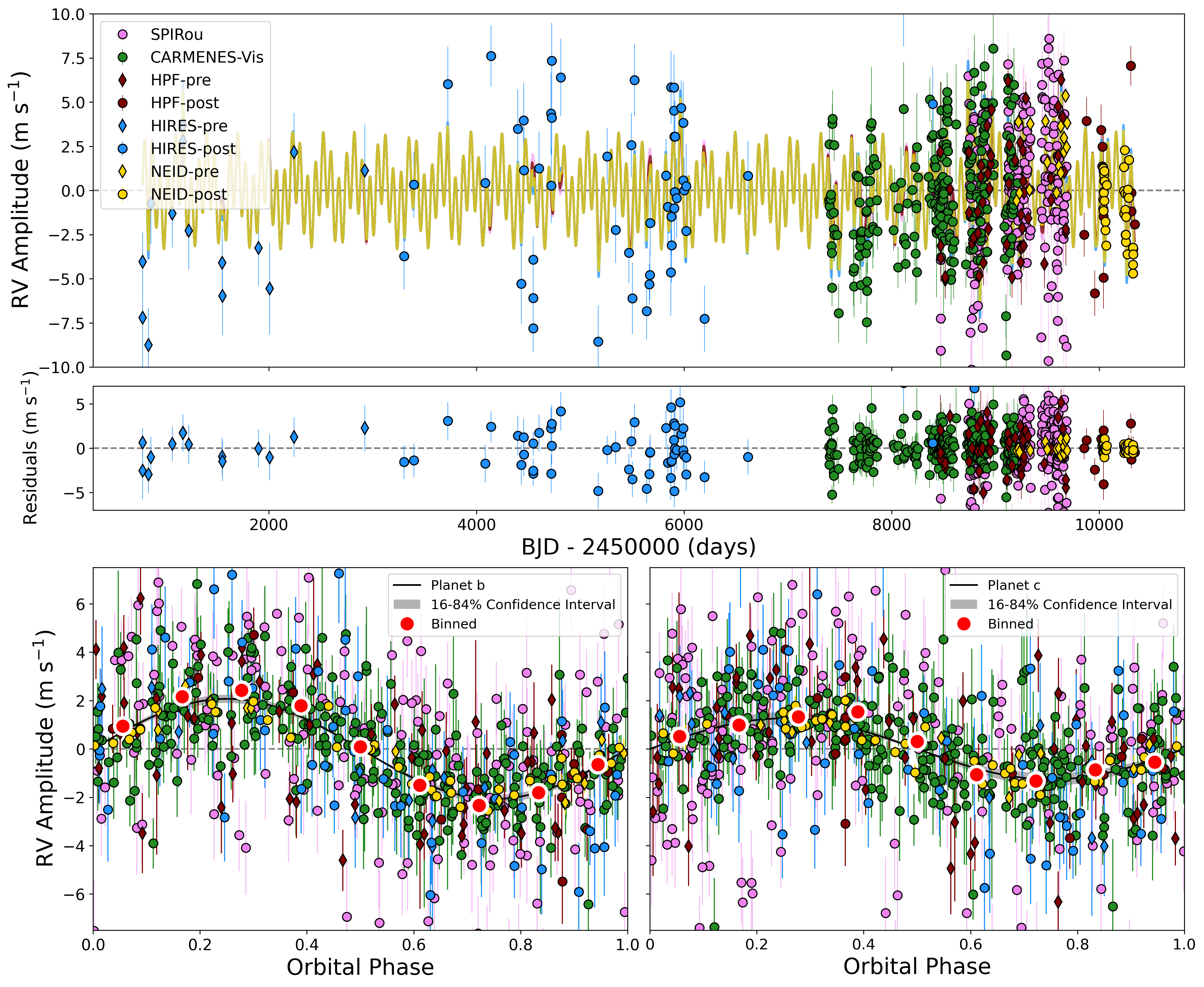
Figure 6: RV time series with the best-fit GP + 2 planet model overlaid, residuals, and phase-folded RVs for GJ 251 b and c.
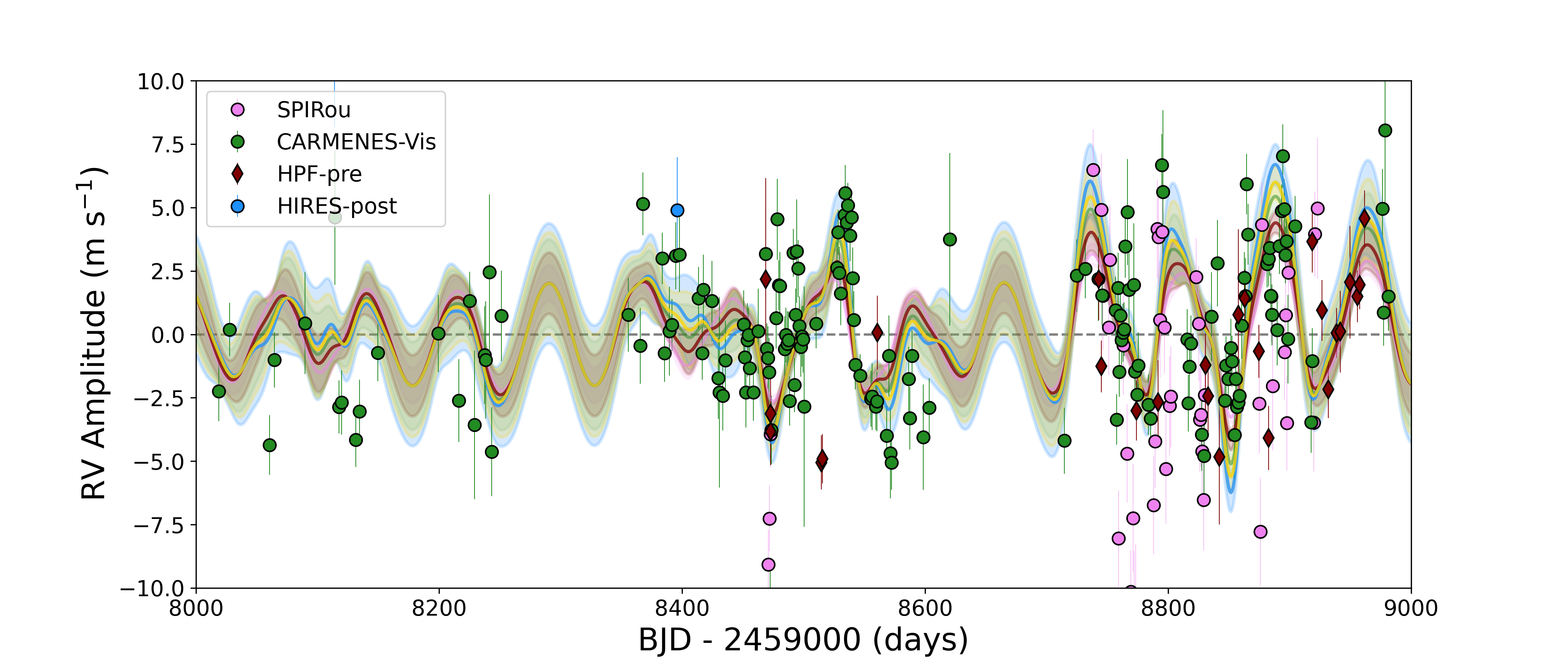
Figure 7: Chromatic GP model predictions for a dense region of RVs, illustrating the wavelength dependence of activity-induced RV variations.
Bayesian evidence computed via nested sampling (juliet/dynesty) is used for model comparison. The two-planet model with the KJ2 chromatic GP kernel is strongly preferred over one-planet or activity-only models, with a Bayes factor exceeding the canonical threshold for model selection. The 54-day signal is stable across instruments and observing seasons, and synthetic data tests confirm a low false alarm probability for a spurious detection at this period.
Photometric and Astrometric Constraints
TESS photometry is analyzed for transits of GJ 251 b and c. Pixel-level periodogram analysis rules out contamination from rapid stellar rotation, and no transits are detected for either planet, consistent with the low geometric transit probability at these orbital separations.
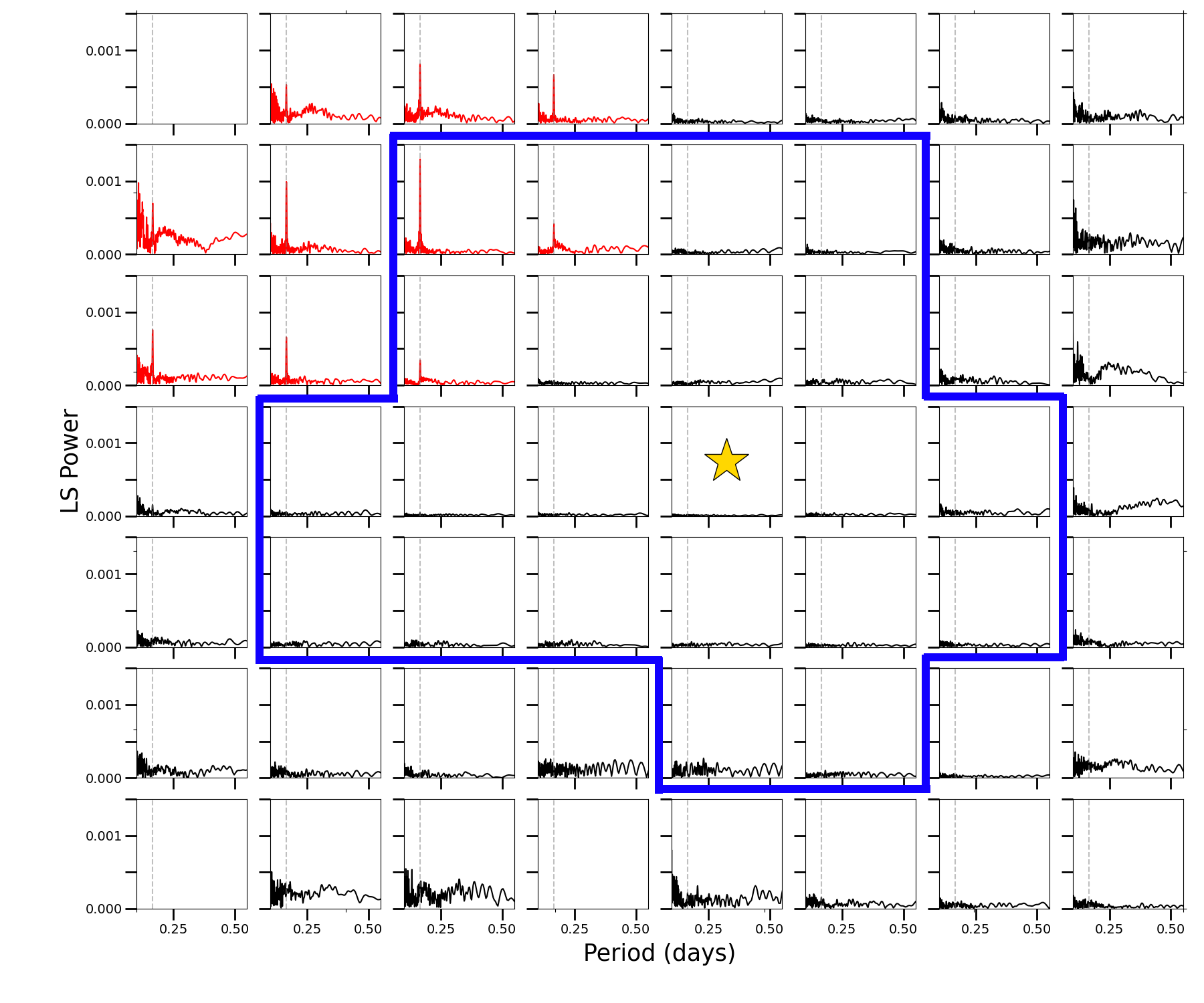
Figure 8: Pixel-by-pixel periodogram of TESS photometry, demonstrating that the observed 4-hour periodicity is not intrinsic to GJ 251.
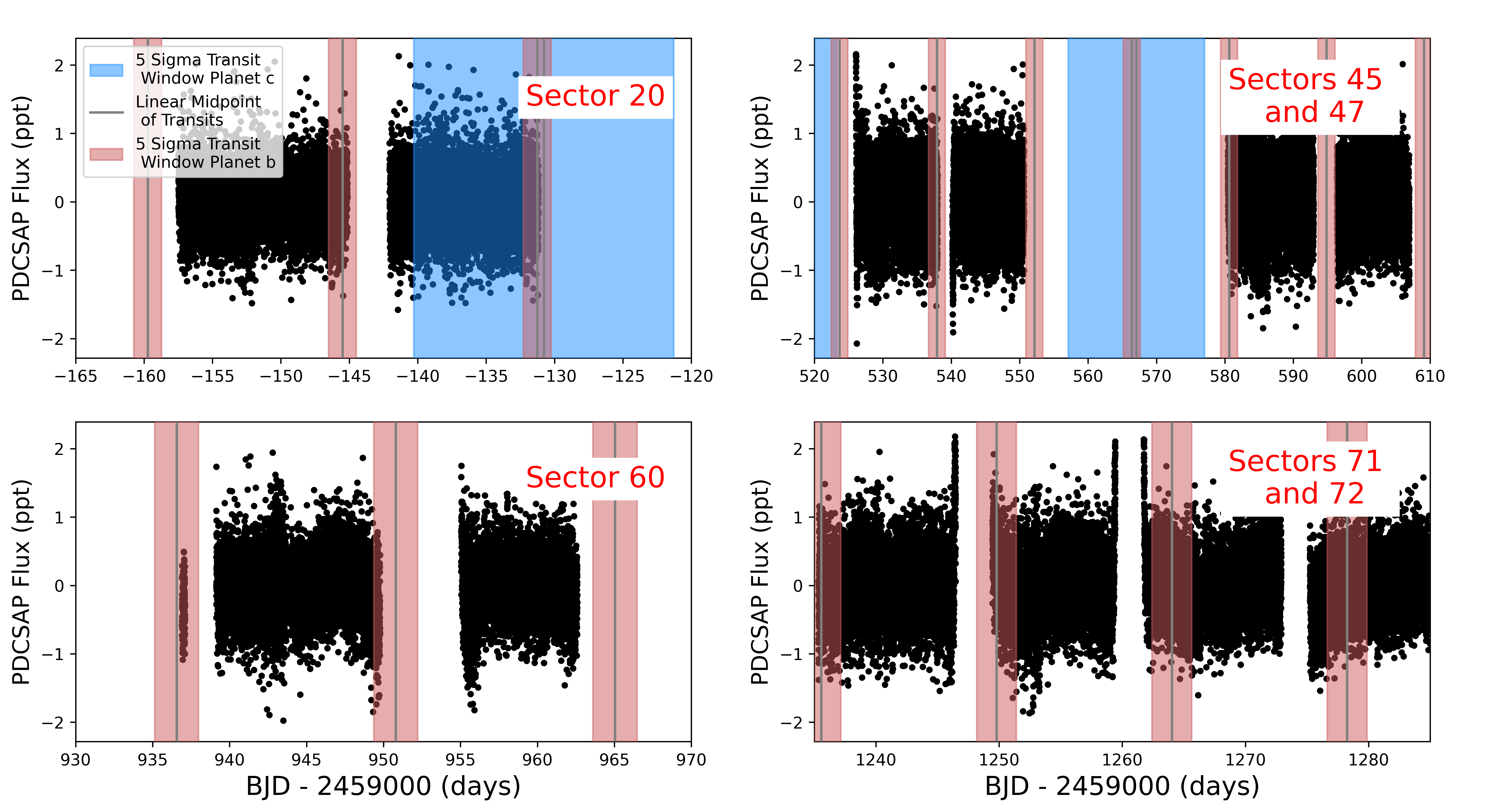
Figure 9: TESS short-cadence photometry with predicted transit windows for GJ 251 b and c, showing the absence of transits.
Gaia astrometry shows no evidence for significant orbital motion, ruling out massive, highly inclined companions as the source of the RV signals.
Direct Imaging Prospects
GJ 251 c's minimum mass (3.8±0.7M⊕), semi-major axis ($0.196$ AU), and the system's proximity yield an angular separation of $0.035''$, placing it within reach of the inner working angle of future ELT-class coronagraphs such as TMT/PSI. The expected planet-star contrast, depending on radius and albedo assumptions, is in the 10−8 to 10−9 range, challenging but plausible for next-generation instrumentation.
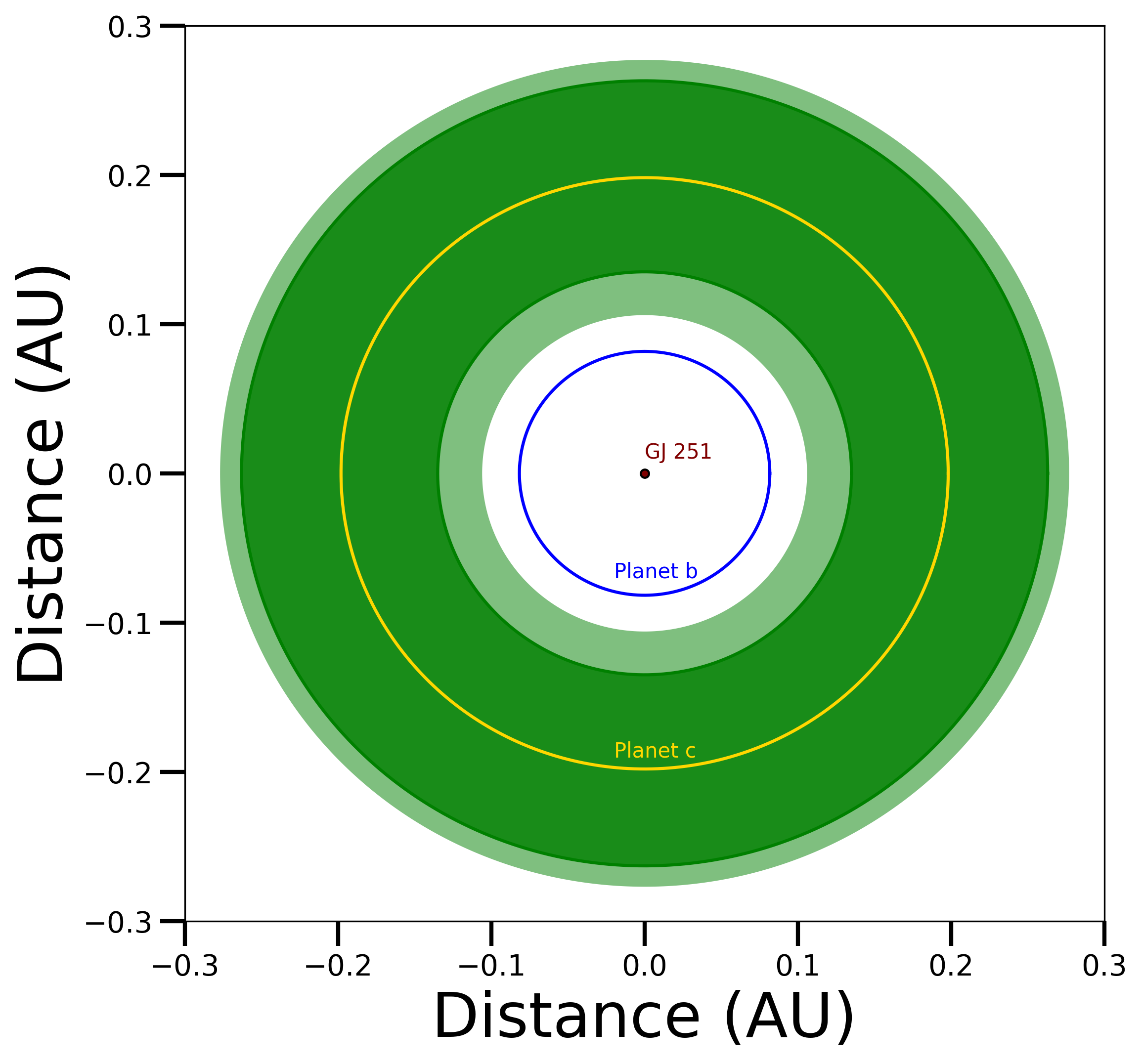
Figure 10: Scaled diagram of GJ 251 and the orbits of b and c, with the conservative and optimistic HZ boundaries indicated.
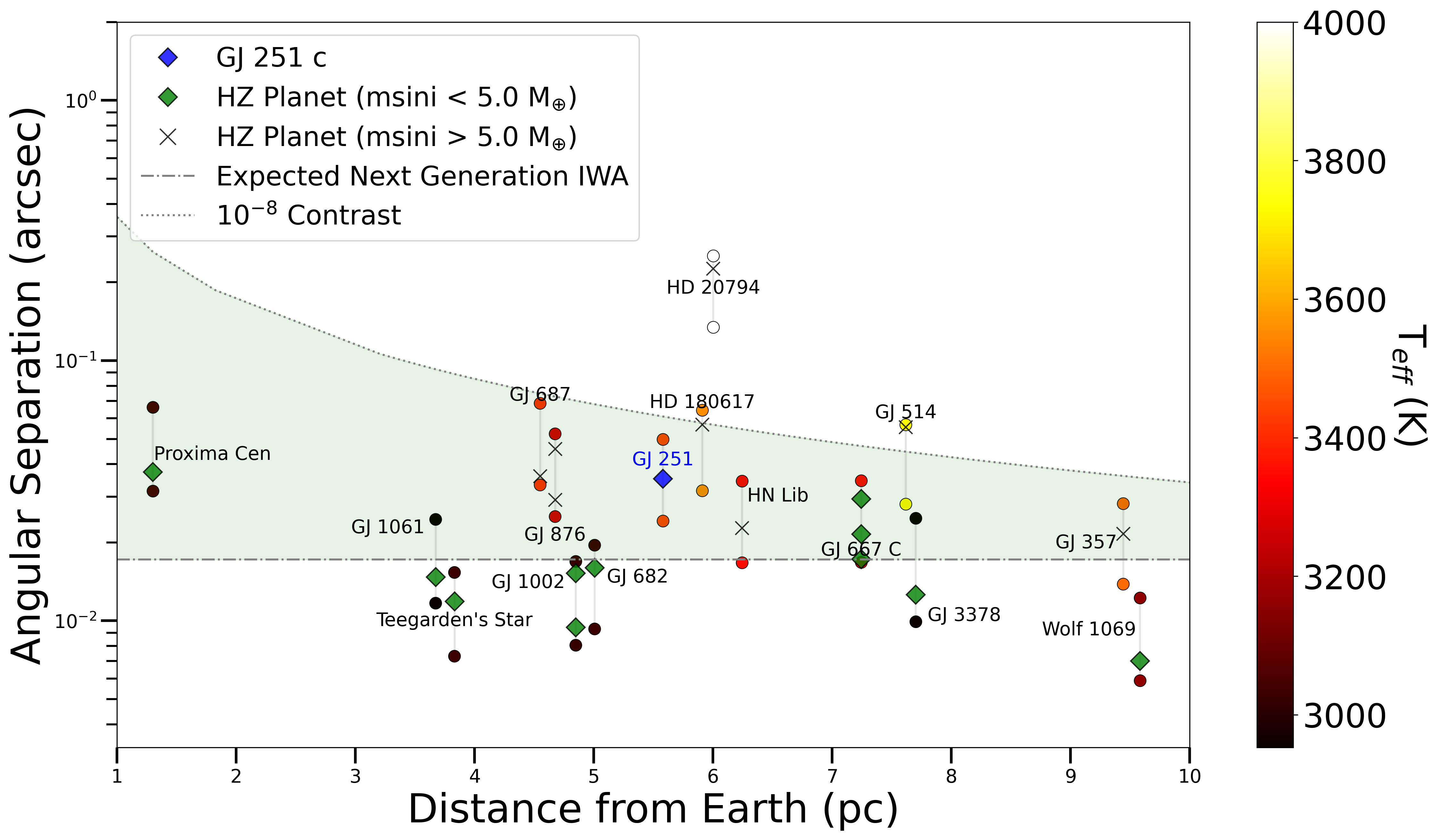
Figure 11: Angular separation of the HZ for the nearest stars with known HZ planets, highlighting GJ 251 c's favorable position for direct imaging.
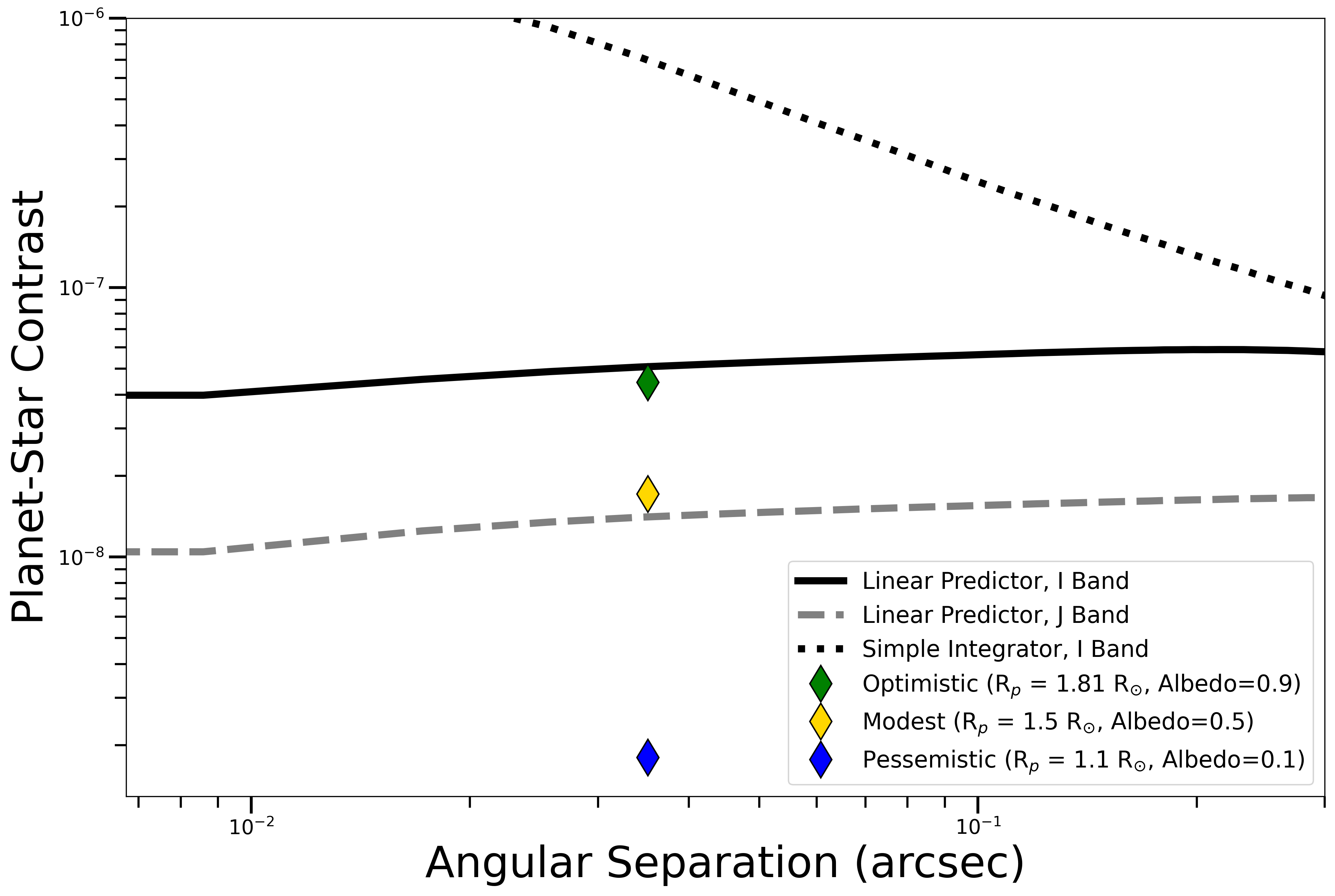
Figure 12: Predicted contrast limits for TMT/PSI and calculated contrasts for GJ 251 c under various assumptions, demonstrating the feasibility of direct imaging in optimistic scenarios.
Climate Modeling and Atmospheric Characterization
3D climate simulations (ExoCAM) are performed for a range of atmospheric compositions (Earth-like, 10 bar CO2, Titan-like, mini-Neptune). Only the high-CO2 scenario yields habitable surface temperatures; Earth-like and Titan-like atmospheres result in global glaciation, while a mini-Neptune is uninhabitable due to high surface temperatures. Synthetic spectra (PSG) are generated for each scenario, illustrating the diversity of potential atmospheric signatures accessible to direct imaging.
Robustness of the Planetary Interpretation
The paper addresses the risk of false positives by comparison to known cases (GJ 581, Alpha Cen B, Barnard's Star), emphasizing the absence of activity correlations at the 54-day period, the stability of the signal across time and instruments, and the statistical preference for a two-planet model with activity modeling. The authors adopt a conservative "candidate" designation for GJ 251 c, noting that the Bayes factor only modestly exceeds the threshold for strong evidence.
Conclusion
This work provides a rigorous detection and characterization of a super-Earth candidate in the HZ of a nearby M dwarf, with a detailed assessment of the planetary nature of the signal and its amenability to direct imaging. The combination of chromatic RV analysis, advanced GP modeling, and robust Bayesian inference sets a methodological standard for future RV planet searches in active, low-mass stars. GJ 251 c emerges as a top target for atmospheric characterization with ELTs, and the climate modeling underscores the diversity of possible surface conditions. The study highlights the critical role of multi-wavelength, multi-instrument RV campaigns and the necessity of sophisticated statistical frameworks for robust exoplanet detection in the presence of stellar activity.
Conclusion
The detection of GJ 251 c as a habitable zone super-Earth candidate, supported by multi-instrument RV data, chromatic activity mitigation, and Bayesian model selection, represents a significant advance in the identification of nearby exoplanets suitable for direct imaging. The system's proximity and the planet's orbital properties make it a benchmark target for future ELT-class facilities. The methodological framework established here—combining chromatic RVs, advanced GP kernels, and rigorous model comparison—will be essential for the robust detection and characterization of terrestrial planets in the habitable zones of active, low-mass stars.