- The paper develops a framework using Radiometric Bode’s Law and random forest regression to predict exoplanet radio emissions.
- It validates model performance with high accuracy (R² up to 0.993) and applies it to 1330 exoplanets, identifying promising targets for SKA observation.
- The study addresses observational constraints like ionospheric cutoff and radio quenching, prioritizing targets for SKA-Low and SKA-Mid bands.
Exoplanetary Radio Emission Predictions and Detectability in the SKA Era
Introduction
The detection and characterization of exoplanetary magnetic fields via radio emission is a critical frontier in planetary science, with implications for understanding planetary interiors, atmospheric retention, and habitability. This paper presents a comprehensive framework for predicting auroral radio emission from confirmed exoplanets and evaluating their detectability with the Square Kilometre Array (SKA), leveraging both semi-empirical scaling laws and machine learning regression models. The analysis is grounded in a dataset of 1330 confirmed exoplanets, with radio emission properties estimated using the radiometric Bode's law (RBL) and extended via random forest regression to systems with incomplete parameter sets.
Data Acquisition and Parameter Estimation
The study utilizes the Extrasolar Planets Encyclopedia to extract planetary and stellar parameters necessary for radio emission calculations. For planets lacking measured radii or semi-major axes, the mass-radius relation from Müller et al. (2024) and Kepler's third law are employed to impute missing values. The resulting dataset spans a wide range of planetary masses and radii, with the majority of planets in close-in orbits (a<1 AU).
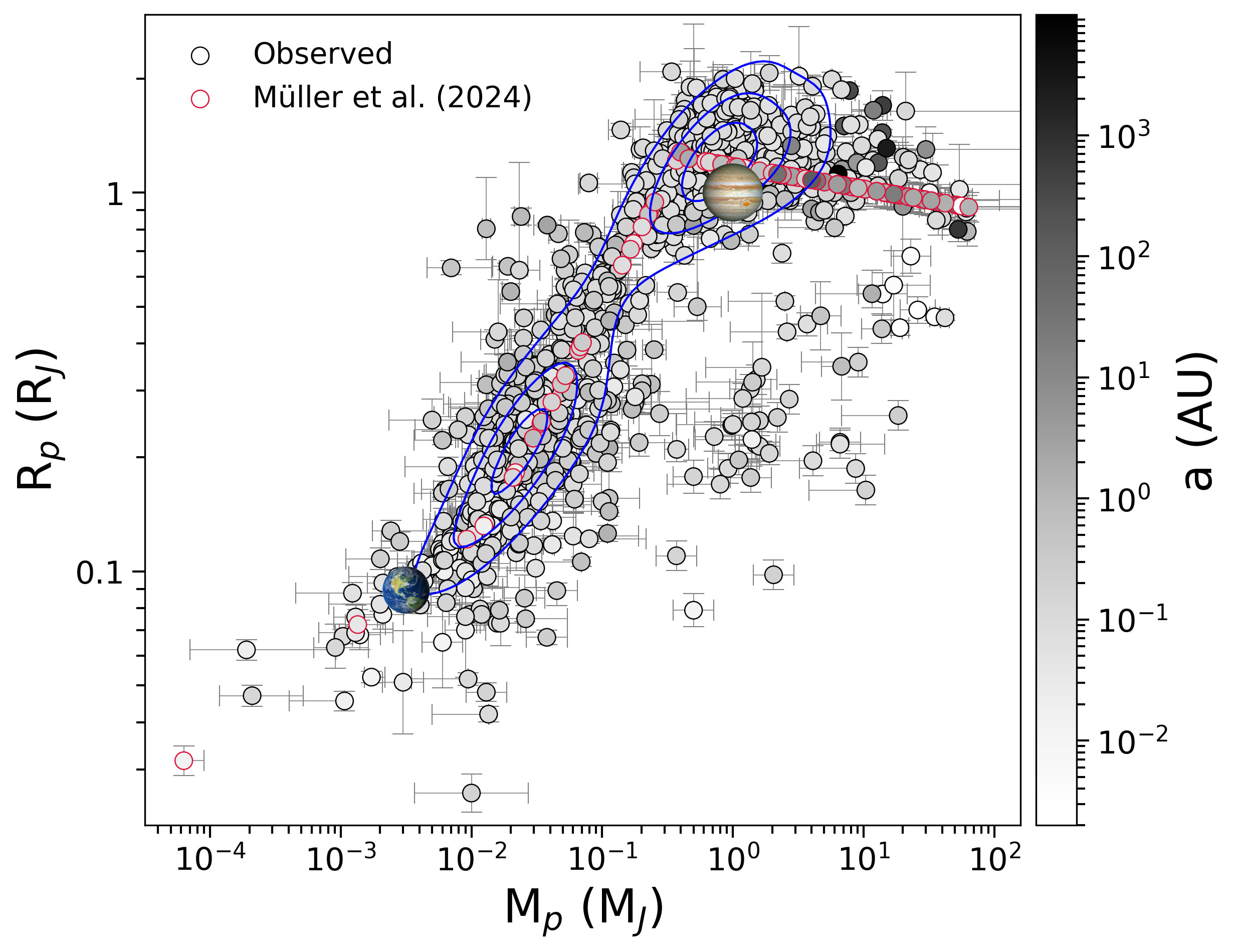
Figure 1: The planetary radius (Rp) as a function of mass (Mp), color-coded by orbital semi-major axis (a), illustrating the mass-radius trend and the parameter space occupied by radio-emitting solar system planets.
Radio Emission Modeling: RBL and Machine Learning
Radiometric Bode's Law
The RBL provides a semi-empirical relationship between planetary radio emission power and incident stellar wind power, incorporating parameters such as stellar mass-loss rate, wind velocity, planetary mass, radius, rotation rate, and orbital semi-major axis. The radio flux at Earth is computed by integrating these factors, with emission bandwidth and beaming solid angle calibrated to solar system analogs.
Random Forest Regression
To overcome the limitations of incomplete parameter sets, the study trains random forest models to predict radio flux and characteristic emission frequency using a reduced feature set: planetary mass, radius, orbital semi-major axis, and Earth-star distance. Feature selection via permutation importance (PI) and SHAP analysis confirms the dominance of these four parameters in predictive performance.
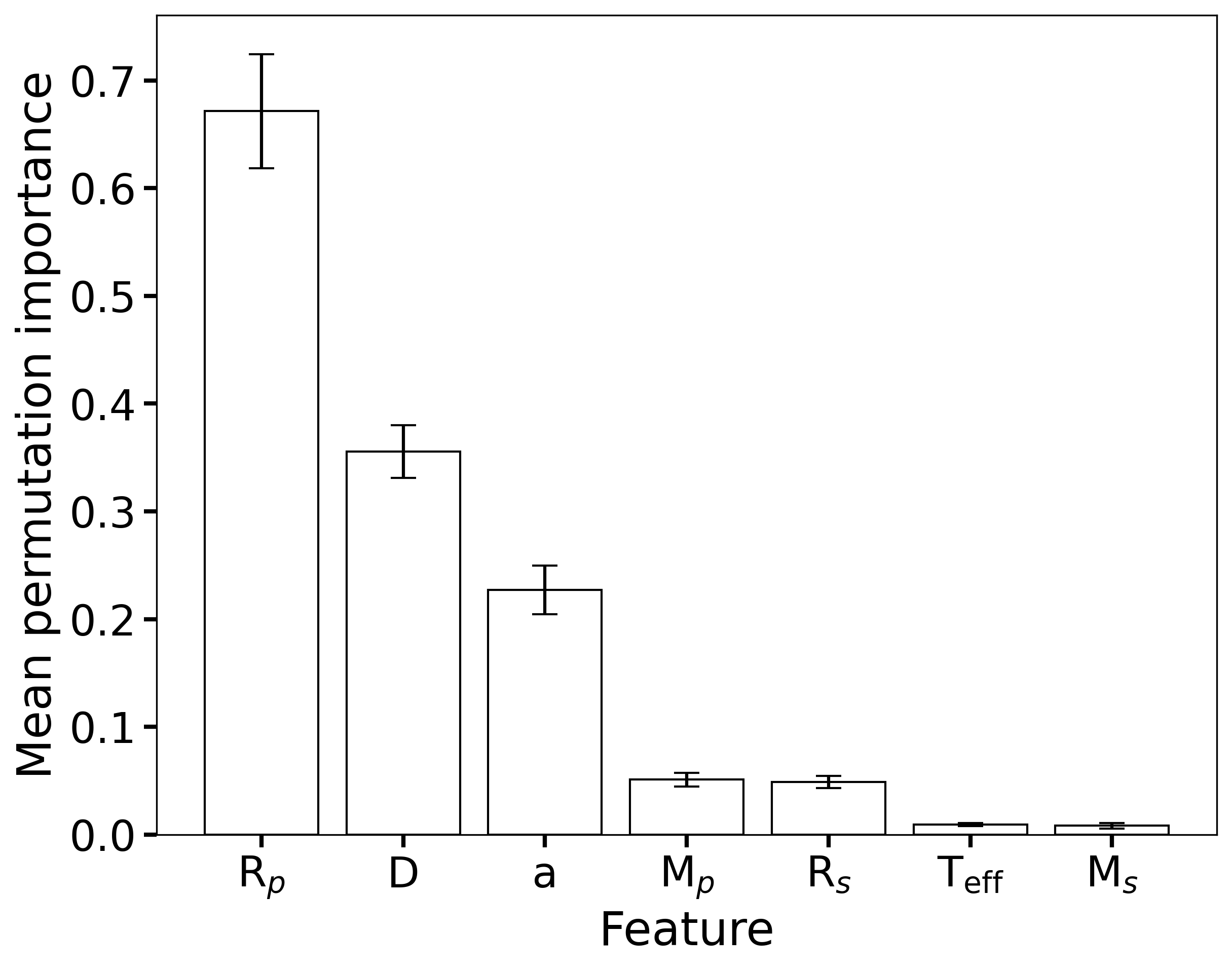
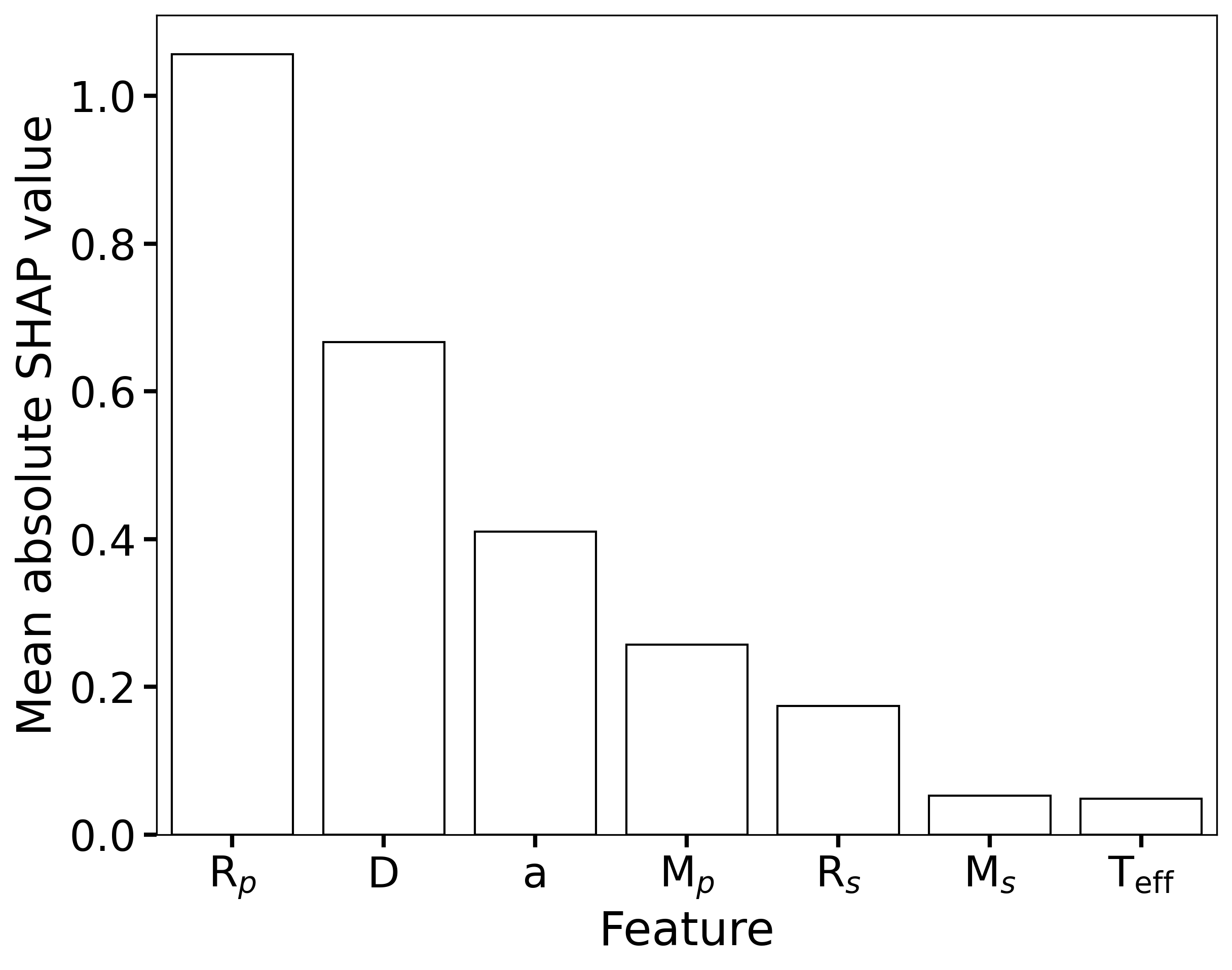
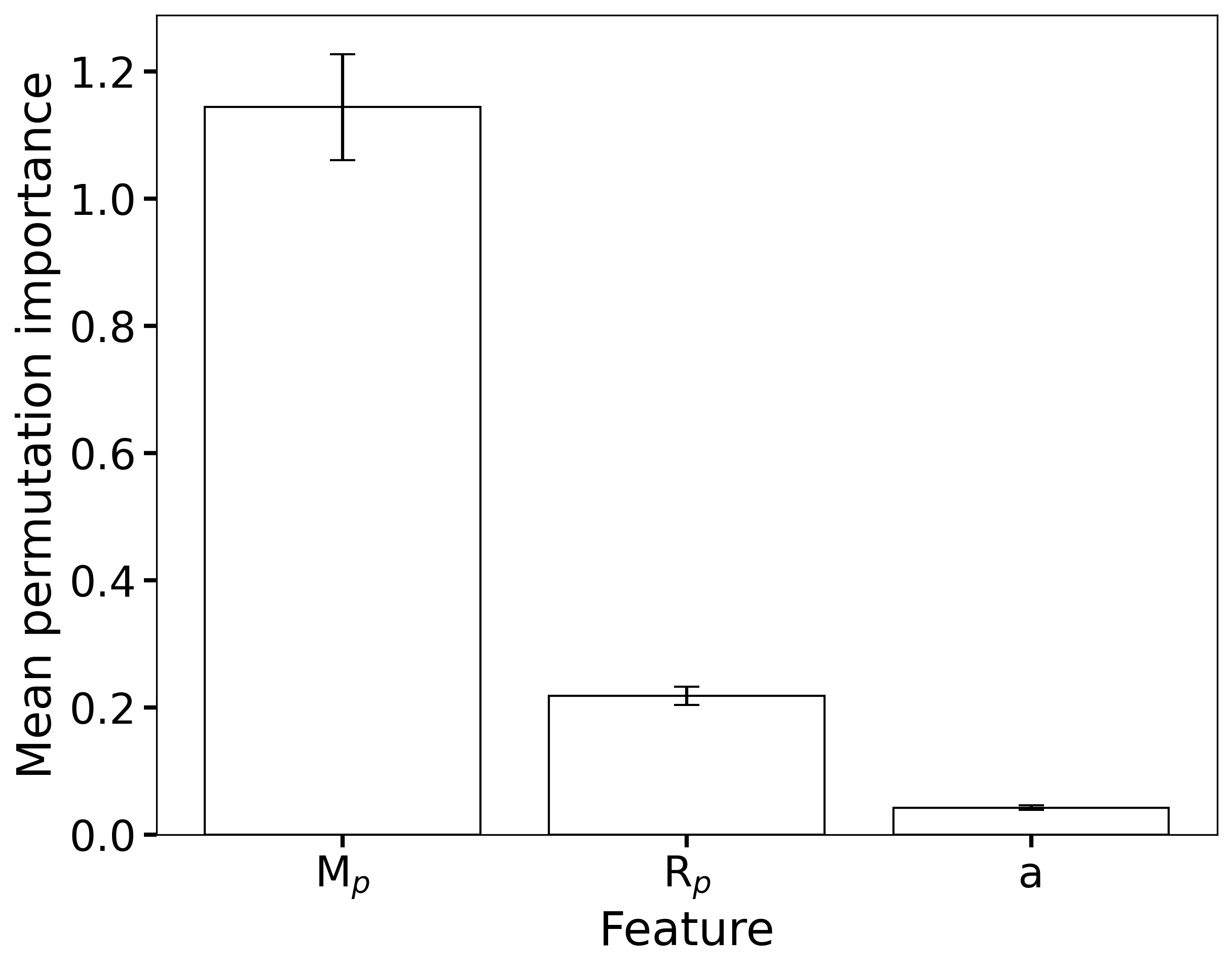
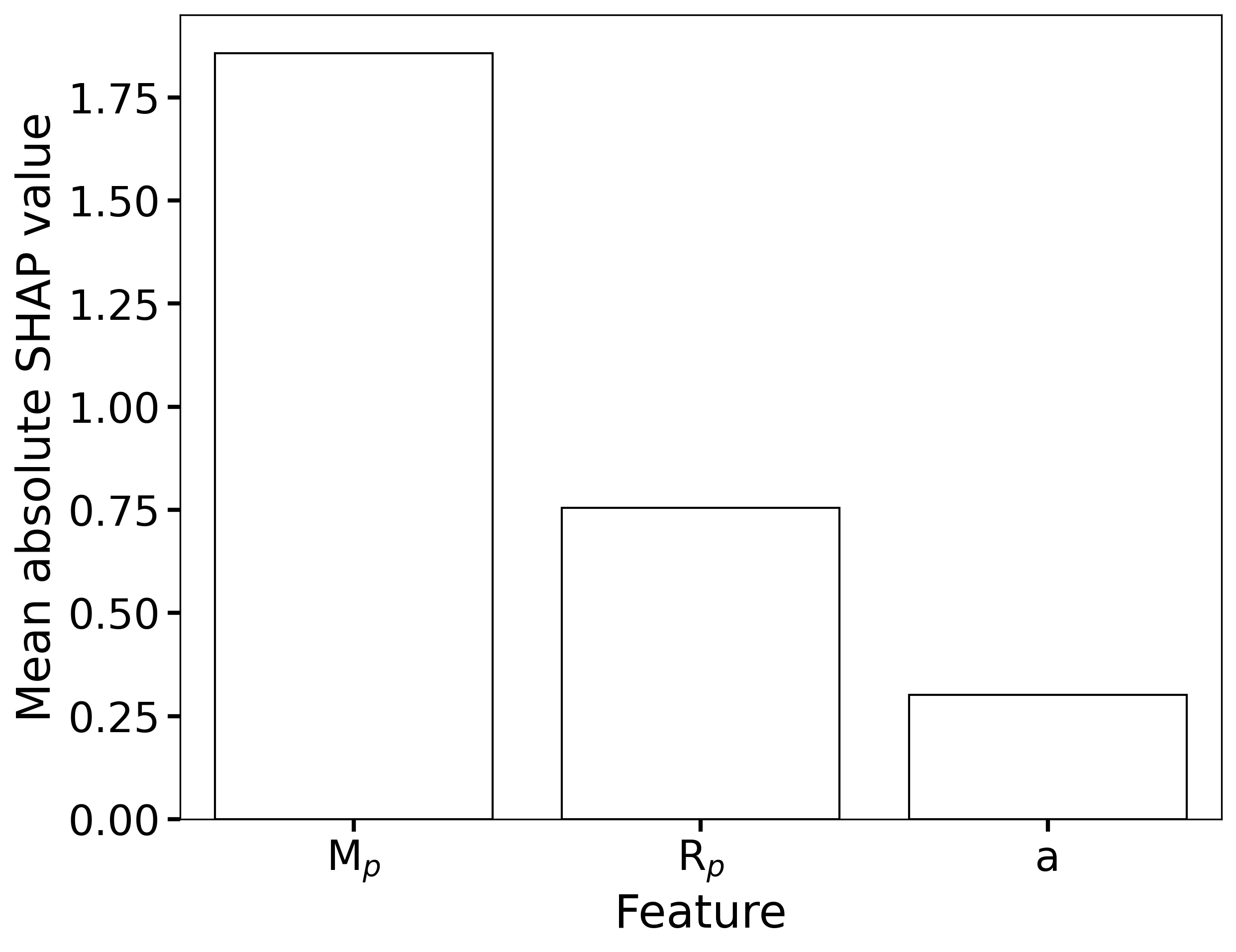
Figure 2: Feature importance analysis for radio flux and frequency prediction, demonstrating the primacy of Rp, Mp, a, and D.
The random forest models exhibit high fidelity in reproducing RBL-derived targets, with RMSE=0.629, MAE=0.445, and R2=0.911 for radio flux, and RMSE=0.241, MAE=0.151, and R2=0.993 for characteristic frequency. Cross-validation and residual analysis indicate minimal overfitting and robust generalization across the parameter space.
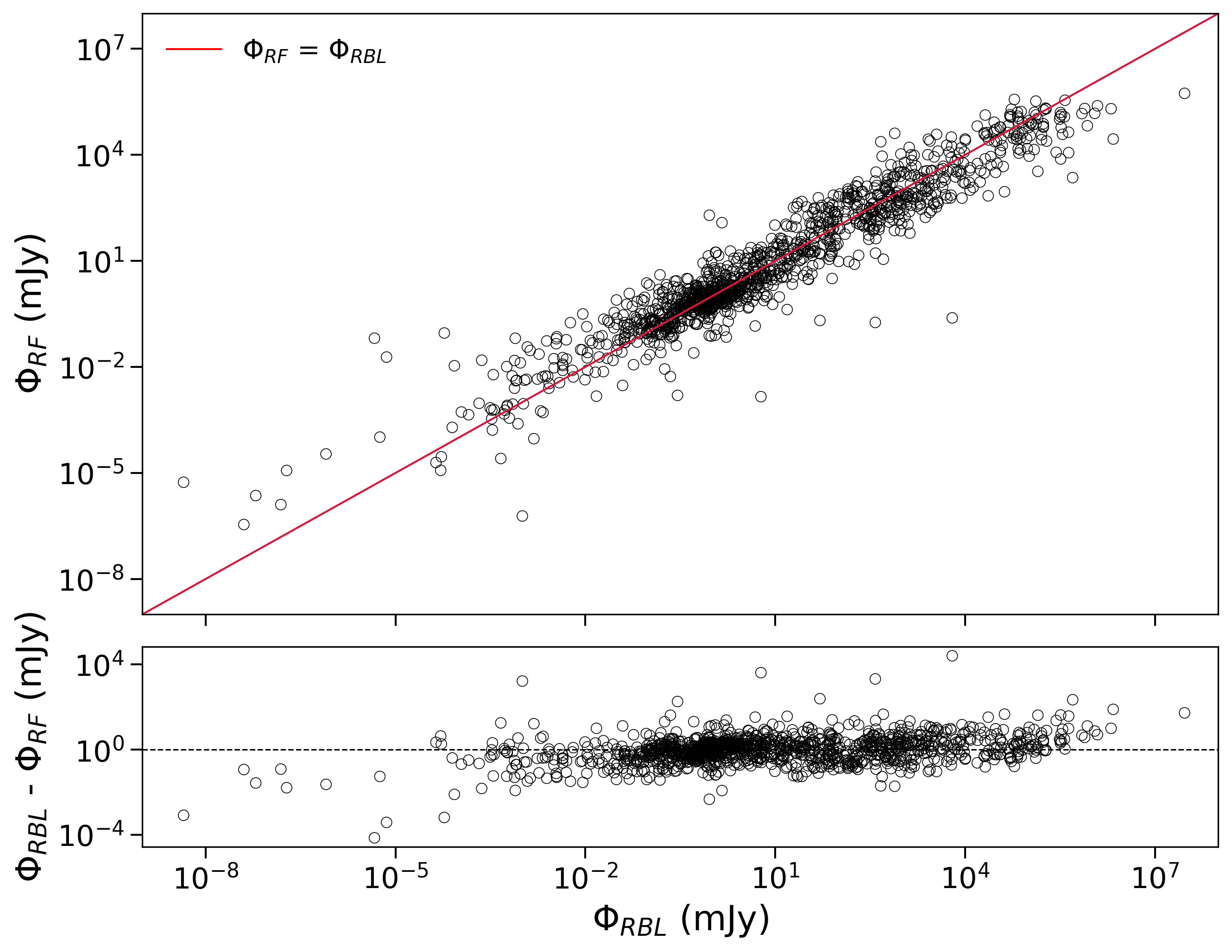
Figure 3: Comparison of radio flux predictions from the random forest model and RBL, with residuals symmetrically distributed around zero.
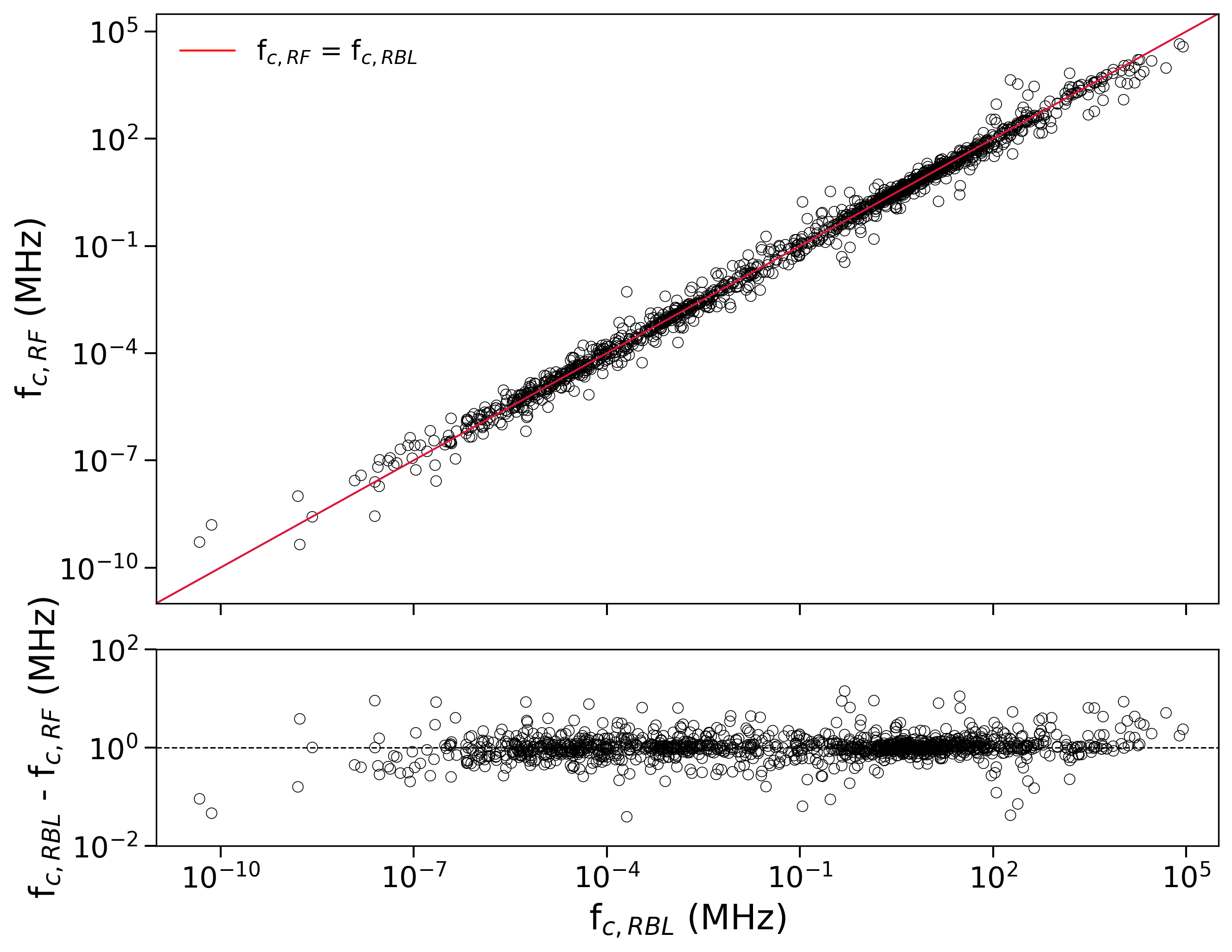
Figure 4: Comparison of characteristic frequency predictions from the random forest model and RBL, showing tight clustering along the one-to-one relation.
Observational Constraints and SKA Detectability
Frequency and Sky Coverage
The Earth's ionospheric cutoff (∼10 MHz) and SKA's practical declination limit (δ<+30∘) impose stringent constraints on detectability. Of the 1330 analyzed exoplanets, only 248 meet both frequency and sky coverage criteria.
(Figure 5)
Figure 5: Histograms of exoplanet properties grouped by emission frequency, highlighting the mass and radius distributions of detectable targets.
(Figure 6)
Figure 6: Predicted radio flux and frequency for 1330 exoplanets, with shaded regions indicating unobservable frequency and declination ranges.
SKA-Low and SKA-Mid Target Selection
Within the SKA-Low (50–350 MHz) and SKA-Mid (0.35–1.76, 4.6–15.4 GHz) bands, 58 and 69 exoplanets, respectively, are identified as potential radio emitters. Conservative 5σ imaging sensitivities for 1-hour integrations are applied to assess detectability in both AA4 and AA* subarray configurations.
(Figure 7)
Figure 7: Radio flux versus characteristic frequency for 248 exoplanets, with symbol size and color encoding planetary radius and mass, and shaded regions denoting SKA frequency coverage.
MASCARA-1 b (7.209 mJy at 135.1 MHz) and WASP-18 b (18.638 mJy at 812.9 MHz) emerge as the most promising SKA-Low and SKA-Mid targets, respectively, with predicted SNRs exceeding 400 and 4200 in feasible integration times.
Physical Limitations: Radio Quenching
The study rigorously accounts for radio quenching due to elevated plasma densities in the magnetospheres of low-mass, close-in planets. Seven SKA-Low candidates fall within the quenching regime (a<0.2 AU, 0.01<Mp≤2MJ), with four (HATS-18 b, WASP-12 b, WASP-103 b, WASP-121 b) otherwise considered promising but likely suppressed in CMI emission.
(Figure 8)
Figure 8: Planetary mass versus orbital semi-major axis for SKA-Low and SKA-Mid candidates, with the radio-quenching region highlighted.
Comparison with Observational Campaigns
Recent VLA surveys of nearby exoplanetary systems have yielded only tentative detections, with most targets undetected due to insufficient sensitivity or unfavorable emission geometry. The model's predictions for GJ 876 b (2.737 mJy at 428.4 MHz) and other systems are consistent with non-detections, given current instrument limitations. The framework provides a quantitative basis for prioritizing future SKA observations.
Implications and Future Directions
The integration of semi-empirical and machine learning approaches enables scalable, high-fidelity predictions of exoplanetary radio emission, facilitating efficient target selection for next-generation radio telescopes. The methodology is robust to incomplete data and adaptable to evolving exoplanet catalogs. The detection of exoplanetary radio signals with SKA will provide direct constraints on planetary magnetic fields, interior structure, and atmospheric dynamics, with profound implications for planetary habitability and comparative planetology.
Conclusion
This study establishes a rigorous, data-driven framework for predicting and assessing the detectability of exoplanetary radio emission in the SKA era. By combining RBL modeling with machine learning regression, the analysis identifies a subset of exoplanets with emission properties and sky positions amenable to SKA observation, while accounting for physical and instrumental limitations. The results underscore the transformative potential of SKA in exoplanetary science and provide a foundation for future large-scale monitoring and characterization campaigns.