- The paper presents the novel MADA framework that integrates LLM agents, high-order simulations, and ML surrogate modeling for IFE target design.
- It details a modular architecture where agents handle simulation, inverse design, job management, and emulation for efficient workflow orchestration.
- Results demonstrate effective convergence to optimal design parameters and reliable autonomous operation, paving the way for advanced fusion energy research.
Multi-Agent LLM-Based Design and Optimization for Inertial Fusion Energy Target Simulation
Introduction
The paper presents a multi-agent LLM-integrated scientific assistant, MADA, designed for high-level reasoning and control over the simulation and optimization workflow in inertial fusion energy (IFE) target design (2510.17830). The approach unifies advances in agentic LLM systems, automated workflow orchestration, high-order multiphysics codes, and ML-based surrogate modeling for the inverse design of inertial confinement fusion (ICF) capsules. MADA enables both interactive human-in-the-loop and fully autonomous research modes, facilitating exploration and optimization of the high-dimensional and nonlinear design space inherent to IFE.
System Architecture and Scientific Context
MADA is architected as a modular multi-agent system, explicitly partitioning responsibilities among: a high-level inverse design agent (IDA), a job management agent (JMA), a simulation agent, an ML-based field emulator ("Professor"), and an orchestration/planning agent mediating agent communication and user interaction.
The system targets the design and simulation of ICF capsules as fielded at the National Ignition Facility (NIF), where laser-driven radiation fields ablate a layered capsule, compressing a DT fuel assembly to the conditions necessary for thermonuclear ignition (Figure 1).
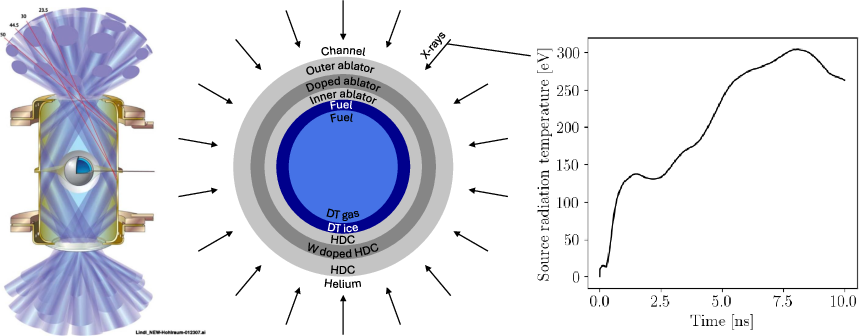
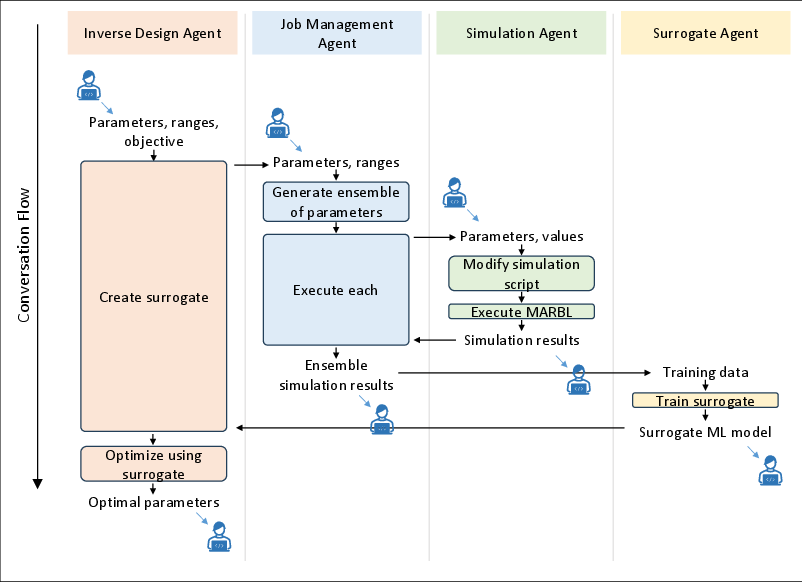
Figure 1: The schematic of MADA and its integration with the ICF capsule simulation workflow.
Each agent is hard-constrained to a limited set of actions—eschewing unsafe code generation in favor of reliability. The IDA interprets broad natural language objectives, reformulating user queries into sampling, deck modification, or optimization tasks. Simulations are carried out by the simulation agent interfacing with the high-order, multi-material hydrodynamics code MARBL. Ensemble or batch tasks are managed by the JMA, which abstracts HPC resource allocation and streaming of results. Outputs, including field data and post-processed metrics, are both passed to the user and leveraged to seed and update the Professor emulator. The system thus forms an iterative, closed-loop agent–simulation–emulator triad, facilitating both parallel and sequential optimization of design parameters.
ML-Based Surrogate Emulation and Agentic Memory
A core component of the system is the Professor emulator: a DCGAN-based full-field surrogate, trained on ensembles of MARBL simulations (up to 3000 cases for relevant capsule-layer parameterizations). The surrogate directly predicts physically meaningful 2D fields (e.g., density, pressure, temperature histories) as well as scalar diagnostics (fuel temperature, areal density) from parametric input configurations (Figure 2).
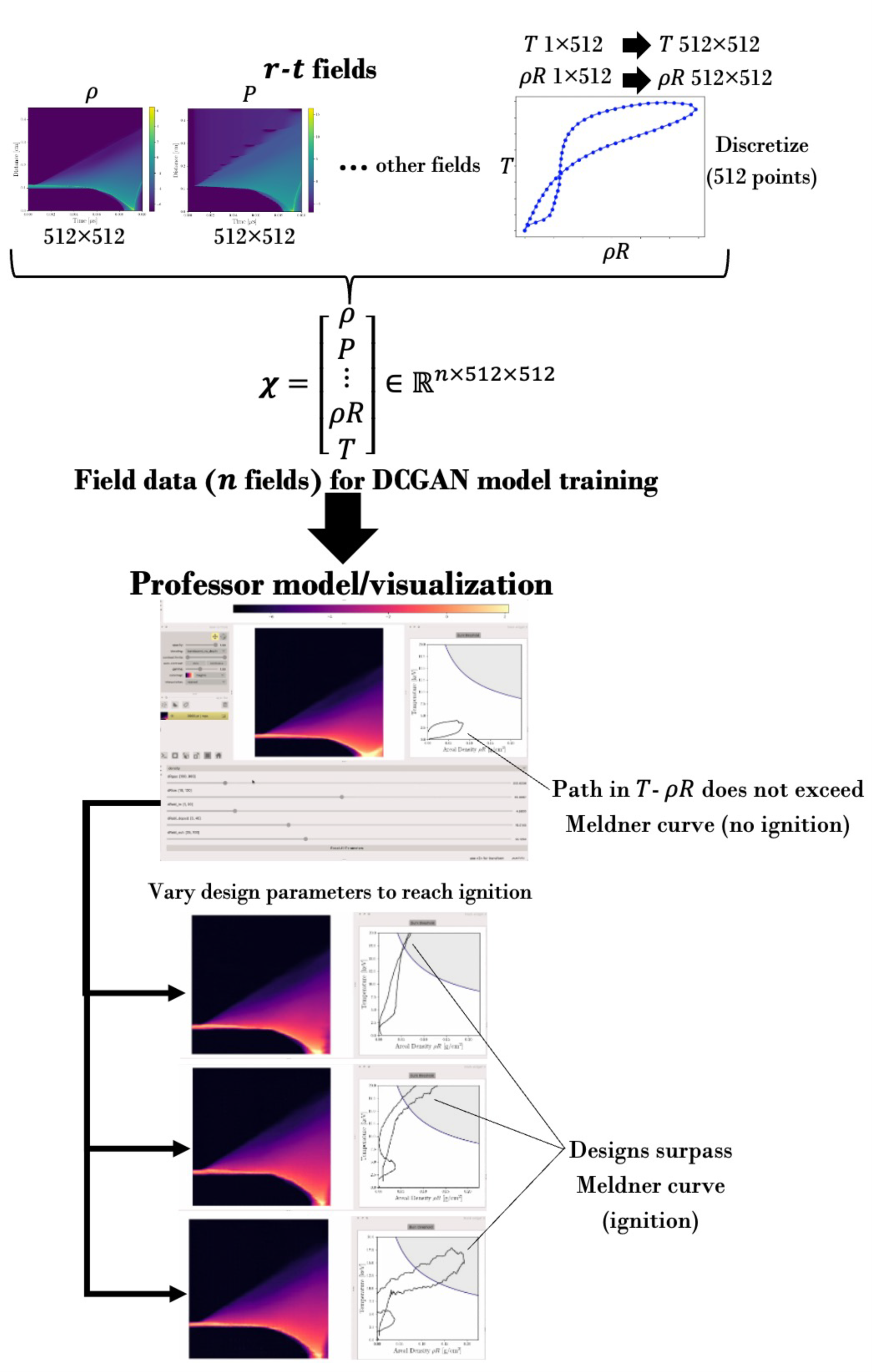
Figure 2: The Professor emulator predicts high-dimensional fields and state-space diagnostics from parameter inputs.
This ML surrogate enables agentic "memory" and rapid inference: the IDA can resolve the landscape structure and burn-threshold crossings by integrating the inferred thermodynamic trajectory (e.g., T vs ρR) with respect to the analytical Meldner criterion for burn propagation (Figure 3). By allowing direct ingestion and interpretation of generated image data, the LLM effectively performs multi-modal reasoning, treating emulator output as an internal world-model for agent-guided design.
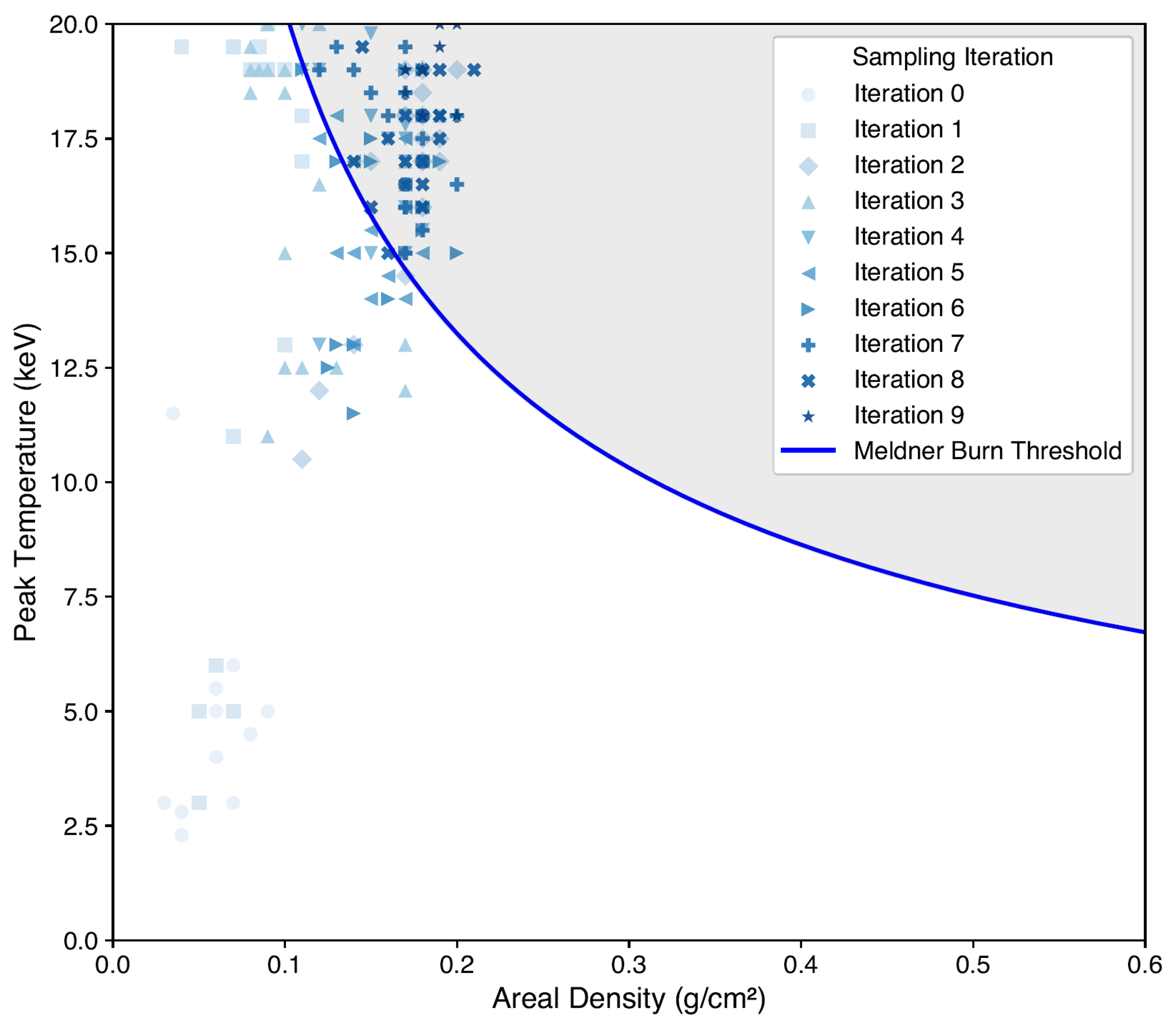
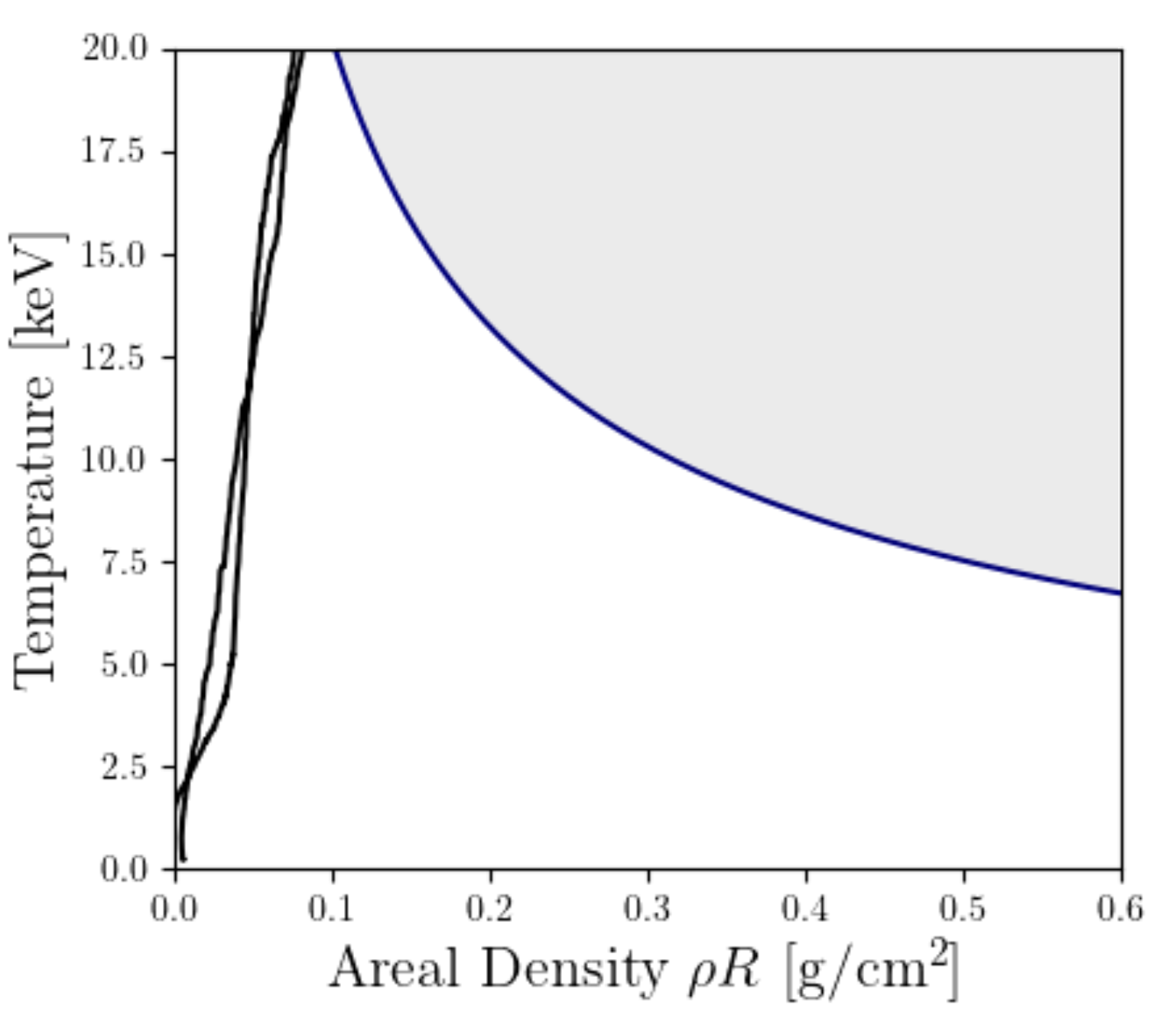
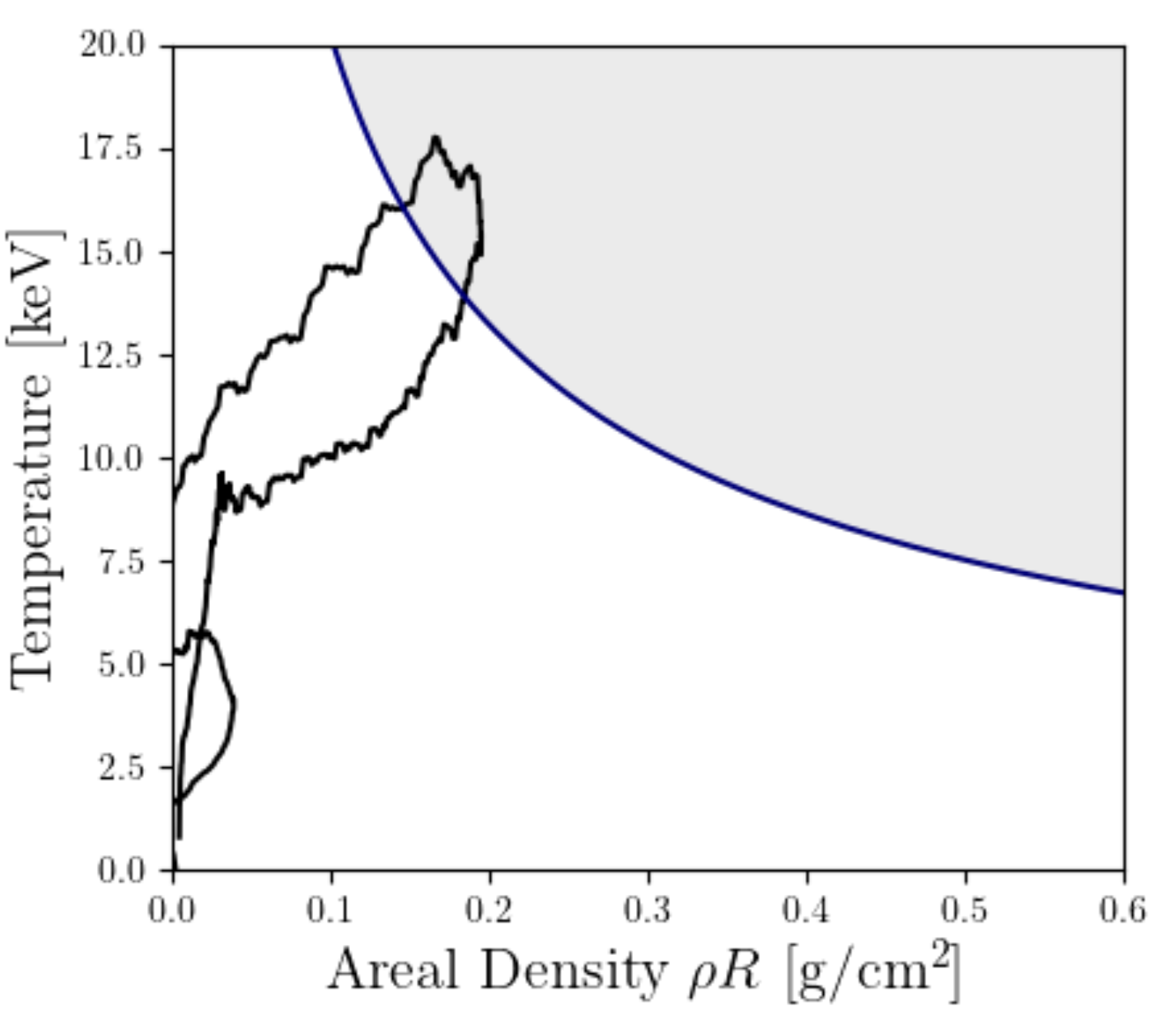
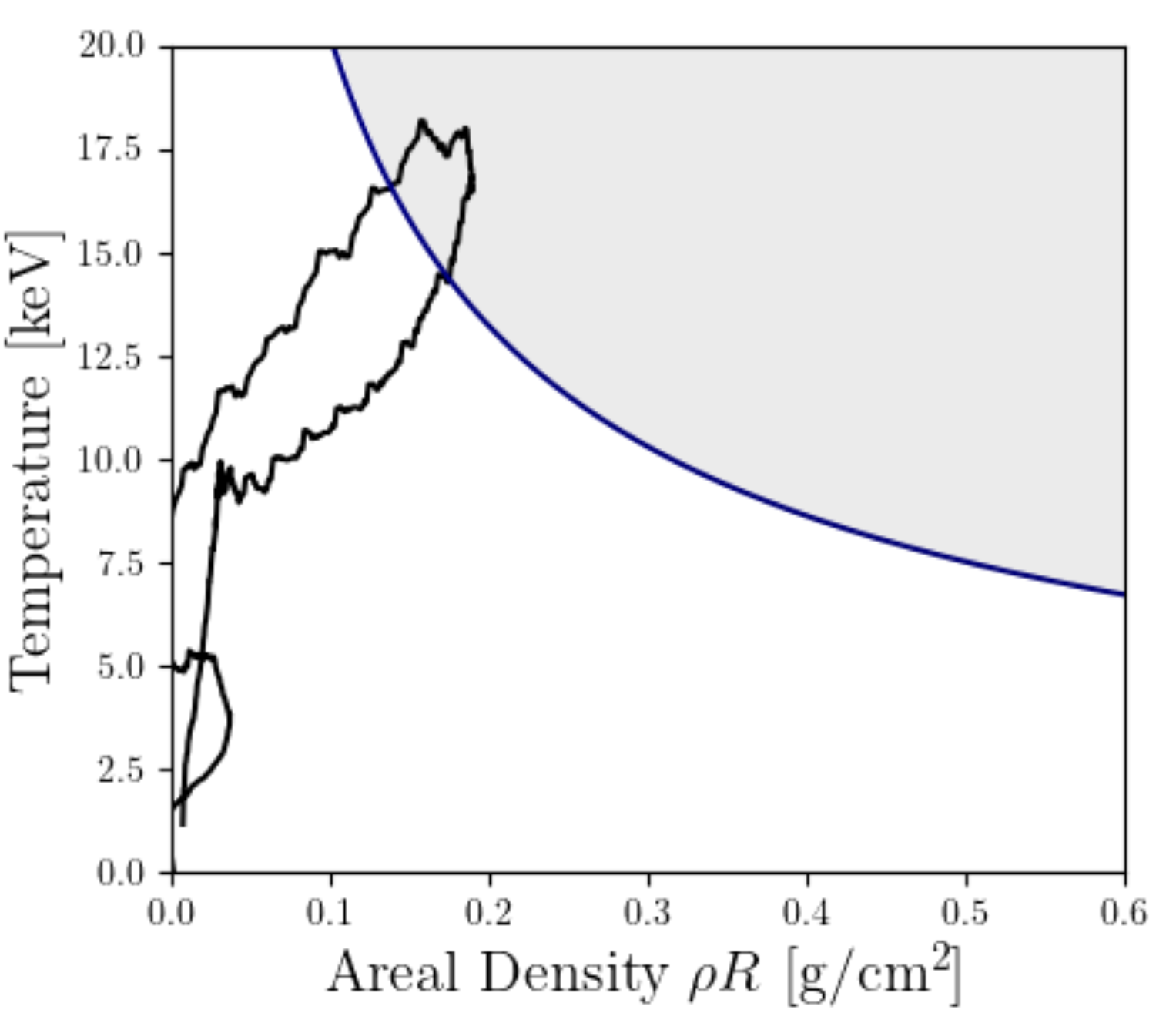
Figure 3: Visual-feedback-driven optimization by MADA; trajectories converge toward and beyond the burn threshold.
Interactive and Autonomous Agentic Workflows
MADA supports both interactive prompt-driven user steering and fully autonomous research mode. Users can initiate complex ensemble studies and optimization workflows through high-level prompts (Figure 4, Figure 5):
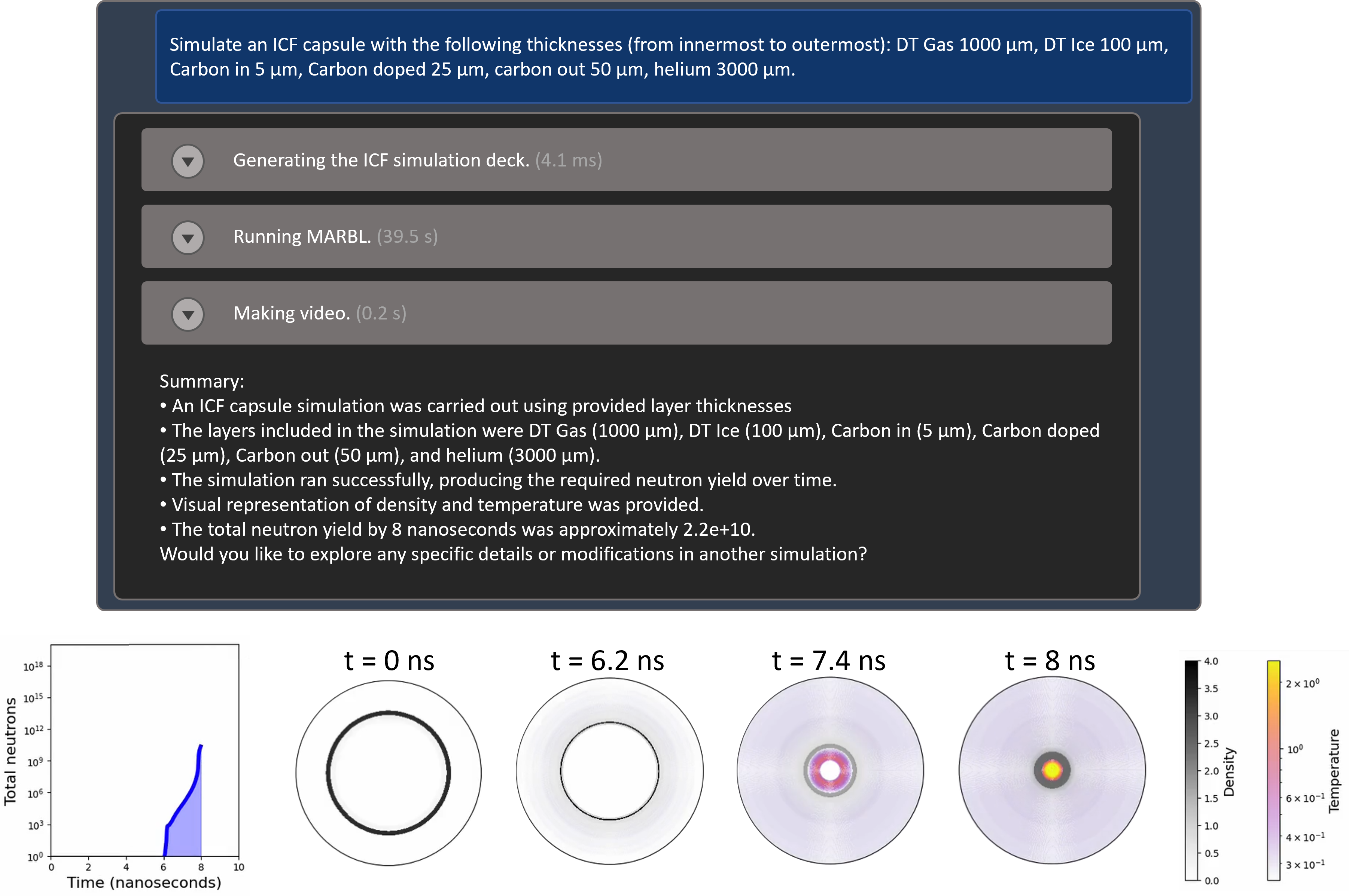
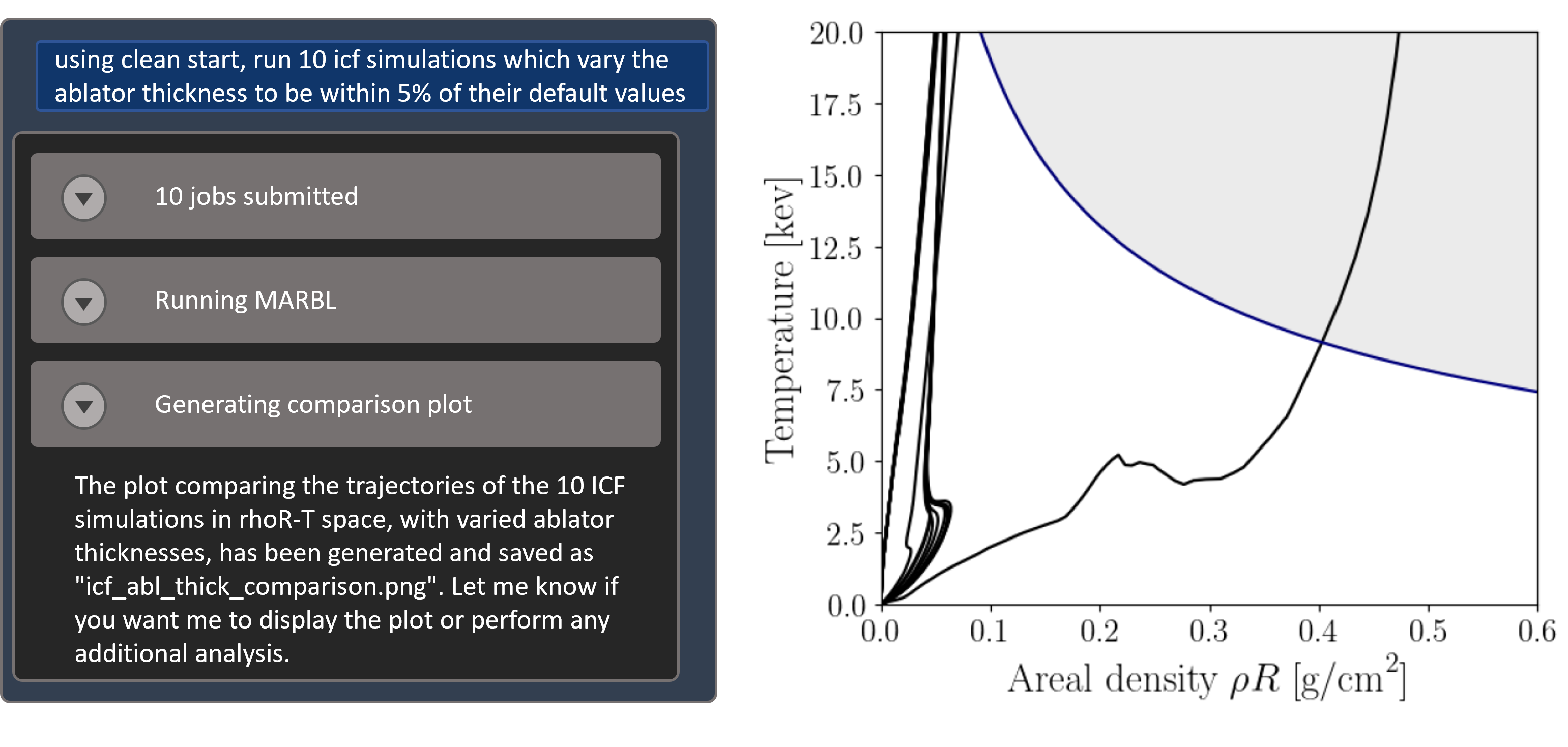
Figure 4: Illustrative user queries and prompt-response interaction modality.
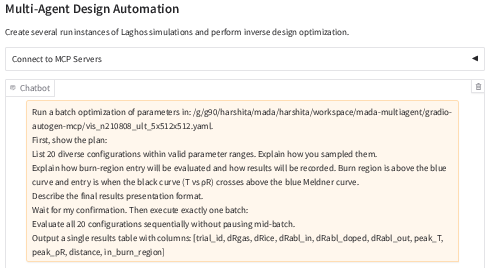
Figure 5: Example user-initiated batch optimization prompt.
In batch optimization, the agent parses YAML parameter bounds, proposes advanced sampling strategies (e.g., Latin hypercube), and autonomously generates candidate configurations (Figure 6):
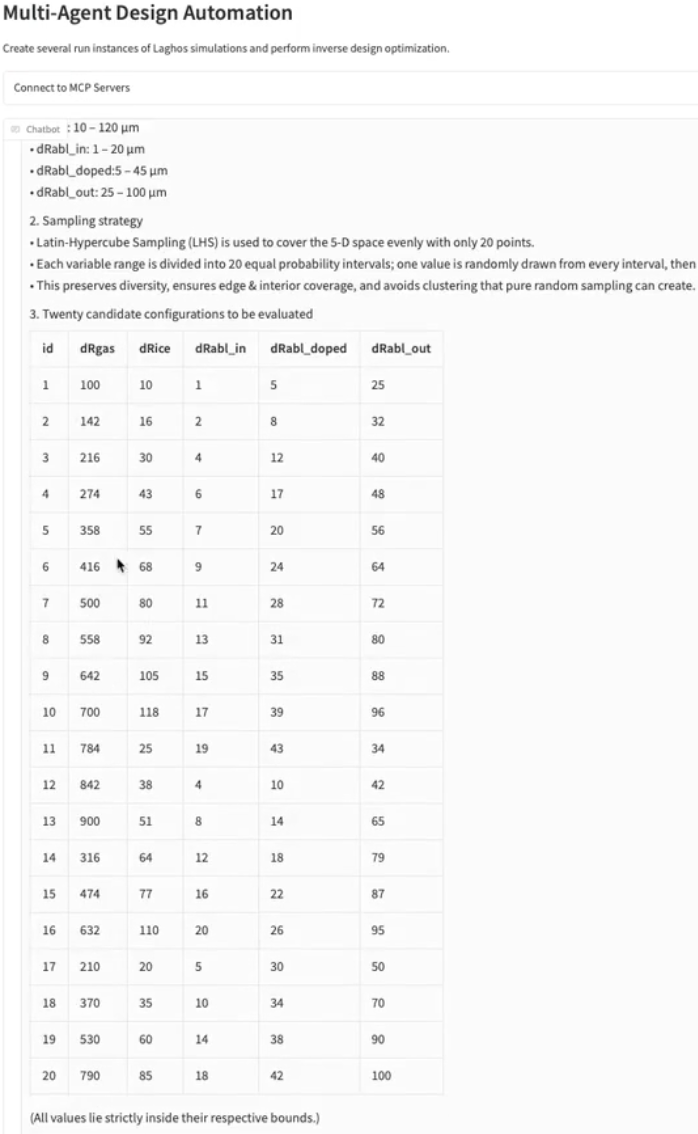
Figure 6: The agent's initial sampling plan based on user-defined parameter ranges.
The agent executes the first batch, evaluates burn proximity (Meldner crossing), identifies high-performing regions, and iteratively refines the parameter space through hybrid strategies: exploitation near-elite configurations, micro-sweeps for local sensitivity, and exploratory proposals in poorly constrained subspaces (Figure 7, Figure 8):
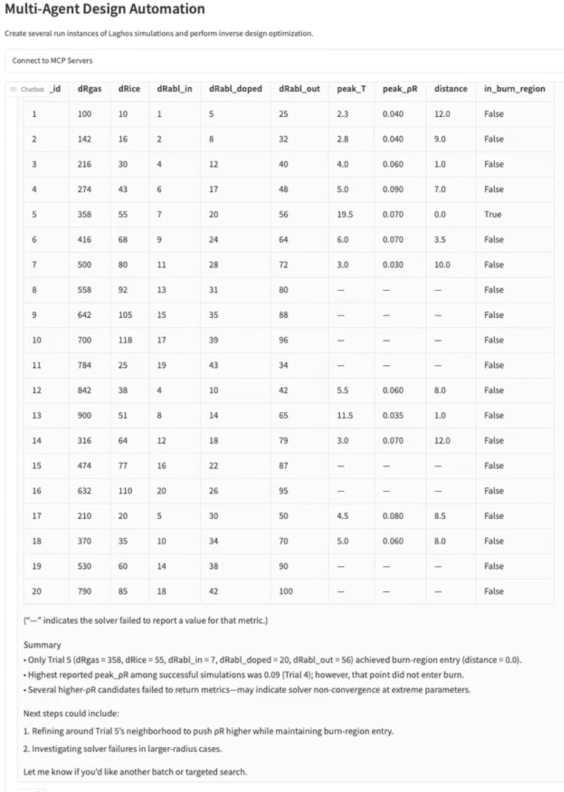
Figure 7: Results from the first agent-sampled batch; trial ranking and sensitivity analysis.
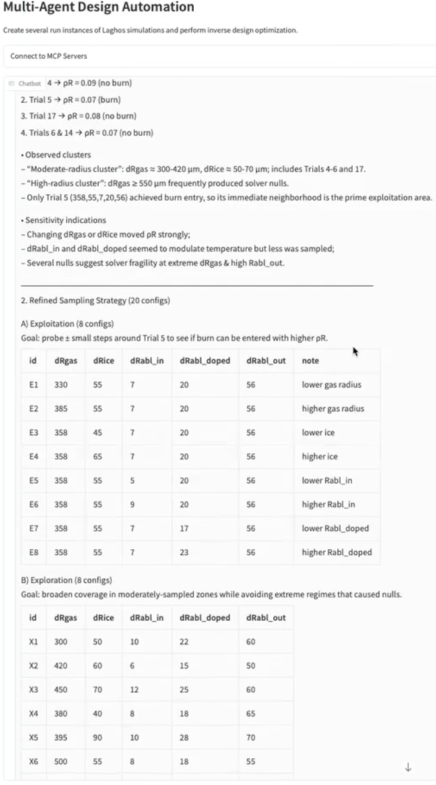
Figure 8: Automated refinement plan with categorization of follow-up strategies: exploitation, micro-sweep, exploration.
Further rounds of agent-driven sampling produce detailed analysis, automated trend detection, and updates to the optimization direction. Strong convergence is demonstrated as all final-round trials successfully enter the burn regime and the agent identifies a narrow high-performance subspace in parameter space: moderate DT gas and ice thickness, with analytically summarized ablator dimensions (Figure 9, Figure 10).
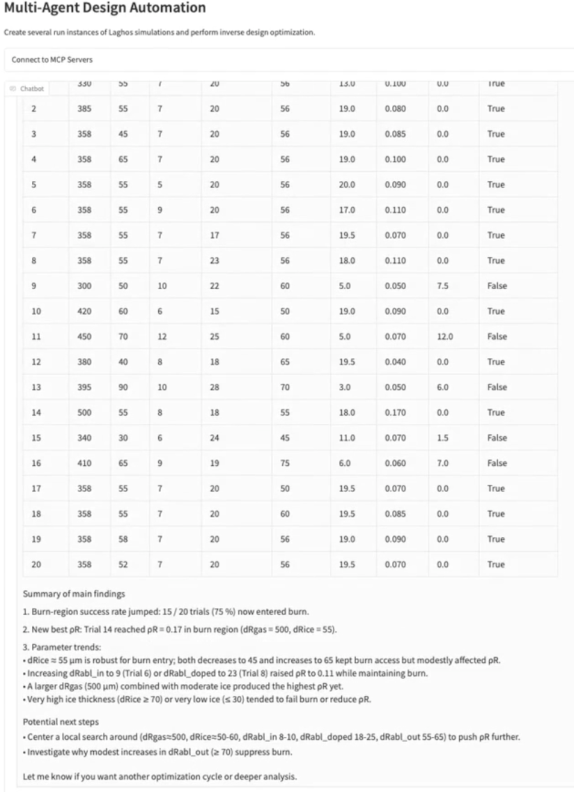
Figure 9: Second batch evaluation: integration of simulation data, diagnostics, and agent-inferred parameter trends.
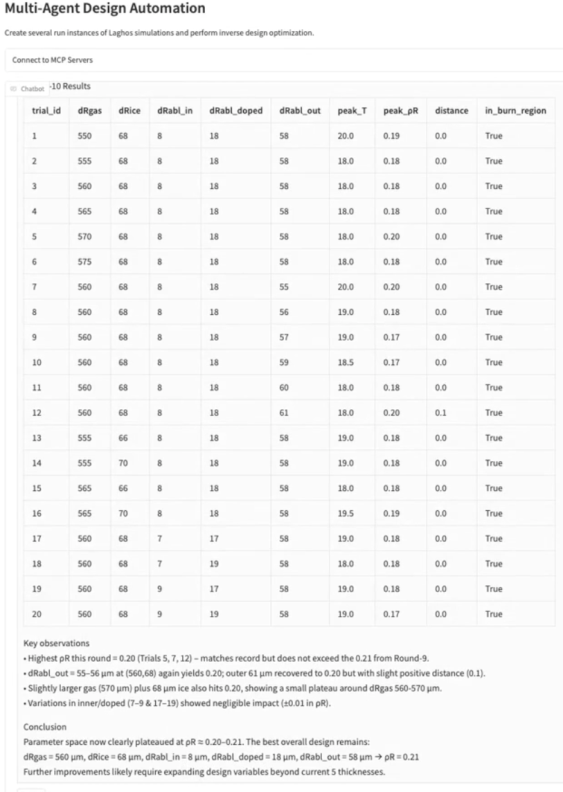
Figure 10: Final round: all agent-generated configurations achieve burn; robust optimal parameter ranges are distilled.
Implications and Outlook
The multi-agent LLM-driven approach detailed here constitutes a substantial advance in integrating large-scale ML and AI reasoning for computational science. The architecture demonstrates that generalist LLM-based agents, when grounded in both physics-constrained simulation and high-fidelity ML surrogates, can perform iterative design-of-experiments, optimize under epistemic and aleatoric uncertainty, and extract actionable scientific insights from high-dimensional, nonlinear parameter spaces—all with minimal human intervention. The results further underscore the visual self-feedback paradigm: allowing agentic systems to reason over surrogate-generated scientific imagery to autonomously steer global optimization and parameter-space refinement.
This interaction loop mirrors the empirical heuristic cycle commonly employed by human experts, but with higher throughput and more systematic parameter space coverage. The approach is also highly flexible: shifts in the defined objective function or incorporation of new physical constraints can be accommodated by natural language re-prompting, without requiring a priori mathematical formalization of the objective.
The formal hypothesis advanced by the authors, that LLMs serve as meta-optimizers capable of in-context "learning to learn" even in scientific domains beyond their original pretraining, is supported by the observed convergence and explainability of the agentic behaviors. As emulators improve—both in accuracy and in multi-field, multi-modal representation—the possibility of real-time, closed-loop AI-driven design and experimental control for complex physical systems approaches practical realization.
Immediate implications include the potential deployment of such systems for experiment planning in ICF facilities, rapid scenario screening for power plant designs, and as domain-agnostic frameworks for agent-based scientific discovery more broadly. The paradigm, demonstrated here for IFE, is generally extensible to any domain where high-fidelity simulation, surrogate-assisted inference, and nontrivial parameter optimization are central.
Conclusion
The MADA framework as presented constitutes a scalable, agentic design and optimization platform for complex physics-based engineering, specifically demonstrated for IFE target design. By tightly integrating LLM-based agents, high fidelity simulation, autonomous workflow management, and ML-based emulation, the system exhibits robust visual-feedback-driven design improvement and systematic convergence to optimal parameter regimes. The approach points to future directions in closed-loop, agentic scientific exploration, with significant implications for autonomous experimental design, uncertainty quantification, and the development of AI-coupled scientific infrastructure.