- The paper identifies a unique planetary system around the M dwarf TOI-756 featuring both a transiting sub-Neptune and a non-transiting cold eccentric giant, along with hints of a third companion.
- High-precision TESS photometry and RV measurements from NIRPS and HARPS enabled precise determination of the planets’ mass, radius, and orbital parameters.
- The discovery challenges traditional planet formation models by presenting a volatile-rich inner sub-Neptune coexisting with an outer eccentric giant, prompting new insights into planetary migration and atmospheric evolution.
A Peculiar M Dwarf System: A Transiting Sub-Neptune and a Cold Eccentric Giant around TOI-756
Introduction and Scientific Context
The paper presents the discovery and detailed characterization of a unique planetary system around the M1V star TOI-756, leveraging the synergy of TESS photometry and high-precision radial velocity (RV) measurements from NIRPS and HARPS. The system comprises a transiting sub-Neptune (TOI-756 b) and a non-transiting, cold, eccentric giant planet (TOI-756 c), with evidence for an additional massive companion inferred from a significant RV acceleration. This architecture is unprecedented among known M dwarf systems, providing a critical data point for understanding planet formation and evolution in low-mass stellar environments.
Stellar and System Characterization
TOI-756 is a moderately bright (V=14.6, J=11.1) M1V star with Teff∼3657 K and super-solar metallicity ([Fe/H] =0.20±0.03 dex). The star is the primary in a wide binary, with a co-moving M3/4V companion at ∼955 au projected separation. The stellar parameters were robustly determined using both optical (HARPS) and near-infrared (NIRPS) high-resolution spectra, employing machine learning and spectral fitting techniques, and cross-validated with SED modeling.
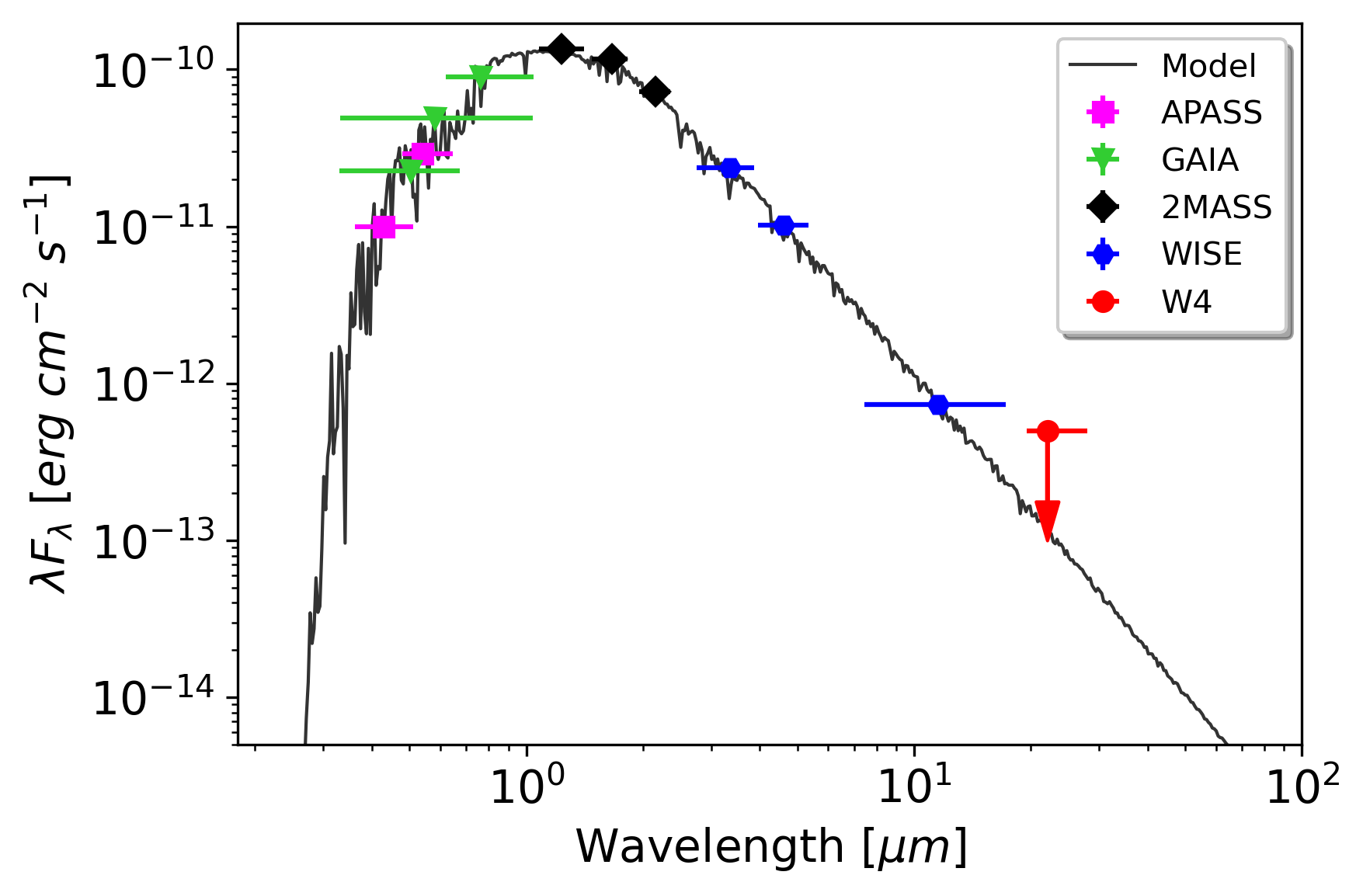
Figure 1: SED of TOI-756 constructed from multi-band photometry, modeled with a BT Settl atmosphere.
High-resolution imaging (VLT/NACO, SOAR/HRCam, Gemini/Zorro) excluded close stellar companions down to late M dwarfs at separations >0.1′′, ensuring the planetary signals are not contaminated by unresolved binaries.
Photometric and Radial Velocity Analysis
TESS observed TOI-756 in four sectors, detecting a robust 1.24-day periodic transit signal. Ground-based follow-up with LCO-CTIO and ExTrA confirmed the transit and refined the ephemeris. The phase-folded light curves exhibit consistent transit depths across optical and NIR bands, ruling out false positives due to blended eclipsing binaries.
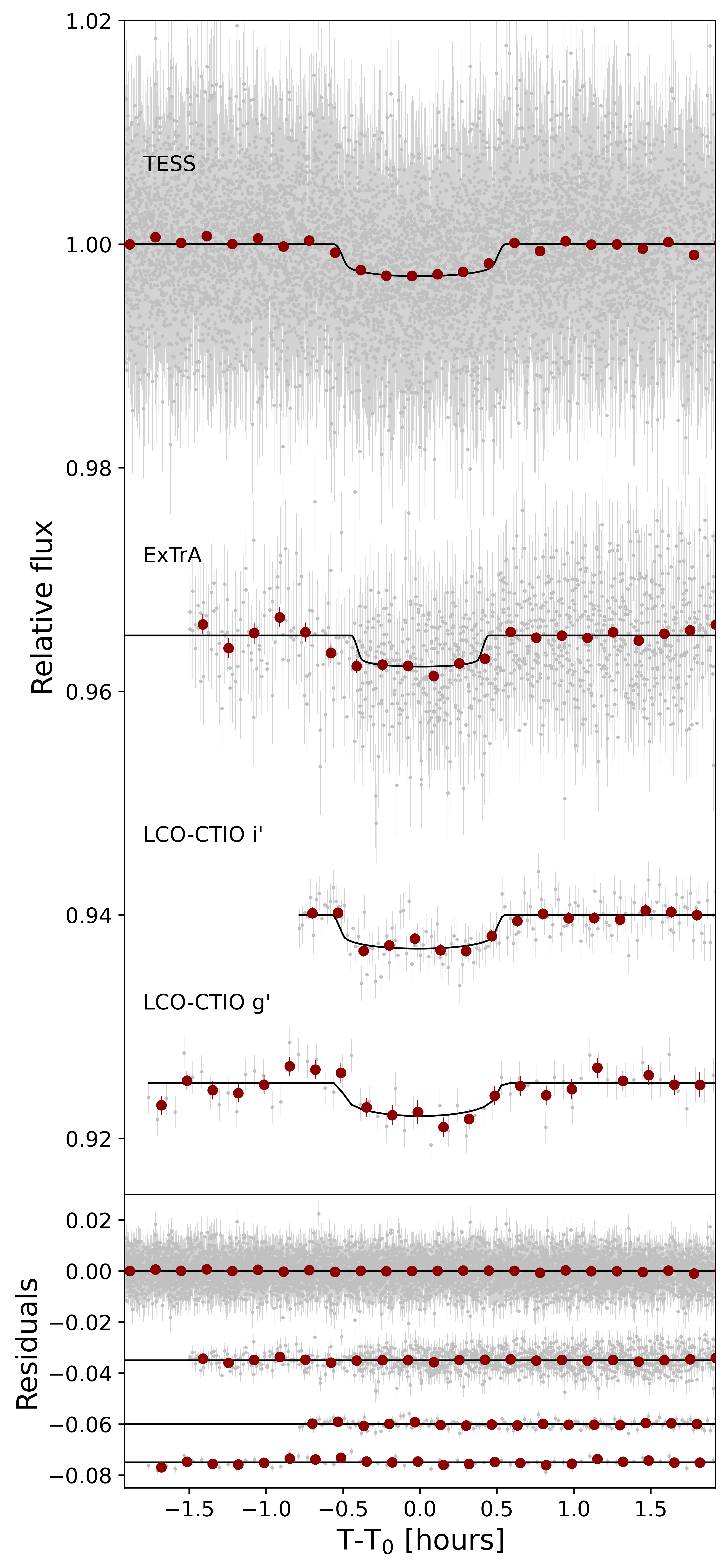
Figure 2: Phase-folded TESS, ExTrA, and LCO-CTIO light curves of TOI-756 b with joint model fits and residuals.
RV monitoring with HARPS and NIRPS revealed two distinct Keplerian signals: a low-amplitude (Kb∼9.2 m/s) signal at 1.24 days, and a high-amplitude (Kc∼273 m/s), highly eccentric (ec∼0.45) signal at 149.6 days. A significant linear trend (∼146 m/s/yr) indicates a third, more distant companion.
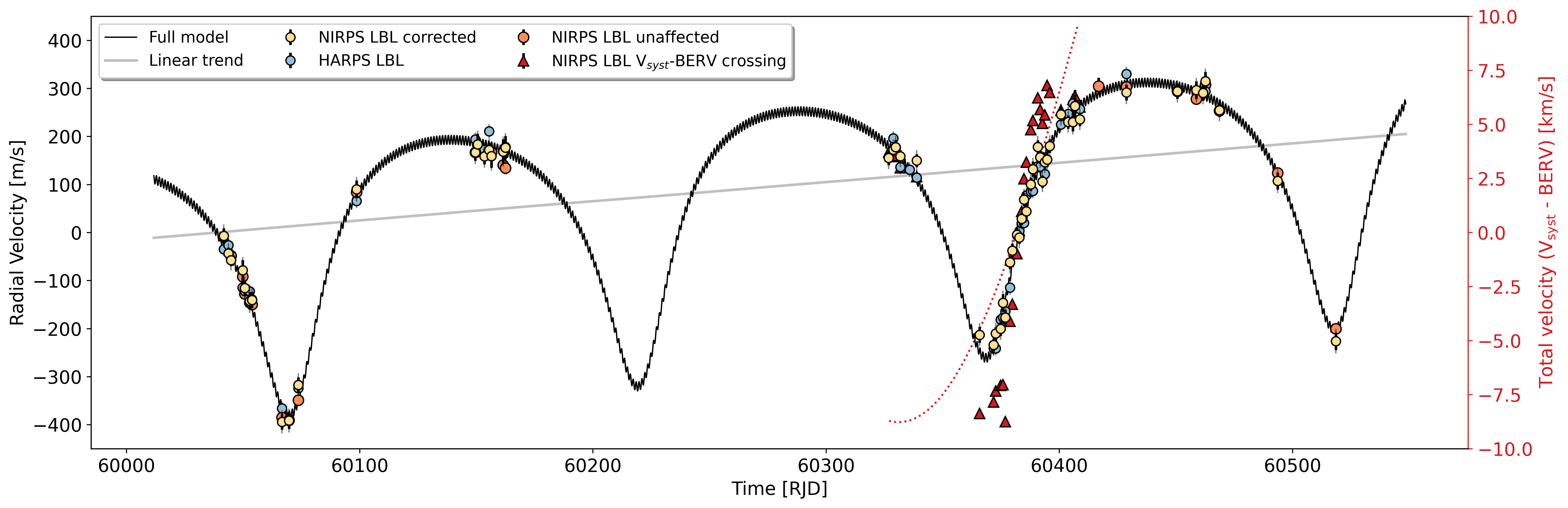
Figure 3: RV time series from HARPS and NIRPS, showing the two planetary signals and the linear trend.
The NIRPS RVs required careful mitigation of telluric contamination, especially during epochs when the barycentric Earth RV crossed the systemic velocity of the star. The authors implemented a line-by-line (LBL) approach, excising spectral regions affected by strong OH emission, which restored consistency between NIRPS and HARPS datasets.
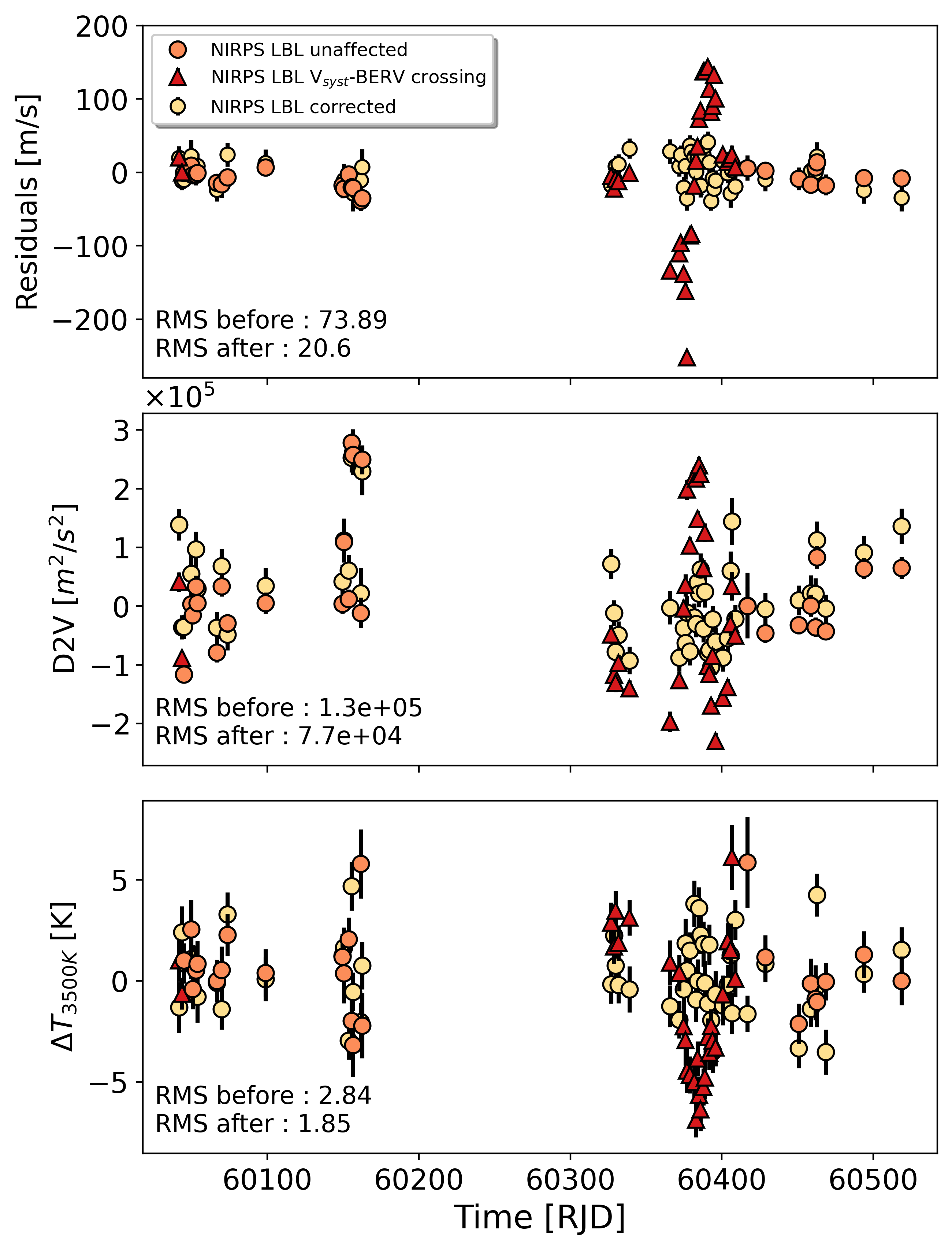
Figure 4: NIRPS RV residuals and spectral indicators, illustrating the impact and correction of telluric contamination.
Planetary Properties and Internal Structure
TOI-756 b is a sub-Neptune with Rp=2.81±0.10R⊕, Mp=9.8−1.6+1.8M⊕, and ρp=2.42±0.49 g/cm3, orbiting at a=0.018 au (P=1.24 d, Teq∼934 K). The planet's density places it above the 50% water line and is consistent with a volatile-rich composition, requiring a H/He envelope mass fraction of 0.023±0.003 and a core mass fraction of 0.27±0.03 when stellar refractory abundances are used as priors.
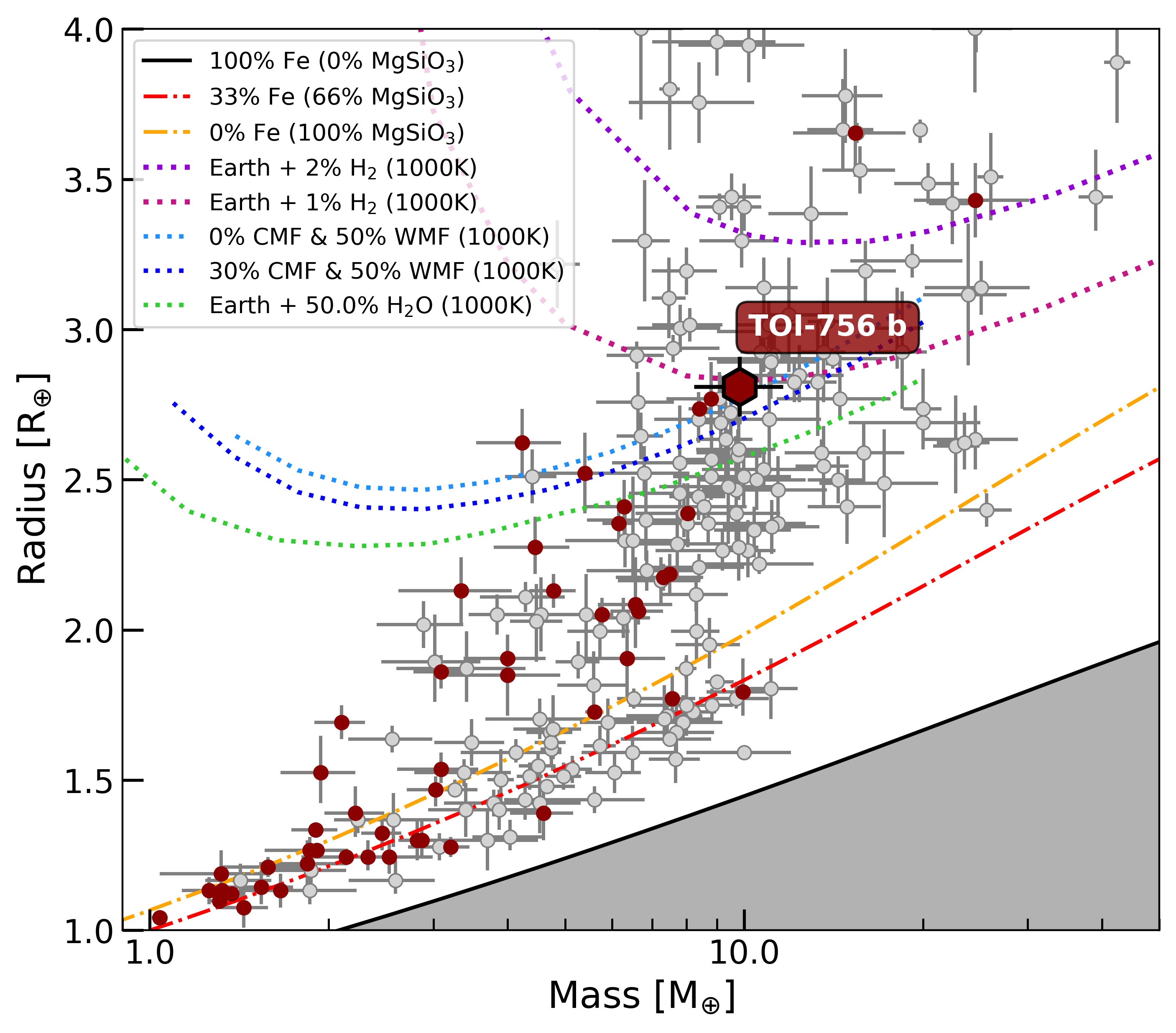
Figure 5: Mass-radius diagram for small exoplanets, highlighting TOI-756 b among M dwarf and FGK dwarf hosts and theoretical composition lines.
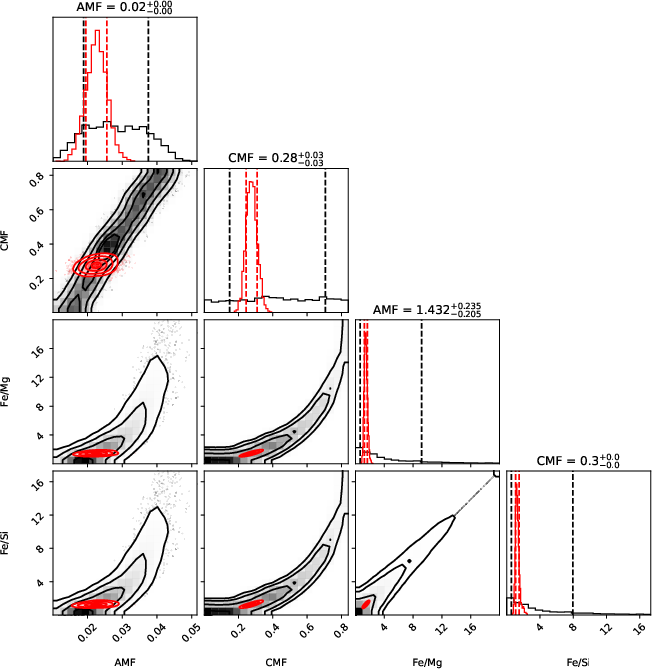
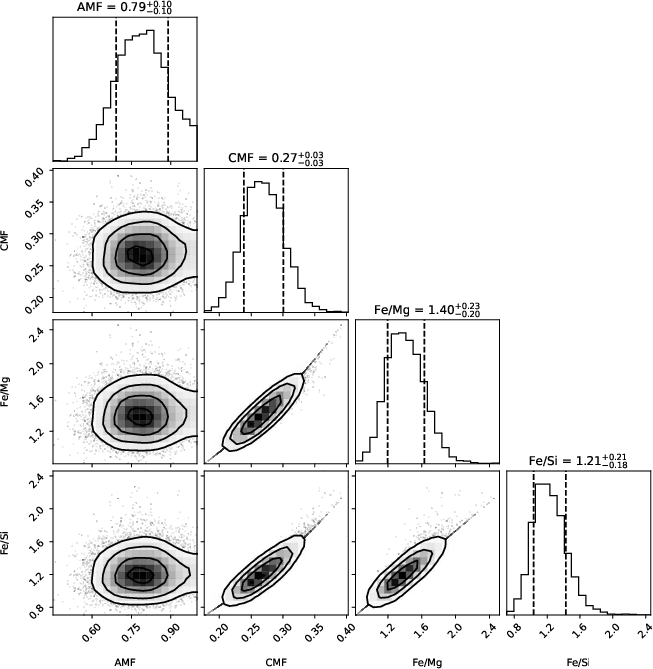
Figure 6: Corner plots from the Bayesian interior modeling of TOI-756 b, showing constraints on core and envelope mass fractions.
TOI-756 c is a cold, eccentric giant with Mcsini=4.05±0.11MJup, P=149.6 d, e=0.45, and a=0.439 au. No transit is detected, and the orbital configuration is dynamically distinct from the inner planet.
Third Companion: The RV trend constrains the minimum mass and separation of the outer companion, with high-contrast imaging and CCF analysis excluding stellar-mass objects at a≲10 au. Gaia DR4 astrometry is expected to further constrain its nature.
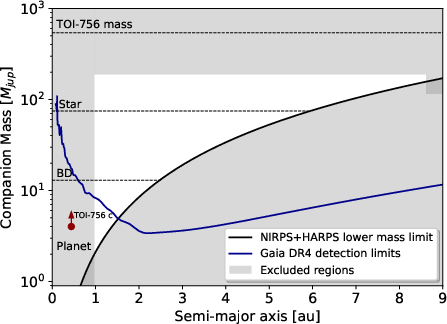
Figure 7: Limits on the companion mass as a function of semi-major axis, combining RV, imaging, and astrometric constraints.
System Architecture and Demographic Context
The TOI-756 system is the first confirmed M dwarf hosting both a transiting sub-Neptune and a cold eccentric giant. The inner planet lies at the lower boundary of the Neptune desert and within the "radius cliff"—a region of steeply declining planet occurrence between 2.5 and 4 R⊕—and exhibits a low density compared to sub-Neptunes around FGK stars. Statistical analysis (Mann-Whitney U test) confirms that small sub-Neptunes around M dwarfs are systematically less dense than those around FGK dwarfs, with a p-value of 0.006 (0.015 with bootstrapping), strengthening the claim of a compositional difference.
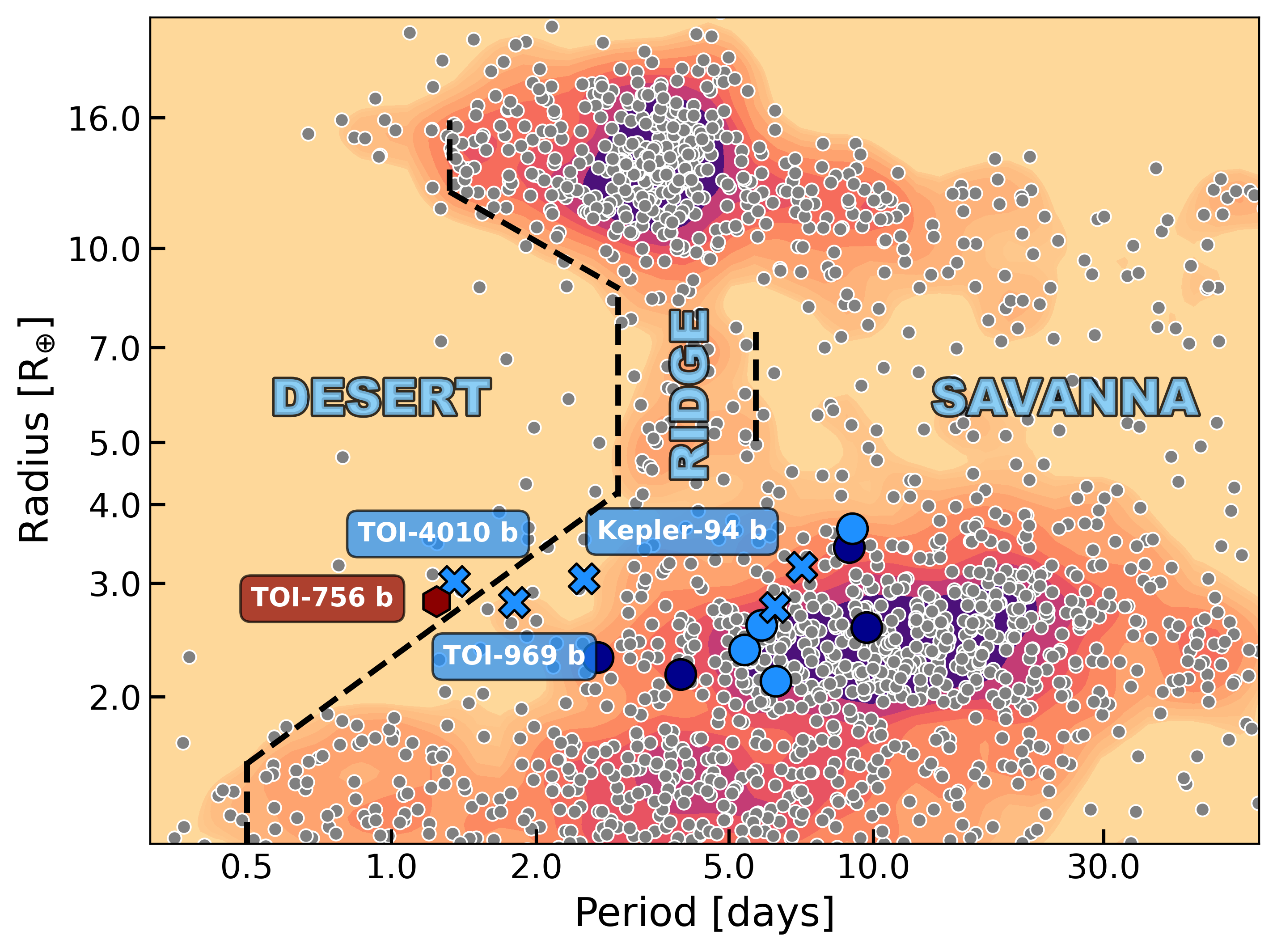
Figure 8: Planet radius vs. orbital period, highlighting the Neptune desert and the location of TOI-756 b.
The system's architecture is rare: among known exoplanet systems, only a handful host a close-in sub-Neptune and a distant giant, and none previously around an M dwarf. The outer giant's high eccentricity and the presence of a third companion suggest a dynamically active history, possibly involving high-eccentricity migration or planet-planet scattering.
The presence of a volatile-rich sub-Neptune interior to a cold giant in a metal-rich M dwarf system challenges standard core accretion models, which predict a low frequency of giant planets around low-mass stars. The system supports scenarios where migration and/or dynamical interactions deliver icy material to the inner system, consistent with the observed low density of TOI-756 b. The high metallicity of the host may have facilitated giant planet formation despite the low stellar mass.
The location of TOI-756 b at the edge of the Neptune desert and radius cliff provides a testbed for theories of atmospheric loss (photoevaporation, core-powered mass loss) and atmospheric retention in high-irradiation environments. The planet's moderate density, despite strong irradiation, may be attributable to its metal-rich atmosphere, which is more resistant to escape.
The wide binary companion (WT 352) at ∼955 au is unlikely to have truncated the protoplanetary disk or suppressed planet formation, but its presence may have influenced the system's dynamical evolution and mutual inclinations.
Prospects for Atmospheric and Dynamical Characterization
TOI-756 b is a prime target for transmission spectroscopy with JWST, with a Transmission Spectroscopy Metric (TSM) of 63. Atmospheric characterization could distinguish between a H/He-dominated or high mean molecular weight envelope, directly testing formation and evolution models for sub-Neptunes around M dwarfs.
The system's dynamical configuration, including the mutual inclination of the planets and the binary companion, can be further constrained with continued RV monitoring and Gaia astrometry. Measurement of the Rossiter-McLaughlin effect for TOI-756 b could reveal spin-orbit misalignment, probing the system's dynamical history.
Conclusion
The TOI-756 system, as revealed by NIRPS and TESS, exemplifies the diversity of planetary architectures possible around M dwarfs and provides a critical benchmark for models of planet formation, migration, and atmospheric evolution in low-mass stellar environments. The combination of a volatile-rich sub-Neptune, a cold eccentric giant, and a possible third companion in a wide binary system challenges existing paradigms and motivates further observational and theoretical work. The system's unique properties make it a high-priority target for future atmospheric and dynamical studies, with implications for the demographics and formation pathways of planets around the most common stars in the Galaxy.