- The paper proposes a mandate for AI labs to release lightweight analog models that serve as proxies for testing safety interventions in large systems.
- Empirical results and theoretical scaling laws confirm that interventions in analog models effectively transfer to larger, frontier AI systems.
- The proposal enhances public oversight and research transparency while balancing innovation with risk management and competitive integrity.
Small Analog Models for Frontier AI Safety and Innovation
Introduction to Analog Models
The paper "Position: Require Frontier AI Labs To Release Small 'Analog' Models" (2510.14053) advocates for a novel regulatory approach in the AI landscape, particularly focusing on frontier AI models. The paper argues for AI laboratories to release small, publicly accessible versions of their large, proprietary models, termed “analog models.” These models serve as proxies that not only help in safety testing, interpretability research, and transparency but also alleviate concerns around the safety-innovation tradeoff that has historically stymied regulation efforts. The paper proposes that these analog models, distillations of larger systems, could significantly contribute to safety advancements without incurring excessive costs.
Technical Foundations
Empirical Evidence of Transferability
Recent industry and academic studies have demonstrated the effective transferability of safety interventions from analog models to larger frontier systems. For instance, research shows steering vectors developed in smaller models can neutralize hazardous behaviors when applied to much larger systems [oozeer2025activation]. Furthermore, maps fitted on token embedding spaces demonstrate high reliability when translating steering directions between models of various sizes [lee2025sharedgloballocalgeometry].
Both findings were achieved using relatively limited computational resources. This empirical evidence suggests analog models can provide a cost-effective platform for developing interventions that are robustly generalizable across different scales of AI models (Figure 1).
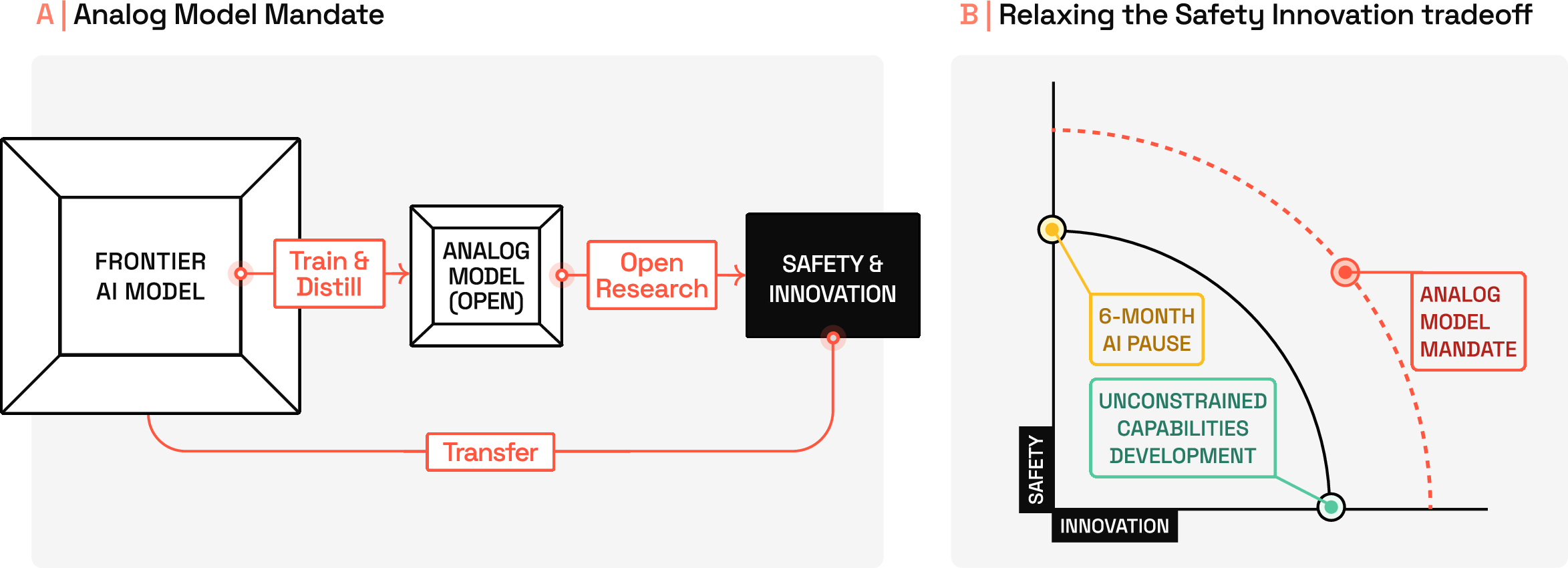
Figure 1: The Analog-Model Mandate and Its Effect on the SafetyâInnovation Frontier.
Theoretical Underpinnings
The consistency in transferability is supported by robust theoretical foundations. The "Platonic Representation Hypothesis" posits that as models scale, they converge to a shared representation space, facilitating reliable generalization across models [huh2024platonic]. Additionally, scaling laws indicate that capabilities scale continuously, implying interventions validated in analog models predictably influence larger models [kaplan2020scaling]. Representational convergence further supports these claims, demonstrating stable feature retention even across substantial scale transitions [elhage2022toymodels, olah2023monosemanticity].
Policy Mechanism and Implementation
Proposed Mandate
The paper proposes that labs releasing frontier AI models must also release an analog model, post-trained using distillation with identical data and objectives, capped at 0.5% to 5% of the original model's size. This ensures analog models remain lightweight and economically viable, facilitating rapid public oversight and research while maintaining competitive integrity.
Compliance and Enforcement
The mandate specifies that analog models should be released within 1-3 months post-deployment of frontier models, allowing timely safety assessments. Enforcement leverages existing regulatory frameworks, such as the U.S. Export Control Reform Act, to ensure compliance with penalties proportionate to non-compliance impacts. Licensing of analog models under permissive open-source terms fosters wide-ranging academic and research use while minimizing dual-use risks.
Pilot Programs and Industry Response
The paper suggests phased implementation with voluntary or incentivized releases in the initial year and mandatory compliance thereafter. By observing the positive uptake and scholarly impact from initiatives like Meta's open-sourcing of LLaMA models, the proposal demonstrates feasibility and substantial benefits in catalyzing innovation and safety research without sacrificing commercial interests.
Risks and Benefits
Strategic Benefits
The introduction of analog models promises considerable advantages:
- Accelerated Safety Research: Analog models enable independent verification and oversight, streamlining regulatory processes and fostering rapid intervention cycles.
- Public Knowledge Spillovers: By democratizing access to advanced AI resources, analog models expand research contributions and accelerate safety advancements.
- Trust and Accountability: Increased transparency enhances public trust and confidence in AI deployments, promoting accountability.
Managing Risks
Potential risks include intellectual property exposure, security vulnerabilities, and compliance burdens. The paper addresses these through stringent constraints on analog model releases, delayed timelines for mitigation assessments, and standardized compliance reporting to minimize regulatory overhead and prevent misuse.
Conclusion
The analog-model mandate represents a pragmatic shift in frontier AI regulation, showing potential to enhance safety and innovation simultaneously. Through leveraging public proxies for AI systems, the policy fosters a compounding stream of public knowledge, broadens research participation, and strategically balances openness with proprietary interests. As technology acts as a multiplier in economic growth, analog models analogously expand the AI safety-innovation frontier, ensuring sustainable and responsible advancements in AI development.
Future work should focus on validating transferability for emergent model behaviors, releasing multi-modal analog versions, and developing standardized benchmarks. Pilot programs could refine regulatory parameters and infrastructure, ensuring effective implementation across labs and regulatory agencies.