- The paper introduces a dense-shutter spectroscopy method that increases target density by 4–5× compared to standard MSA strategies.
- It demonstrates robust redshift and emission-line measurements with a 65% success rate and detects galaxies as faint as 3 nJy.
- The method significantly improves survey speed and sets a new standard for efficient high-redshift galaxy observations.
High-Multiplex JWST/NIRSpec Dense-Shutter Spectroscopy in the JADES Origins Field
Introduction and Motivation
The paper presents a novel observational strategy for JWST/NIRSpec multi-object spectroscopy, termed "dense-shutter spectroscopy" (DSS), implemented in the JADES Origins Field (JOF). The approach leverages the NIRSpec micro-shutter assembly (MSA) to maximize multiplexing by deliberately allowing controlled spectral overlaps, thereby increasing the number of simultaneous targets by a factor of 4–5 compared to standard MSA strategies. The primary scientific motivation is to efficiently obtain deep, wide-band spectra for large samples of faint, high-redshift galaxies, particularly those with zphot>3, while retaining the low background and high sensitivity of slit spectroscopy.
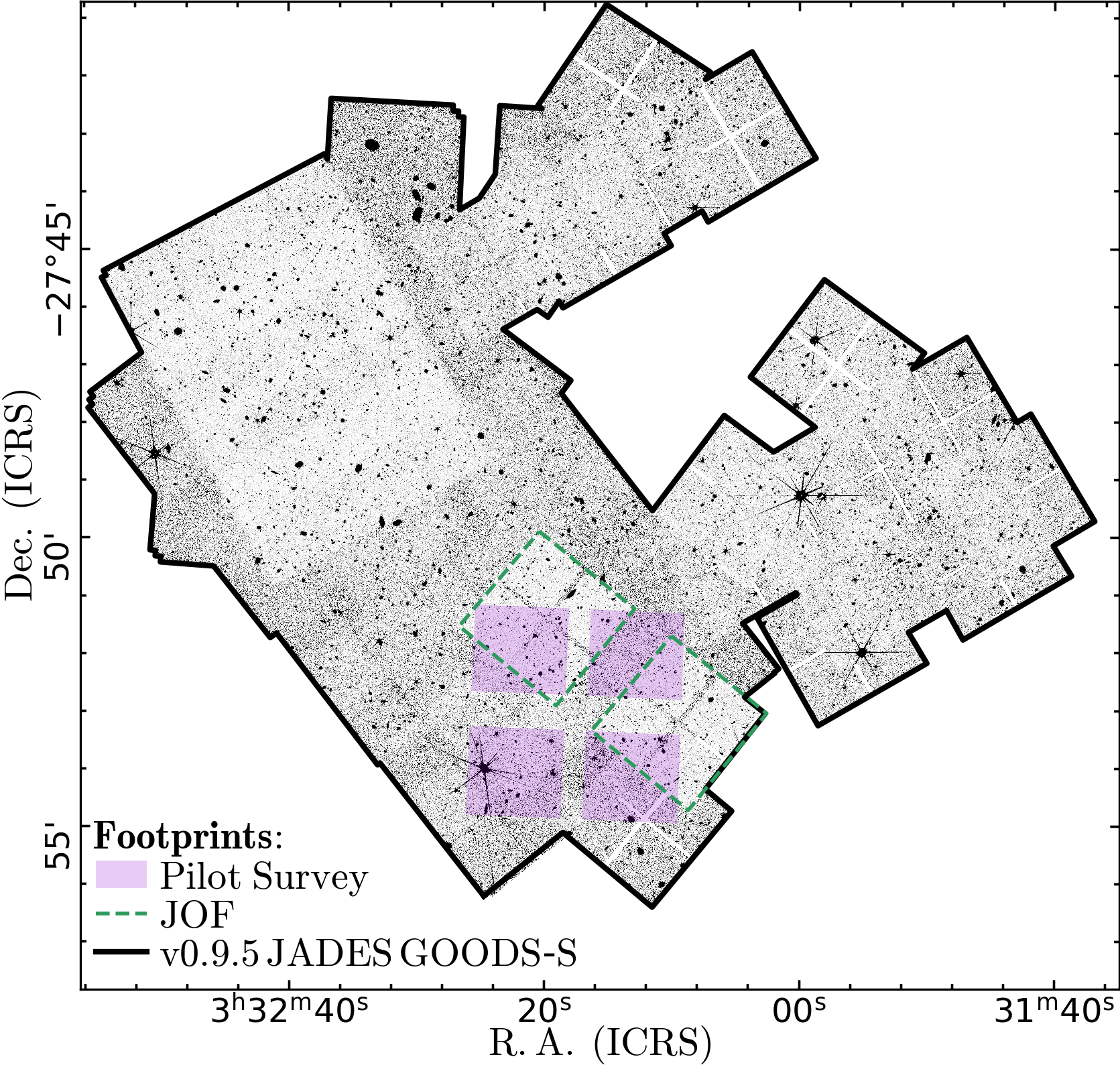
Figure 1: Position of the Dark pilot survey pointing (shown in pink) relative to existing multi-band NIRCam coverage from JADES (solid black) and the deep JOF field (dashed green).
Survey Design, Target Selection, and Multiplexing
The DSS pilot survey, "Dark," targeted all faint (mF444W<30 mag) $z_{\rm phot} > 3$ candidates in the MSA, excluding only bright continuum sources to avoid excessive background. The final configuration allocated ∼850 sources in a single mask, with a completeness of fC=0.34 (854/2516 targets within the MSA footprint). The completeness is set by a combination of MSA bar vignetting, inoperable shutters, and exclusion zones to limit catastrophic overlaps.
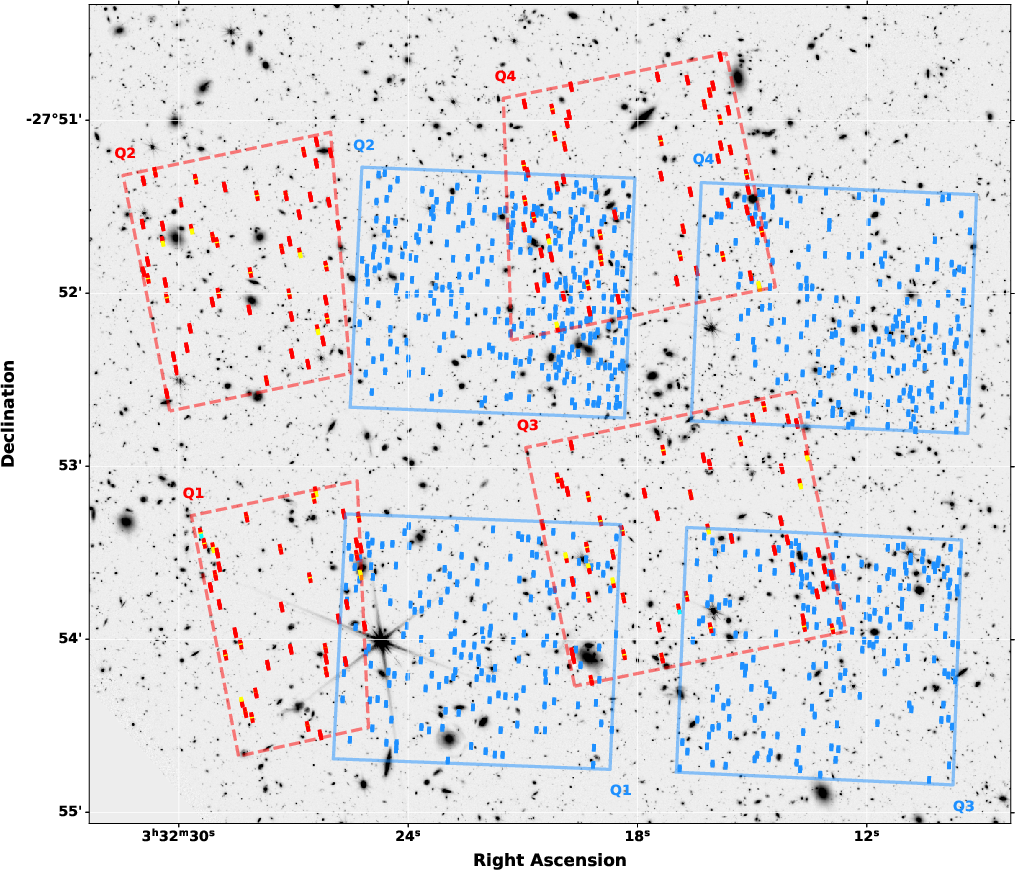
Figure 2: Comparison of a standard MSA target allocation (red slitlets) and the dense-shutter method (blue), both using 3-shutter slitlets.
The DSS approach achieves a per-configuration target density 4–5× higher than standard MSA allocations, with the penalty of increased photon noise from overlapping spectra. The empirical time penalty to reach the same sensitivity as standard MSA is ∼1.7×, but the gain in survey speed is a factor of 5, more than compensating for the sensitivity loss.
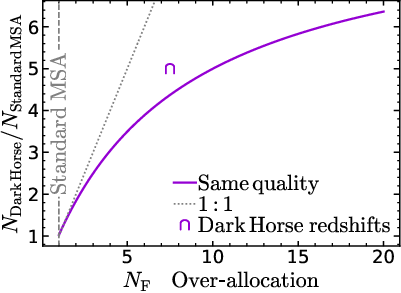
Figure 3: Number of sources in dense-shutter mode relative to standard MSA allocation, accounting for the exposure time penalty due to spectral overlaps.
Data Reduction and Sensitivity
Data reduction followed the JADES pipeline, with nod background subtraction and path-loss corrections. The achieved 5σ emission-line sensitivity in DSS is only ∼13% worse than in traditional deep MSA observations, validating the predicted noise penalty. The DSS mode remains detector-noise dominated for the adopted target brightness and overlap level.
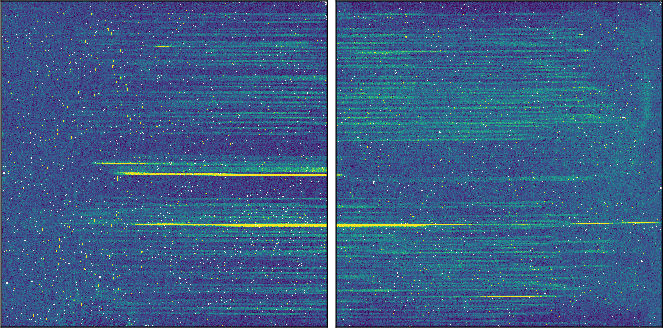
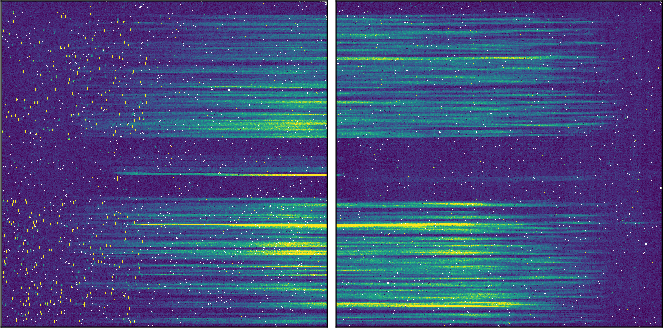
Figure 4: Count-rate maps from a standard MSA configuration (top) and the Dark dense-shutter observation (bottom), illustrating the increased target density and background in DSS.
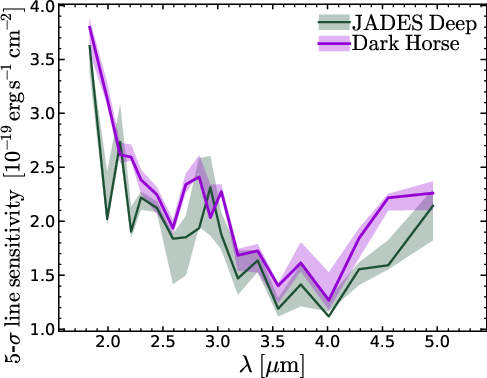
Figure 5: Emission-line sensitivity of dense-shutter spectroscopy (purple) compared to traditional NIRSpec/MSA (green) for similar exposure times.
Redshift and Flux Measurements
Secure spectroscopic redshifts were obtained for 539 galaxies over 2.5≲z≲8.9, with a success rate of 65%. The DSS approach yields a 25% higher redshift success rate and five times more redshifts than comparable standard MSA grating surveys. The high success rate extends to sources as faint as 3 nJy in the continuum.
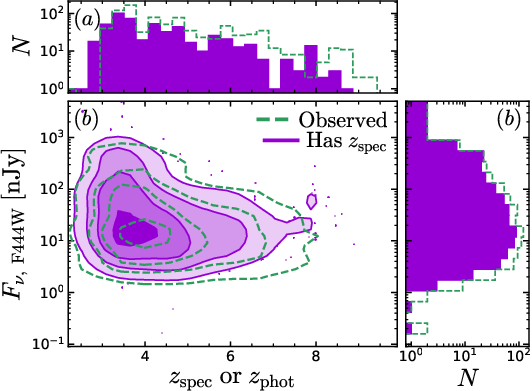
Figure 6: Distribution of Pilot Survey galaxies in the redshift–magnitude plane, highlighting the high success rate for faint sources.
Spectral overlaps are efficiently identified and deblended using spatial and photometric information, with only rare cases of emission-line confusion.
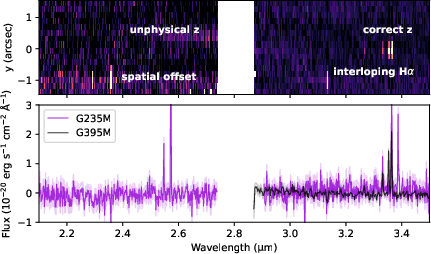
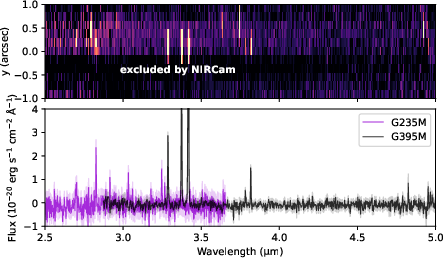
Figure 7: Example of spectral overlap identification, showing how spatial and photometric constraints resolve ambiguous line associations.
Flux measurements are robust, with a ∼10% systematic offset relative to JADES DR4 attributed to path-loss corrections. Alternative background subtraction strategies (e.g., local modeling) yield consistent results, supporting the feasibility of even higher multiplexing.
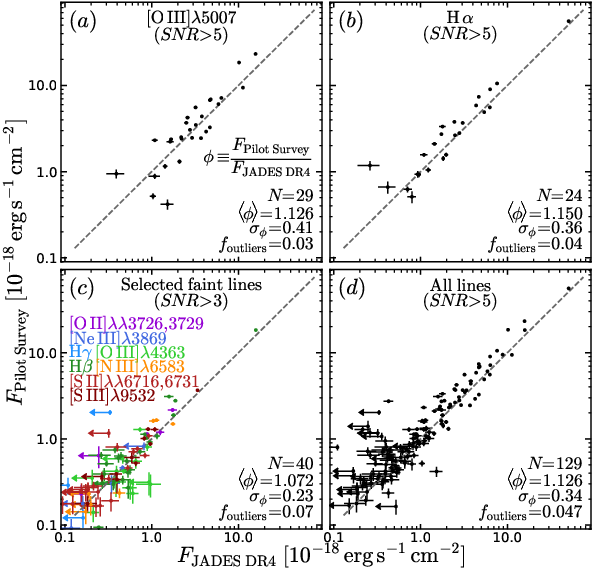
Figure 8: Comparison of flux measurements from Dark and JADES DR4 for 43 common objects, showing excellent agreement.
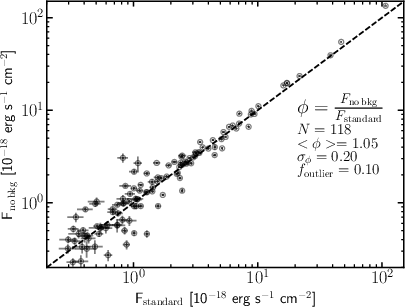
Figure 9: Comparison of default flux measurements to those obtained without background subtraction, demonstrating consistency.
Science Results
Star-Forming Main Sequence and Metallicity
The DSS sample enables precise measurement of the star-forming main sequence (SFMS) and mass–metallicity relation (MZR) at z=3–8, with Balmer-line-based SFRs and strong-line/auroral-line metallicities for hundreds of galaxies. The sample size for direct Te-based metallicities is an order of magnitude larger than previous deep NIRSpec surveys.
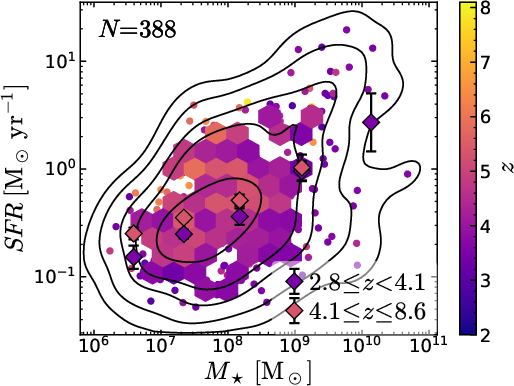
Figure 10: Redshift-collapsed star-forming main sequence from Dark, based on SED-derived M∗ and SFR from emission lines.
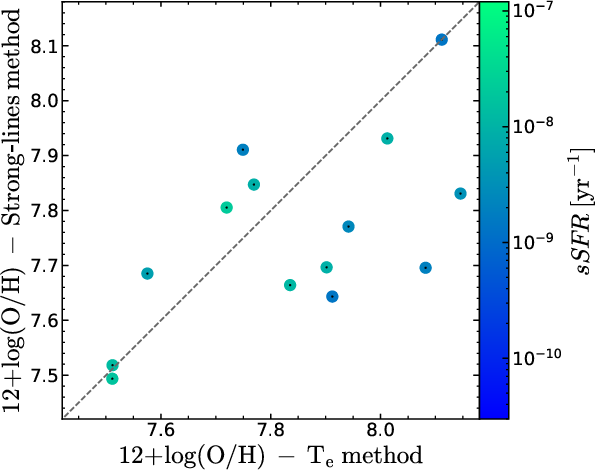
Figure 11: Comparison of gas metallicities between direct Te and strong-line methods, color-coded by specific SFR.
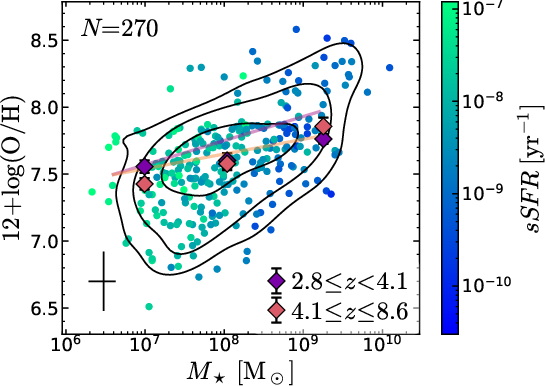
Figure 12: Mass–metallicity relation based on strong-line calibrations, illustrating redshift evolution and sSFR dependence.
Dust, Outflows, and AGN
The high completeness and depth allow studies of dust in the CGM via background galaxy attenuation, detection of multi-phase outflows in AGN hosts, and identification of rare populations such as "Little Red Dot" AGN and mini-quenched galaxies.
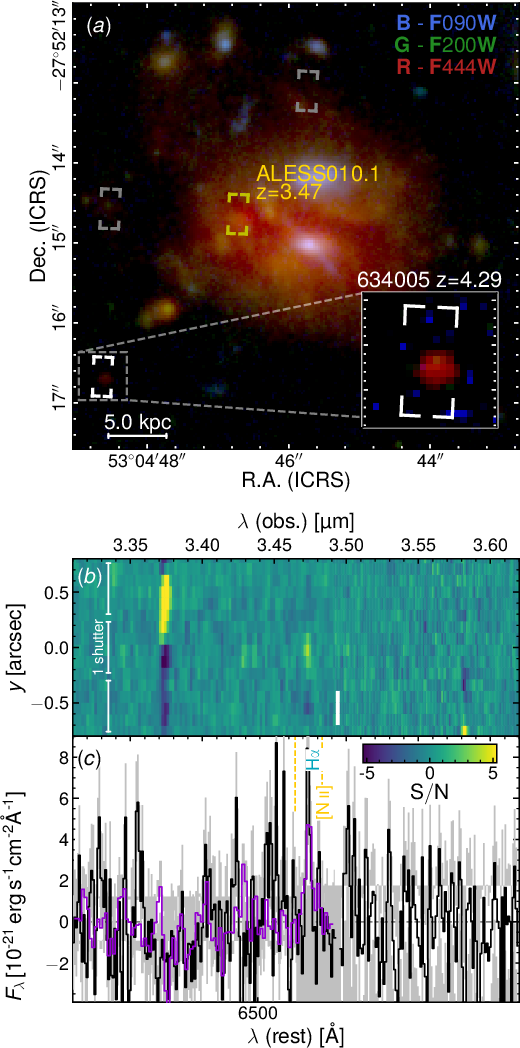
Figure 13: NIRCam image of the sub-mm galaxy ALESS010.1 at z=3.47; background galaxy attenuation reveals dust in the CGM.
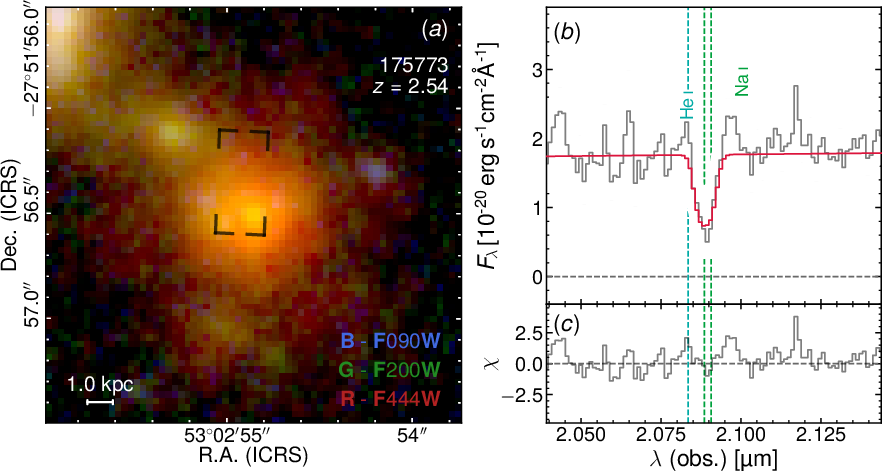
Figure 14: Dust-obscured AGN-host galaxy at z=2.5 with compact morphology and evidence for neutral-phase outflow.
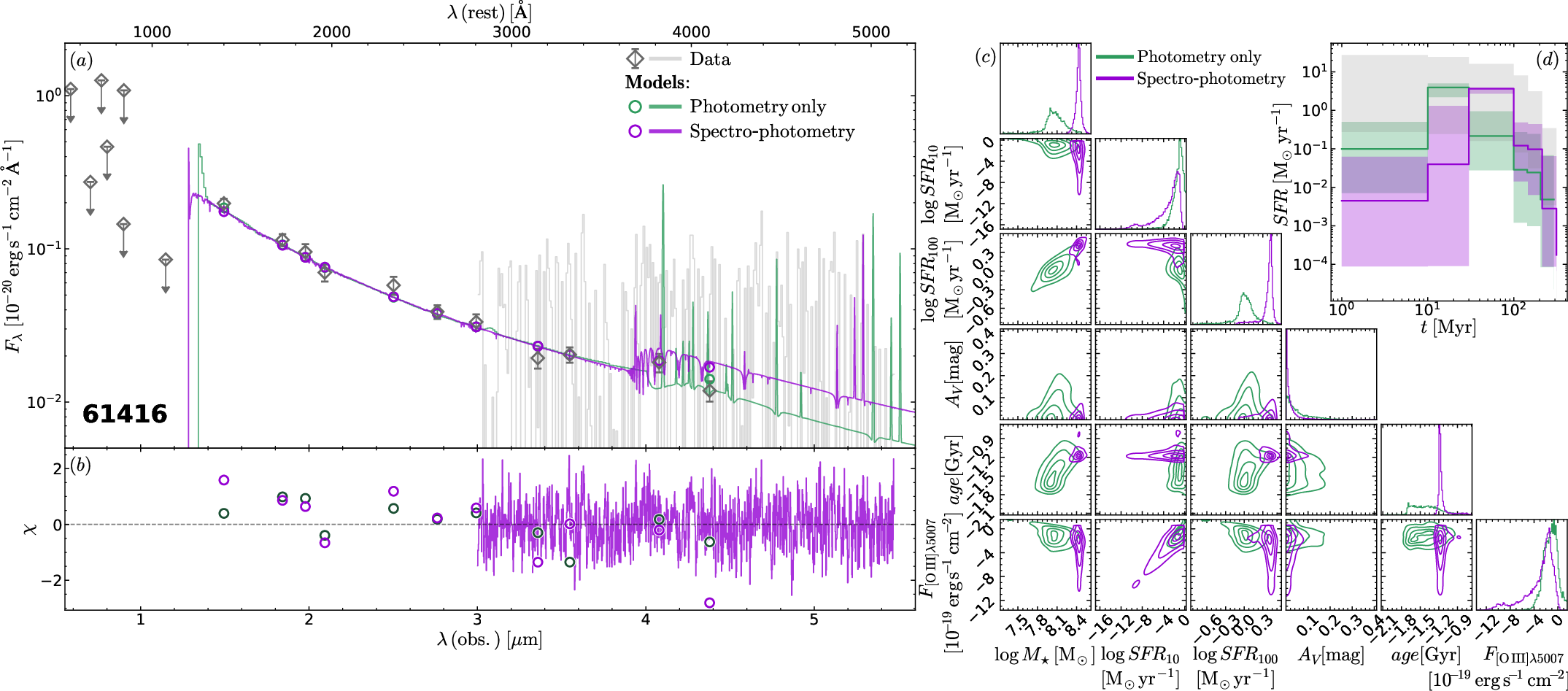
Figure 15: SED modeling of a mini-quenched galaxy at zphot=9.6; joint photometric and spectroscopic constraints reveal extremely low SFR.
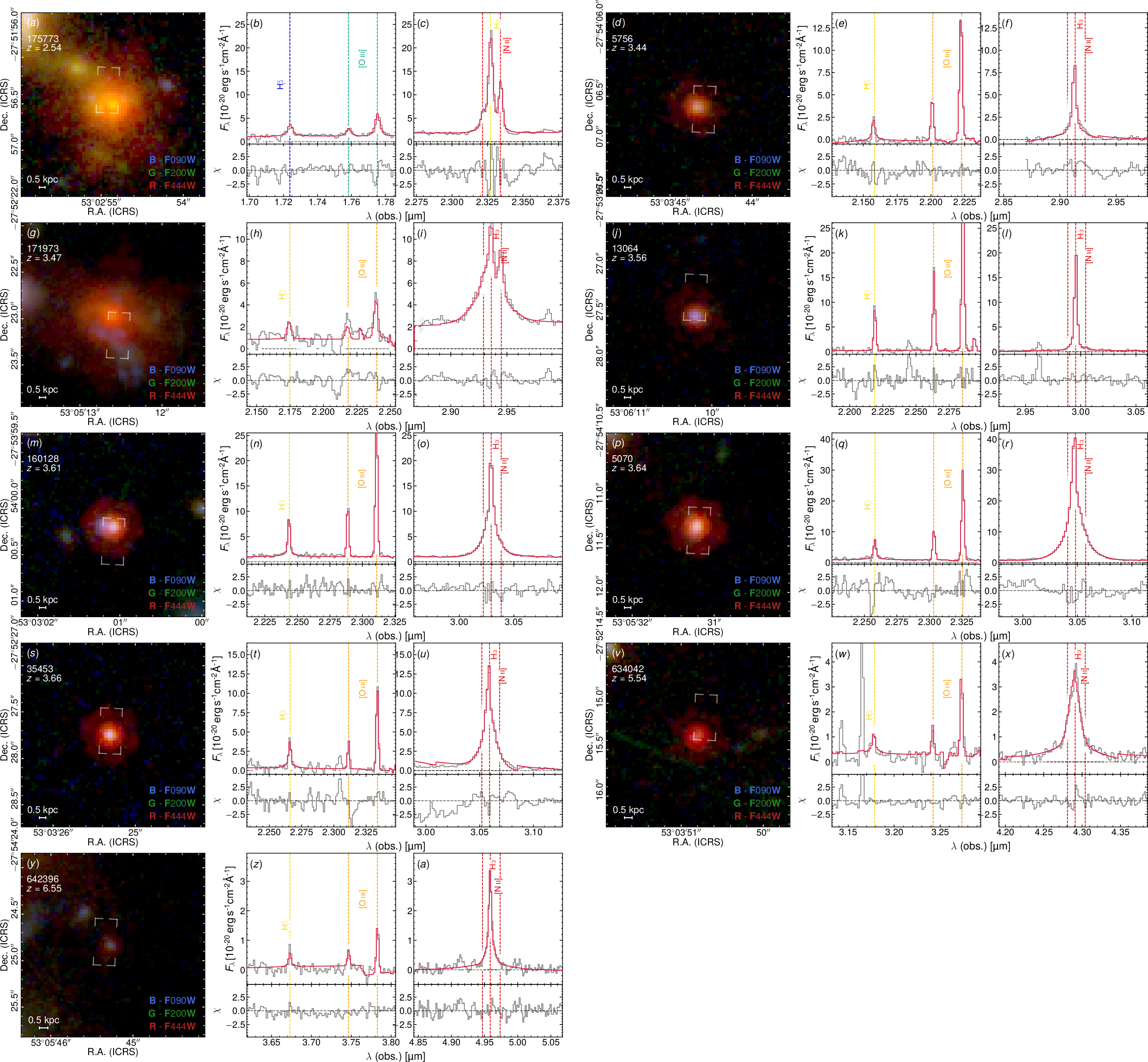
Figure 16: Broad-line AGN and LRDs in Dark, showing diversity in line profiles and SEDs.
Environmental Studies
The DSS approach is well-suited for identifying high-redshift overdensities and clustering, as demonstrated by the detection of 13 spectroscopically confirmed members of a z∼8 protocluster in a single pointing.
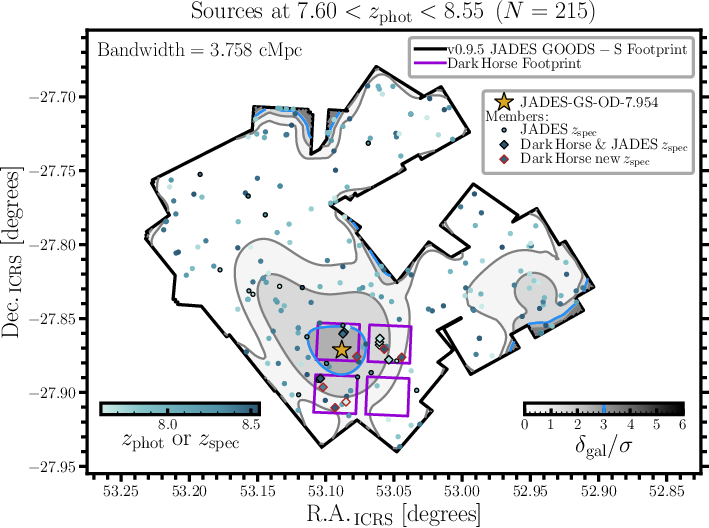
Figure 17: Spatial distribution of z∼8 galaxy candidates and spectroscopically confirmed overdensity members in the JADES field.
Comparison to Slitless Spectroscopy and Survey Trade-offs
A quantitative comparison with NIRCam/WFSS slitless spectroscopy demonstrates that DSS achieves a factor of 4–10 improvement in line sensitivity (16–100× in exposure time) at fixed survey time, despite a factor of ∼2–3 lower single-configuration completeness. The DSS method also provides broader instantaneous wavelength coverage and is less affected by field-of-view truncation.
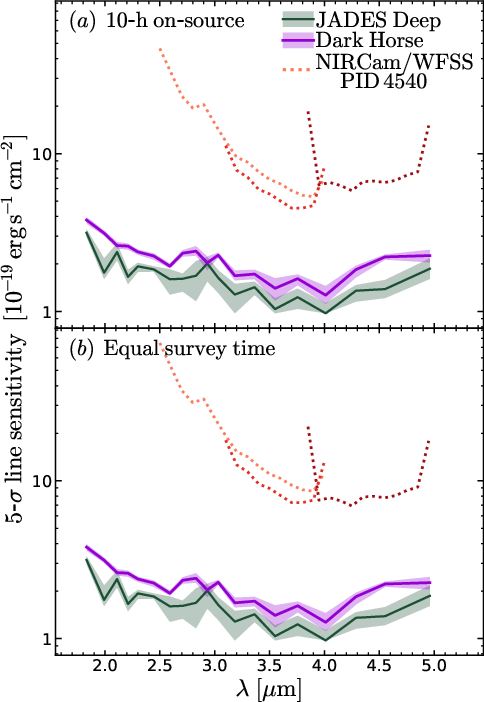
Figure 18: Sensitivity comparison between dense-shutter spectroscopy and NIRCam/WFSS, showing the substantial advantage of DSS in line sensitivity per unit time.
The main limitations of DSS are the need for deep pre-imaging for target selection and astrometry, and the complexity of flux calibration for extended sources. However, the method is highly efficient for emission-line science in deep legacy fields.
Implications and Future Prospects
The DSS approach represents a significant advance in the efficiency of JWST/NIRSpec multi-object spectroscopy for faint, high-redshift galaxy populations. The demonstrated ability to obtain hundreds of secure redshifts and emission-line measurements in a single deep pointing, with only a modest sensitivity penalty, opens new parameter space for studies of galaxy evolution, feedback, and environment at early cosmic times.
The method is immediately applicable to any field with deep NIRCam imaging and is particularly compelling for emission-line science, where the density of faint targets is high. Further optimization—such as single-shutter slitlets, relaxed exclusion zones, or multiple configurations—could increase completeness and multiplexing even further.
Conclusion
The JADES Dark Horse pilot survey establishes dense-shutter spectroscopy as a highly effective strategy for high-multiplex, deep NIRSpec observations. The approach bridges the gap between the completeness of slitless surveys and the sensitivity and bandwidth of slit spectroscopy, enabling efficient assembly of large, physically informative samples of faint, high-redshift galaxies. The methodology and results set a new standard for future extragalactic spectroscopic surveys with JWST and provide a robust framework for maximizing the scientific return from deep legacy fields.