- The paper introduces a novel MOFAT non-LTE radiative model that accurately fits both CO overtone and fundamental bands in SN 2024ggi.
- High-resolution JWST NIRSpec data reveal asymmetric line profiles and clump morphology changes, indicating an aspherical explosion with limited mixing.
- A marked decline in CO mass and temperature between +285 and +385 days underscores rapid molecular destruction, impacting dust formation processes.
JWST NIRSpec Spectroscopy and CO Modeling of SN 2024ggi at Late Times
Introduction
This study presents late-time JWST NIRSpec observations of SN 2024ggi at +285 and +385 days post-explosion, focusing on the nebular phase molecular and atomic emission. The work leverages the unprecedented sensitivity and spectral coverage of JWST to resolve both the first overtone and fundamental vibrational bands of CO, as well as a suite of atomic lines from H, Ca, Ar, C, Mg, Ni, Co, and Fe. The analysis is centered on a novel, data-driven, non-LTE radiative transfer modeling approach (MOFAT) that incorporates 3D clumping effects, enabling robust constraints on the physical and morphological properties of the molecule-forming regions in the SN ejecta.
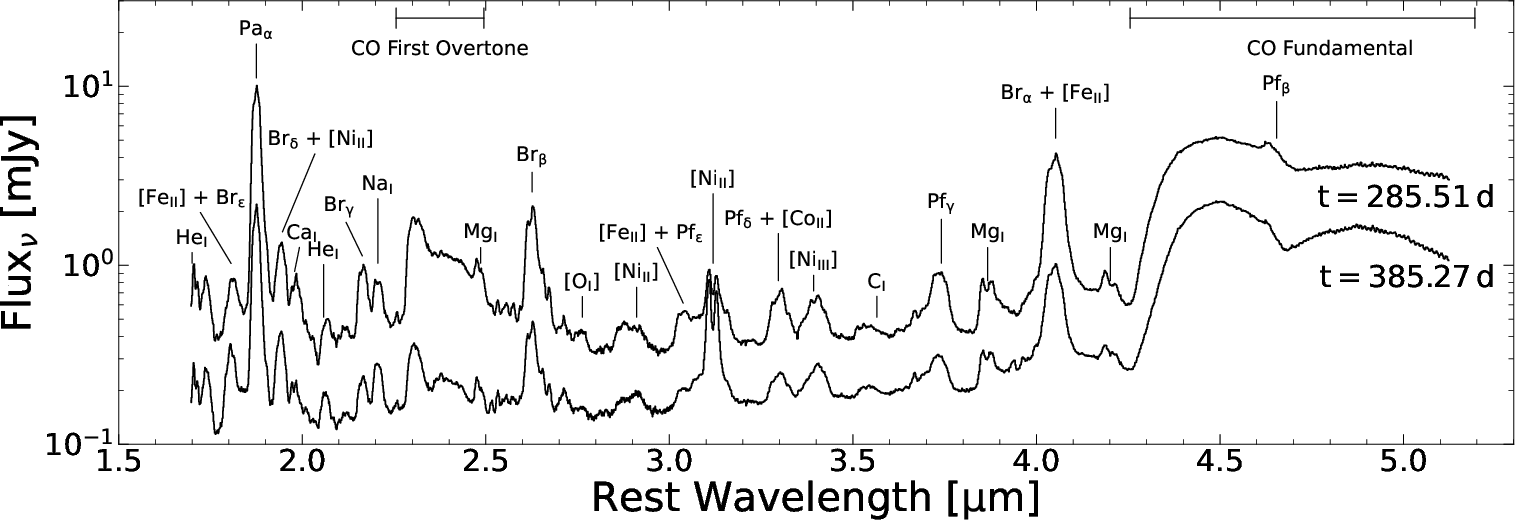
Figure 1: NIRSpec spectra of SN 2024ggi at +285.64 and +385.55 days, with prominent atomic and molecular features identified.
Spectral Properties and Line Diagnostics
The NIRSpec spectra reveal a rich set of emission lines, with hydrogen transitions (Paα, Brα, Brγ, etc.) and forbidden lines from intermediate-mass and iron-group elements. The line profiles are notably asymmetric, with velocity splitting and redward tilts, indicating an aspherical explosion geometry and limited mixing between the 56Ni-rich and C/O-rich layers. The absence of CO+ emission, in contrast to SN 1987A, further supports minimal mixing.
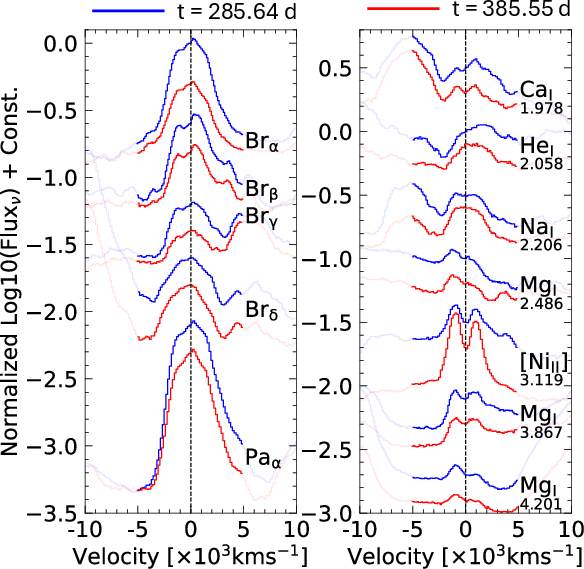
Figure 2: Velocity profiles of hydrogen and metal lines, showing asymmetry and splitting consistent with an aspherical explosion.
Comparative analysis with SN 1987A and SN 2023ixf demonstrates that SN 2024ggi shares similar atomic and molecular features, but the higher spectral resolution of JWST enables the resolution of blended lines and more precise diagnostics of the molecular bands.
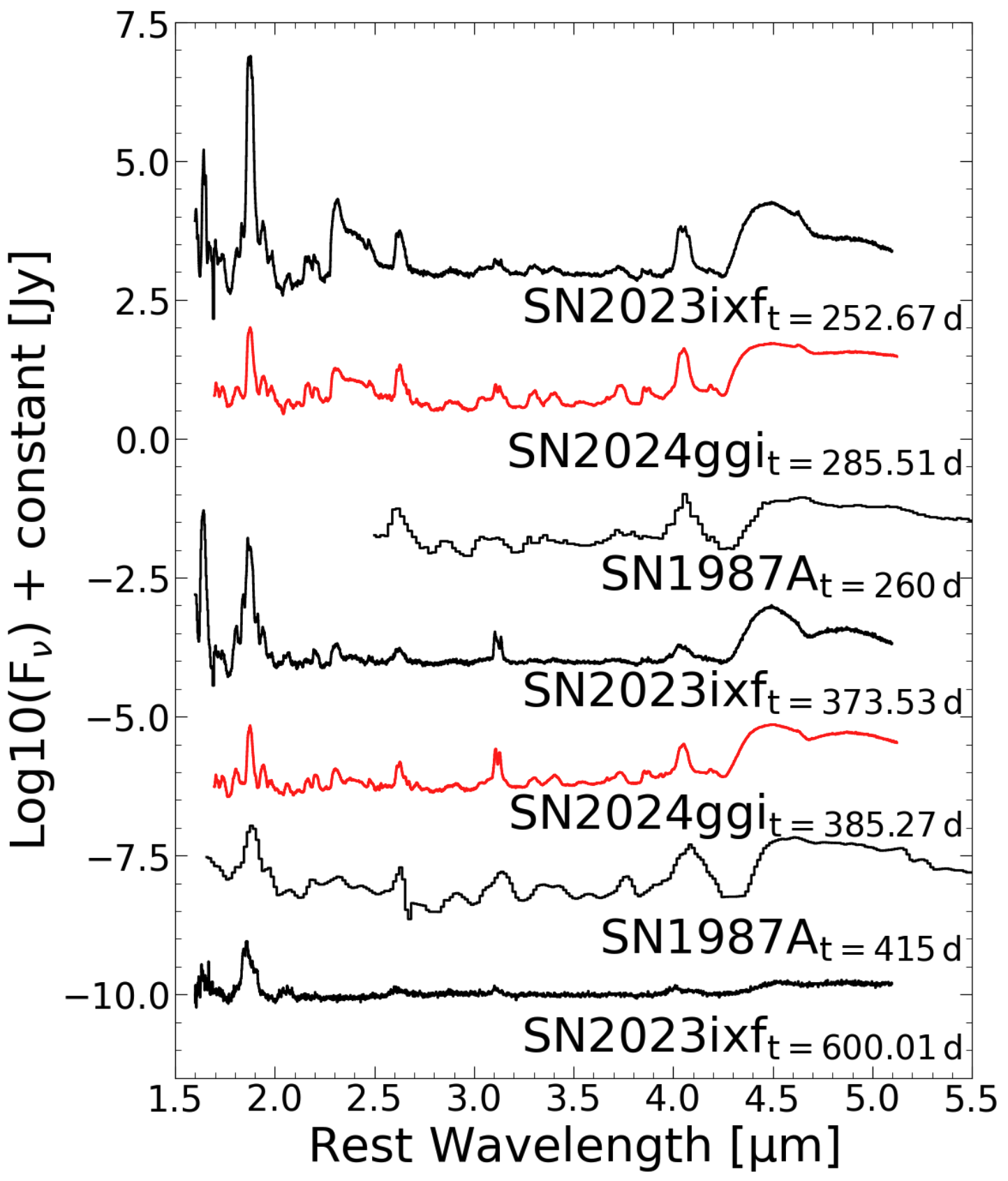
Figure 3: 1.5–5.5 μm spectral comparison between SN 2024ggi, SN 1987A, and SN 2023ixf, highlighting resolved features and CO band evolution.
Data-Driven Molecular Modeling: MOFAT Framework
Traditional analyses of SN molecular emission have relied on optically thin, one-zone models or forward spherical explosion simulations, both of which fail to capture the complexity of optically thick bands and multidimensional structure. The MOFAT code introduced here iteratively fits observed fluxes in both the CO overtone and fundamental bands, using a seven-parameter model that includes clump morphology (size, density contrast, shape), temperature structure, and velocity distribution.
The modeling demonstrates that at +285d, the CO distribution is nearly homogeneous, with clumping parameters (fc≈1.2) close to unity. By +385d, clumping becomes pronounced (fc≈2), with clumps becoming smaller and rounder, consistent with pressure equilibrium between heated outer and cool inner layers. The CO mass decreases sharply from 8.7×10⁻³M⊙ to 1.3×10⁻³M⊙ over the 100-day interval, indicating dominant CO destruction rather than ongoing formation.
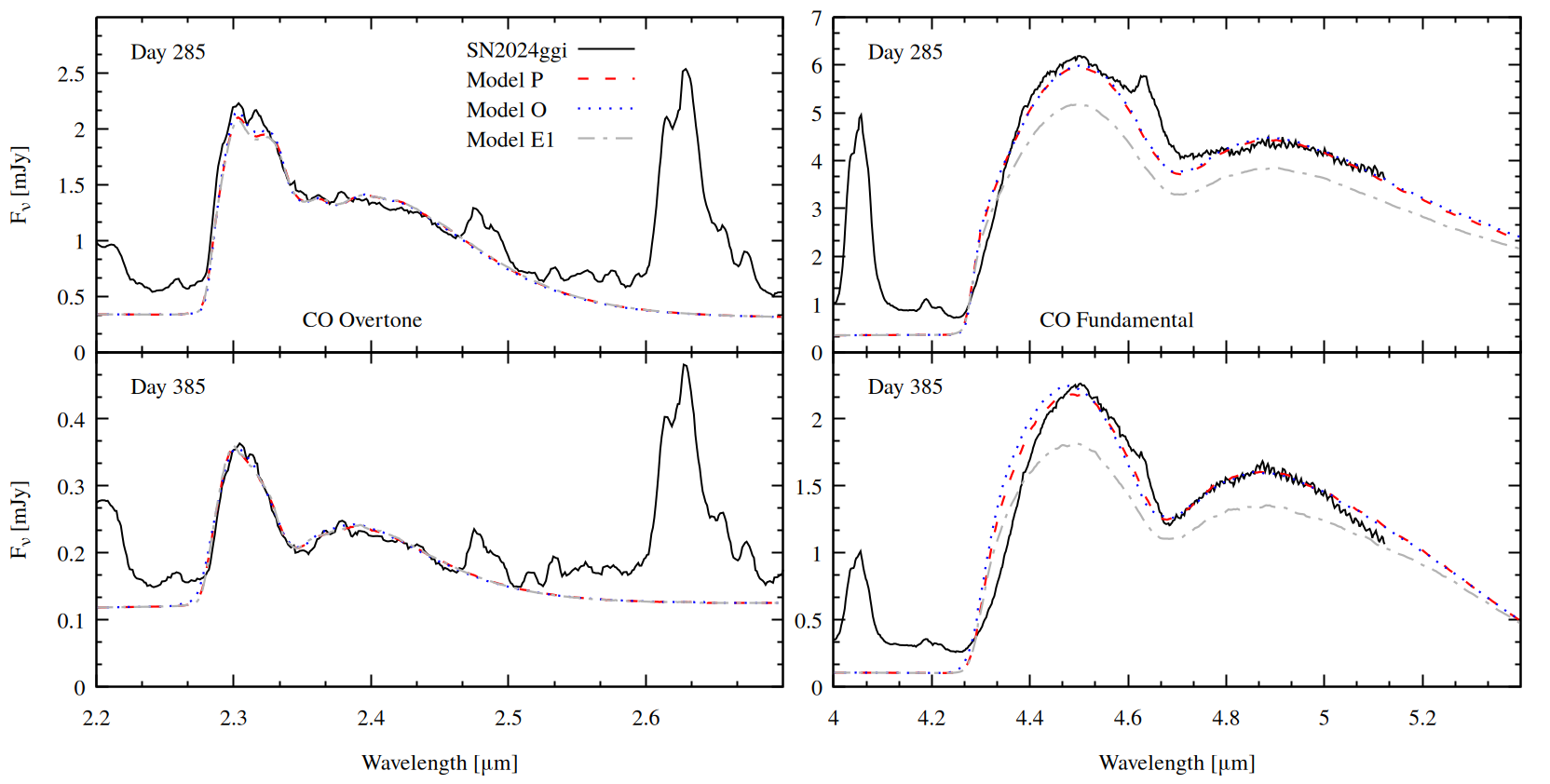
Figure 4: Fits of prolate and oblate clumping models to the CO bands at both epochs, showing sensitivity to clump size and density contrast.
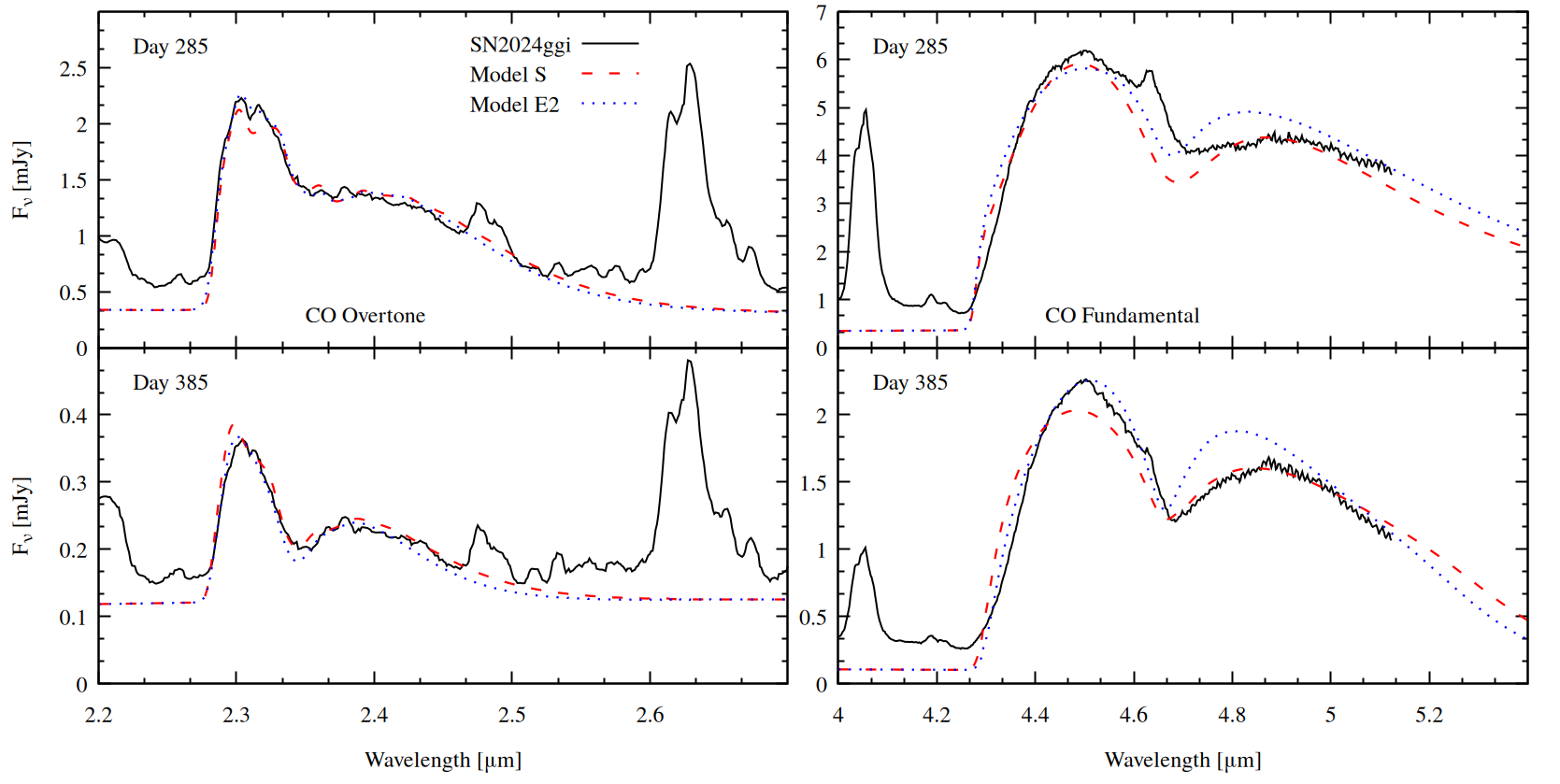
Figure 5: Non-clumping model fits, which fail to reproduce the fundamental band at late times, highlighting the necessity of clumping.
The temperature structure derived from the models shows a minimum near 2000 K at +285d, dropping further by +385d. The cooling is dominated by the optically thick CO fundamental band, and the temperature profile is sensitive to clumping morphology.
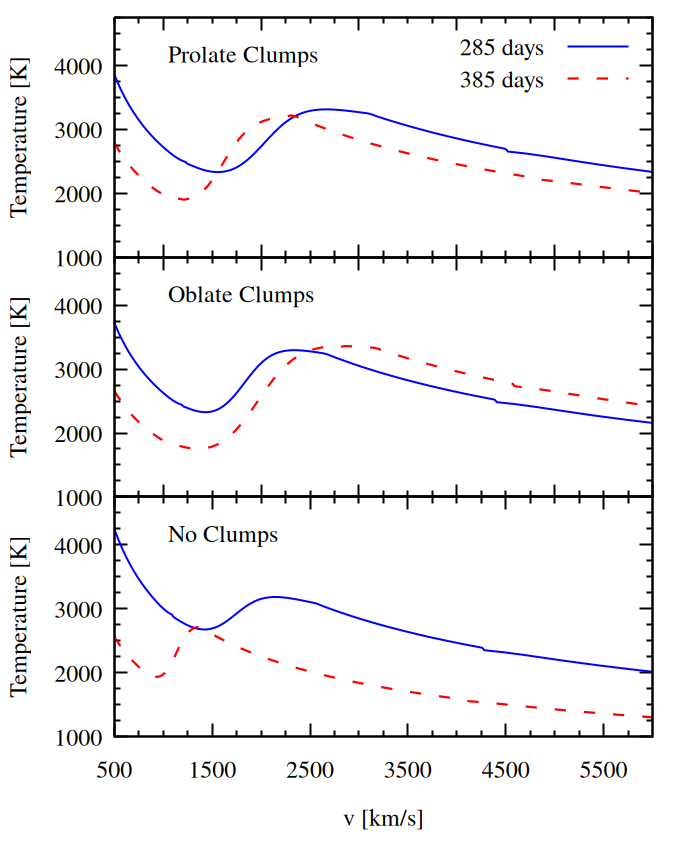
Figure 6: Converged temperature structures for prolate, oblate, and non-clumping models, illustrating the impact of clumping on thermal evolution.
The analysis finds that CO formation is largely complete by +285d, with subsequent evolution governed by destruction via radiative heating and dissociation. The inner edge of the CO-rich region remains above the photosphere, which has receded into Si-rich layers. Synthetic modeling of SiO bands, using equilibrium abundances from stellar models, suggests only modest SiO masses (∼10−3M⊙), insufficient for significant cooling at these epochs, but potentially increasing at later times to trigger dust formation.
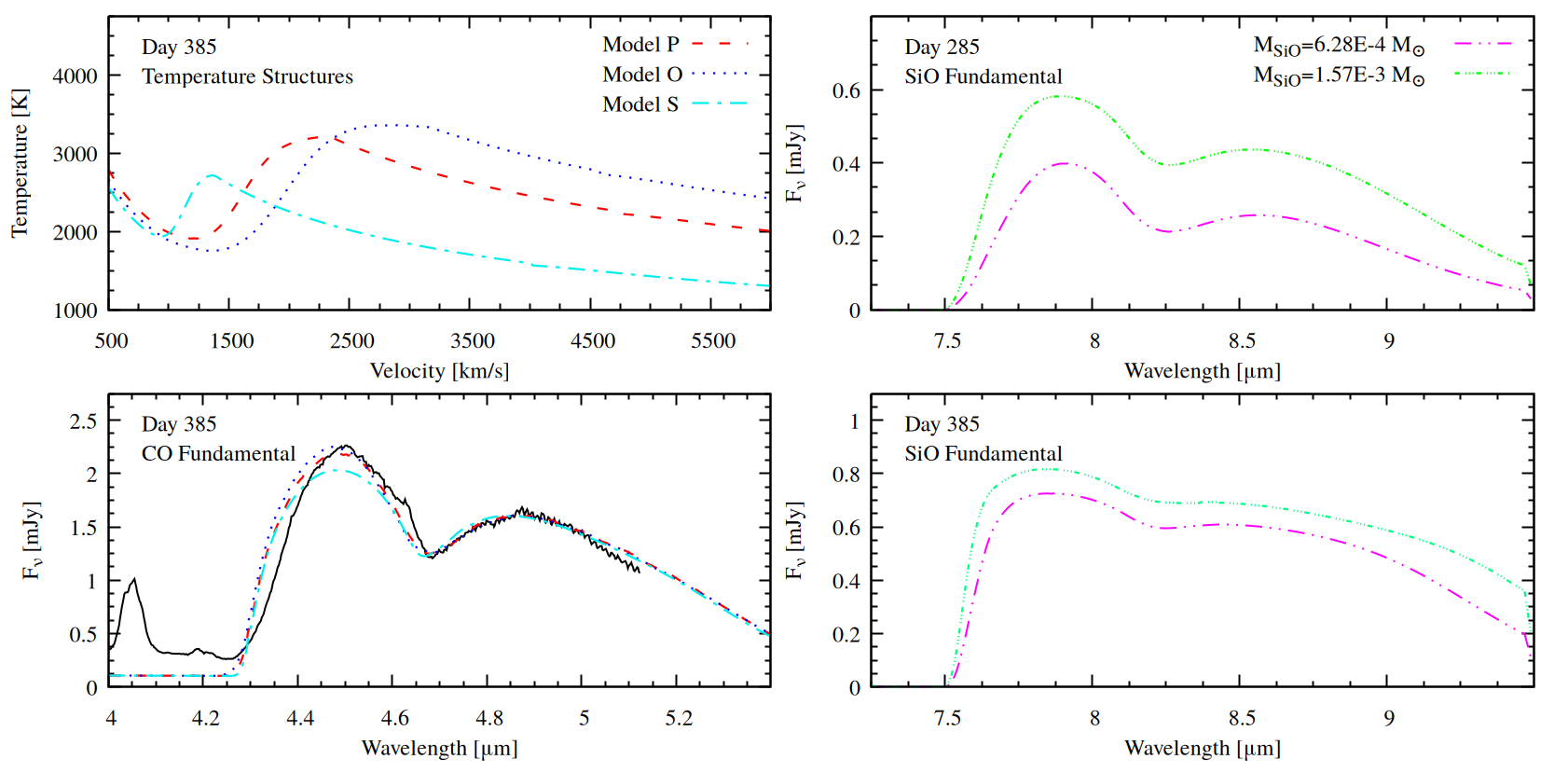
Figure 7: Comparison of temperature profiles and CO fundamental band fits with and without clumping at +385d; synthetic SiO spectra for both epochs using model-derived temperature structures.
The ratio of the first to second vibrational modes in the CO fundamental band is a sensitive diagnostic of clumping, with homogeneous models underpredicting the ratio by ∼15% at late times. This "picket fence" effect in clumpy media provides a robust probe of small-scale structure.
The MOFAT inverse modeling approach robustly reproduces both the overtone and fundamental CO bands, outperforming classical one-zone and spherical forward models, especially at late times when optical depth and multidimensional effects dominate. The necessity of clumping to fit the data at +385d is a strong result, suggesting that clumping is a generic feature of molecule-forming regions in SN II ejecta.
However, the study is limited by the lack of early-time (post-plateau) and late-time (strong SiO formation) spectral coverage, which are needed to fully map the onset and evolution of molecular and dust formation. Theoretical uncertainties remain in the sensitivity of derived parameters to model assumptions and in the treatment of clump morphology. Future work should focus on time-series JWST observations beginning immediately after the plateau phase, expanded grids of multi-D explosion models, and improved diagnostics linking molecular bands to progenitor and explosion physics.
Conclusion
JWST NIRSpec observations of SN 2024ggi at +285 and +385 days provide high-fidelity spectra of both atomic and molecular emission, enabling detailed constraints on the physical and morphological properties of the molecule-forming regions. The data-driven MOFAT modeling framework demonstrates that clumping is required to simultaneously fit the CO overtone and fundamental bands at late times, with clump properties evolving as CO is destroyed. The results have significant implications for understanding the 3D structure of SN ejecta, the timing and efficiency of molecule and dust formation, and the role of core-collapse SNe in cosmic dust production. Time-series infrared spectroscopy with JWST and future facilities will be essential for advancing these constraints and linking molecular formation to explosion physics and progenitor properties.