- The paper demonstrates the integration of LES with a novel 1D model to accurately predict tunnel pressure wave evolution in partially loaded freight trains.
- The methodology includes gap-dependent mesh and boundary condition enhancements that closely match experimental pressure history curves with errors below 10%.
- The study highlights improved computational efficiency and scalability, offering practical tools for railway infrastructure design and tunnel safety optimization.
Numerical Modelling of a Partially Loaded Intermodal Container Freight Train Passing Through a Tunnel
Introduction
This paper presents a comprehensive numerical investigation into the aerodynamics of partially loaded intermodal container freight trains traversing railway tunnels. The study addresses the limitations of traditional one-dimensional (1D) pressure wave models, which inadequately capture the complex flow separations and discontinuities inherent to freight trains with variable container loading patterns. By integrating advanced Large Eddy Simulation (LES) techniques and developing a novel 1D computational framework, the research provides a robust methodology for predicting pressure wave evolution and aerodynamic effects in tunnel environments for freight rolling stock.
Methodology
1D Numerical Model Enhancements
The 1D model is constructed on the foundation of unsteady, compressible, non-isentropic flow equations, solved via the Method of Characteristics (MOC). Key innovations include:
- Mesh System: The annular mesh is referenced to the train, subdivided at container gaps to accommodate discontinuities without excessive mesh extension or extraction.
- Boundary Conditions: New formulations are introduced for the head/tail of the locomotive and at the ends of container gaps, accounting for effective area changes due to separation bubbles and pressure losses.
- Parameterisation: Empirical relationships are established between gap length and effective blockage area, as well as separation bubble dimensions, enabling dynamic adjustment of model parameters for arbitrary loading configurations.




Figure 1: Different loading configurations adopted for the parameterisation study (a) fully loaded train (b) 20 foot gap (c) 40 foot gap (d) 60 foot gap (1 carriage empty).
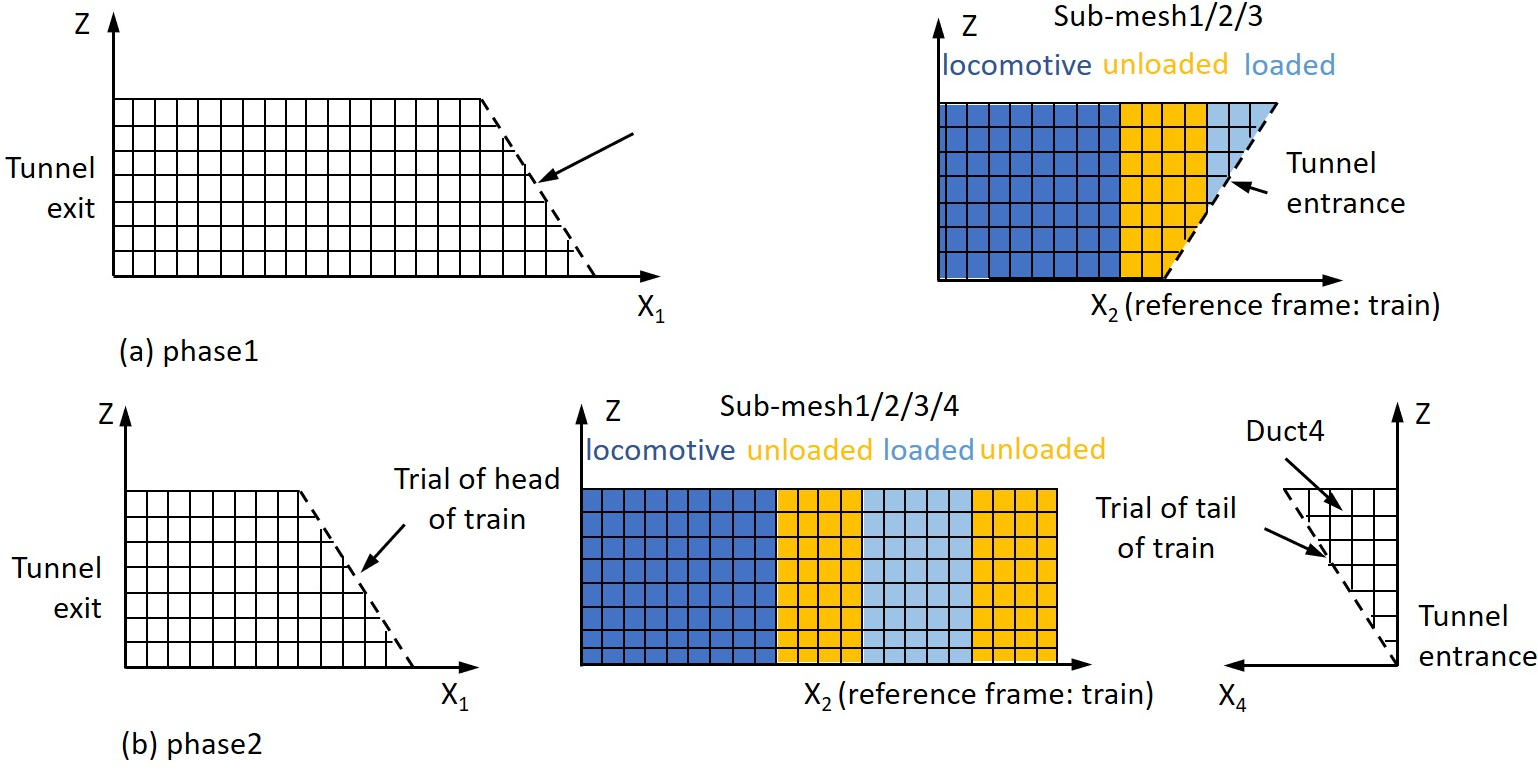
Figure 2: Modified mesh system for a partially loaded container freight train.
3D LES Simulations
LES is employed to resolve the highly turbulent, separated flows around bluff freight train geometries. The WALE subgrid-scale model is selected for its efficacy in capturing near-wall turbulence and vortex structures. Meshes are manually structured, with y+≈8 and 17 prism layers, ensuring high fidelity in boundary layer and separation region resolution. Validation against experimental data demonstrates mesh adequacy, with pressure coefficient errors below 6.4%.
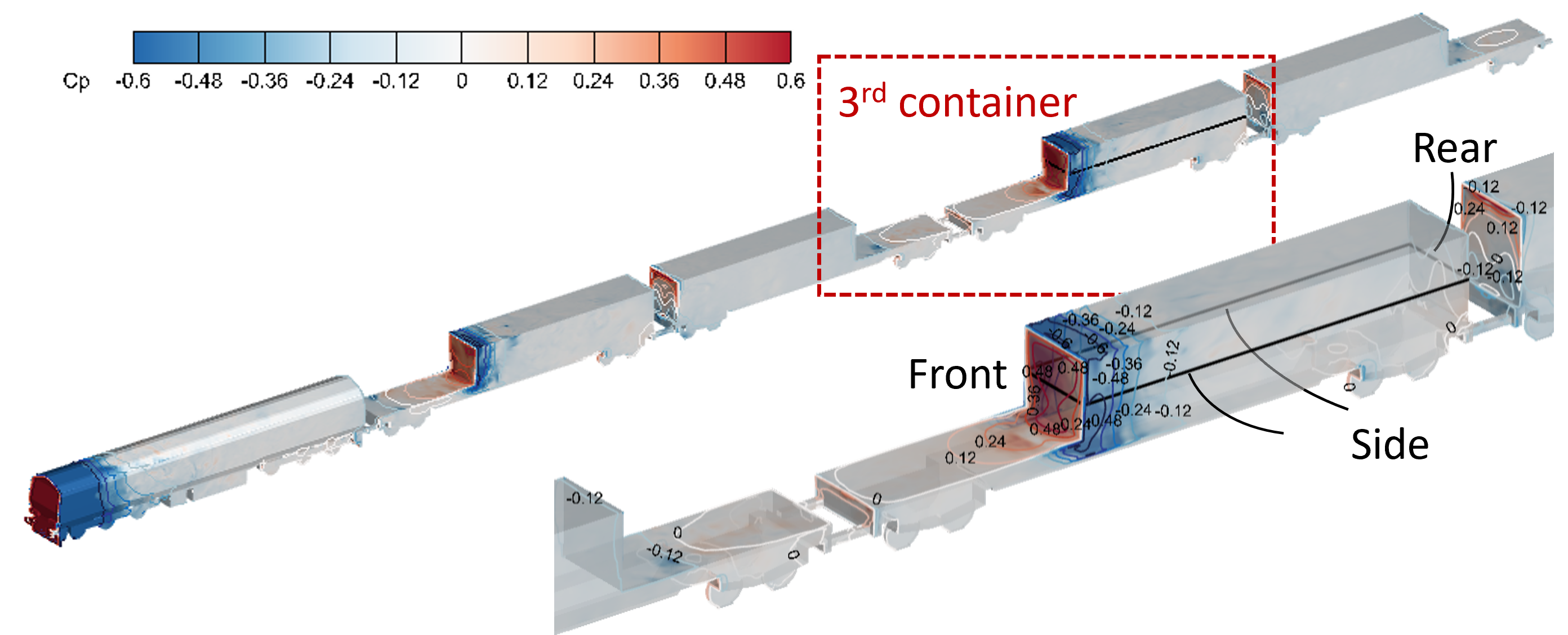
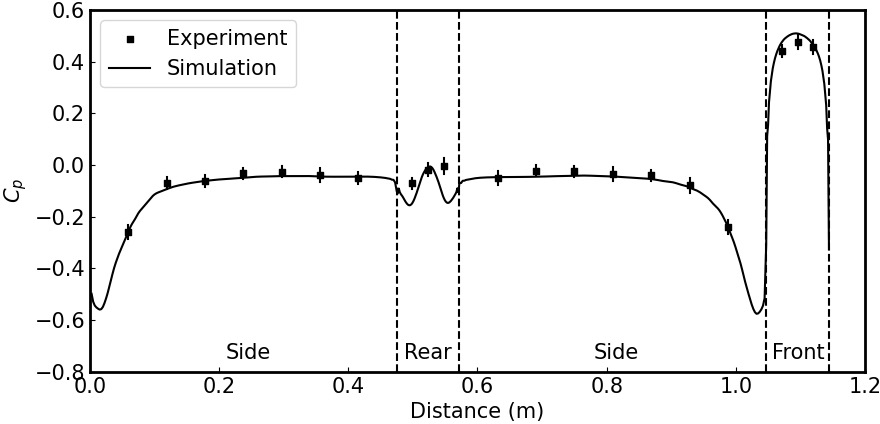
Figure 3: Pressure distribution of the Class 66 hauled container freight train with four wagons loaded with containers in a 66% loading efficiency, compared with experimental results.
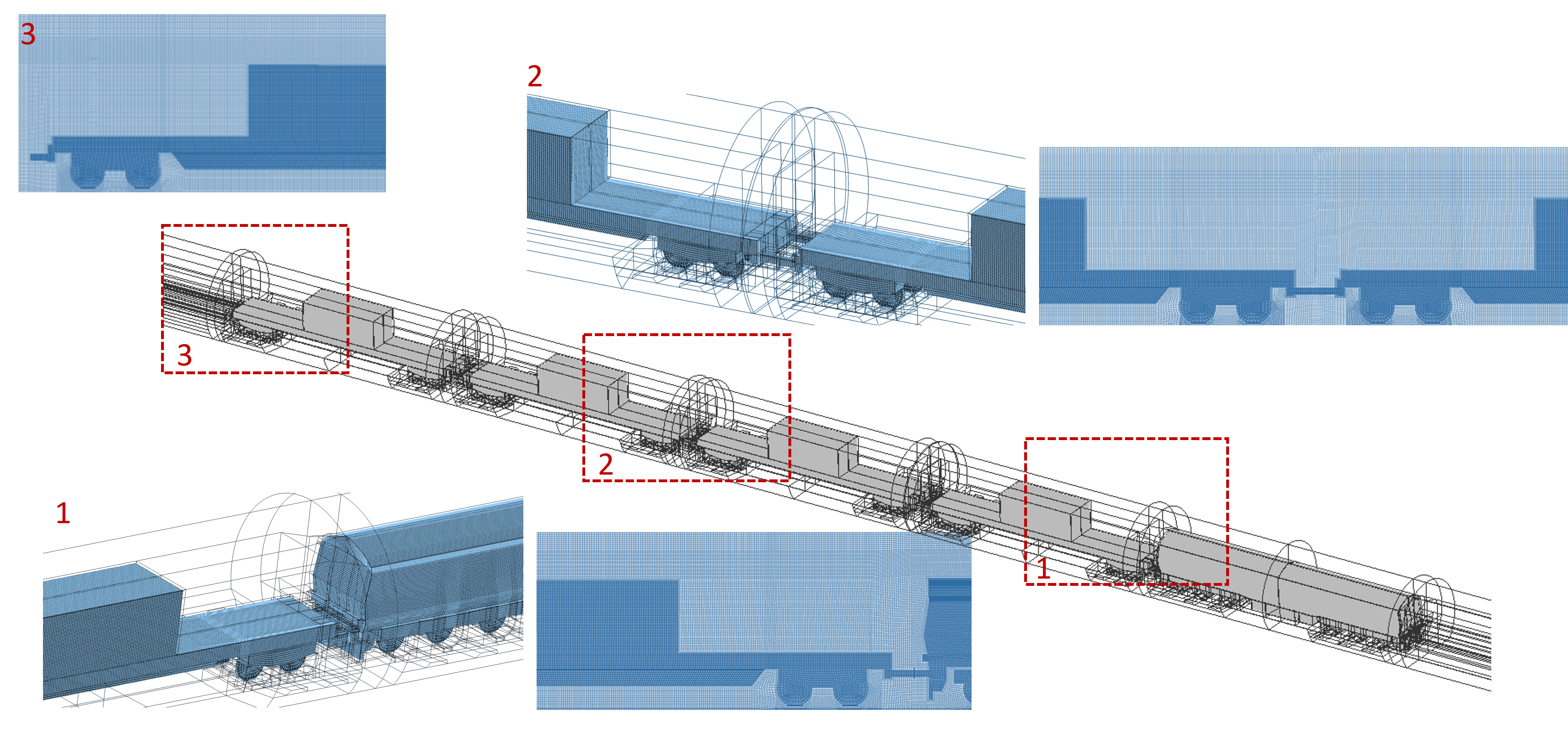
Figure 4: Blocking structure and mesh detail around the 33% partially loaded freight train.
Results
Pressure Wave Evolution
LES and 1D simulations reveal that partially loaded configurations generate a characteristic step-like pressure rise within the tunnel, attributed to sequential compression and expansion waves at each discontinuity. The magnitude and timing of these waves are strongly dependent on gap length and container arrangement.





Figure 5: Velocity contour at plane Y = 0 and distribution of surface wall shear stress at (a) t = 0.03 s (b) t = 0.07 s (c) 0.11 s.





Figure 6: Velocity contour at plane Y = 0 and distribution of surface wall shear stress at (a) t = 0.03 s (b) t = 0.07 s (c) t = 0.11 s.
The modified 1D model, incorporating gap-dependent parameters and separation bubble effects, accurately reproduces the pressure history curves observed in LES, including the sub-pressure waves generated by container entries and the associated reflected waves. The previous 1D model version, lacking these enhancements, fails to capture these features, resulting in significant discrepancies.
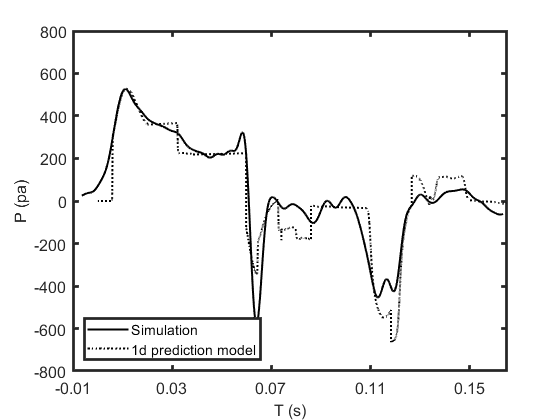
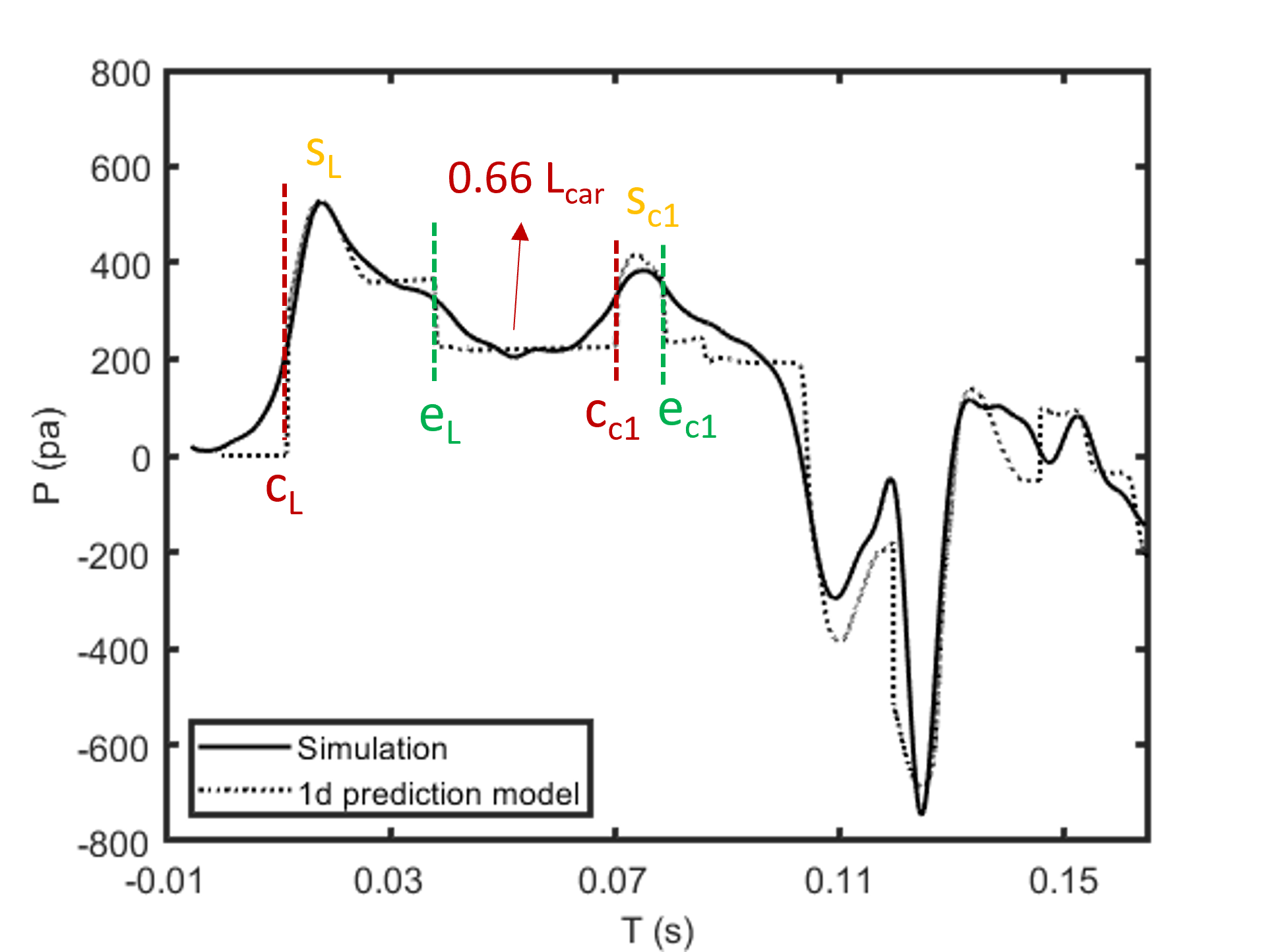
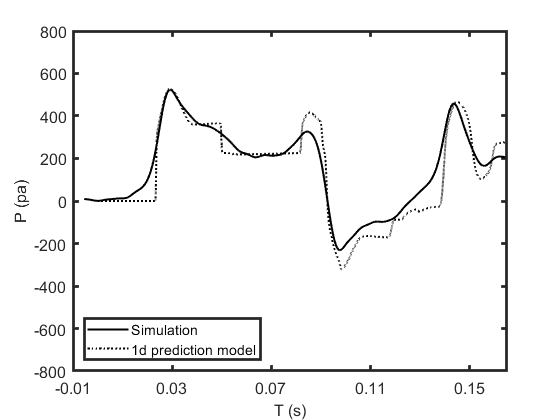
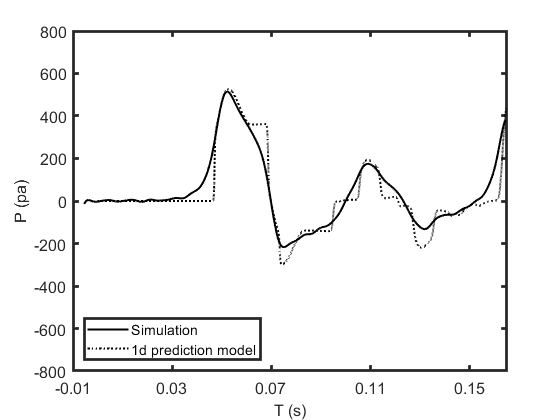
Figure 7: Comparison of pressure history curves for the validation case predicted by the redeveloped 1D programme and LES simulation at (a) 2 m (b) 4 m (c) 8 m (d) 16 m from tunnel entrance.
Flow Field Characterisation
LES visualisations demonstrate that wake recirculation and separation bubbles dominate the flow in container gaps and at blunt container heads. The direction of wall shear stress in these regions aligns with train motion, reducing the effective frictional coefficient compared to fully loaded trains. The size of separation bubbles and the effective blockage area are shown to increase with gap length, directly influencing pressure wave strength.


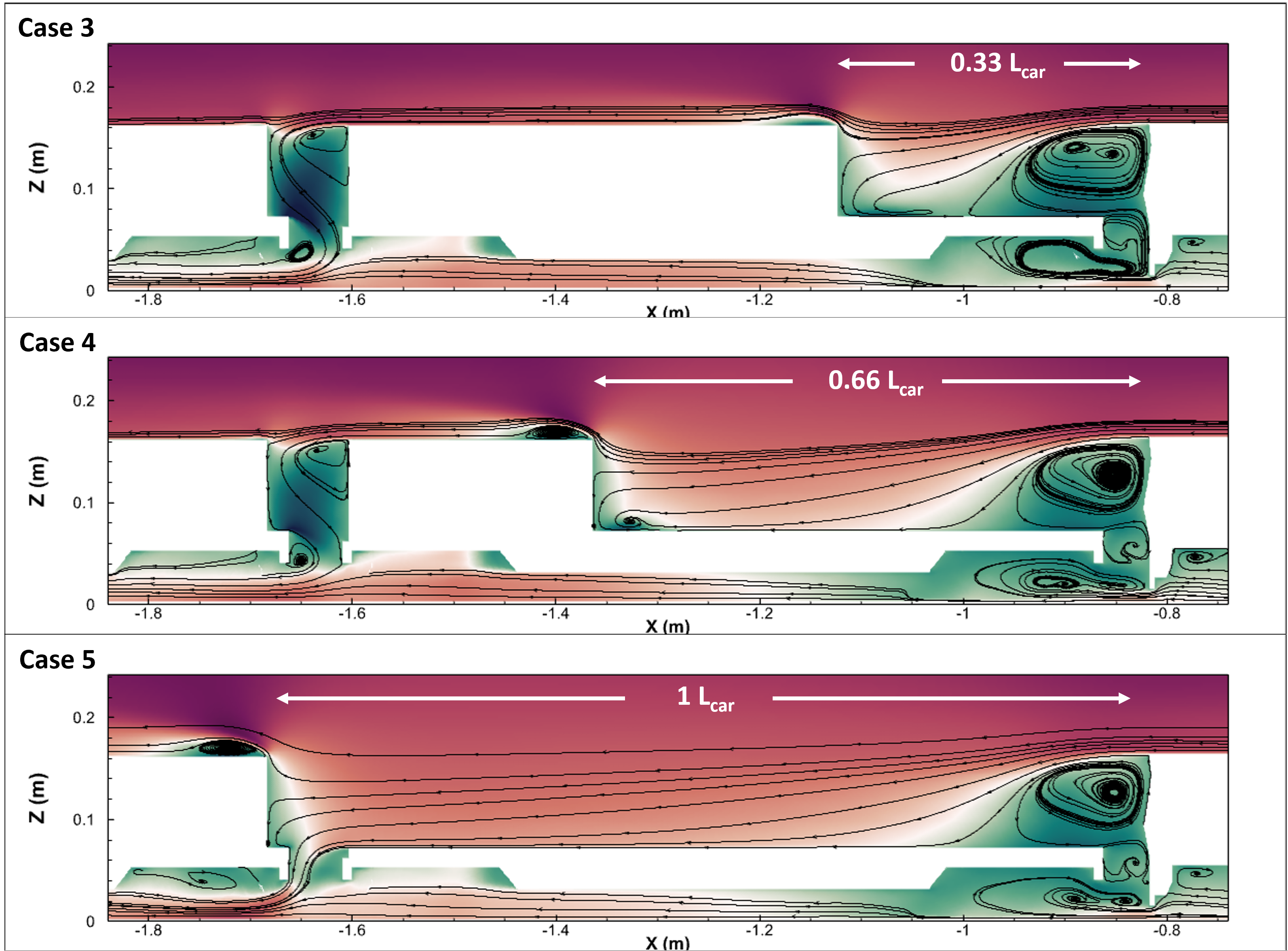
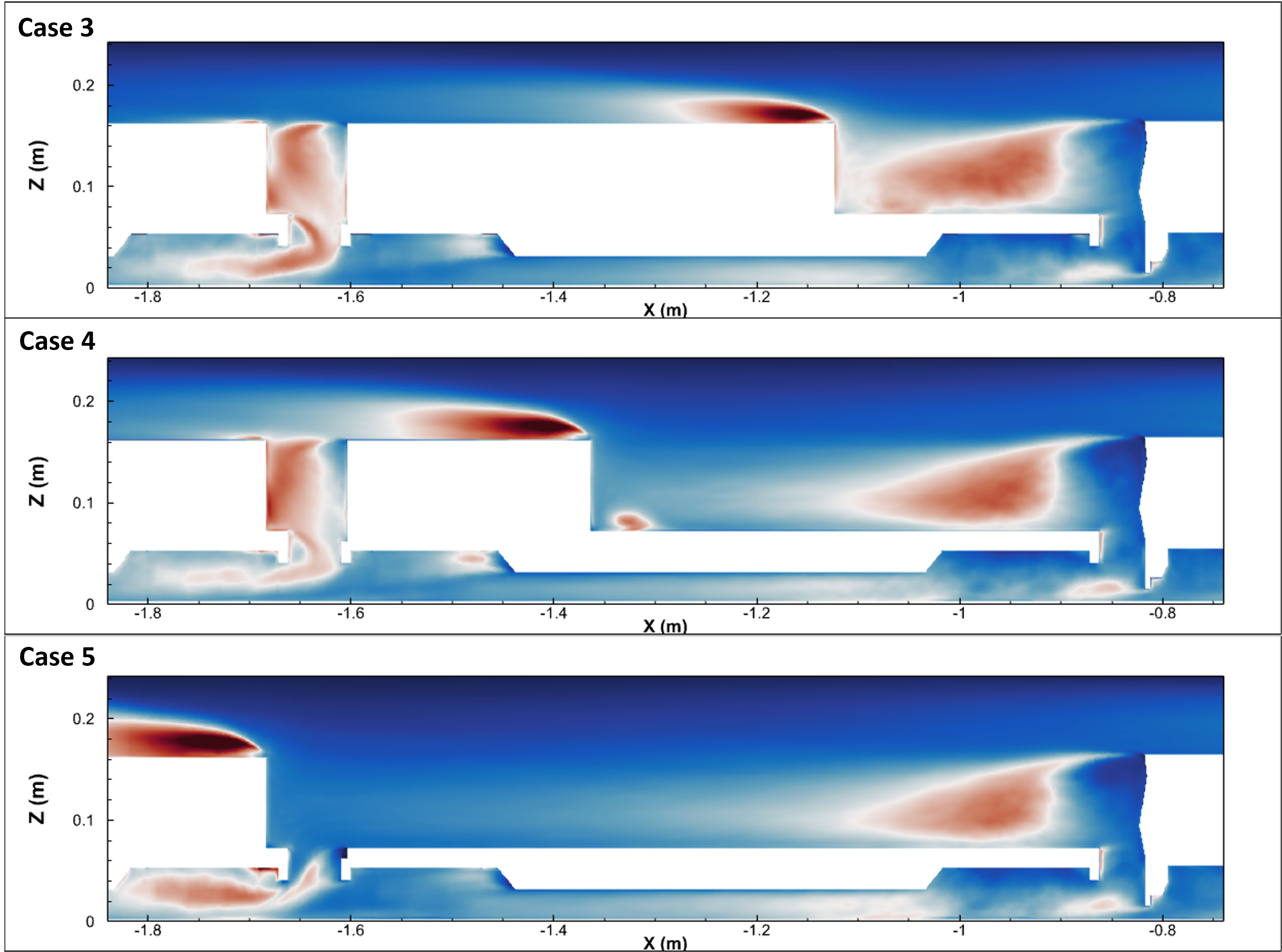
Figure 8: Velocity field of the first wagon at contour Y=0 m (a) mean u and streamline (b) TKE.

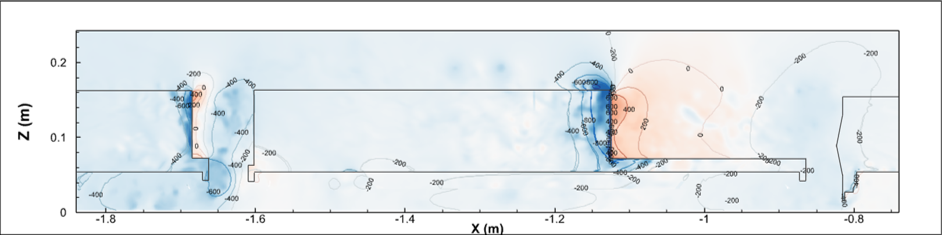
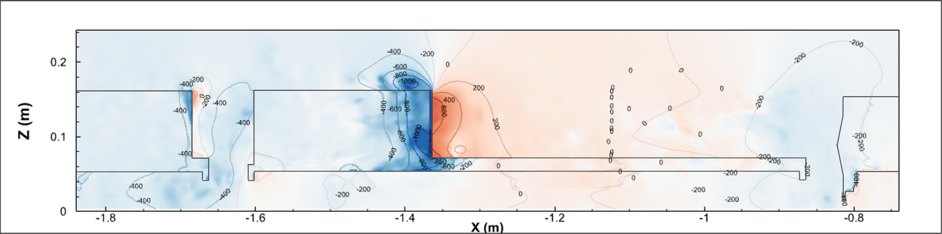
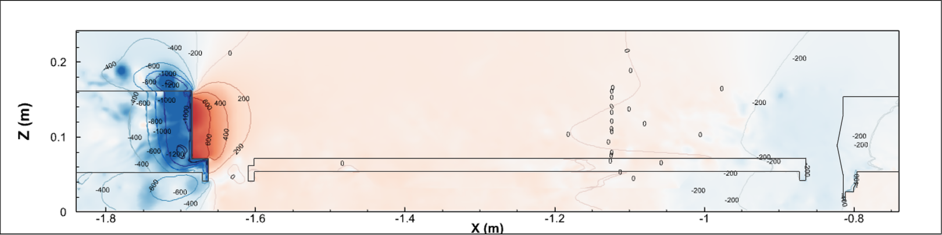
Figure 9: Pressure distribution around the first wagon with gap distances of (a) 0.33 Lcar (b) 0.66 Lcar (c) 1 Lcar.
Parameterisation and Model Validation
Empirical equations are derived to relate gap length to effective blockage area and separation bubble height. These are embedded in the 1D model, enabling rapid adaptation to arbitrary loading scenarios. Validation against independent LES simulations for new train and tunnel configurations confirms the model's predictive accuracy for pressure wave patterns and magnitudes.
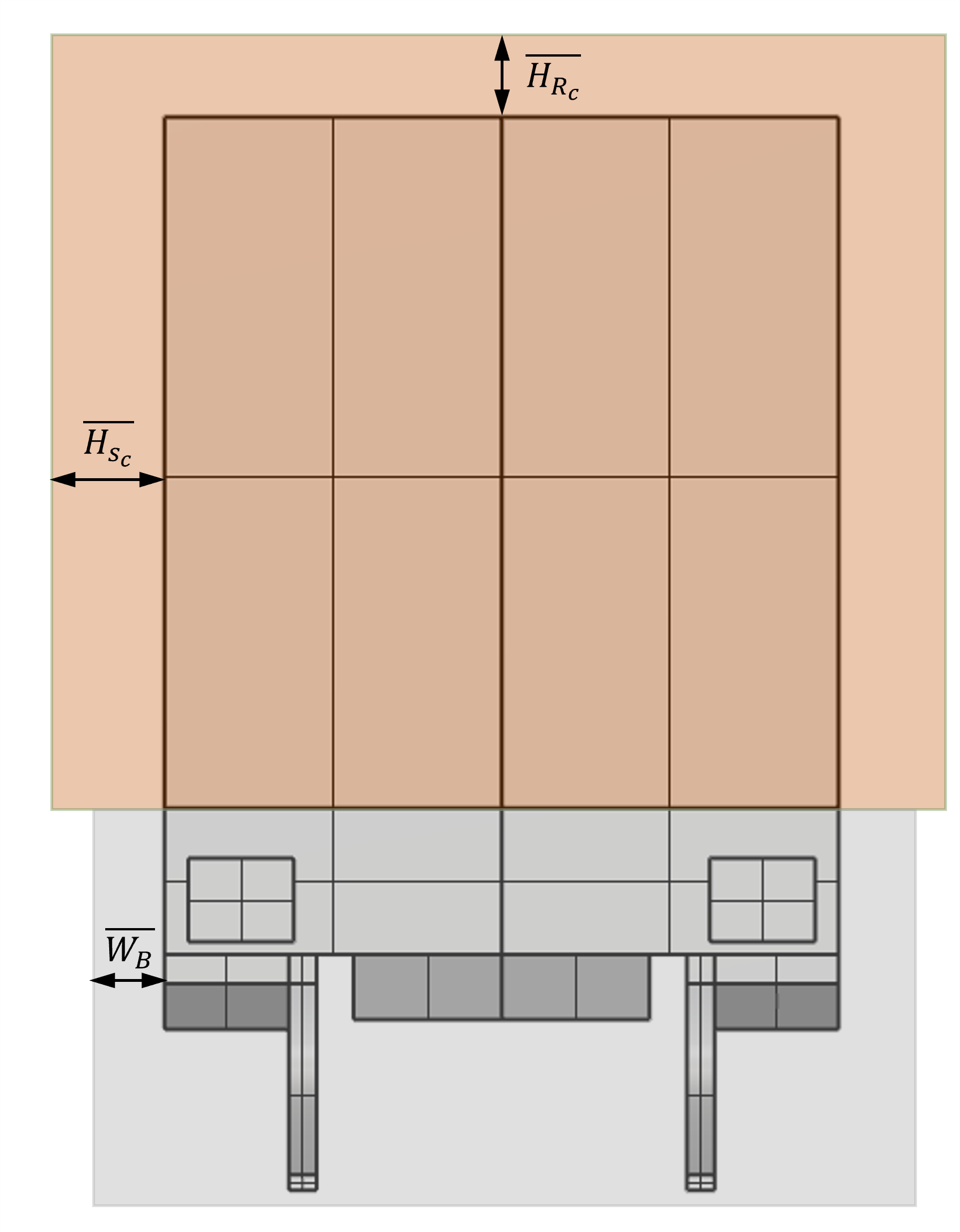
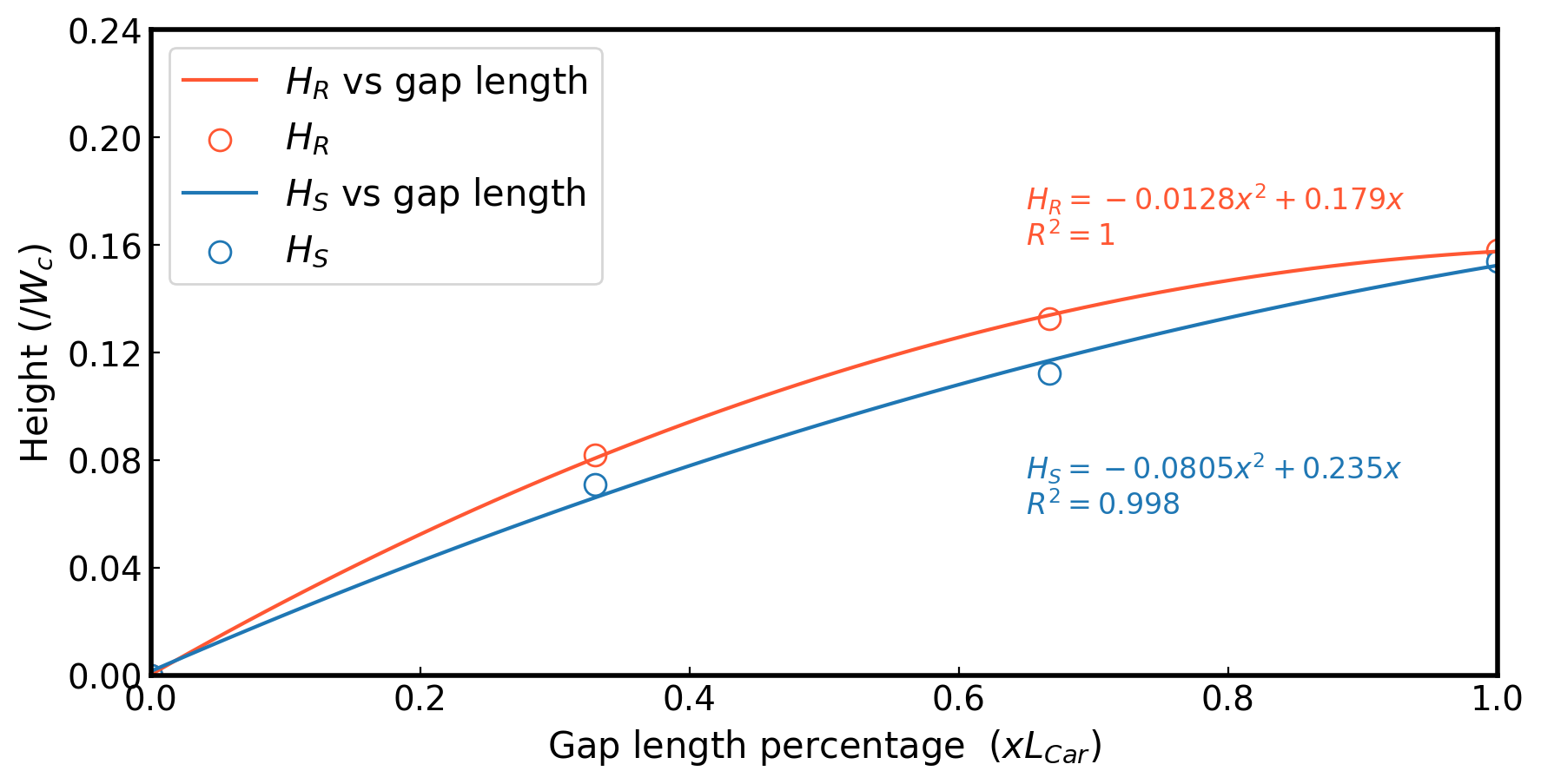
Figure 10: Estimation of the loaded container's effective area.
Discussion
The research demonstrates that accurate prediction of tunnel pressure waves for freight trains requires explicit modelling of flow separations and discontinuities. The enhanced 1D model offers significant computational efficiency over full 3D CFD, while retaining high fidelity for engineering applications. The parameterisation approach enables generalisation across a wide range of loading configurations, supporting preliminary design and operational planning.
Key numerical results include:
- Pressure history curve errors between 1D and LES models are typically below 10% for validated cases.
- Effective frictional coefficients for partially loaded trains are reduced by up to 40% compared to fully loaded cases.
- Separation bubble heights and effective blockage areas exhibit near-linear dependence on gap length for the studied range.
Implications and Future Work
Practically, the developed 1D tool can be integrated into railway infrastructure design workflows, enabling rapid assessment of pressure wave impacts for diverse freight train formations. Theoretically, the study advances understanding of bluff body aerodynamics in confined environments, with implications for noise, comfort, and structural loading.
Future research directions include:
- Extension of the parameterisation to multi-level container stacking and non-standard wagon geometries.
- Coupling with acoustic models for prediction of micro-pressure wave emissions.
- Integration with real-time operational data for adaptive tunnel ventilation and safety management.
Conclusion
This work establishes a validated, efficient methodology for simulating the aerodynamics of partially loaded intermodal container freight trains in tunnels. By bridging the gap between high-fidelity LES and practical 1D modelling, the study provides both theoretical insight and actionable tools for railway engineering. The parameterisation framework enables accurate, scalable prediction of pressure wave phenomena across a broad spectrum of loading configurations, supporting both infrastructure design and operational optimisation.