- The paper replicates the suspensefulness effect in HCI via a controlled car unlocking scenario with a robust sample (n=281).
- It reports small effect sizes (r ≤ 0.2) where suspenseful gestures, though statistically lower, remain within high social acceptability thresholds.
- The findings challenge strict design guidelines, suggesting that context-specific factors should guide interaction design over form-based taboos.
Revisiting the Practical Impact of Suspenseful Interactions on Social Acceptability
Introduction
The paper "How Problematic are Suspenseful Interactions?" (2506.01287) addresses foundational claims in HCI regarding the presumed challenges posed by "suspenseful" interactions—defined as interactive gestures with visible manipulations but invisible effects. Prevailing design guidelines discourage such interactions, yet their empirical foundation is limited and, arguably, insufficient for evidence-based recommendation. This study presents a controlled replication and quantitative validation of the "suspensefulness effect," addressing prior methodological limitations while assessing the actual magnitude and practical significance of the effect. Notably, the work centers both on confirming previously reported trends and on contextualizing their relevance in the modern interactive landscape.
Methodological Advancement Over Past Studies
The research remedies deficiencies in foundational studies, most notably Montero et al. (2010), by deploying a larger, statistically robust sample (n=281), employing standardized protocols, and ensuring manipulations isolate visibility as the only experimental variable. The interactions are operationalized using car unlocking scenarios, varied across expressive, magical, secretive, and suspenseful modalities, while all other parameters remain invariant (Figure 1).
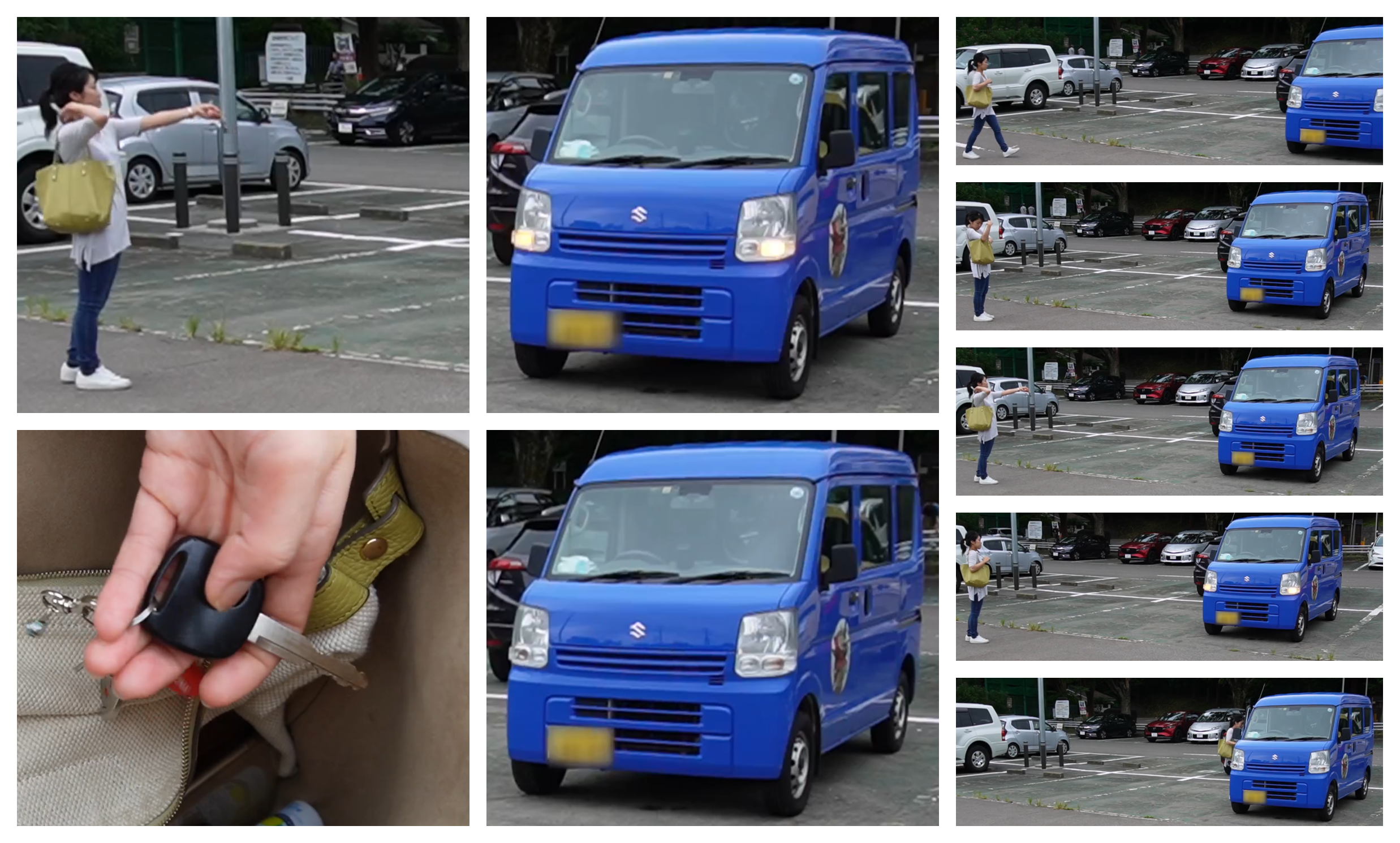
Figure 1: Key elements and sequence of the car unlocking interaction, illustrating manipulation and effect visibility variants.
After viewing randomized videos, participants respond to three established social acceptability instruments, allowing for cross-measure triangulation. Additional exploratory measures (location/audience suitability, confidence at home, etc.) enable investigation of contextual transferability.
Quantitative Results and Statistical Insights
The main outcome establishes that the suspensefulness effect is statistically replicable on two primary social acceptability metrics, with the suspenseful gesture rated lower than expressive, magical, or secretive alternatives across Montero et al. (2010) and Koelle et al. (2018) items, and lower than expressive/magical on the Pearson et al. (2015) item. However, effect sizes are uniformly small (r≤0.2), with median ratings for all gestures—suspenseful included—consistently at the high (socially acceptable) end of every scale.
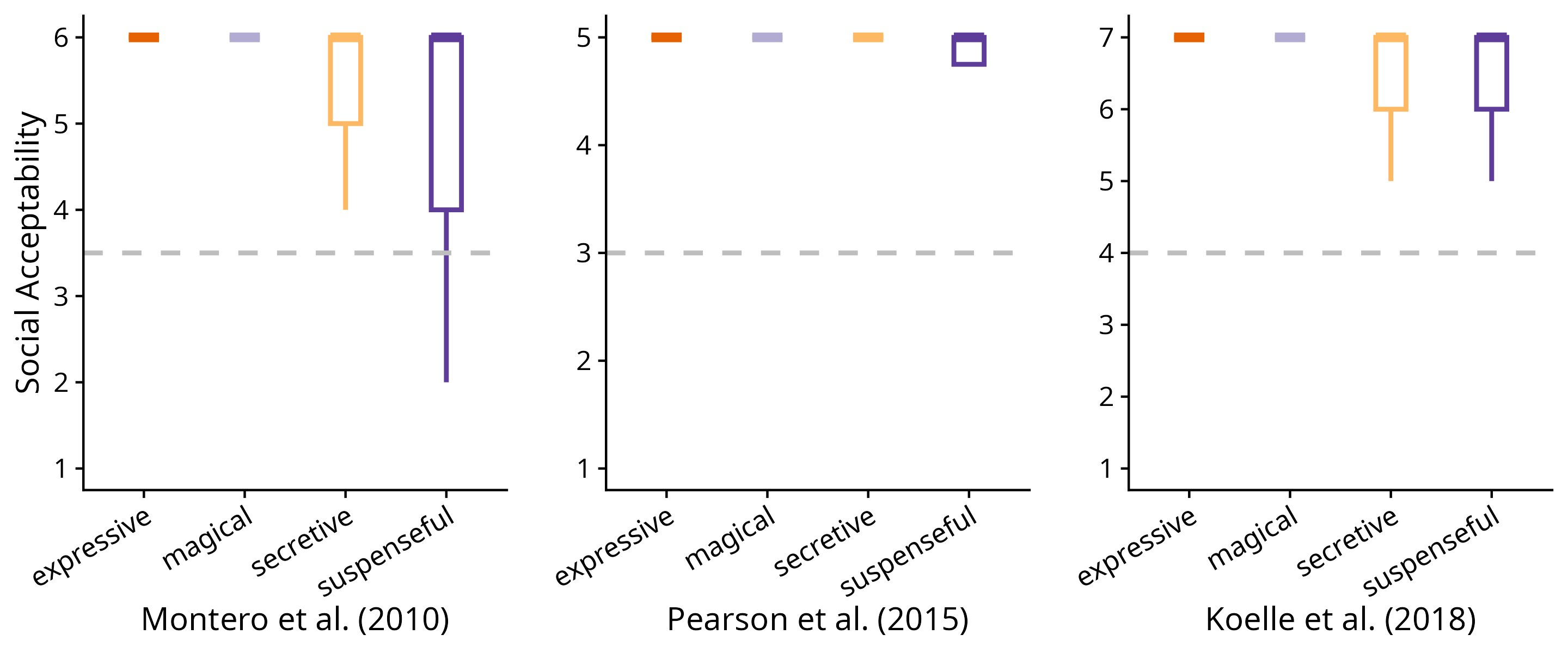
Figure 2: Boxplots for all four interaction modes across the three social acceptability measures. Suspenseful gestures are rated lower in relative terms but remain above the acceptability threshold in absolute terms.
Further analysis using location and audience axes confirms high acceptability of the suspenseful interaction across typical contexts, with the overwhelming majority of ratings clustering at the maximum comfort level.
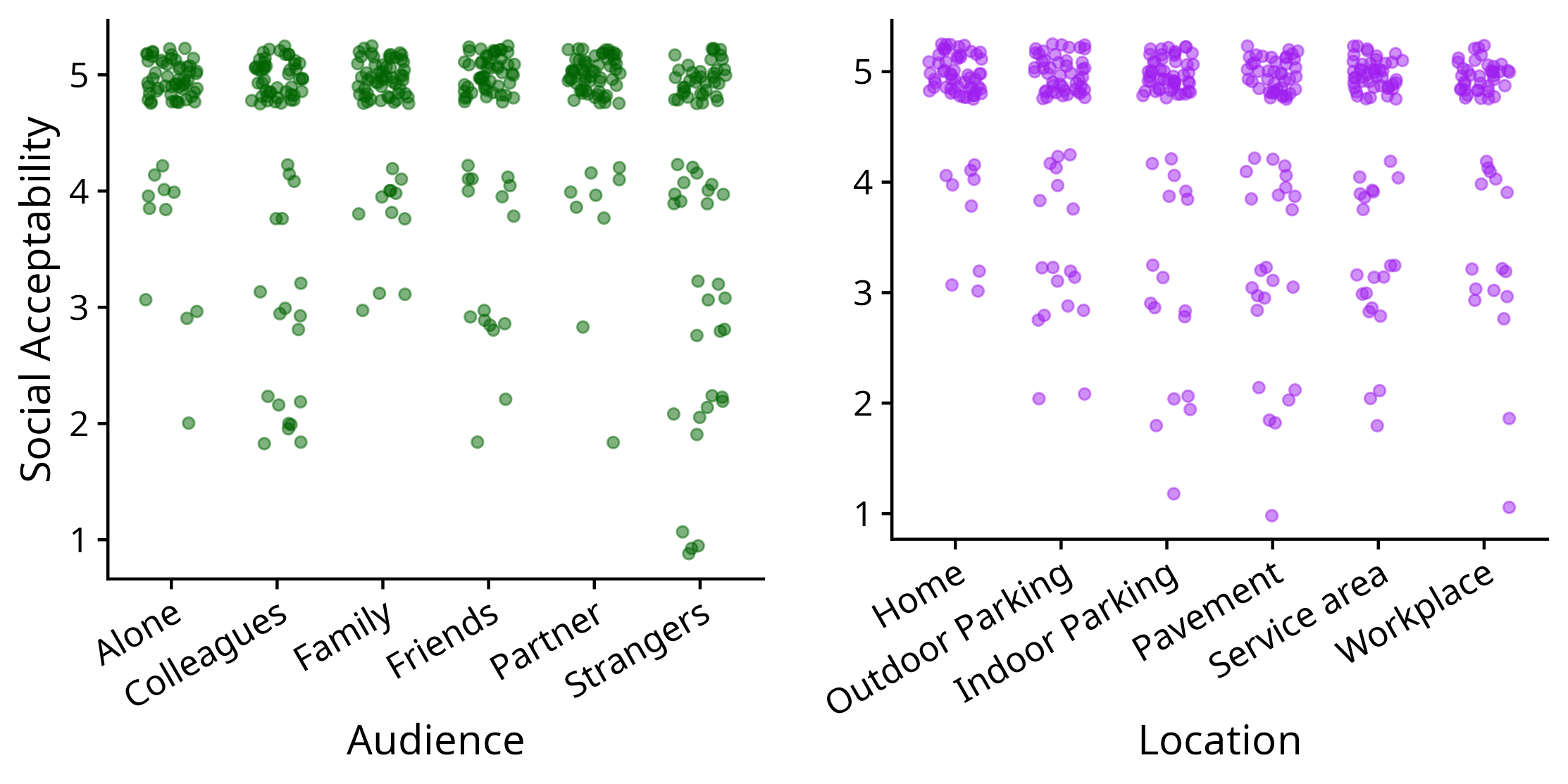
Figure 3: Scatter plot visualizing suspenseful gesture acceptability across suitable locations and audience categories, demonstrating consistently high scores.
Implications for HCI Theory and Practice
The empirical confirmation of a small but statistically significant decrease in acceptability for suspenseful interactions, relative to other forms, provides quantitative support for their distinct experiential profile but decisively challenges their characterization as problematic. All tested forms, including the suspenseful variant, are well within the range of typical user comfort in relevant situations, directly contradicting existing design guidelines that discourage suspenseful gestures per se.
The findings underscore the limitations of generalizing interaction visibility patterns as the central axis of social acceptability judgments. The "suspensefulness effect" is shown to be real but marginal; practical design decisions should, therefore, prioritize situational fit, audience, cultural familiarity, and task appropriateness rather than adhering to form-based taboos.
Theoretically, the results suggest that social acceptability in HCI is a multifactorial construct where visibility schema are, at best, a minor contributing axis. Explicitly, interaction designers must recognize the pragmatic acceptability of many naturally suspenseful interactions (e.g., smartphone use, car unlocking) and avoid overly restrictive guidelines that do not align with empirical social norms.
Limitations and Directions for Future Research
The study’s rigorous control of context, while methodologically necessary, constrains applicability to broader classes of interaction. Results are derived from a car unlocking scenario, and transferability to domains characterized by higher perceived awkwardness or unfamiliarity remains to be tested. Additionally, current social acceptability scales lack robust theoretical unification—future work should aim at developing multidimensional, validated instruments calibrated for dynamic, context-rich settings.
Further experimental work incorporating real-world performance (rather than video observation) and manipulation of additional situational variables (group size, urban/rural settings, etc.) would be valuable. The roles of novelty, personal identity signaling, and the impact of evolving social conventions on the acceptability envelope also warrant systematic investigation.
Conclusion
This study robustly replicates the suspensefulness effect in social acceptability ratings but finds that its practical significance is minor. The empirical data refute the view that suspenseful interactions are inherently undesirable; guidelines discouraging such interactions overlook broader determinants of user comfort and social fit. Hence, HCI research and design practice should abandon universal avoidance of suspenseful forms in favor of evidence-driven engagement with specific, situated interaction ecologies.