- The paper presents Bugdar, an AI solution that augments secure code reviews using LLMs and RAG techniques to provide context-sensitive vulnerability analysis for GitHub pull requests.
- It demonstrates significant improvements in detection metrics, achieving 39% precision and 64% recall while processing code over 100 times faster than manual reviews.
- The study highlights Bugdar's seamless integration into GitHub workflows, reducing costs and timelines in secure software development.
Bugdar: AI-Augmented Secure Code Review for GitHub Pull Requests
The paper "Bugdar: AI-Augmented Secure Code Review for GitHub Pull Requests" introduces Bugdar—an AI-driven system designed to revolutionize secure coding practices within GitHub workflows. By combining advanced LLMs and RAGs, Bugdar provides context-sensitive vulnerability analyses for pull requests, increasing both efficiency and accuracy in detecting potential security issues across several programming languages.
Introduction to Bugdar
Bugdar's motivation lies in the inherent complexities of modern software development and the inadequacies of existing security audit solutions. Manual code audits, while exhaustive, are notoriously slow and costly, often unsuitable for rapid deployment cycles. Automated tools, despite their quick operation, suffer from reliability concerns due to a prevalence of false positives. Bugdar integrates directly into GitHub pull requests and offers near real-time security feedback, dramatically reducing the time and cost associated with manual reviews without sacrificing our software systems' security integrity. It supports multiple languages, such as Solidity, Move, Rust, and Python.
System Architecture and Workflow
Bugdar's architecture, as visualized in (Figure 1), is methodically designed to integrate with GitHub's pull request interface. This seamless integration is critical to delivering actionable feedback within developers’ workflow effectively. Key components of Bugdar's system architecture include:
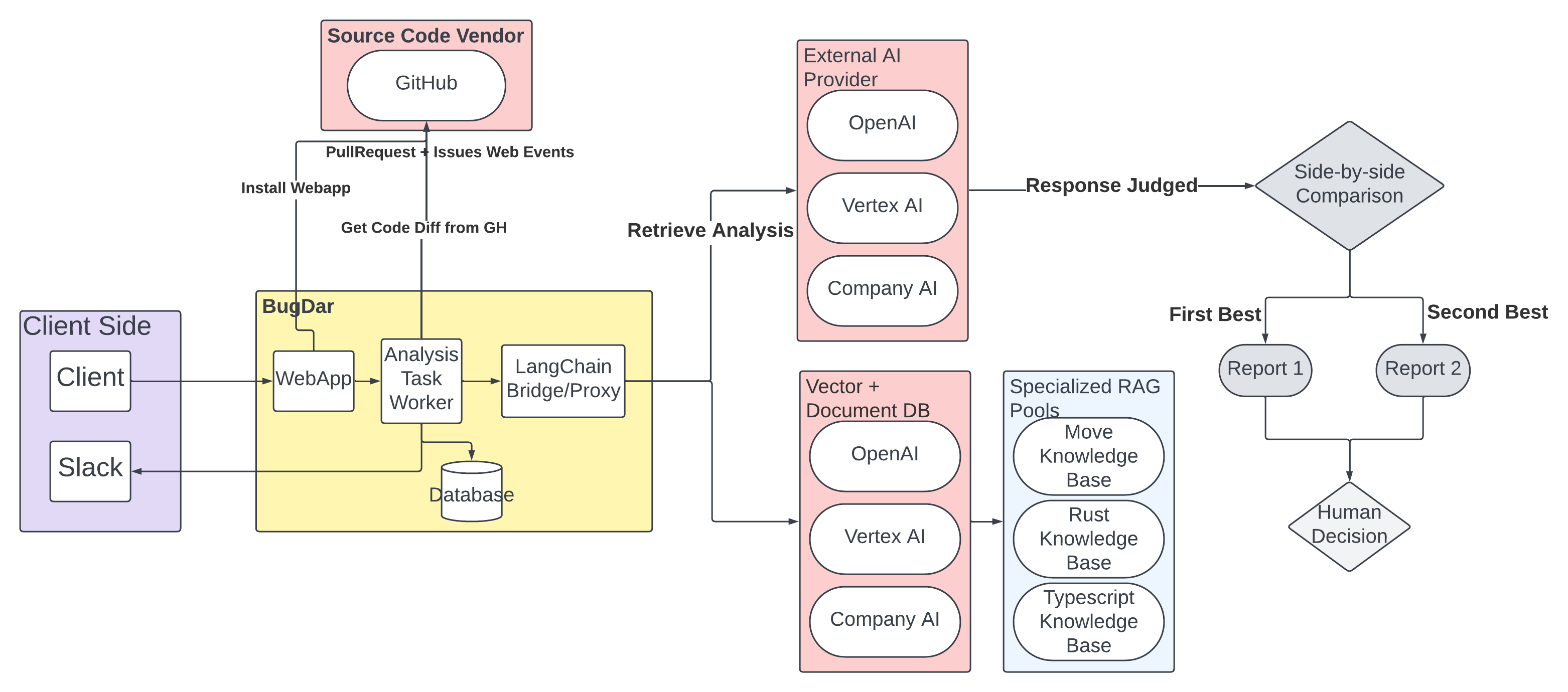
Figure 1: The diagram illustrated the architecture of the Bugdar system.
- GitHub Integration Layer: Serves as the interface between Bugdar and GitHub API, facilitating the retrieval of code diffs and enabling comprehensive review comment postbacks.
- Preprocessing and Context Retrieval: Employs techniques like RAGs to enhance the contextual understanding of code diffs. By leveraging pertinent project documentation and historical data, Bugdar can assess vulnerabilities more accurately.
- LLM-based Analysis and Reporting: Utilizes modern LLMs, such as GPT-4o, for security analysis and generates detailed vulnerability reports with remediation advice.
The workflow is optimized for efficiency, processing code in chunks fitting the LLM context window, ensuring thorough analysis without overwhelming resources. The AI-augmented review process shifts security analysis earlier in the development cycle, enabling developers to address vulnerabilities proactively.
Evaluation Metrics and Results
The comprehensive evaluation of Bugdar focused on precision, recall, F1 score, false positive rates, and processing time. Results showcased Bugdar's exceptional ability to identify vulnerabilities rapidly and accurately:
Quantitative Results
The comparison between vulnerability classification and description tasks showed significant improvements with Bugdar's integration of RAG techniques. GPT-4o demonstrated notable gains in both precision and recall, especially in classification tasks—an increase to 39% precision and 64% recall when RAG was employed.
Time Efficiency
One of the crowning achievements of Bugdar is its ability to process pull requests swiftly—handling approximately 30 lines of code per second, or an average of 56.4 seconds per pull request, a considerable improvement over traditional manual reviews. Bugdar processes code at a rate over 100 times faster than manual methods.
Case Studies and User Feedback
Bugdar successfully identified vulnerabilities missed by traditional static analysis, such as reentrancy issues in Solidity smart contracts, showcasing the depth and accuracy of the AI-augmented approach. Feedback from developers indicated an appreciation for Bugdar's ability to seamlessly integrate security checks into their workflows, thereby fostering a security-first culture.
Discussion
The implementation of Bugdar highlights both notable strengths and areas that require further development. Its ability to leverage LLMs for real-time, context-aware vulnerability detection is transformative; however, challenges such as high false positive rates and limitations in handling domain-specific contexts persist. Additionally, reliance on current training datasets may limit coverage across some specialized code structures.
Future Directions
Future advancements for Bugdar will focus on refining LLM’s contextual understanding and implementing active learning to continuously enhance its detection capabilities. Expanding Bugdar's integration into development environments outside GitHub, such as creating IDE plugins, represents an exciting avenue for growth. Furthermore, an exploration into interactive dashboards for real-time feedback will further enhance its utility.
Conclusion
In summary, Bugdar advances secure code review methodologies by embedding AI-driven security analyses within existing developer workflows, substantially improving both the efficiency and accuracy of vulnerability detection. Ongoing research and iterative refinements promise to bolster Bugdar’s capabilities, addressing evolving challenges in cybersecurity within the software development arena.