- The paper introduces a volt-PF control that dynamically allocates reactive power based on both voltage and active power, improving fairness and voltage regulation.
- The paper’s simulations indicate a 28.5% reduction in reactive power demand and enhanced power factor uniformity compared to traditional volt-VAr methods.
- Hardware tests confirm the practicality of volt-PF control in existing inverter systems with minimal modifications, ensuring efficient grid performance.
Volt-PF Control Mode for Distribution Feeder Voltage Management Under High Penetration of Distributed Energy Resources
Introduction
The paper "Volt-PF Control Mode for Distribution Feeder Voltage Management Under High Penetration of Distributed Energy Resources" (2405.18305) introduces a novel voltage regulation technique that aims to address the inadequacies of existing volt-VAr control methods in high DER penetration environments. Traditional volt-VAr control methods focus solely on the terminal voltage and mandate Q support from DERs without considering the active power (P) being generated, often leading to disproportionate burdens on specific DERs. The proposed volt-PF control addresses these shortcomings by integrating both voltage (VPCC) and active power (P) into the regulation schema, thus ensuring a balanced allocation of reactive power and maintaining DER power factor (PF) within a narrow range (0.9 to 1).
Review of Volt-VAr Control
Volt-VAr control is widely used to manage overvoltage issues caused by high DER penetration in distribution feeders. This method derives Q support only from VPCC, leaving DERs generating lower P, which contribute less to overvoltage, providing disproportionate Q support leading to excessive PF variation.
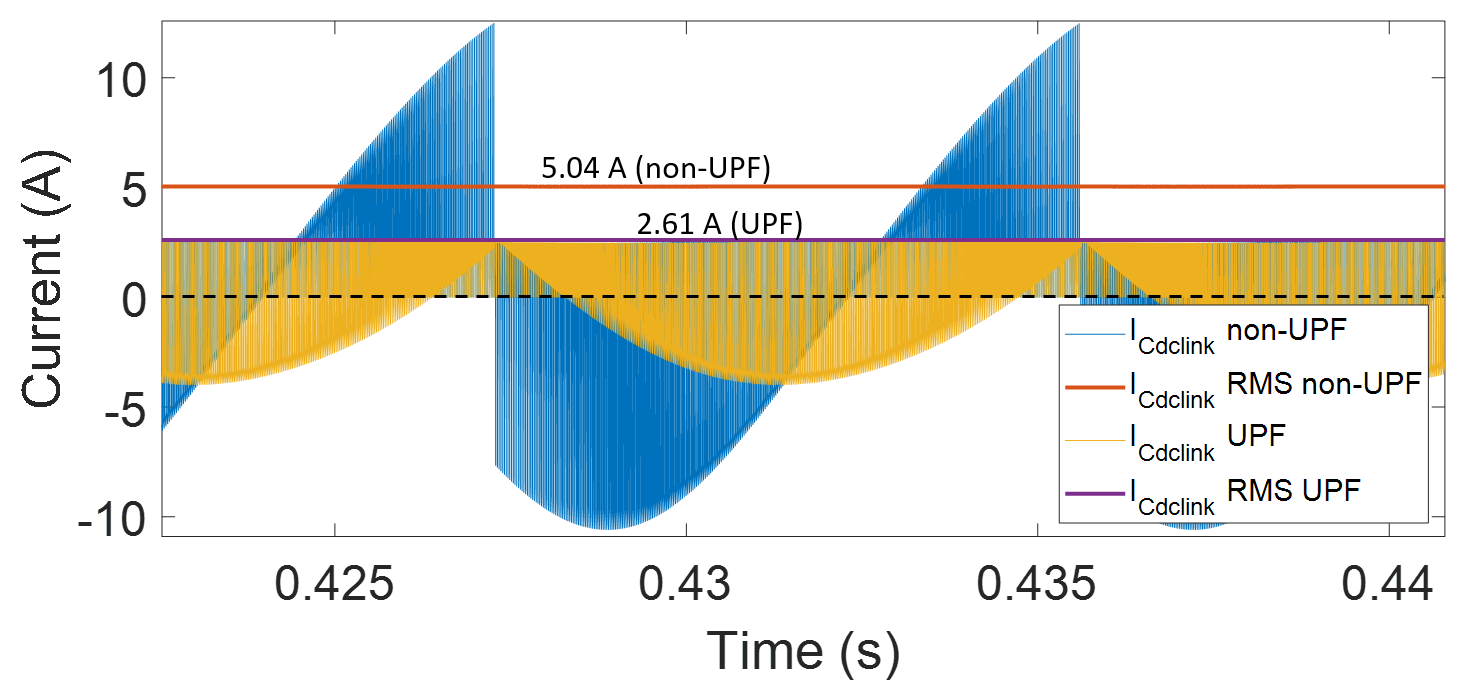
Figure 1: A comparison of the instantaneous and RMS values of the DC link capacitor current of an inverter operating at unity PF (1 kW) vs. operation at 0.5 PF (1 kW, 1.73 kVAr).
The volt-VAr control thus often results in DERs operating at low PF, creating inefficiencies and degrading hardware reliability, as seen by the increased RMS current through DC link capacitors in Figure 1.
Proposed Volt-PF Control Mode
Volt-PF control mode innovatively aligns Q support to both VPCC and P. This scheme ensures a fairer allocation of reactive power and minimizes PF variation. In the volt-PF scheme, the PF of DER is set as a function of VPCC, inherently aligning Q support with the active power generated, thus offering improved voltage regulation.
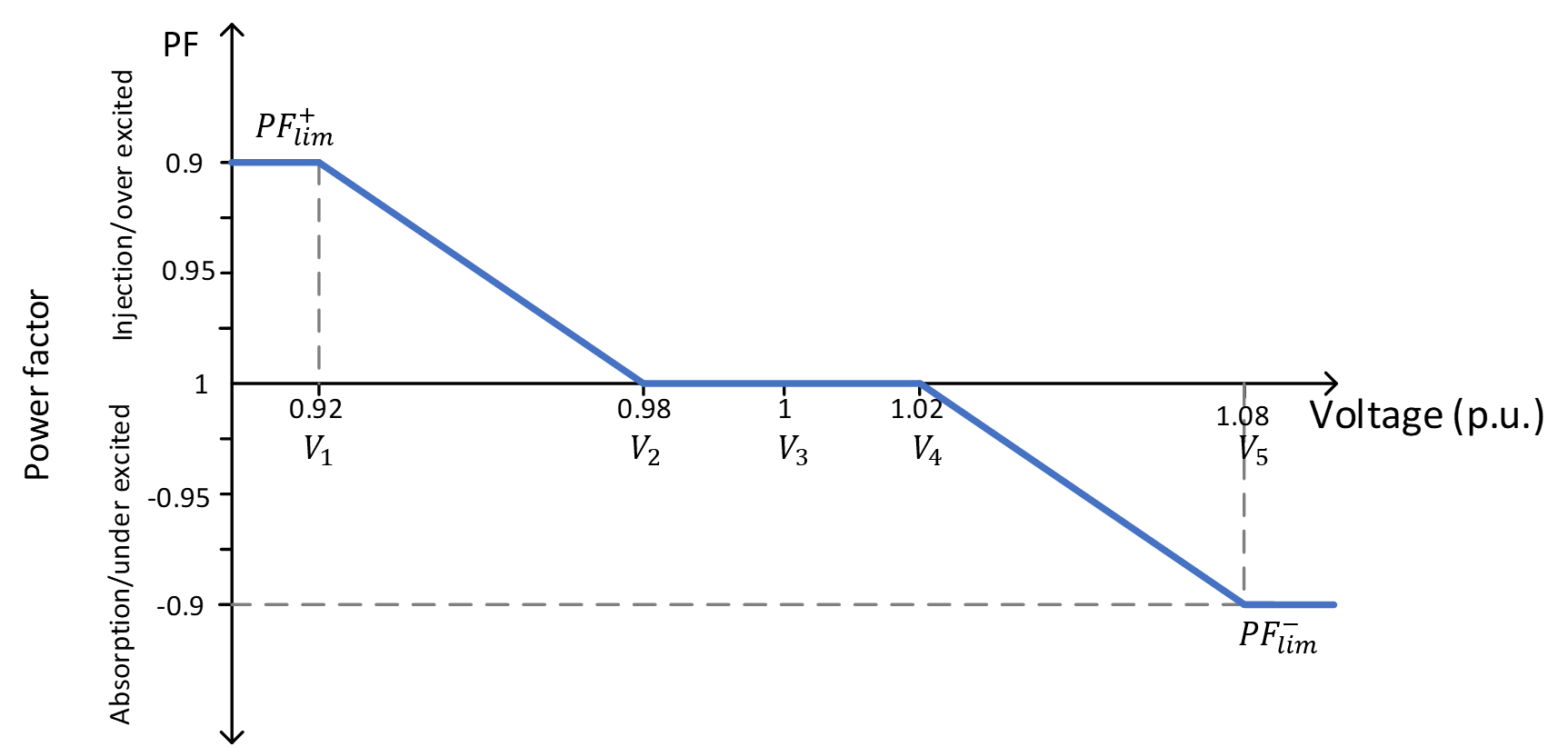
Figure 2: Proposed volt-PF characteristic with settings corresponding to those of default volt-VAR curve in 1547-2018.
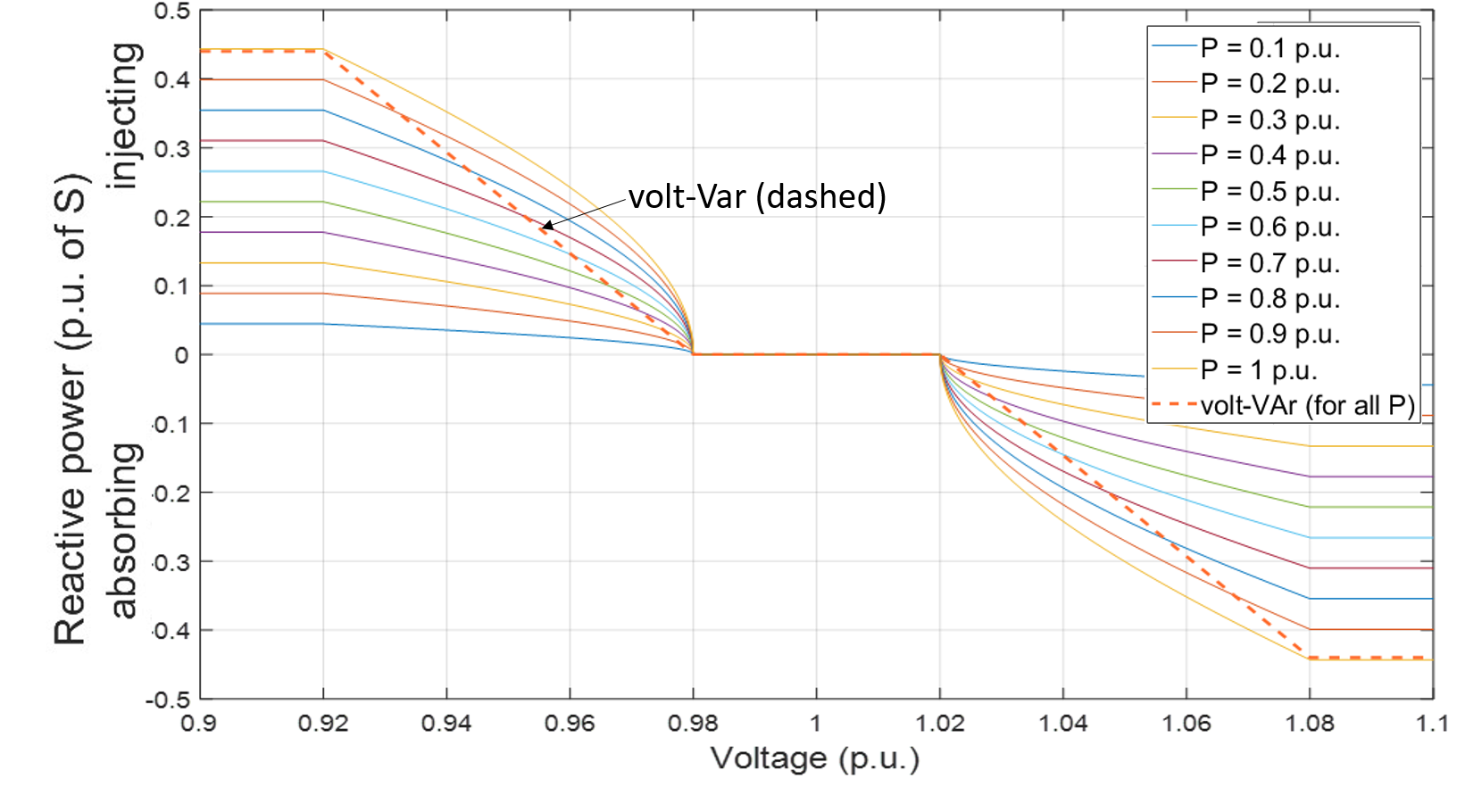
Figure 3: Volt-PF vs. volt-VAr: Relationship between voltage and reactive power of an inverter under volt-PF mode (solid) compared with standard volt-VAr (dashed) for a range of inverter active power.
Compared with volt-VAr, volt-PF ensures that DERs with higher P effectively contribute more to Q support. Figure 3 highlights these characteristics, contrasting volt-PF's adaptive Q response dependent on P against volt-VAr's static approach.
Simulation Results
Static Simulation
The volt-PF scheme was tested against volt-VAr using IEEE 1547-2018 and Hawaiian Electric SRD v1.1 standards in a high penetration feeder simulation. These simulations reveal that volt-PF effectively mitigates voltage violations and reduces reactive power demand by 28.5% compared to volt-VAr schemes.
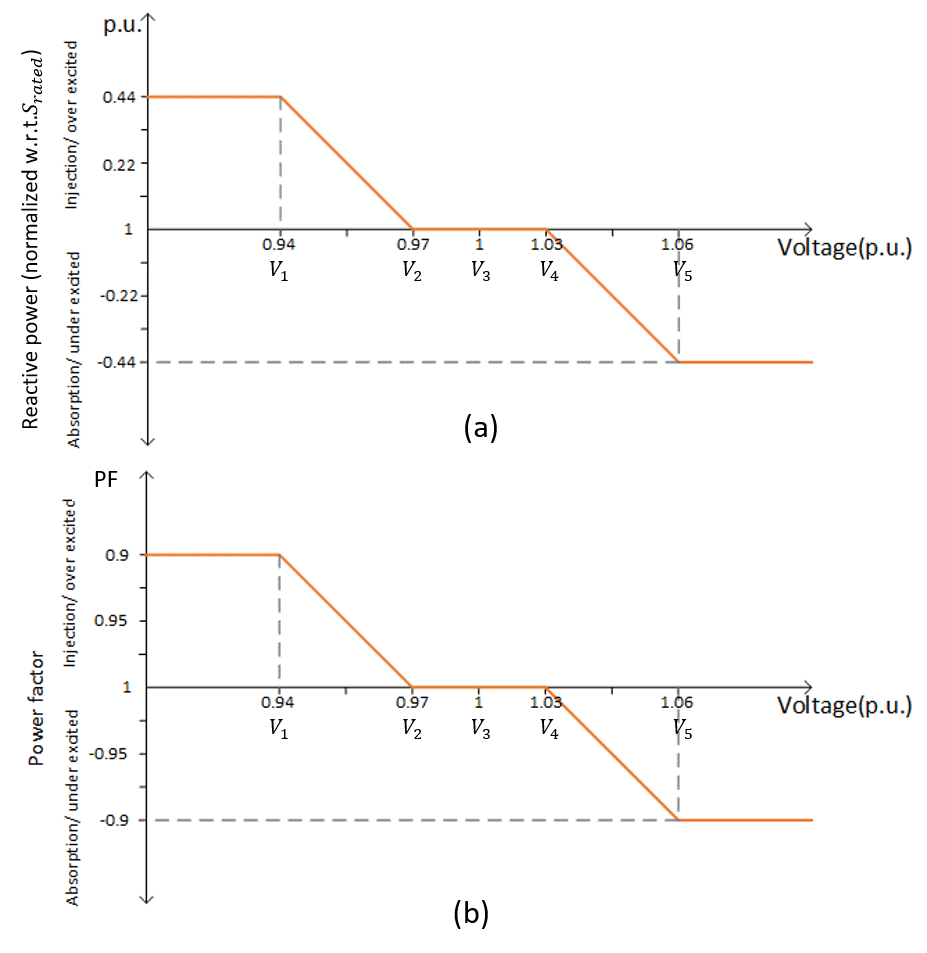
Figure 4: Volt-VAr curve (top) vs equivalent volt-PF curve (bottom) based on the Hawaiian Electric SRD v1.1.
Static evaluations confirmed volt-PF's superior performance in avoiding excessive reactive power demands, improved PF uniformity among DERs, and reduced transformer loadings.
Dynamic Simulation
Dynamic simulations further verified volt-PF's efficacy under varying real-time operational conditions. The simulations demonstrated reduced peak reactive power usage and confirmed effective voltage regulation across the feeder during high penetration periods.
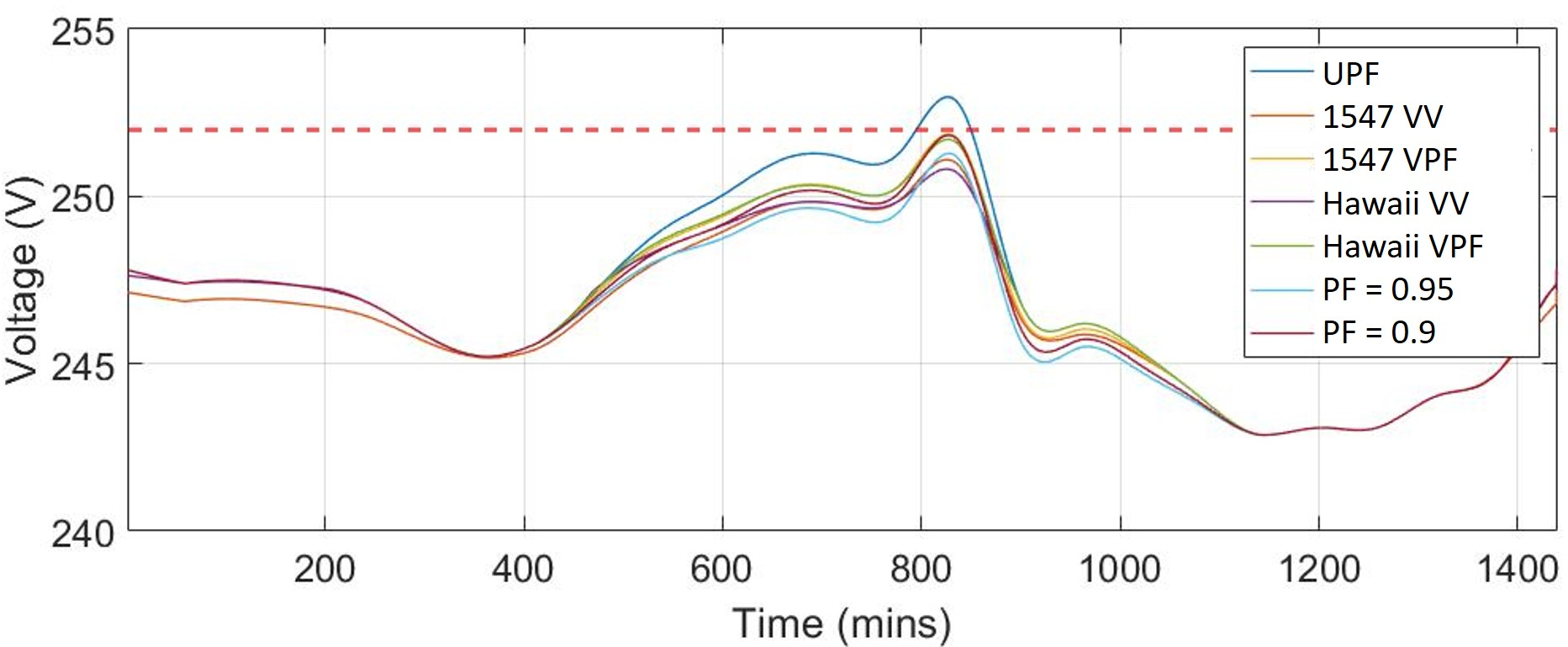
Figure 5: Voltage of a selected inverter in dynamic simulation for different voltage regulations 1. Unity PF 2. Volt-VAr IEEE 1547-2018 curve 3. Volt-PF curve based on 1547 curve 4. Volt-VAr Hawaiian curve 5. Volt-PF curve based on Hawaiian 6. Constant PF operation 0.95 7. Constant PF operation 0.9.
Hardware Implementation
Volt-PF control was implemented in custom-built and commercial hardware inverters, showcasing practical application capabilities and ease of integration. The control scheme requires negligible hardware changes, as most inverters already support constant PF mode and have requisite sensors.
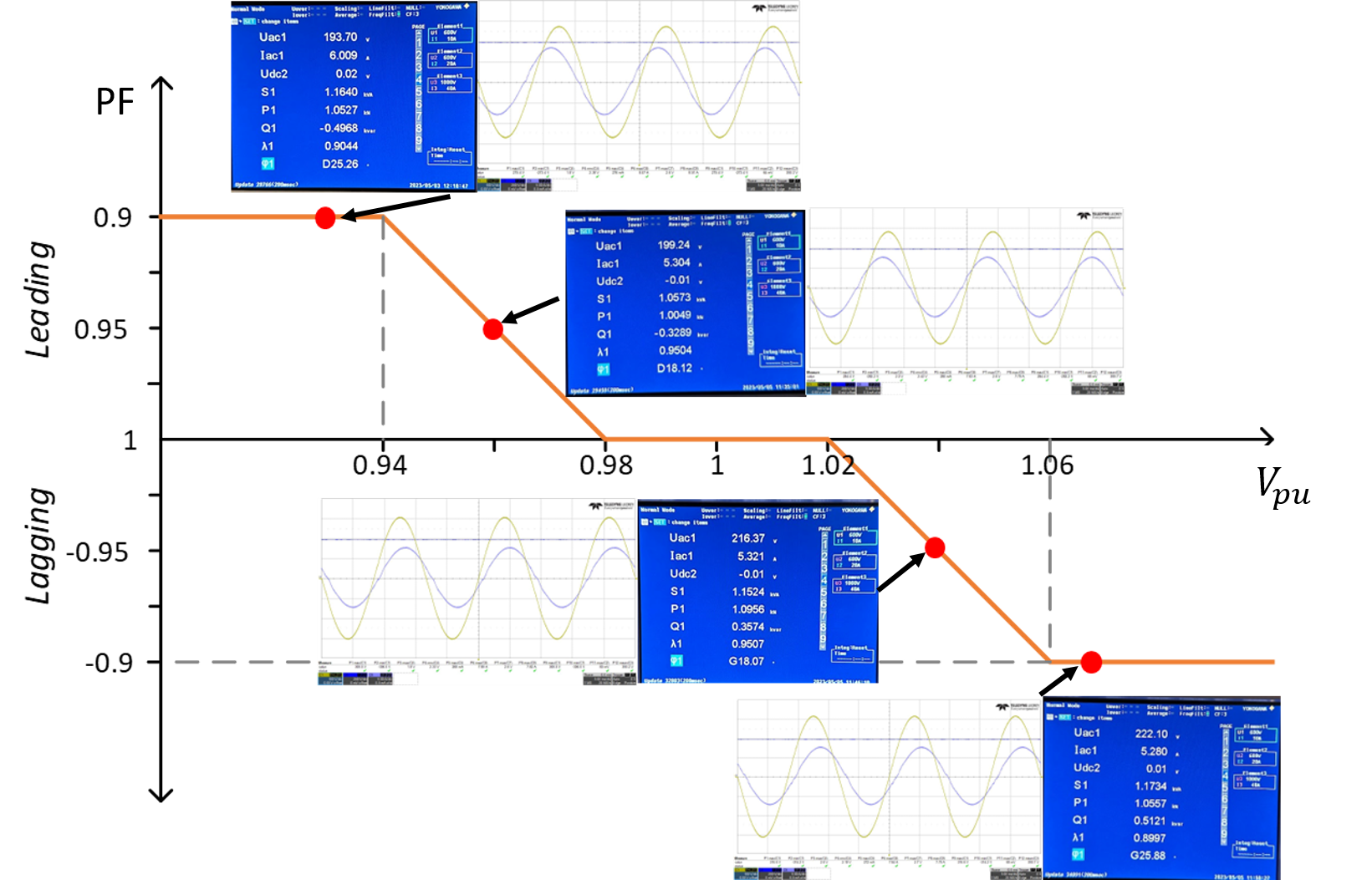
Figure 6: Hardware results for the custom-built inverter operating in the volt-PF mode at different voltage intervals.
The commercial implementation was facilitated using edge intelligent devices (EID), communicating updated PF commands via Modbus, further demonstrating implementation feasibility in existing DER systems.
Conclusion
Volt-PF provides an innovative method for fair and efficient voltage regulation in DER-rich distribution feeders, resolving the disparities caused by traditional volt-VAr schemes. It achieves this by dynamically linking reactive power support to both VPCC and P, ensuring equitable support with minimal PF variation. Extensive simulations and hardware tests validate the benefits and practicality of volt-PF control, demonstrating significant improvements in reactive power usage, feeder efficiency, and transformer loading uniformity. Such results advocate for volt-PF's adoption in modern grid management as DER penetration rates continue to rise globally.

