Papers
Topics
Authors
Recent
Search
2000 character limit reached

Shorts on the Rise: Assessing the Effects of YouTube Shorts on Long-Form Video Content

Published 28 Feb 2024 in cs.SI and cs.MM | (2402.18208v2)

Abstract: Short form content has permeated into the video creator space over the past few years, led by industry leading products such as TikTok, YouTube Shorts and Instagram Reels. YouTube in particular was previously synonymous with being the main hub for long form video content consumption. The monetization of long form videos was easier as it allowed multiple advertisement placements during the course of the video. This model also facilitated thematic brand partnerships. However, since the introduction of short form content, creators have found it more difficult to generate revenue as advertisement placements have decreased. This leads to a unique situation where people are spending more time watching shorter videos, and yet they generate less revenue for the creators. In this paper, we perform a study of 250 creators with significant audiences to see if the introduction of short form content has affected the view counts and engagement of long form content. Our findings reveal a noteworthy trend: since the advent of short-form content, there has been a significant decrease in both view counts and engagement in long-form videos on these channels.

Definition Search Book Streamline Icon: https://streamlinehq.com
References (10)
  1. R. Lobato, The cultural logic of digital intermediaries: Youtube multichannel networks, Convergence 22 (2016) 348–360.
  2. J. Kim, The institutionalization of youtube: From user-generated content to professionally generated content, Media, culture & society 34 (2012) 53–67.
  3. Making a living in the creator economy: A large-scale study of linking on youtube, Social Media+ Society 9 (2023) 20563051231180628.
  4. D. V. Dunas, S. A. Vartanov, Emerging digital media culture in russia: modeling the media consumption of generation z, Journal of Multicultural Discourses 15 (2020) 186–203.
  5. A. Alzubi, The evolving relationship between digital and conventional media: A study of media consumption habits in the digital era, THE PROGRESS: A Journal of Multidisciplinary Studies 4 (2023) 1–13.
  6. To engage or not engage? the features of video content on youtube affecting digital consumer engagement, Journal of consumer behaviour 20 (2021) 1336–1352.
  7. Beyond views: Measuring and predicting engagement in online videos, in: Proceedings of the International AAAI Conference on Web and Social Media, volume 12, 2018.
  8. W. Maenhout, Length does matter: The effectiveness of long-form versus short-form video marketing according to advertising context and viewer age (????).
  9. S. C. Kies, et al., Social media impact on attention span, Journal of Management & Engineering Integration 11 (2018) 20–27.
  10. M. Z. Newman, New media, young audiences and discourses of attention: from sesame street to ‘snack culture’, Media, Culture & Society 32 (2010) 581–596.
Summary

  • The paper finds a significant decline in long-form video viewership after the rise of YouTube Shorts, confirmed via statistical tests.
  • The mixed-methods study of 250 creators reveals that short-form content quickly outperforms long-form in views and likes, despite fewer comments.
  • The findings highlight the need for adaptive monetization strategies as creators diversify content to sustain engagement and profitability.

"Shorts on the Rise: Assessing the Effects of YouTube Shorts on Long-Form Video Content"

Introduction

The paper "Shorts on the Rise: Assessing the Effects of YouTube Shorts on Long-Form Video Content" investigates the impact of short-form video content on the engagement and viewership of long-form videos on YouTube. Short-form content has become a prominent feature in digital media with platforms like YouTube Shorts, TikTok, and Instagram Reels leading this transformation. These short videos cater to the reduced attention spans of modern digital audiences, contrasting with the more expansive narratives favored in long-form content. This shift poses significant challenges for creators who rely on long-form content for monetization, as shorter videos offer limited advertising opportunities.

Methodology

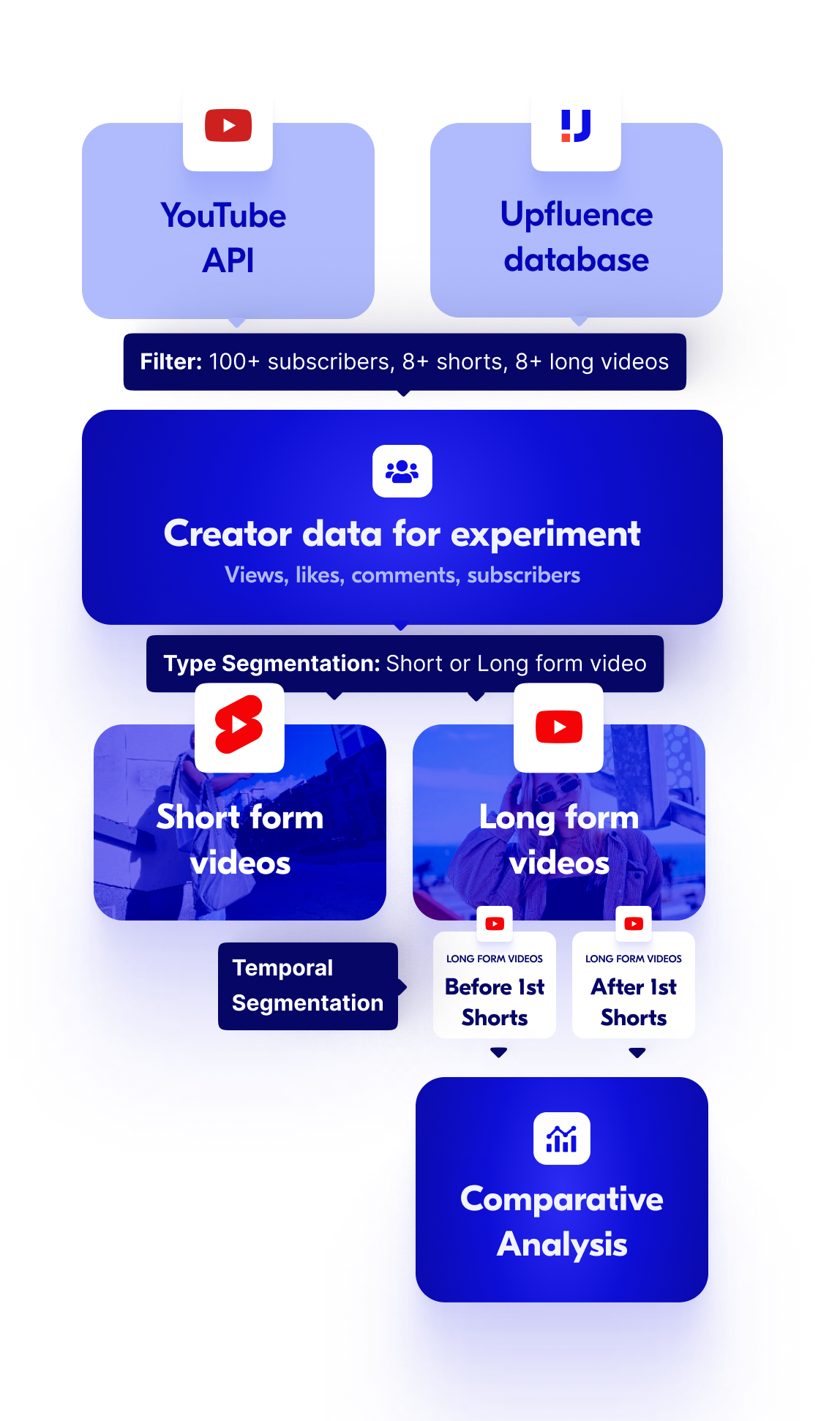
This study employs a mixed-methods approach to quantify the effect of YouTube Shorts on long-form video engagement. By analyzing data from 250 creators with significant subscriber bases (more than 100,000 subscribers), the study provides insights into how the introduction of YouTube Shorts has altered consumption patterns and engagement metrics for long-form content. Figure 1

Figure 1: Block diagram depicting the data collection and analysis followed in this study.

Data was collected from various channels and categorized into short-form and long-form content, with a key temporal marker being the introduction date of YouTube Shorts on each channel. The study utilized statistical tests (e.g., Wilcoxon signed-rank test) to assess the significance of changes in view counts and other engagement metrics pre- and post- the introduction of Shorts.

Findings

Impact on Long-Form Content

Figure 2

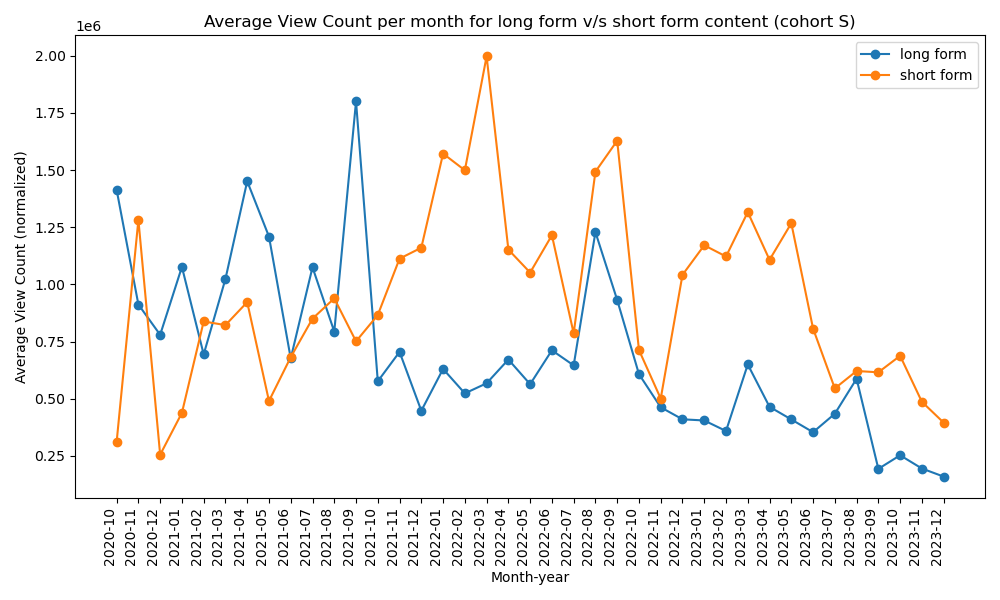
Figure 2: Average view count since the introduction of Shorts on YouTube (cohort L).

The analysis revealed a significant decrease in viewership for long-form content following the introduction of YouTube Shorts. This trend was more pronounced for creators who predominantly produced long-form content. While short-form content gained traction, the average long-form view count decreased. The statistical tests confirmed the significance of this decline, especially in the long-form-centric cohort (cohort L).

Engagement Metrics

Short-form content outperformed long-form content not just in terms of view counts but also in likes, despite long-form content attracting more comments. This trend illustrates the quick engagement nature of short-form videos, which aligns with viewer habits of consuming rapid, concise content suitable for mobile consumption.

Creator and Subscriber Categories

Figure 3

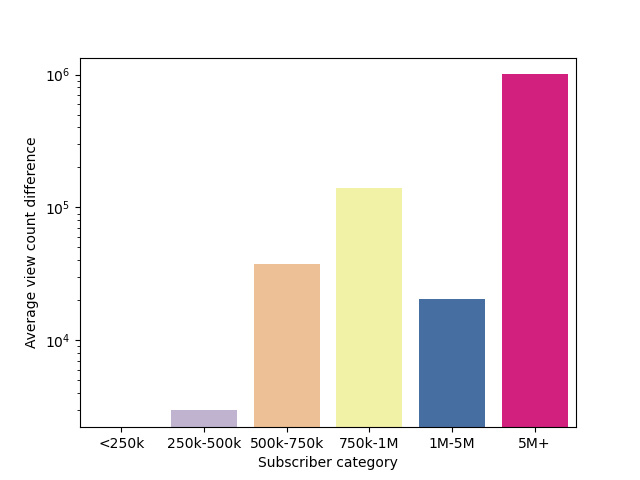
Figure 3: Average view count difference across different subscribers categories.

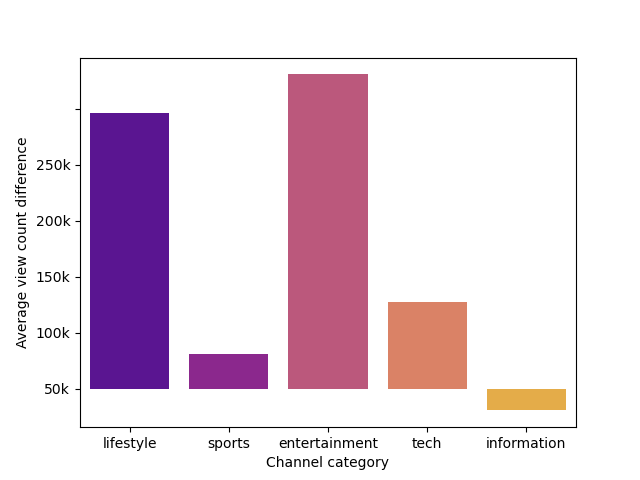
The study also explored the effects across different creator subscriber bases and content categories. Larger creators with more than 5 million subscribers experienced a more significant drop in long-form engagement. On the channel category front, entertainment and lifestyle content saw substantial shifts towards short-form dominance, unlike educational or informational content, which remained stable. Figure 4

Figure 4: Average view count difference across different channel categories.

Discussion

The paper concludes that the rise of YouTube Shorts has markedly impacted long-form video content, reshaping the consumption landscape. The findings support the need for adaptive monetization models that align with the new digital content consumption paradigms. As short-form content becomes ever more dominant, creators must strategically diversify their content to maintain financial sustainability and audience engagement.

Conclusion

Through a comprehensive analysis, the study underscores the critical changes brought by the advent of YouTube Shorts. The transition toward short-form content requires creators and platforms alike to innovate and adapt their monetization strategies to sustain engagement and profitability. These insights into digital media consumption trends provide a foundation for further research and development of content strategies in the evolving digital ecosystem.

Paper to Video (Beta)

Whiteboard

No one has generated a whiteboard explanation for this paper yet.

Open Problems

We haven't generated a list of open problems mentioned in this paper yet.

Collections

Sign up for free to add this paper to one or more collections.