- The paper introduces a Differentiable Cell Complex Module (DCM) that infers latent topologies beyond conventional graph structures.
- It employs a two-step methodology using an alpha-Differentiable Graph Module for pairwise interactions and a Polygon Inference Module for multi-way relationships.
- Experimental results demonstrate enhanced representation learning and improved accuracy in modeling complex data interactions.
Differentiable Cell Complex Module for Latent Topology Inference
The paper "From Latent Graph to Latent Topology Inference: Differentiable Cell Complex Module" (2305.16174) presents a novel approach for latent topology inference by employing a Differentiable Cell Complex Module (DCM). It seeks to advance the representation learning capabilities within graph neural networks by integrating latent topological structures, which are inferred via regular cell complexes. This methodological framework circumvents the conventional graph-based restrictions, offering a richer, multi-faceted perspective on data interactions and dependencies.
Methodology
The core of the proposed method lies in the Latent Topology Inference (LTI) procedure facilitated by the DCM. The process is bifurcated into two principal components: the alpha-Differentiable Graph Module (alpha-DGM) and the Polygon Inference Module (PIM). The alpha-DGM is responsible for constructing graphs that encapsulate pairwise interactions among data points. This resulting graph is leveraged as the 1-skeleton upon which regular cell complexes are erected. The PIM extends these interactions by inferring 2-cells (polygons), which account for multi-way interactions.
Following the complex construction, the inferred topology is utilized within two distinct message-passing networks: a Graph Neural Network (GNN) at the node level and a Cell Complex Neural Network (CCNN) at the edge level. This dual application ensures robust downstream task resolutions through comprehensive data interaction mapping.

Figure 1: The proposed two-step procedure for Latent Topology Inference (LTI) via regular cell complexes.
Architectural Details
The architecture highlights the integration of the DCM with existing frameworks. It introduces a novel learning pipeline that aligns graph-based paradigms with topological inference, optimizing information processing capabilities. Key elements like the alpha-DGM and PIM are elucidated further to describe their distinctive roles in topology construction and interaction modeling.
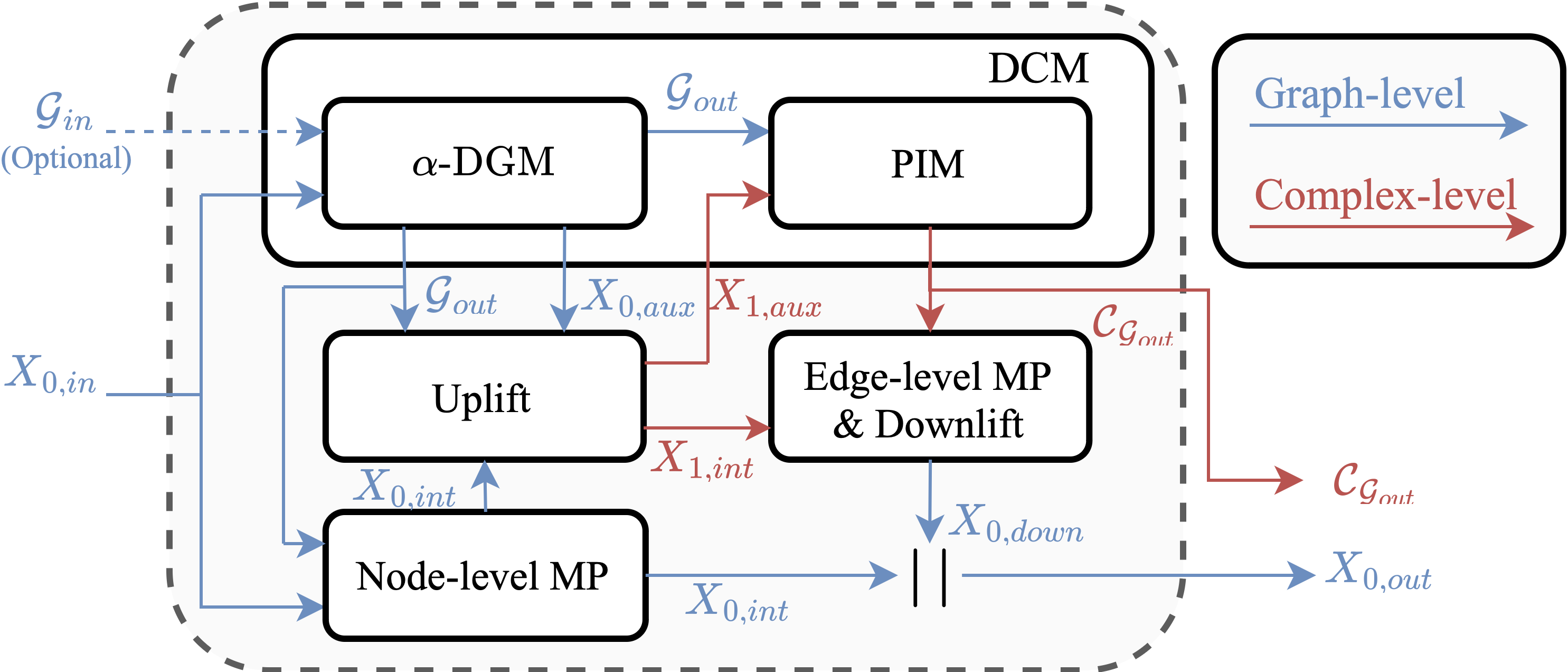
Figure 2: The DCM and the proposed architecture.
Experimental Evaluation
The paper illustrates various experimental setups to assess the efficacy of the proposed module in comparison to traditional models. The results demonstrate significant improvements in representation learning, highlighting enhanced accuracy and adaptive representation when latent topologies are considered. The empirical benchmarks underscore the superior performance of the proposed method in scenarios necessitating complex interaction modeling and inference.
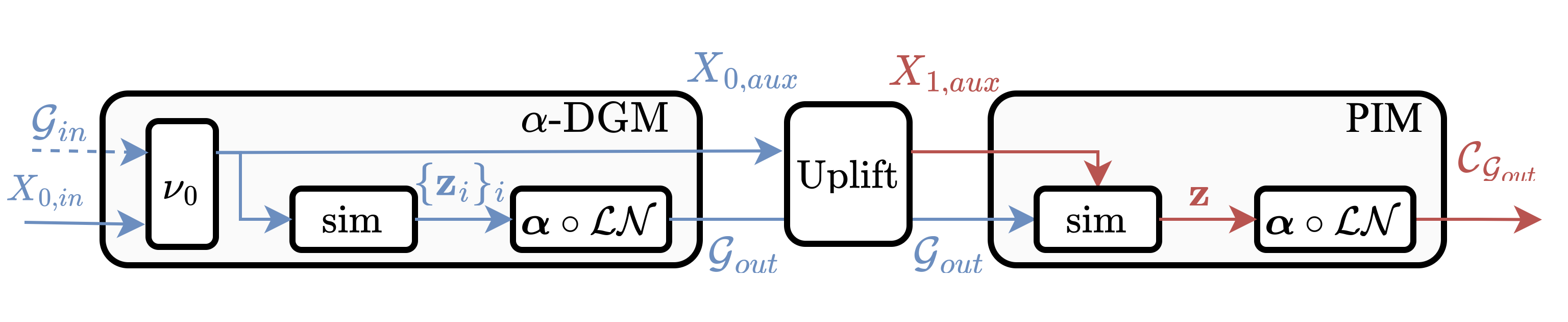
Figure 3: The alpha-Differentiable Graph Module (left) and the Polygon Inference Module (right).
Implications and Future Directions
The introduction of the Differentiable Cell Complex Module delineates a path toward augmenting graph and topology-based learning frameworks. Practically, it facilitates the efficient handling of complex data structures, while theoretically, it prompts further discourse on topology's role in enhancing neural network capabilities. Future research could explore variants of this framework, its application across diverse domains, and the extension of topology inference into more intricate data landscapes.
Conclusion
This paper provides a comprehensive model that transitions from latent graph learning to sophisticated topology inference. By employing the Differentiable Cell Complex Module, it sets a new standard in multi-way interaction representation, enriching both the theoretical framework and practical implementations of neural network architectures. The methodology and experimental success pave the way for expanded utilization and refinement within this field.

