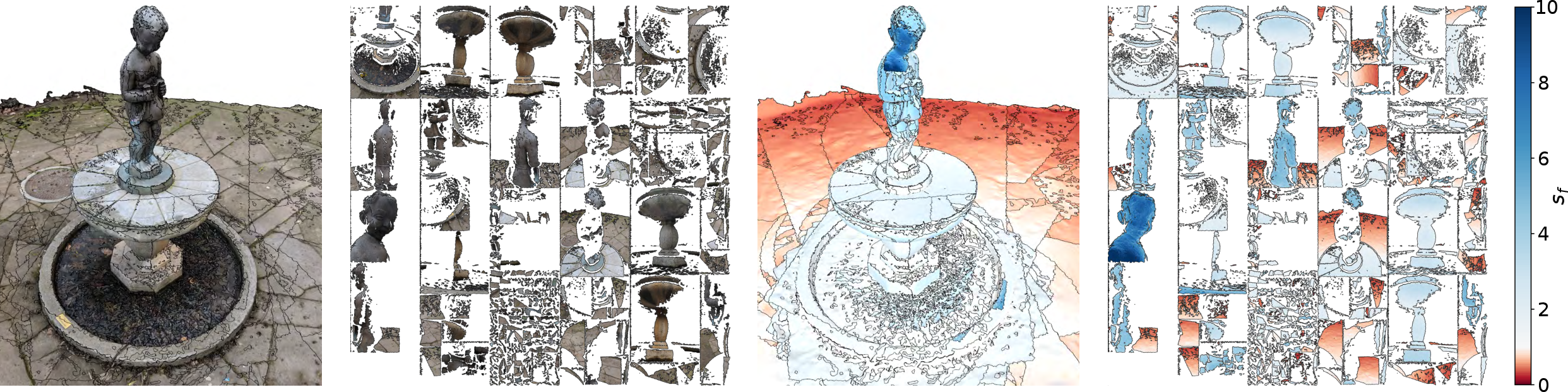
- The paper presents a novel dataset of 568 high-resolution, photo-reconstructed textured 3D models with complex UV maps.
- It outlines challenges in UV map quality, geometric complexity, and texture fragmentation, introducing metrics like atlas crumbliness.
- It benchmarks existing UV mapping tools, highlighting performance gaps and suggesting improvements for automated texture processing.
Overview of the RWTT Dataset
The paper "Real-World Textured Things: a Repository of Textured Models Generated with Modern Photo-Reconstruction Tools" presents a unique dataset composed of 568 textured 3D models acquired through various photo-reconstruction techniques. These models are distinctly different from traditional 3D models due to their high-resolution geometry, irregular meshing, and complex UV maps resulting from automatic generation processes.
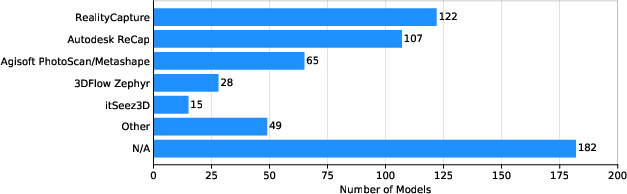
Figure 1: Overview of the different software tools used to create the models featured in Real-World Textured Things. There are at least 18 different reconstruction pipelines represented in the dataset; here for compactness we only report the most frequent occurrences.
Characteristics and Defects of the Models
Models in the Real-World Textured Things (RWTT) dataset exhibit common traits such as high-resolution but low-quality meshes, and UV maps with excessive fragmentation and numerous seams. These characteristics often originate from the tools used for photo-reconstruction, which prioritize color fidelity over efficient UV mapping.
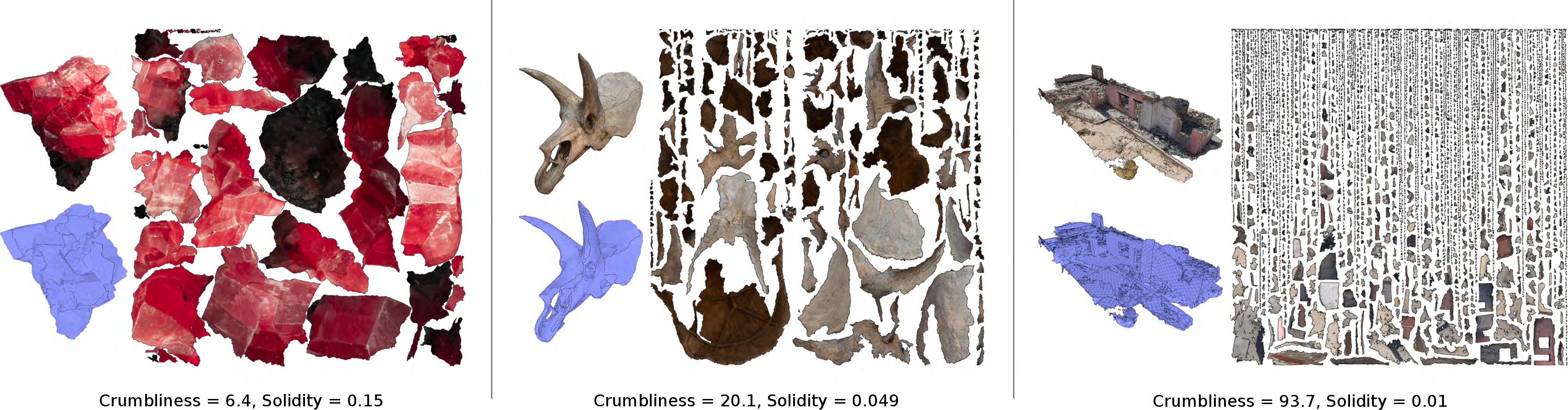
Figure 2: Three models with their texture seams highlighted. Crumbliness and solidity values conveniently model the fragmentation of the texture atlas.
The dataset significantly highlights these traits:
- Geometric Complexity: The models have varying degrees of geometric intricacy, with a significant portion containing over 250,000 vertices (Figure 3).
- Fragmentation of Texture Atlases: These are typically highly fragmented, leading to poor memory efficiency and potential artifacts in rendering (Figure 4).
- UV Map Distortions and Occupancy: While the maps often retain their conformality, the occupancy can be low, indicating inefficient packing of texels (Figures 5 and 7).
Measuring Model Quality
The research introduces novel metrics, such as atlas crumbliness, to quantify the level of fragmentation within texture atlases.
UV and Texture Quality
Texture and UV map analysis show:
Texture Seam Discrepancies
The evaluation reveals notable color discrepancies across texture seams, impacting potential application performance and visual consistency of the models (Figure 8).
Challenges with Automatic UV Mapping
The paper assesses existing UV mapping tools, including commercial software like Maya and Blender, as well as academic solutions. It highlights the limitations of these tools when dealing with the complex models within the RWTT dataset. The evaluation shows these tools often fail to enhance UV map quality or struggle with existing model defects:
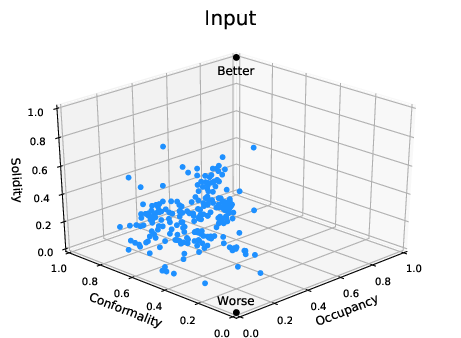
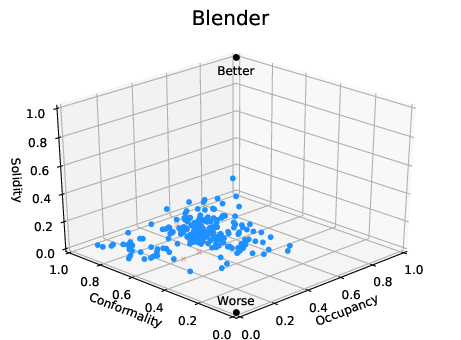
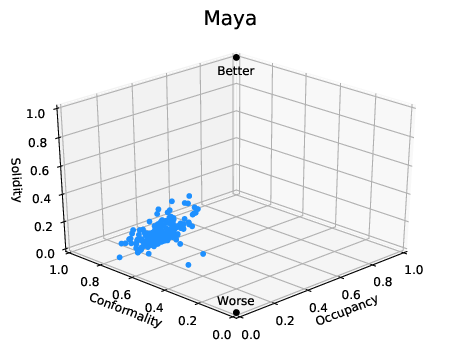
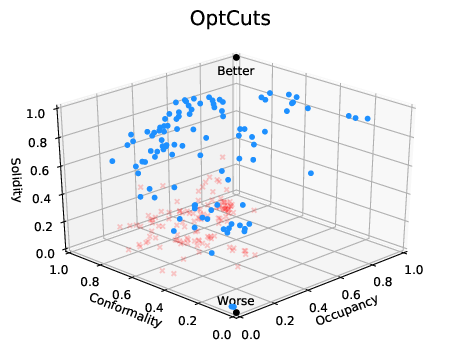
Figure 9: Performance of existing UV mapping tools on models generated with photo-reconstruction technology.
- Performance Gaps: These tools exhibit substantial failure rates or provide marginal improvements, underscoring the need for more advanced UV mapping methodologies that can reliably handle high-resolution, fragmented data inputs (Figure 9).
Implications and Future Directions
The RWTT dataset serves as a benchmark for assessing and developing algorithms capable of processing and optimizing photo-reconstructed 3D models. The introduction of TexMetro, a tool for evaluating UV map quality, provides a standardized mechanism for researchers to quantify model characteristics and compare future methodologies.
Continued advancements in computer graphics should focus on:
- Refining automatic UV mapping algorithms to address fragmentation and packing inefficiencies.
- Developing robust tools that can handle geometric and topological defects commonly seen in photo-reconstructed models.
- Leveraging the RWTT dataset for benchmarking and improving commercial and open-source photo-reconstruction utilities.
Conclusion
Real-World Textured Things offers a critical resource for the computer graphics community, bringing attention to the challenges and shortcomings associated with current photo-reconstruction practices. It invites further research and development efforts to bridge the gaps in existing technologies, ultimately enhancing the deployment and usability of 3D models derived from real-world environments.