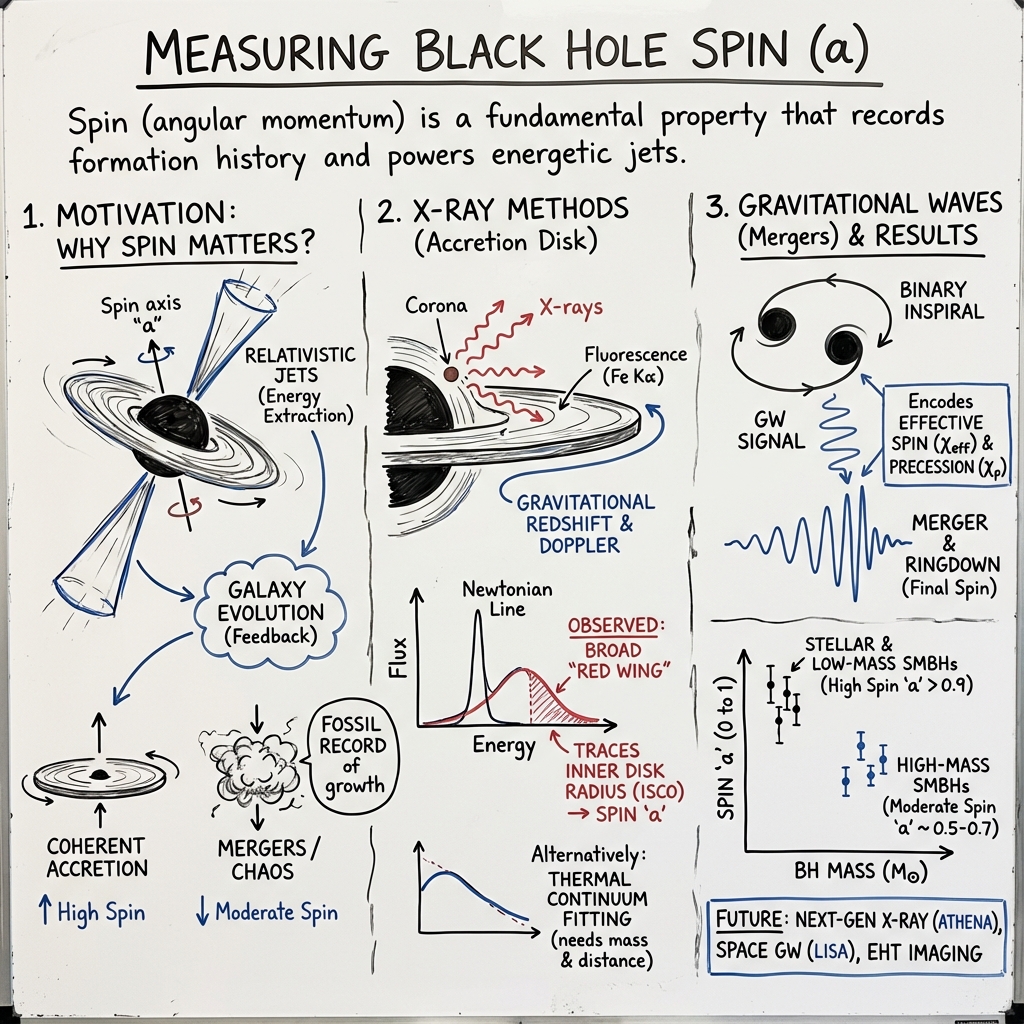
- The paper establishes that iron Kα line broadening and ISCO measurements effectively constrain black hole spin.
- It identifies a bimodal spin distribution in supermassive black holes linked to distinct accretion and merger histories.
- The study demonstrates how gravitational wave observations complement X-ray methods in validating spin alignments and testing general relativity.
Observing Black Holes Spin
Introduction to Black Hole Spin
The spin of a black hole, characterized by its angular momentum, provides critical insights into the black hole's formation, growth, and the energetic processes it drives. Spin is particularly significant because it can fuel the powerful jets observed in active galactic nuclei (AGN) and serves as a fossil record of black hole formation scenarios. The current challenge lies in developing robust observational methods to measure black hole spin, which can then be used as tools to test theories of gravity and understand the dynamics of accretion and jet formation.
Measuring Black Hole Spin: Techniques and Observational Methods
For over two decades, measuring black hole spin has predominantly been the domain of X-ray astronomy. The methods are centered around observing the X-ray emission from accretion disks that form around black holes when gas spirals inward. The inner edge of these disks, the innermost stable circular orbit (ISCO), is influenced by the black hole's spin, affecting the geometry and gravitational redshift of emitted radiation.
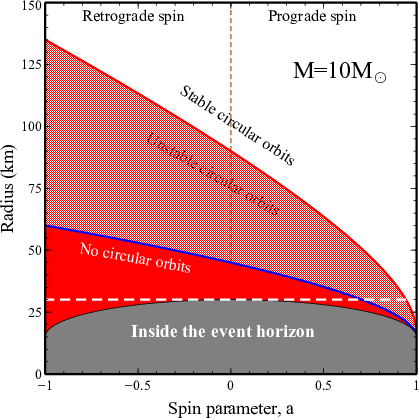
Figure 1: Location of some special orbits in the equatorial plane of a Kerr black hole as a function of spin parameter.
A primary technique employs the broadening of iron Kα lines in the X-ray spectrum. These lines are significantly distorted due to Doppler shifts and gravitational redshifts, with the extent of the redshifted tail reflecting the black hole's spin (1903.11704). The ISCO, moving closer to the event horizon with increasing spin, serves as the theoretical basis for these measurements.
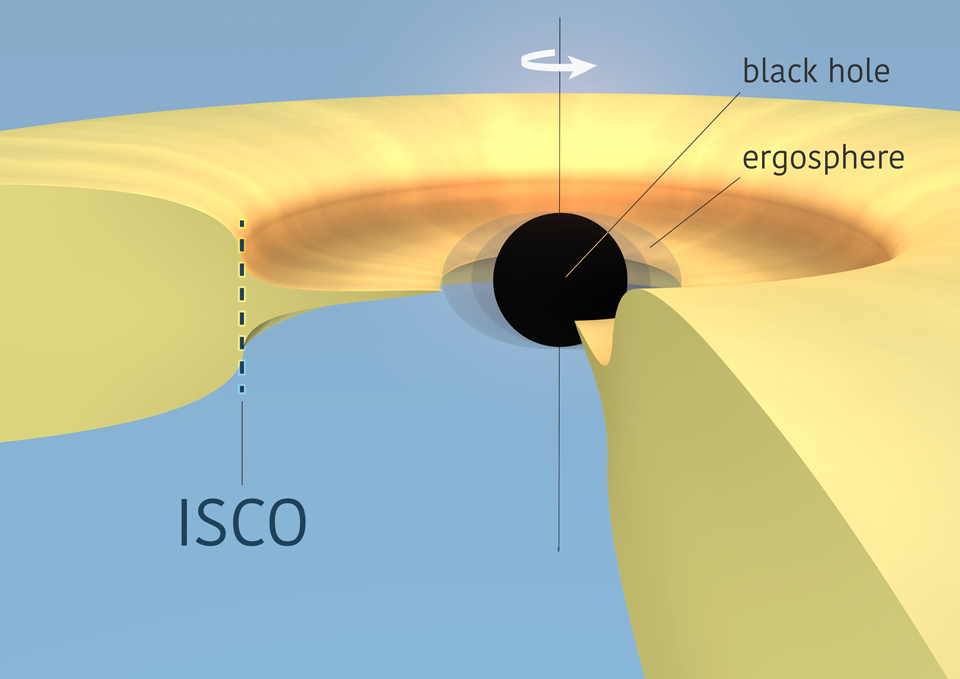
Figure 2: Cartoon of the inner regions of a geometrically-thin accretion disk showing the transition in disk structure at the innermost stable circular orbit (ISCO).
Additionally, the advent of gravitational wave astronomy has provided a complementary approach. Observations from aLIGO and VIRGO have opened a new window, allowing researchers to infer spins from the gravitational wave signatures of black hole mergers. This method is particularly informative as it involves "pure" gravitational physics devoid of complex accretion dynamics.
Results from X-ray and Gravitational Wave Observations
X-ray studies have consistently revealed a bimodal distribution of supermassive black hole (SMBH) spins. Lower mass SMBHs tend to exhibit high spins (a>0.9), while large-mass SMBHs often show moderate spins (a∼0.4−0.7). This distribution implies a difference in formation history, with high-spin SMBHs likely having undergone prolonged coherent accretion.
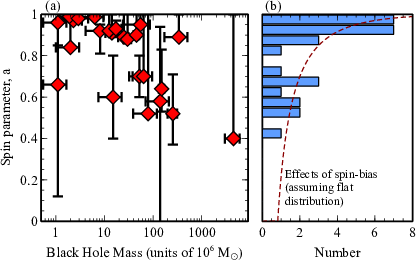
Figure 3: Results on the spins of supermassive black holes in active galactic nuclei using the X-ray reflection method.
Gravitational wave observations have offered a fresh perspective, particularly highlighting effective and precession spins during black hole mergers. The case of GW151226 showcased constraints on effective spin χeff, indicating that spins were partially aligned with orbital angular momentum—reinforcing theoretical predictions about black hole formation dynamics through mergers.
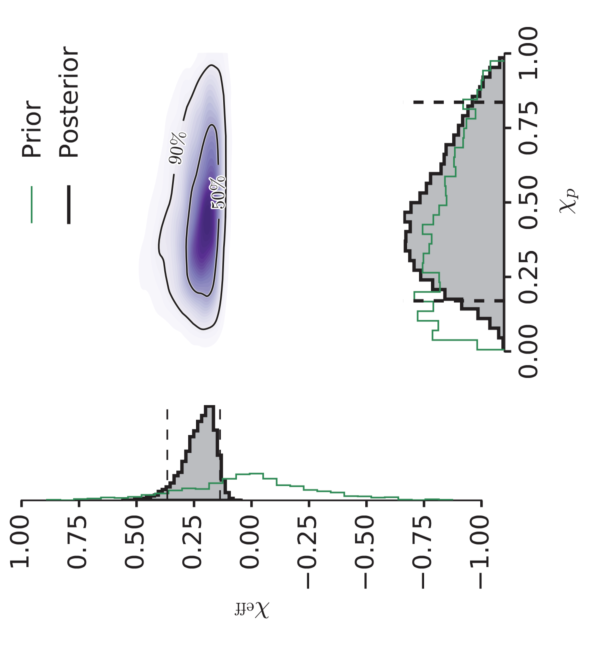
Figure 4: Constraints on black hole spin for GW151226.
Implications and Future Directions
The measurement of black hole spins has significant implications for our understanding of galaxy evolution, as black hole feedback influences star formation rates. In addition, the discrepancy between SMBH and stellar-mass black hole spins underscores different pathways in stellar evolution and core-collapse supernovae.
The future of black hole spin measurements promises deeper insight with next-generation X-ray observatories like ATHENA and improved gravitational wave detectors. These will allow researchers to probe earlier cosmic epochs and study SMBHs at cosmological distances. Furthermore, new methods, such as observing the shadows of SMBHs through instruments like the Event Horizon Telescope (EHT), will provide direct measurement capabilities.
Conclusion
The study of black hole spins has transitioned into a precision science with the development of advanced observational techniques. As astronomers continue to refine these measurements, they are unraveling the complex dynamics of black hole systems, testing the limits of general relativity, and elucidating the lifecycle of black holes and their host galaxies. The next era of observational advancements promises an expanded understanding of these enigmatic objects, driving forward our comprehension of fundamental astrophysical processes.