- The paper surveys state-of-the-art techniques in automated vulnerability detection and exploit generation, emphasizing DARPA’s Cyber Grand Challenge.
- It details methodological trade-offs using static, dynamic, and concolic analysis to balance thorough exploration with performance constraints.
- The paper highlights future research directions, advocating for enhanced pre‐processing and the integration of reinforcement learning in cybersecurity.
Survey of Automated Vulnerability Detection and Exploit Generation Techniques in Cyber Reasoning Systems
Introduction
The increase in software complexity and dependence inherently escalates security risks, necessitating efficient, scalable, and automated solutions for vulnerability detection and exploit generation. This demand sees fruition in DARPA’s Cyber Grand Challenge (CGC) which showcases autonomous Cyber Reasoning Systems (CRS) capable of vulnerability detection, exploit generation, and patching without human intervention. This essay explores techniques and technologies utilized by winning systems such as Mayhem and Mechanical Phish, offering insights into their design considerations, offensive capabilities, and areas for future research.
The Impact of DARPA's Cyber Grand Challenge
DARPA's CGC significantly contributes to cybersecurity research by establishing standard benchmarks and datasets, bridging the gap prevalent in binary analysis. The challenge incorporates realistic binaries designed to simulate real-world software defects, evaluated on security, availability, and evaluation criteria. This endeavor aims to streamline efforts in vulnerability detection research by offering a common platform for evaluation and exploration.
Techniques in Automated Vulnerability Detection
Static Binary Analysis
Static binary analysis deciphers code without executing it, leveraging control flow graphs (CFGs) to navigate potential execution paths. However, the complexity arising from indirect jumps necessitates approximations that may affect accuracy.
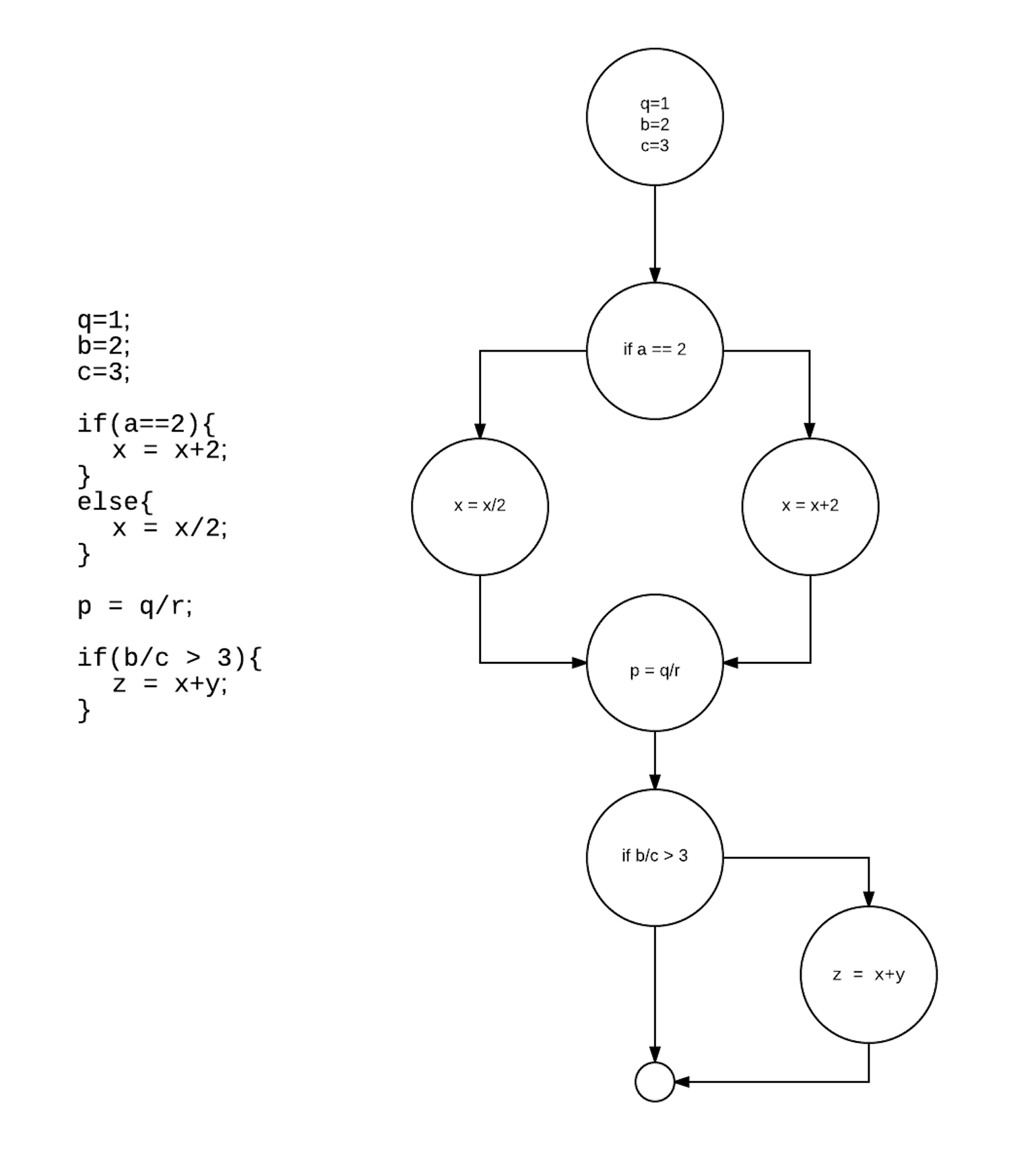
Figure 1: Example of simple control flow graph (adapted)
While techniques like value-set analysis (VSA) attempt to counter limitations by using over-approximation strategies, static analysis remains inherently constrained by scalability and performance challenges.
Dynamic Binary Analysis
Dynamic binary analysis accentuates real-time monitoring and examination, offering precise path-specific analysis at the cost of reduced code coverage. Here, symbolic execution emerges as a potent tool, deploying both concrete and symbolic path exploration to derive input-driven pathways.
Concolic execution merges concrete and symbolic exploration methodologies, aiding tools such as Mayhem in mitigating issues like path explosion. Meanwhile, fuzzing remains a cornerstone of such methodologies, although limited by its dependence on introductory test cases.
Dynamic Symbolic Execution
Dynamic symbolic execution helps identify vulnerabilities by meticulously generating exploratory path constraints fed to an SMT solver to navigate potential software defects. Despite its efficiency, scalability issues due to path explosion remain a critical challenge, often addressed via hybrid or concolic methodologies.
Analysis of Offensive Cyber Capabilities
Mayhem
Mayhem embodies an advanced CRS tool implementing hybrid symbolic execution to balance the trade-offs between exhaustive path exploration and resource management. It synthesizes concrete and symbolic execution environments, guided by the SES and CEC subcomponents to dynamically adjust execution strategies. Importantly, Mayhem excels in vulnerability pinpointing and exploit generation for common software vulnerabilities such as buffer overflows and format string attacks.
Mechanical Phish
Mechanical Phish leverages Driller, a guided fuzzer that amalgamates fuzzing with concolic execution, adapting symbolic execution only when conventional methods falter. Complemented by the angr framework’s modular architecture, Mechanical Phish showcases versatility in detecting deep-seated software vulnerabilities across varied binary structures.
Prominent Vulnerabilities
The exploration of common vulnerabilities unveils buffer overflows, format string attacks, and memory corruption as key targets for CRS tools. These vulnerabilities can severely compromise software integrity by facilitating unauthorized access and control exploitation.
Implications and Future Directions
Despite the undeniable advancements, current systems such as Mayhem and Mechanical Phish highlight limitations when handling large-scale, complex binaries. Future research trajectories advocate for enhanced pre-processing techniques to minimize search space and integrate deep learning paradigms for adaptive vulnerability handling. Emphasis on incorporating reinforcement learning could potentially cultivate a robust AI-driven framework for vulnerability discovery, augmenting the informed decisions driving current analysis methodologies.
Conclusion
Cyber Reasoning Systems represent significant strides in automated vulnerability detection and exploit generation. The innovations exemplified in systems like Mayhem and Mechanical Phish underscore the realization of human-equivalent analysis capabilities, providing a foundational scaffold for future research and development in automating cybersecurity challenges. The lands of potentiality they inhabit suggest a promising horizon, albeit with tangible research challenges ahead.