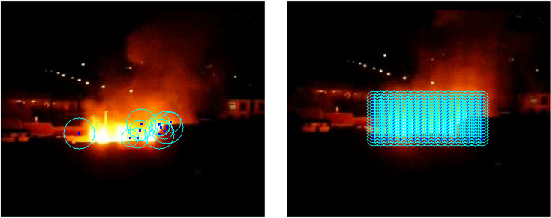
- The paper presents a real-time fire detection system combining multi-level thresholding, LAB color, and SURF texture features to achieve 93% precision and 82% recall.
- It employs a cascaded framework including candidate proposals, SVM-based region classification with an RBF kernel, and temporal verification to significantly reduce false positives.
- Empirical studies with a newly compiled dataset demonstrate the system’s adaptability to various lighting and background conditions, enhancing video surveillance efficiency.
Towards a Solid Solution of Real-Time Fire and Flame Detection
Introduction
The paper "Towards a Solid Solution of Real-Time Fire and Flame Detection" focuses on developing a robust, real-time method for detecting fire and flames in videos. This system is designed to be integrated into video surveillance and event retrieval applications. The necessity for such a technology is underlined by numerous fire catastrophes, as mentioned in the paper, and the need for early detection systems. The approach taken by this paper is significant as it leverages vision-based methods, using RGB cameras, which provides various advantages over sensor-based methods, including cost-effectiveness and the ability to cover broader areas in real time.
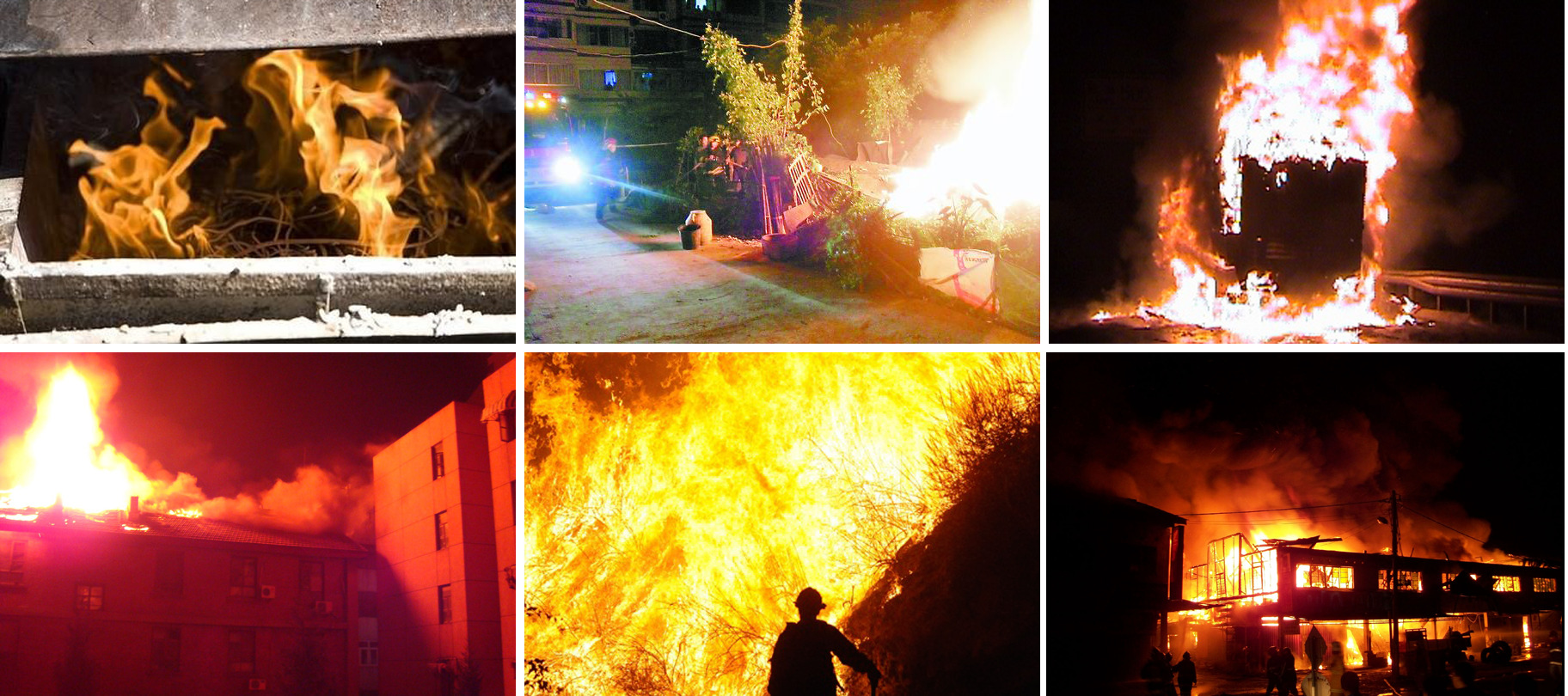
Figure 1: Various appearances of fire.
System Framework
The proposed fire detection system is structured in three cascaded steps: candidate region proposals, fire region classification, and temporal verification. The system's architecture is key to processing video efficiently and in real time.
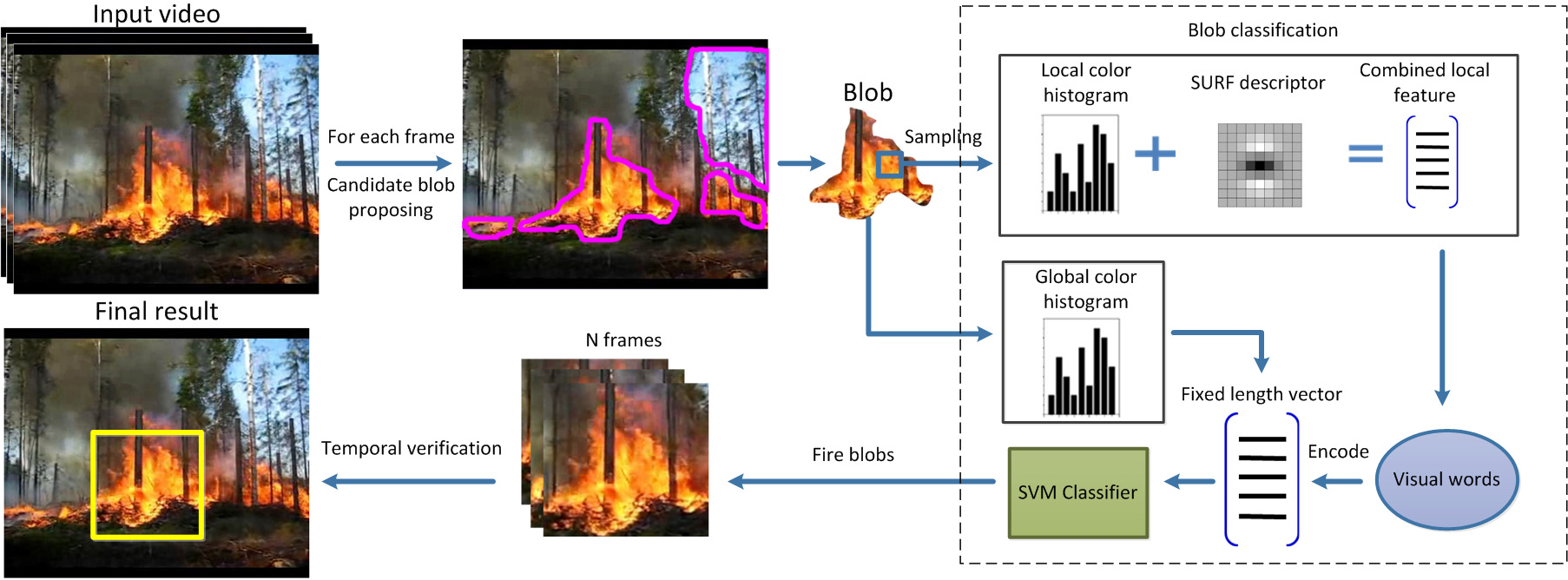
Figure 2: Framework of proposed fire detection system.
- Candidate Region Proposals: This step involves proposing potential fire regions by modeling the background and using a multi-level thresholding approach. This method dynamically adjusts thresholds based on background intensity statistics, addressing challenges posed by varying lighting conditions and reflective surfaces.
- Region Classification: The classification process utilizes a combination of color-texture features, including a CIE LAB color descriptor and SURF texture descriptors, with an SVM classifier to detect fire regions. Importantly, the RBF SVM kernel is identified as the optimal choice, addressing issues with high false alarms associated with purely color-based detection methods.
- Temporal Verification: The system further reduces false positives through temporal verification, employing statistical measures like perimeter and area stability over time to differentiate transient light sources from actual fires.
Empirical Study and Feature Selection
The system's feature selection is based on extensive empirical studies using a newly compiled dataset. The researchers tested different color spaces and found LAB histograms to outperform others when using an RBF SVM kernel.
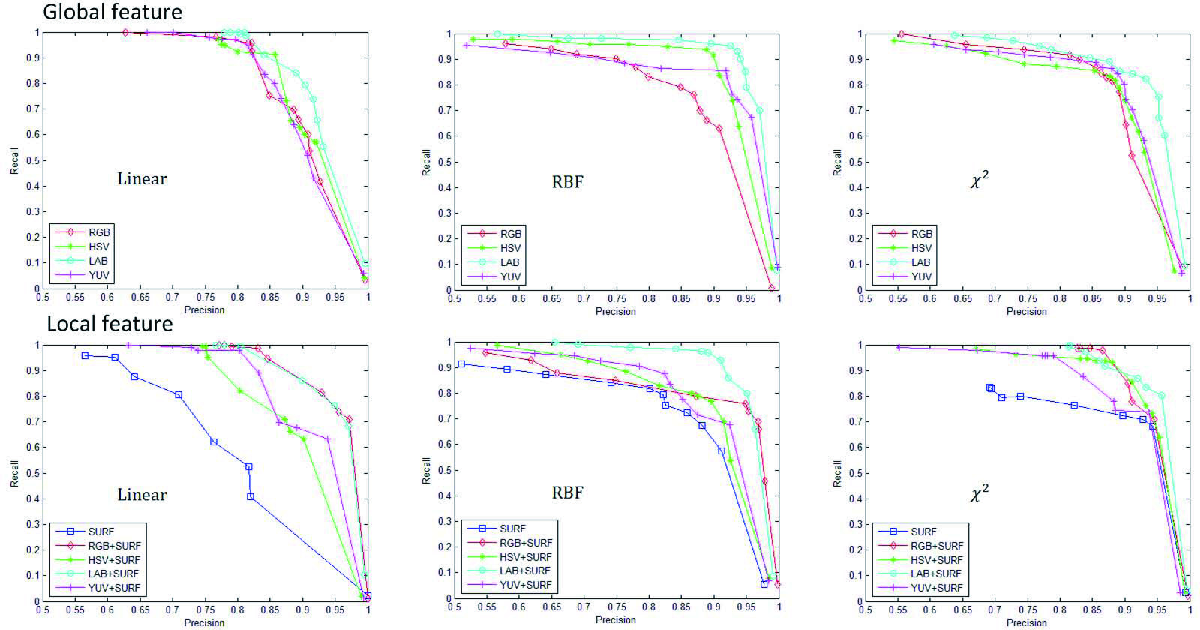
Figure 3: Precision-recall curves of different features with 3 kinds of SVM kernels.
Color and Texture Features
These features significantly improved the robustness of fire detection, allowing the system to operate effectively in diverse visual contexts.
System Implementation
The implementation leverages a hierarchical structure of feature extraction and classification to enable real-time processing. The proposed system's capability to adapt to different environmental settings through dynamic threshold adjustments makes it versatile for various surveillance contexts.

Figure 5: Two examples of candidate fire region proposing. The first row shows a surveillance video example with still background, the background modeling result is shown in (a), and the mask of candidate regions is shown in (c). The second row shows a video with moving background. The candidate fire region mask shown in (e) is found by a multi-level threshold.
Evaluation and Results
Extensive testing with a dataset comprising 64 video clips demonstrated the system's high precision (93%) and recall (82%) rates, outperforming existing methods by improving recall significantly. The evaluation indicates that while the system is highly effective, early-stage fire detection, particularly for small flames, remains a challenge due to subtle visual characteristics.
Conclusion
This research presents a significant advancement in fire detection systems, emphasizing empirical evaluation and optimal feature utilization to develop a reliable, real-time detection framework. The study contributes valuable datasets and software, encouraging further improvements and adaptations in real-world applications. Future work should explore enhancing initial combustion detection sensitivity and refining the accuracy of distinguishing between fire and fire-like objects in challenging scenarios.