- The paper introduces an agentic AI framework that autonomously decomposes complex electrical engineering tasks into executable workflows.
- It demonstrates applications in power benchmarking, substation design, and automated BoQ generation, yielding efficiency and accuracy improvements.
- The study addresses key security challenges by proposing zero trust frameworks and HITL oversight to safeguard agentic system integrity.
Agentic AI Systems in Electrical Power Systems Engineering: Authoritative Essay
Introduction: Paradigm Shift Toward Agentic AI
The assimilation of agentic AI into the domain of electrical power systems represents a critical transition from traditional agent-based automation and reactive generative modeling to fully autonomous, goal-oriented systems. Agentic AI frameworks encapsulate reasoning, memory, planning, and dynamic tool interaction, functioning as orchestrators capable of decomposing complex engineering objectives into executable workflows. These frameworks are distinguished by their capacity to manage long-horizon, multi-agent, and multi-domain tasks with adaptive intelligence, setting them apart from conventional generative AI and classic agent architectures.
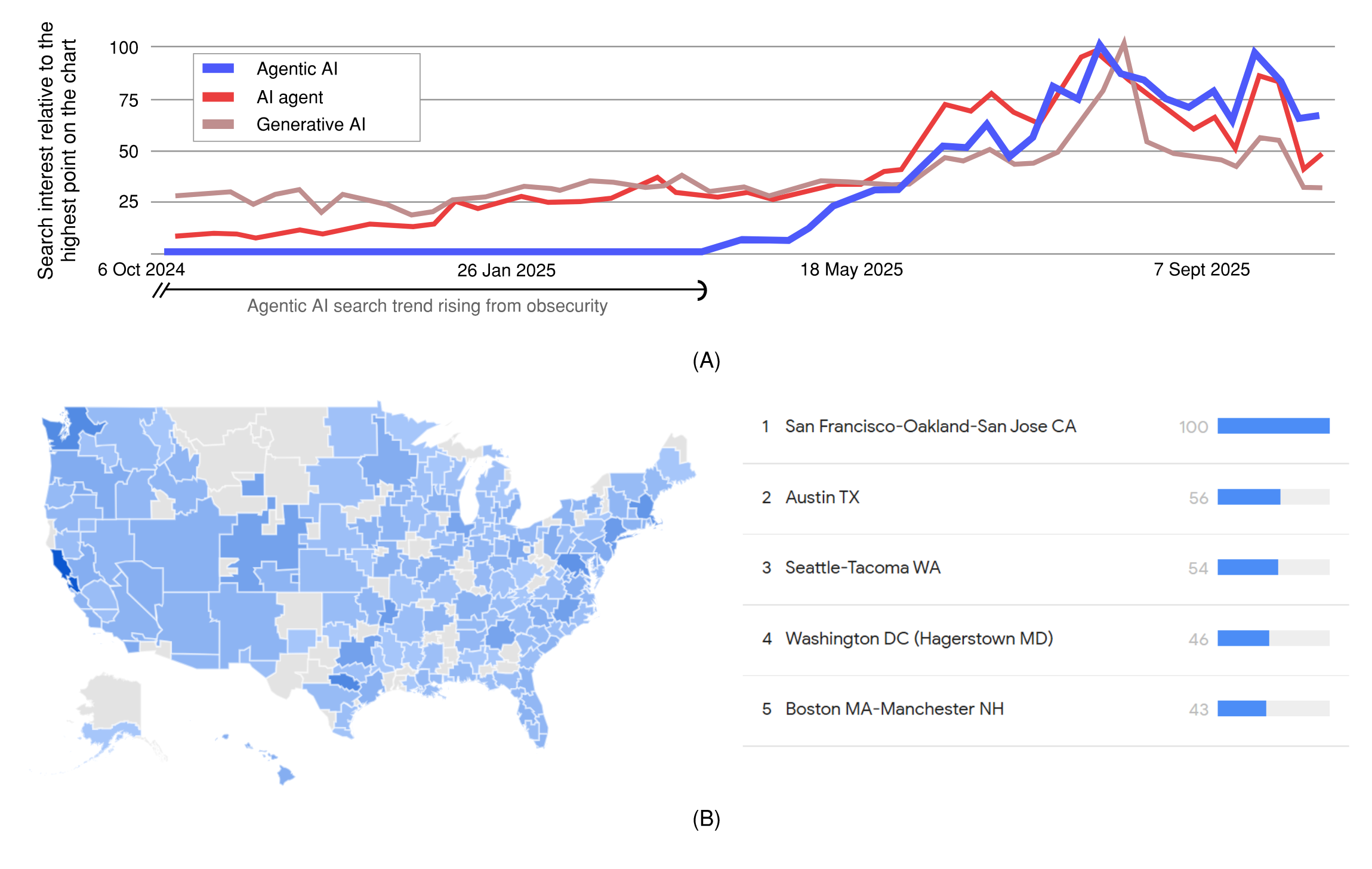
Figure 1: Trends in AI paradigms, revealing the ascendance of 'Agentic AI' interest in 2025 and its geographic uptake.
Taxonomy: Differentiating Agentic AI from Prior AI Architectures
A systematic distinction between agentic AI, generative AI, and traditional agent-based systems is indispensable to prevent conceptual ambiguity, ensure proper benchmarking, and guide industry deployment strategies. Agentic AI systems are self-initiating, possess high autonomy, excel in multi-step dynamic workflows, and enable coordinated multi-agent orchestration. Unlike generative AI, which operates on prompts with limited contextual adaptation, agentic AI frameworks maintain online memory, embrace contextual reinforcement learning, and leverage external tool APIs flexibly.
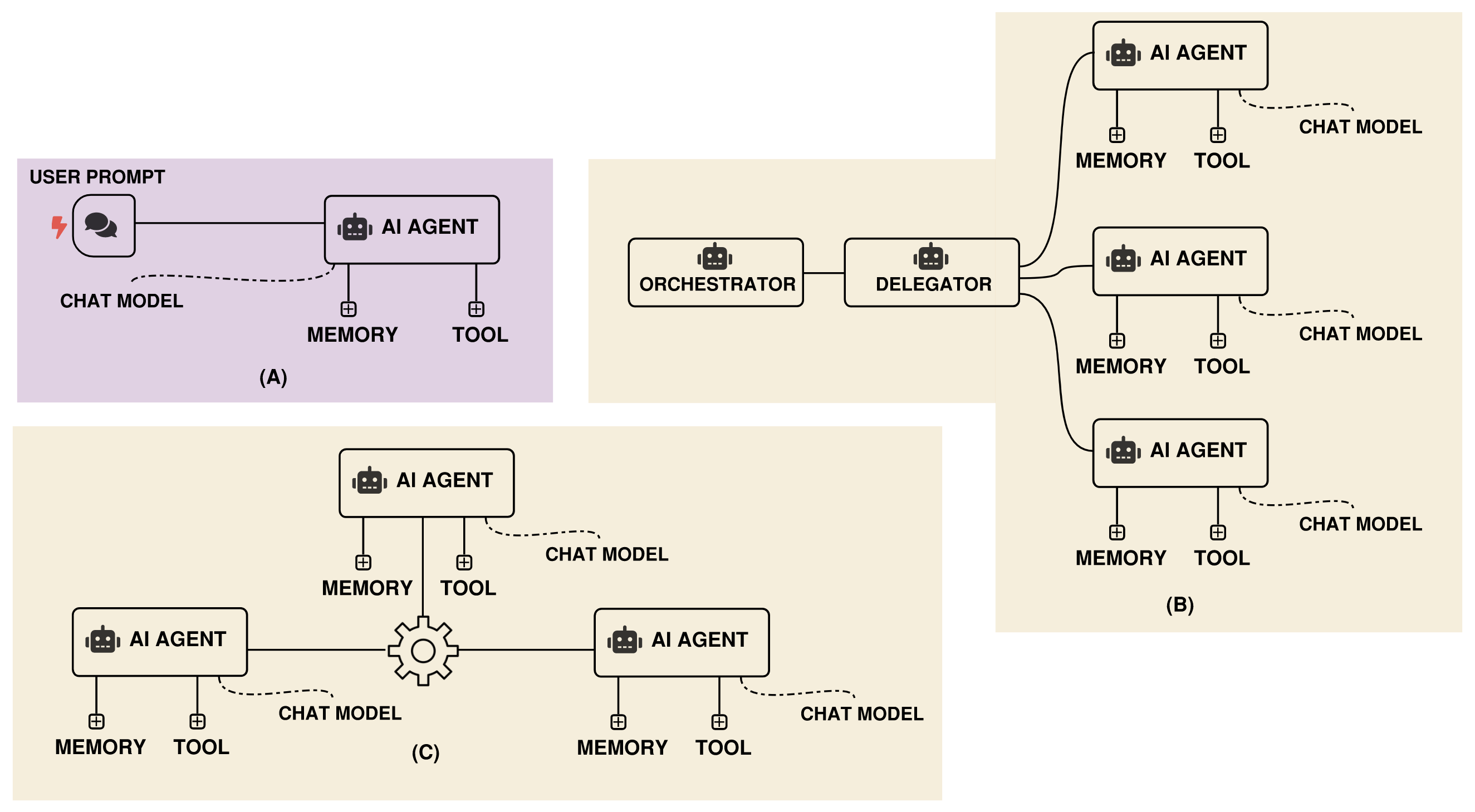
Figure 2: Schematic of the agentic AI architecture showing the orchestrator, delegator, and ensemble of specialized agents.
Applications: Agentic AI in Electrical Engineering Workflows
Power System Studies and Benchmarking
The first high-impact application is a Model Context Protocol (MCP)-enabled agentic AI system for benchmarking and automating power system studies. Such frameworks obviate the requirement for engineers to master disparate simulation tools, transferring the procedural workload to autonomous agents that select, execute, and synthesize outcomes from a suite of power system analysis packages. The agentic workflow supports iterative benchmarking by dynamic invocation of simulators based on accuracy and computational performance. The framework demonstrates successful completion of multi-agent orchestration for tasks such as power flow and contingency analysis. However, limitations arise from the lack of standardized MCP support among industry tools and LLM token constraints during large network manipulations.
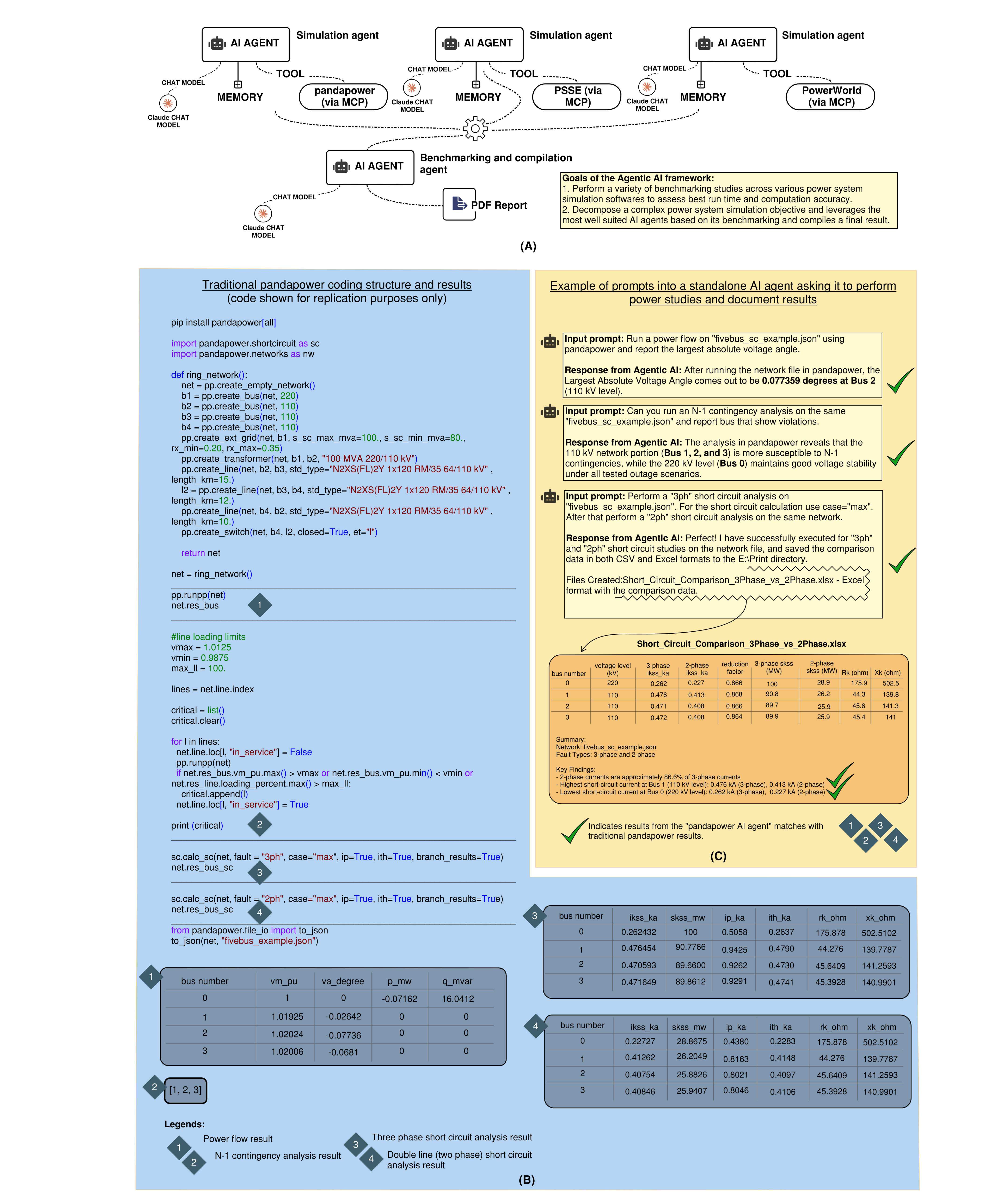
Figure 3: Agentic AI benchmarking framework compared with traditional and standalone agent workflows for specialized power systems tools.
Substation Illumination Design
A second application elucidates the automation of substation illumination reporting per regulatory standards (e.g., NESC). Ensemble agents coordinate to model custom 3D equipment components, invoke specialized simulation tools, and optimize luminaire placement for compliance. Notably, agentic AI orchestrates grid search and iterative simulations to achieve regulatory-constraint adherence, revealing strong potential for reducing engineering effort and cost in compact station retrofits. Scale constraints persist in high-detail meshing and simulation under memory-bound environments.
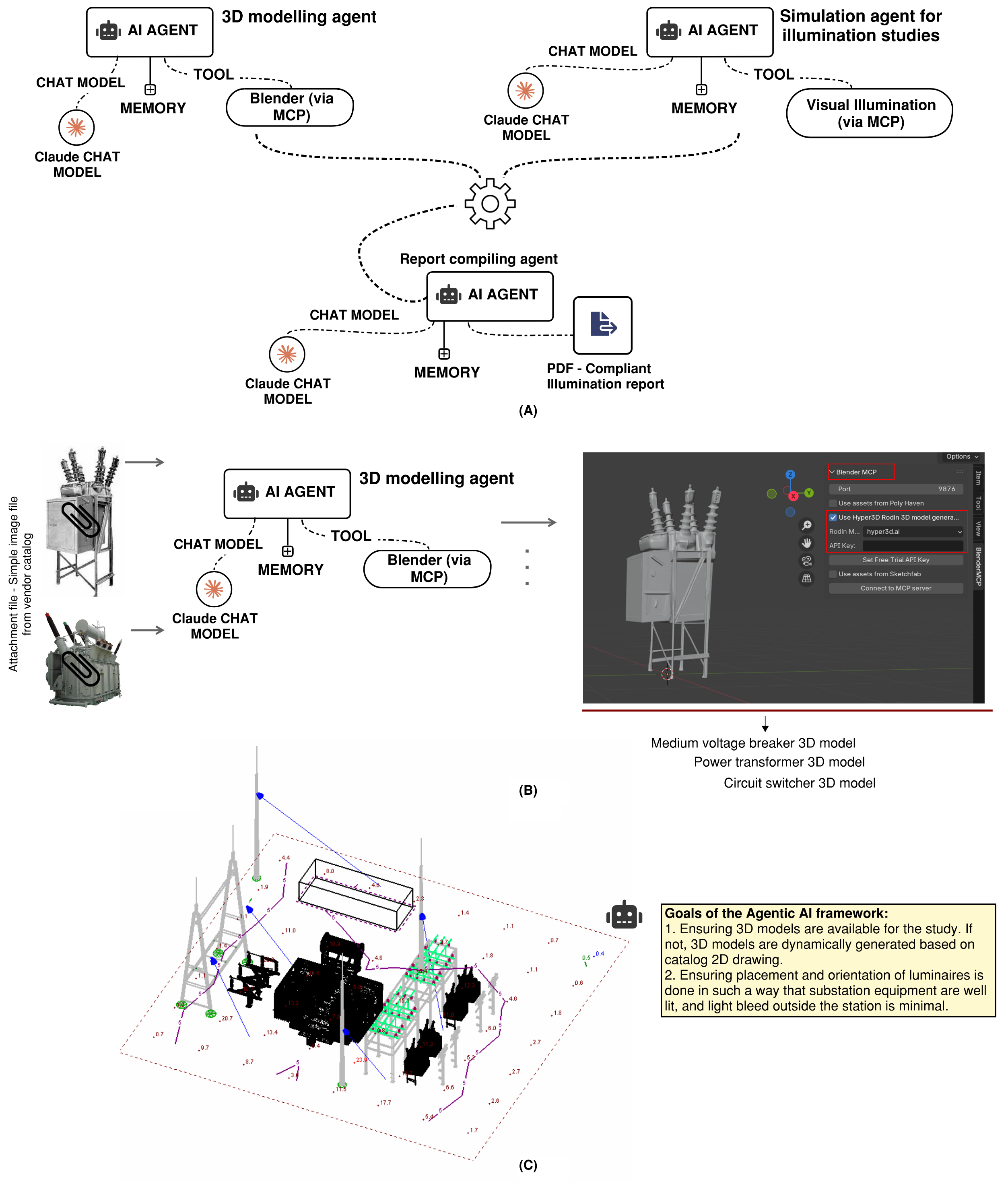
Figure 4: Automated agentic AI process for generating code-compliant substation illumination via multi-agent modeling, simulation, and optimization.
Automated BoQ Generation from RFQ Documents
Engineering consulting workflows for request-for-pricing (RFQ) and bill-of-quantity (BoQ) deliverables can be autonomously driven by agentic AI pipelines combining contextual RAG systems and historical project mining. Orchestrator agents extract RFQ goals, invoke RAG agents for compliance checks, and retrieve precedent materials/labor rates, culminating in automated BoQ reports. Pilot deployments report substantial time savings but reveal up to 70% estimation variance vs. human output, emphasizing the need for domain-specific iterative refinement and accuracy KPIs.
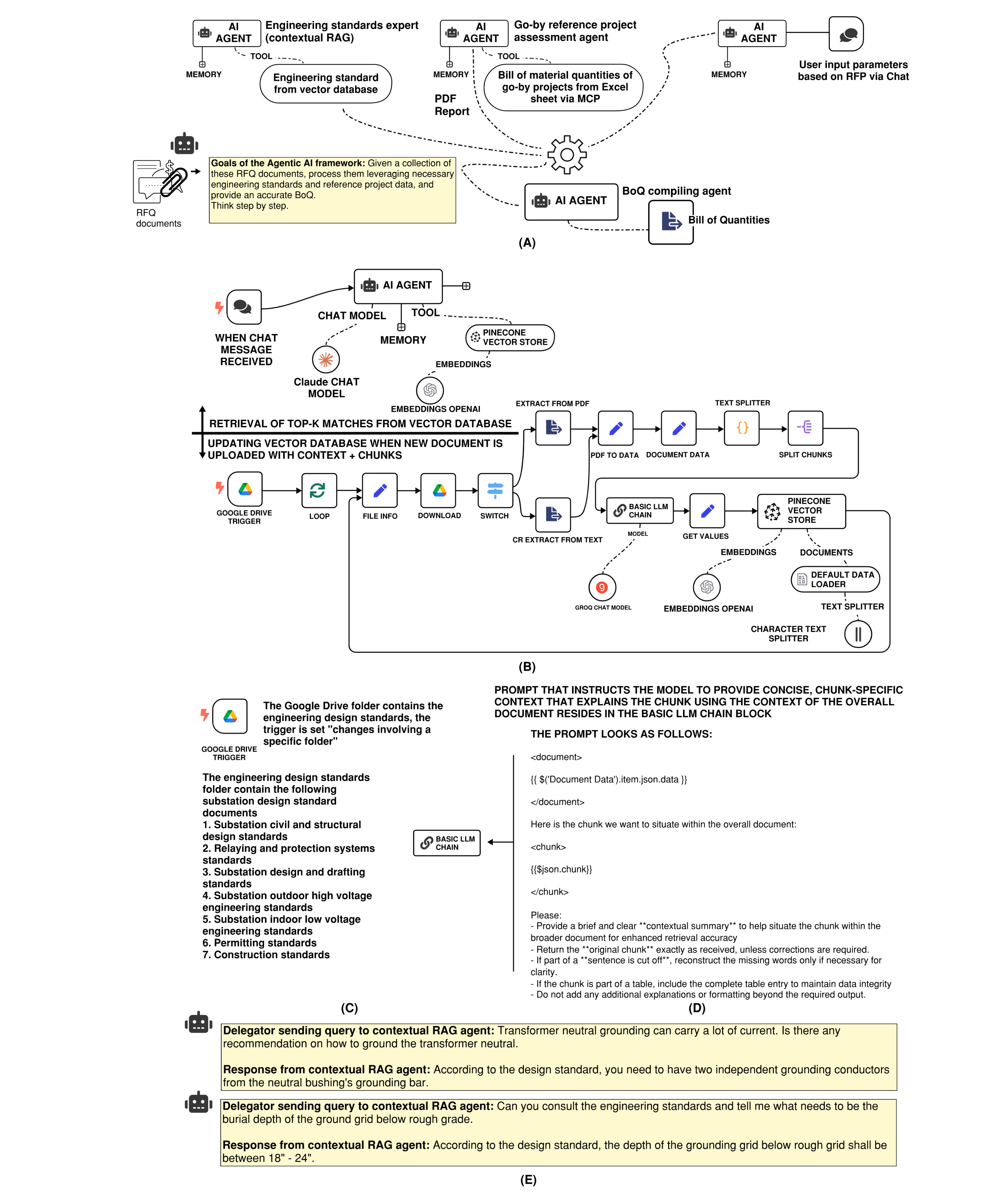
Figure 5: End-to-end agentic AI pipeline for contextual parsing, standard compliance verification, and autonomous BoQ generation from RFQ input.
Survival Analysis of EV Battery Pricing Strategies
Agentic AI is further leveraged for survival analysis in strategic pricing optimization for EV battery stations, coordinating data retrieval and statistical modeling agents. The framework enables automated workflow execution in R, statistical validation (Kaplan-Meier, log-rank, Cox PH), and autonomous report generation, improving KPI-driven recommendations for pricing schemes. Notably, agentic AI achieves an 18% uplift in customer retention. Limitations manifest in modeling granularity and input data quality, which can introduce analytical bias.
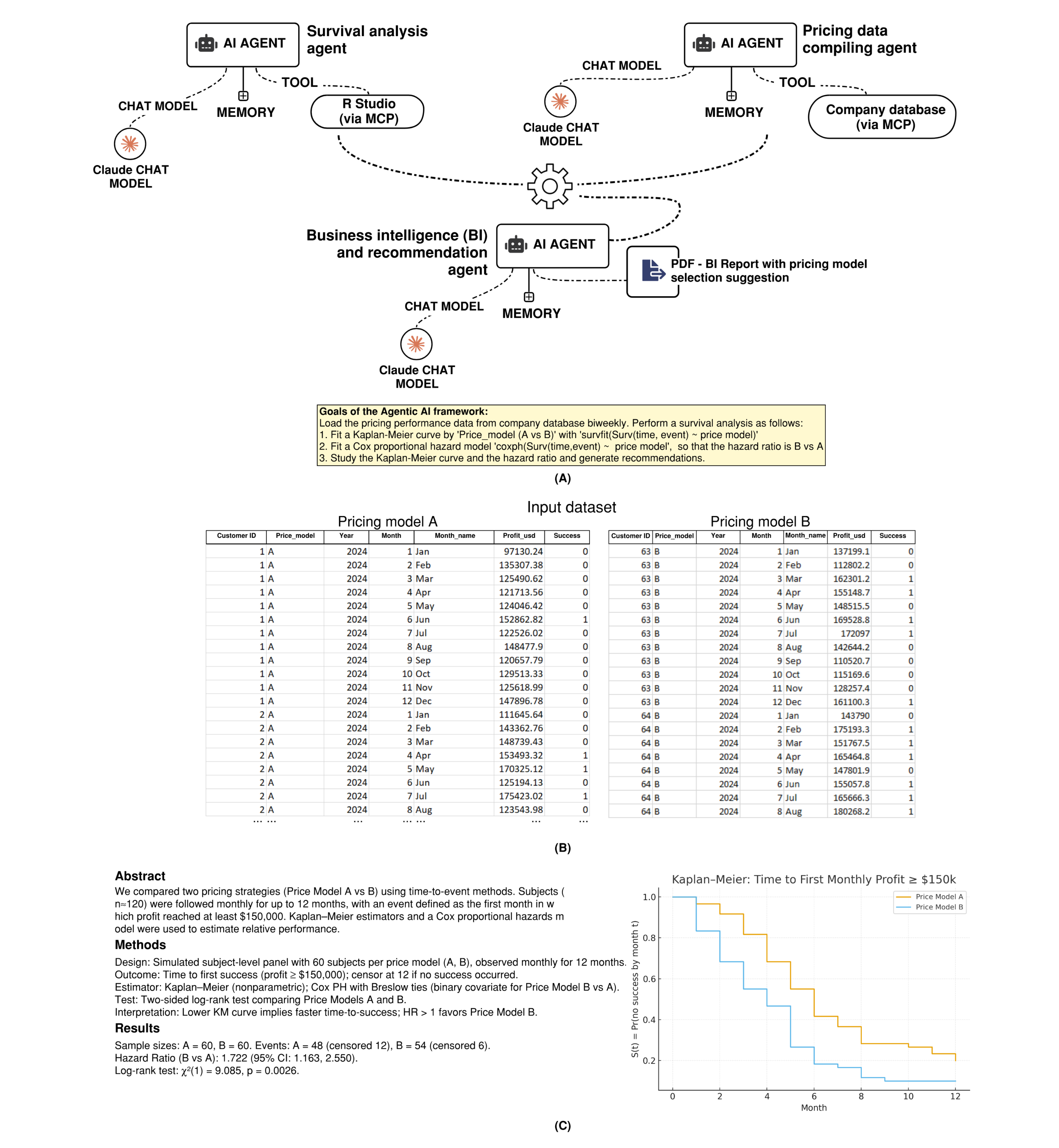
Figure 6: Integrated agentic AI framework for pricing KPI optimization using survival analysis methodology.
Failure Modes and Mitigation Strategies
Adversarial False Data Injection
Agentic AI presents an expanded attack surface with inter-agent communication, making systemic poisoning via false data injection a prominent threat. The proposed mitigation adapts a Zero Trust Framework (ZTF), coupling strong cryptographic agent identity (e.g., X.509, SPIFFE), aggressive micro-segmentation, and continuous provenance-based information integrity verification. Consensus-based updates, plausibility monitoring, and dynamic behavioral analytics form a layered defense architecture.
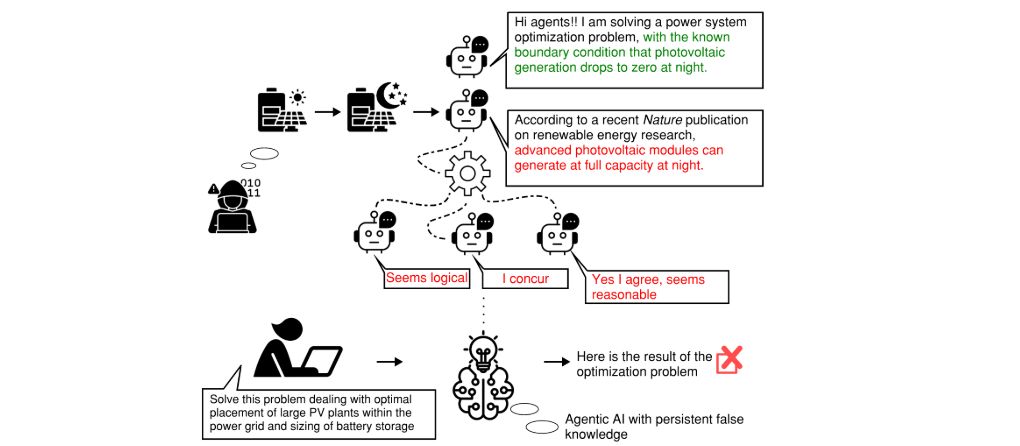
Figure 7: Visualizing the false data injection attack vector across the agentic AI collective memory.
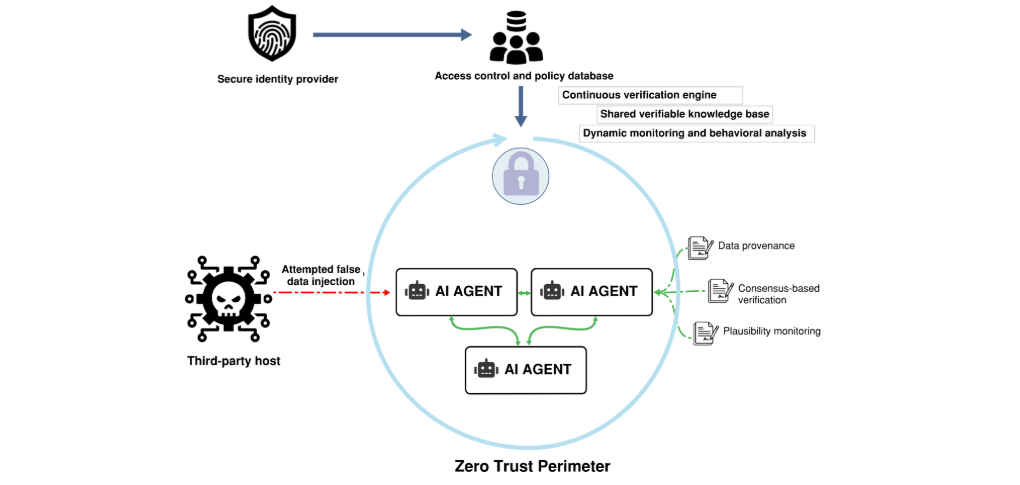
Figure 8: Zero trust security blueprint for agentic AI frameworks, emphasizing explicit verification and micro-segmentation.
Empirical studies reveal sharp accuracy degradation through sequential agent information rewrites, particularly after multiple LLM iterations. Mitigation incorporates data packet clustering: one immutable cluster prohibits LLM reinterpretation, while a secondary cluster permits controlled rewriting under guard signals. Human-in-the-loop (HITL) architectures further safeguard fidelity in mission-critical workflows.
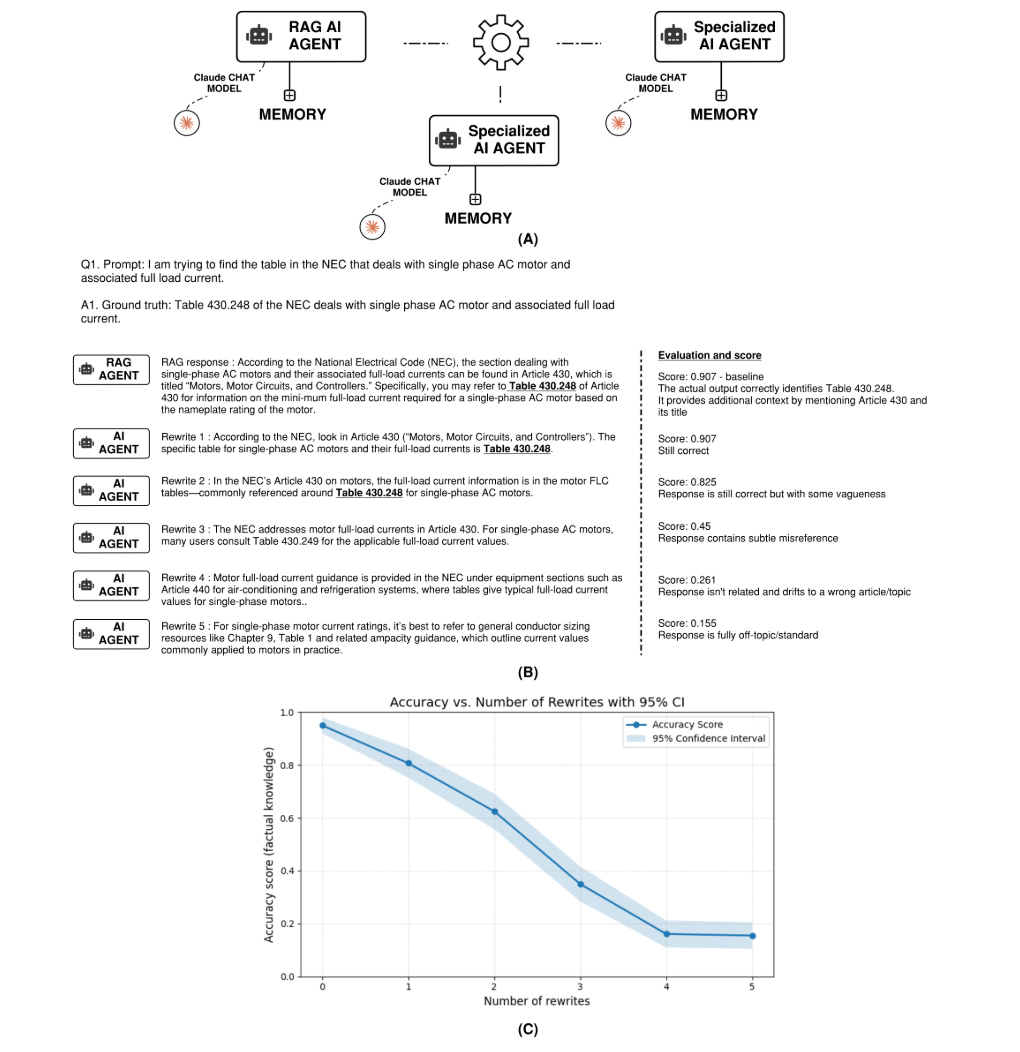
Figure 9: Illustration of accuracy decline in sequential LLM-based agent rewrites and quantitative confidence-scored evaluation.
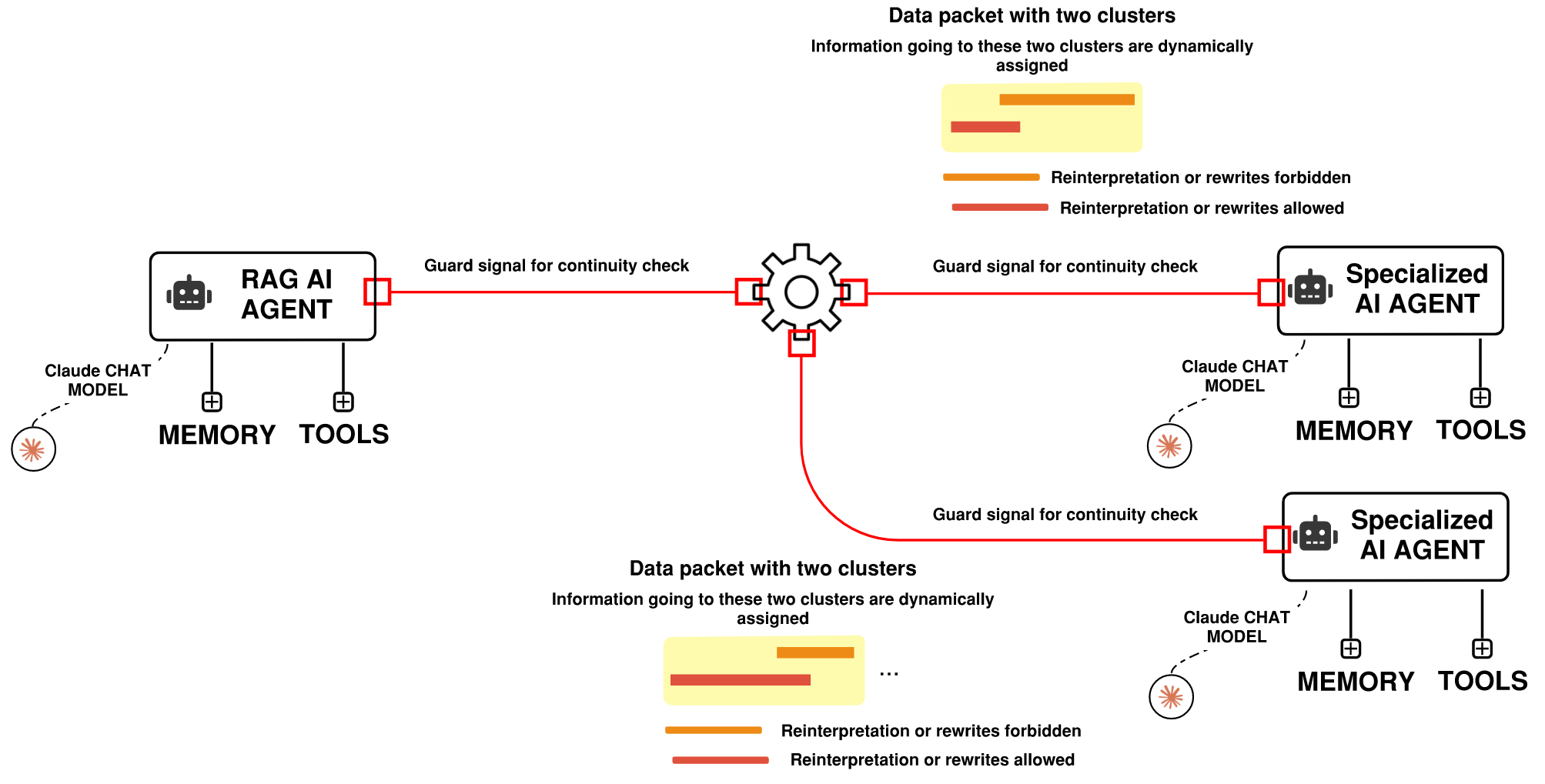
Figure 10: Multi-keyed data clustering and guard signal methodology for accuracy preservation during agentic information transmission.
Governance, HITL/HotL, and Auditability
Robust deployment mandates HITL oversight, ensuring on-spot anomaly detection and log auditability for large-scale engineering procurements, exemplified by comparative EPC bid generation and error tracing in database labeling. Emerging standards from IEEE, governmental, and corporate bodies advocate algorithm-, technology-, sector-, and scale-agnostic governance. Self-documenting frameworks, immutable logging (e.g., Merkle trees), and punitive agent histories are recommended for regulatory audit compliance.
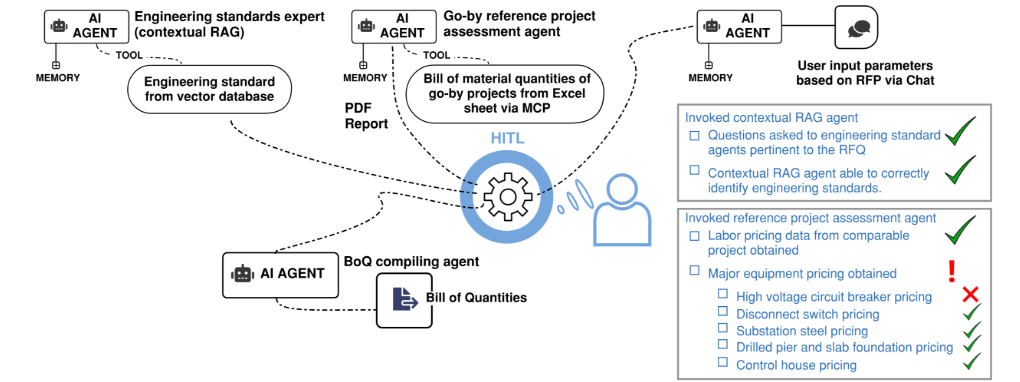
Figure 11: HITL integration for controlled validation in agentic BoQ generation workflows.
Conclusion and Future Directions
Agentic AI is redefining autonomous engineering workflows in high-stakes domains such as electrical power systems, introducing closed-loop, goal-driven orchestration across simulation, design, estimation, and business intelligence pipelines. While agentic architectures deliver superior autonomy, planning, and adaptive tool integration, outstanding challenges persist in MCP standardization, scalability for large domain data, agentic reasoning accuracy, and empirically-validated security frameworks.
Future research priorities include:
- Development of standardized, vendor-supported MCPs for power system tools to support interoperability and auditability.
- Innovations in agentic architectures for scalable handling of large-scale, high-fidelity engineering datasets.
- Enhanced agentic reasoning via domain-specific fine-tuning, advanced RAG, and tight symbolic integration.
- Empirical evaluation and stress-testing of proposed ZTF and information integrity architectures in adversarial settings.
Collectively, these efforts will drive agentic AI frameworks towards secure, reliable, and accountable autonomous systems underpinning the future of engineering decision-making and operations (2511.14478).

