- The paper introduces a decentralized reservoir management framework that integrates bio-inspired murmuration rules with multi-agent reinforcement learning and LLM-guided reward shaping.
- It demonstrates significant improvements with 23% enhanced uncertainty resilience and 68% faster flood response, all while reducing computational complexity to linear scaling.
- The system offers scalable, real-time performance and adaptability to diverse environmental events, suggesting applications in water, energy, and other infrastructure domains.
MARLIN: Multi-Agent Reinforcement Learning with Murmuration Intelligence and LLM Guidance for Reservoir Management
Introduction and Motivation
MARLIN introduces a decentralized reservoir management framework that integrates bio-inspired murmuration intelligence with multi-agent reinforcement learning (MARL) and LLM guidance. The system is designed to address the dual-layer uncertainty inherent in large-scale water resource networks: physical water transfer losses and environmental variability. Traditional centralized optimization approaches scale poorly (O(n3) complexity), and existing MARL methods lack robust coordination under uncertainty, resulting in oscillatory and unsafe behaviors. MARLIN leverages local coordination rules inspired by starling murmurations—alignment, separation, and cohesion—combined with LLM-driven reward shaping to enable adaptive, scalable, and resilient control.
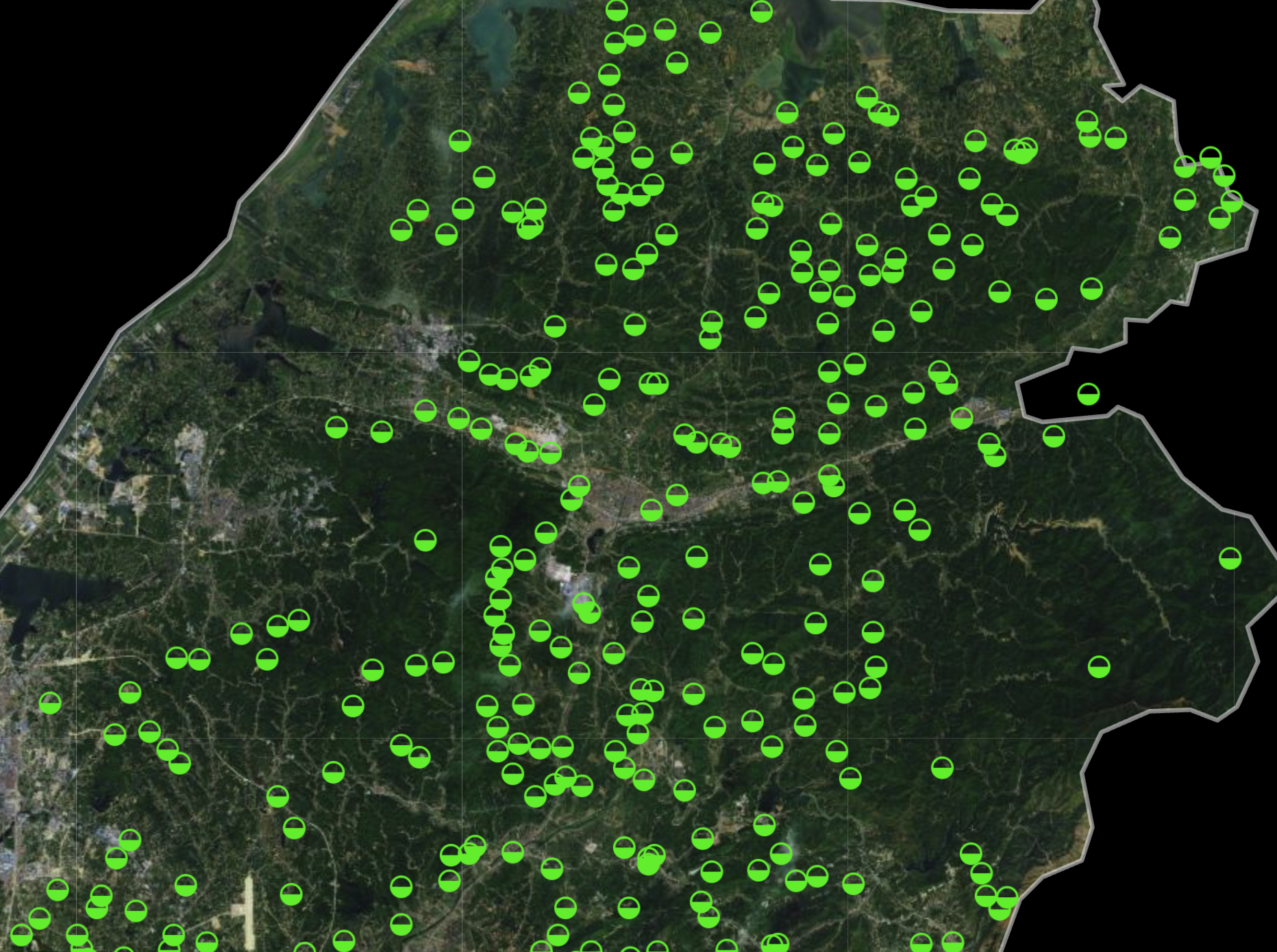

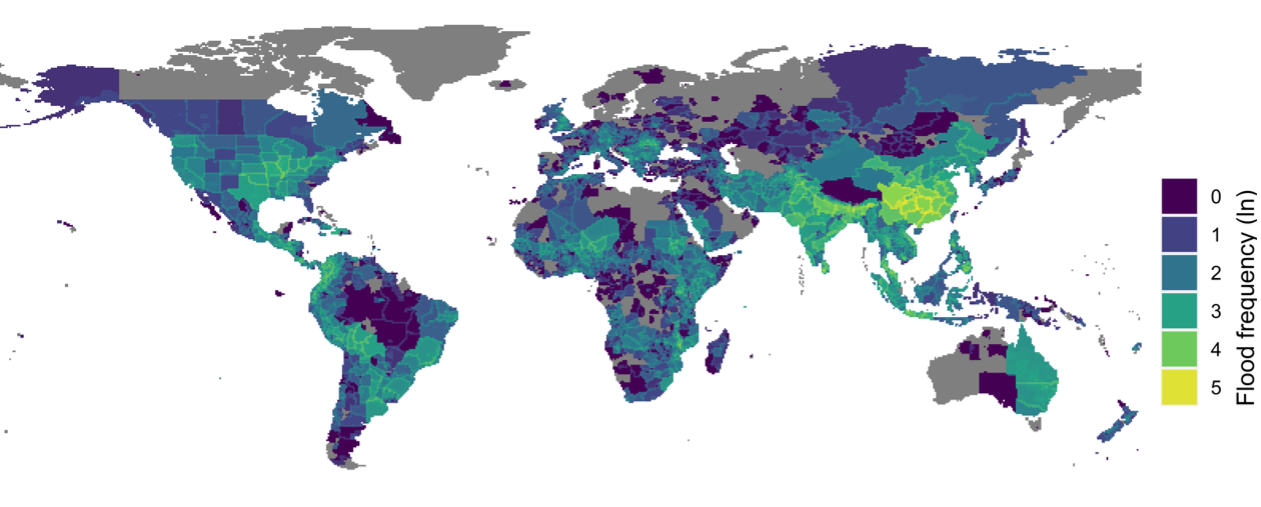
Figure 1: Reservoir networks illustrating the complexity and interconnectivity of real-world water management systems.
System Architecture and Methodology
MARLIN's architecture consists of three core components:
- Murmuration Coordination Layer: Implements alignment, separation, and cohesion rules to guide local agent decisions. Alignment encourages coordinated releases among neighbors, separation maintains strategic diversity to prevent systemic failures, and cohesion ensures ecological requirements are met at the regional scale.
- MARL Policy Networks: Each agent's policy network is enhanced with state representations that include local reservoir states, neighbor information via GNNs, historical patterns via LSTMs, and weather forecasts. Murmuration coordination signals are injected into the policy gradients, modifying the hidden state and PPO objective to balance individual optimization with emergent coordination.
- LLM-Guided Reward Shaping: An LLM processes heterogeneous contextual information (weather, regulations, stakeholder communications) and dynamically adjusts the weights of the murmuration rules (α, β, γ) and reward shaping parameters. This enables the system to adapt to strategic, tactical, and operational contexts, from seasonal planning to emergency response.
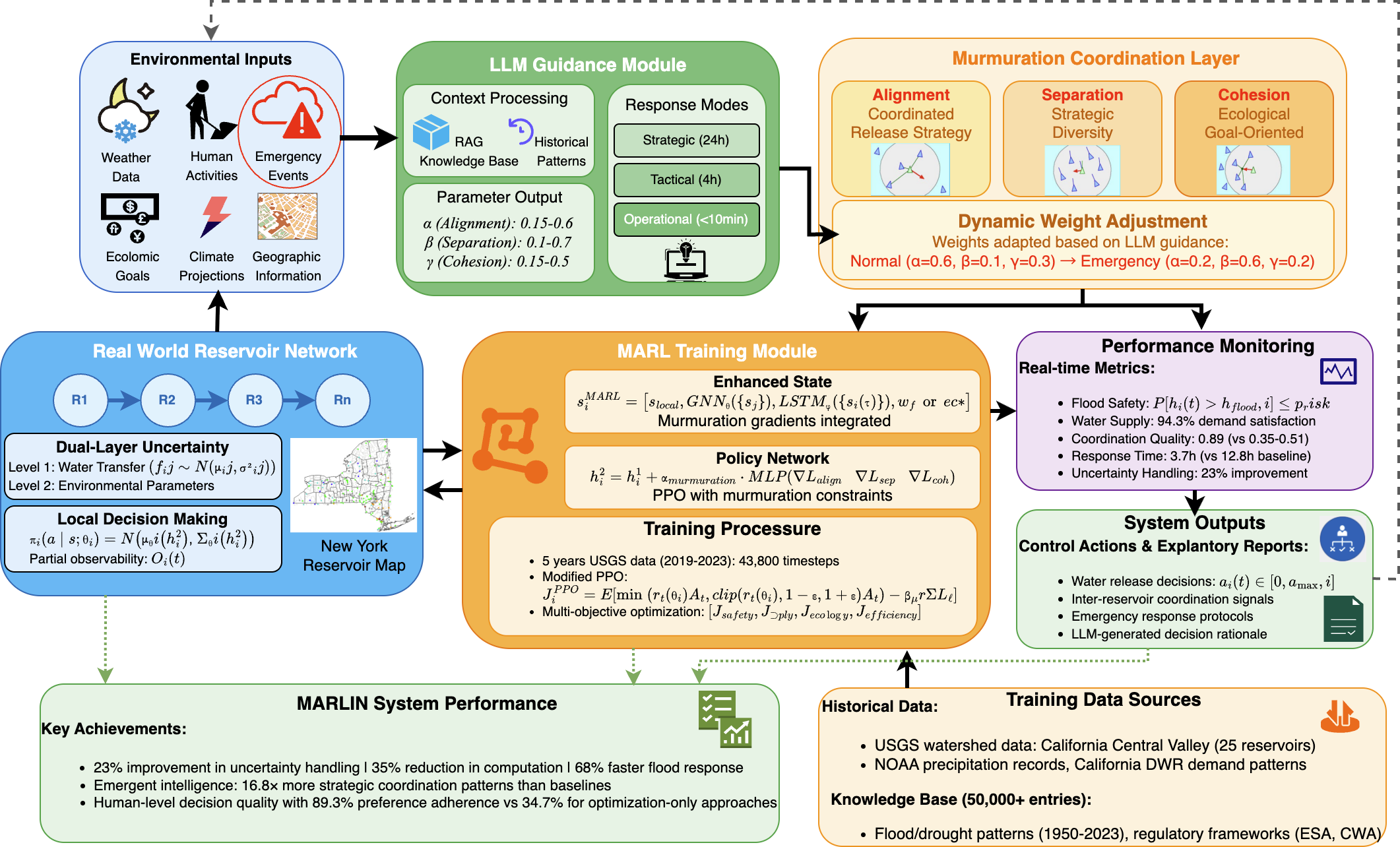
Figure 2: Overview of the MARLIN system architecture and training workflow, integrating bio-inspired coordination and LLM guidance for distributed reservoir management.
Theoretical Foundations
The paper provides rigorous analysis of the murmuration rules:
- Alignment: Proven to converge to average consensus under doubly stochastic weights and connected graphs.
- Separation: Prevents convergence to brittle uniform strategies under high uncertainty, maintaining robustness.
- Cohesion: Ensures global optimality for ecological objectives via distributed Lagrangian optimization.
- Combined System: Multi-objective convergence to (1−ϵ)-optimal solutions, with ϵ bounded by uncertainty and network topology.
- Robustness: Performance loss under uncertainty is analytically bounded, with separation providing a tunable trade-off between efficiency and resilience.
- Complexity: Linear per-iteration complexity (O(∣E∣)), supporting real-time control for large networks.
Experimental Evaluation
Murmuration-Based Coordination
MARLIN was evaluated on real-world USGS data (California Central Valley, Colorado River Basin, Columbia River System) and synthetic networks up to 104 nodes. Key findings:
- Uncertainty Handling: MARLIN improves uncertainty resilience by 23% over baselines (MADDPG, QMIX, MAPPO, MPC).
- Computation: Achieves 35% reduction in decision time and memory usage, with linear scaling.
- Flood Response: Accelerates response by 68%, maintaining safety thresholds during extreme events.
- Emergent Coordination: Generates 16.8× more strategic clusters at scale, with modularity scores >2× higher than baselines.
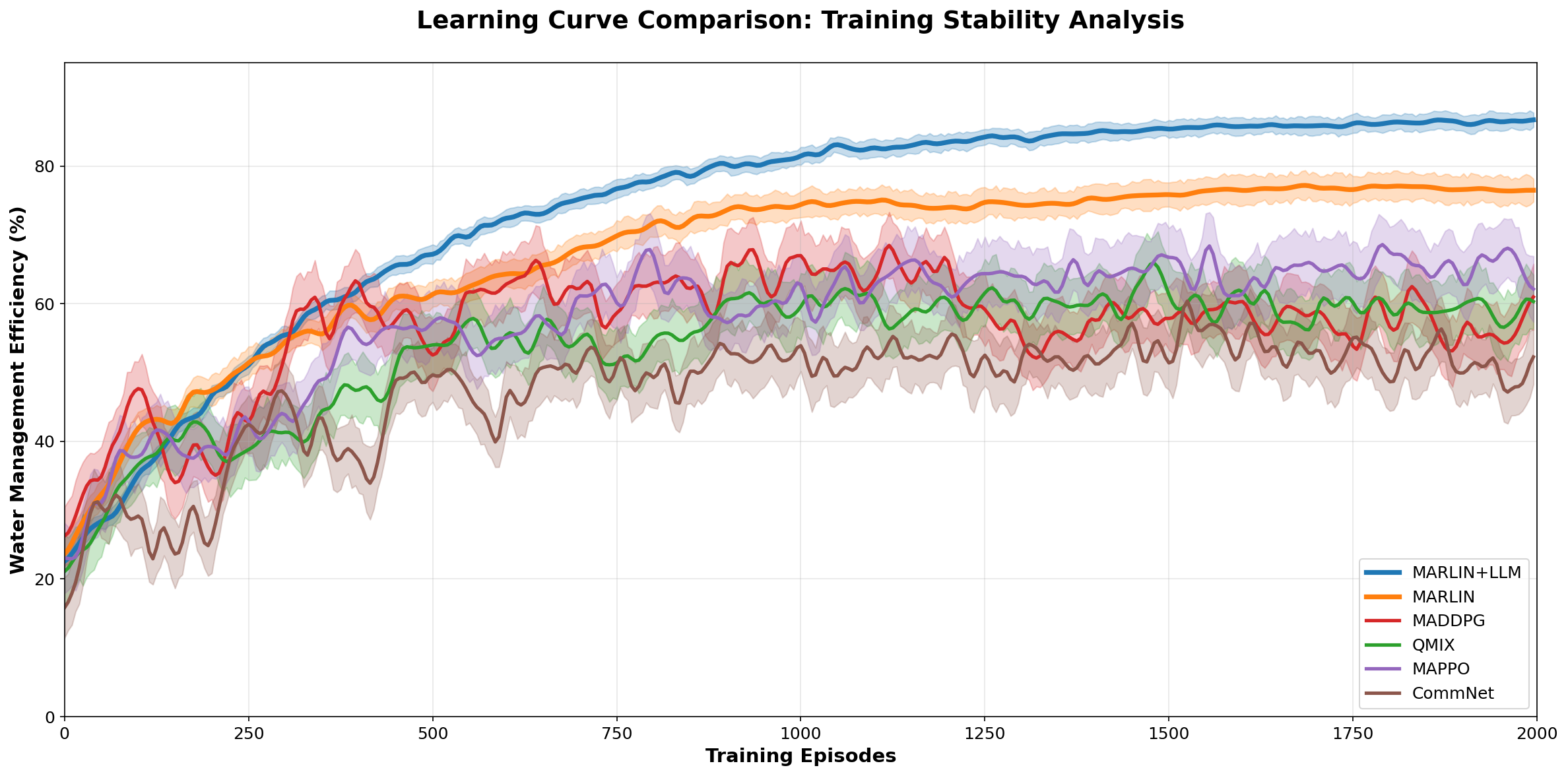
Figure 3: Learning curves showing MARLIN’s stable convergence under dual-layer uncertainty, with low coefficient of variation compared to persistent oscillations in baselines.
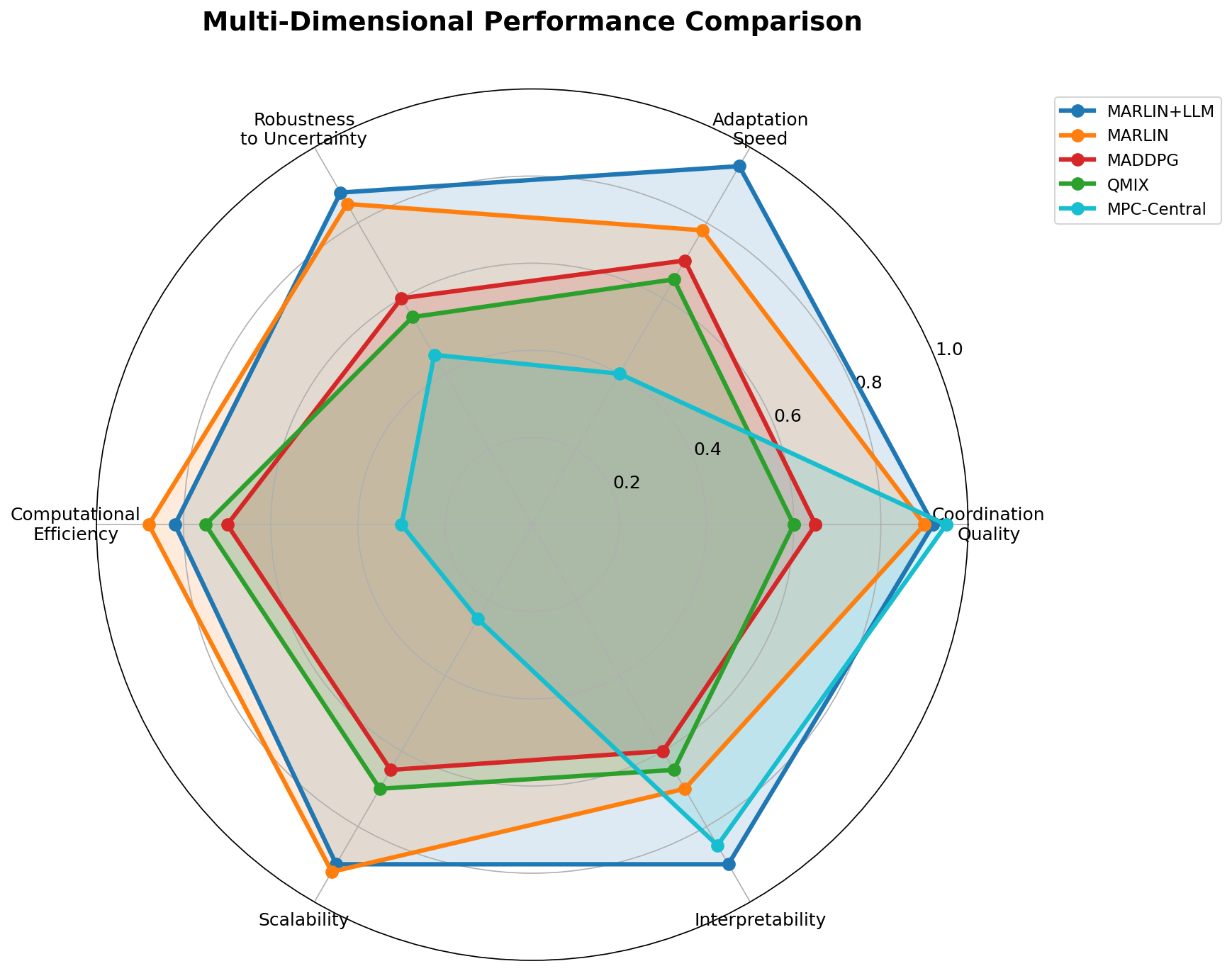
Figure 4: Multi-dimensional performance comparison across six metrics, demonstrating MARLIN’s superior balance.
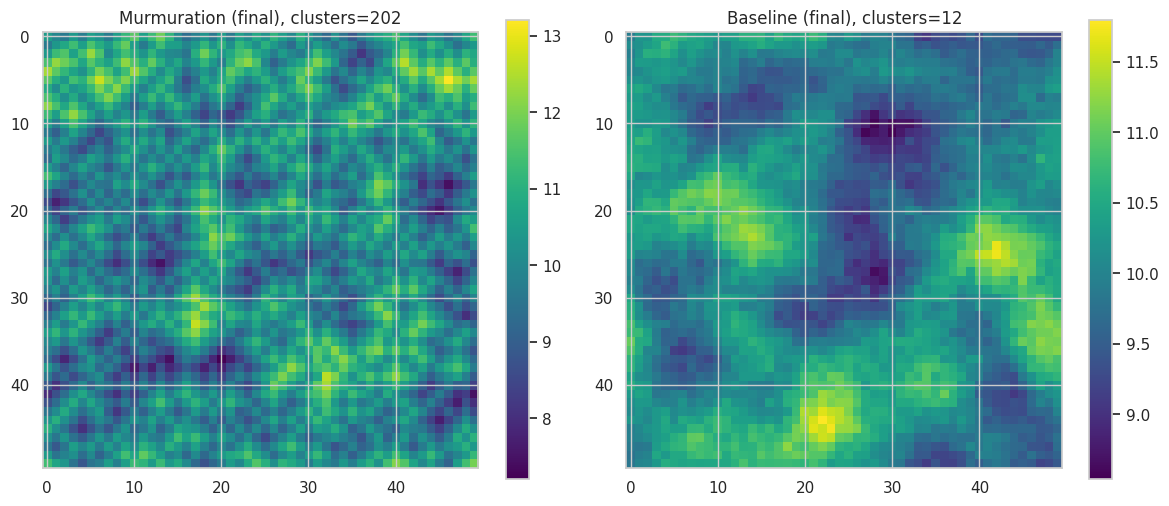
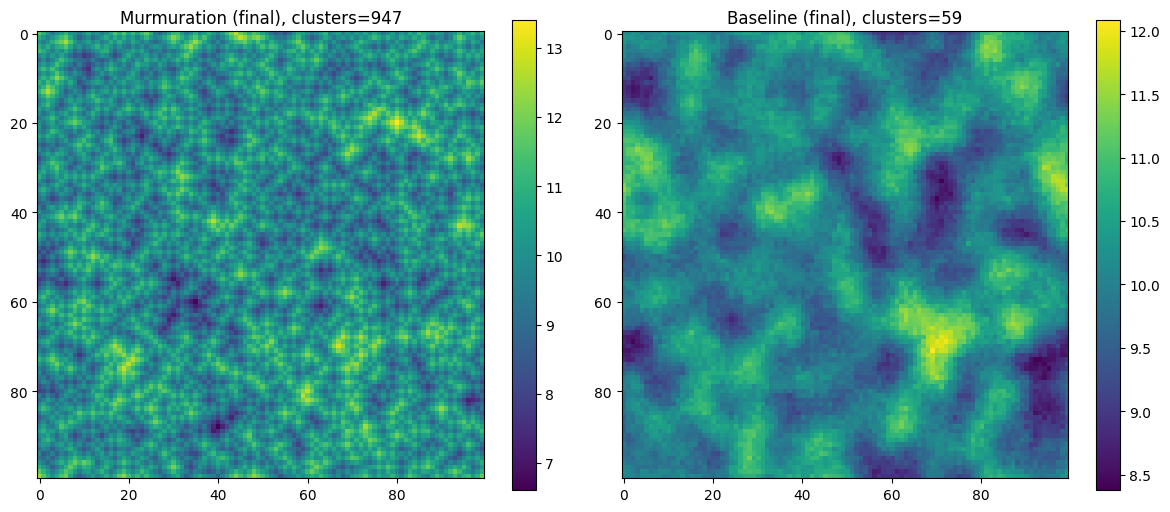
Figure 5: Emergent strategic clusters at multiple scales, with MARLIN producing significantly more distinct coordination patterns aligned to watershed topography.
LLM-Guided Adaptation
MARLIN+LLM was tested on seven major environmental events, including droughts, floods, and infrastructure failures:
- Temporal Adaptation: Maintains performance above the 0.8 safety threshold, with average response time of 3.7 hours (vs. 12.8 hours for baselines) and limited performance loss (8.3% vs. 24.7%).
- Spatial Adaptation: Achieves 84.7% of theoretical maximum inter-regional water transfer, maintaining local safety constraints and improving regional water balance by 42%.
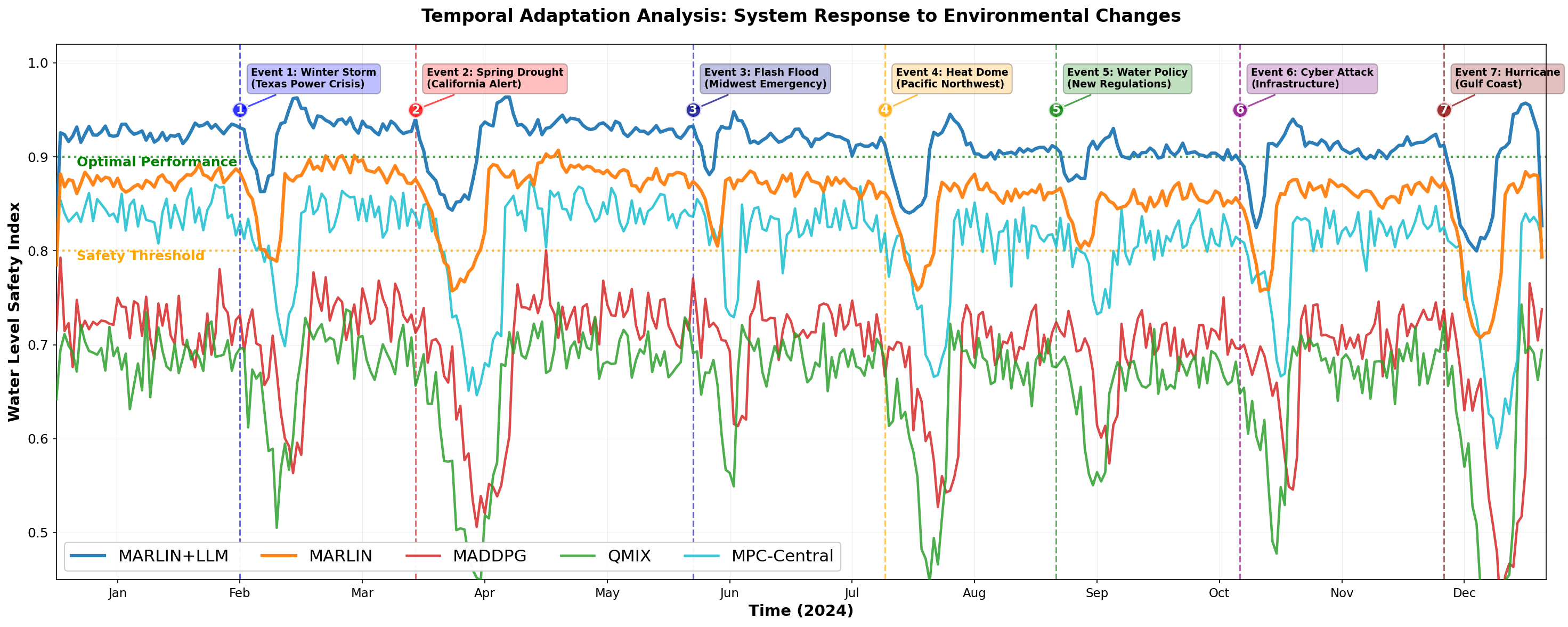
Figure 6: Temporal adaptation across seven environmental events, with MARLIN+LLM enabling rapid and robust recovery.
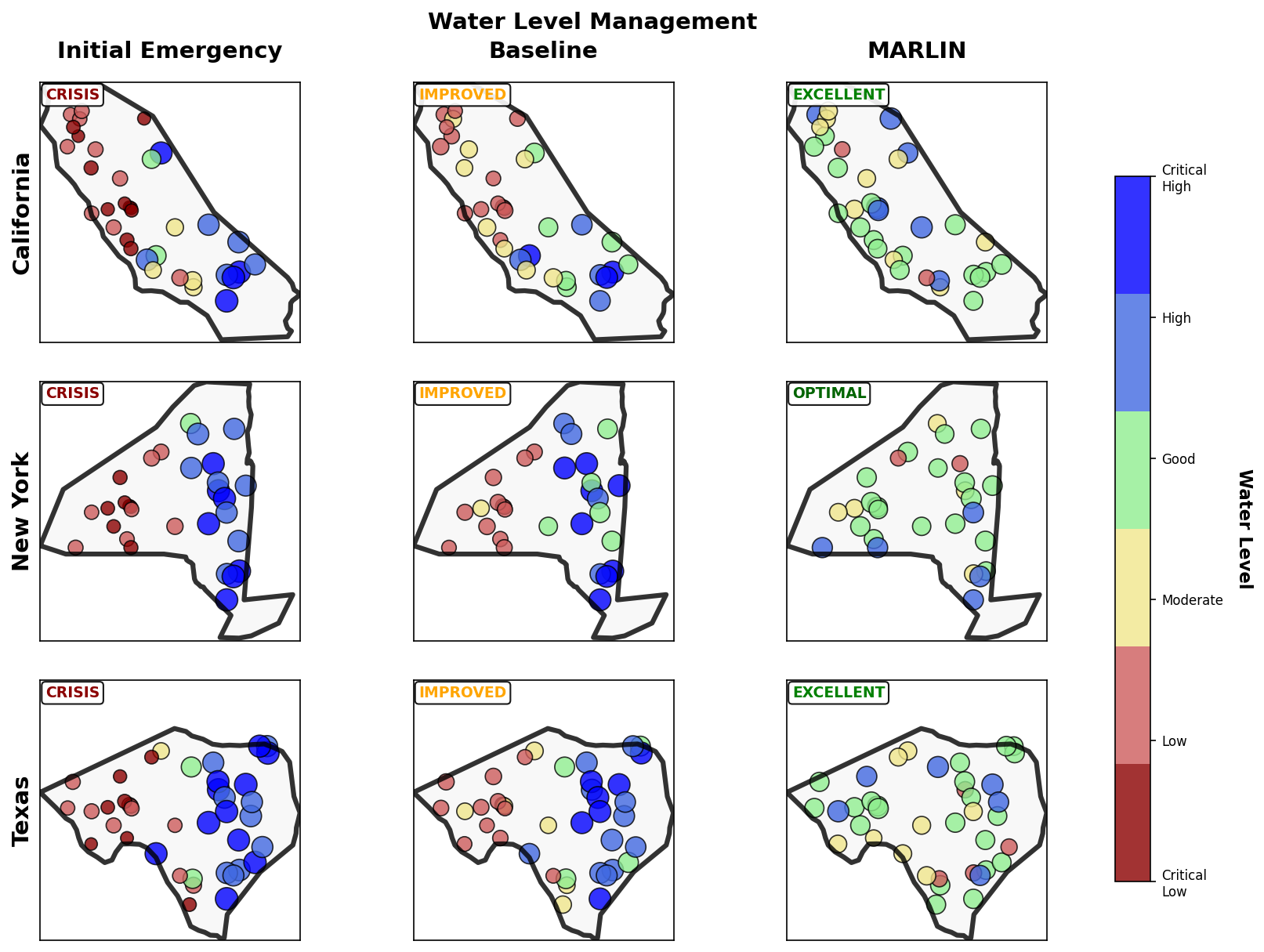
Figure 7: Spatial adaptation under simultaneous drought and flood risk, demonstrating efficient inter-regional coordination.
Implementation Details
MARLIN is implemented using PyTorch, Torch Geometric, and Gemini-1.5-Pro for LLM integration. The system supports parallel training, retrieval-augmented knowledge bases, and dynamic context windows. Hyperparameters are tuned via grid search and cross-validation. The architecture is modular, enabling transfer learning and edge-cloud deployment for latency-sensitive applications.
Pseudocode Overview
- MARLIN Training: Iterative policy updates with murmuration coordination, LLM-guided reward shaping, and modified PPO.
- LLM Reward Shaping: Contextual prompt construction, strategic/tactical/emergency mode selection, and dynamic parameter adjustment.
- Coordination Computation: Alignment, separation, and cohesion losses computed per agent, aggregated with context-dependent weights.
Practical and Theoretical Implications
MARLIN demonstrates that bio-inspired local rules, when combined with MARL and LLM guidance, can achieve scalable, robust, and adaptive coordination in complex infrastructure networks. The system's linear complexity and resilience to uncertainty make it suitable for real-world deployment in water management, power grids, and other domains requiring distributed control under uncertainty. The integration of LLMs enables human-in-the-loop adaptation, regulatory compliance, and multi-objective balancing, bridging the gap between optimization and stakeholder preferences.
Future Directions
Potential extensions include:
- Edge Deployment: Low-latency LLMs and hybrid architectures for real-time emergency response.
- Transfer Learning: Adapting policies to new regions with limited data.
- Generalization: Application to other critical infrastructure domains (energy, transportation, supply chains).
- Explainability: Enhanced visualization and interpretability tools for operator trust and regulatory oversight.
Conclusion
MARLIN advances the state of the art in distributed reservoir management by combining murmuration intelligence, MARL, and LLM-guided reward shaping. The framework achieves provable convergence, optimality, and robustness, with strong empirical results on uncertainty handling, scalability, and adaptive response. Its principles generalize to broader infrastructure control problems, offering a foundation for resilient, autonomous systems in the face of global uncertainty.

